Eye spy…well, I know I did not feel very comfortable with these two window blinds spying on me every night when I returned to my hotel in a rather worn down area of Riga, Latvia.
For more inspirational eyes…click here to go to WordPress challenges!

Eye spy…well, I know I did not feel very comfortable with these two window blinds spying on me every night when I returned to my hotel in a rather worn down area of Riga, Latvia.
For more inspirational eyes…click here to go to WordPress challenges!
Signs and labels – don’t we all love them? Join in with Cee this week – click here for more inspiration!
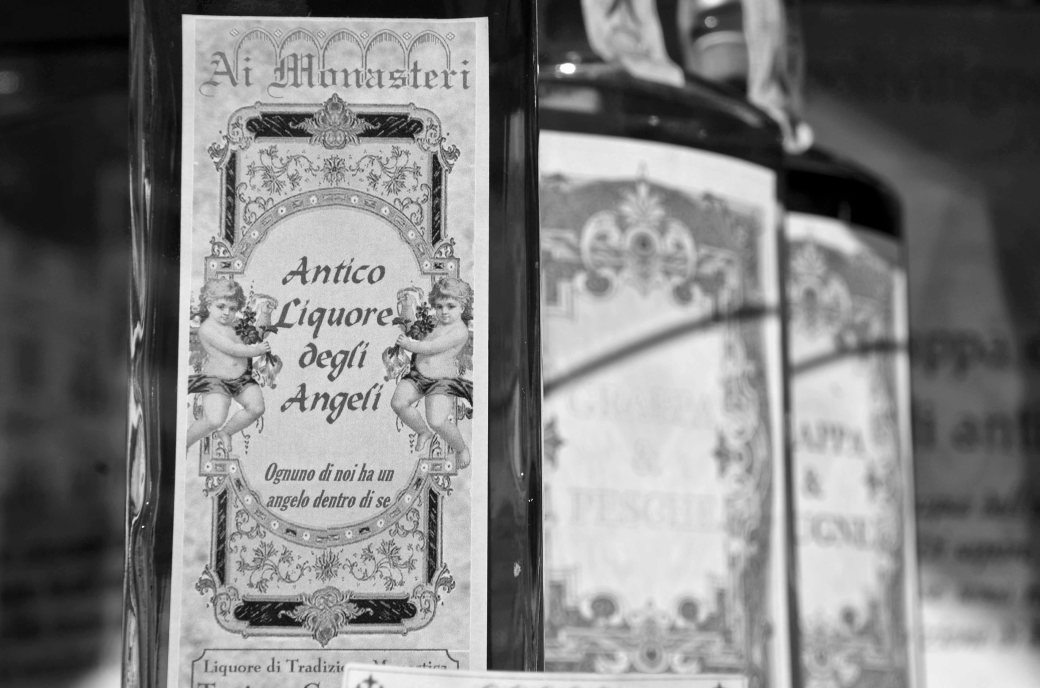
These two are from the famous Ai Monasteri in Rome. They make every drop from ancient recipes used in the old monasteries.
Everything is in transition.
The WordPress Challenge is to show this in pictures.
The old houses in Jurmala outside Riga most certainly were – living evidence of transition not always being a word with a less positive meaning.

As usual an interesting challenge from Cee – why not join in yourself? Click here.

In Rome…anything might happen. This photographer was very dedicated. See more here.

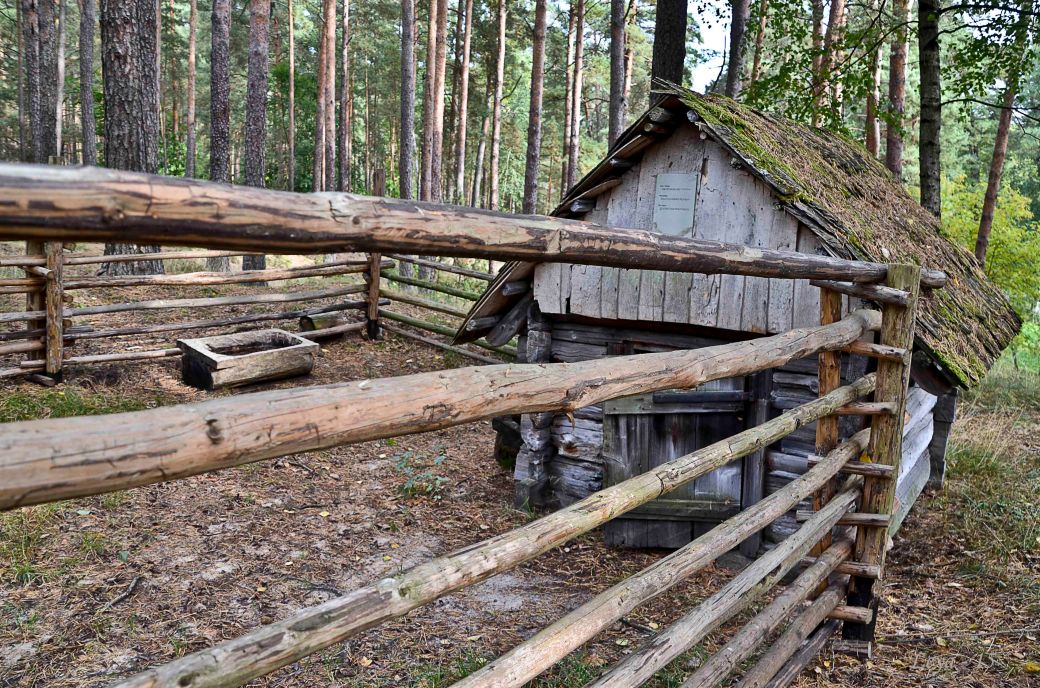
Boundaries – physical or others are essential to mankind and society. On visiting the open air museum in Riga, I found some old beauties – an elegant garden fence and a rustic pigsty fence. I love them both. Join in and let us see your choices!
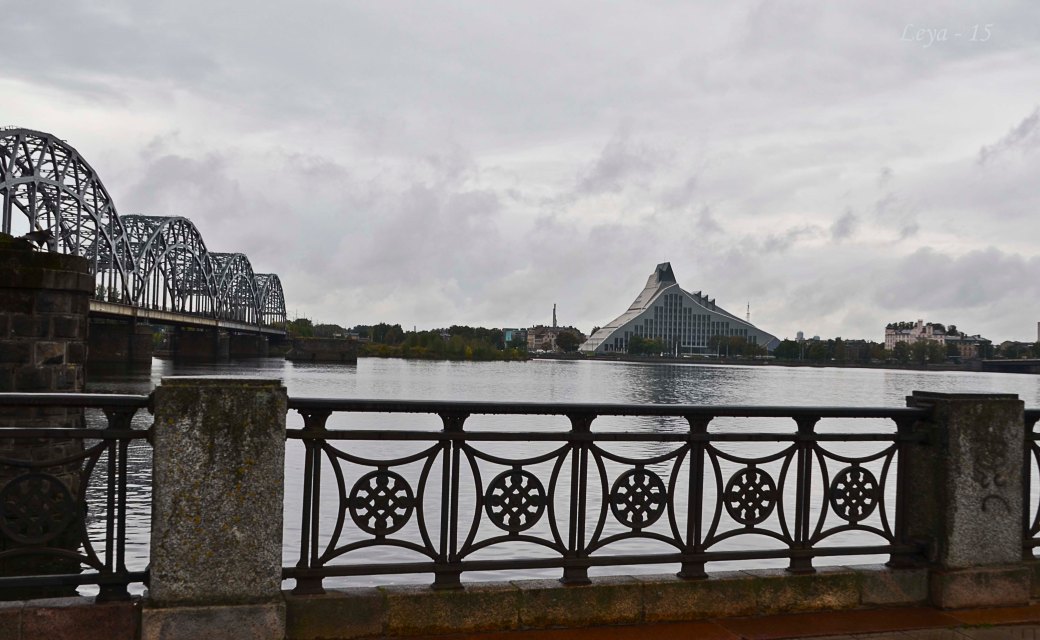 Riga is the capital of Latvia, and situated on the river Daugava. Inhabitants about 707 000, a third of the country’s total. Riga is also the biggest city in the Baltic area. Together with Umeå in Sweden it was the 2014 European Capital of Culture. More: USA Today’s readers voted Riga as Europe’s most attractive city and CNN Travel and Lonely Planet also give their praise to the city.
We visited for three days and fell in love with the mix of green areas, old and new, worn, dilapidated, beautiful houses, Russian style ”boxes”, the massive Jugend areas and the restored gems. And the people. The span is refreshing and we enjoyed every minute.
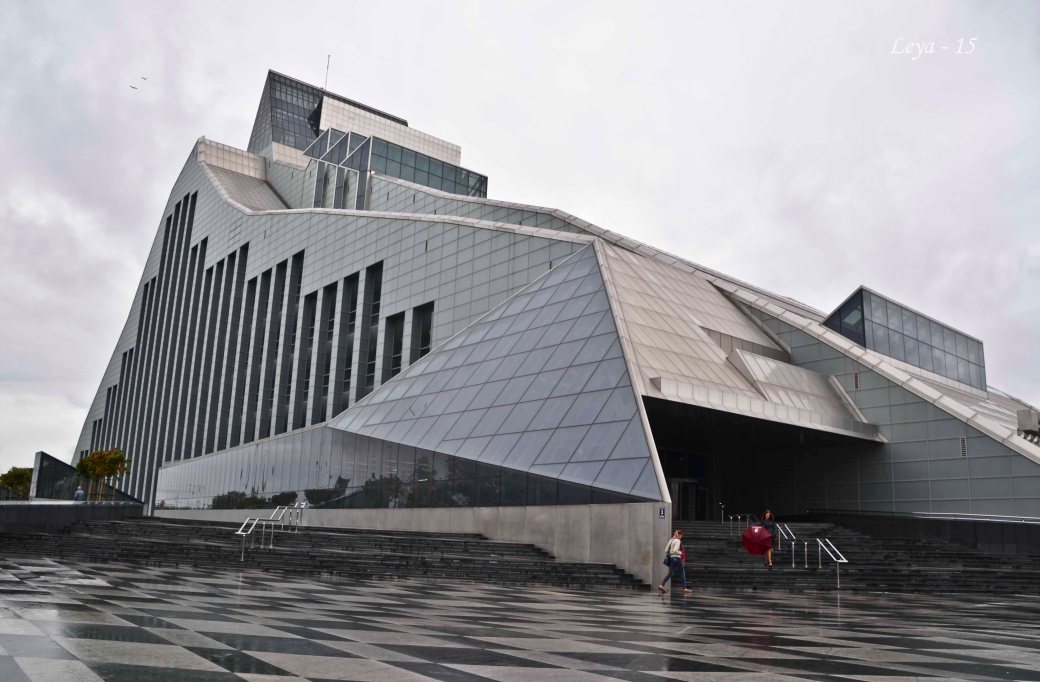
One of the newest buildings here – which you cannot miss when you arrive – is the National Library. Gaismas pils, or The Castle of Light, at Mūkusalas iela on the river Daugava opposite Riga’s Old Town. Latvian architect Gunnar Birkerts, was inspired by Latvian folklore in his construction.
The building is 40 000 m2, built in 13 stories, where the two on top is only meant for cultural arrangements and for rent (having a party? I didn’t ask the cost…) There are approxiamately 1000 study seats in several rooms, and storing room for six million books.
The Library opened August 29, 2014.
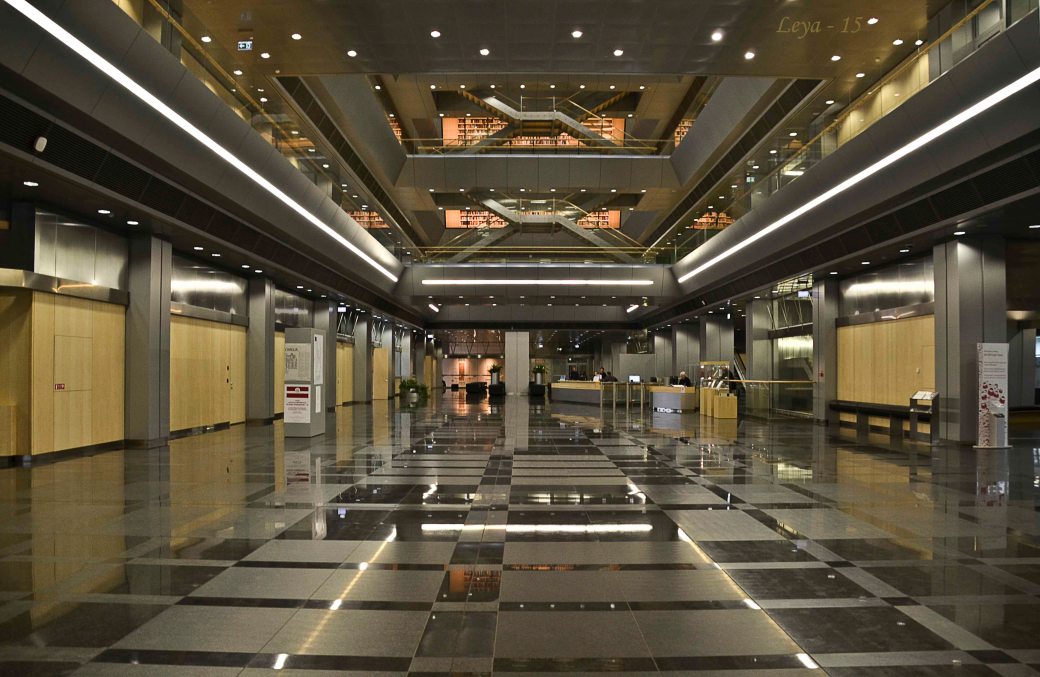
Already in the entrance, I loved it…but with a strange feeling in my stomach…
We had to put all our things in lockers and you were not allowed to bring any drink or food – not even water. You had to get a visitors’ badge too and display it clearly. Then you had to pass the gates and a sighing lady…who looked like ”it would be really nice here… if it weren’t for the visitors.”

Large empty spaces and mirrors called for a selfie first…
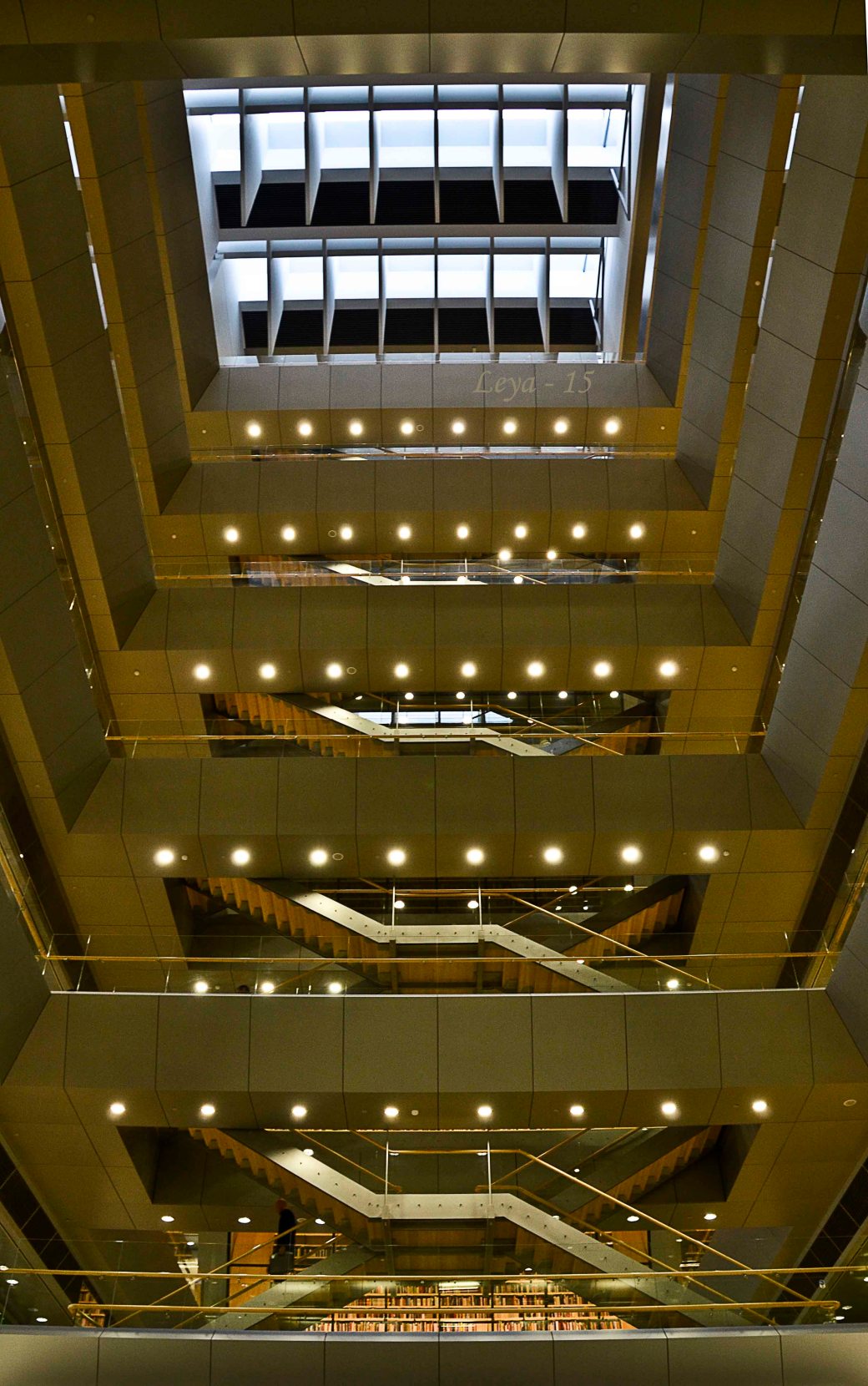
As we went searching for the books, suddenly there was a marvellous display right ahead – up in the air.
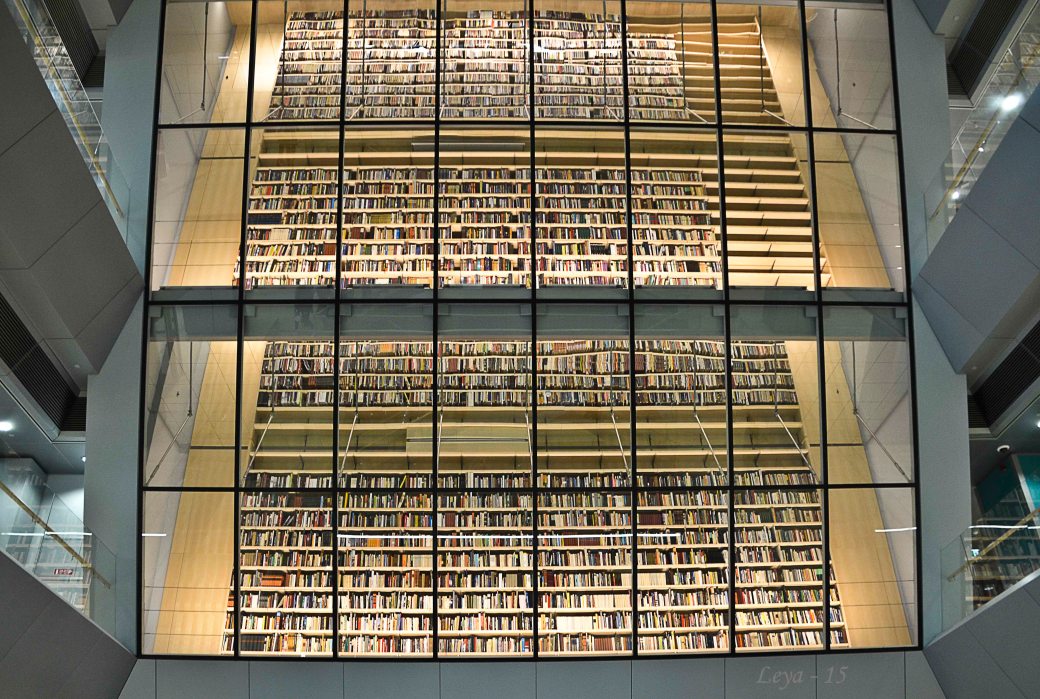
Beautifully displayed – we headed for them immediately. But, being there, we realized that they were locked in behind glass – only eye candy…
We entered stairs and elevators, slowly becoming more and more desperate…where were the books? And the people? Students? Children?
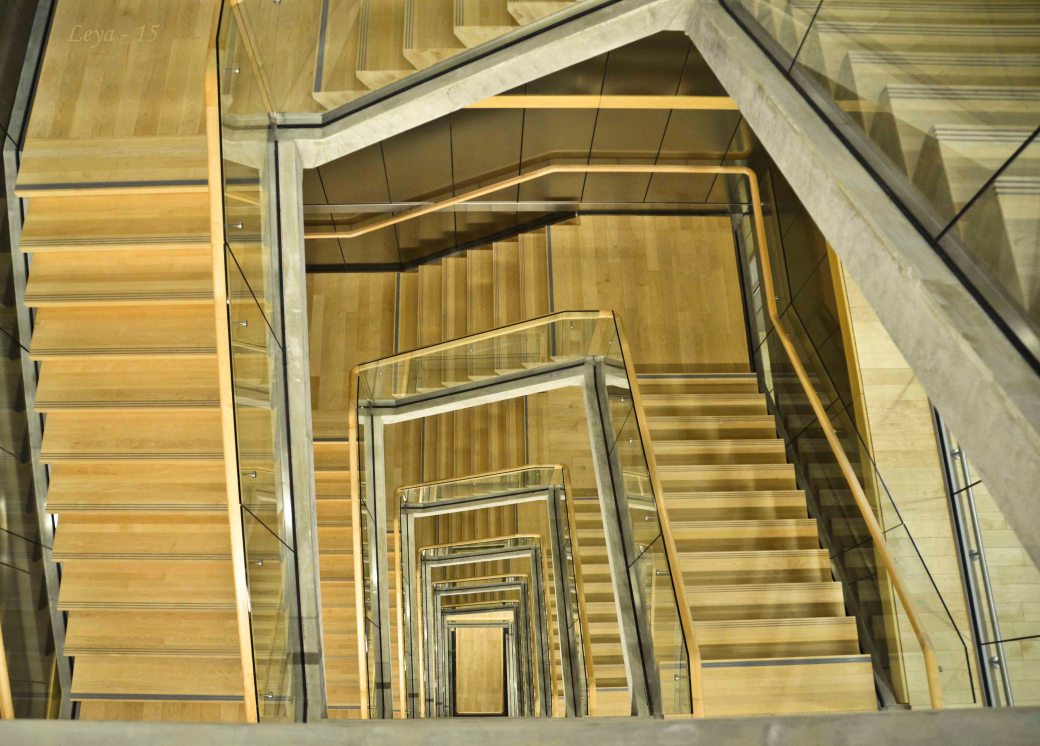
We tried every door on every floor, but no. They were all locked. We saw the children’s books department – but only through a tiny window…the door was locked.

Finally we managed to find one door open. Some students were sitting there, studying. You could hear a needle drop…And, there was something strange about the room. Not the artsy furniture….not the silence…but – look up in the right corner of the photo: There Were Some BOOKS. In a LIBRARY ?- WOW.

In fact, these were the only books we saw and were able to touch in this building…But the view of Old Town was not so bad.
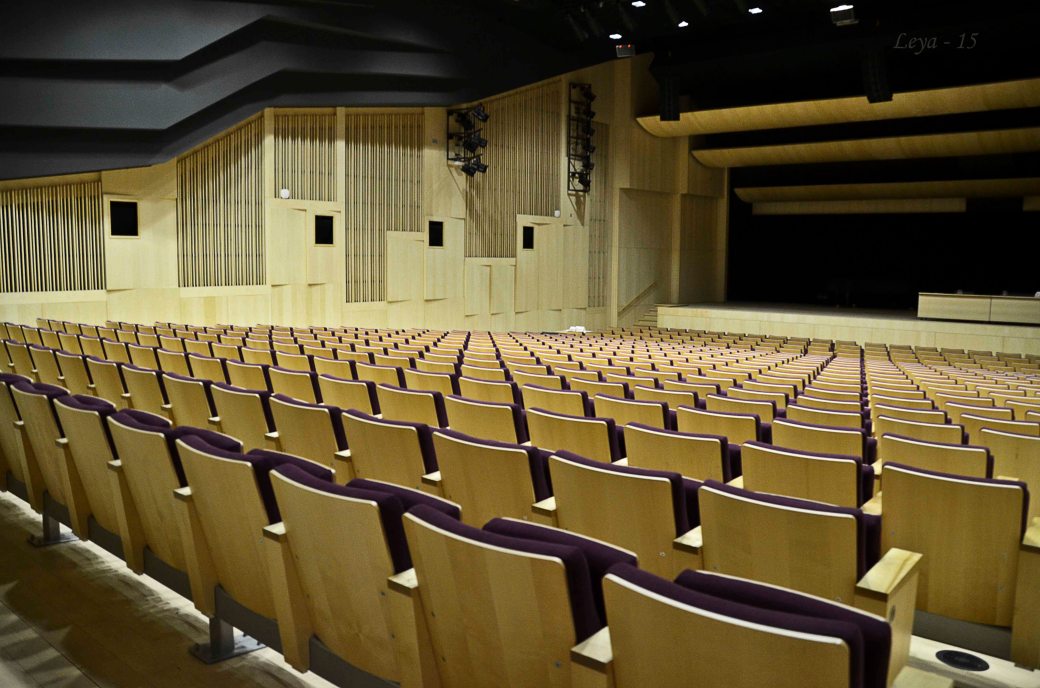
Giving up on the books and about to leave we saw another open door and peeped in. No people of course, but a beautiful aula.
We decided for a last try to reach the uppermost rooms on level 11 and 12. Found an elevator, and a cleaning lady on her way up. No admittance except for guided tours…She agreed on her being our guide and up we went.

This was only for special guests – and no panorama view was possible to photograph because all windows were filled with giant black dots.
As we went down again in the elevator, passing corridors after corridors after corridors…
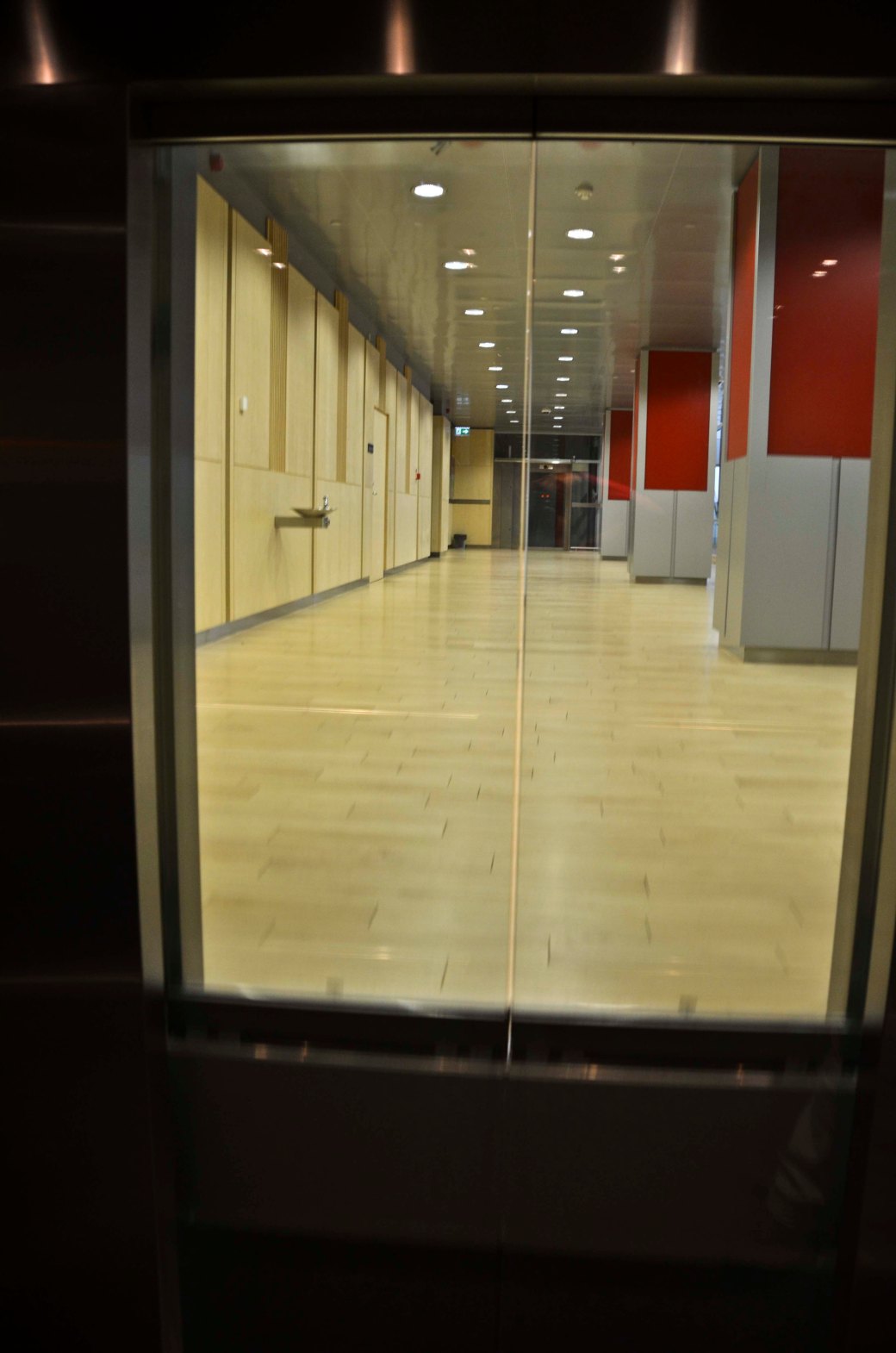
…we talked about how much this reminded of North Korea and the library in Pyongyang. My husband’s pictures in my head, and he could confirm the feeling…
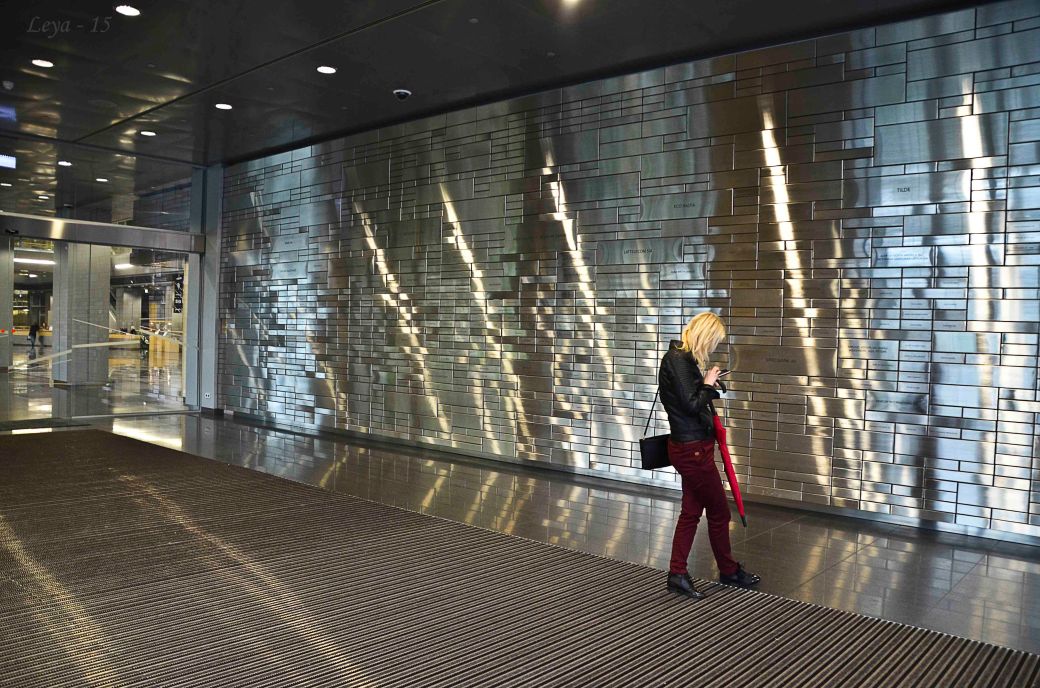
Leaving through the entrance, we agreed on this: What you can do here is enjoy the architecture and the fine materials used – and fiddle with your phone – there is no joy in books or reading visible here…

…as there is in this old ”biblioteka” where there is soul and warmth! A true home for books, readers and the joy of stories.
What do you think? Do you go to the library still? Should it be ”alive” or only for display?
Guarda and Ardez – Pearls of Engadin
This area of great beauty in Switzerland, called Engadin, is stretching from the Maloja pass to Zernez. Here, the language used to be 99% Rhaeto – Romanic, but today only 63% speak this old language.
These two genuine villages, Guarda and Ardez belong to the area of Engadin, and they are both painted in a very special style called Sgraffito (plural graffiti) – in Switzerland found only in Engadin.
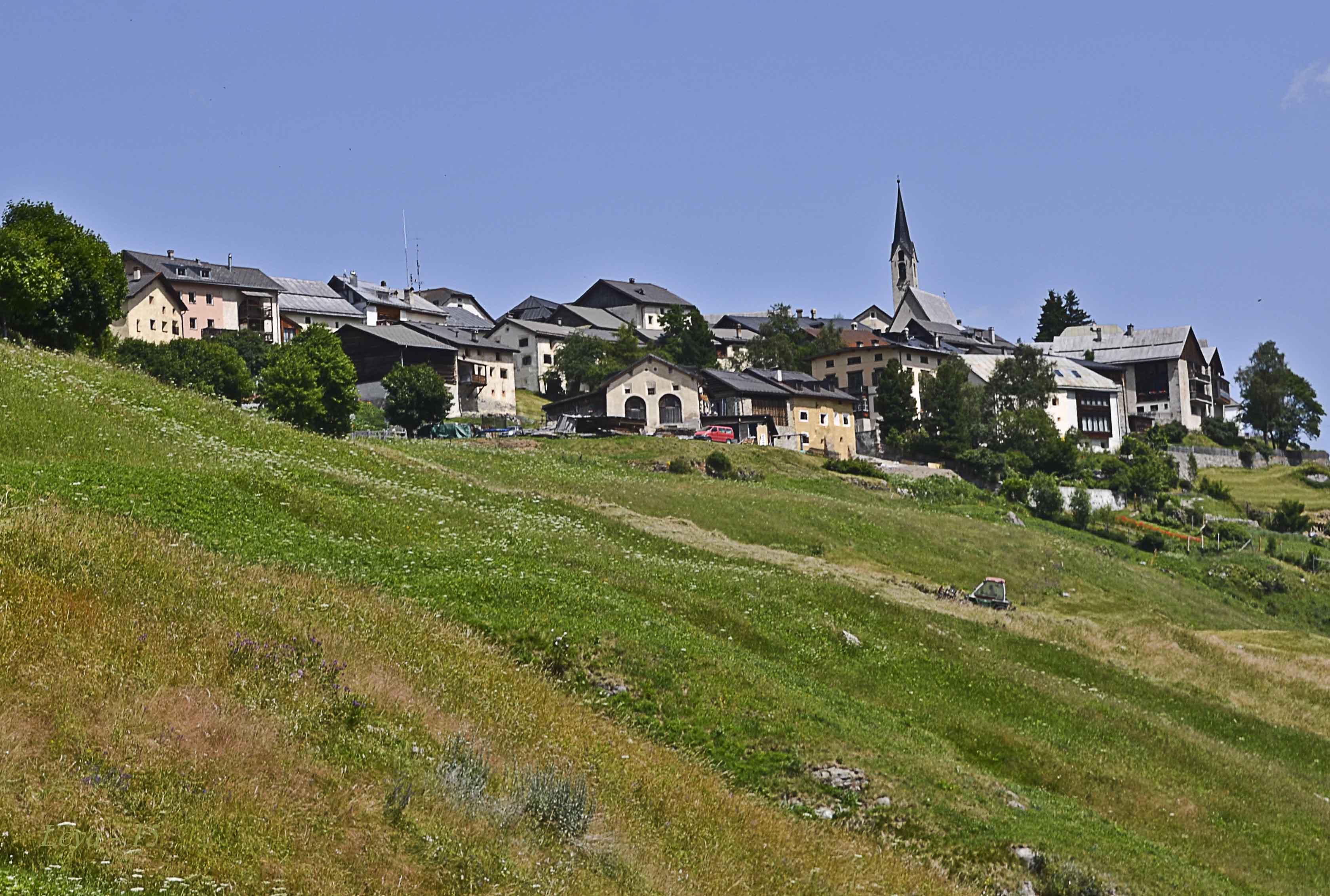
Starting in Guarda, this village is pearched high up on a hill, and the inhabitants don’t want cars driving through the narrow, cobbled streets, so you have to park your car further down the hill and walk up.

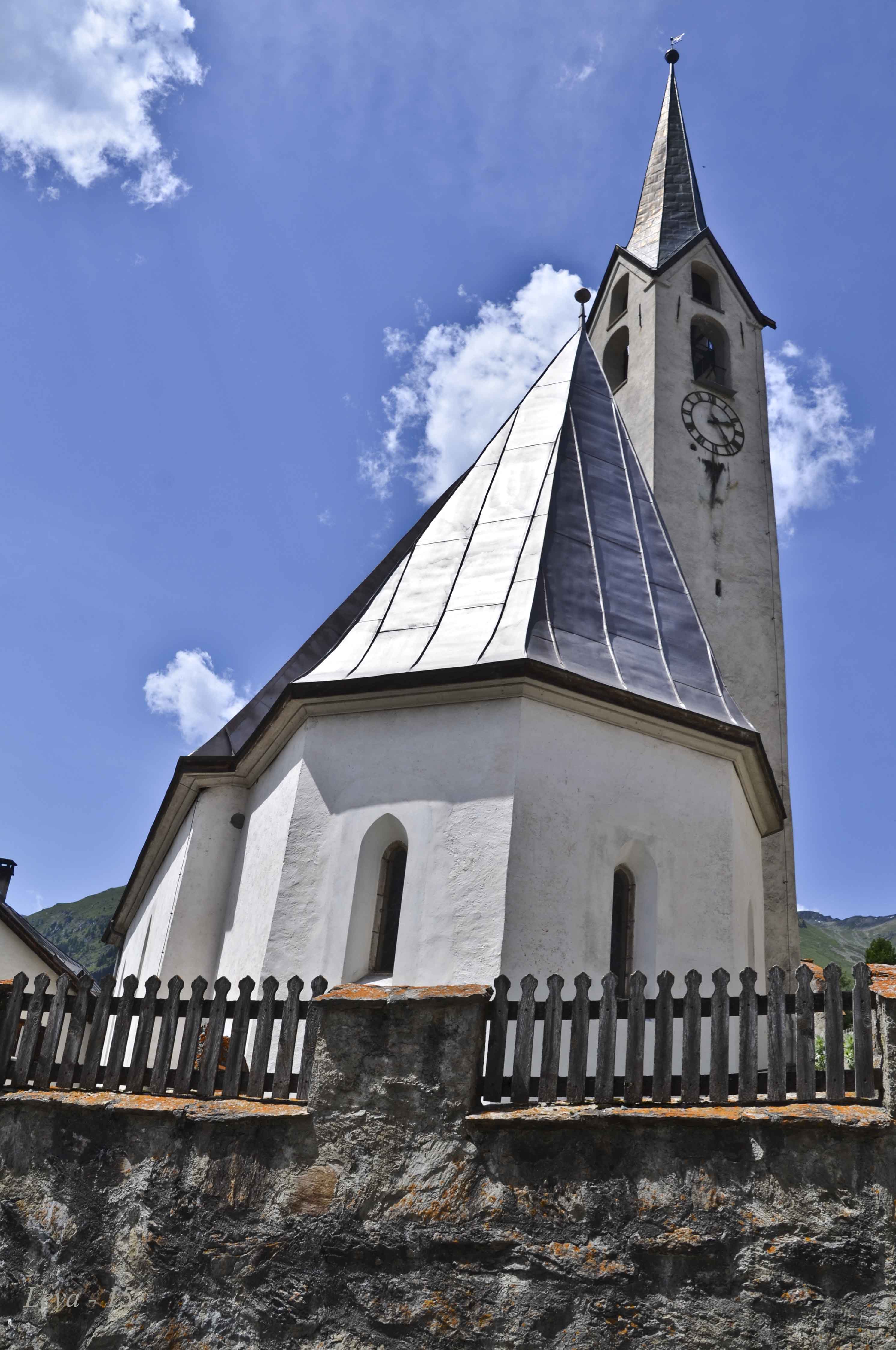
The church is one of a kind.
Almost every house is painted and each in its own special way.
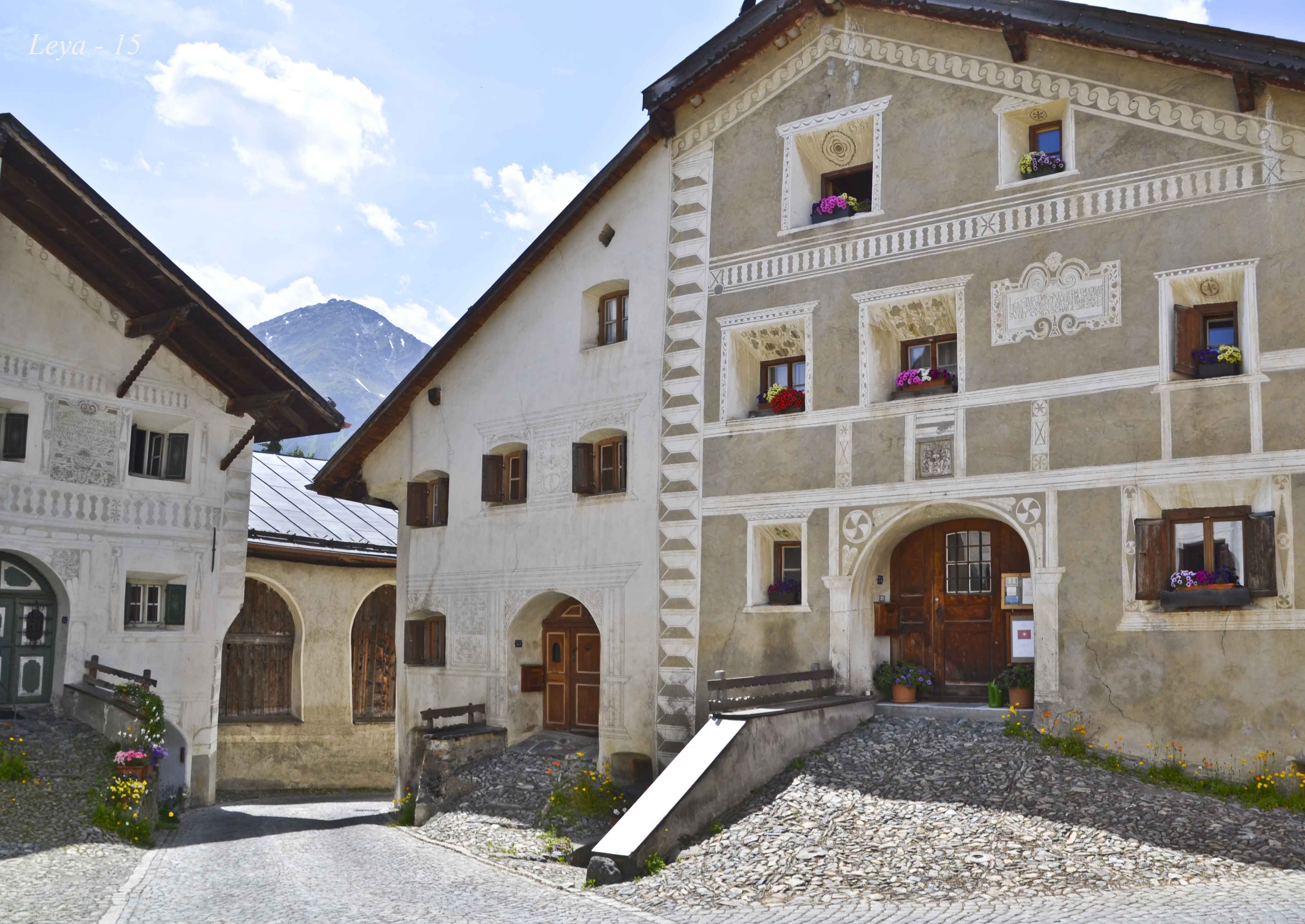
Sgraffito is a technique either of wall decor, produced by applying layers of plaster tinted in contrasting colours to a moistened surface, or in ceramics, by applying to an unfired ceramic body two successive layers of contrasting slip, and then in either case scratching so as to produce an outline drawing.

A closer look will reveal something of the technique.

Sgraffito on walls has been used in Europe since classical times, and it was common in Italy in the 16th century – and, can be found in African art as well. Today there has been a growing interest in this old technique.

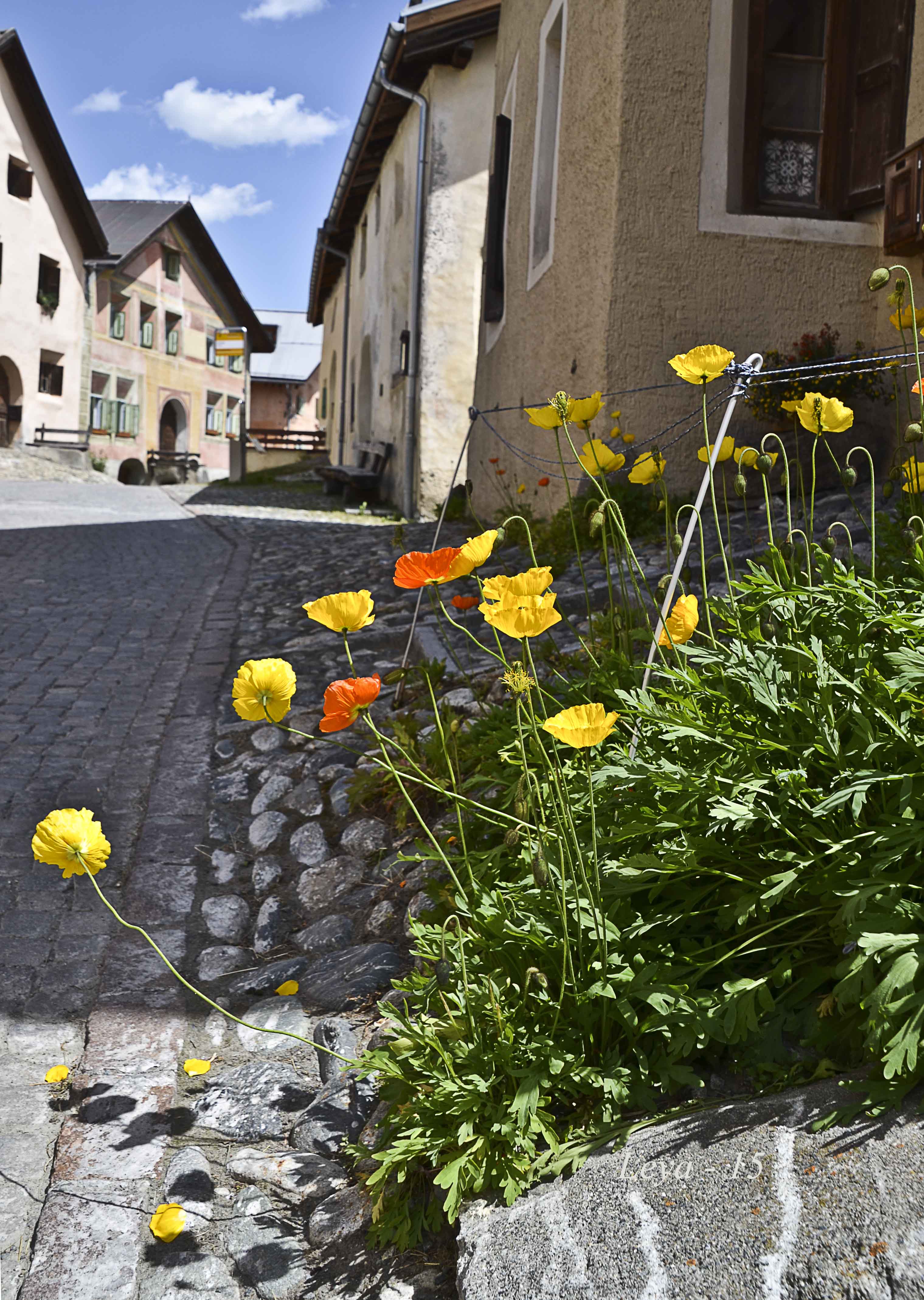
Many houses have spectacular, cobbled paths up to the entrances – I tried to figure out why – but maybe its only something common here.

Beautiful, grand doors…

…and other doors of beauty and solitude.

Guarda is by many people seen as the most beautiful village in Engadin, and it is also famous for its many drinking fountains. Useful this hot day.

No people? Well, due to the heat we were quite alone walking through the village.
 Leya
Leya 
Du måste vara inloggad för att kunna skicka en kommentar.