As so many of you expressed your appreciation over my son’s inspirational desk (Creativity Challenge #42)…I thought I would invite him this Thursday, to share some of his creative work with us. And he said Yes – so – I hope you will enjoy his explorings!
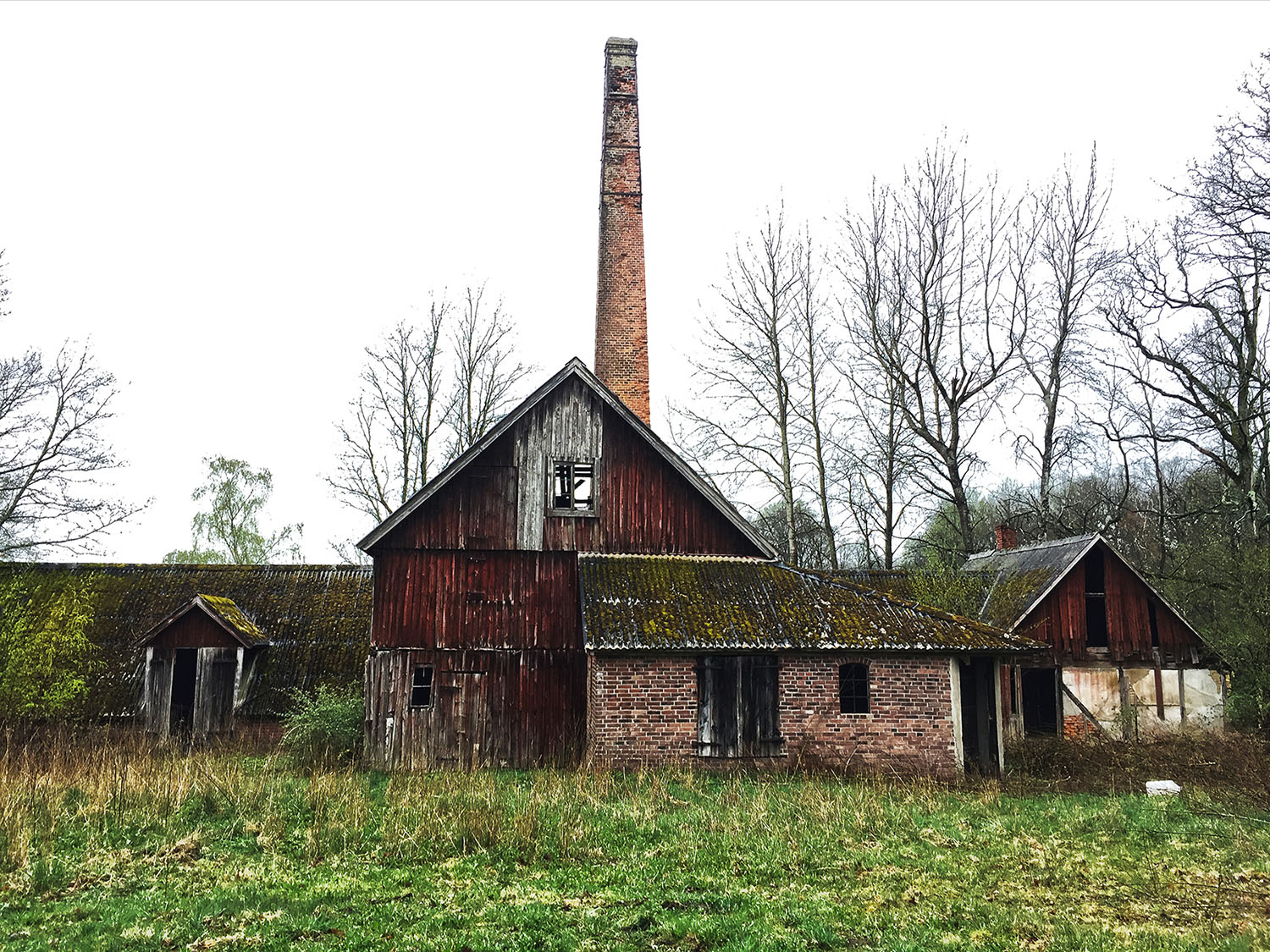
Sösdala Distillery
There lies an old distillery right next to what feels like endless farm fields. One might assume that the farmers grow potatoes, barley or wheat here – since they are all big components in making spirits – especially Vodka.


This distillery, which is considered one of the oldest in Sweden, was built in 1860 – the same year Sweden passed a law against moonshine. At the time, alcohol consumption was becoming a big issue. Some workplaces even offered to pay their workers in home brewed spirits. This law marked an important milestone towards state-regulated spirits, and an overall healthier relationship to alcohol. But on the flipside, it also gave birth to lucrative smuggling from Denmark.

Sadly, the remnants of the production were few. Some barrels could be found, as well as rusted taps and scales. They had some straw beds left, along with a very rusty stove. I’m impressed that the tall chimney is still intact. Though I wonder why they built a square chimney instead of a round one – since the latter is proven to have better airflow.
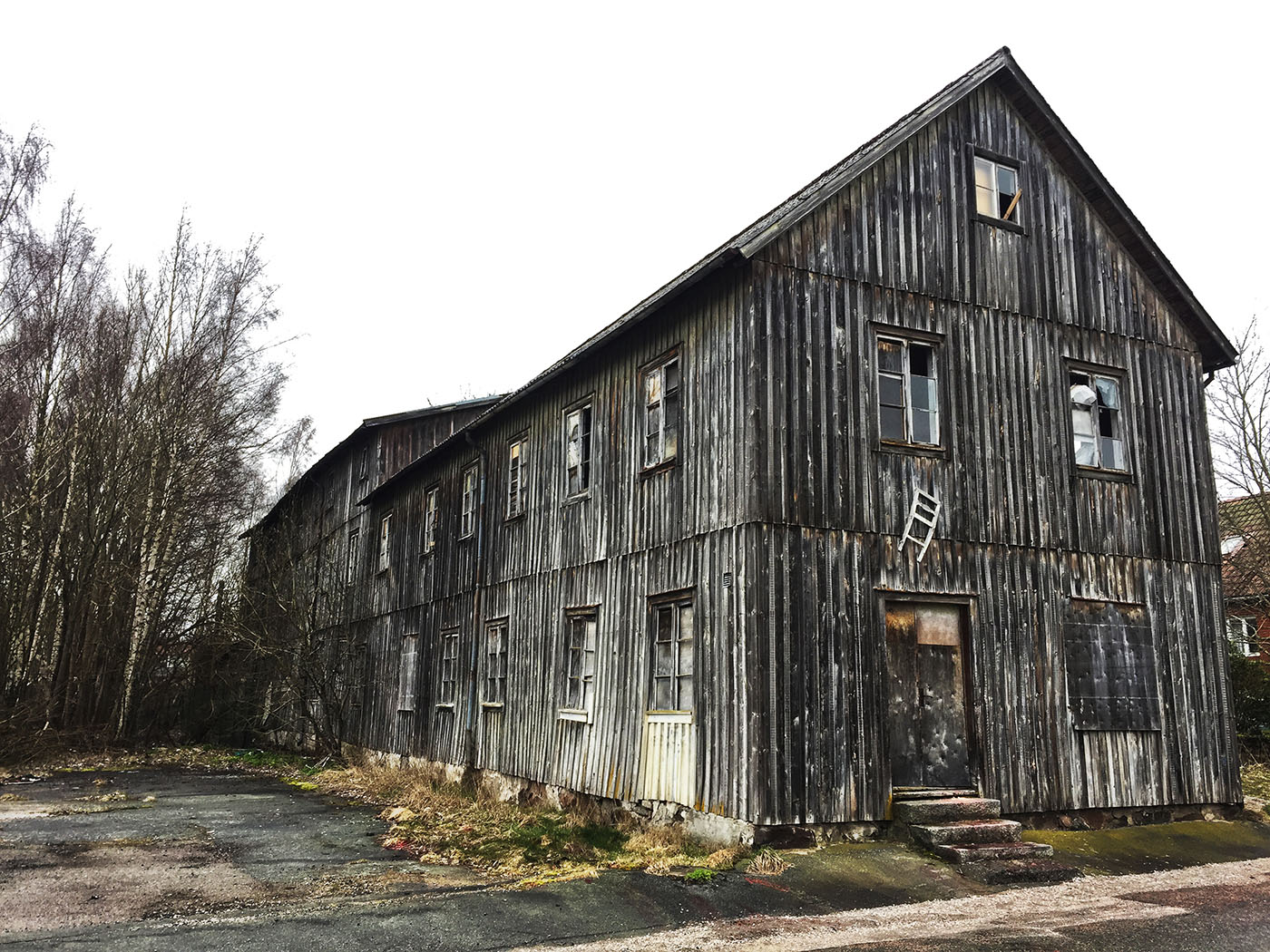
Bjärnum – Mattssons Furniture Factory
A remnant from a time where this little town, located in the southern parts of Sweden, flourished with furniture factories. It was abandoned in 1982 and will soon be demolished to make space for a new housing area. I like to imagine that the craftsmanship within these walls will be decorating households for decades to come – so that even if the factory is no more, their work will live on.
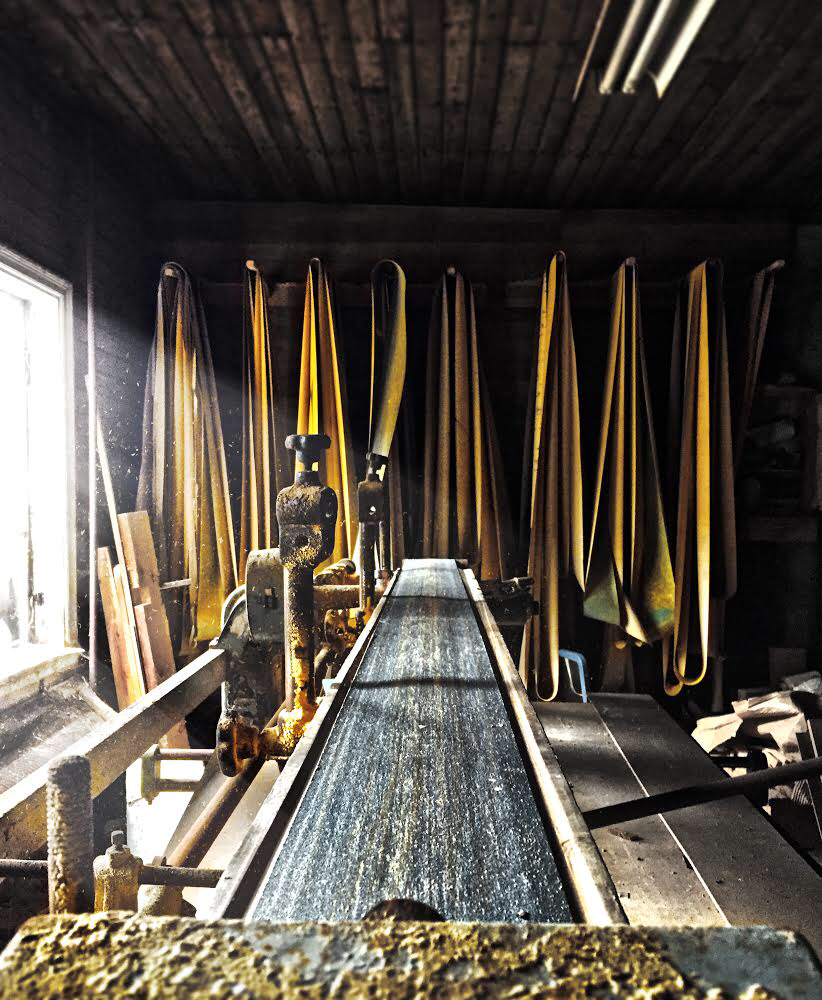
Some of the original machinery is still intact and would probably function if serviced.


The ground floor invokes the feeling of a haunting murder scene due to the red color pigment leaked onto the wooden floor. Every single scratch and mark reveal the countless hours of pacing and activity inside. Scrapings from the wooden joist creating a half moon shape onto the door – which most likely led to a loading area.


Posters and signs can be found throughout the factory. The top one forbids the use of tobacco, while the bottom one is a poster for seminars about ”international issues”. The year is 1933, and the fee for the whole course was 1 Swedish Crown. Today, 2019, that would be 32 Crowns – an interesting way to get a perspective of currency inflation.

The building consists of three whole floors. While the lower ones are filled with machines and tools, the upper floors mostly contain books, almanacs and old photos. Ranging from the 1890s to the 1980s – almost a whole century of history.
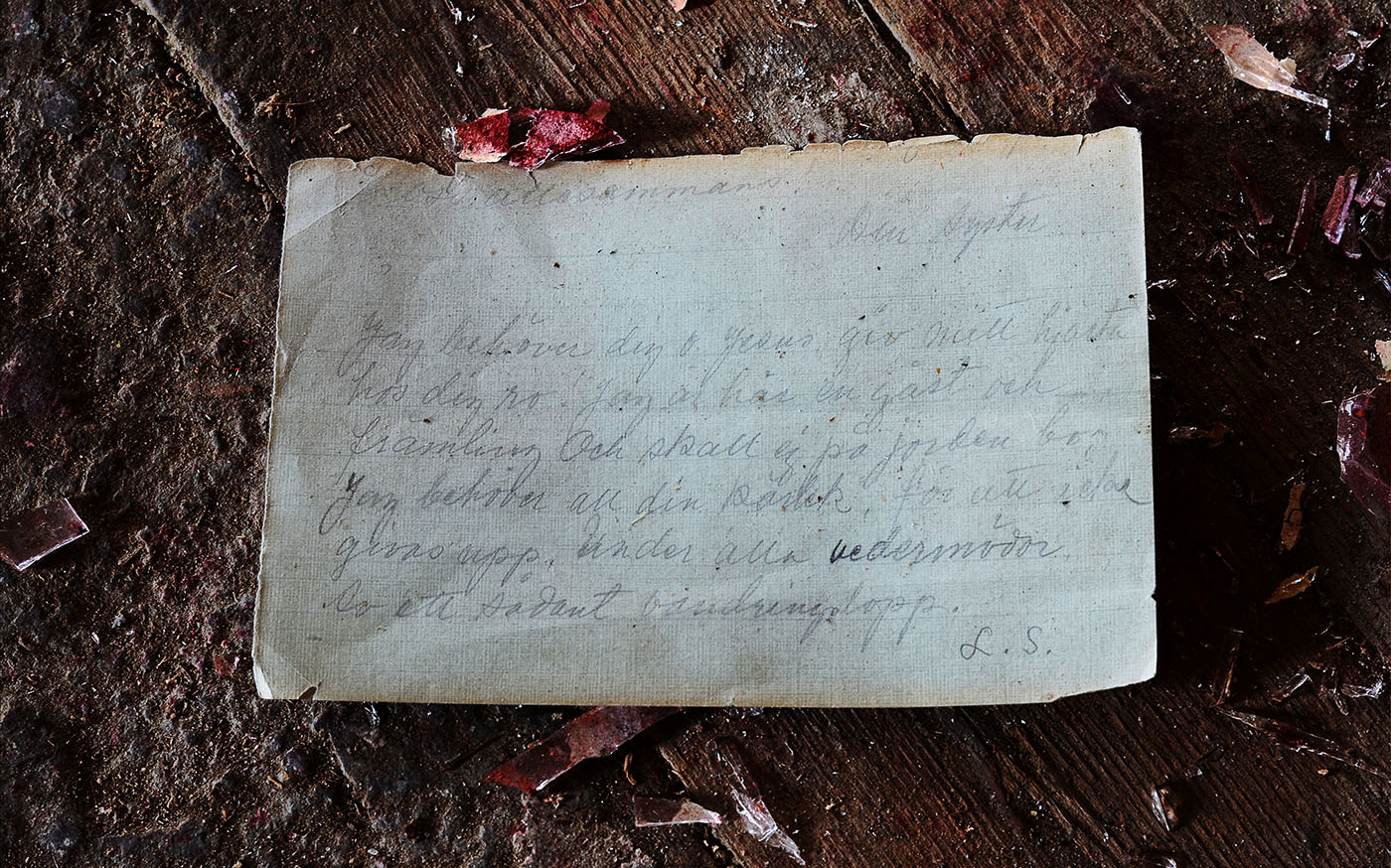
A stack of paper signed ”L.S” is hidden in a desk drawer on the middle floor. Intimate letter correspondence between one of the workers, assumably a seamstress, and her husband who was sent into World War II. We get to invest ourselves in the hardships of past times. The longing hearts of two lovers, separated. Exchanging handwritten words, feelings and prayers.
Urban exploring is an interesting way to experience and learn about history. These places are all forgotten and abandoned. Sometimes they’re just empty shells. I enjoy searching for puzzle pieces, trying to recreate their stories to show the beauty of it all. It’s a way to pay respect to these life stories – and a way for them to be remembered – if only for a short moment in time.
I would like to thank my Mother for this opportunity. This blog is an inspiration for me, and I hope you enjoyed this peek into my thoughts.
Sincerely,
David P


 Leya
Leya 
Du måste vara inloggad för att kunna skicka en kommentar.