Lens-Artists Challenge #394 – History Through the Lens

History plays a big part in all our lives, and John urges us to post some interesting history this week. Please visit his site for wonderful stories and photos!

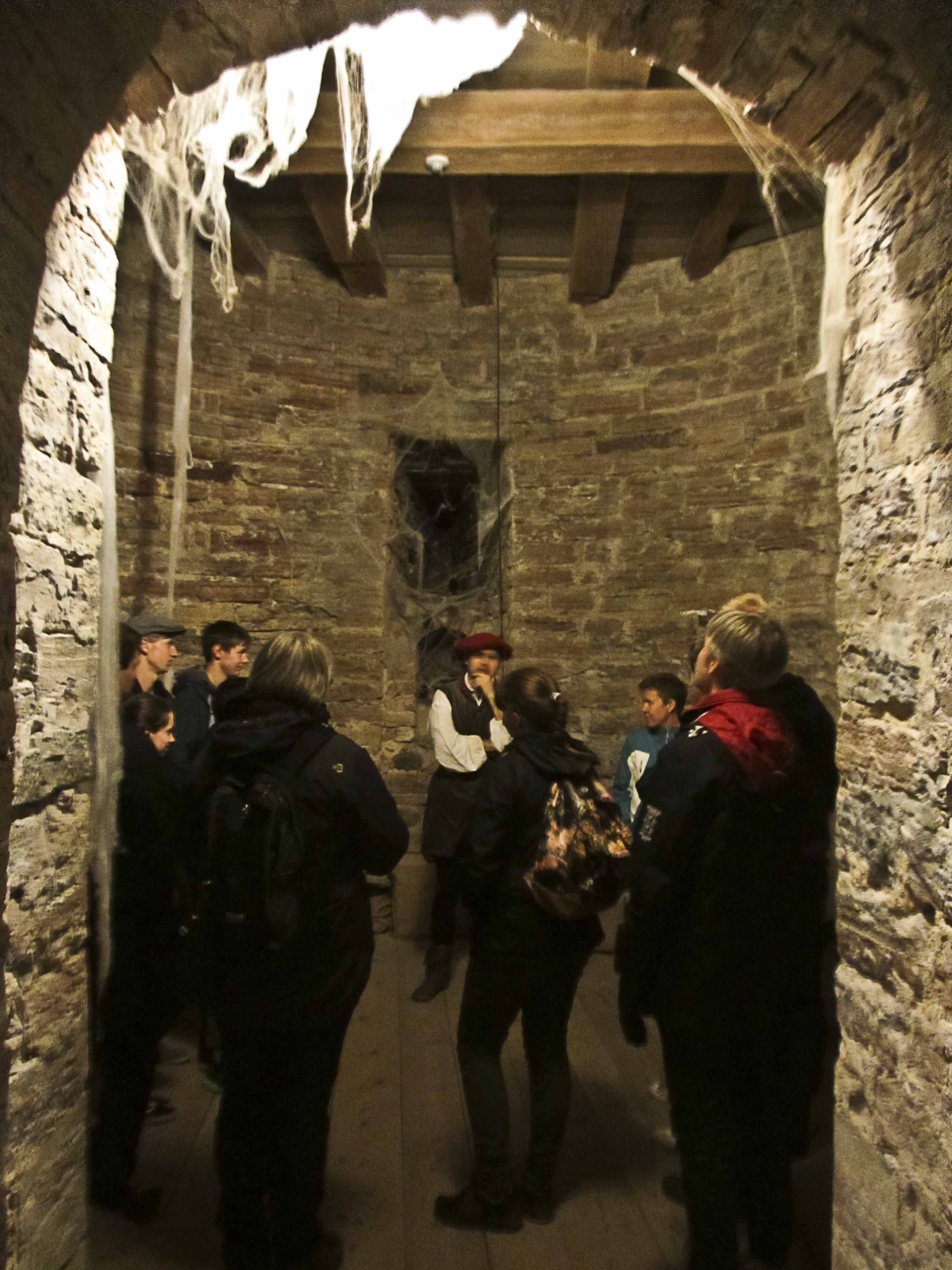
Some years ago we visited Tjolöholm Castle, which is not very old, but contains a great mix of old and new. In many respects it is a fairytale castle, built 1898-1904 by James Fredrik and Blanche Dickson. In fact it was Blanche who finished it, as her husband died shortly after the plans were ready.

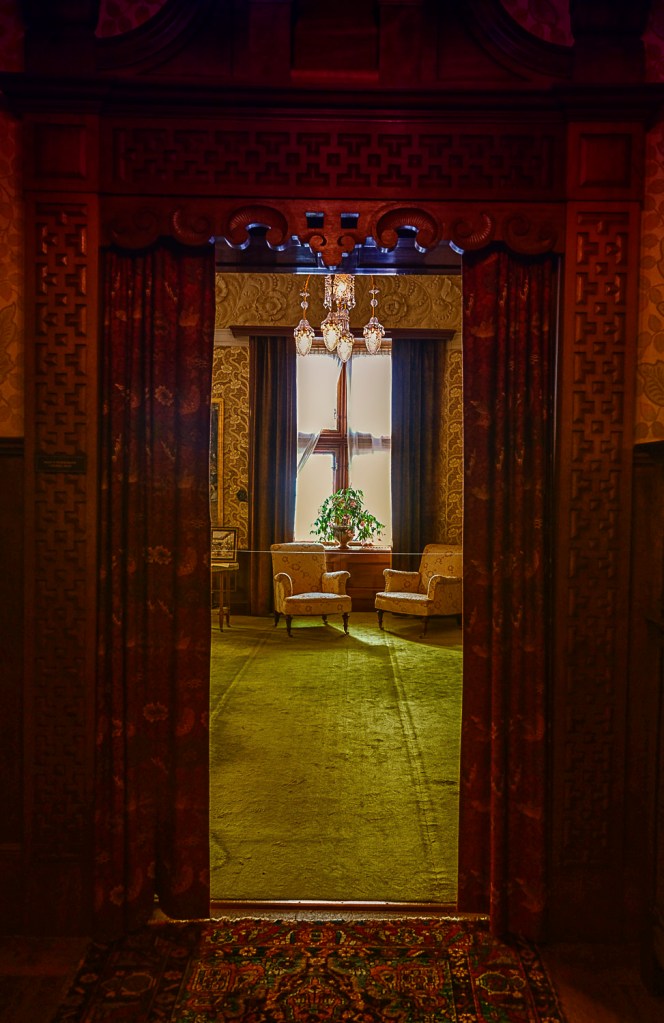
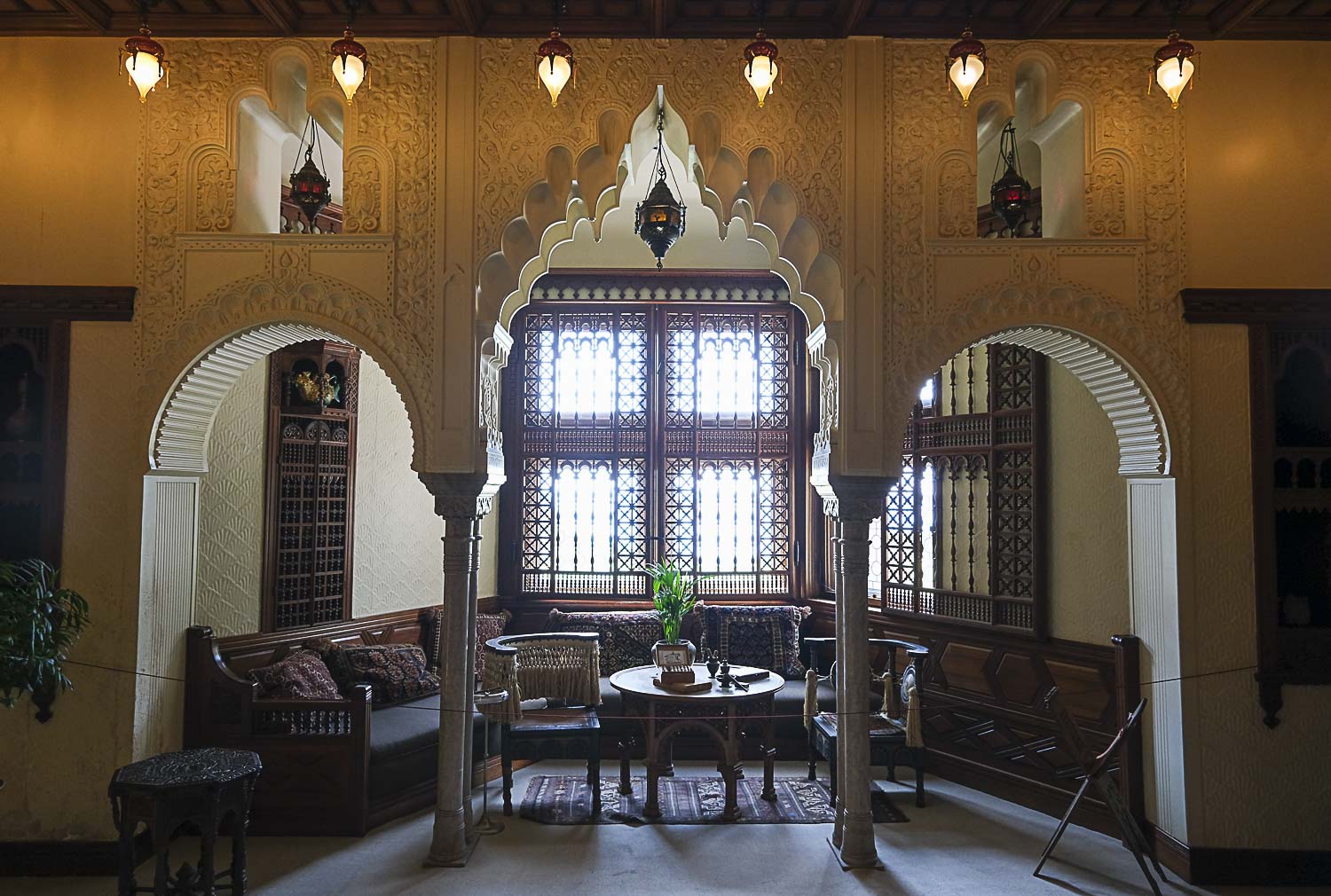
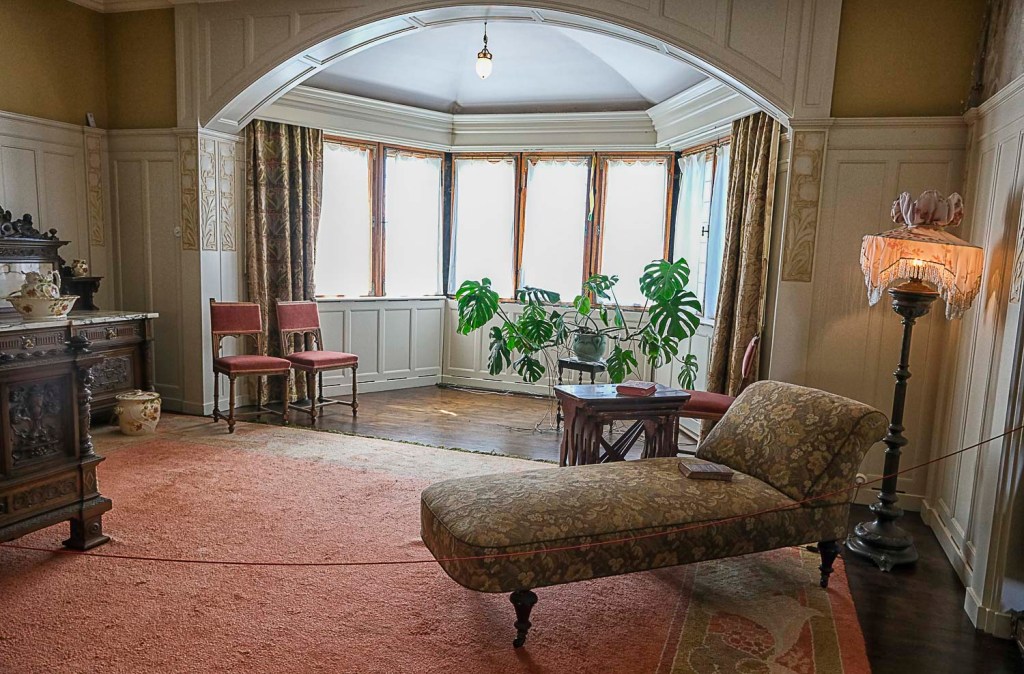
The Dickson family had moved from England and bought Tjolöholm to build a new home. The style is Arts and Crafts, and the whole interior is intact – rather fantastic. The furniture, tapestery and almost everything indoors was bought from Liberty in London – a company that still exists.

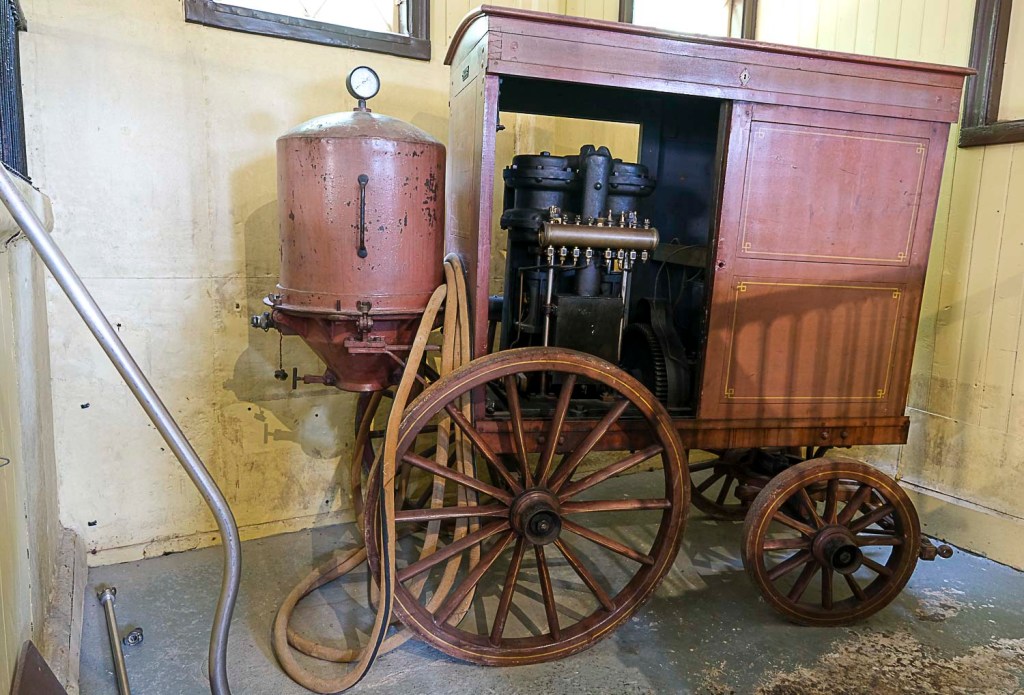
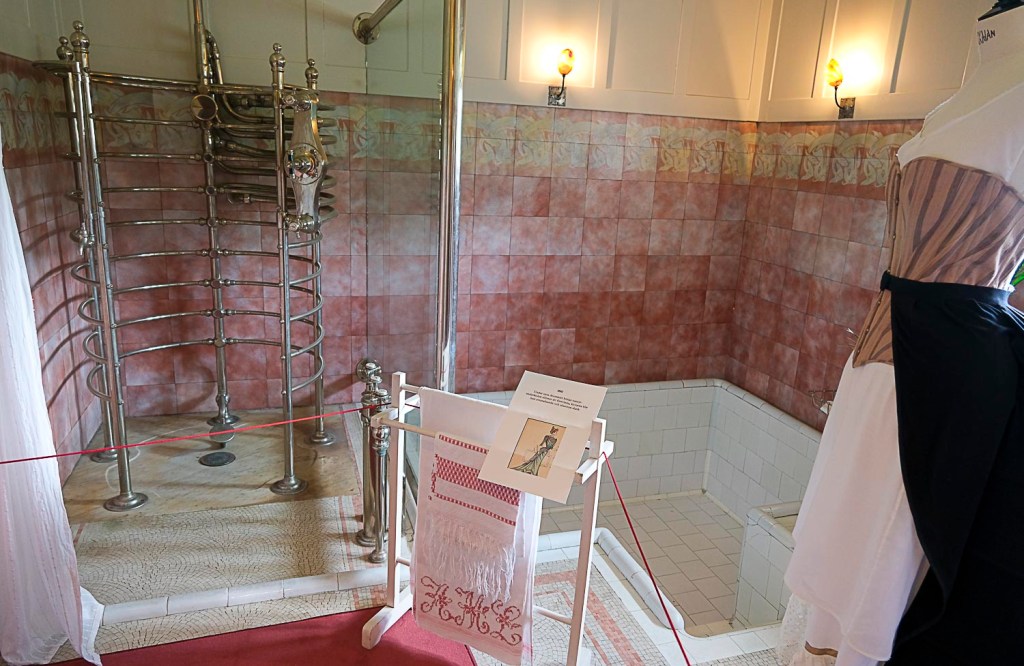
The young architect, Lars Israel Wahlman, combined the Tudor style with modernities from the turn of the century such as showers with circularly flowing water, electricity, central heating, and a vaccuum cleaner (so big and heavy that it had to be drawn by horses). The intention was to create a home that was both comfortable and dignified.
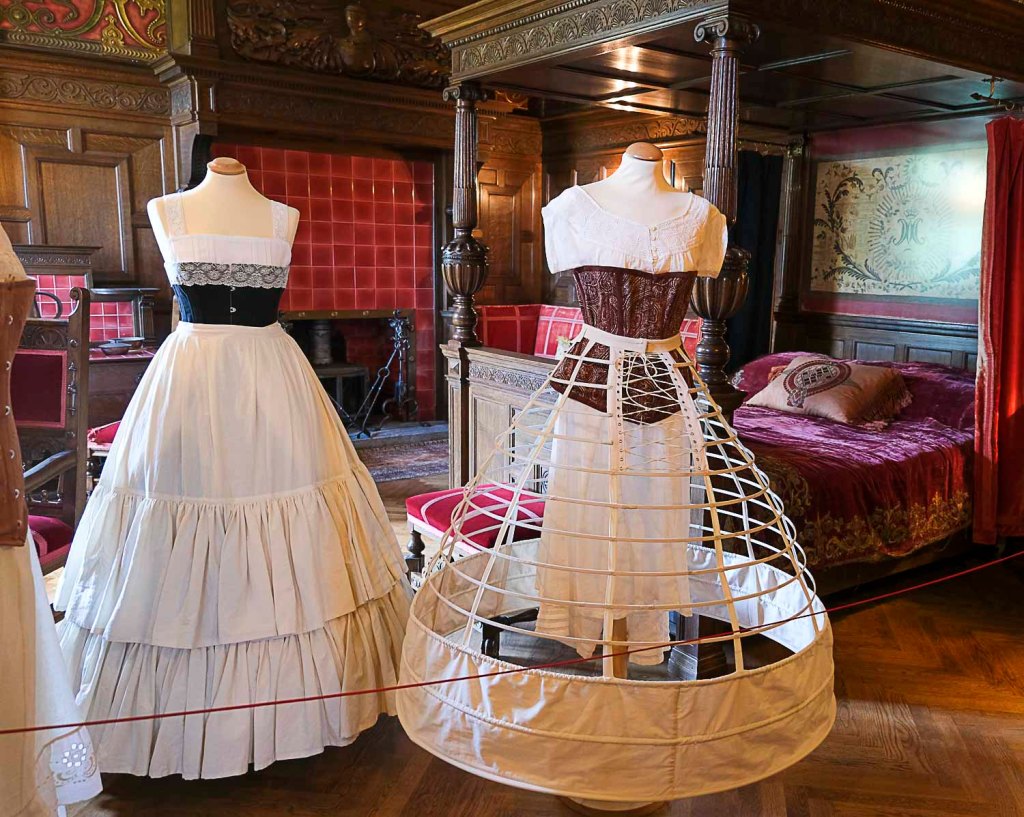
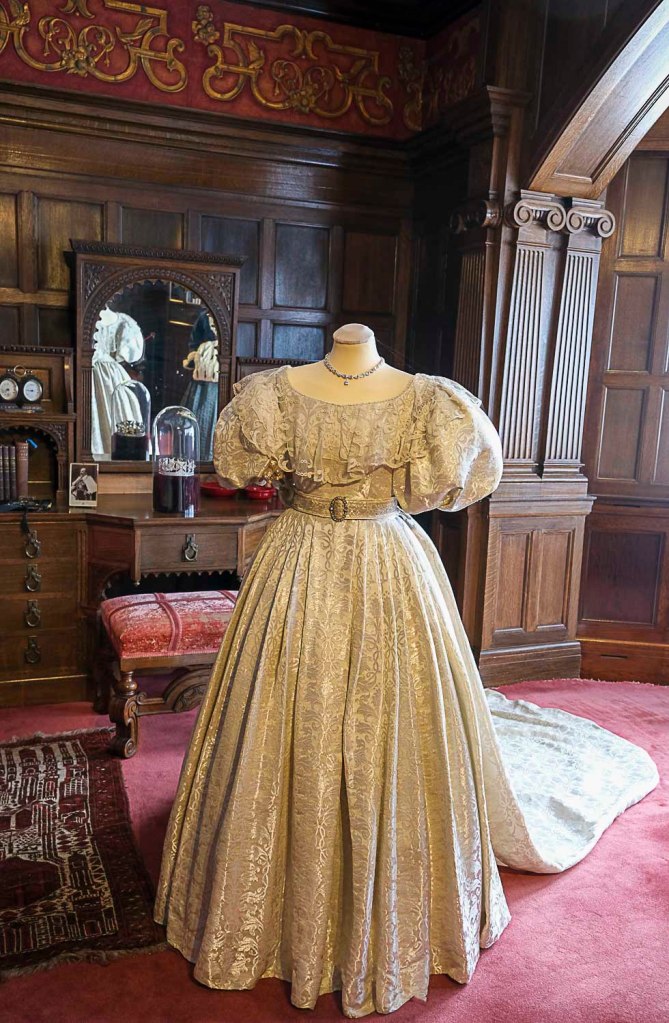
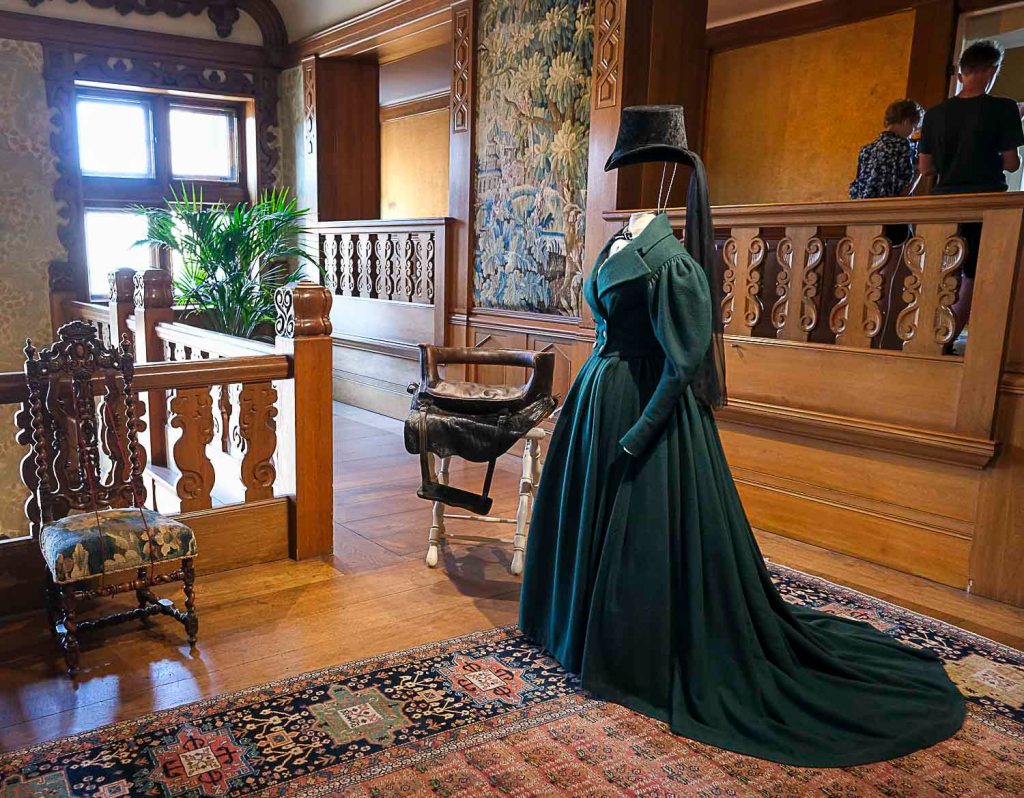
Dresses? One made for side saddle and some showing what to make them all stand out – I can imagine how cumbersome it must have been for women to ride – and walk…

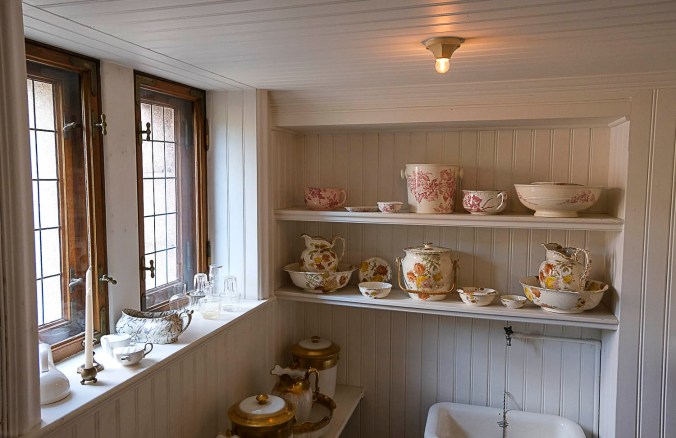
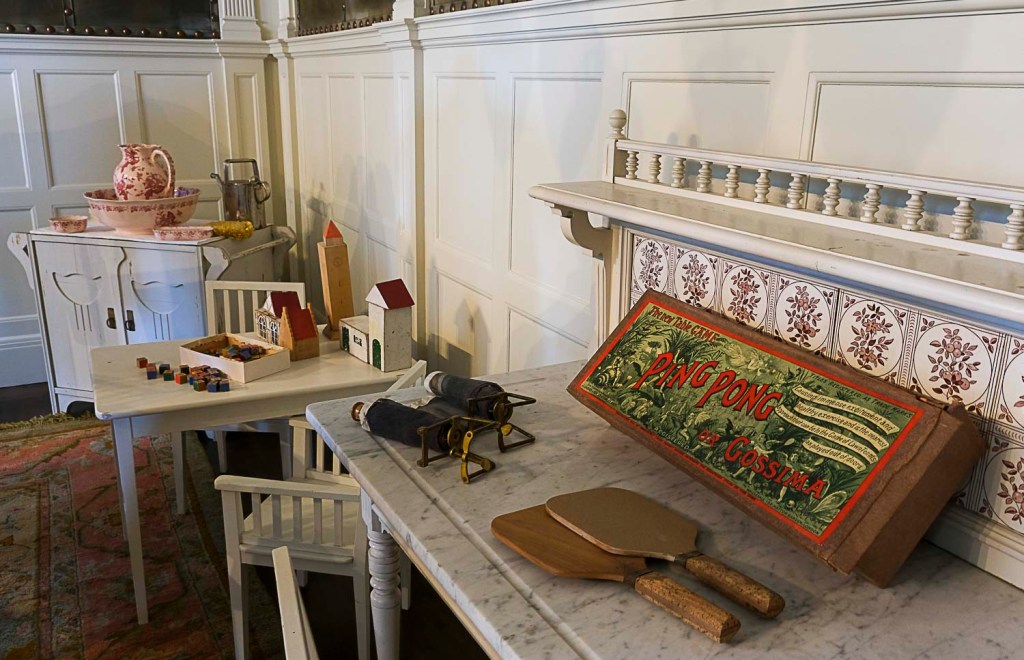
Some of the most impressive ideas and rooms were the bathrooms with the special showers. All ordered from Liberty in London – the worksmen as well! I loved the flower room and the children’s room, where the vases and the toys still stood waiting.
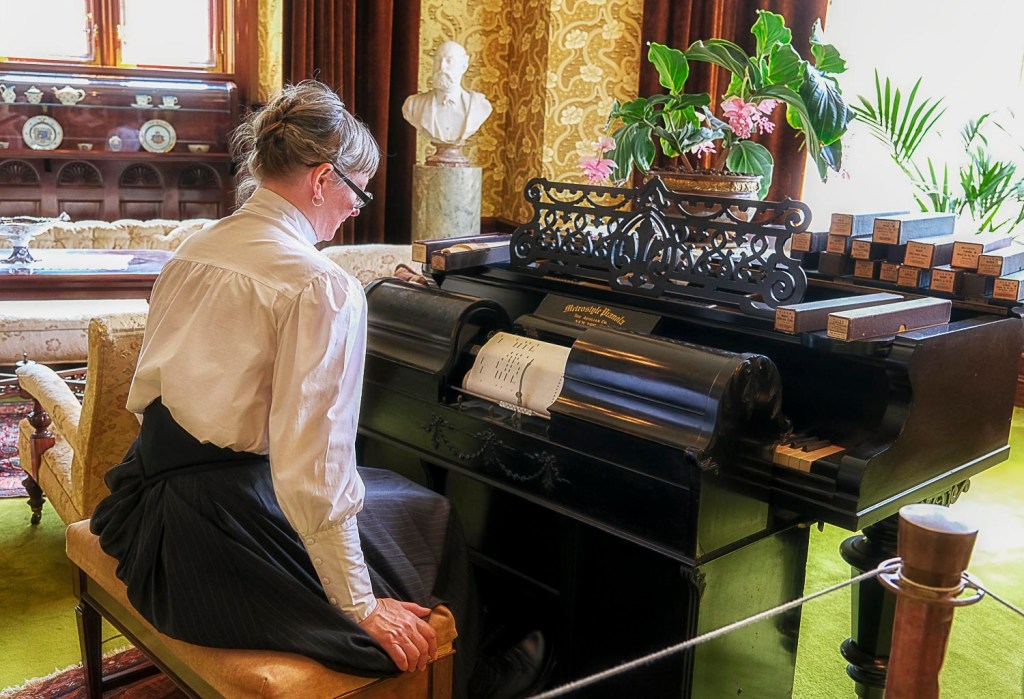
The player piano or pianola to the left, is one of the last existing, working pianolas. The many boxes on top of it contains pieces of music for the instrument. The last picture shows the quite elegant vaccuum cleaner…

At the back of the castle waited a wonderful garden, English style of course. Well worth a visit. And it contained one of my favourites – this white thistle – like beauty.

There is a famous history of these flowers as well, Eryngeum giganteum, often called ”Miss Wilmott’s Ghost”. Ellen Ann Willmott (1858-1934) was a trailblazer in the male dominated world of horticulture, she challenged the gender roles and redefined what women could achieve in science and art. She won the Royal Hoticultutral Society’s Victoria Medal of Honour for her work.

The flower then? Well, they say Miss Wilmott used to carry seeds from this plant in her pocket, scattering them secretly in gardens she visited.

Thank you to Sofia for last week’s wonderful Lucky Shots – many smiles and wows! Lucky shots certianly play a big role in what we catch with our lens. Next week, it’s Beth’s turn to host. Be sure to follow her [here] so you don’t miss her challenge that goes live on Saturday at noon Eastern Time.

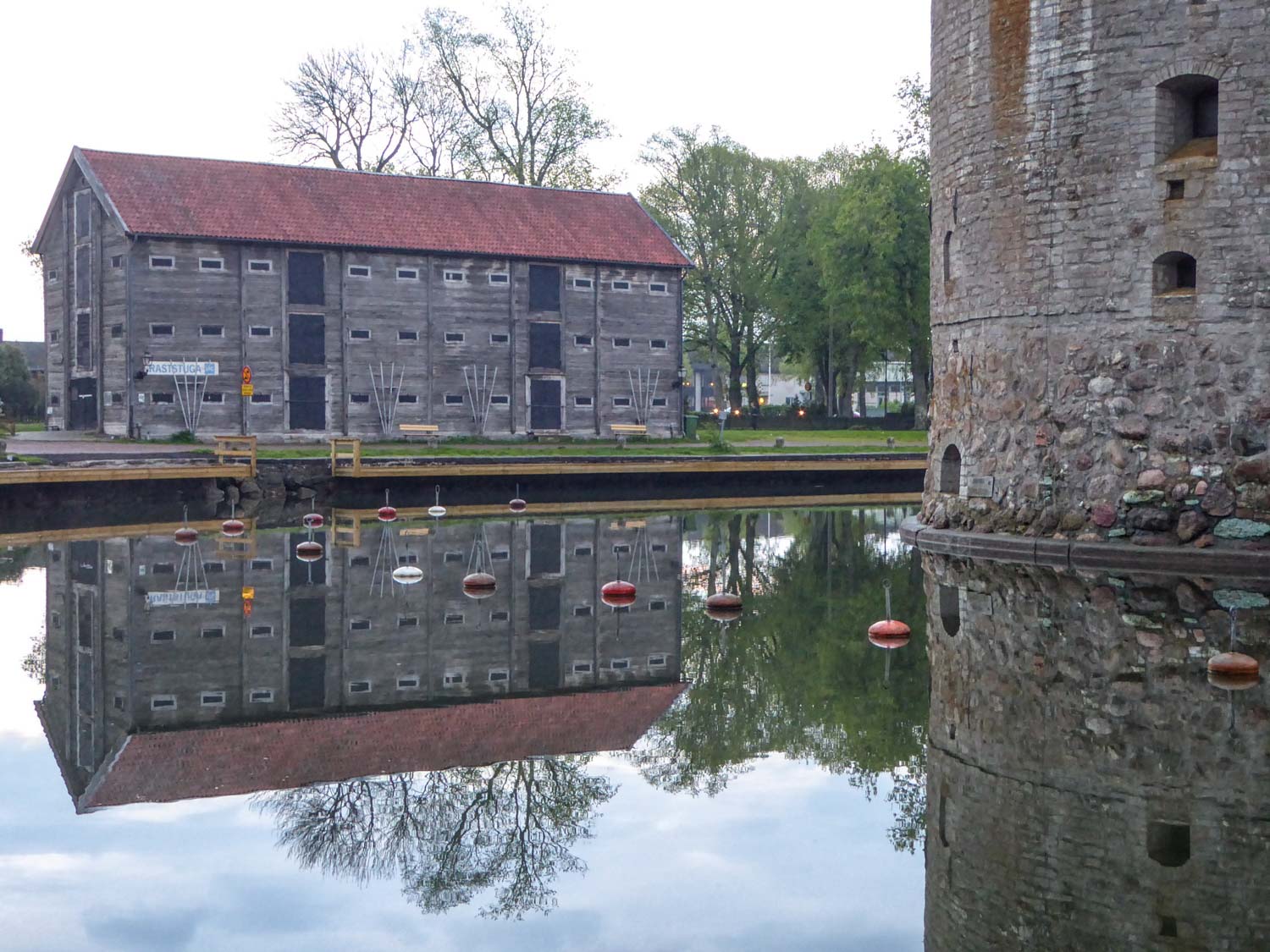
Vadstena – Castle and Abbey – A One Day/Night Stay

Vadstena Castle was originally built by King Gustav I in 1545 as a fortress to protect Stockholm from enemies approaching from the south. Indeed it looks massive and strong today as well.

By 1620, when the castle was completed, all the kings of the House of Vasa had contributed to its construction. Since 1620, the castle has been very well preserved, and is one of Sweden’s best examples of Renaissance architecture.

In the fog and greyness, it looks stern and almost hostile – but in the evening sun, I could almost imagine a Cinderella somewhere…

P1130419-Redigera

Vadstena Abbey, close by, was the motherhouse of the Bridgettine Order. The abbey started on one of the farms donated to it by the king, but the town of Vadstena grew up around it. It was active from 1346 until 1595, but there are still a handful of nuns here.

The castle on the left hand side and the abbey on the upper right hand (The red dot: Här är du!)

The Abbey is now turned into a hotel – and a beautiful one. The different houses decorated in different styles, and we stayed at ”The Castle Villa” in Jugend style.

We had breakfast under the old vaults,  and I had some difficulties in resisting the pots for sale. Swedish design inspired by China.


WPC: Weathered

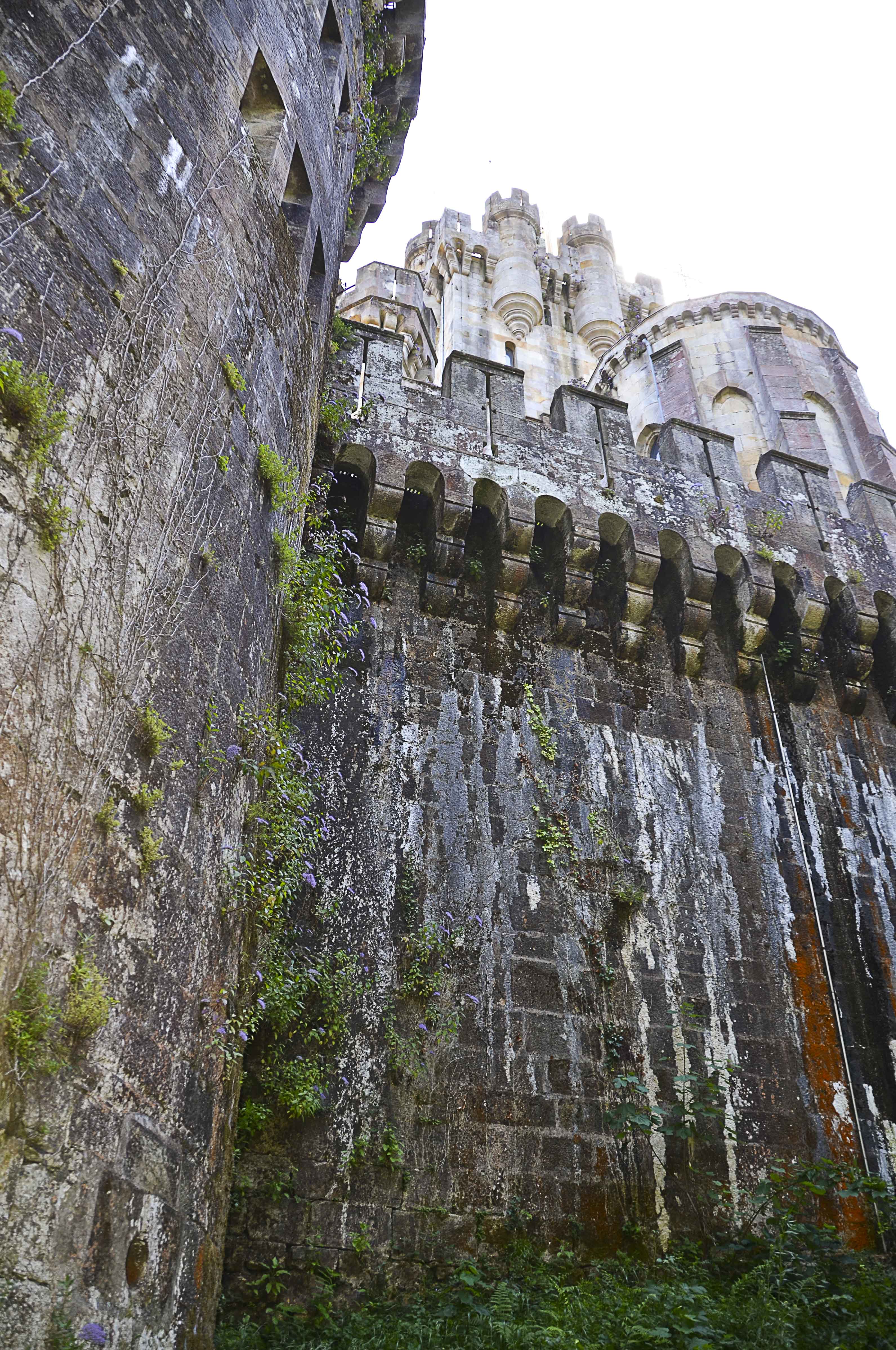
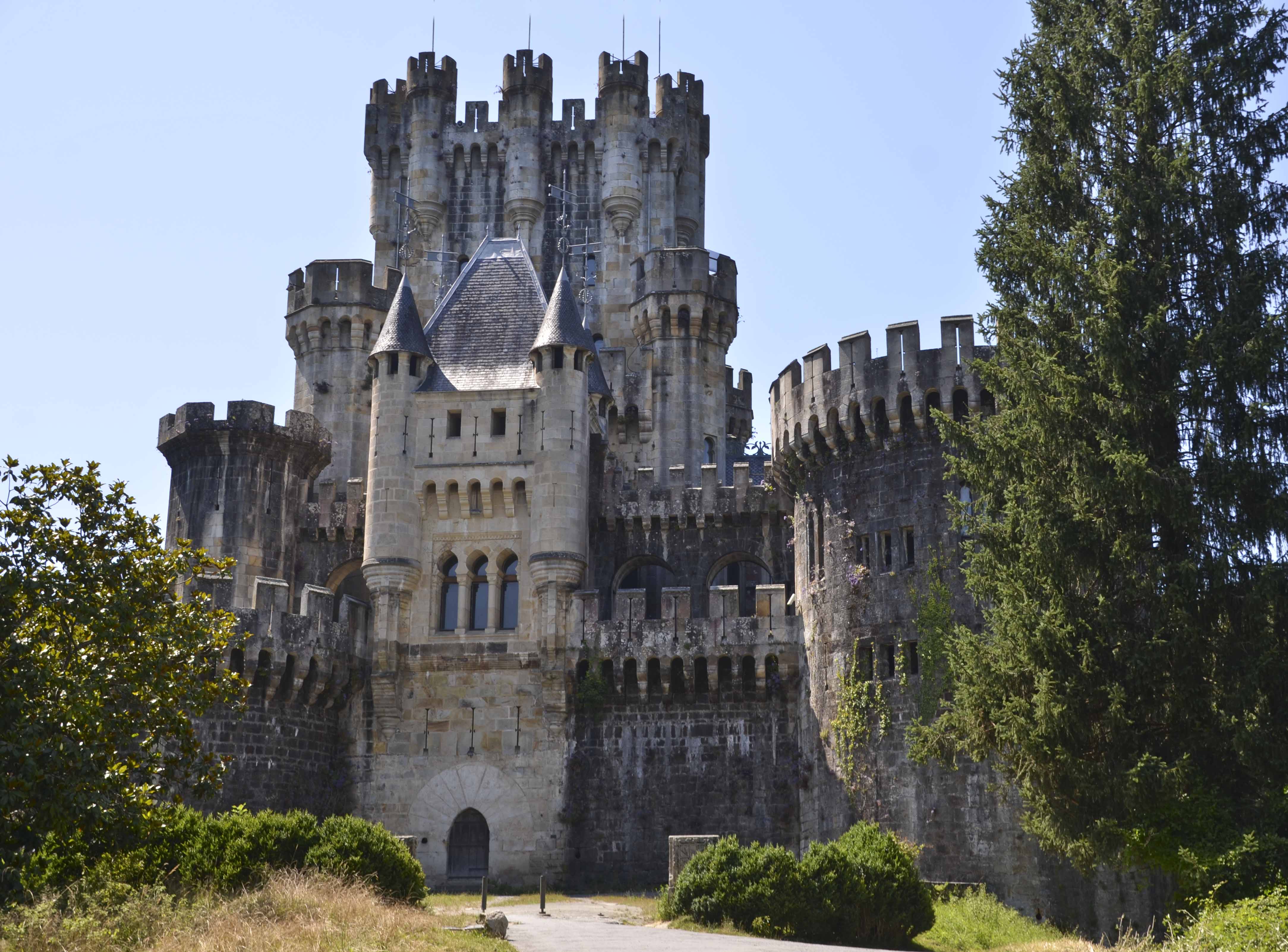
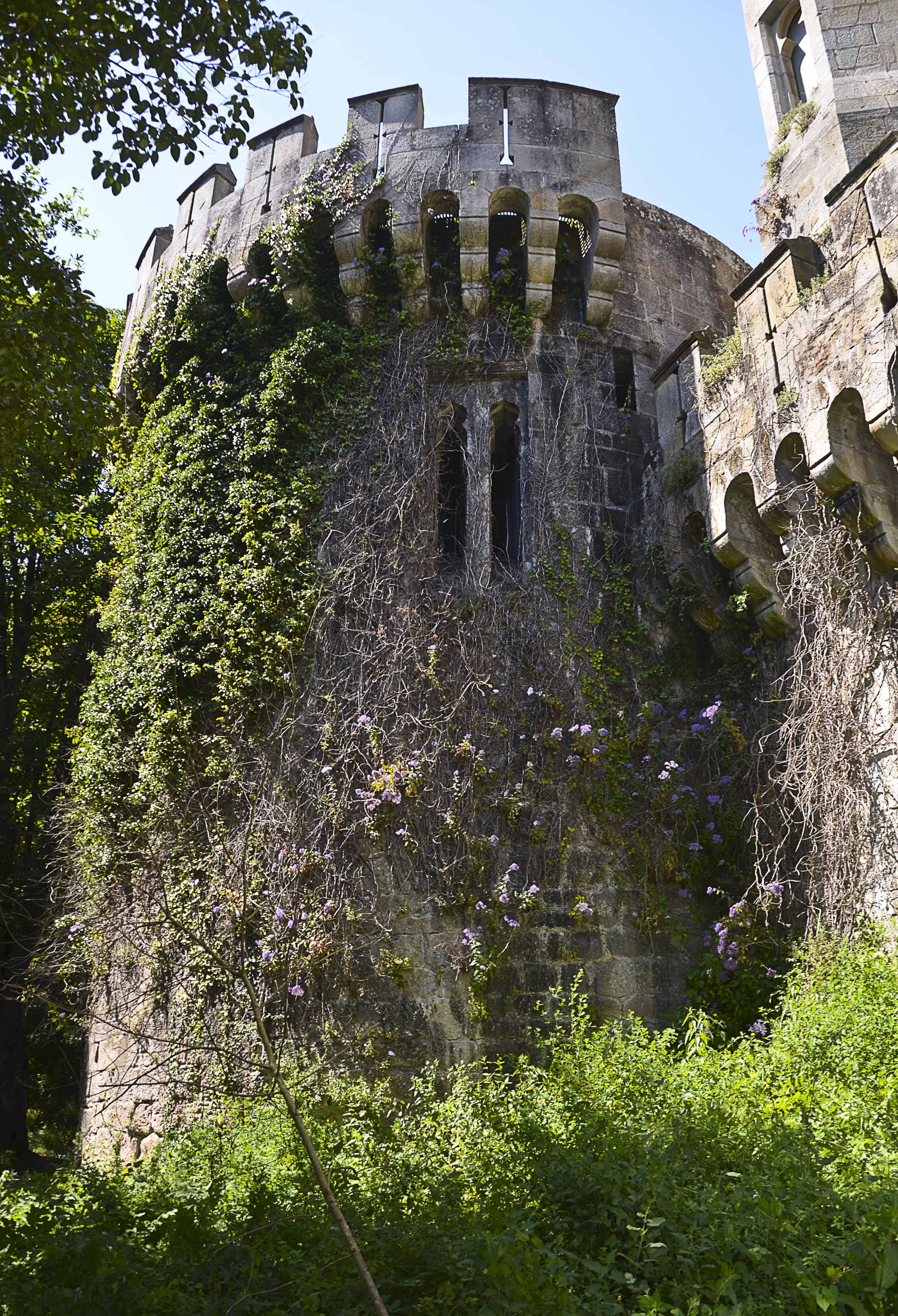
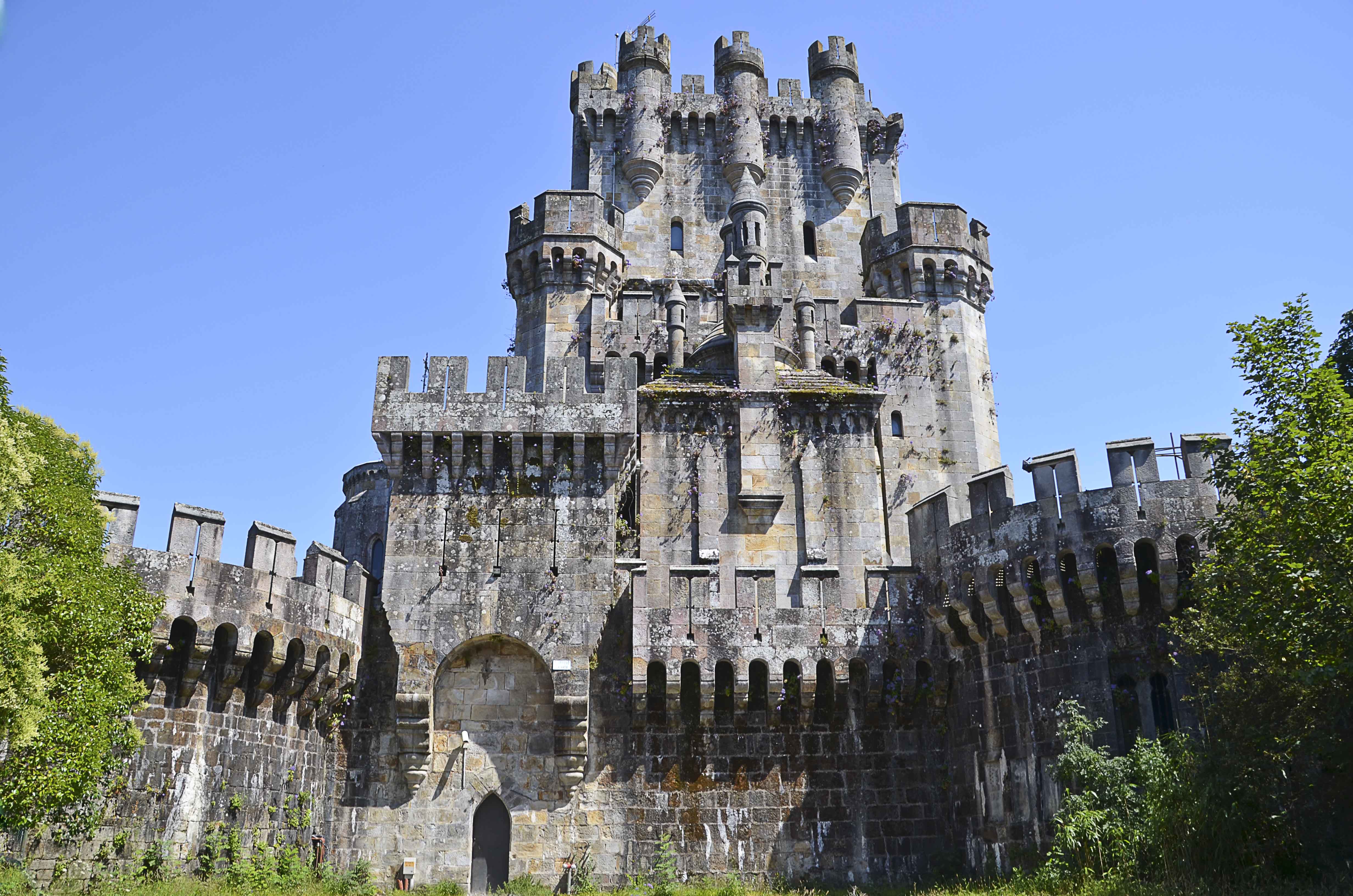
This weathered Castle we found in a forlorn place in the Spanish countryside. We saw the pinnacles sticking up from the treetops and headed for it. A fairy tale castle!


Thursday Thoughts – The Fairy – Castle

We were driving along the road from Bilbao to visit Gernika this day, when suddenly, out of nowhere, without any road sign – we saw the pinnacles above the dense forest. A castle. This castle is located in Gatika, in the province of Biscay, in northern Spain

We turned left off the road and decided to have a closer look at it – and after some twists and turns of narrow roads – we found it.

The castle has a fairy-tale look about it, and as we started walking around it, we realised that the place was abandoned and nobody lived there. Further down the road we found pictures of knights and horses, together with a closed down, dilapidated café. The premises had probably been used for games or jousting.

A look at Wikipedia tells us that the present building was created as a hobby for its then owner and to create something visually spectacular rather than to produce something for people to live in. ” In fact it would be quite inconvenient as a home as the towers have little useful space and various parts of the castle have exterior connections which are not particularly apt for the wet Basque weather.”

The building is surrounded by an overgrown park which includes palms and exotic plants. We thought the forlorn castle must be totally unknown, but in fact it seems this is not the case…As any other little girl,  Kate Middleton’s dream once was to get married in this fairy tale castle. (Said in a BBC interview with David Ferald.)

Back in Bilbao again in the evening, we learned from our host that the castle is named Castillo de Butrón . (He even had a painting of Butrón on the wall.) It dates originally from the Middle Ages, although it owes its present appearance to an almost complete rebuilding, inspired by Bavarian castle models, begun by Francisco de Cubas (also known as Marqués de Cubas) in 1878.

The castle fell into disuse, was later renovated and opened again, but the building was finally closed to visitors although the grounds remained open.

In November 2005 the building was purchased by INBISA (Grupo Empresarial) for about 1,6 million euros, but it remains under the general protection of Spanish law in respect of historic buildings in Spain.