Neutral colours in a neutral Moroccan landscape…go look for details at Ailsa’s!

Neutral colours in a neutral Moroccan landscape…go look for details at Ailsa’s!
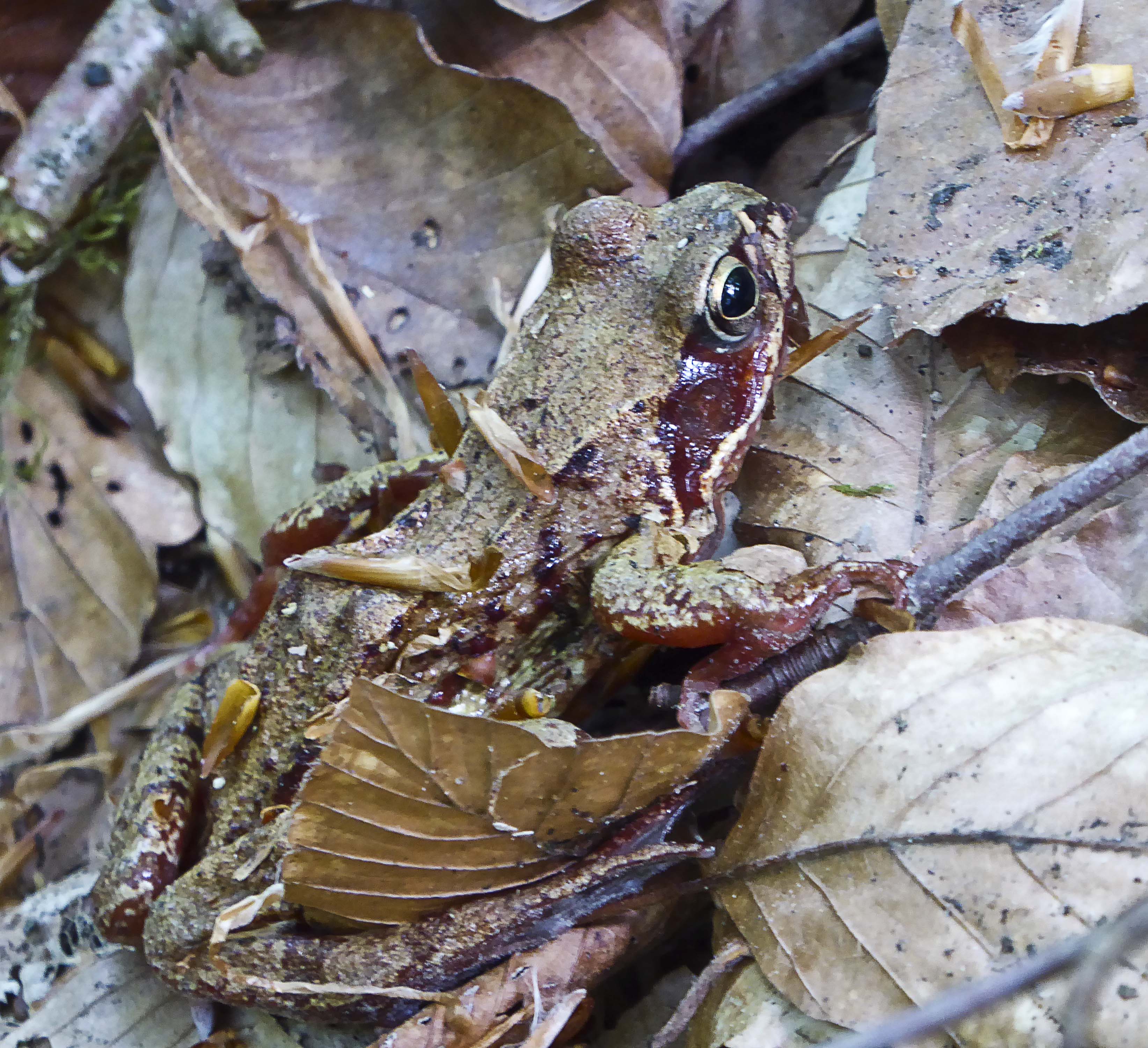
Do you want to feel safe? Are you in some kind of danger? If you want to live a good life, you might have to blend in. At least sometimes.
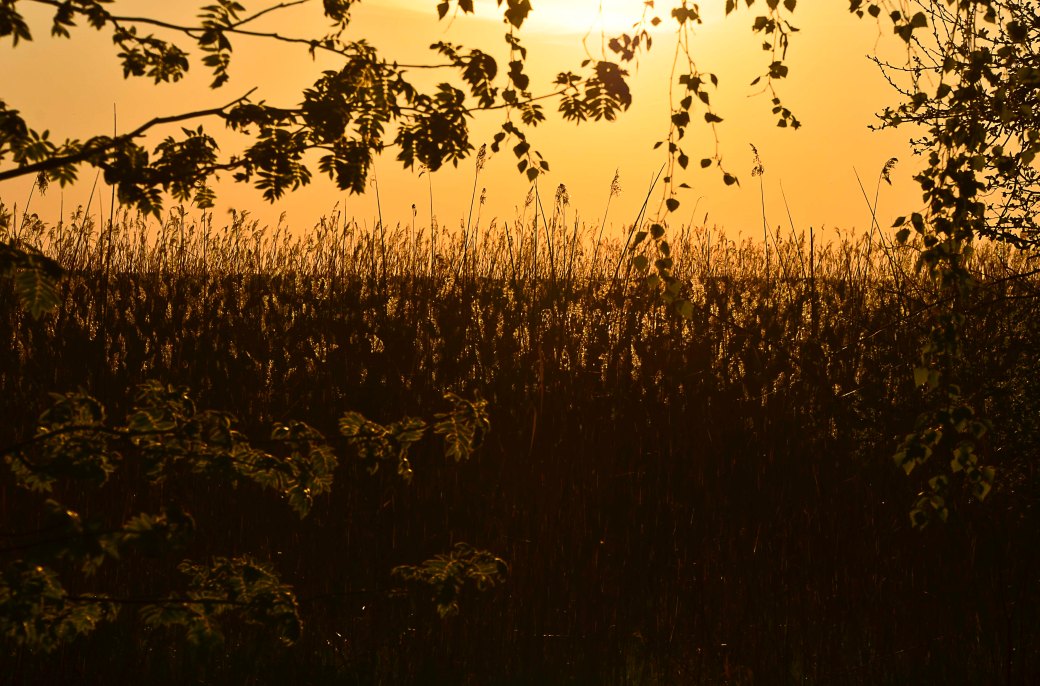


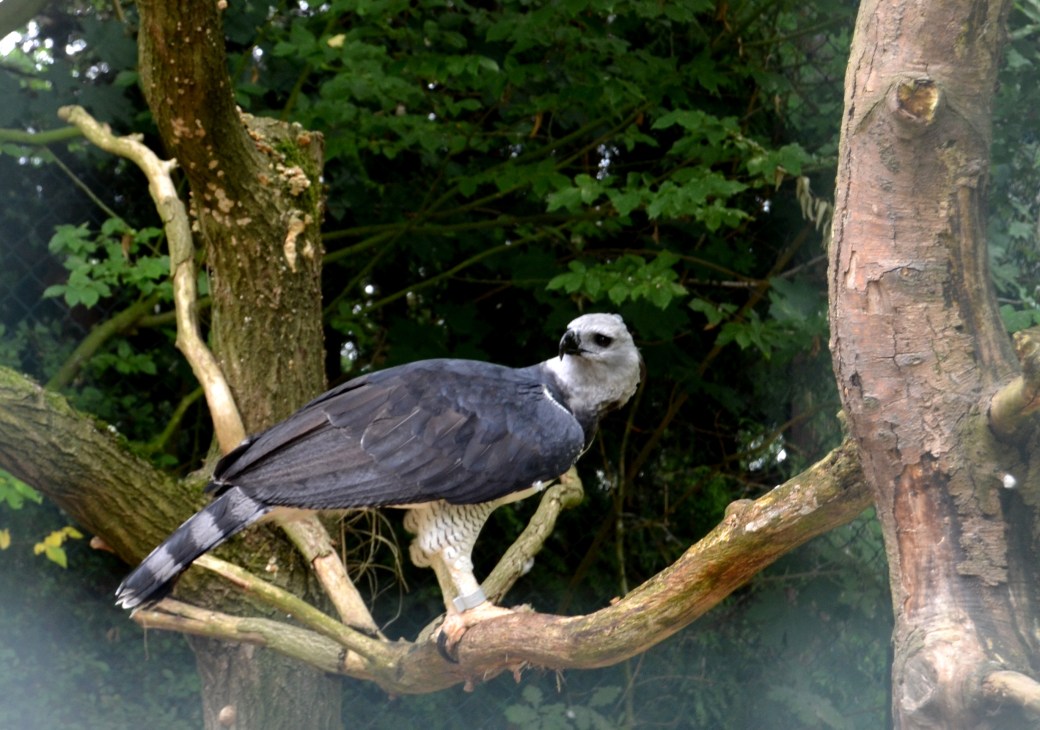
Harpy Eagle (Americas) photographed in Walsrode, Germany
For Sylvain Landry this week – Birds. I chose the swan and the harpy Eagle. The swan is a graceful beauty, and the harpy is one of the most cruel looking birds in the world – at least according to me. Which one do you prefer?
I have done much camping in my days…many of us have. As a child I loved it, then as a young woman in love, we camped all over Europe during the summers. Some camping in the mountains, hiking and some camping with my students…but now, it is over.
Or… almost.
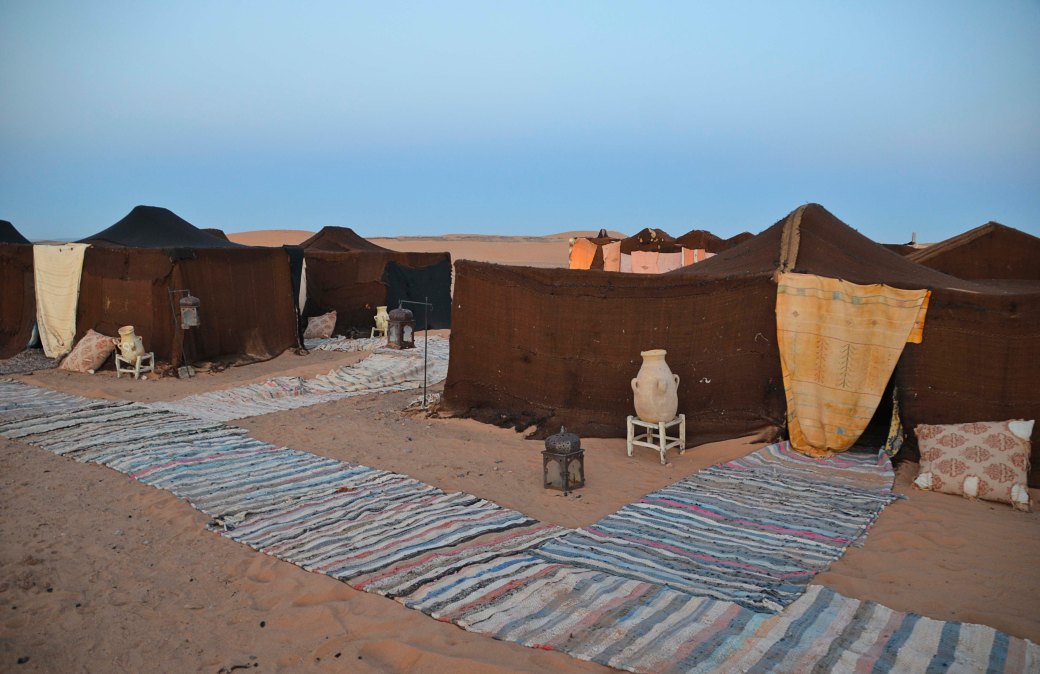
If staying at a Berber camp for two days, in tents, and having a camp fire in The Sahara Desert, is camping, then I have camped again… last month. Our tent was the one to the right, with a yellow entrance carpet.
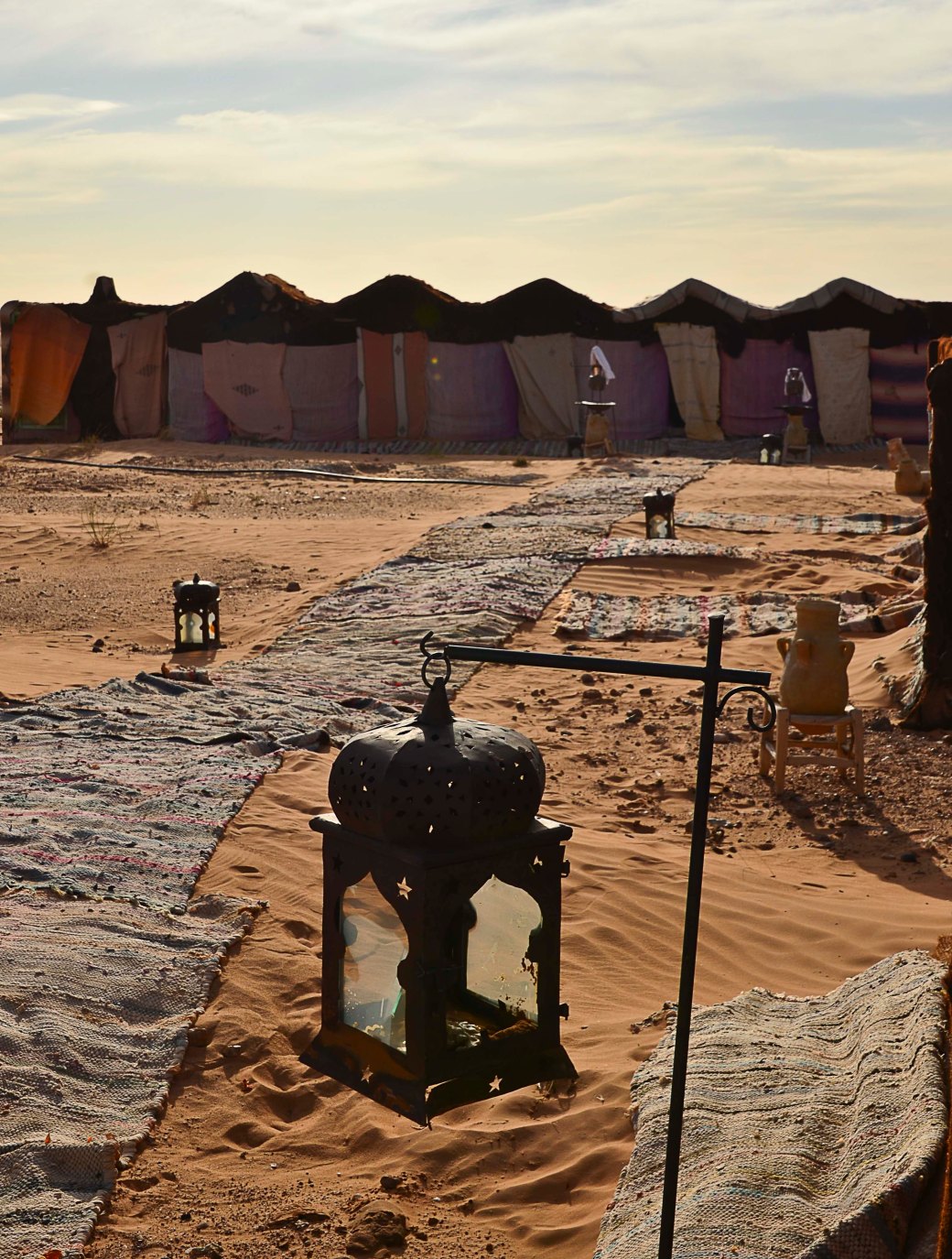
At the far end of the camp were the toilets – and to my great disappointment, they were ordinary toilets – just like those at home…The washing basins outdoors though.
The adventure started with a marvellous camel ride over the dunes, and enjoying the colourful sunset from the top dunes.Back at the camp, we were treated to a real feast – or at least it felt so after our long day…
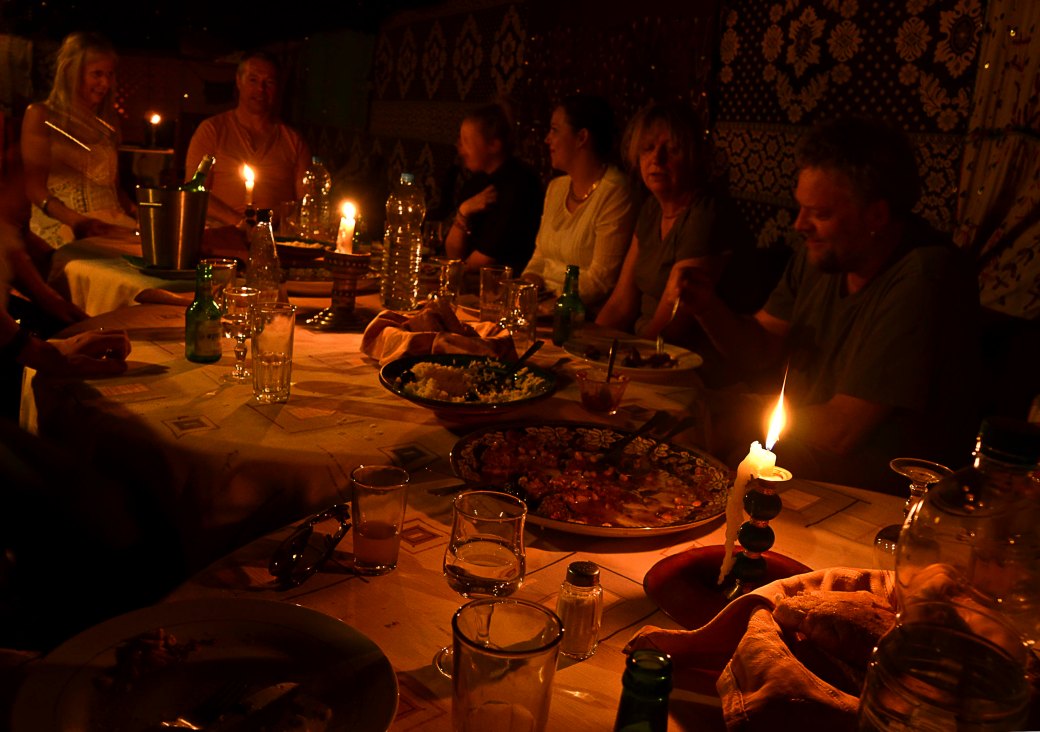
We had some delicious tagine by candle light in the main tent, and then we sat by the fire under the stars, listening to each others’ stories. Just existing.

We all slept well that night, but some of us woke up early…trying to find our way in the dizziness of the silence of unfamiliar surroundings.

I had expected it to be very cold during the night – we had been told to bring warm clothes. But three o’clock in the morning the air was soft and smooth, fresh and only a bit cool.
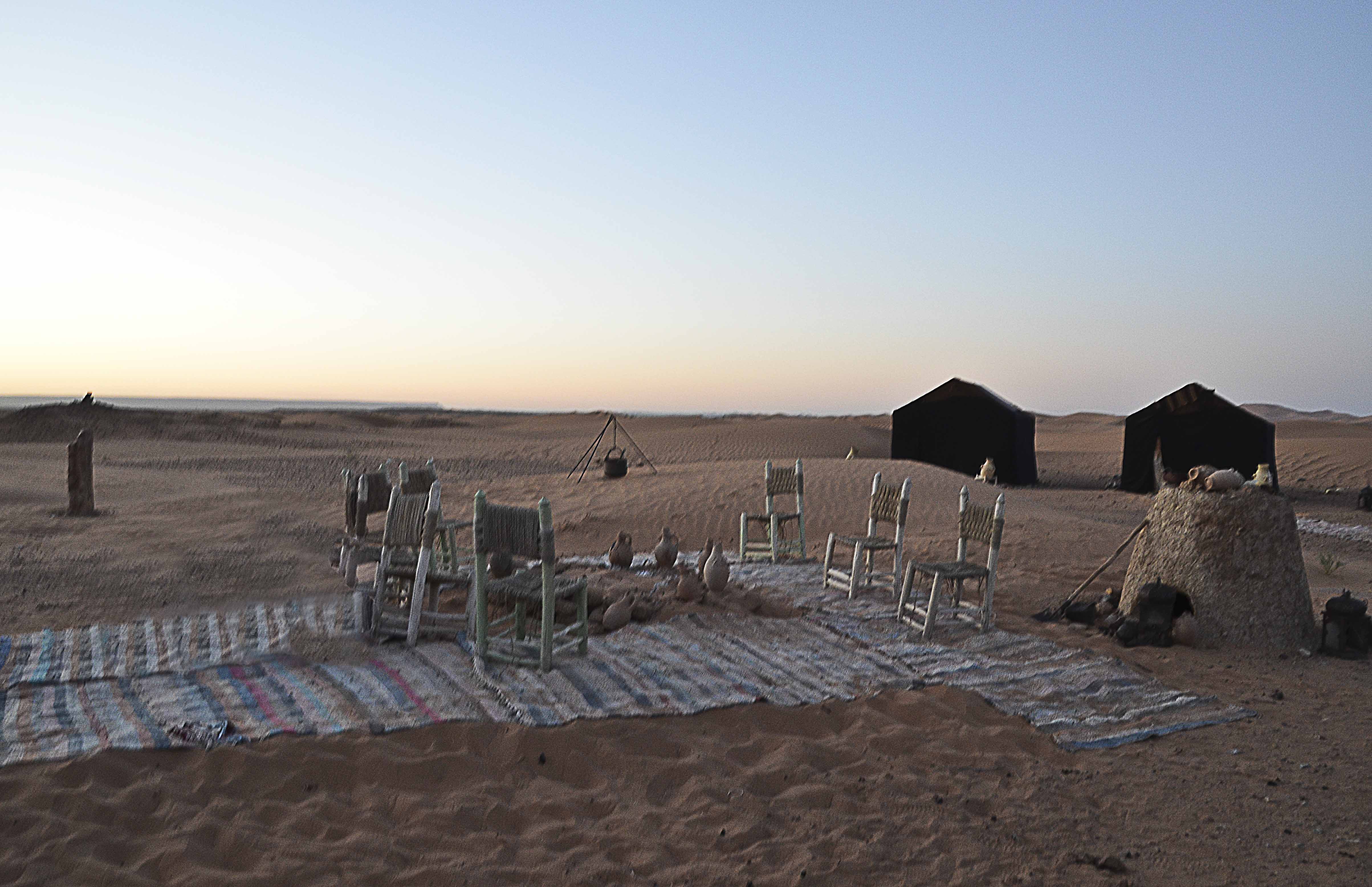
Finally back at our tent, I admired yesterday’s fireplace in the clear morning light, went inside the tent, and fell asleep again.
Before leaving the camp the day after, I enjoyed the sun seeping through our carpet, and the joy of photographing our tent in daylight. The bed was very warm and comfortable, and we were provided with all sorts of bed linen, blankets, duvets, etc.
 A last look at the camp and the ”restaurant”, then we left what had been the highlight of our journey.
 The rest of my desert adventures will have to wait for a post of their own.

I was just thinking that, maybe one day…we will be back in the Sahara again…
Go for more camping here.
Everywhere you look in the Djemaa el-Fna, Marrakesh’s main square, you’ll discover theatre in progress. The street theatre has a natural home here ever since this plaza was the site of public executions around AD 1050. Even if there are discussions on the origin of its name, Jemaa means ”congregation” in Arabic, probably referring to a destroyed Almoravid mosque. ”Fanâʼ” or ”finâ'” can mean ”death” or ”a courtyard, space in front of a building.” Thus, one meaning could be ”The assembly of death,” or‘assembly of the dead’.
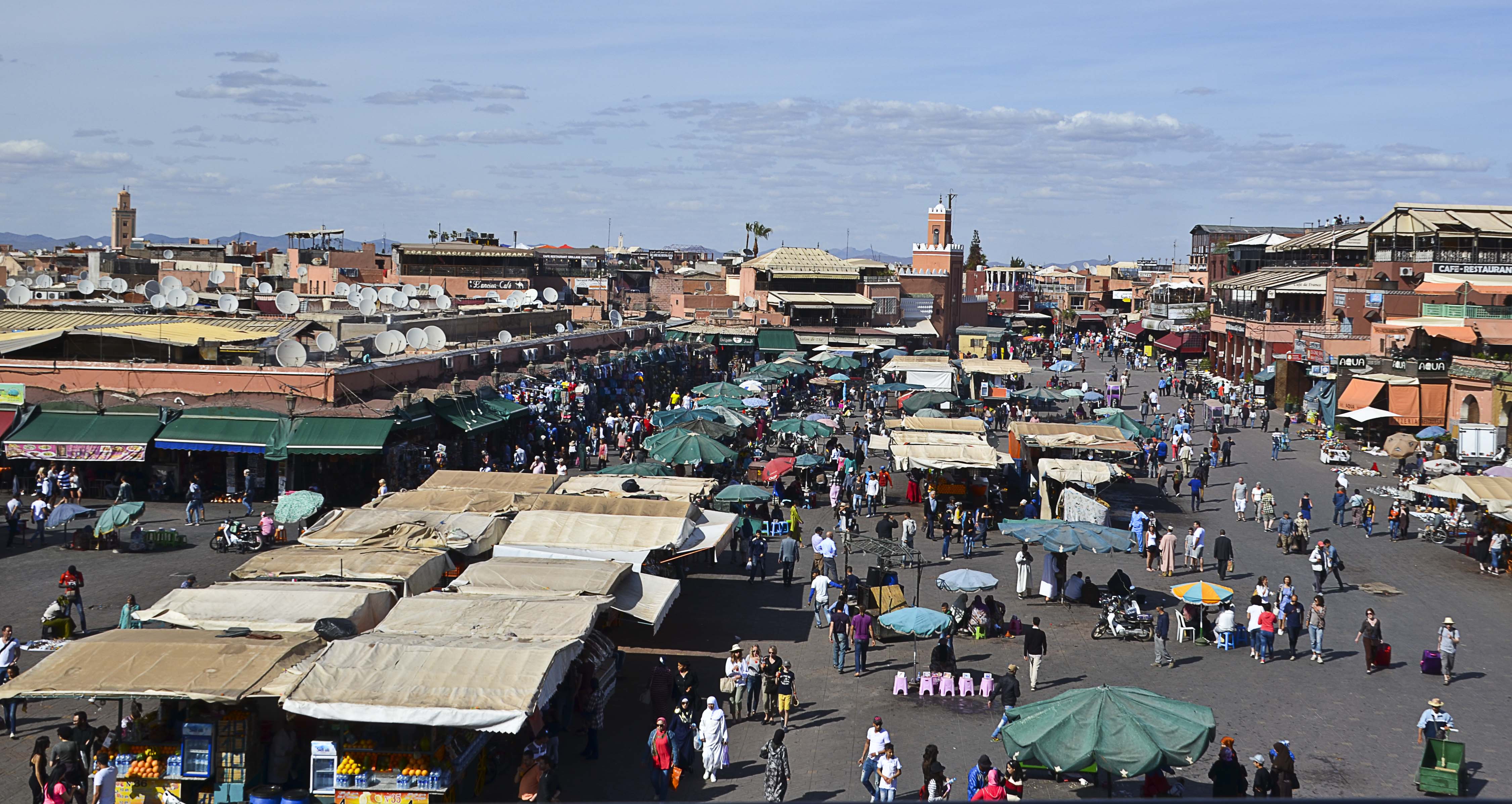
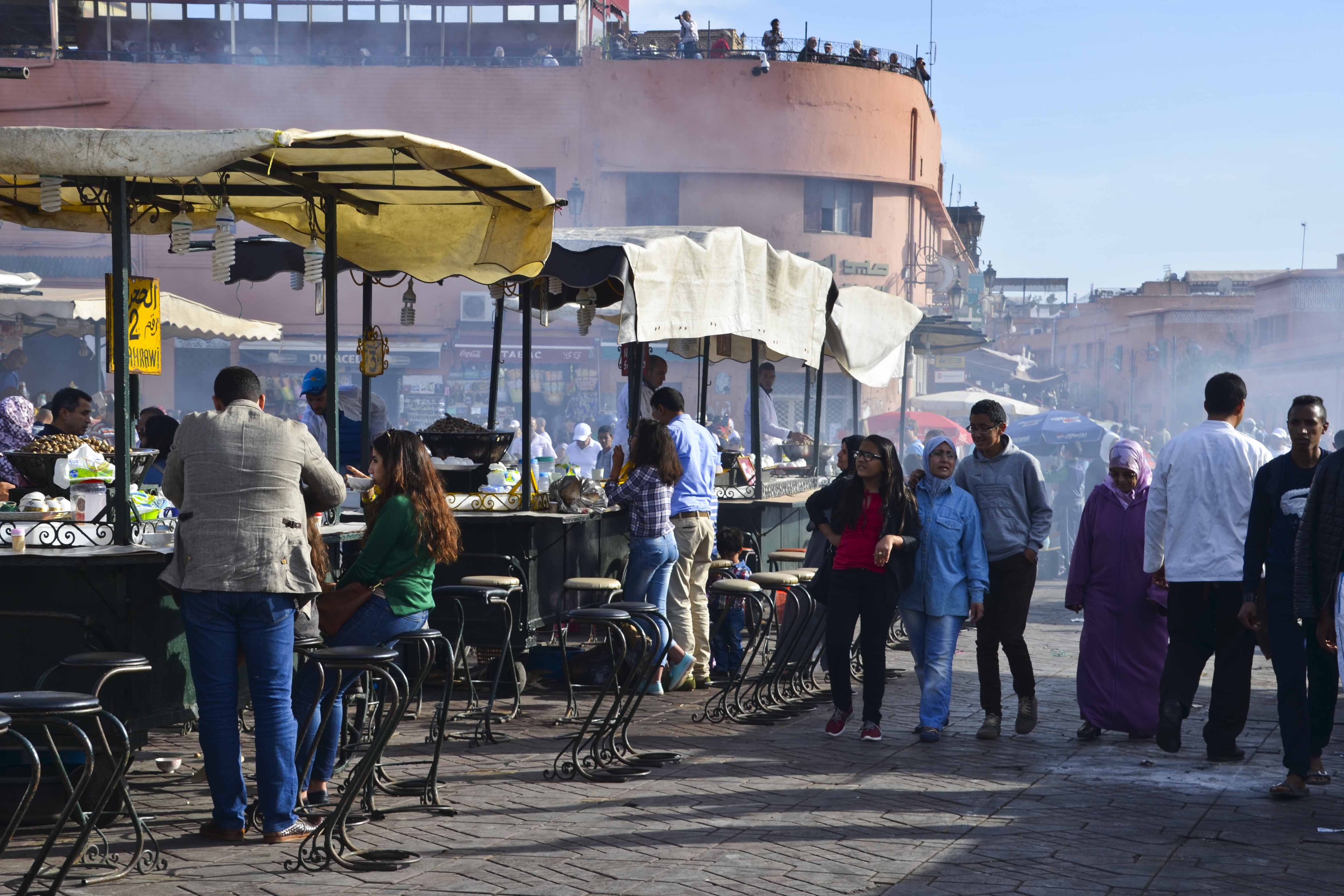
It is not just a tourist attraction since many locals also enjoy the activities that make Djemaa el- Fna come alive. During the day, the square has numerous stalls, most of which sell fresh fruit juice, water and fruit.

By 10am, the daily performance is under way. Snake charmers with their hissing cobras and men with chained Barbary apes, despite the protected status of these species under Moroccan law; henna tattoo artists ( women with piping bags full of henna paste, ready to paint you with “tattoos” that will last up to three months – though beware of synthetic “black henna”, which contains a toxic chemical; only red henna is natural. The Henna Café guarantees to use only natural henna).


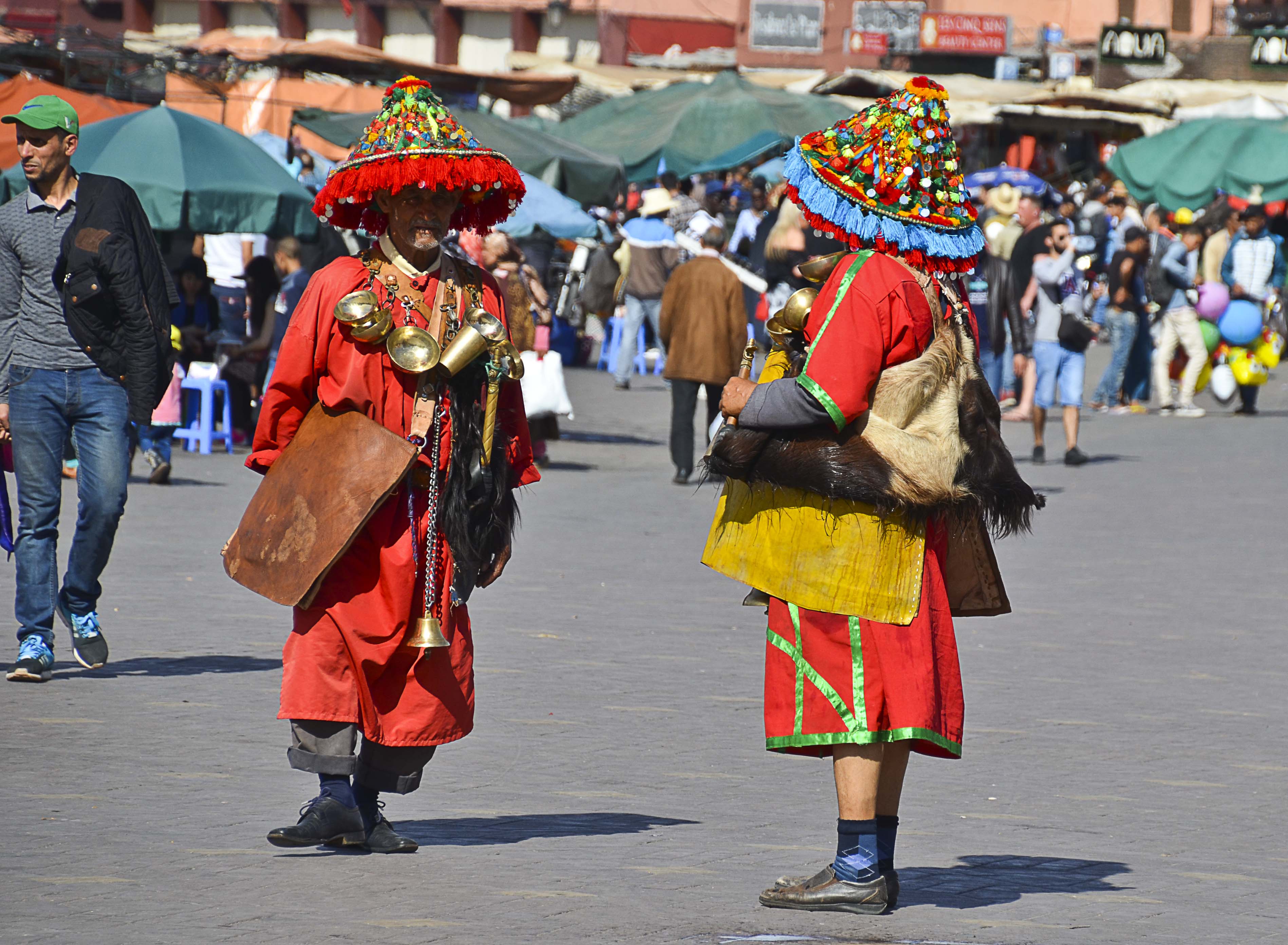
Water-sellers in fringed hats, with water-bags hanging and brass cups clanging. Medicine men display their cures, and tooth-pullers display trays of extracted molars to prove their skill. And if you wonder…fortune-tellers sit under umbrellas with packs of fortune-telling cards at the ready.
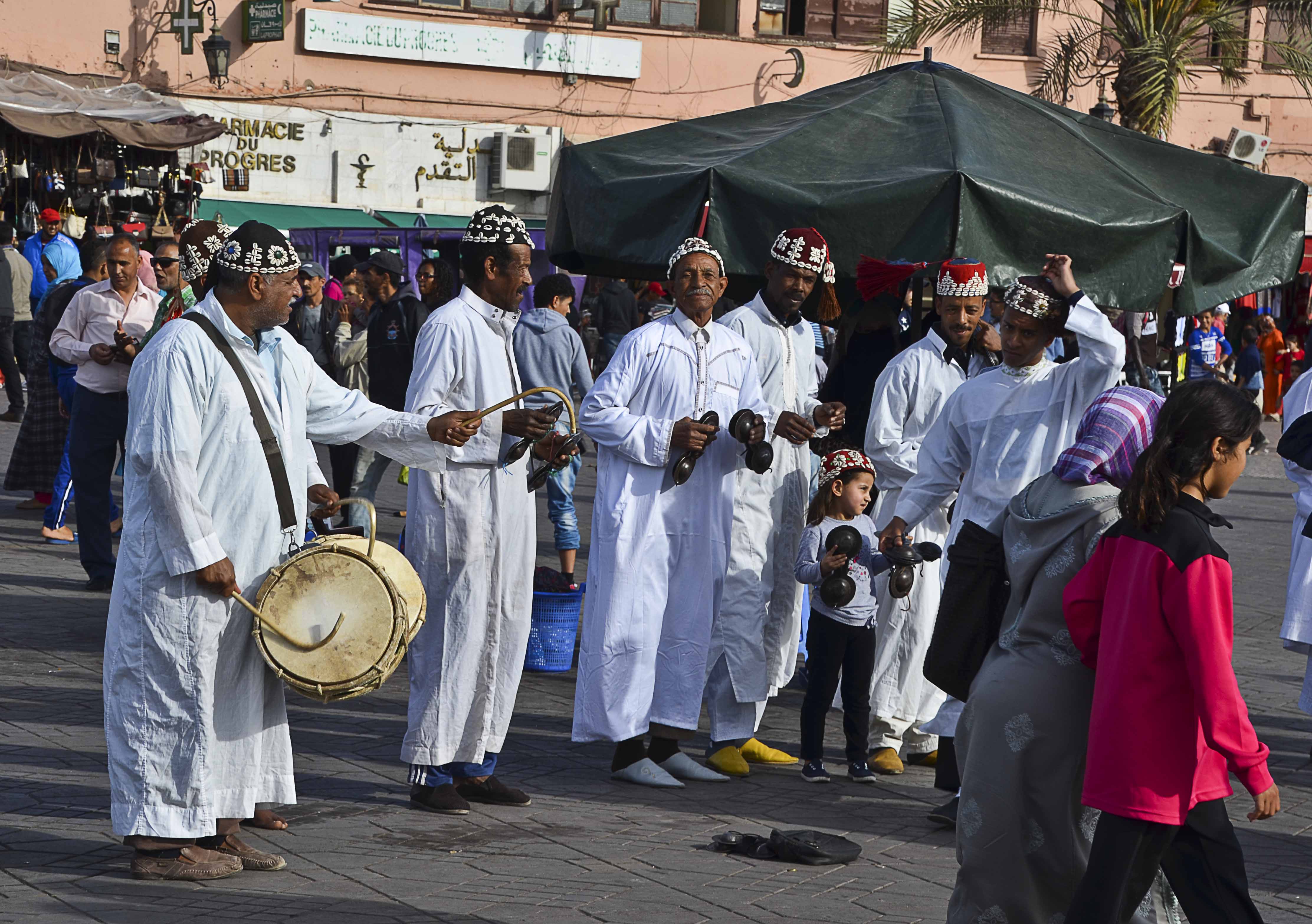
At dusk people come out for an evening promenade, and the square gradually fills until it becomes a whole carnival of storytellers (telling their tales in Berber or Arabic, to an audience of locals), acrobats, musicians and entertainers. If you want a respite, you can move over to the rooftop terraces, such as the Café du Grand Balcon, or Café Glacier, for a vista over the square and all the activities, and the crowds who come to see them. Very much recommended. We enjoyed a rather expensive bottle of juice and a less expensive mint tee – having a great view without being crowded.
Arrive early in the evening to get a good seat. Applause and a few dirhams will encourage the performers. It’s a great show, but be prepared…taking photos immediately brings at least one man to your door…dirhams!
In 2001, Djemaa el-Fna was recognized by UNESCO in the project Masterpieces of the Oral and Intangible Heritage of Humanity – the initiative coming from people concerned about the Djemaa el-Fna. Since long known for its concentration of traditional activities by storytellers, musicians and performers, but now threatened by economic development pressures. The residents wanted protection of their traditions, and called for action on an international level. In 2001, this ”cultural space” got its protection.
In Marrakesh, this meeting place is a must. Remember – this is far from only for tourists. Most people strolling here, enjoying themselves, are locals. This is, even today, a genuine piece of Arabian Nights…no ”assembly of the dead”.
.
I don’t know anything more jubilant than students storming out in real life, celebrating their achievements and their last minutes in highschool –

– and then freeeeeeedom!

When I go abroad, I try to visit at least one school – if possible. I guess we all like to see how our own profession works in other parts of the world. In Morocco my visit was to an abandoned school – but still it was very interesting.
The Ben Youssef Madrasa was an Islamic college in Marrakesh, Morocco, named after the sultan Ali ibn Yusuf (reigned 1106–1142), who expanded the city and its influence considerably. It is the largest Medrasa in Morocco, and lies totally embedded in the city. There was nothing to reveal its true looks from the outside.
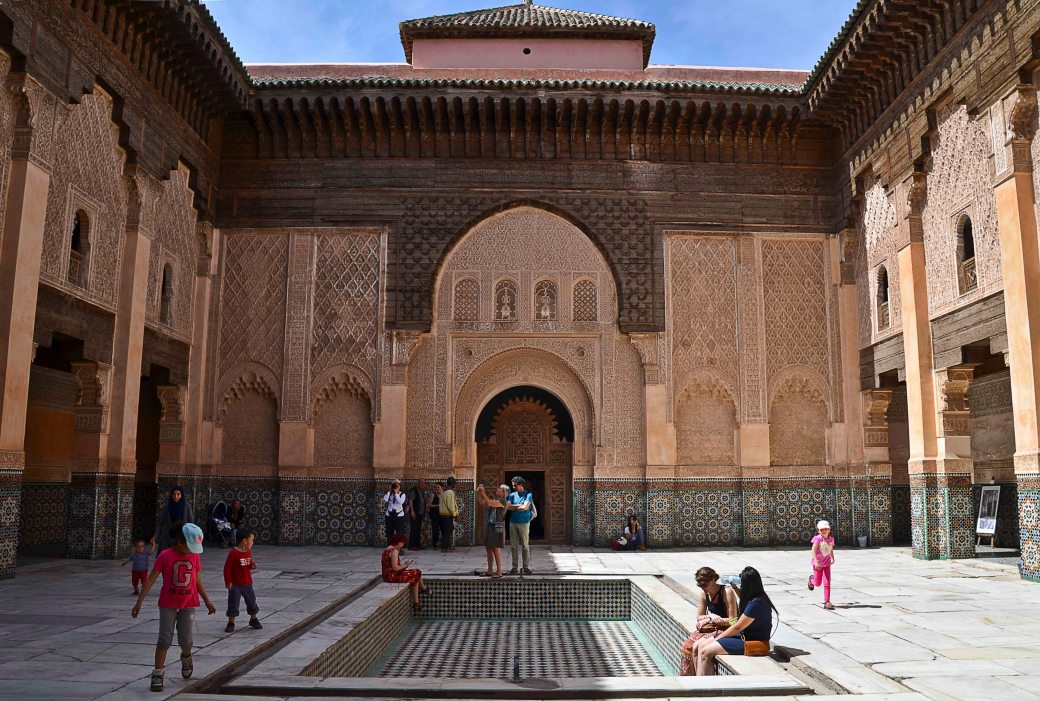
The college was founded in the 14th century, and its 130 student dormitory cells cluster around the courtyard, richly carved in cedar, marble and Moroccan style stucco.
The pool is the wash basin – elaborately decorated in marble tiles. I wonder how several hundred students were organized to perform this ceremony? Every day?
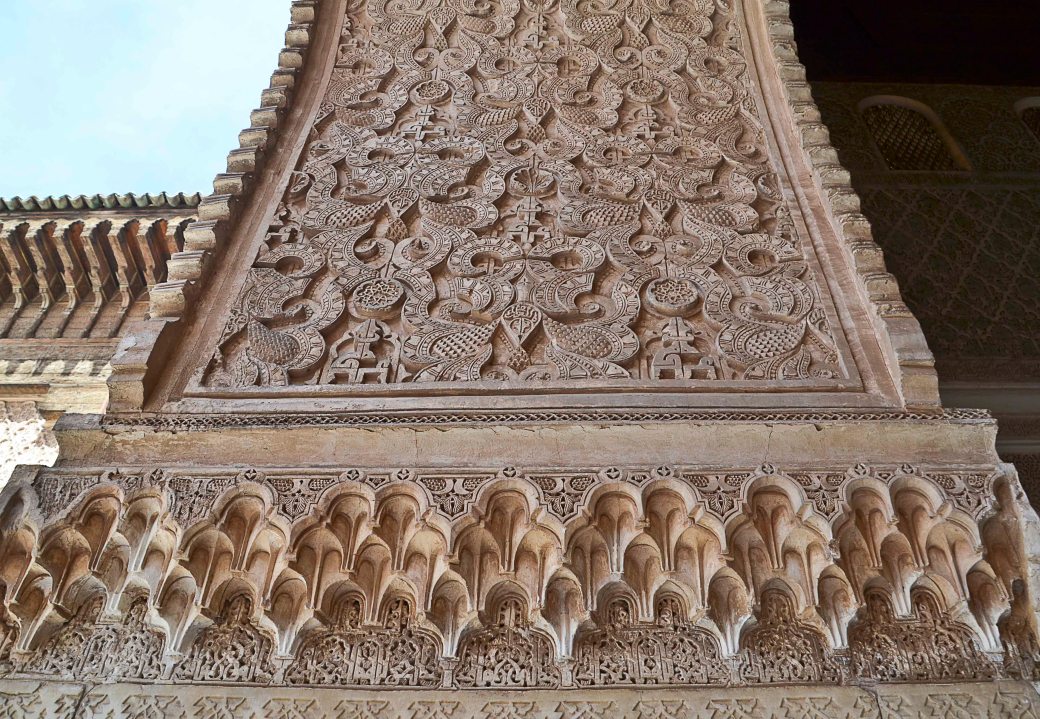
As required by Islam, the carvings contain no representation of humans or animals, and consist entirely of inscriptions and geometric patterns.
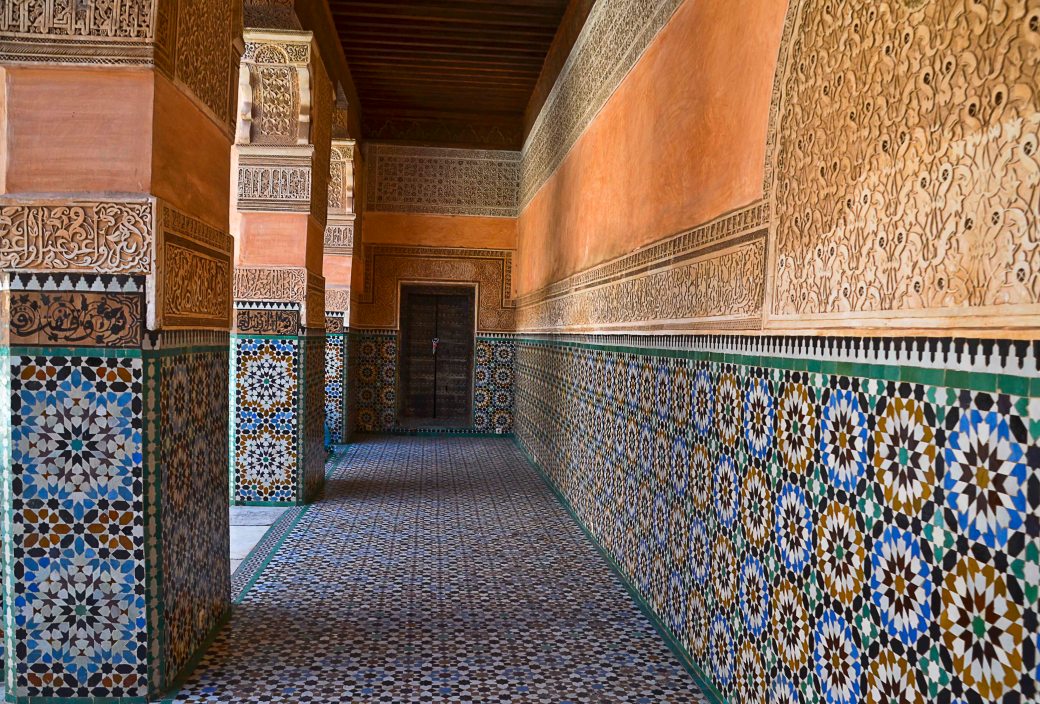
This madrasa was one of the largest theological colleges in North Africa and may have housed as many as 900 students. Hard to understand from what we could see of the size.

The students’ cells were all on the first floor, and richly decorated corridors led to each dorm.
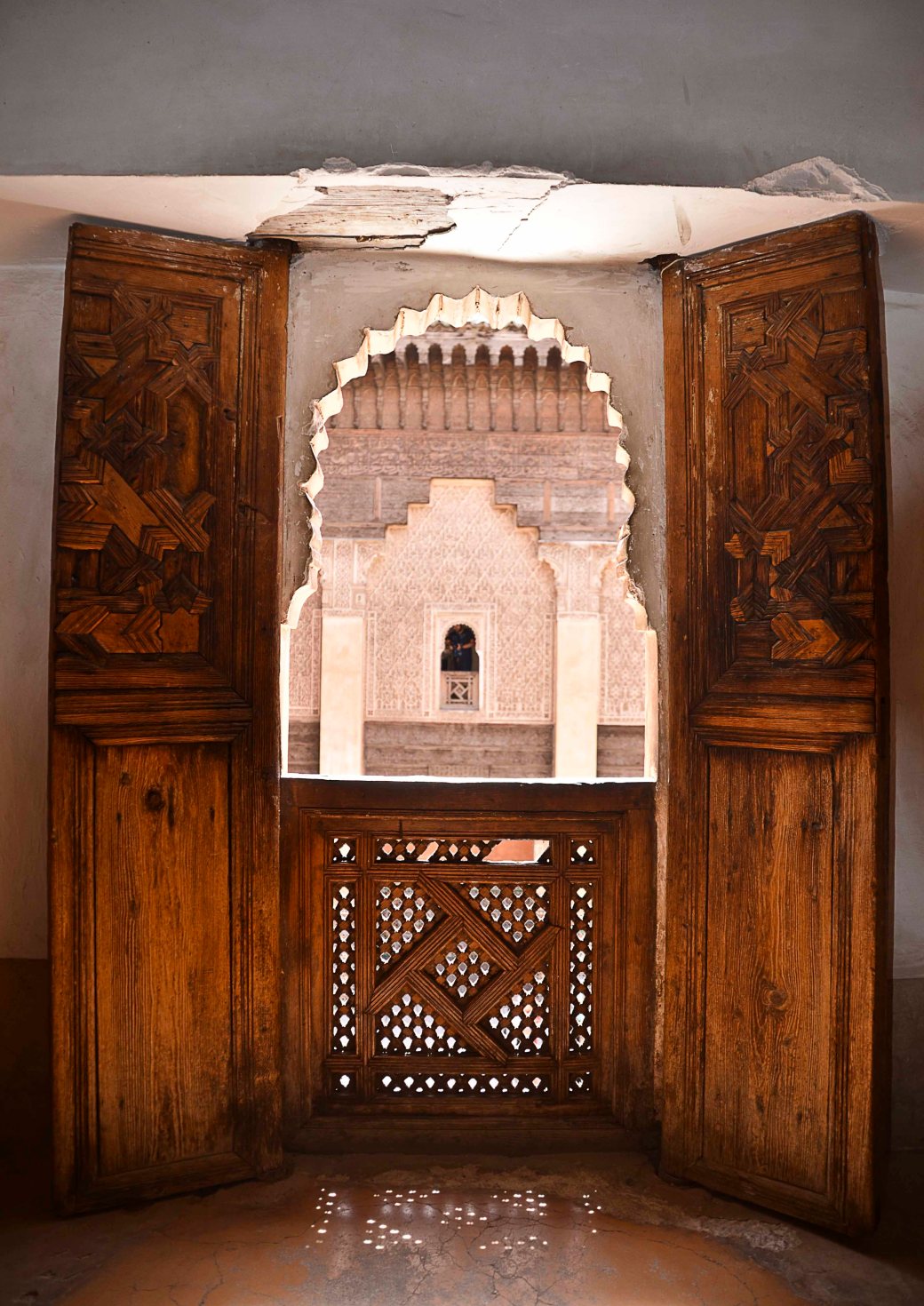
These beautiful doors opened up to the courtyard, and the student living here could see across the yard to the student on the other side. The cells were very small, maybe 9 square metres, and most of them had no windows at all.
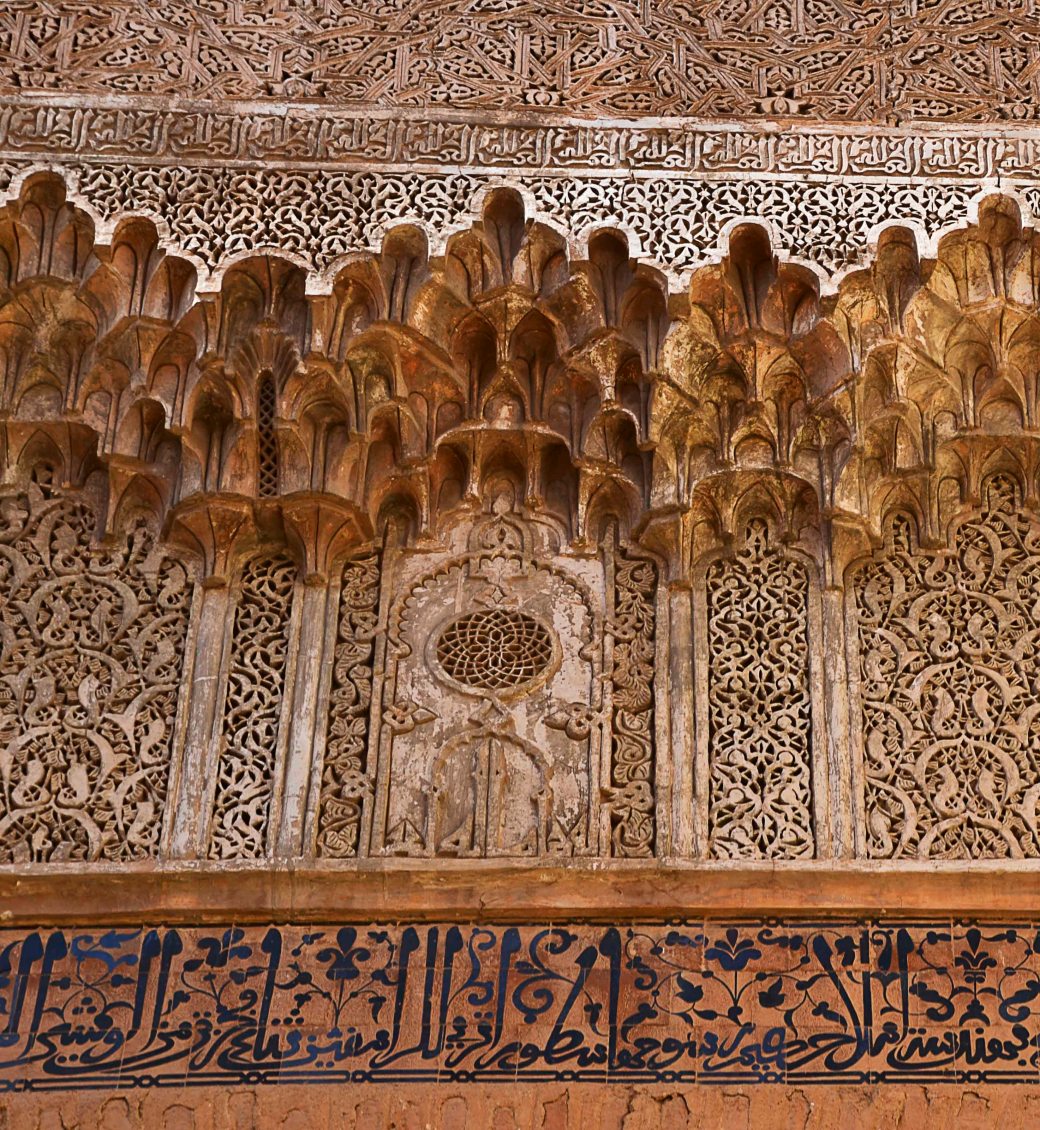
The college was still alive and working when I was born, but closed down in 1960. The madrasa was refurbished and reopened to the public as an historical site in 1982.
Those who lived and worked here were surrounded by beauty…but I wonder where all those students went when it closed down…? And, would I have loved to study here – inside this spectacular work of art? Would you?

 Leya
Leya 
Du måste vara inloggad för att kunna skicka en kommentar.