Legs and feet for Cee…could not help posting this one from Le Louvre, Paris. We had great fun, and my daughter had me posing, joking about her brother’s big feet…
For more feet, click here.


Legs and feet for Cee…could not help posting this one from Le Louvre, Paris. We had great fun, and my daughter had me posing, joking about her brother’s big feet…
For more feet, click here.
Well…I’m not sure it had any engine or motor – but I liked it!
Cee is asking for engines and motors…here is a car I fancied – and so did the man in it!
For more engines, click here.
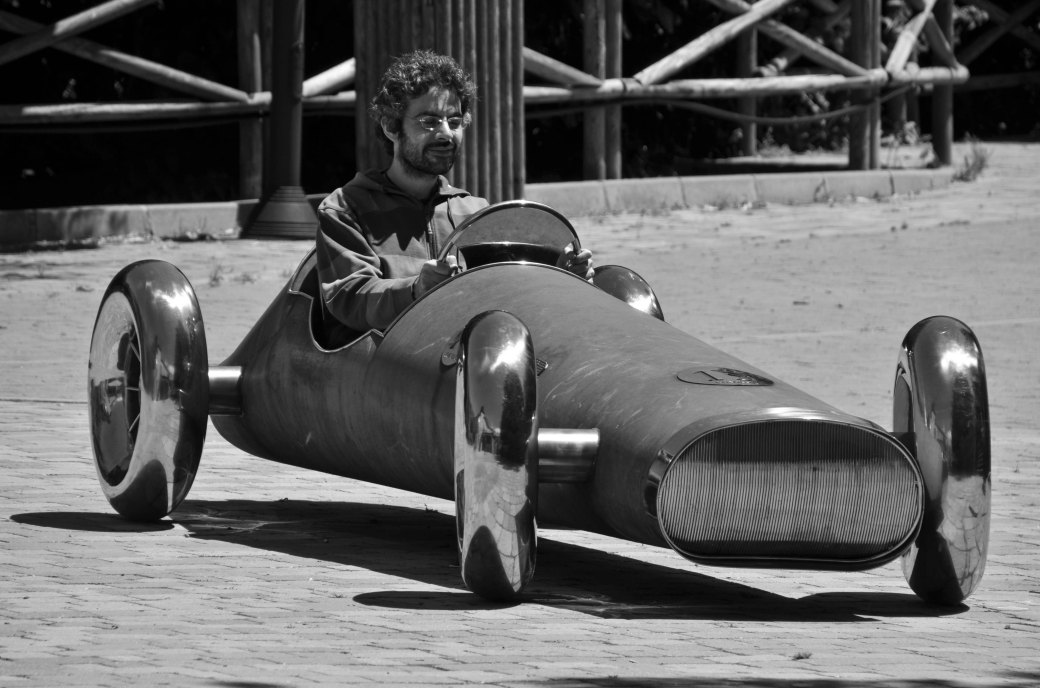
The controversial modernist architect Antoni Gaudí is one of my own favourites…but in his own time – he was not always popular. In Barcelona, you might have visited his fabulous Sagrada Família, Casa Battló or La Pedrera and Parc Güell. And Marvelled.
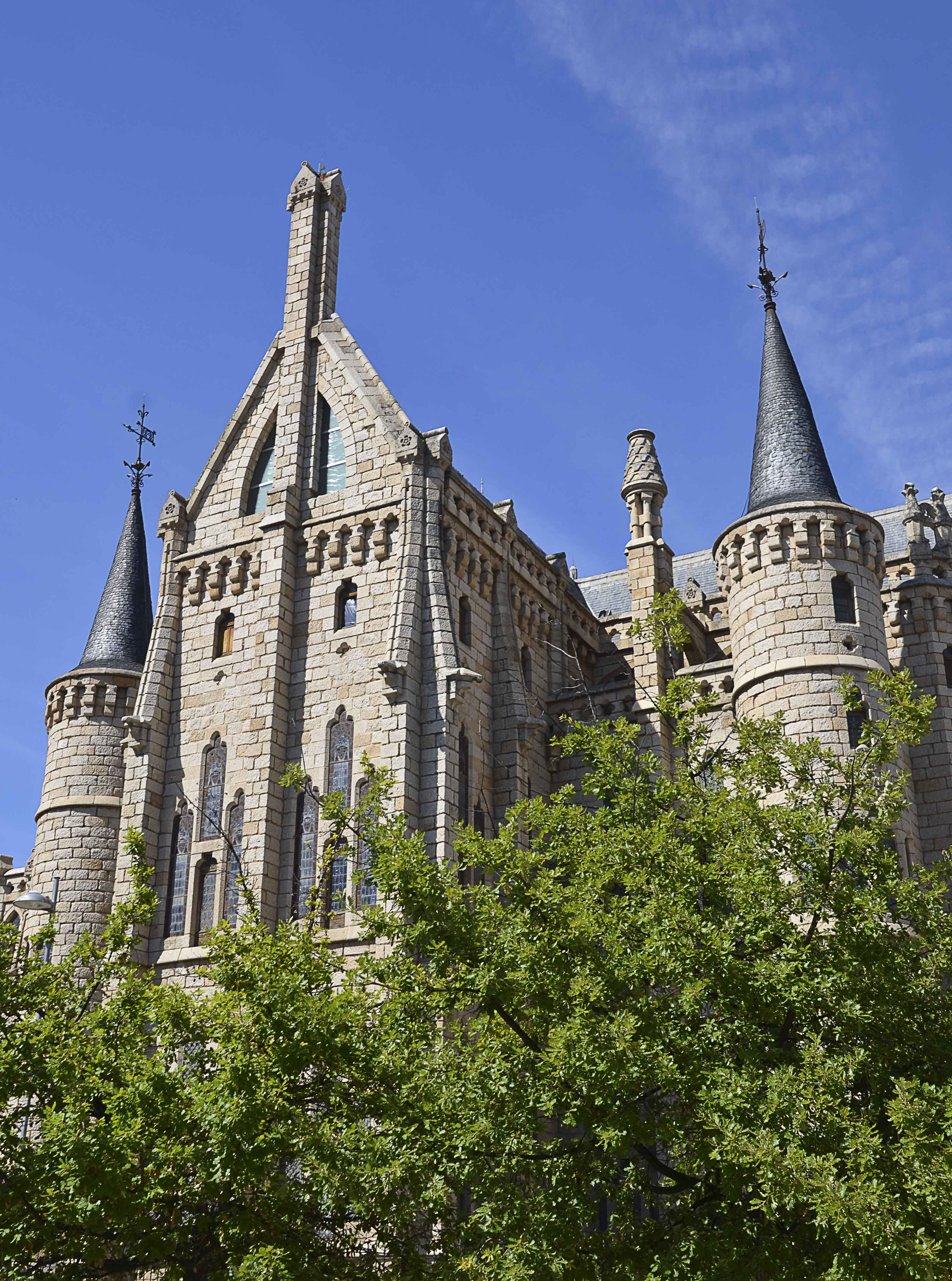
Palacio Episcopal (end of the 19th century) in Astorga was seen as rather abominable in appearance and the cost for building it was just too much for the congregation. No bishop has ever lived there since…
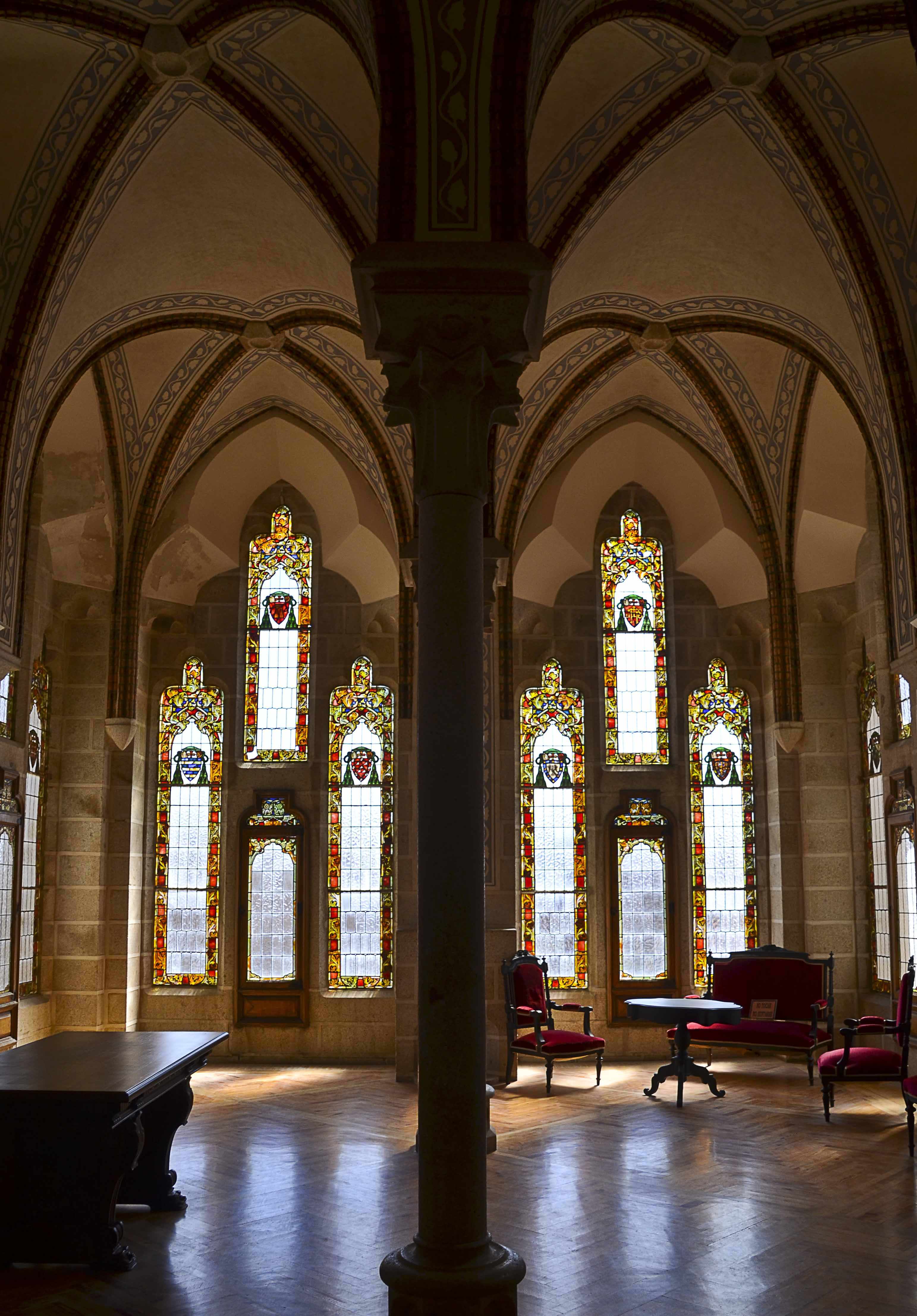
Inside, you recognize Gaudí’s style with beautiful ceramics and stained glass.

The palace is now being restored, and I guess its future visitors will continue to admire his outstanding art.
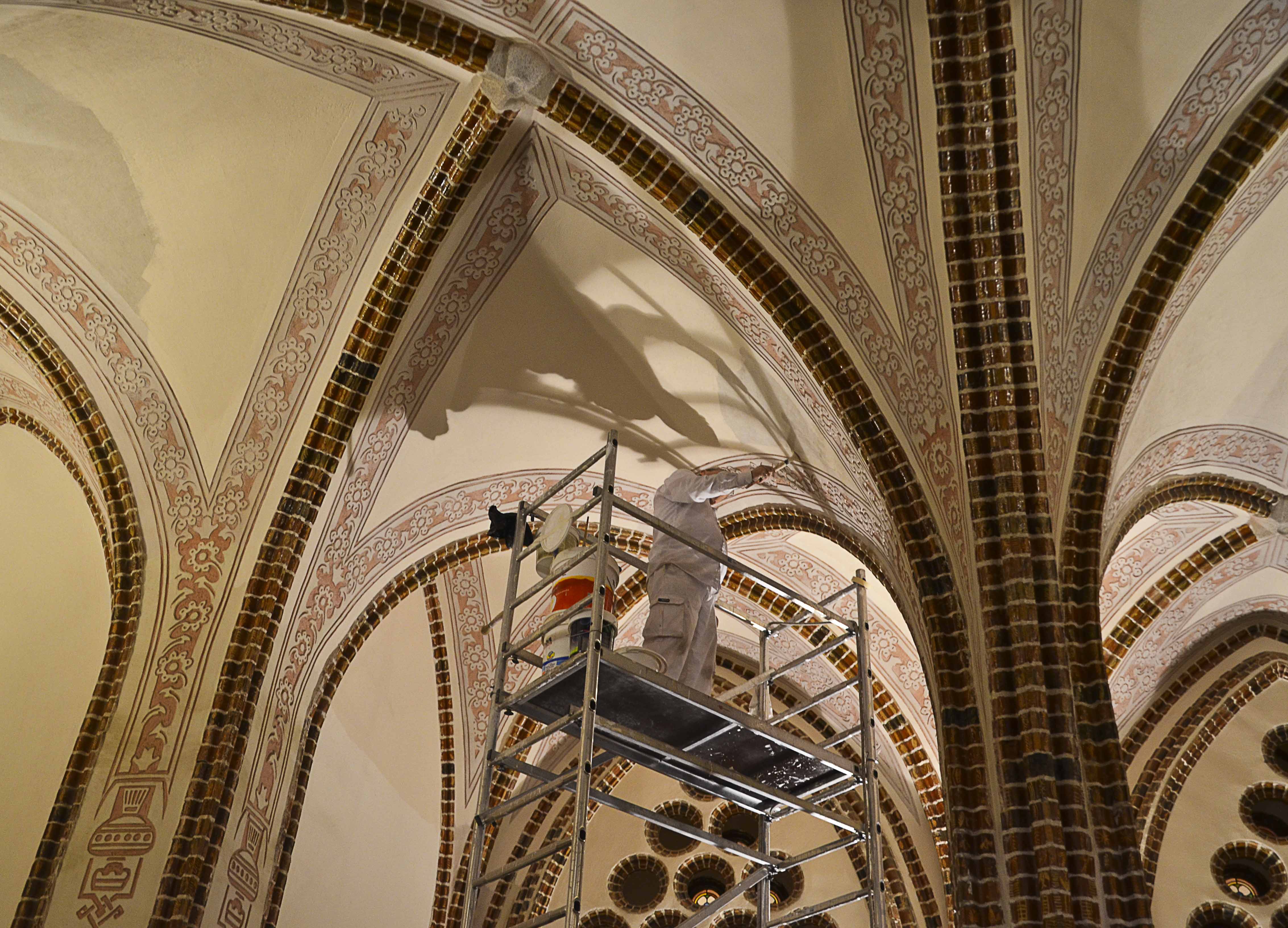
The magnificent cross bows and his colour combinations are simply divine.


So, be sure to visit when your road leads you here…you cannot get too much of Gaudí!
As usual, click to get a larger view – sometimes you have to click twice…and click the links for my previous posts on his art in Barcelona!
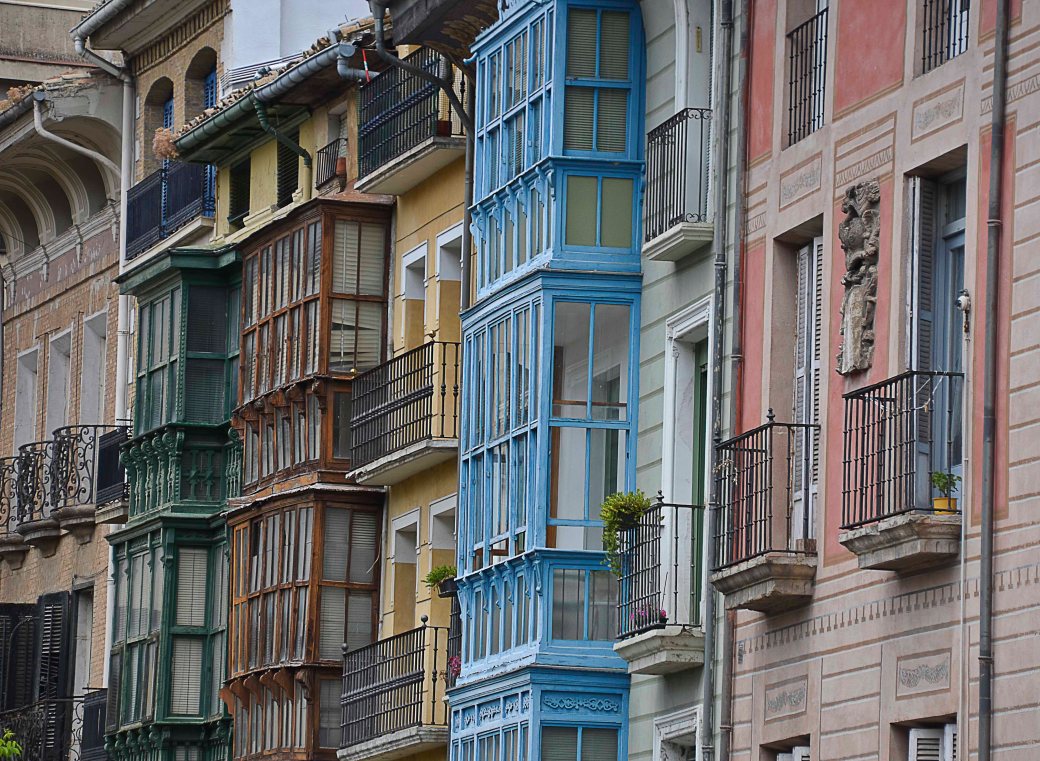
In northern Spain, we feasted on bay windows (I have always wanted one…). Mostly white and covering the whole front of the houses, but I also found some in colour. For Ailsa, pastel is the choice.
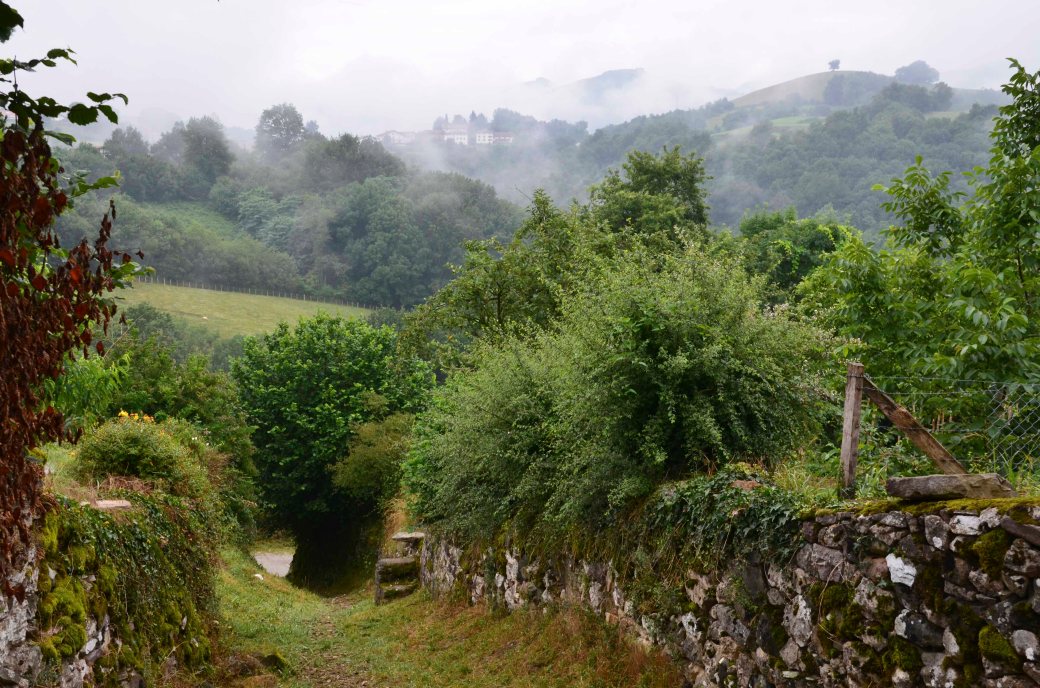
The soft morning…is lifting, taking off towards the day. Ziga, Baztan, Spain.
 For more mornings – click here.
Some of all the lovely people I have met on my travels. In the header two sweet girls at a Scottish country boule club, and below, the most wonderful ladies celebrating Saint Carmen in hotel Amadora on the north coast of Spain. Two of the three ladies were called Carmen, the mother and her daughter standing on her right side (left for you). Their friend was called Ana. My compliments on the eldest lady who was 86, and still a beauty.
Cee’s Fun Foto Challenge: Smiles

On my trip to the northern parts of Spain, I made some lovely aquaintances…and not only with people. I was happily shocked by the numerous storks here – at least one nest in every village!

The white stork (Ciconia ciconia) is a large bird that measure on average 100–115 cm (39–45 in) from beak tip to end of tail, with a 155–215 cm (61–85 in) wingspan. The white stork is a long-distance migrant, wintering in Africa or on the Indian subcontinent. He is also a symbol of my part of Sweden.

He eats a wide range of animal prey, including insects, fish, amphibians, reptiles, small mammals and small birds. He takes most of his food from the ground, among low vegetation, and from shallow water. He is a monogamous breeder, but does not pair for life.

Both members of the pair build a large stick nest, which may be used for several years. Both parents take turns incubating the eggs and both feed the young.

The white stork benefited from human activities during the Middle Ages, but changes in farming methods and industrialisation saw it decline and disappear from parts of Europe in the 19th and early 20th centuries. Conservation and reintroduction programs across Europe have resulted in the white stork resuming breeding in the Netherlands, Belgium, Switzerland and Sweden.


In 1954 the last pair of storks disappeared from Skåne, where I live, as the wetlands were dried out. Many people wanted the beautiful bird back, and in 1989, some wetlands were restored and the Swedish ”Stork project” started. Goal: 150 pairs living free and nesting here. Important to us ”Skåningar”, as the stork is a symbol for this southern part of Sweden.
This summer 112 new storks were released from the project. As they move south, as many as 80-90 percent die flying into power lines breaking legs or wings.

The adult white stork’s main sound is noisy bill-clattering, which has been likened to distant machine gun fire. The bird makes these sounds by rapidly opening and closing its beak so that a knocking sound is made each time its beak closes. I assure you – the sound is not to be missed…when the two of them starts, it gets louder and louder.
This conspicuous species has given rise to many legends, of which the best-known is the story of babies being brought by storks. Have you ever heard of this as a child, in your country?
(Facts taken from Wikipedia and the Swedish Stork project.)

 Leya
Leya 
Du måste vara inloggad för att kunna skicka en kommentar.