In the header – my Magnolia. The other three found on my sunny walks this weekend.
Anemone Hepatica

Wood Anemone

Pasque flower
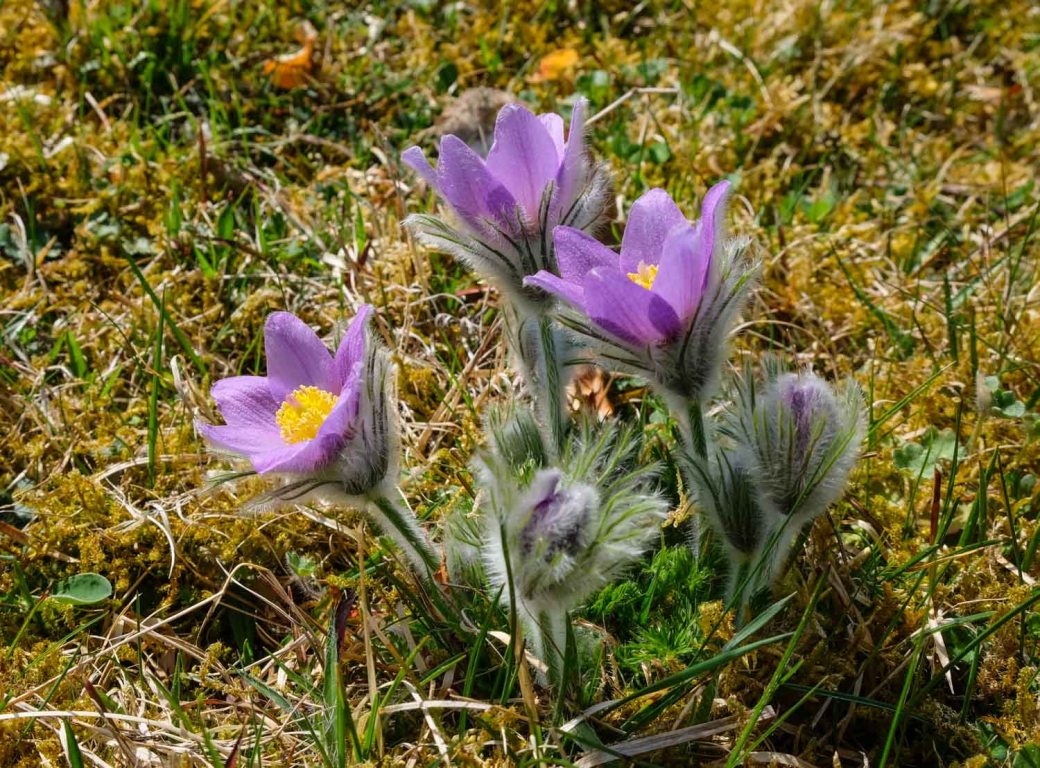
In the header – my Magnolia. The other three found on my sunny walks this weekend.
Anemone Hepatica
Wood Anemone
Pasque flower
The theme this year is to put an end to plastic pollution.
I hope we will all do our best not to use plastic. Bags, for example. Every day in media, we see turtles, birds, sharks, etc. entangled and dying. Not to talk about all the micro plastics killing lives in the ocean and in our lakes. On a trip to Morocco some years ago I was shocked to see millions of plastic bags blowing over the desert sand.
As I recently came back from Bhutan, I want you to know, they have banned plastic bags. So should we all. This is an easy starter, then it will be even easier to follow that road of sustainability. Even if you might think it difficult – just imagine what lies at the end of this winding and narrow path! And think of what awaits our planet, and us all, if we don’t follow that road. So let us Do instead of think and talk.
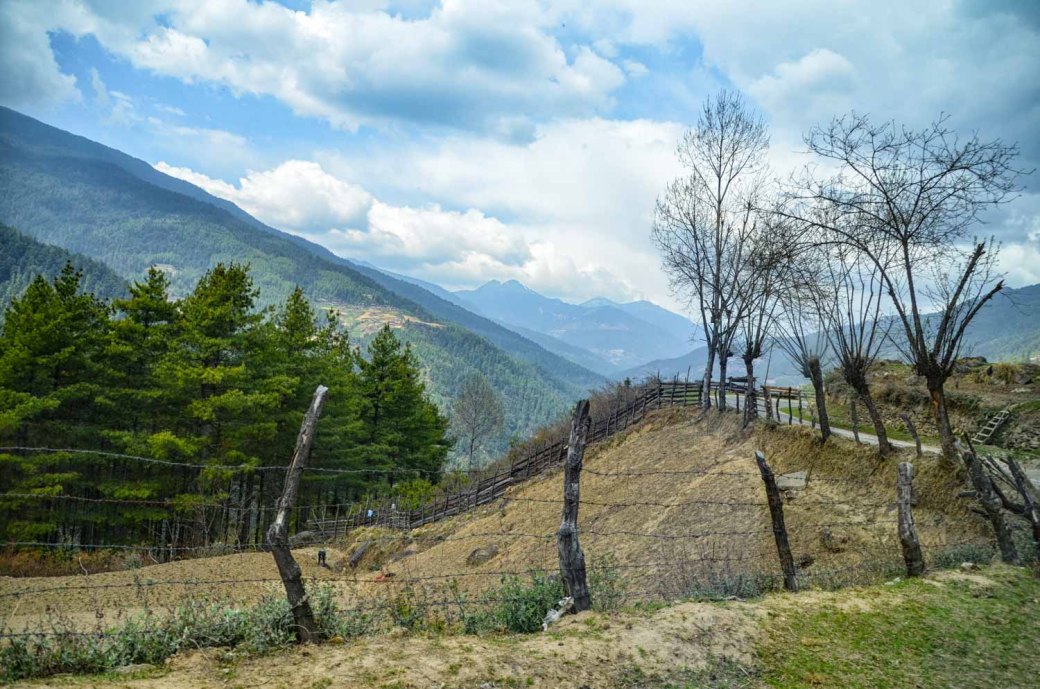
Listen to this hopeful and brilliant TED talk by an intelligent and sound soul. Humor and sensibility are essential in this approach. This is Bhutan and its people in a nutshell.
My contribution is my own pouch findings in Bhutan…Tshering will show you the whole potential of his Gho.
The Divine Madman is of great importance to the Bhutanese. On almost every house you will find his imprint – a phallus symbol – painted on the wall or hanging from the roof as a wooden giant. The phallus symbol is important to ward off evil and to bring luck.

Chimi Lhakang is situated on a hill in this beautiful rural area – the small white building to the left close to the mountain.
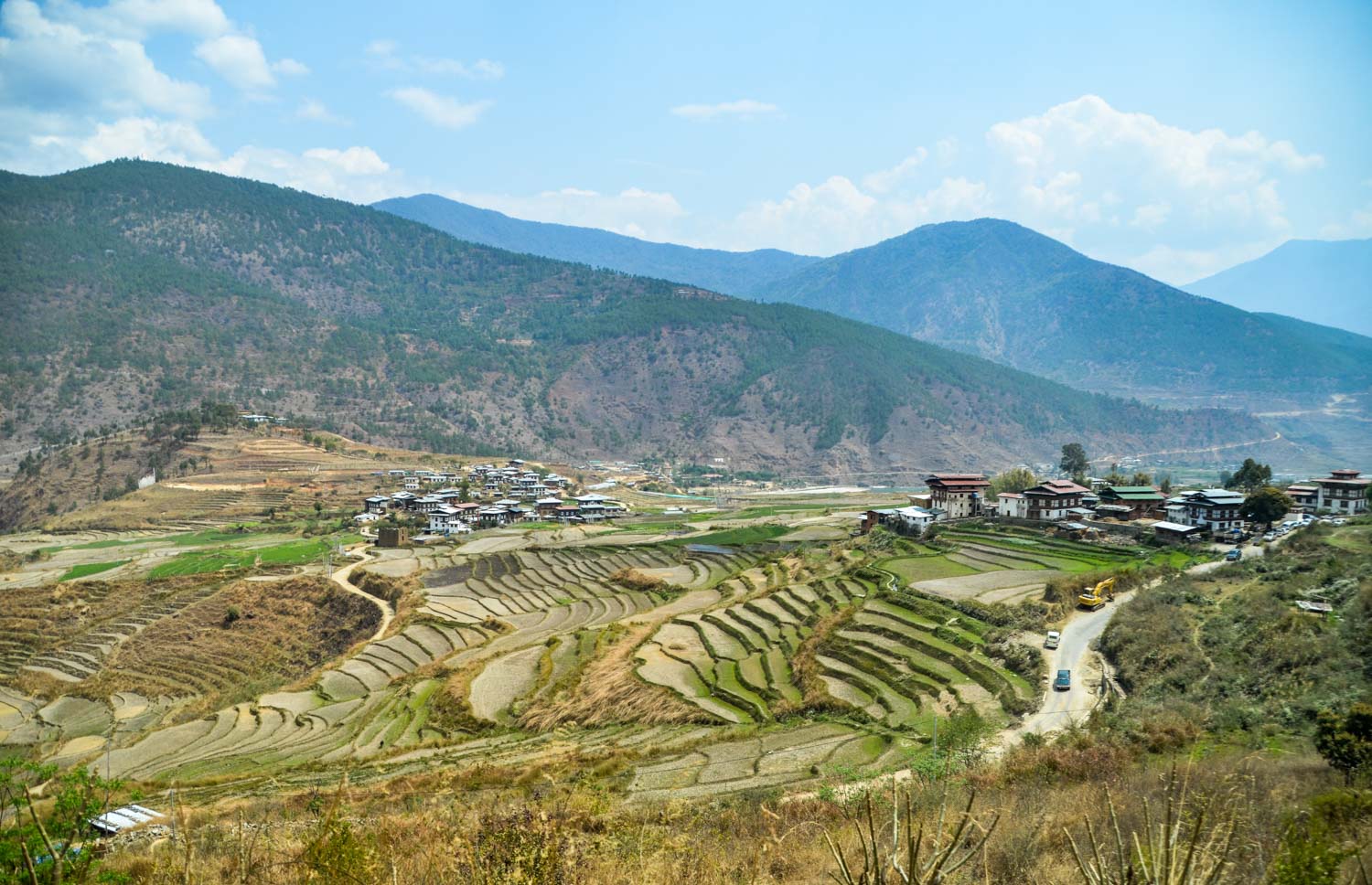
This day, we had some slow raindrops contributing to the green fields.
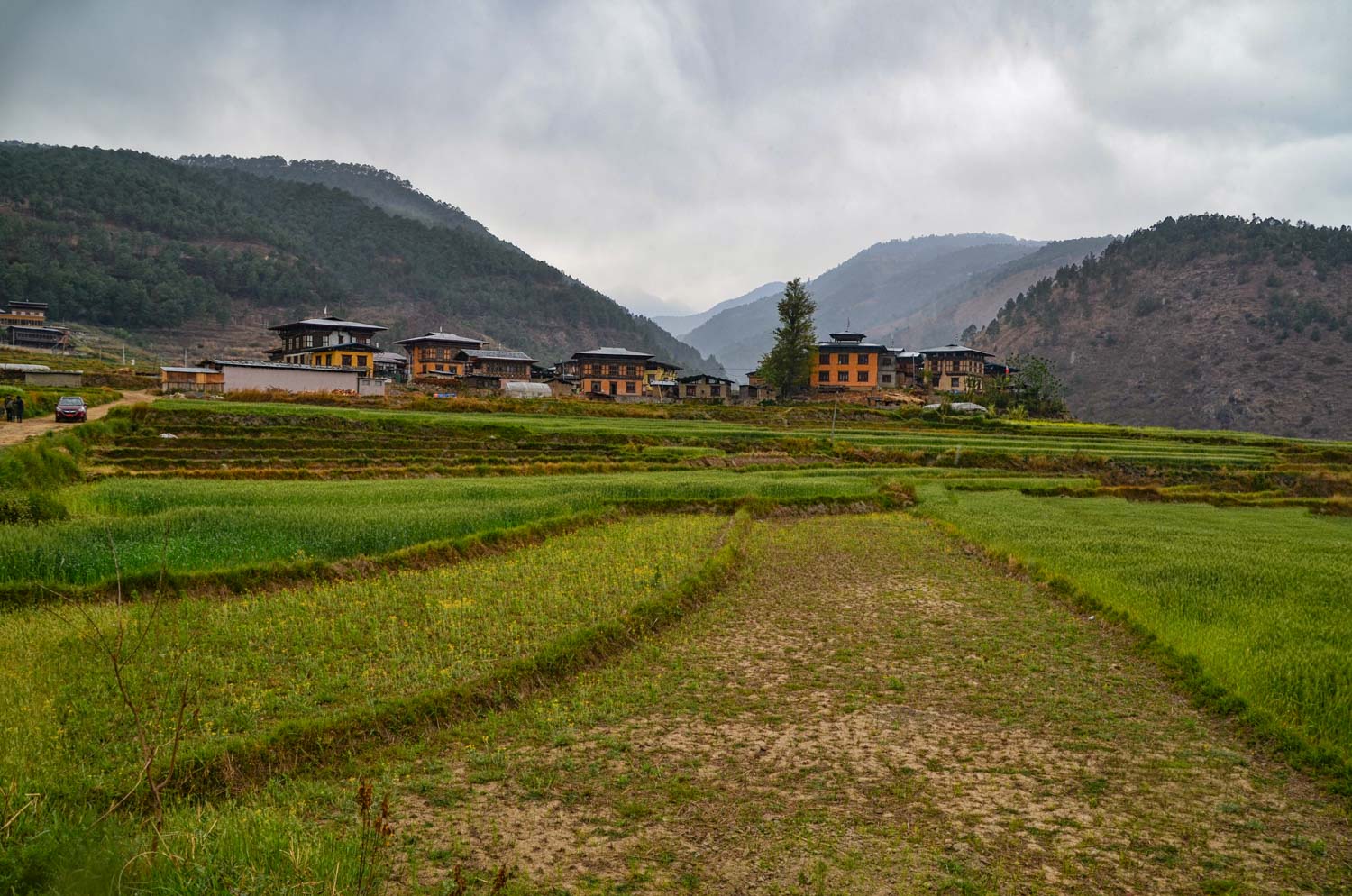
Clouds hanging low, but not a wind.
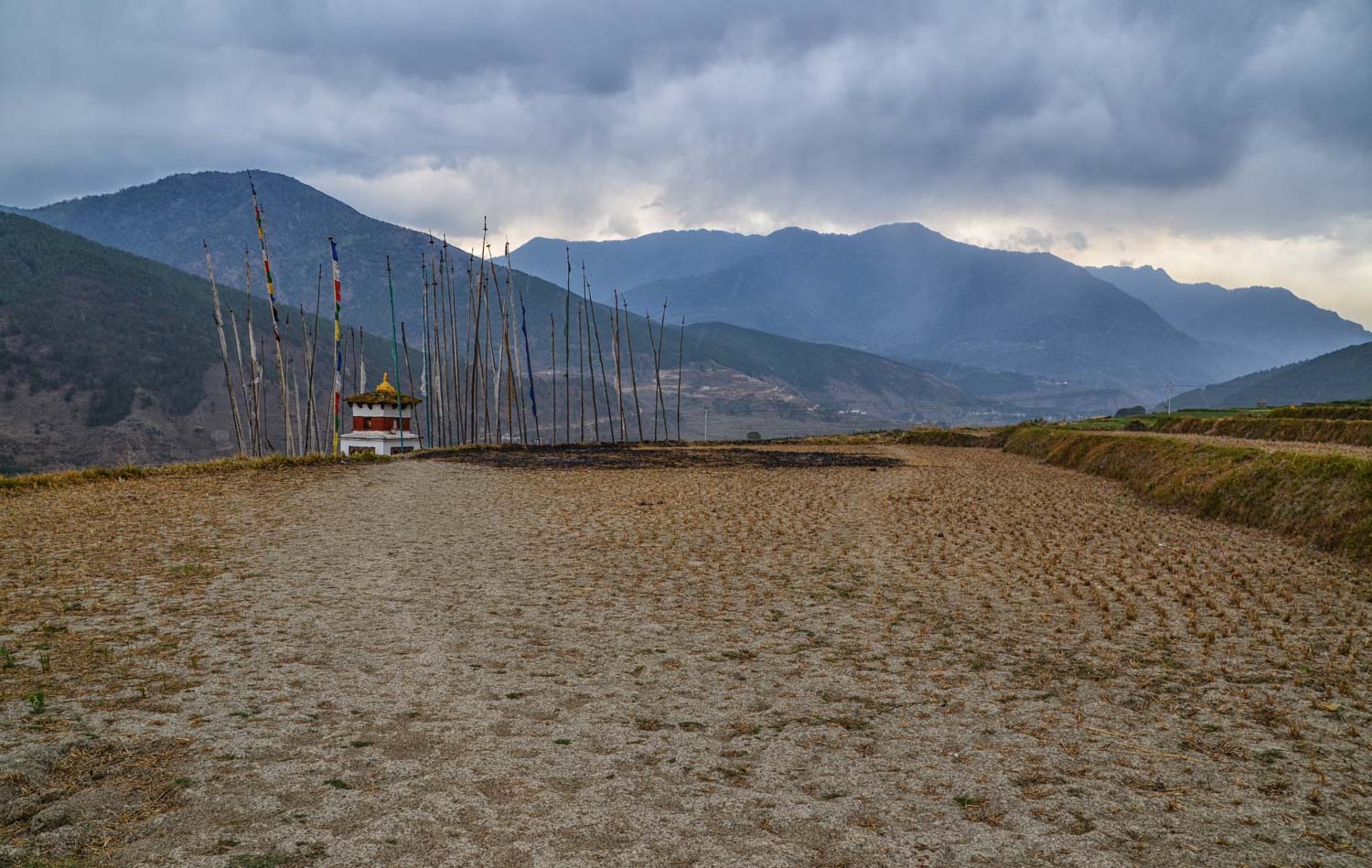
Blessings are important – even to the fields that should feed the people.
On our way up to Lobesa and the Lhakang, we had lunch and stopped by several shops selling masks and phalluses. The red mask is worn at the dances and the phallus on top is to swing out and bless people in the audience.


On reaching the temple, the rain had stopped, and young men and women were spinning the prayer wheels while circumambulating. Both men and women come to Chimi Lhakhang, and not only for fertility wishes. Often, when their child is born, they come back here to give him or her a name. Inside the temple there are bamboo sticks with names on them, if you prefer to let chance decide.
Equality is essential in Bhutan, and often it is the woman who inherits her parents. Marriage is no longer a business matter – people marry out of love. It is also no big deal with a divorce – should the couple not be happy in their marriage. And, I think I said it before – I have never seen so many men taking good care of and playing openly with their children.


Between Paro and the Capital of Bhutan, Thimpu, the road takes you over the Dochula Pass (3140 m) with its 108 chortens. A chorten is a kind of stupa, often built at crossroads and passes to ward off evil. And all chortens contain religious relics.

The Druk Wangyal Khang Zhang Chortens are red-band or khangzang chortens, built in a central hillock at the pass, under the patronage of the Queen Ashi Dorji Wangmo Wangchuk. In local language they are called ”chortens of victory”, because they were built as a memorial in honour of the Bhutanese soldiers who were killed in the December 2003 battle against Assamese insurgents from India. It also marks the victory of King Jigme Singye Wangchuck who dislodged the rebels from their camps in Bhutanese territory.

This is a peaceful place for slow walks – contemplating life, feeling the fresh air and nature’s beauty.
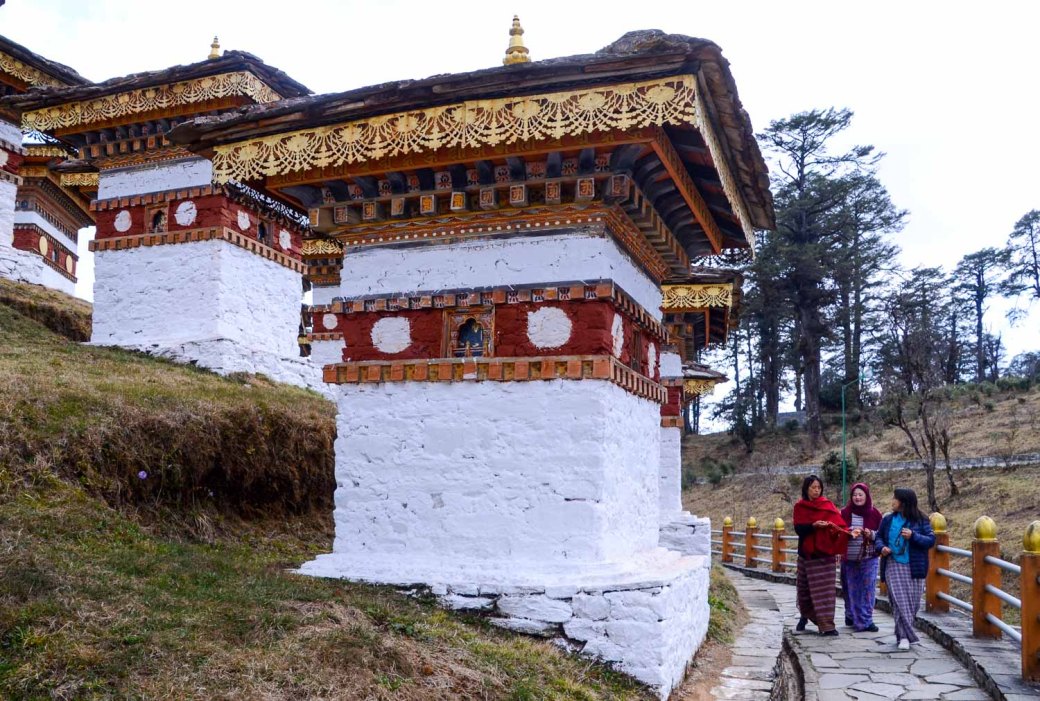
Circumambulating clockwise.
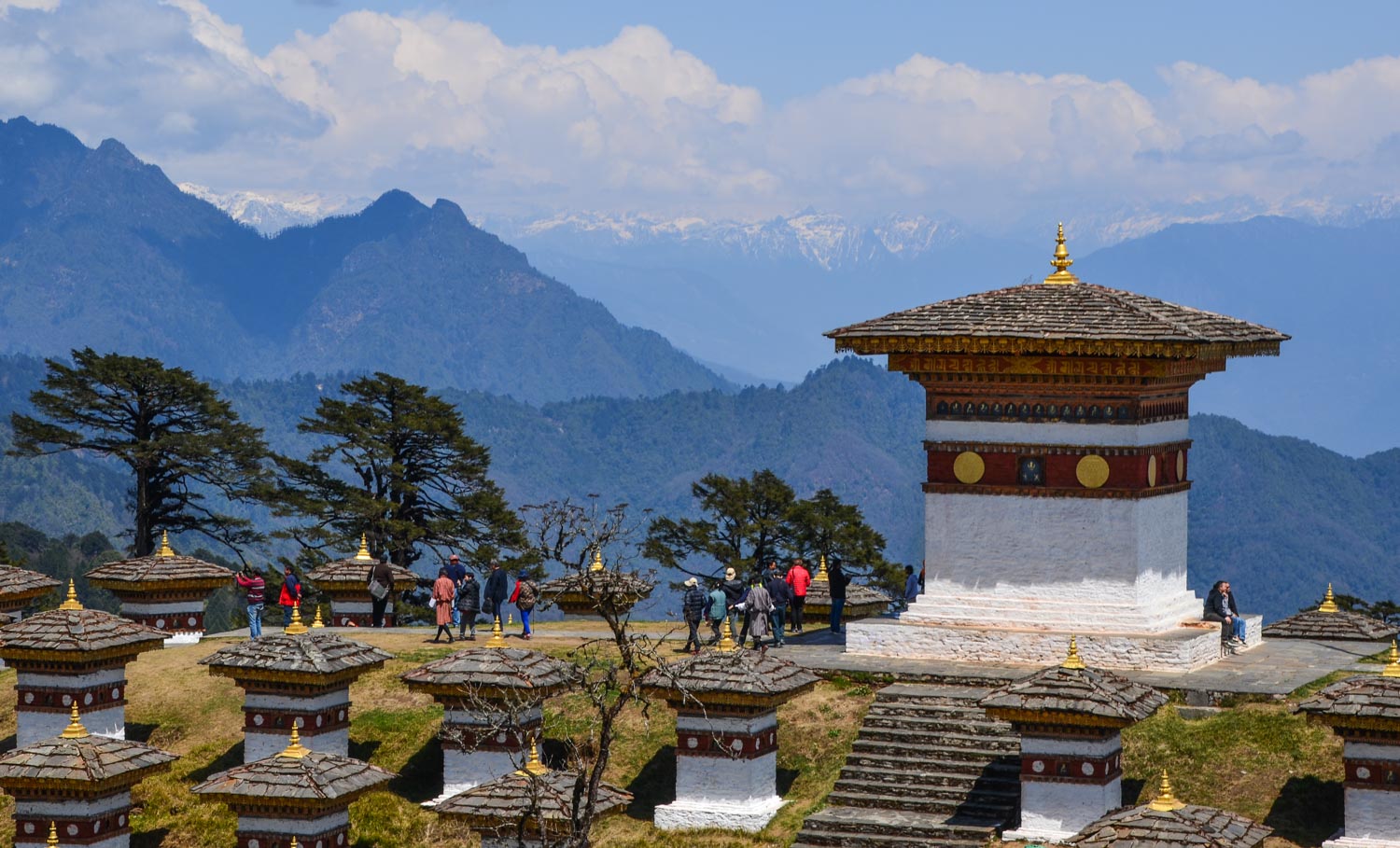 When the sun comes shining through – my heart shines too.

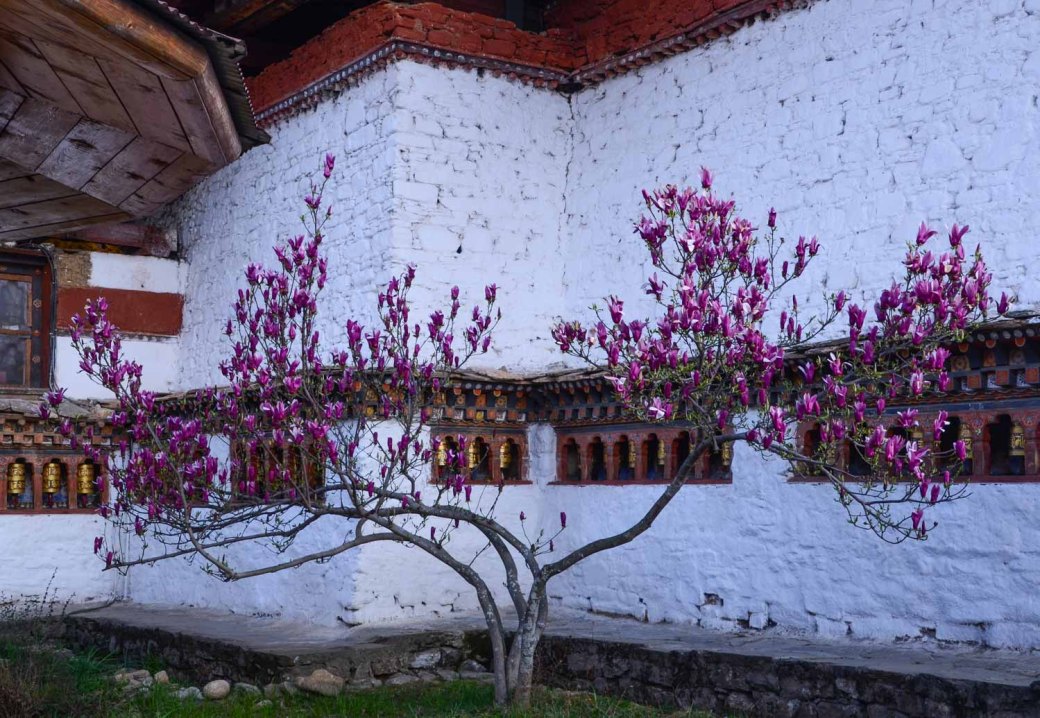
The rhododendrons and magnolias touch the sky.
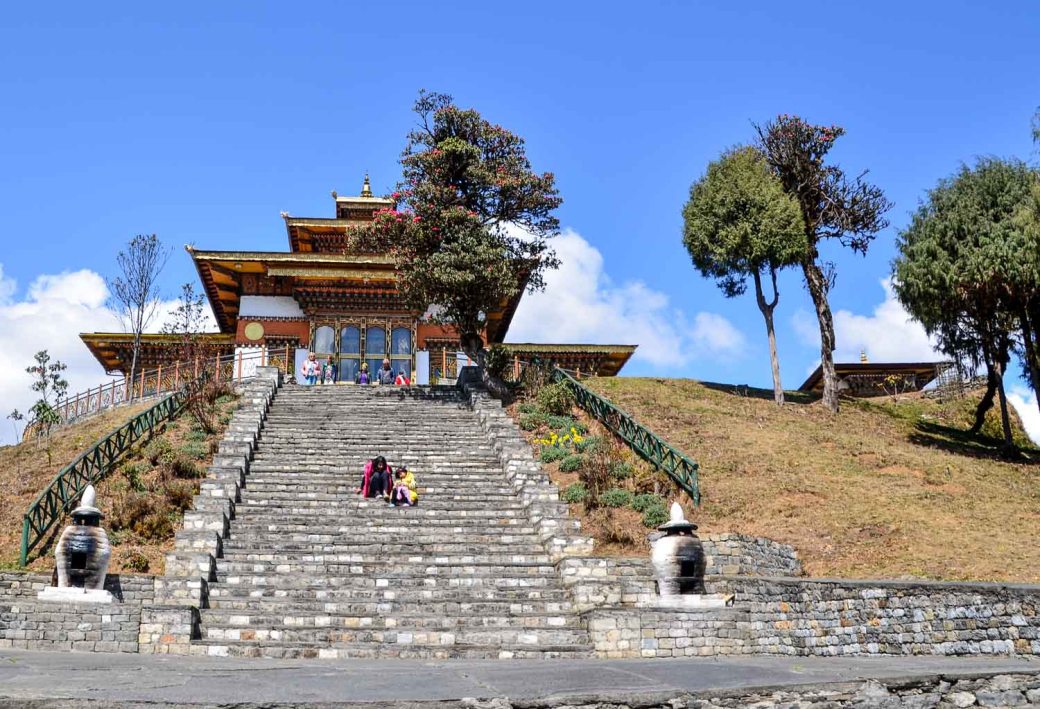
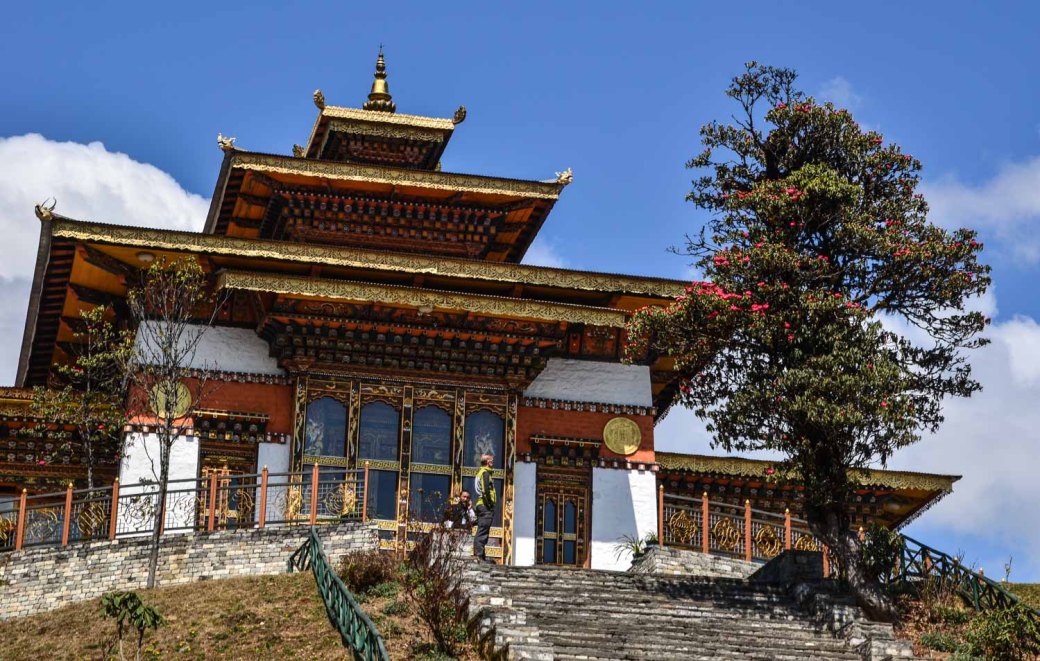
After the completion of the chortens, the temple known as the Druk Wangyel Lhakhang was built in June 2008 – as a memorial to celebrate 100 years of monarchy in Bhutan.
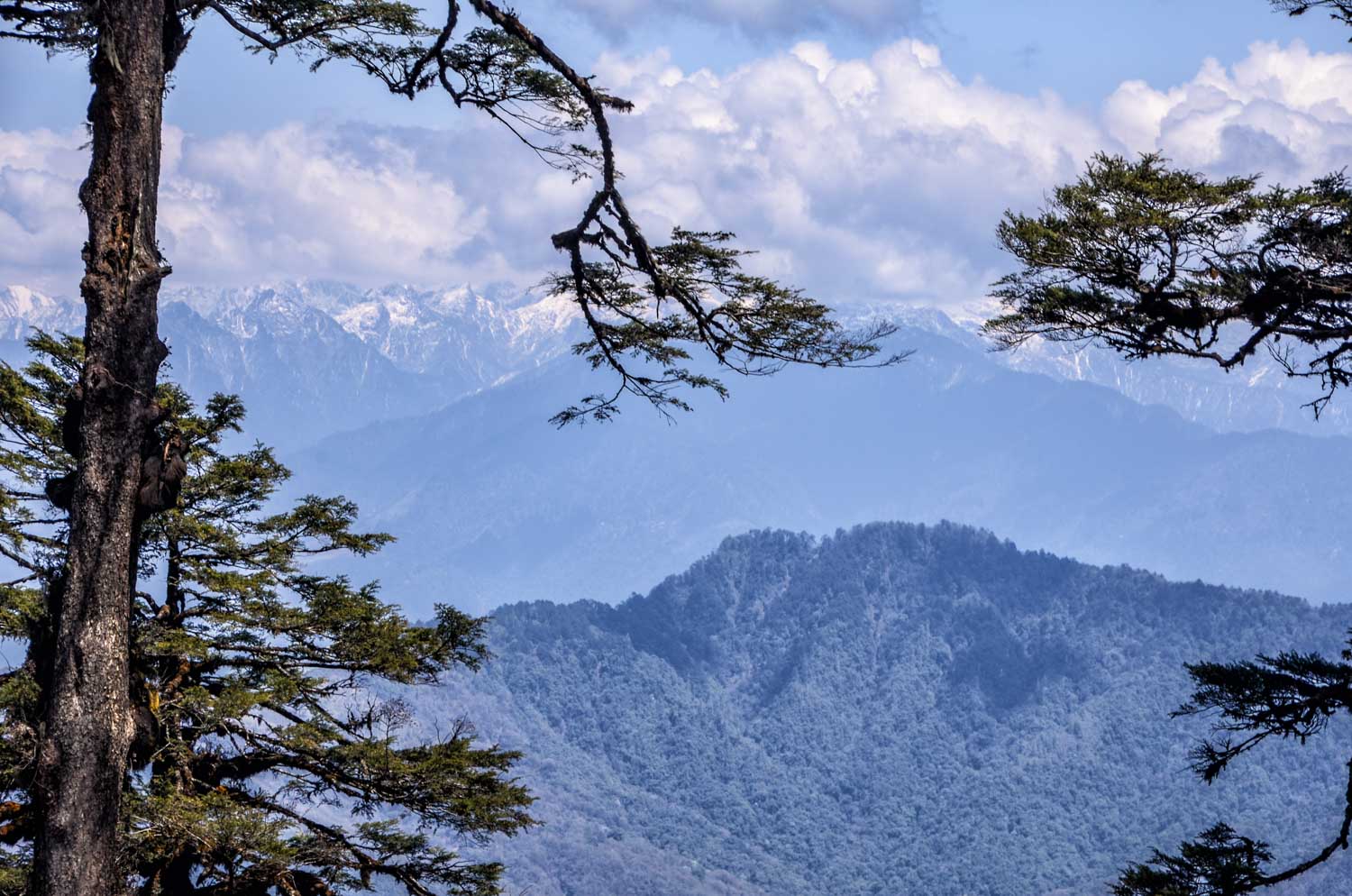
From the Dochula Pass you will, on a clear day, have a panoramic view of the Himalayan range. The best time is in October/November, but we were still quite lucky this day.
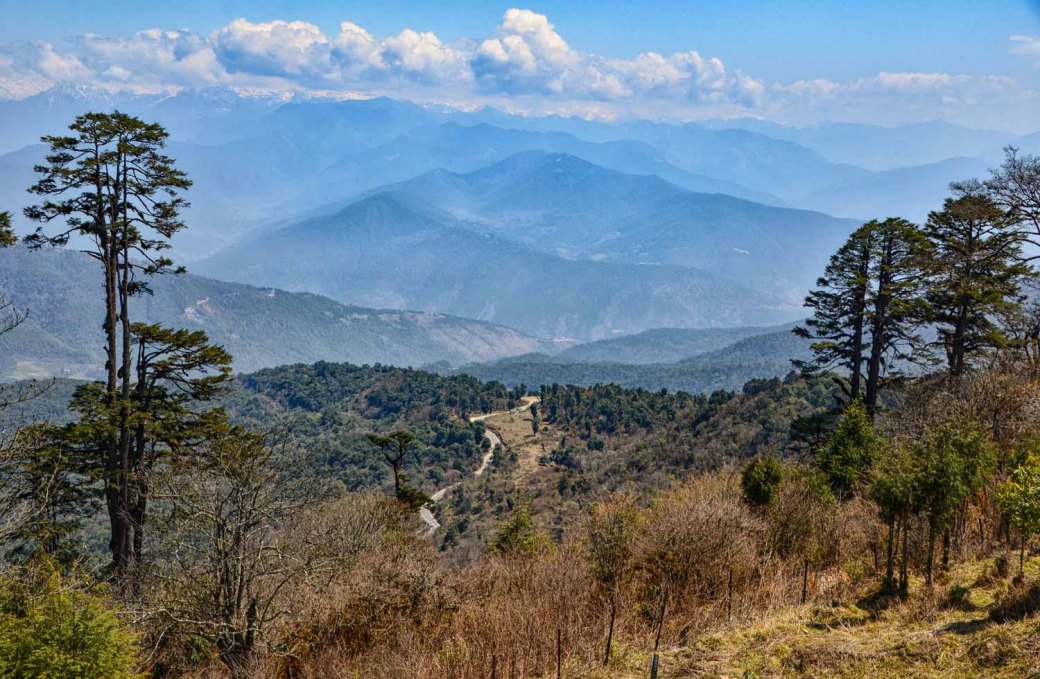
On the far right you will find the highest unclimbed mountain in the world, Gangkar Puensum, 7564 meters. It is also the highest mountain in Bhutan.
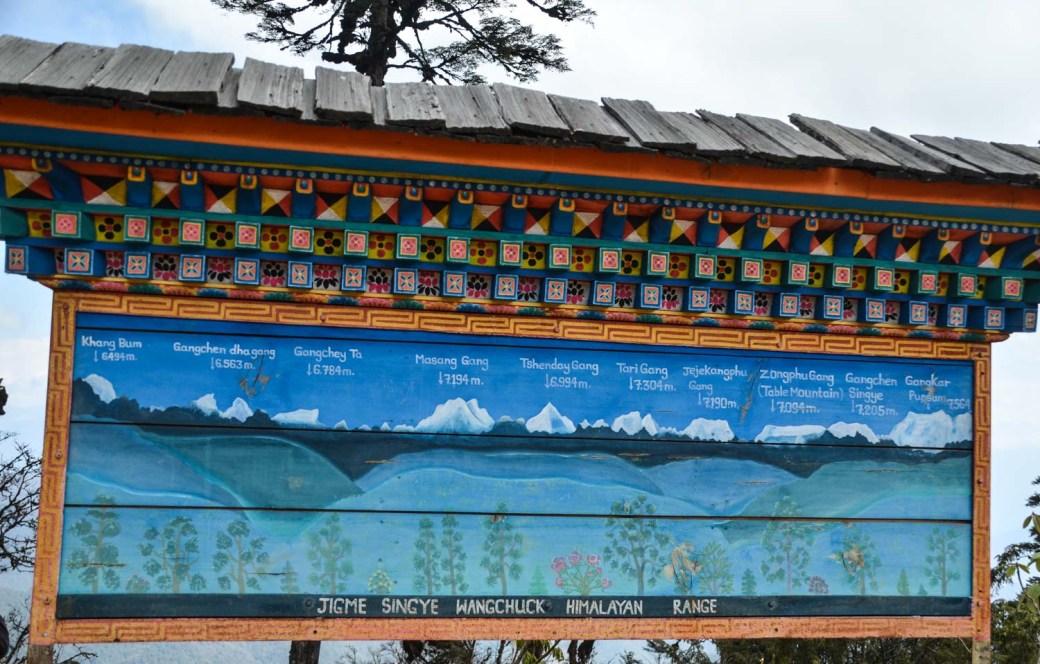 Since 1994, climbing of mountains in Bhutan higher than 6,000 meters has been prohibited out of respect for local spiritual beliefs, and since 2003 mountaineering has been completely forbidden.
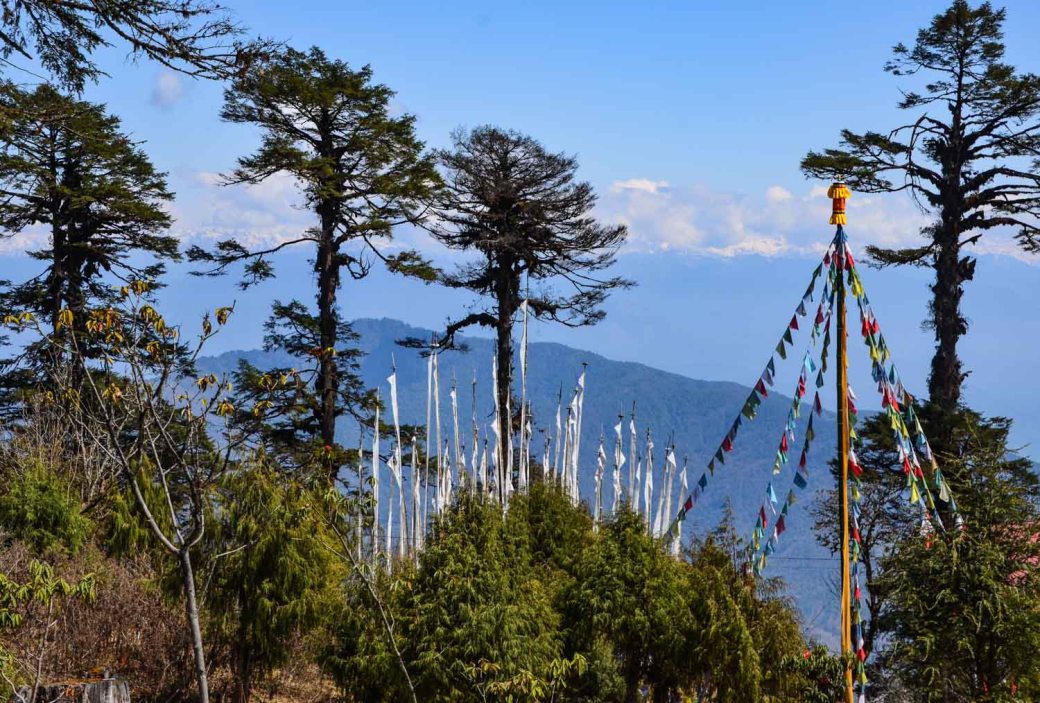
But somewhere, far away behind the treetops, these enigmatic giants are waiting…
Krista, at WordPress, asks us to show what we think about when hearing the word ”prolific” My first thought went to the prolific Spanish sunflower fields – they made me happy just looking at them. They still do.


After Paro Tsechu, we decided to walk home to our hotel, Nak-Sel, in the lovely evening light. Some kilometers that would take about an hour on the narrow, dusty road.
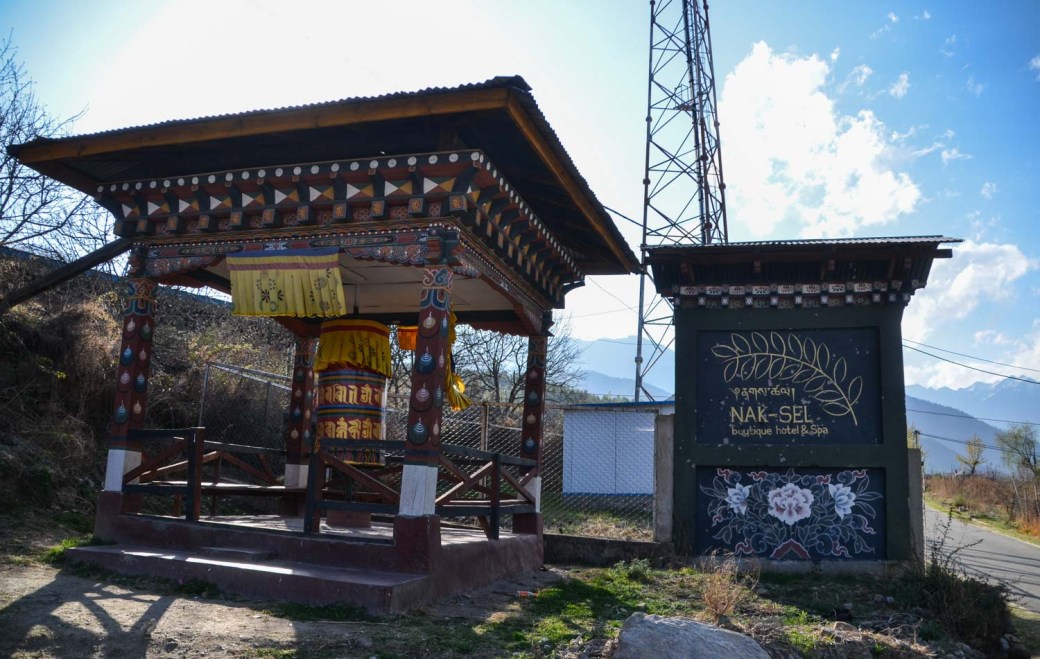
A walk well worth the effort in the thin air – giving us the chance to take in the beautiful countryside and to talk to some of its harmonious inhabitants.

The Bhutanese houses are built to dry the hay on the open upper floor. Even if you don’t have any hay, you build this way – many washed clothes were hanging in this space, and old furniture leaning on the structures.


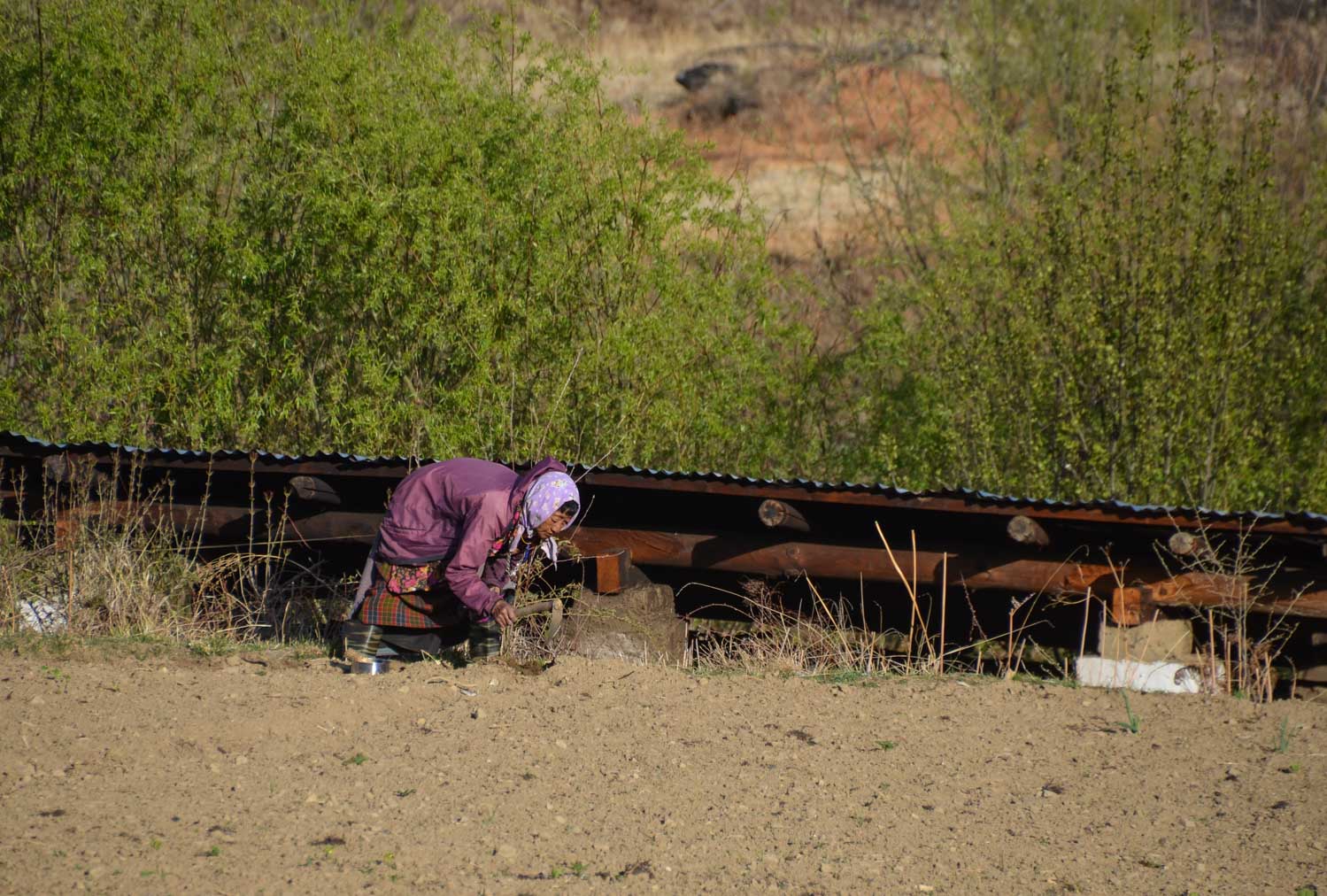
The last hours of light for hard working farmers.
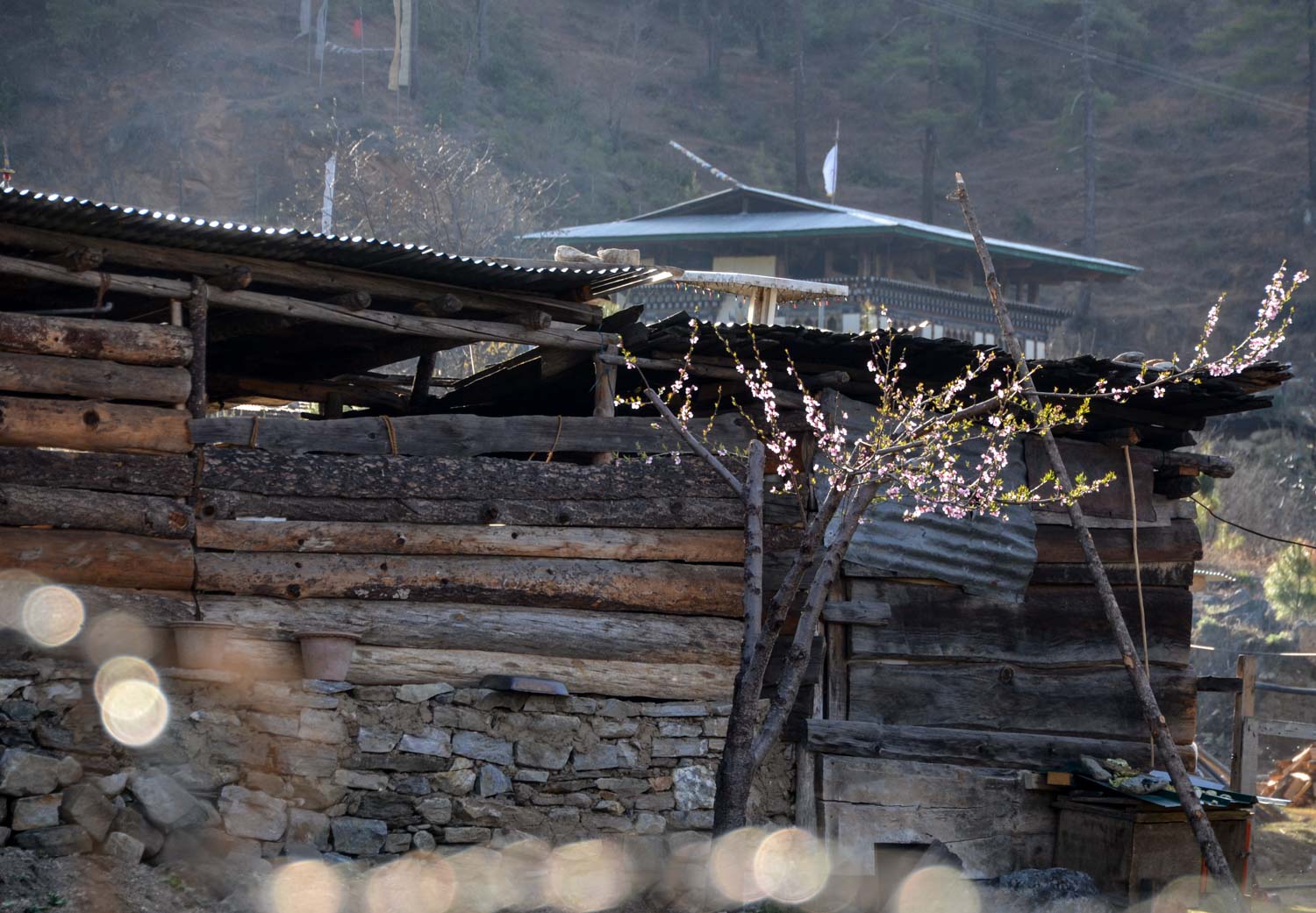
 The old farmsteads lay mostly quiet in the setting sun – and the first cherry blossoms enchantingly aglow.
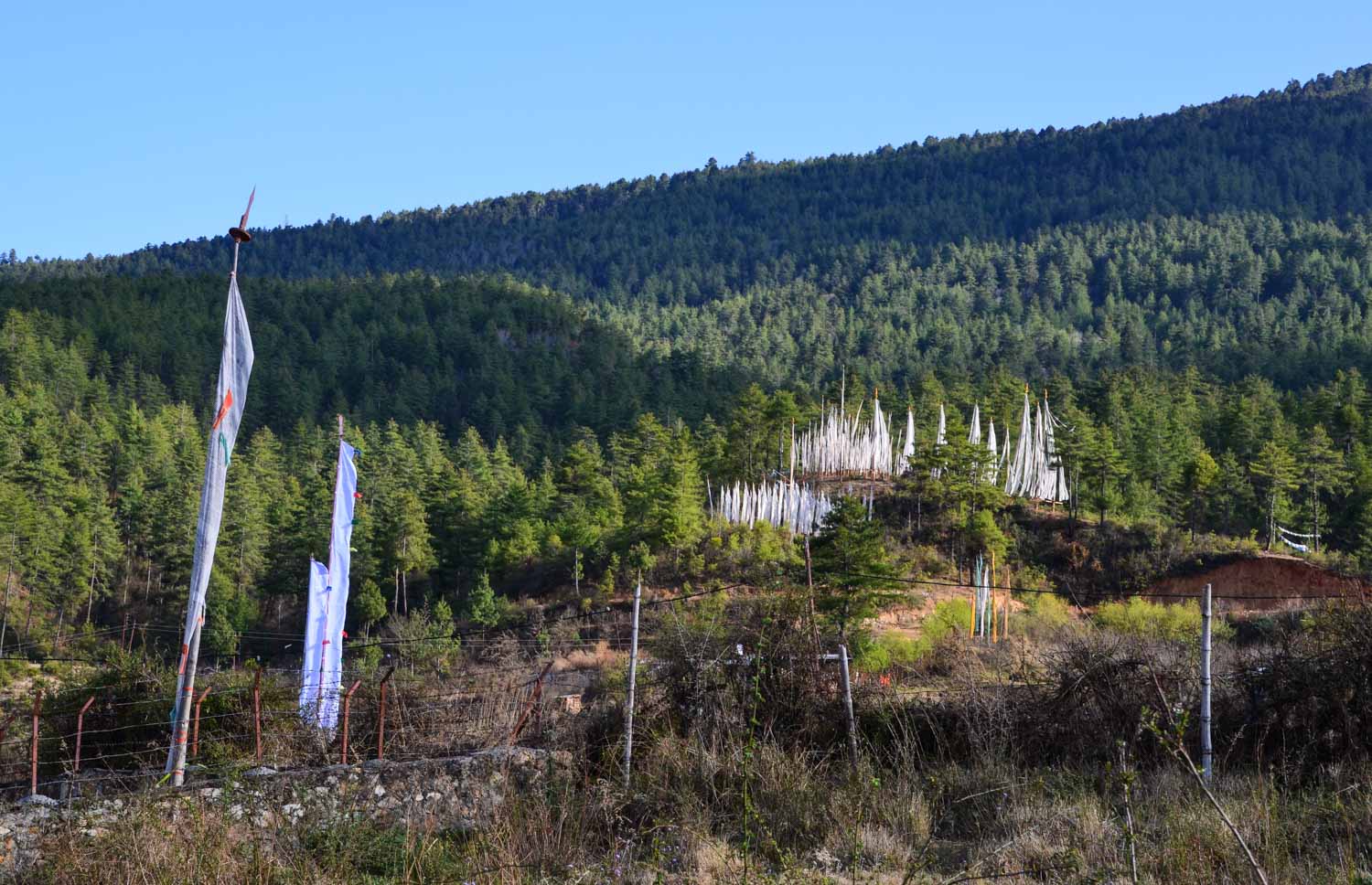
Always 108 flags for the dead. Everywhere on the hills, where the wind is blowing. Naturally there is a religious meaning, but according to our guide, the exact reason to just 108 is lost in history.
An overwhelmingly interesting day had come to an end. And with the stunning views of Jomolhari, 7326 meters, we reached Nak-Sel and went to enjoy a lovely dinner.

 Leya
Leya 
Du måste vara inloggad för att kunna skicka en kommentar.