For this week’s challenge, Patti has chosen History. At first I wanted to write about Riga, the capital of Latvia, whose history begins as early as the 2nd century. But inspired by a visit there, I have chosen a piece of puppetry history instead – an art form very much alive in Latvia.

According to Wikipedia, puppetry is a form of performance that involves the manipulation of puppets – inanimate objects, that are animated or manipulated by a human called a puppeteer. The puppeteer uses movements of his/her hands, arms, or control devices such as rods or strings to move the body, head, limbs, and in some cases the mouth and eyes of the puppet. The puppeteer often speaks in the voice of the character of the puppet, and then synchronizes the movements of the puppet’s mouth with this spoken part.
The earliest puppets probably originated in Egypt, where ivory and clay articulated puppets have been discovered in tombs. Puppets are mentioned in writing as early as 422 B.C.E. In ancient Greece, Aristotle and Plato both made reference to puppetry.
This art form occurs in almost all human societies where puppets are used for entertainment through performance, as sacred objects in rituals, as symbolic effigies in celebrations such as carnivals, or as a catalyst for social and psychological change in transformative arts.
There are many different varieties of puppets, and they are made of a wide range of materials, depending on their form and intended use. They can be extremely complex or very simple in their construction. The simplest puppets are finger puppets and sock puppets. Familiar examples of hand puppets are Punch and Judy. Marionettes are suspended and controlled by a number of strings, plus sometimes a central rod attached to a control bar held from above by the puppeteer.

In Riga, we just happened to walk past the puppet theater, went inside and met – Alexander! A charming young man who showed us around and tried to explain, in broken English, about the theater and the puppets. These special ones behind the glass were handled by him alone. You can see him at work as a puppeteer in the poster shot above.
Some more history of puppetry
Many types of folk art puppetry developed in disparate regions of the world, and some are still practiced today. In Japan, the sophisticated bunraku tradition evolved out of rites practiced in Shinto temples. The Vietnamese created the unique practice of water puppetry, in which wooden puppets appear to walk in waist-high water; this was originally developed hundreds of years ago as a response to the flooding of rice fields. Indonesian shadow puppets are another example of a long-held folk tradition. Ceremonial puppets were also used in several pre-Columbian Native American cultures.
In medieval Italy, marionettes were used in the production of morality plays by the Christian church. The famous comedic puppet tradition of commedia dell’arte evolved in the face of censorship by the church. Later, the plays of William Shakespeare were sometimes performed with puppets in place of actors.
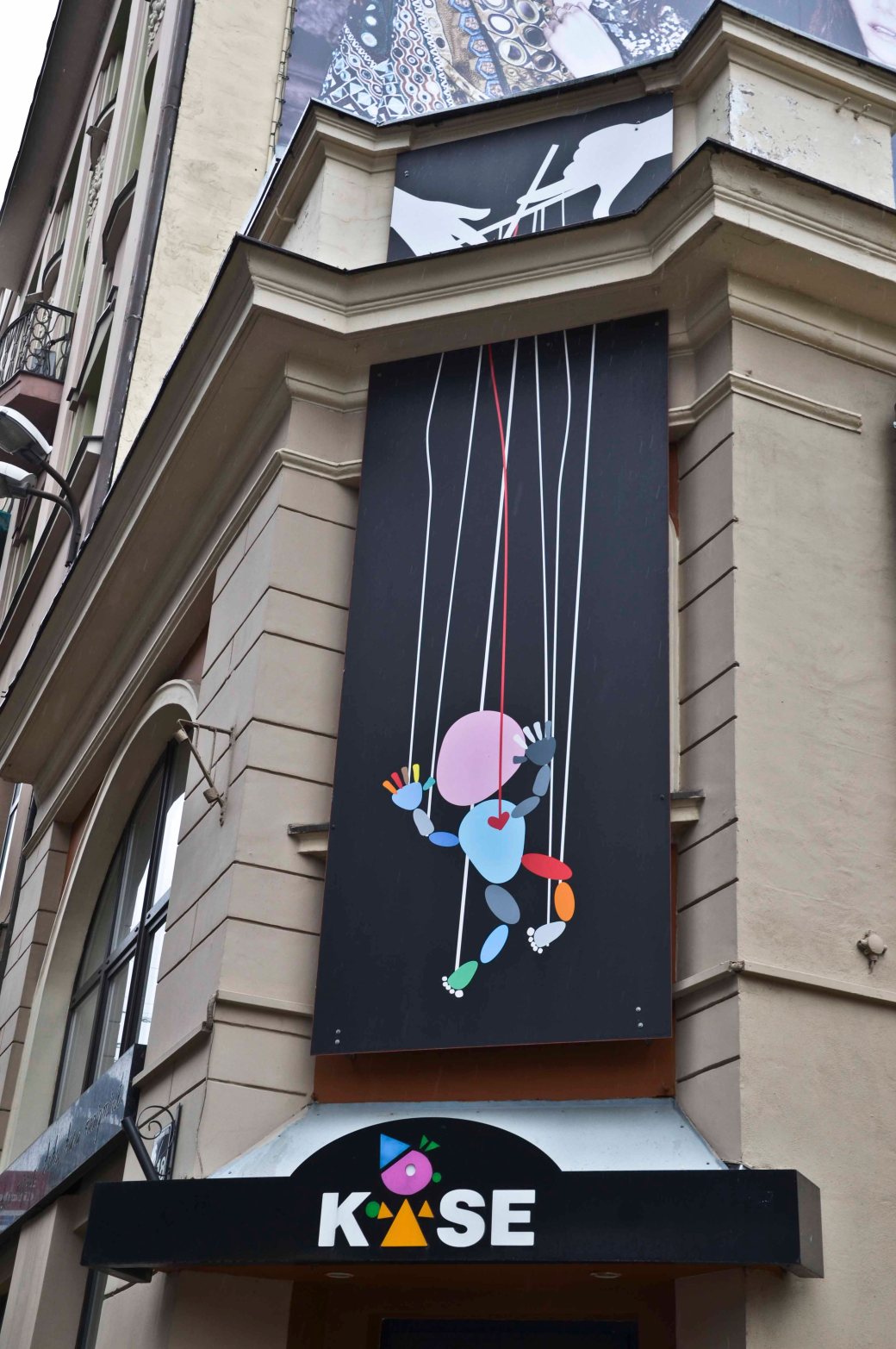
In Sweden there is no great tradition of Puppetry, but it still exists as an art form for small children. In Latvia they have several performances every day. For both young and older children – and for adults as well. Do you have this art form in your country?

Nowadays the Art of Puppetry is experiencing something of a real renaissance all over the world, touching hearts and minds and engaging new spectators of all ages. Puppetry is a unique cultural treasure, which invites you to experience such a magical way of art that cannot be created or substituted by any other form of art. The task of our puppet theatre is to introduce this special kind of theatre arts in such a way, that the wonders of puppetry world would find their home in the heart of every child.
Vilnis Beķeris
General Director of Latvia Puppet Theatre
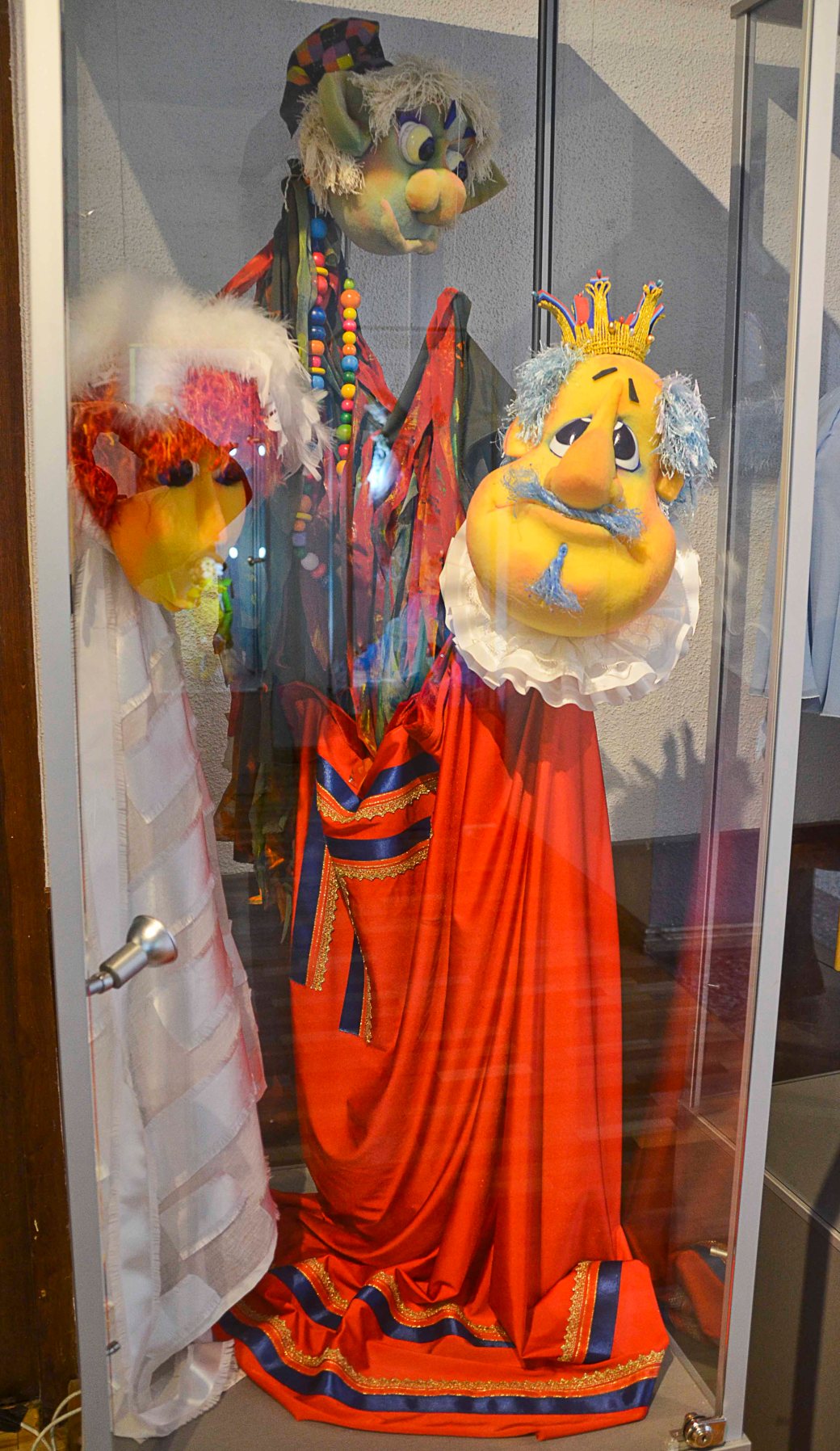
Finally, some history of the theater in Riga
The early beginnings of the Puppet Theater date back to 1942, when during the war the National Art Ensemble of the Latvian SSR ( Latvian Soviet Socialist Republic) was formed in the city of Ivanov in Russia. From there originates a group of puppeteers, whose shows were watched by evacuated soldiers and Latvian people. On the 4th of October 1944 the National Puppet Theater of the Latvian SSR opened, run by poet Mirdza Ķempe and writer and translator Jānis Žīgurs.
Thank you to Patti for letting us share so many things, events and places of historic interest. Welcome to join in the historic tour! And please don’t forget the tag Lens-Artists so people can find you in the reader!








 Leya
Leya 
Du måste vara inloggad för att kunna skicka en kommentar.