Thursday Thoughts – David Gareja Lavra

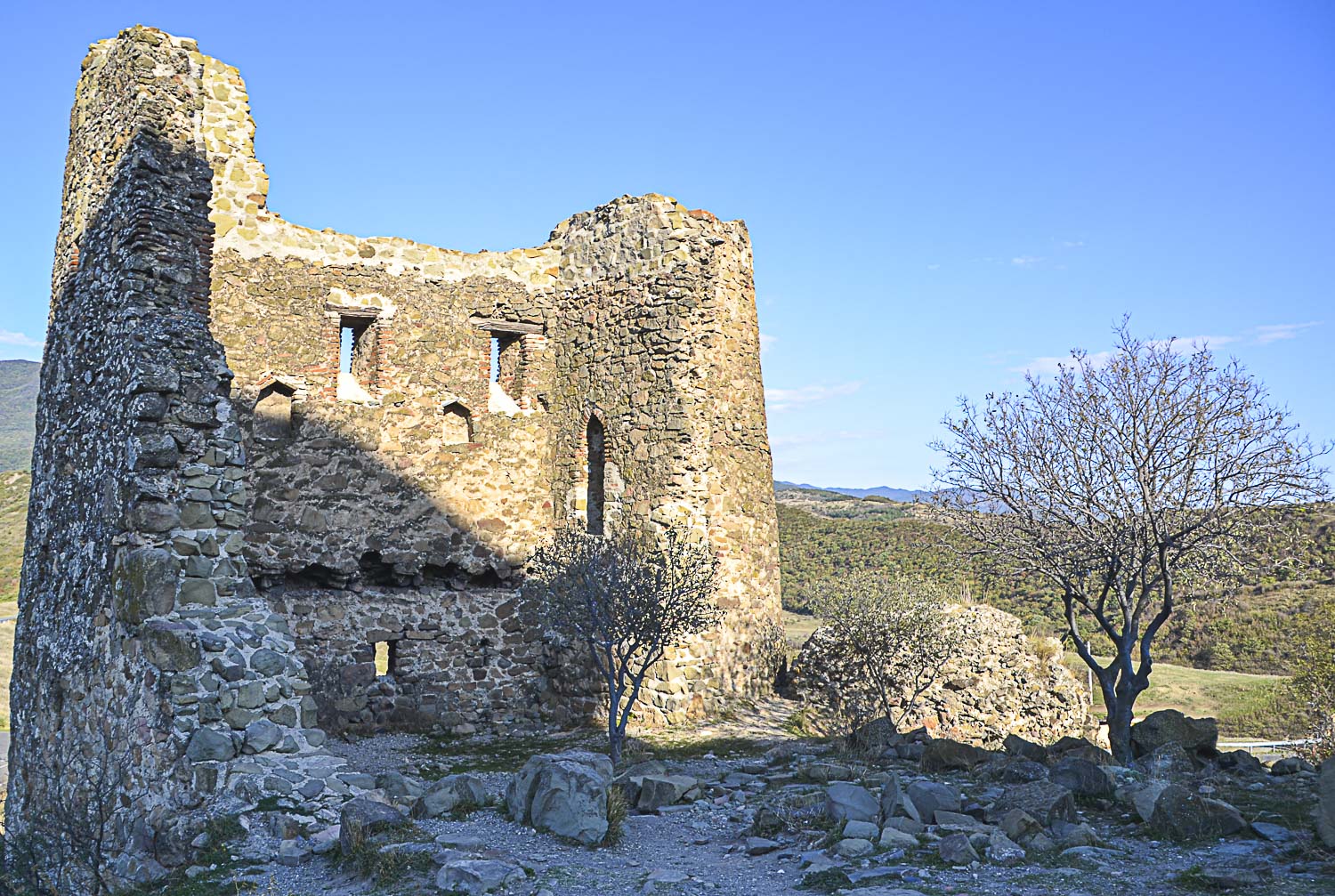
David Gareja Lavra is a historical and architectural monument within the monastic complex of David Gareja. It was built during the first half of the 6th century under the guidance of San David Gareja, one of the thirteen Assyrian monks who arrived in the country at the same time. He came to bring Christianity to Georgia, and he founded around 15 monasteries in the arid and desert like nature on the border to Azerbaijan.

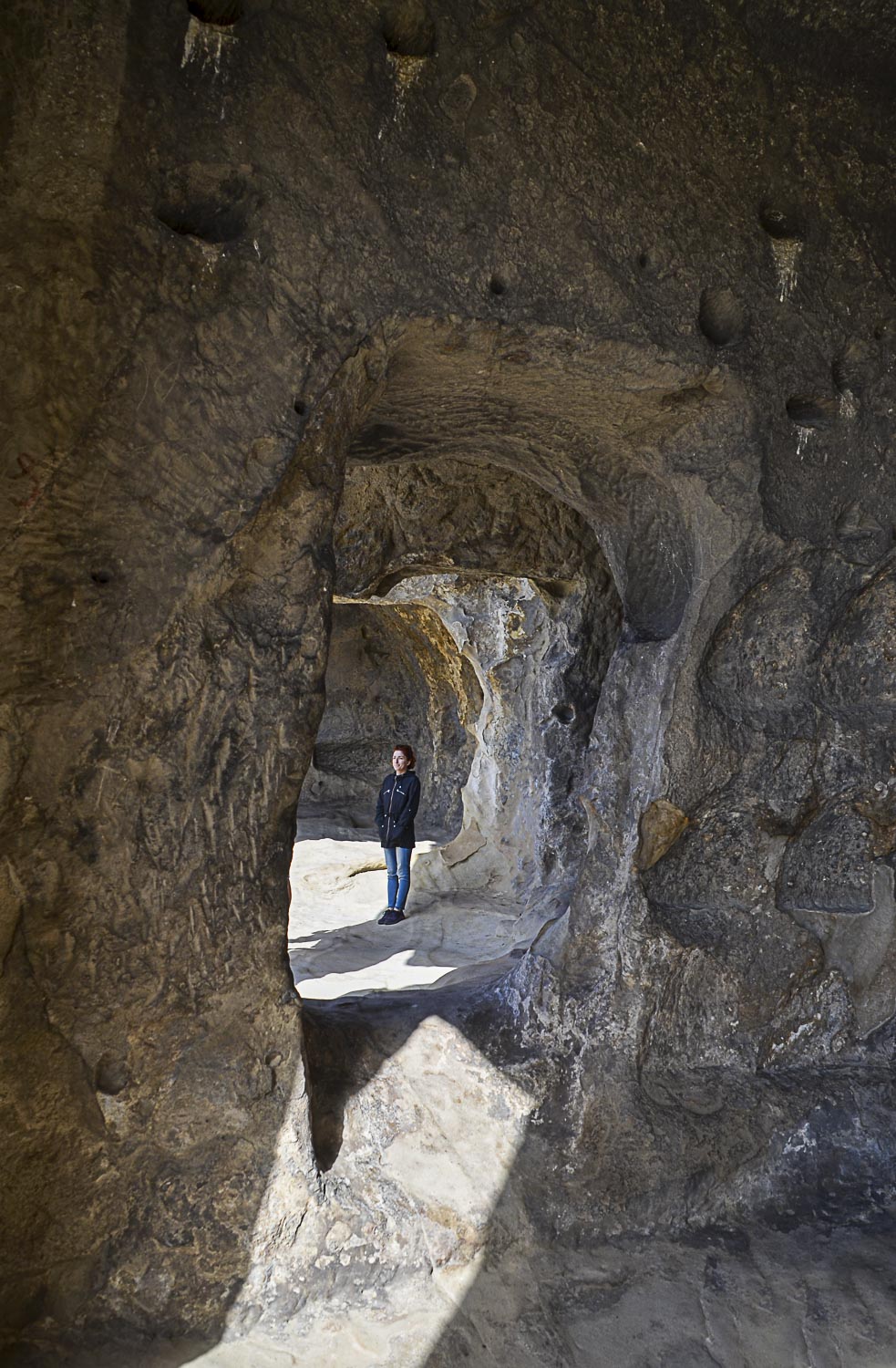
David Gareja is a Georgian Orthodox monastery complex located in the Kakheti region, and the complex includes hundreds of cells, churches, chapels, refectories and living quarters hollowed out of the rock face.

Despite the harsh environment, the monastery remained an important centre of religious and cultural activity for many centuries; at certain periods the monasteries owned extensive agricultural lands and many villages. The renaissance of fresco painting chronologically coincides with the general development of the life in the David Gareja monasteries. The high artistic skill of frescoes made them an indispensable part of world treasure. From the late 11th to the early 13th centuries, the economic and cultural development of David Gareja reached its highest phase.

We left early in the morning on a private tour, because the roads were all very narrow and bumpy – no buses could go there. Road builders and machines were constantly working and in some places we had to drive in the nearby fields instead of the road.
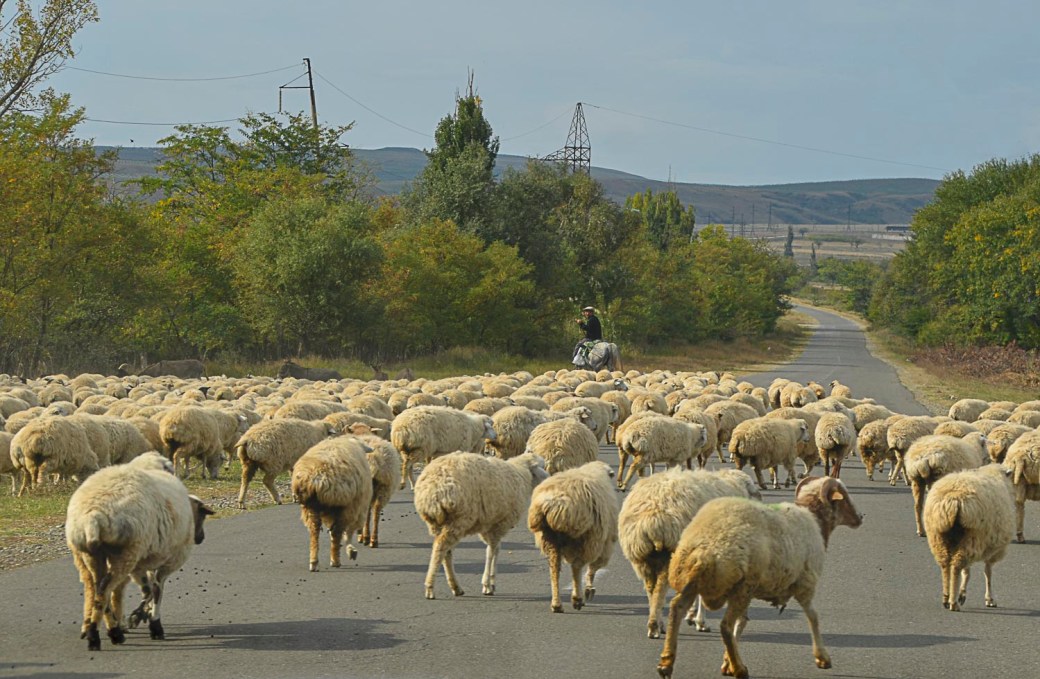
We wondered where these sheep would get any food, but loved to see them – and their shepherds on horses.
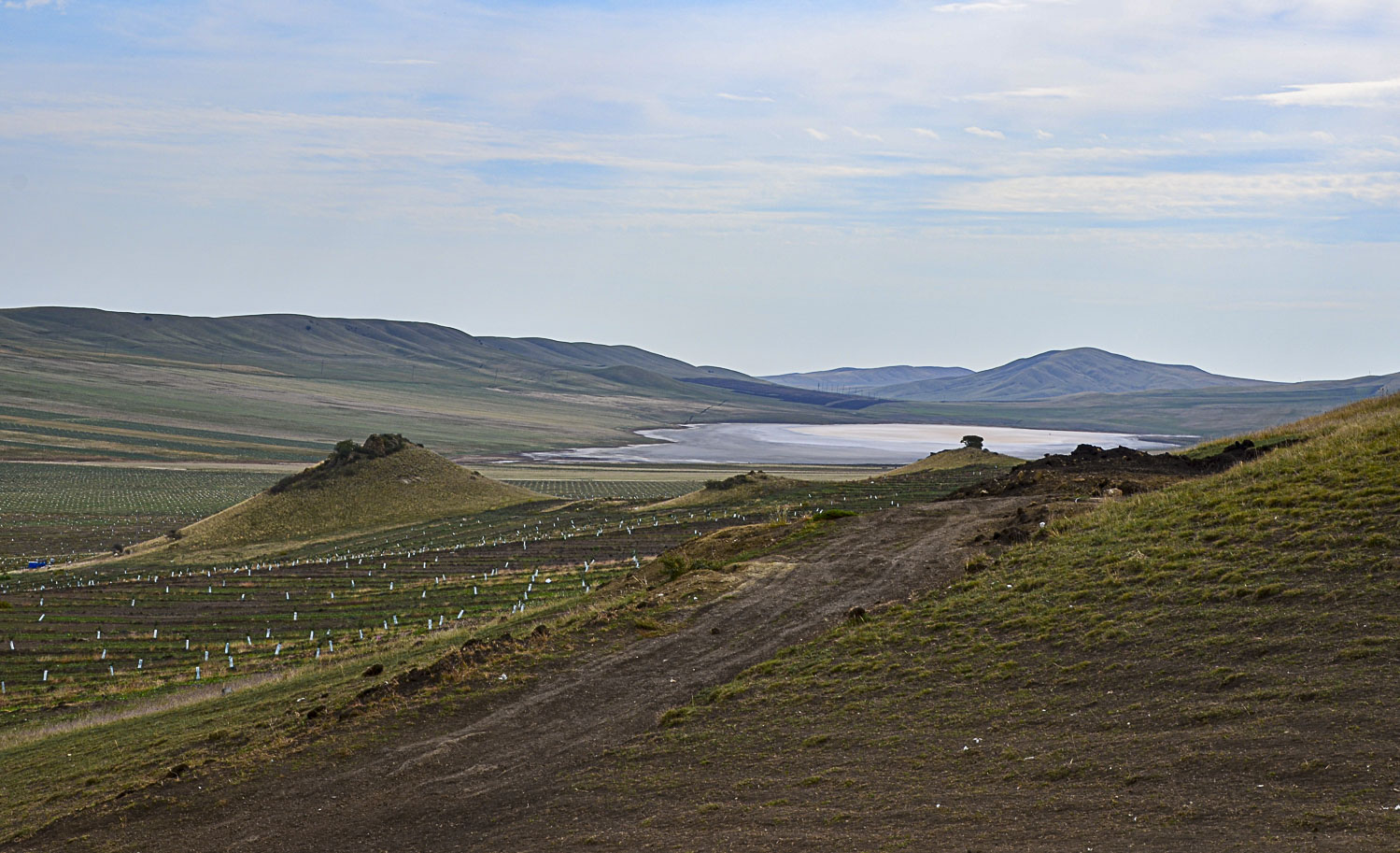
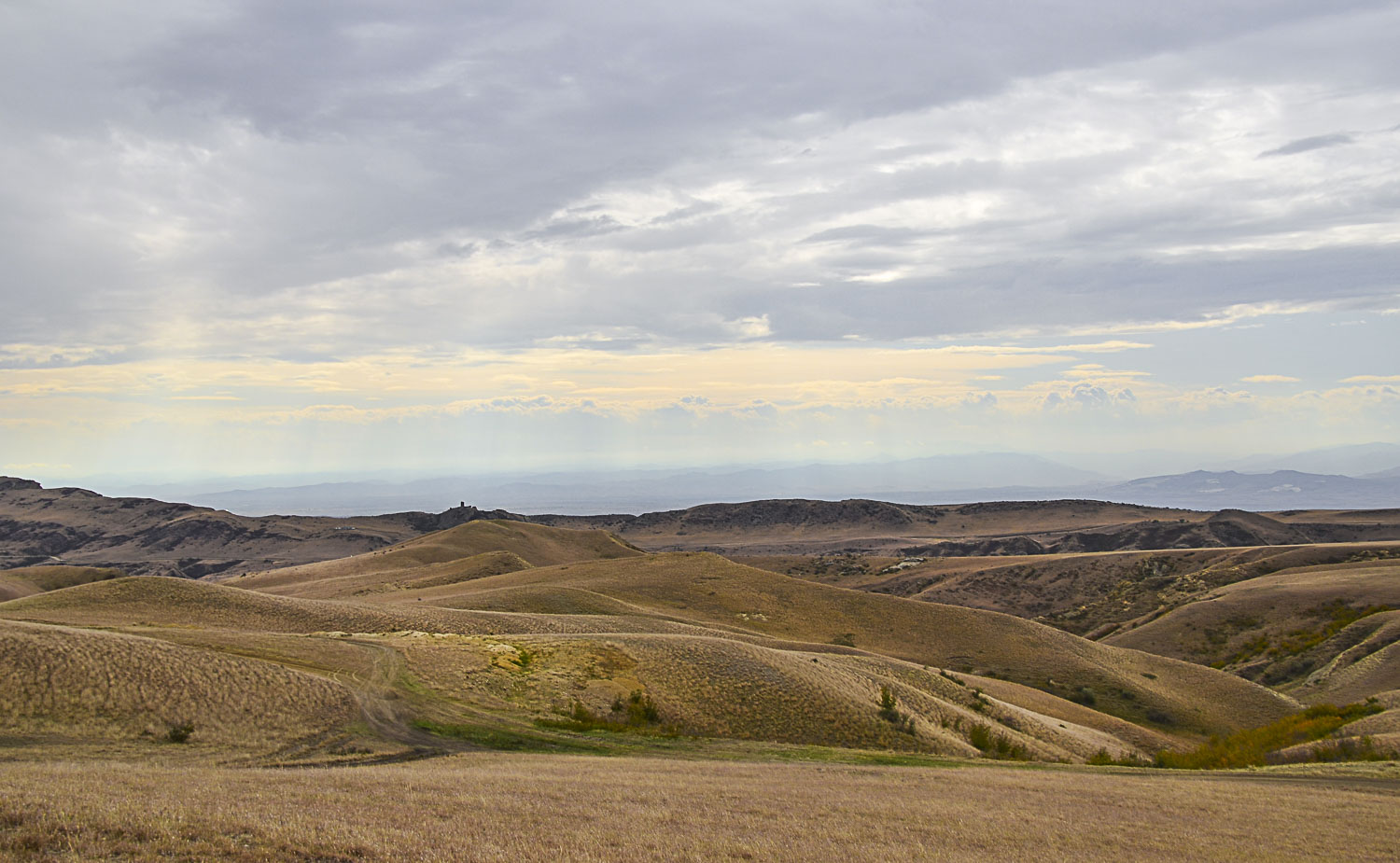
I loved the landscape, the low ridges, the long views and the serenity of the lines. We also saw gigantic areas with olive trees, according to our guide a co-operation with EU. When ready, the olives would be exported for the EU market.
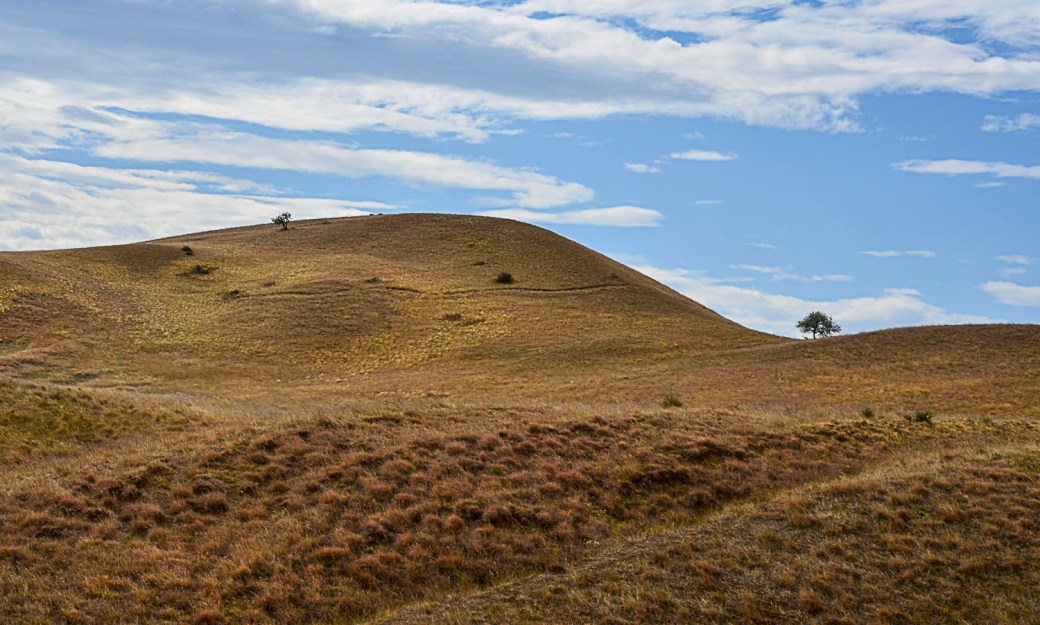
We passed some salt lakes as well. Millions of years ago, the whole area was covered in water, and today these lakes are the only remaining waters to be seen. They have no outflow in this hot and dry area, so what is left is – salt.
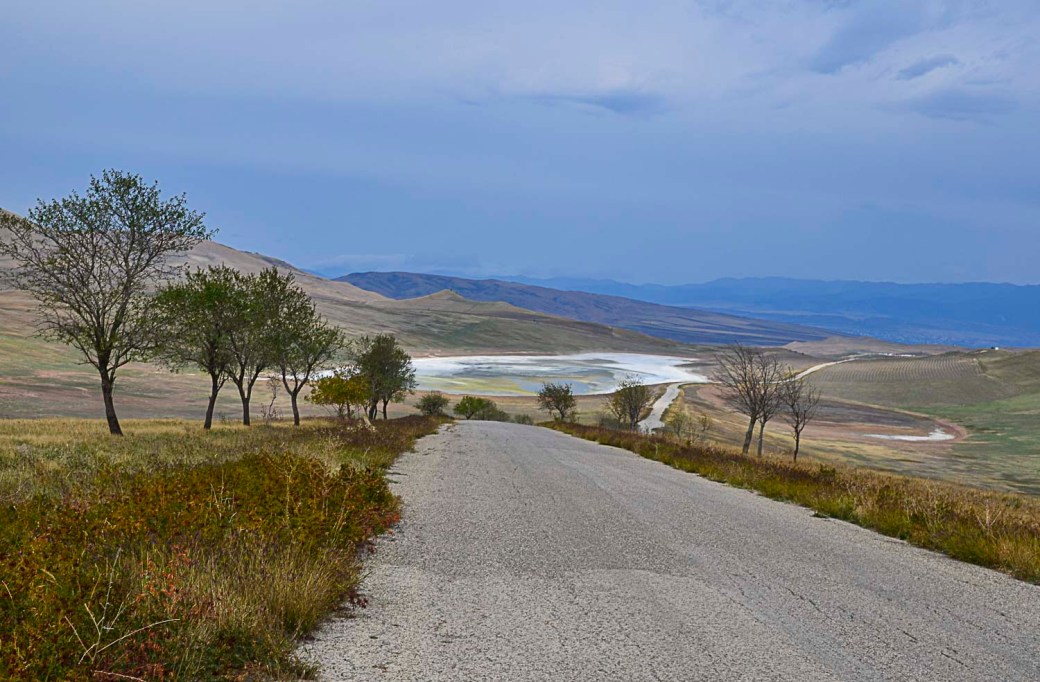
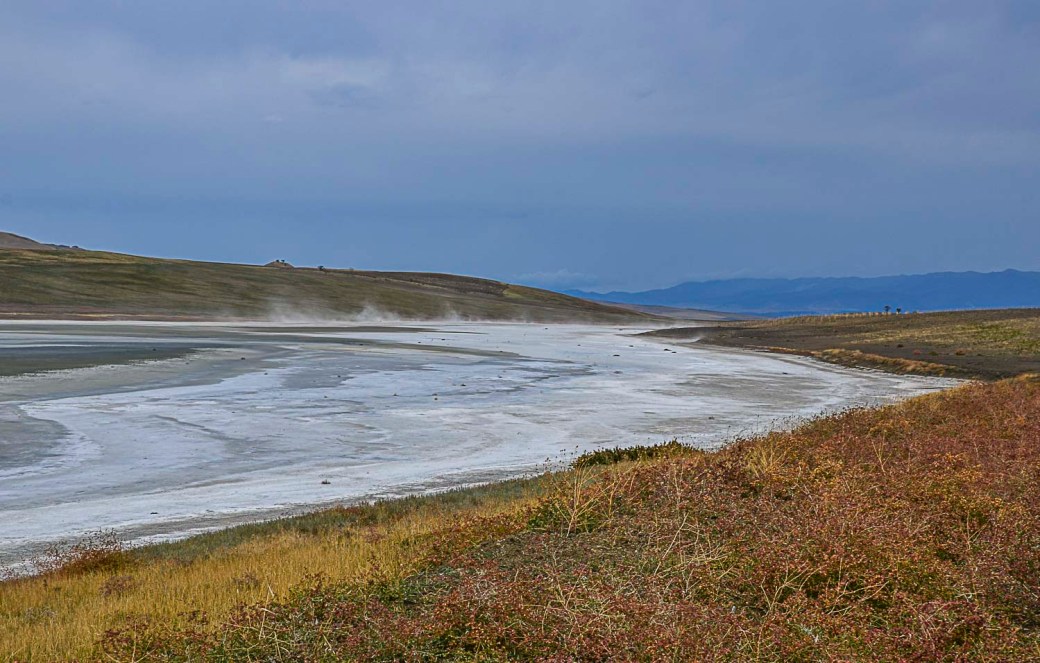
This means that the soil is saturated with salt and difficult to cultivate. Even the ground water here is too salty. In order to use it as drinking water, it has to be filtered. This windy day, salt was flying in the air, and you could feel it on your tongue when speaking.
While driving, our knowledgeable guide told us of The David Gareja monasteries and their long history of wars and vandals, destroying and rebuilding. The Mongolians och Timur Lenk were devastating, but that was nothing to the Persians killing of 6000 monks celebrating Easter in 1615. After the prayer in all 15 monasteries, all monks were locked inside the churches and killed. The rich artworks and other treasures were destroyed or stolen. After this blow, the D G monasteries never came back to their former glory.

Then, what seemed a final blow, came after the violent Bolshevik takeover of Georgia in 1921 – David Gareja was closed down and remained uninhabited. In the years of the Soviet–Afghan War, the monastery’s territory was used as a training ground for the Soviet military, that inflicted damage to the unique cycle of murals in the monastery.

After the restoration of Georgia’s independence in 1991, the monastery life in David Gareja – Lavra – was revived. Today it is the home of 13-30 monks.

We only visited Lavra, and we were not allowed to see how the monks really lived their daily life. But, the guide told us that in one of the higher located caves, the monks had their meals – kneeling at stone tables.

The area is also home to protected animal species and evidence of some of the oldest human habitations in the region.

Part of the complex is located in the Agstafa rayon of Azerbaijan and has become subject to a border dispute between Georgia and Azerbaijan, with ongoing talks since 1991. But as there are strong economic and cultural ties between Azerbaijan and Georgia, they both have peaceful intentions in the determination of borders.
On leaving the monastery, my head was filled with thoughts of how a monk’s life must be out there in the desert. I wonder how young or old they are today, what their cave cells look like and how cold it is there in the long, lonely nights. Questions without answers.

A fact is – that Georgians are, and have always been, a strong people. They have been invaded by so many other powers, countries and people, but every time they have risen again. How they have remained so friendly and good at heart is a true enigma.


Thursday Thoughts – A Last Walk – Until Next Time, Aleksandr!

For the last hours of our walk together, we understood that Aleksandr had saved…

…some of the very finest of courtyards in Tbilisi. But – what is the finest is of course in the eye of the beholder. First some other special pieces we passed.

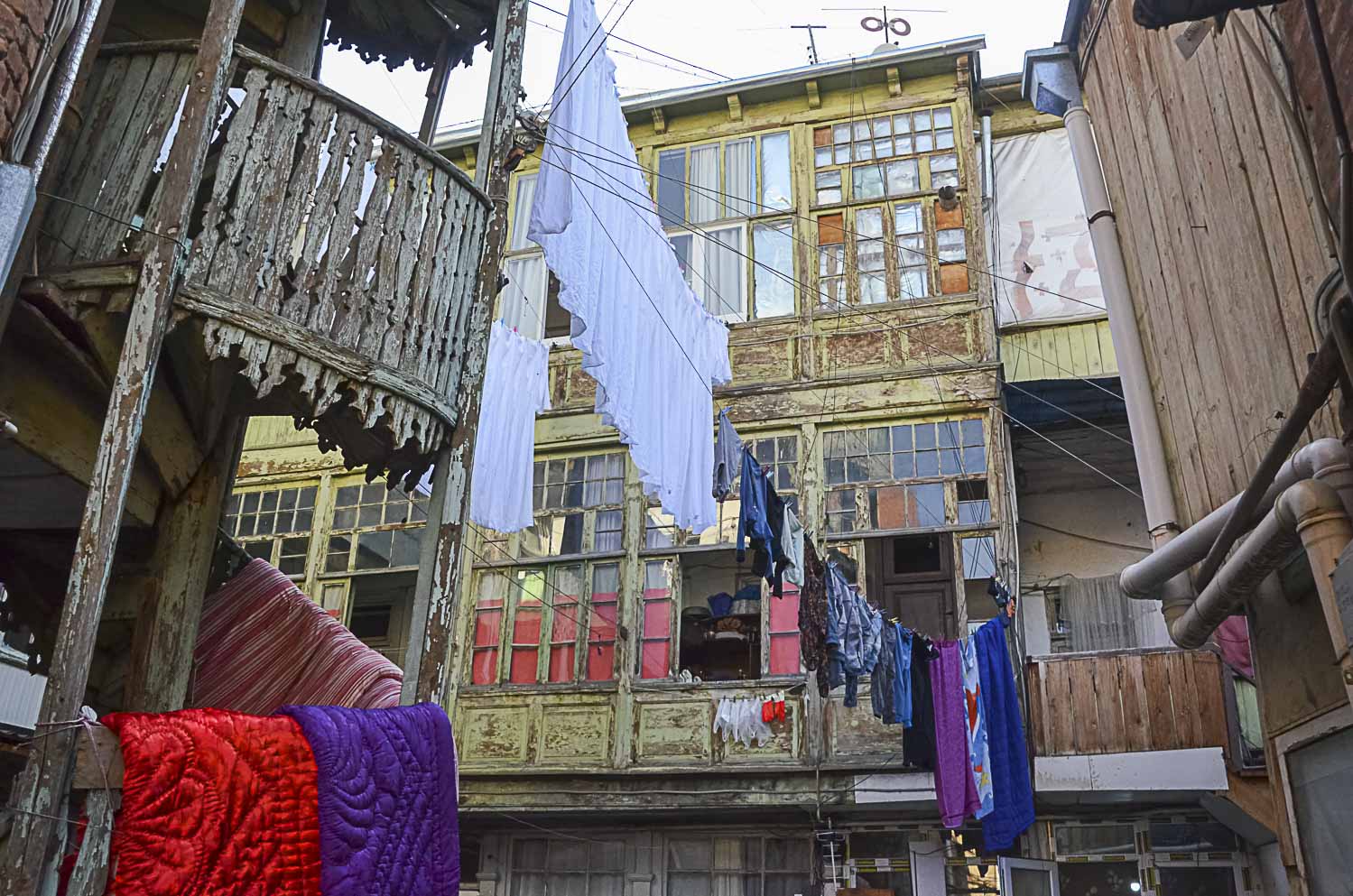
This courtyard, with a fantastic spiral staircase, was so amazing I had to return here the next day. With some luck, I found it again – but then without any laundry.

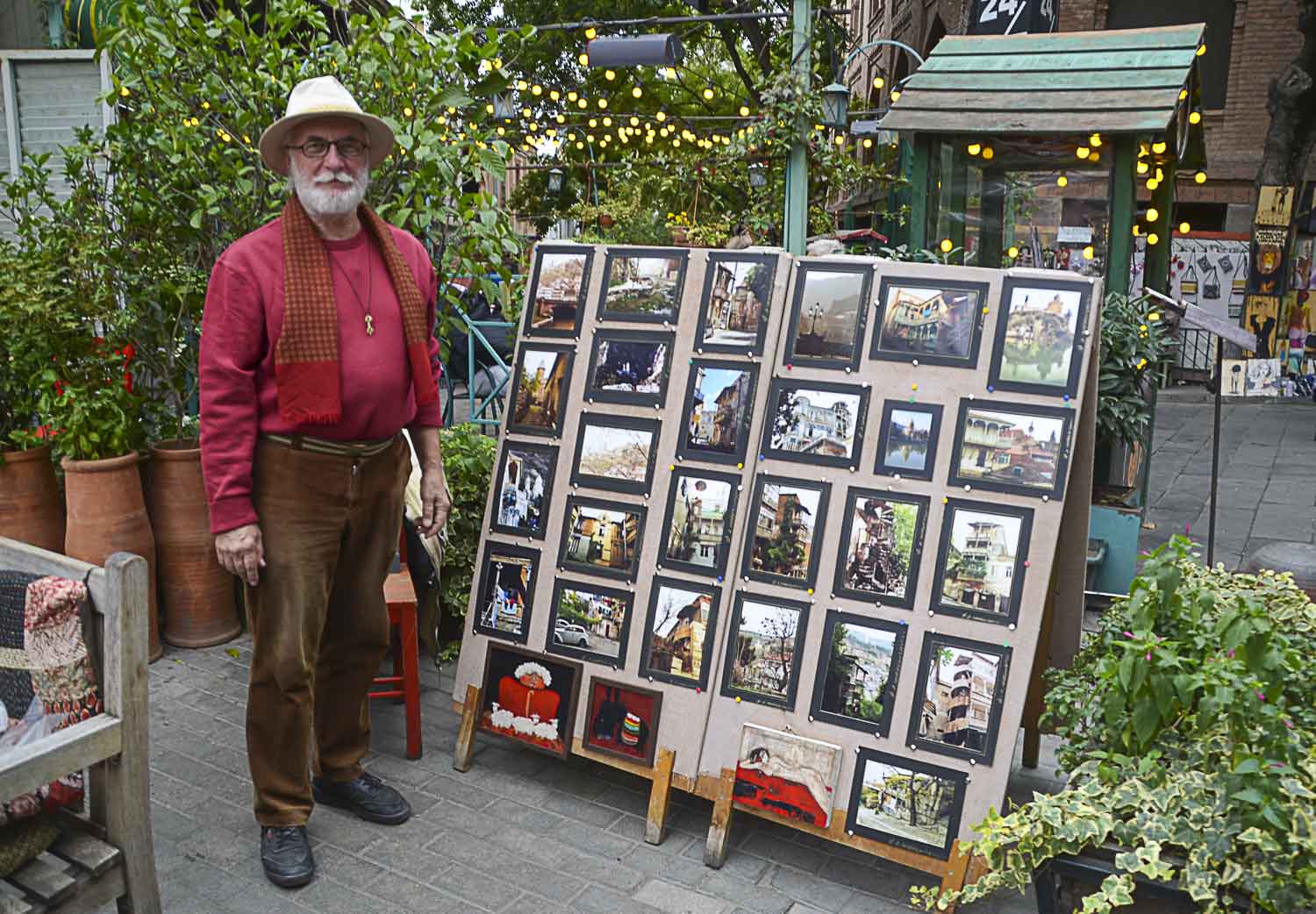
Aleksandr had earlier that day shown us some of his artwork and photos, so when we reached this well hidden courtyard – I recognized the spectacular wooden spiral staircase. I took a deep breath and started rather floating than walking in…

…to a dream. Just imagine what this place must have been like – say a hundred years ago… I hope you will enjoy this courtyard gallery of images from different angles – just could not stop myself. We stayed to talk some with the lovely family who lives here now.

They had restored the houses indoors, but the majestic staircase was for the authorities to restore…which unfortunately had not been done. I asked if they still used the staircase – the answer was Yes, and a moment later a man came running down those steps! It did Not look safe. I do hope they will save this architectural treasure for future generations. In Georgia they still have the skills and knowledge – but they should not wait too long.

I hate goodbyes…and with Aleksandr’s passionate soul, this time it was really hard for me. We had to leave him here with his exhibition in his favorite street, next to his favorite balcony. A very special man whom I am very grateful to have met.

Thank You, Aleksandr, for your warm and generous sharing of Tbilisi ♥

Thursday Thoughts – A Walk with Aleksandr in Old Tbilisi

First of all, I want to thank Viveka of myguiltypleasures for inspiring us to go to Georgia. She went there over Christmas and totally fell in love with the city.
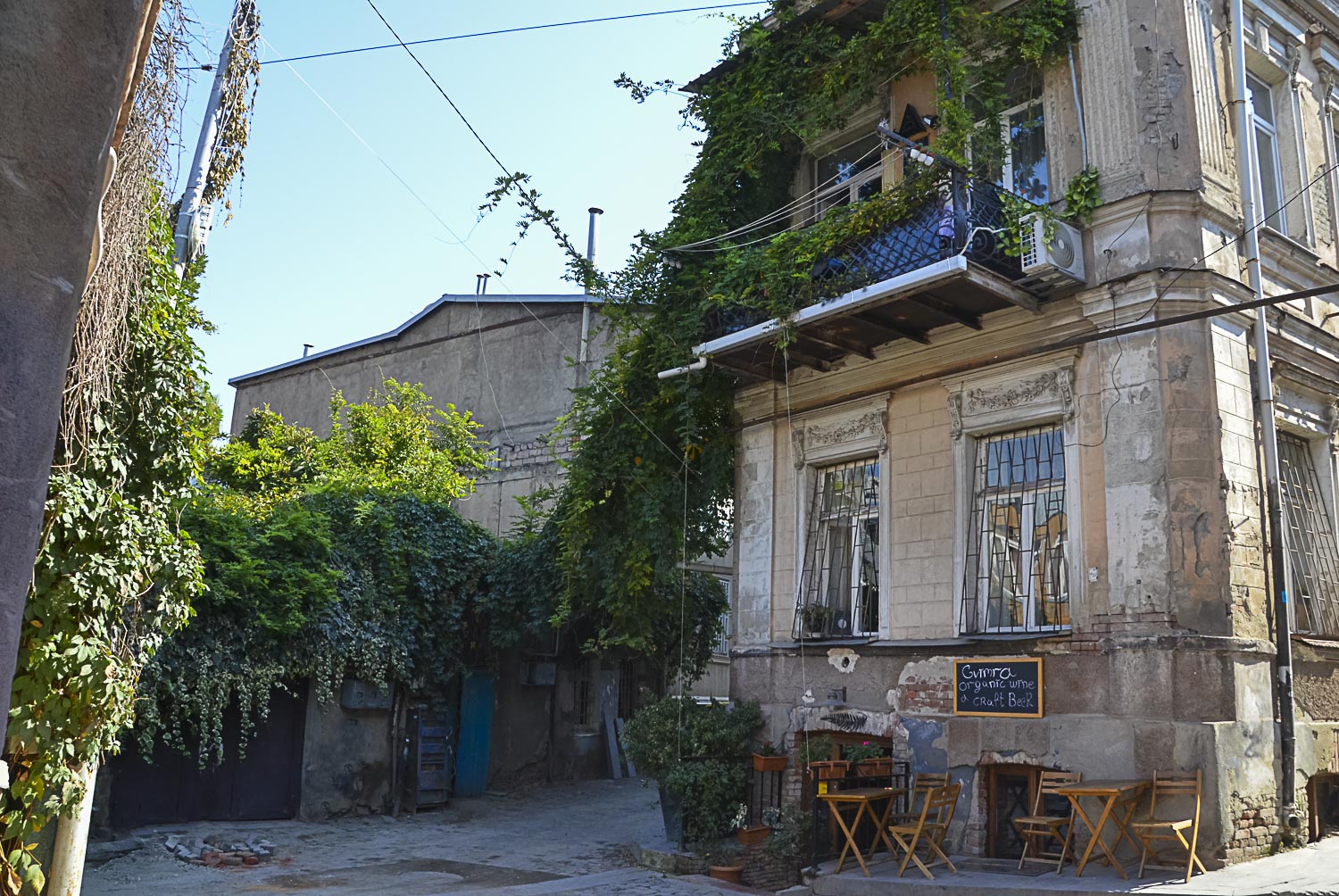
The unmistakable charm of the Old Town, the history, the people, the food and wine, brought us here. We stayed for a week, but could easily have stayed longer. I know Viveka is going again this Easter. A bit envious…I am!

We decided to have a guide for one day – a real gentleman, recommended by Viveka, who had accidentally met Aleksandr at the end of her stay. And what he doesn’t know about Old Tblisi (Old Tiflis), its history and architecture – is not worth knowing. Let’s follow him along his favorite streets!

Tblisi och Georgien 2019 516-2

Aleksandr is a well known face in Old Town, and knows every street and every house. He is a former architect – which explains his faiblesse for the Old part of the city.

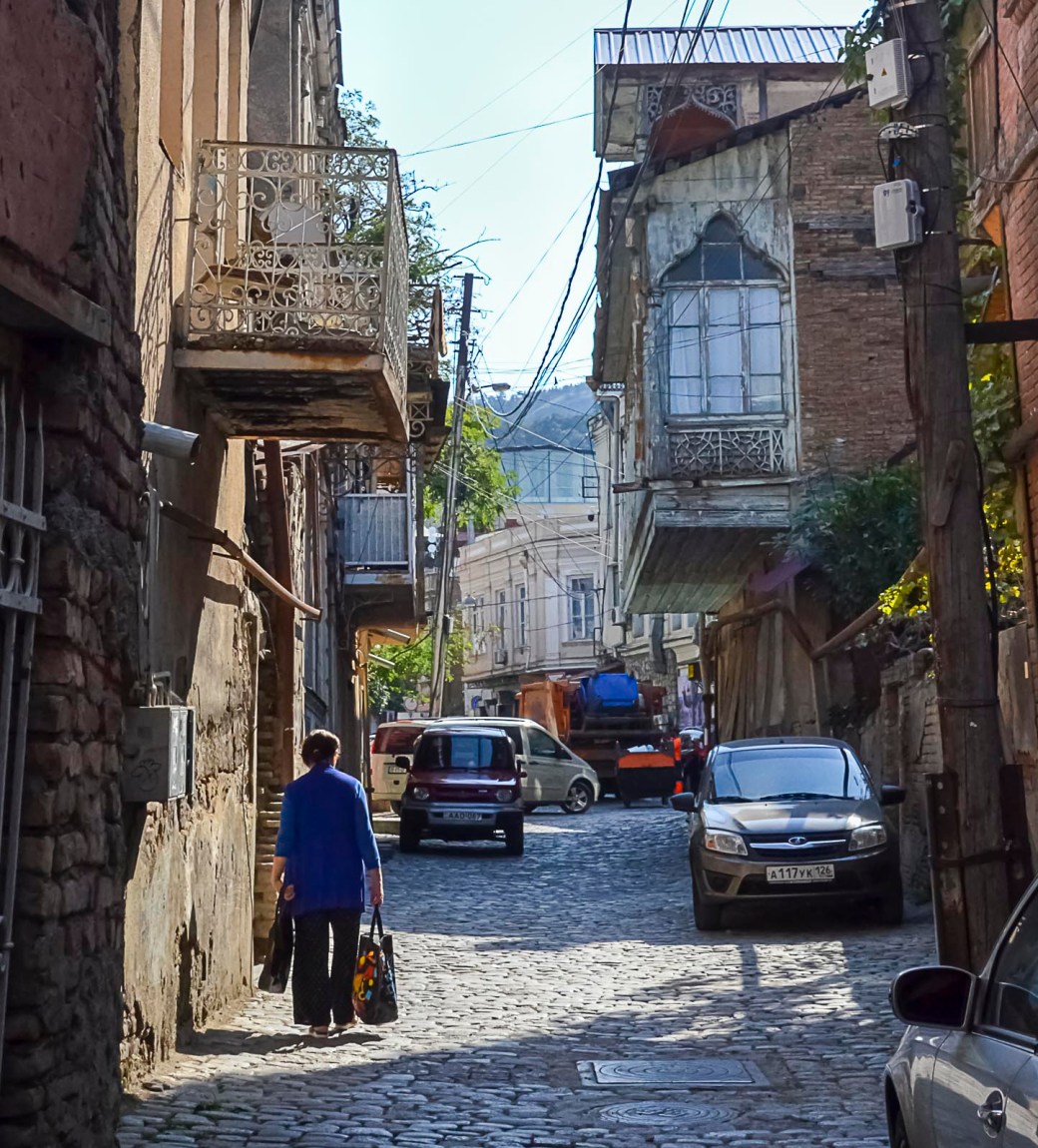
On the left hand side, according to Alexandr, you see the most beautiful balcony in town. The whole street is very beautiful – but what they are building at the end of this lovely row of balconies – I don’t know…

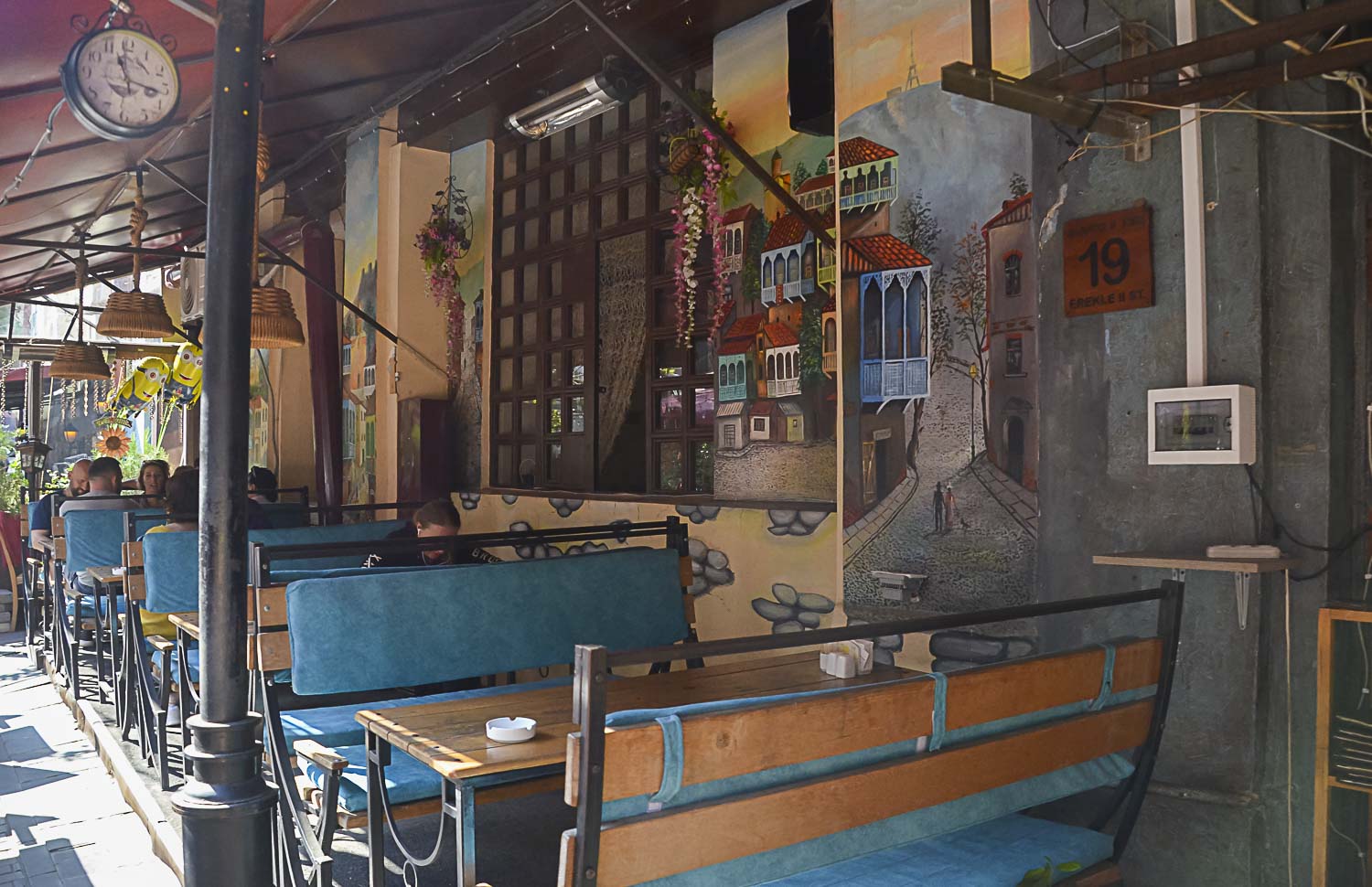
Around midday it was time to sit down for a glass of wine – resting in the shade. It was an unusually hot day for October, 27 degrees C.

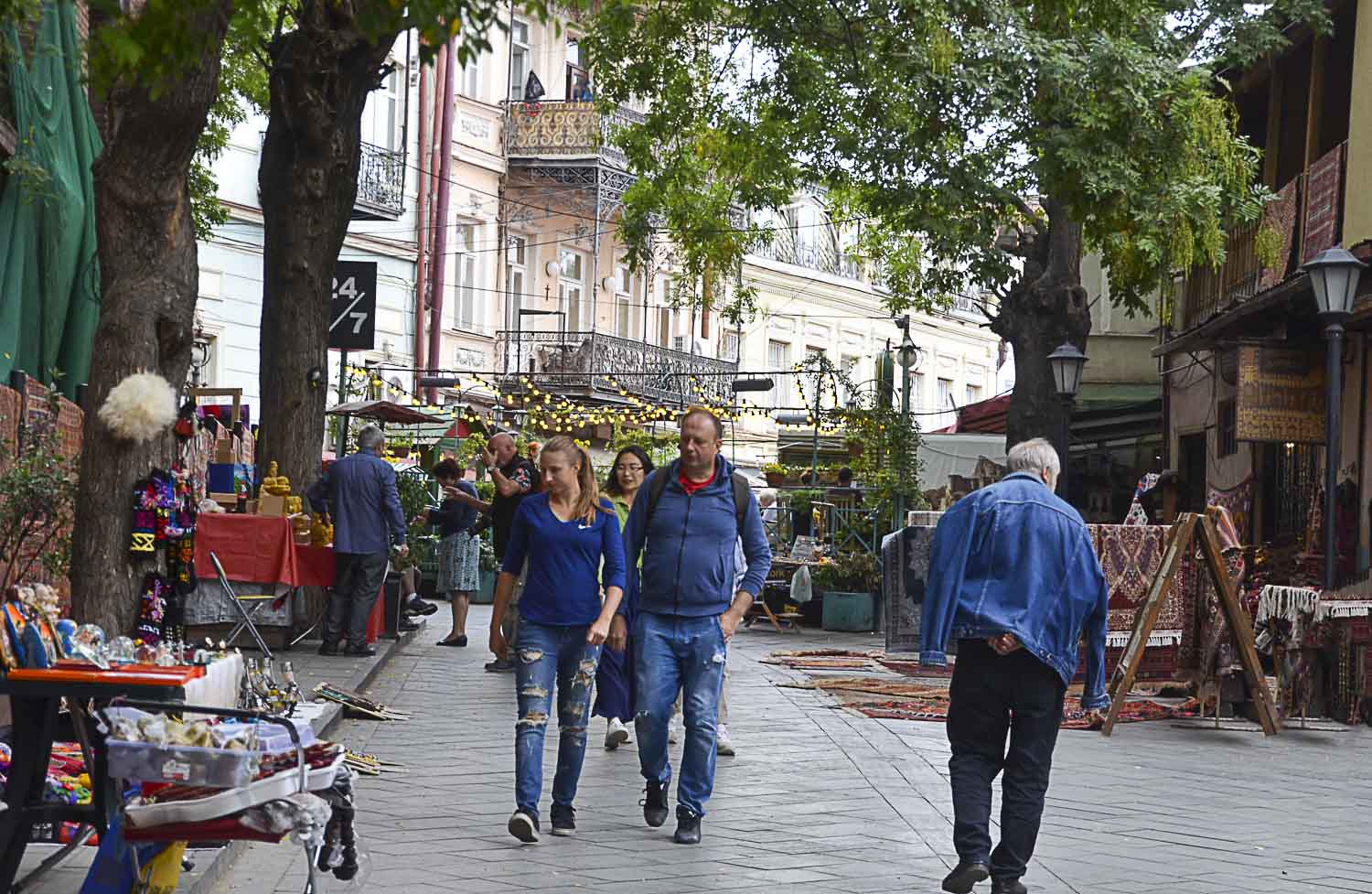
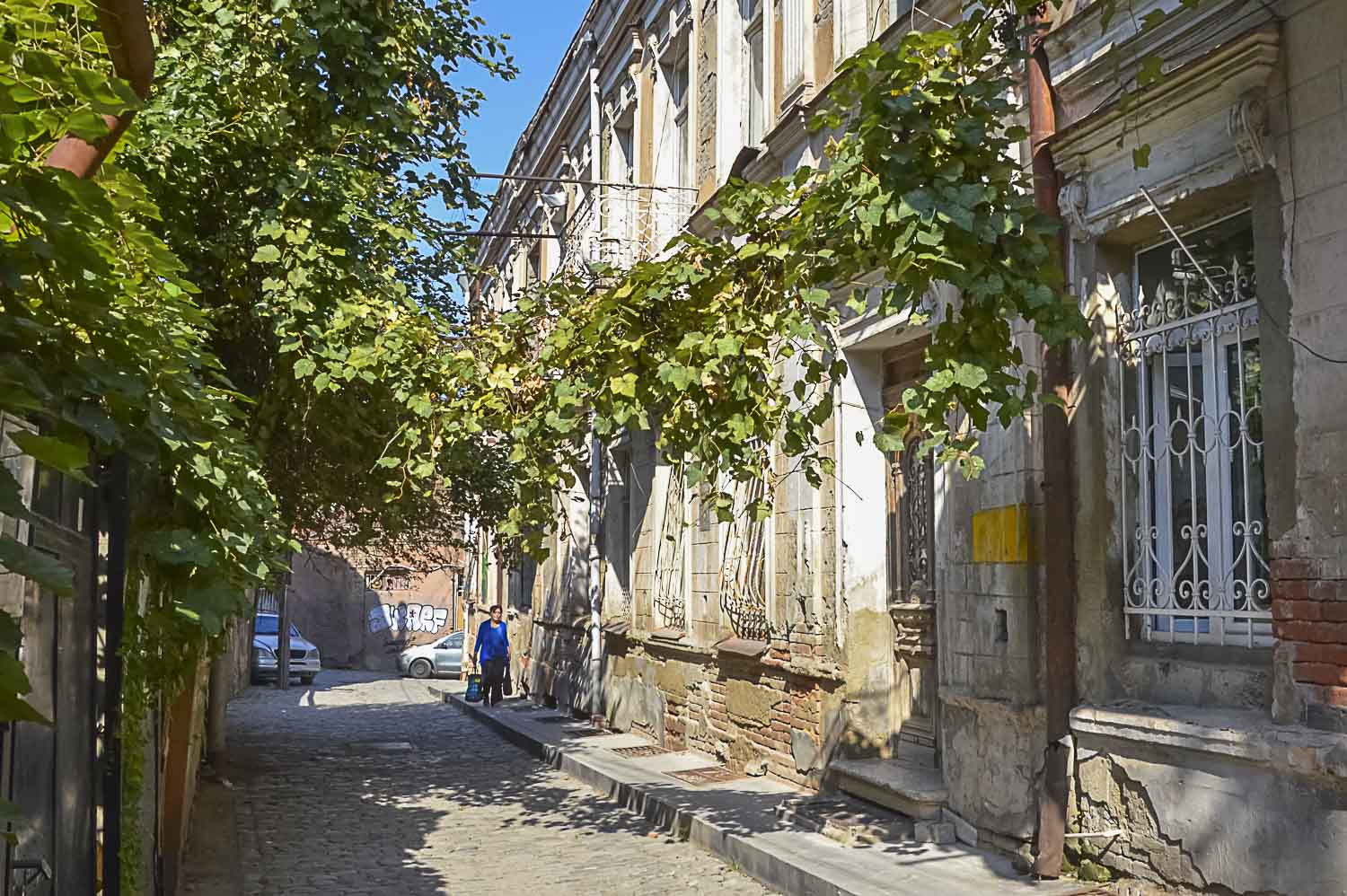
Finally… we were approaching his own favorite, Alexandre Dumas Street. Here the balconies and bay windows seem, if possible, even bigger than in other streets.

The old, cobbled Dumas is rather short and narrow. A document of times gone by – nothing yet demolished, reconstructed or changed. A short glance at Aleksandr, and the light in his eyes revealed just how much he loves his city.

tblisi-och-georgien-2019-603-3.jpg

On reaching the end though, we could see newly constructed buildings – and machines working – when the street took a left turn, and changed names.

Somewhere here we found a peaceful place to sit down and rest. Aleksandr’s tour is not over yet, but maybe next Thursday? I hope you enjoyed walking with us – you are very welcome back!

Thursday Thoughts – A Day with Georgian Historic Sites

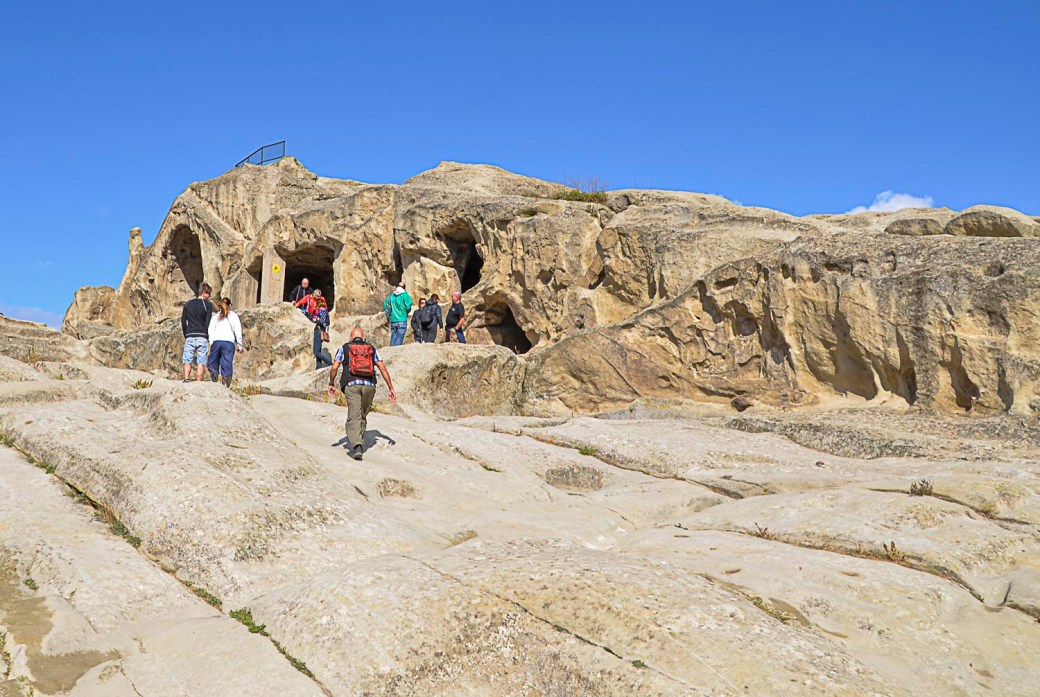
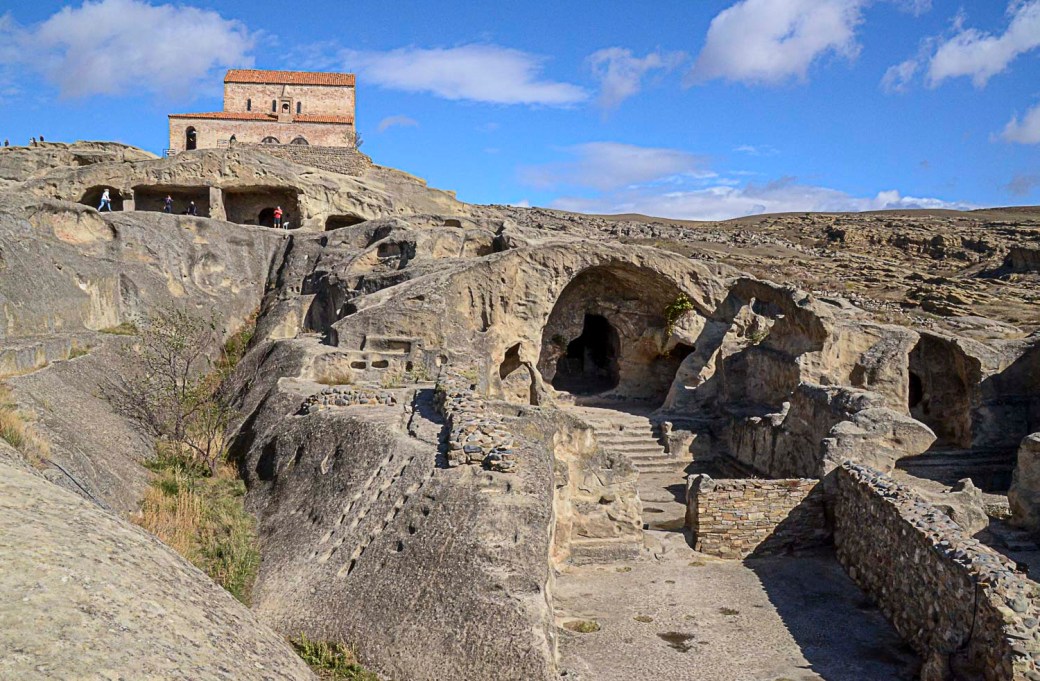
We decided to take a day out of Tbilisi – for some of Georgia’s old historic sites. Uplistsikhe is an interesting ancient rock-hewn town in eastern Georgia, built on the left bank of the Mtkvari River. It is identified by archaeologists as one of the oldest urban settlements in the country.

As our eminent guide, Katie, led us through the remains of this once 20 000 people inhabited town – she told us that even if it was almost destroyed by the Mongolians in the 13th century, the area also suffers from frequent earthquakes, which finally finished its existence.

The town contains various structures dating from the Early Iron Age to the Late Middle Ages, and is notable for the unique combination of various styles of rock-cut cultures from Anatolia and Iran, as well as the coexistence of pagan and Christian architecture.

At the summit of the complex is a Christian basilica built of stone and brick in the 9th-10th centuries. (Another photo from it last Silent Sunday.)

The quiet interior is in perfect harmony. I felt completely at peace with myself, alone in the natural light, in a translucent sphere.

Archaeological excavations have discovered numerous artifacts of different periods, including gold, silver and bronze jewellery, and samples of ceramics and sculptures. Many of these artifacts are in the safekeeping of the National Museum in Tbilisi.

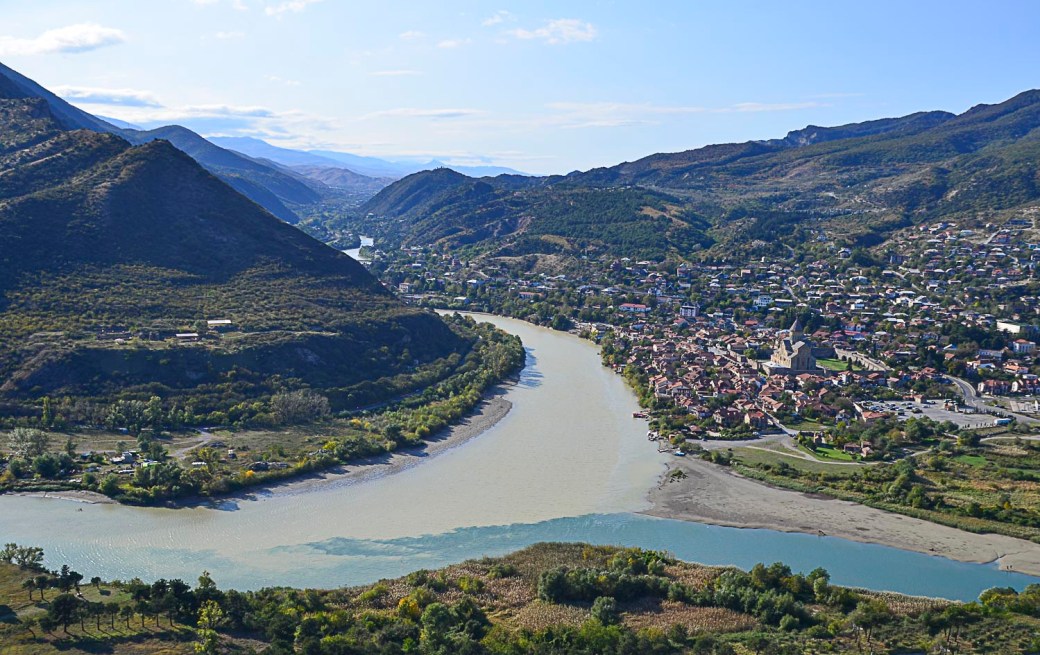
After this windy adventure, we left for Jvari Monastery (in the header, seen from Svetitskhoveli), whose name is translated as the ”Monastery of the Cross”. Jvari Monastery is a sixth century Georgian Orthodox monastery near Mtskheta, and is listed as a World Heritage site by UNESCO.

Jvari is a rare case of the Early Medieval Georgian church that survived to the present day almost unchanged. The church became the founder of its type, the Jvari type of church architecture, prevalent in Georgia and Armenia.
The monastery stands on the rocky mountaintop at the confluence of the Mtkvari and Aragvi rivers, overlooking the town of Mtskheta.
Built atop of Jvari Mount (656 m a.s.l.), the monastery is an example of harmonious connection with the natural environment, characteristic to Georgian architecture.

We ventured down to Svetitskhoveli in Mtskheta (this city also recognized by UNESCO as a World Heritage Site), one of the oldest cities of Georgia, founded by the ancient Meschian tribes in the 5th century. It was capital of the early Georgian Kingdom of Iberia from the 3rd century BC to the 5th century AD, and continued to serve as the coronation and burial place for most kings of Georgia until the end of the kingdom in the 19th century.

The Svetitskhoveli Cathedral (literally the Cathedral of the Living Pillar) is currently the second largest church building in Georgia, after the Holy Trinity Cathedral in Tbilisi. Known as the burial site of Christ’s mantle, Svetitskhoveli has long been one of the principal Georgian Orthodox churches in the region. It is considered a masterpiece of the Early and High Middle Ages.

At the end of the day, our lovely, knowledgeable guide, Katie, waited patiently for her ”sheep” to return to their master.


Thursday Thoughts – Guest Blogger – Chernobyl, a Visit

My son went to Kiev and Chernobyl this Autumn, and I asked him if he would share some of his photos and impressions on this blog. He said yes, and I am happy to have him here once again. Hope you will enjoy his work!


I’ve wanted to visit Chernobyl for a long time. The combination of two of my biggest interests; urban exploration and history, took me here.

The worst nuclear disaster in history took place in April 26th 1986. A disaster releasing an amount of radioactivity equal to 400 Hiroshima bombs.

Pripyat had 50 000 citizens who were evacuated by bus, roughly 1,5 days after the accident. They were given false promises of coming back – and so they left everything, even their beloved pets.

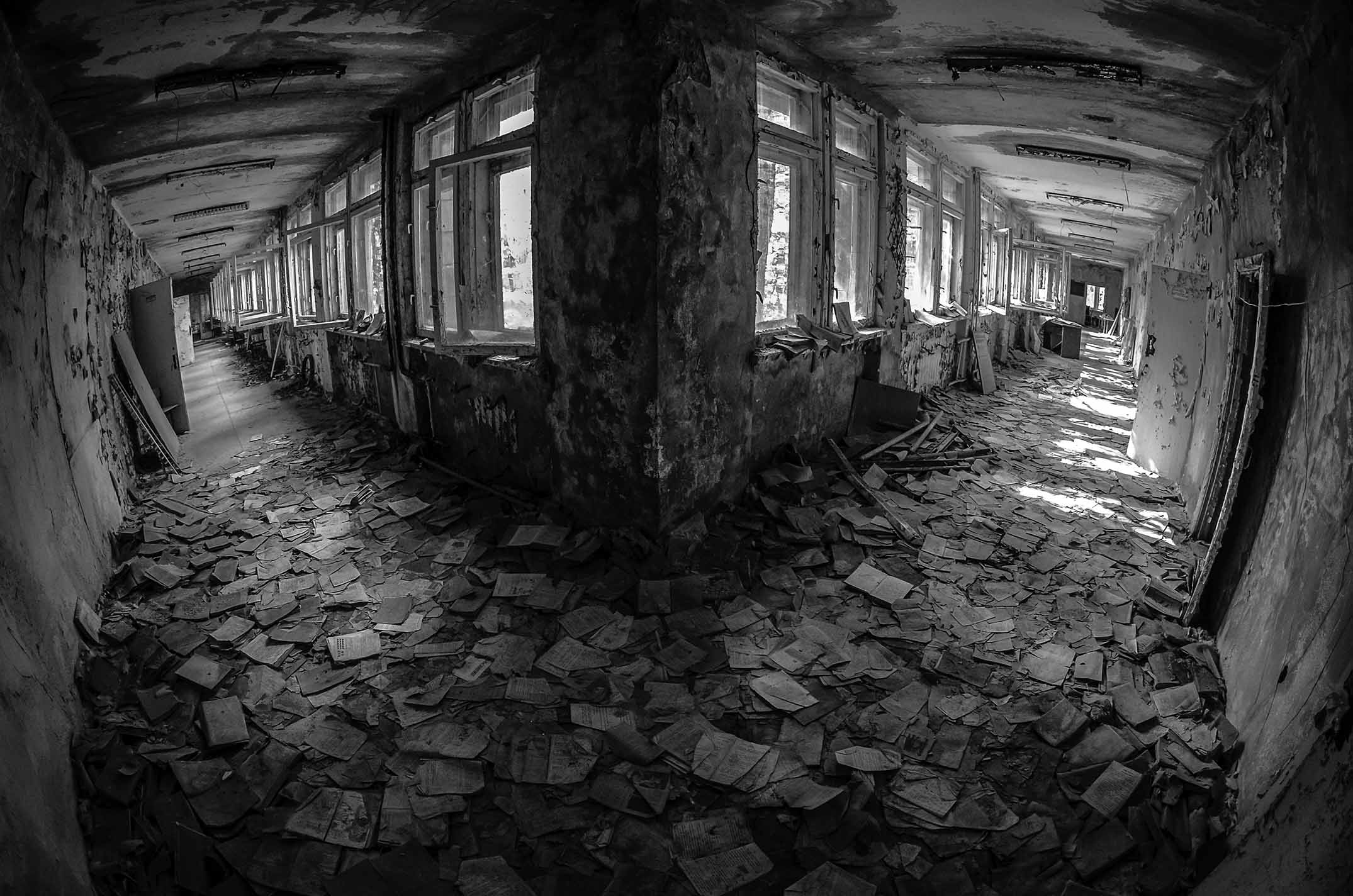
Every corridor in the buildings I visited felt endless. Seemingly reaching for the end of the world.

The Middle School was modern and well equipped with both music halls and sports facilities. They even had a large storage where they kept child-sized Soviet gas masks, in case of an emergency..

Paper_Hall_BW

This was one of five secondary schools in this town. Hundreds of children once ran up and down these corridors. It almost felt like all of these notebooks, documents and files tried to chase after their owners when they left.

There are an endless amount of houses out in the Chernobyl woods. Some hide treasures, but most of them are just husks. Although they are just as beautiful.

DSC_2265

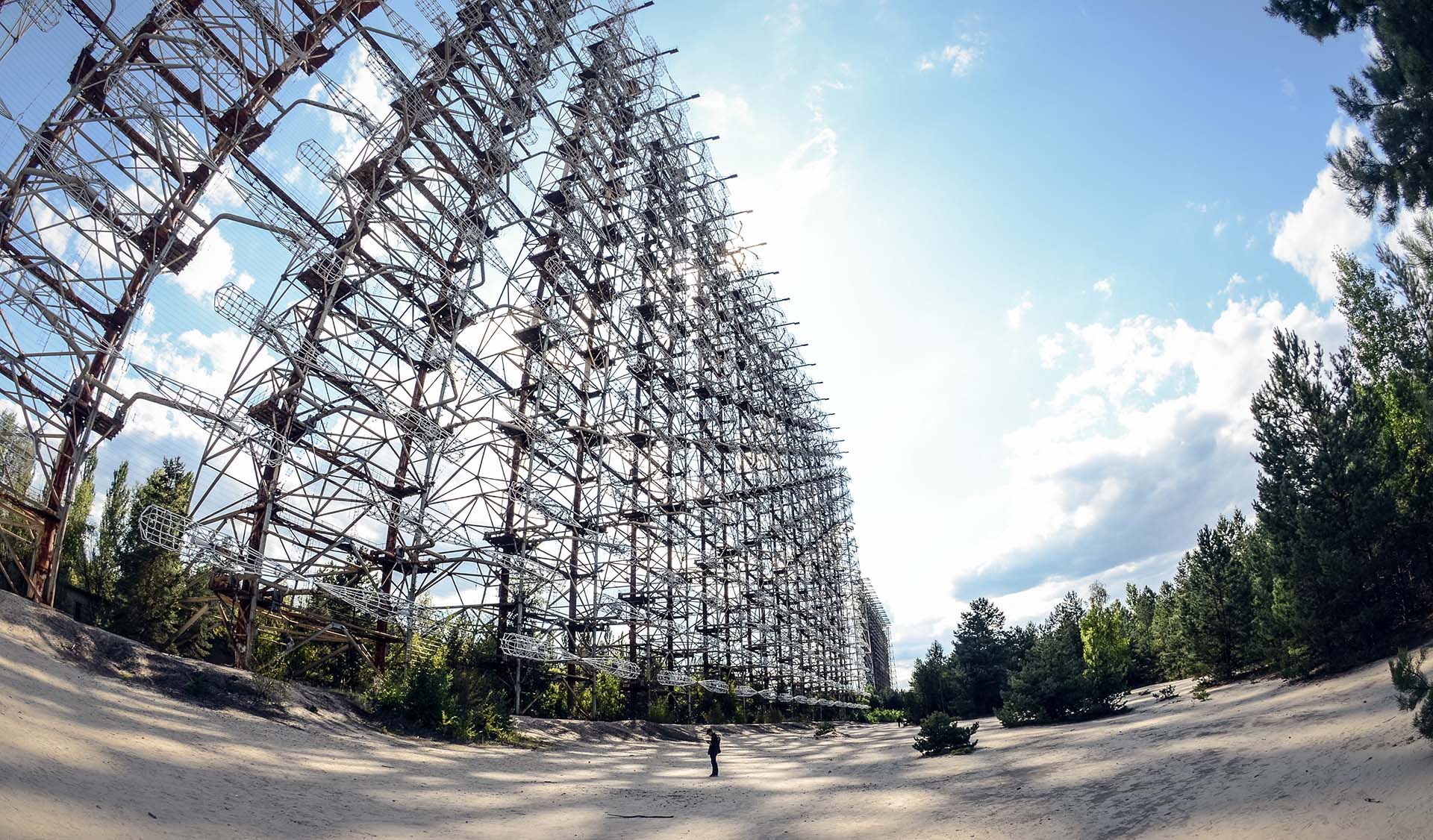
The Duga Radar was a so called ”over-the-horizon” radar that was supposed to detect missiles and airstrikes. Soon, it got the nickname ”The Russian Woodpecker” because of the repetitive tapping noise it caused at 10Hz on shortwave radios.

The radar itself is enormous – towering 150 meters high and around 700 meters wide.


We managed to sneak past security and get a peek at cooling tower #5. It was supposed to pump large amounts of water around the reactor for cooling, but the tower was never finished after reactor #4 exploded.

Stage

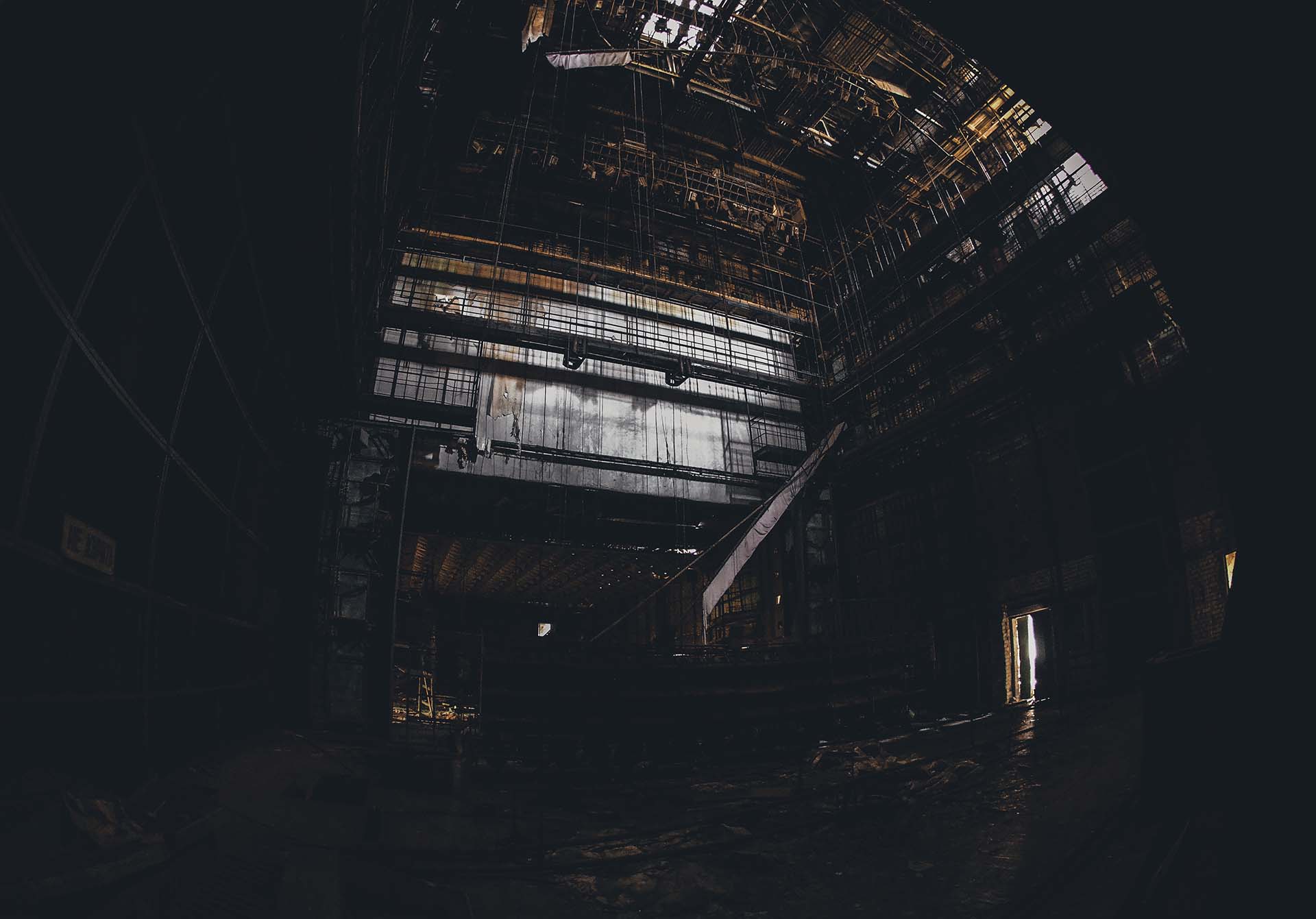
The ”Palace of Culture Energetik” was a large community center for the citizen of Pripyat. ”Energetik” is a wordplay – meaning both ”energetic” and ”power plant worker”. The purpose was to have a wide range of recreational activities including a library, gym, swimming pool, dancing halls and the very theater in the image above.

I am barely even scratching the surface of the stories and the history of Chernobyl. If you are interested in learning more, I recommend the TV Series called ”Chernobyl” on HBO. They portray the disaster in an incredibly powerful and emotional way, while staying close to the facts and real life stories. I also recommend the book which the show is based on: ”Voices from Chernobyl” by Svetlana Alexievich.

I would love to answer any questions that you might have.

Regards,

David P

Thursday Thoughts – The Harvest is In

We happened to land in Tbilisi the day before the annual October festival – two days of celebrating the grape harvest of the year. What luck! Follow me to the market!

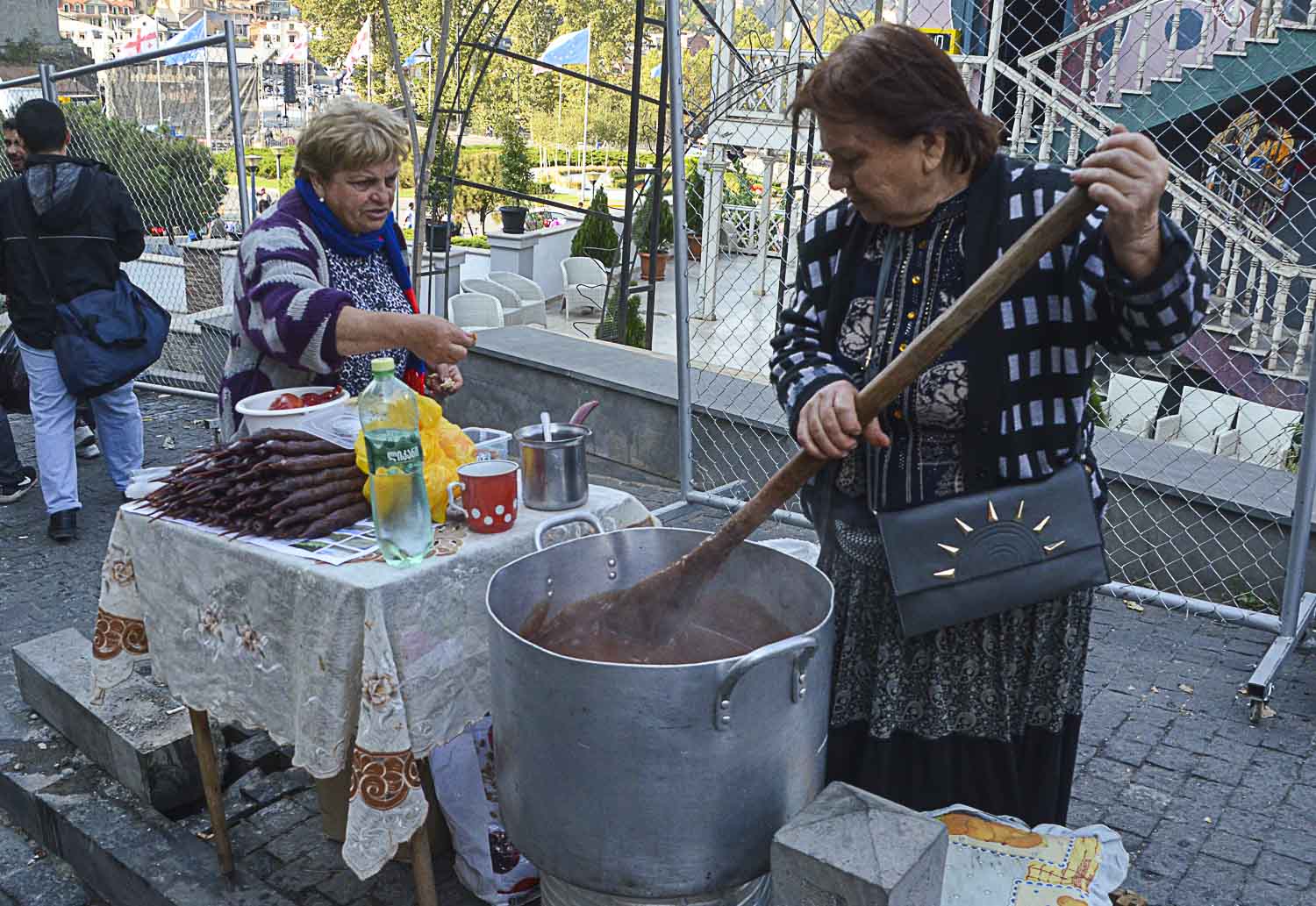
The whole city on its feet, night and day. The first thing we noticed was the many ”braids” of candy called Churchkhela. Delicious! (Recipe in the link.)

They make long threads of mostly walnuts or hazelnuts, then dip them in boiled/cooked grape juice. A long process for several layers, but oh…the taste! We bough many with us home – all colours.

The lovely ”Tree of Life”, by sculptor David Monavarlisashvili, offers so much to discover for children – and grown-ups… It greatly reminded me of one of my children’s favorite authors, Shaun Tan, his books and movies.

And the nights were warm, slowly walking the Rike Park and Peace Bridge. The bridge stretches 150 metres (490 ft) over the Kura River to create a contemporary design feature connecting Old Tbilisi with the new district. The official opening took place on May 6, 2010. Architect, Italian Michele De Lucchi.

Thursday Thoughts – Tbilisi, A Feast for the Eye

Because of its location on the crossroads between Europe and Asia, and its proximity to the Silk Road, Tbilisi has kept its interest to various global powers. Tbilisi’s diverse history is reflected in its architecture, which is a mix of medieval, neoclassical, Beaux Arts, Art Nouveau, Stalinist and the Modern structures. Only one visit will not be enough to seek out all its secrets.

Historically, Tbilisi has been home to people of multiple cultural, ethnic, and religious backgrounds. You will find Mosques, Churches and Cathedrals side by side, and the people live in peace together.

Walking in the capital of Georgia, Tbilisi, is a walk filled with wonders and harmony. At least if you love architecture, open minded and smiling people, and gentle cats and dogs.

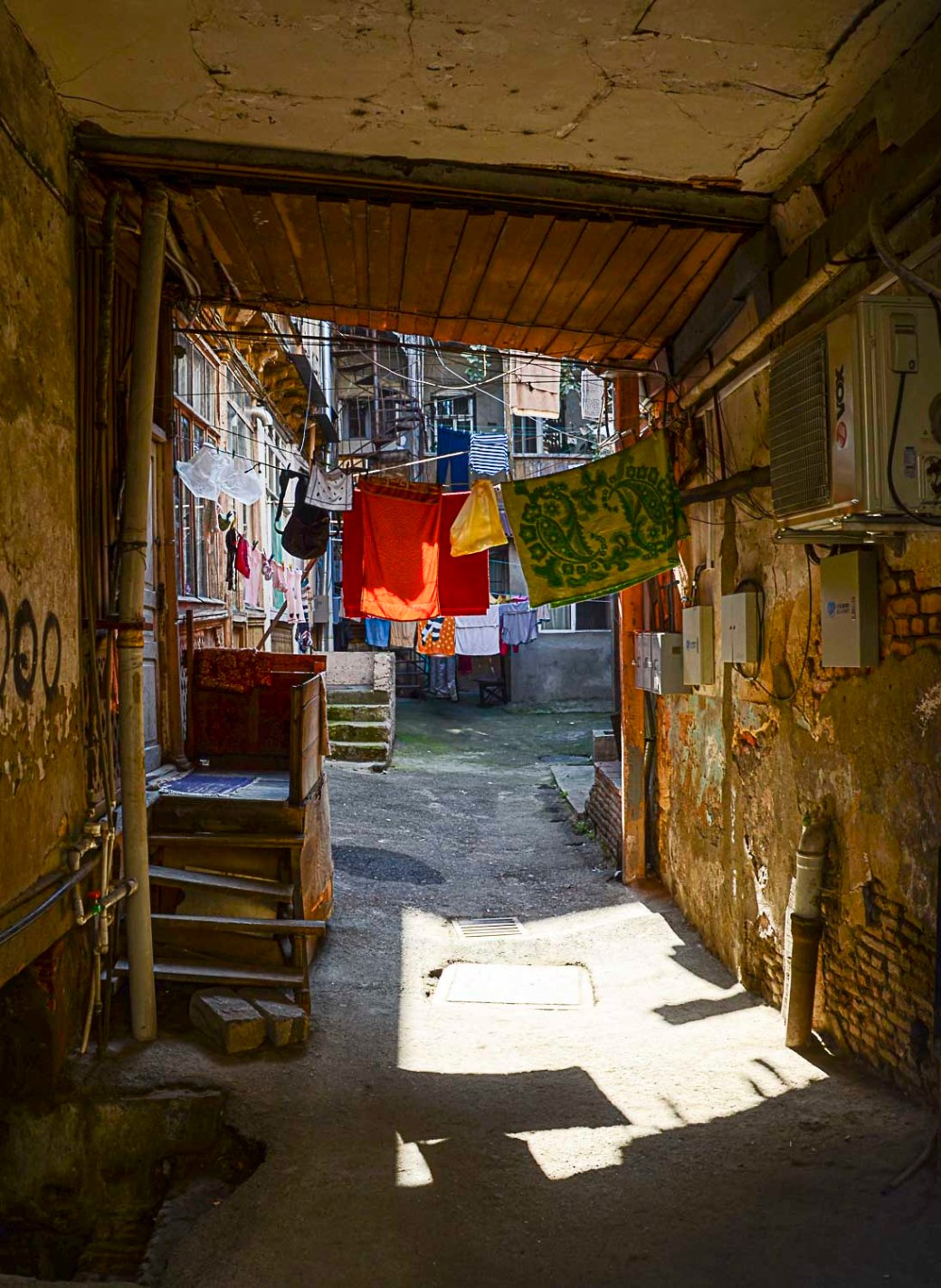
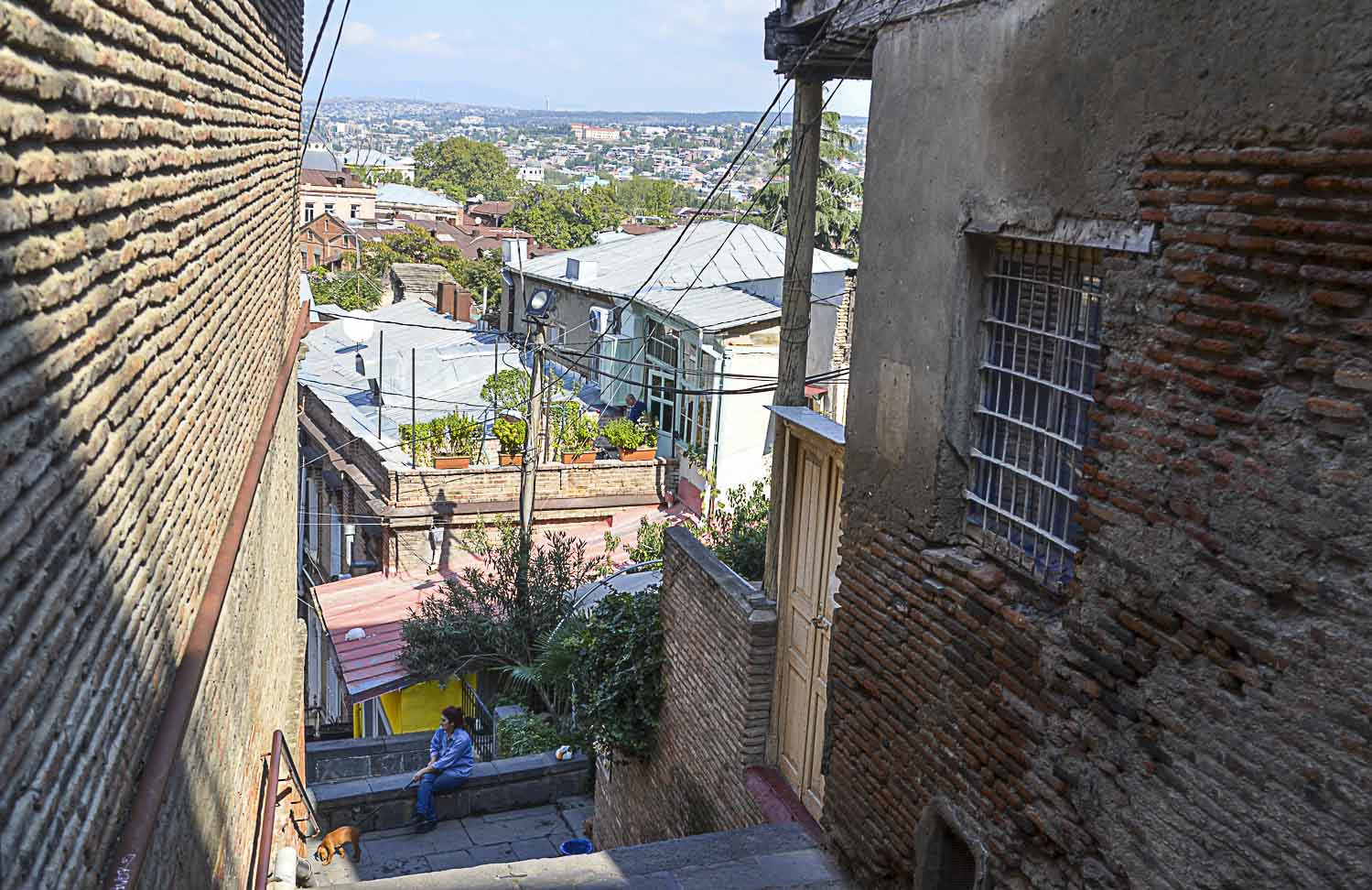
The first thing to learn, is never to pass a gate or a narrow passage without having a look inside. Just quietly walk in, the laundry lady will just smile and give you a nod.

You will always be greatly rewarded. Colours and harmony rules.

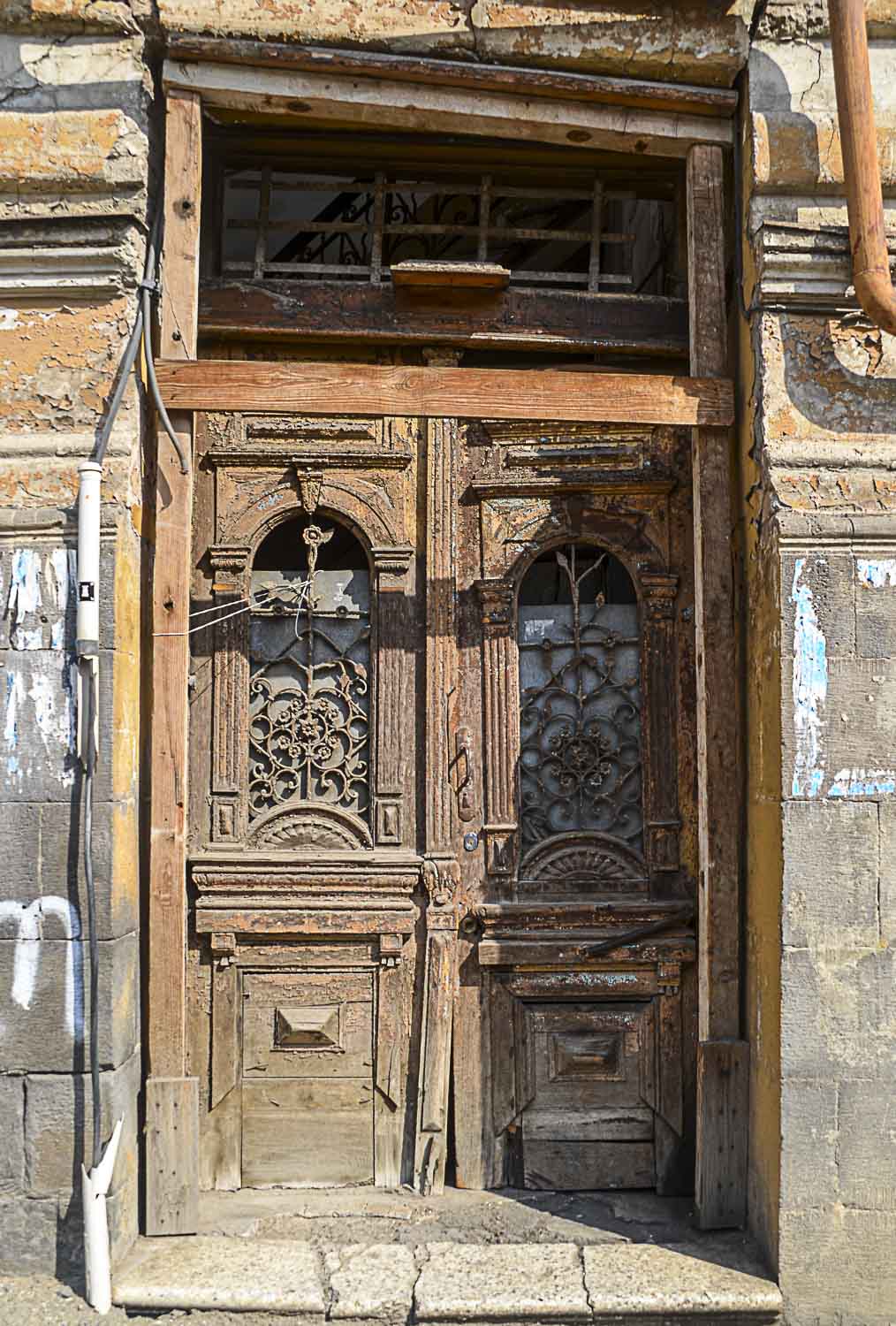
And the doors…I know of many who would swoon at the very sight of only one street…

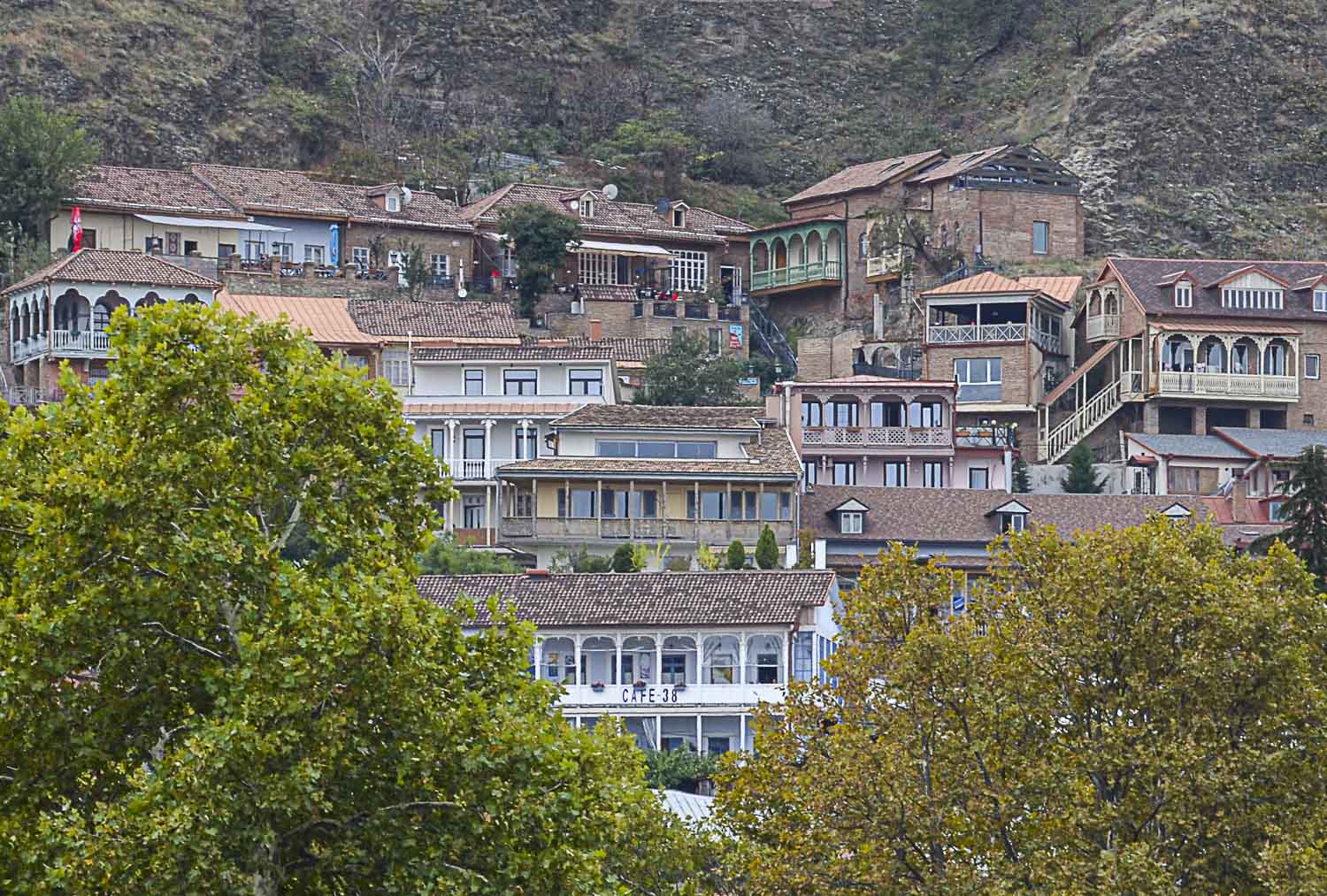
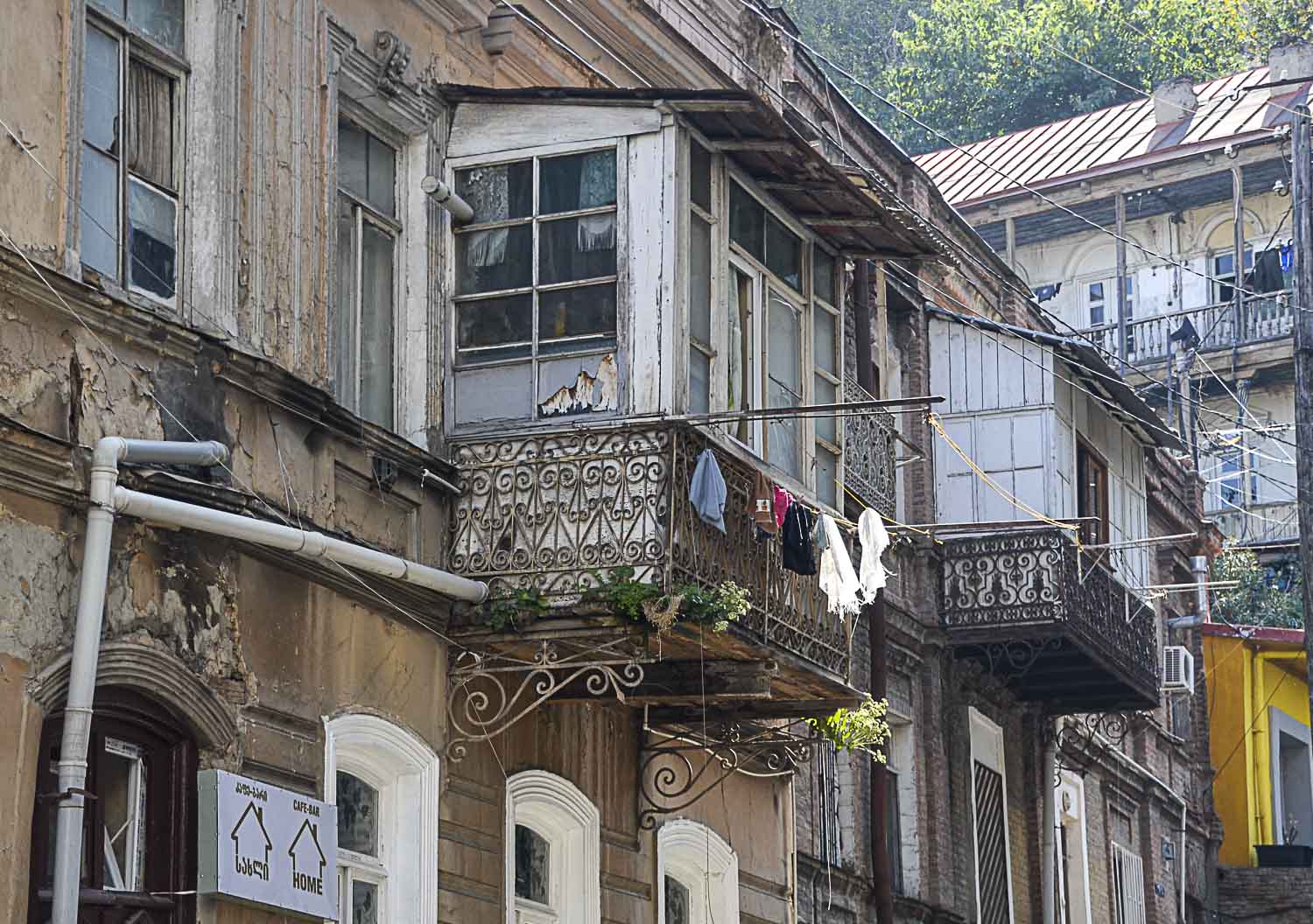
Old iron gates and wooden balconies are characteristic of Tbilisi. I think I have hundreds of balcony images – maybe I will post some more …I cannot get enough of them.

Our first day in the city, we wanted to climb to the medieval Narikala Fortress, to get the best view of the city and the Kura river.

The city’s 1.5 million inhabitants were seeking the shades this hot day, and it really took some effort to walk all those steps. But every minute was a joy, stopping now and then to admire the view and for talking to all the lovely people.

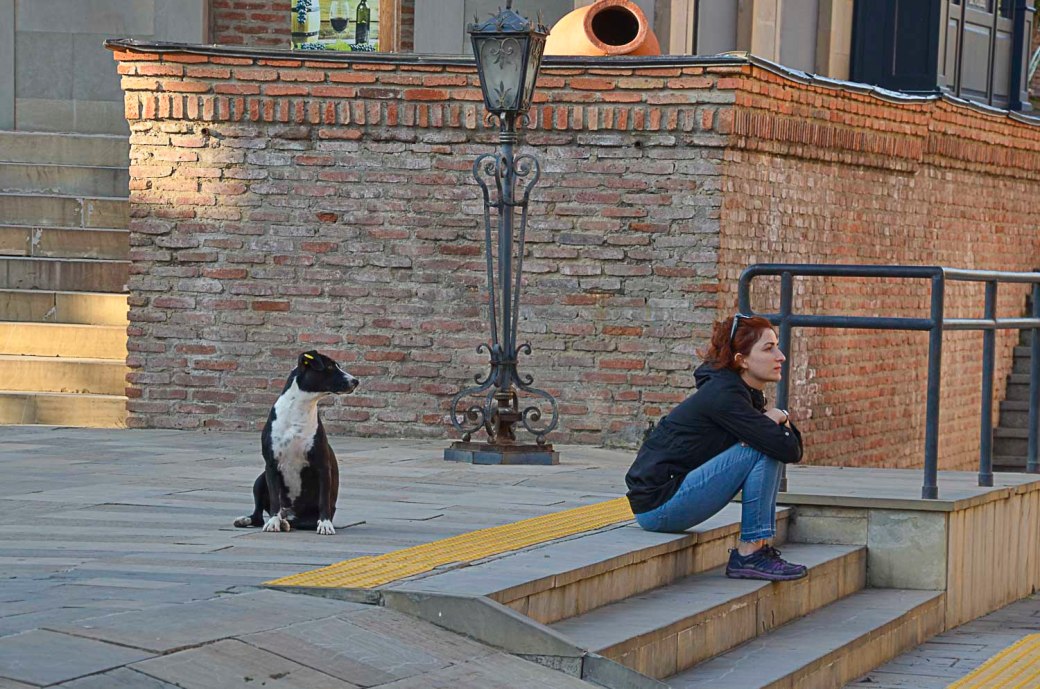
Everywhere being inspected by the friendly cats and dogs of course…

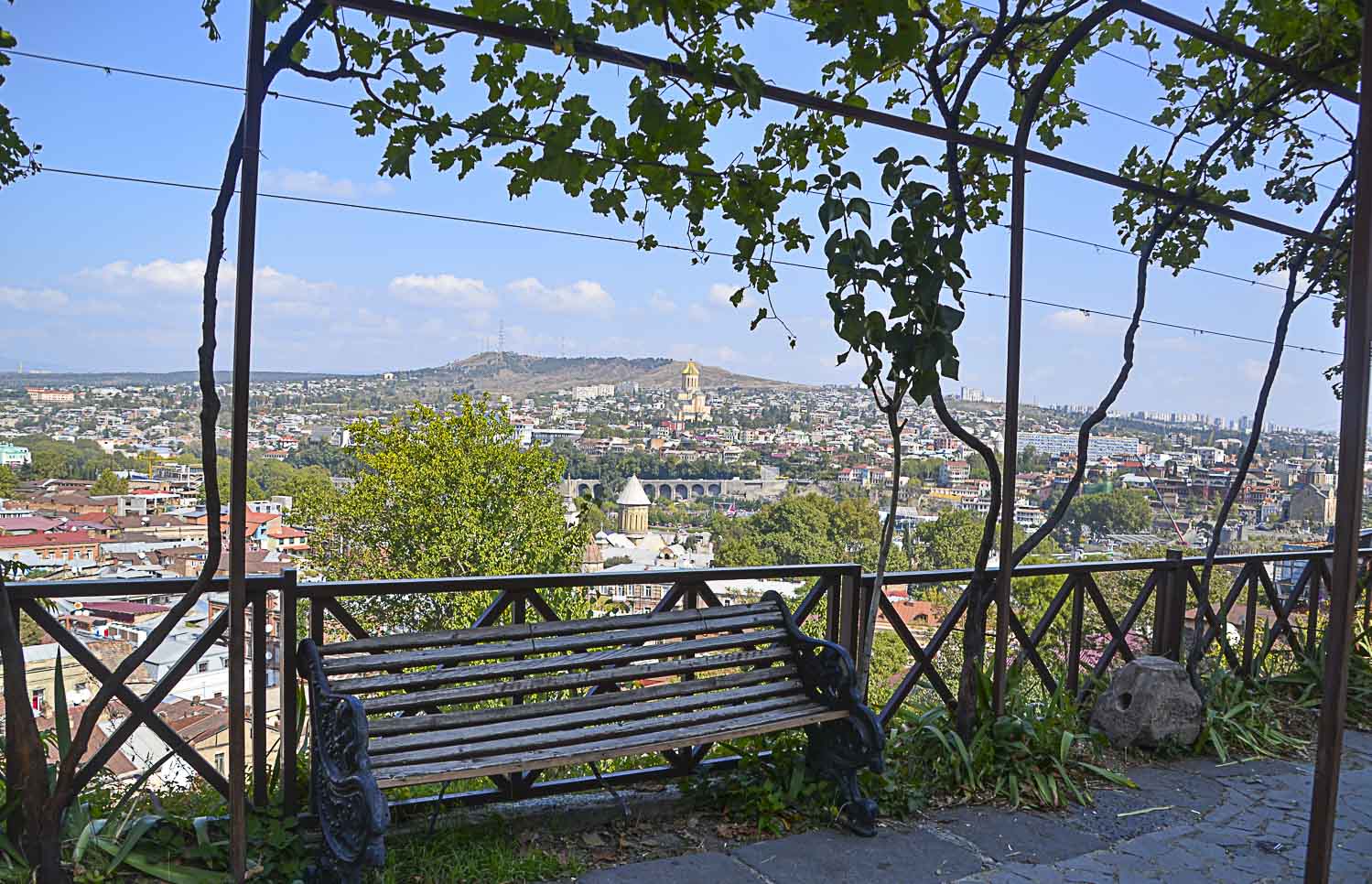
On reaching a bench in the shadow, we had a Swedish ”fika”, admiring the view of the newer part of Tbilisi, the Sioni Cathedral and the Holy Trinity Cathedral.

In the header is the view of Old Tiflis (Old Tbilisi) and the new Peace Bridge reaching over the river Kura.

From the fortress and the slopes of the Botanical Gardens, we finished our first views of this charming and enigmatic city. Hopefully you will want to walk with me again – this is a city filled with art, gentle inhabitants and gorgeous food and wine. A Pearl of cities.

Thursday Thoughts – The Old Sallow

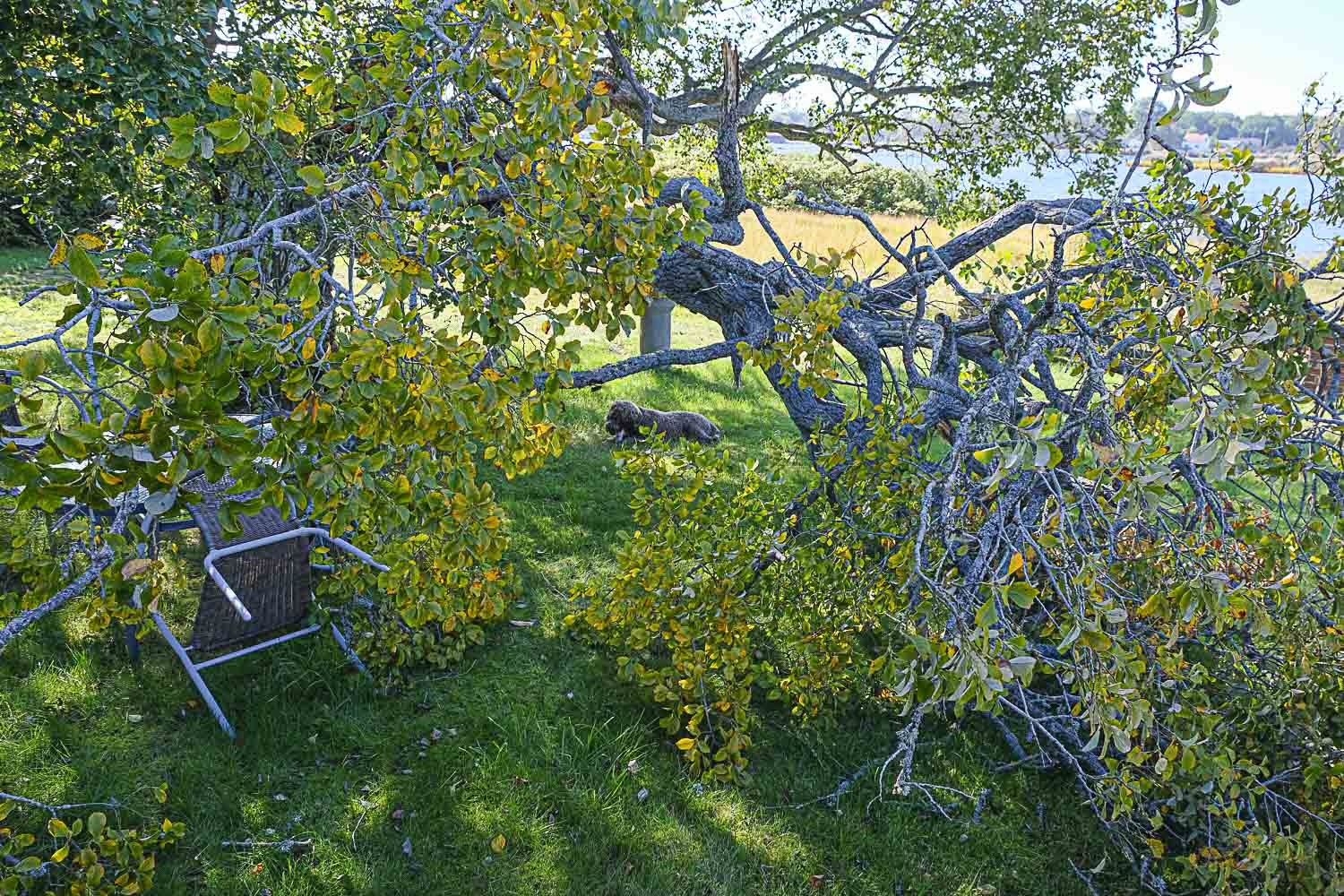
In the garden of our summer house stands a worthy old warden tree – a Sallow. Our children have climbed it every summer, and so did their father when he was a child. Sallows do not get very old, but this tree is a giant, and possibly about 100-150 years old. About double the age it ”should” get.

In the header he was still standing this Spring when we moved in.

But this is the sight that met us when we arrived for the final shut down for winter. Our children were sad to see it, and the only one who did not mind was Milo.

About a third of the trunk had fallen, but fortunately the little house managed without any damage. This sight was what we have feared to meet every Spring on our arrival – and now it was a fact. Hopefully the majestic tree will survive and thrive many years still. There is a sapling striving up right behind it – we tend to it with love.


Thursday Thoughts – The Whaling Station

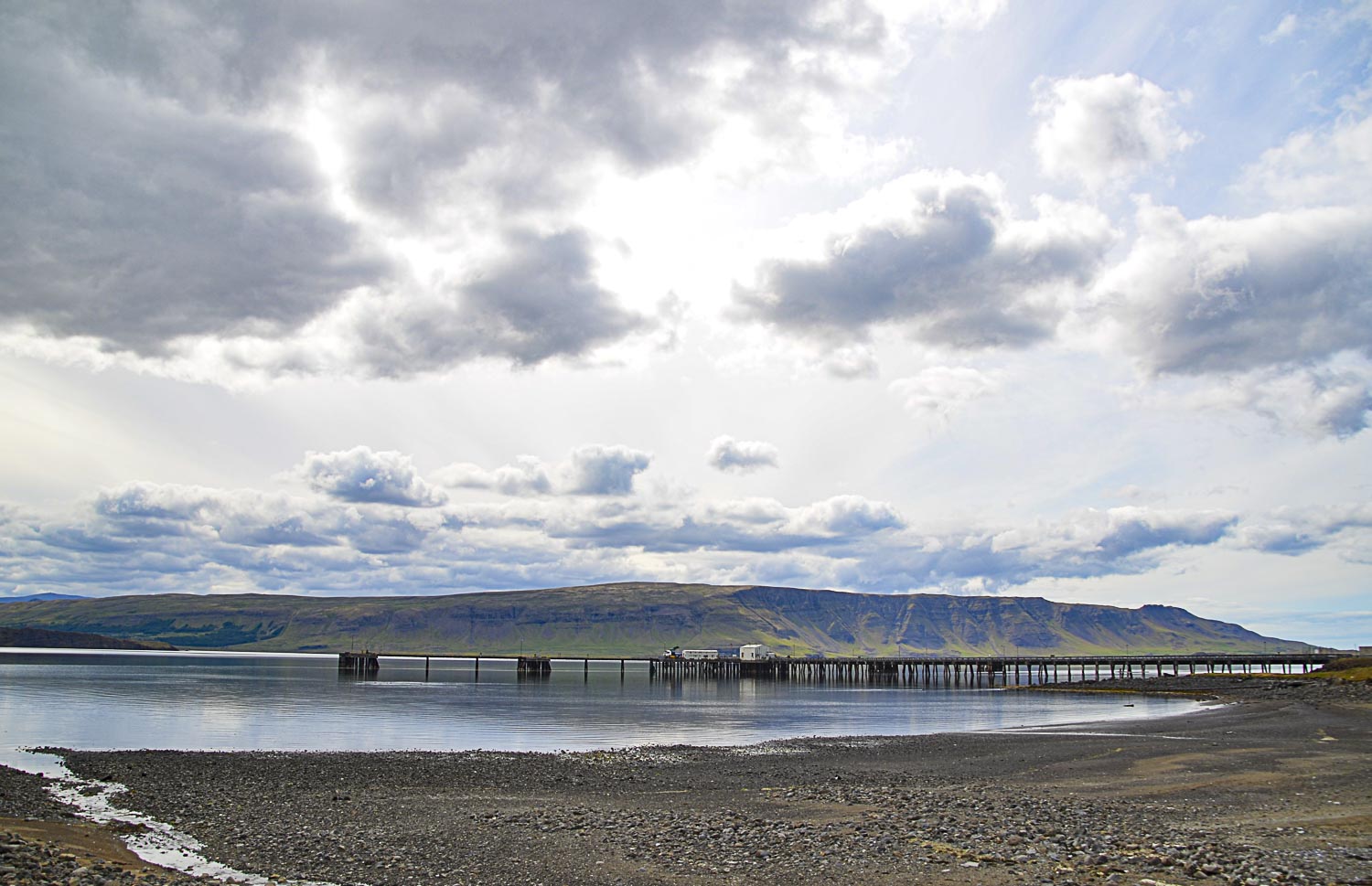
Hvalfjörður is situated in the west of Iceland, and the fjord is approximately 30 km long and 5 km wide. The place has an interesting history.

During WWII, a naval base of the British and American navies could be found in this fjord. One of the piers built by the United States Navy is today used by the Hvalur whaling company for the processing of fin whales, partially for the domestic market, and mostly for export to Japan. None of this in 2019 though.

The origin of the name Hvalfjörður is uncertain. Certainly today there is no presence of whales in the fjord; while the only whaling station in Iceland is still located here. In the past the fjord also contained many herring fisheries.

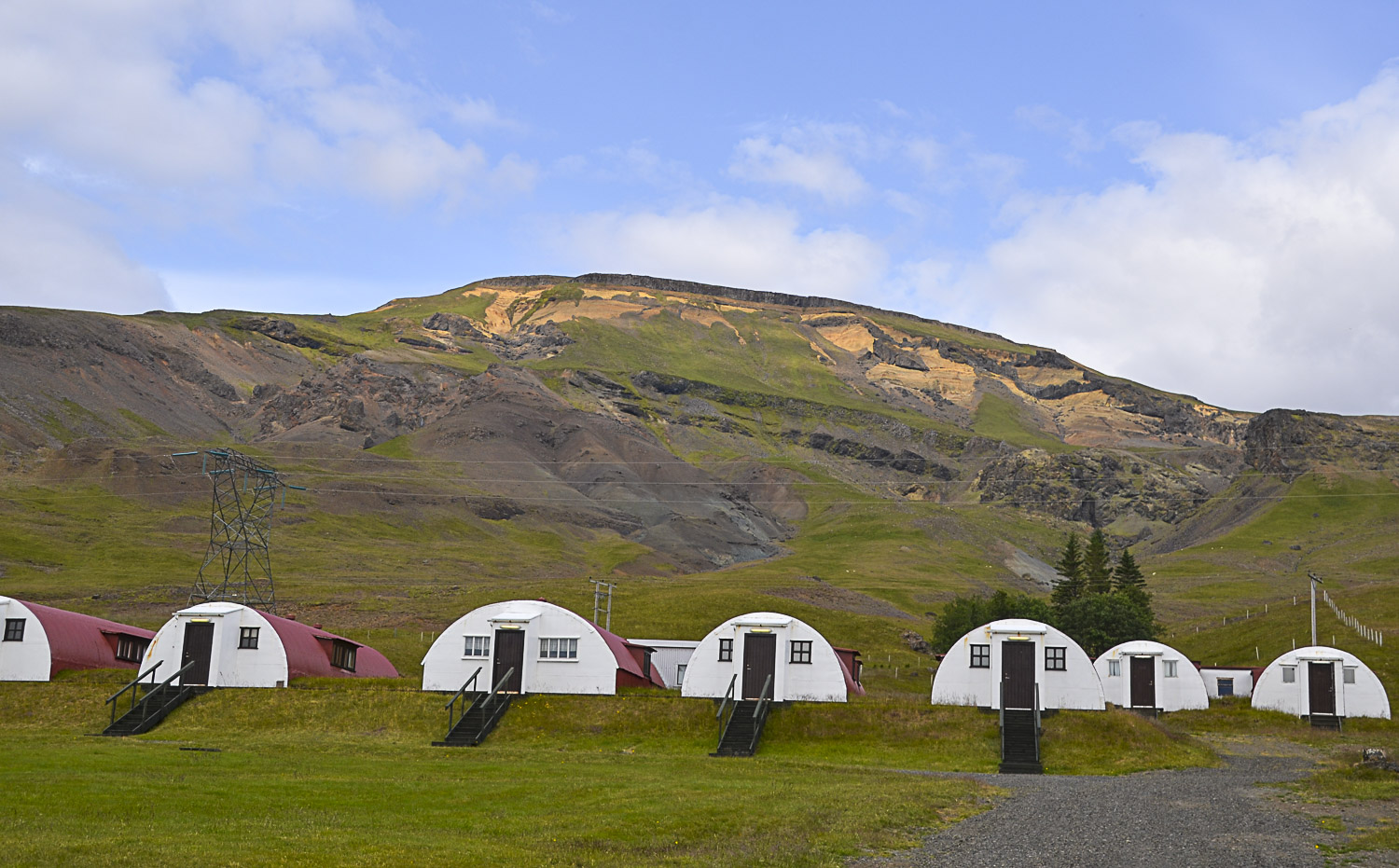
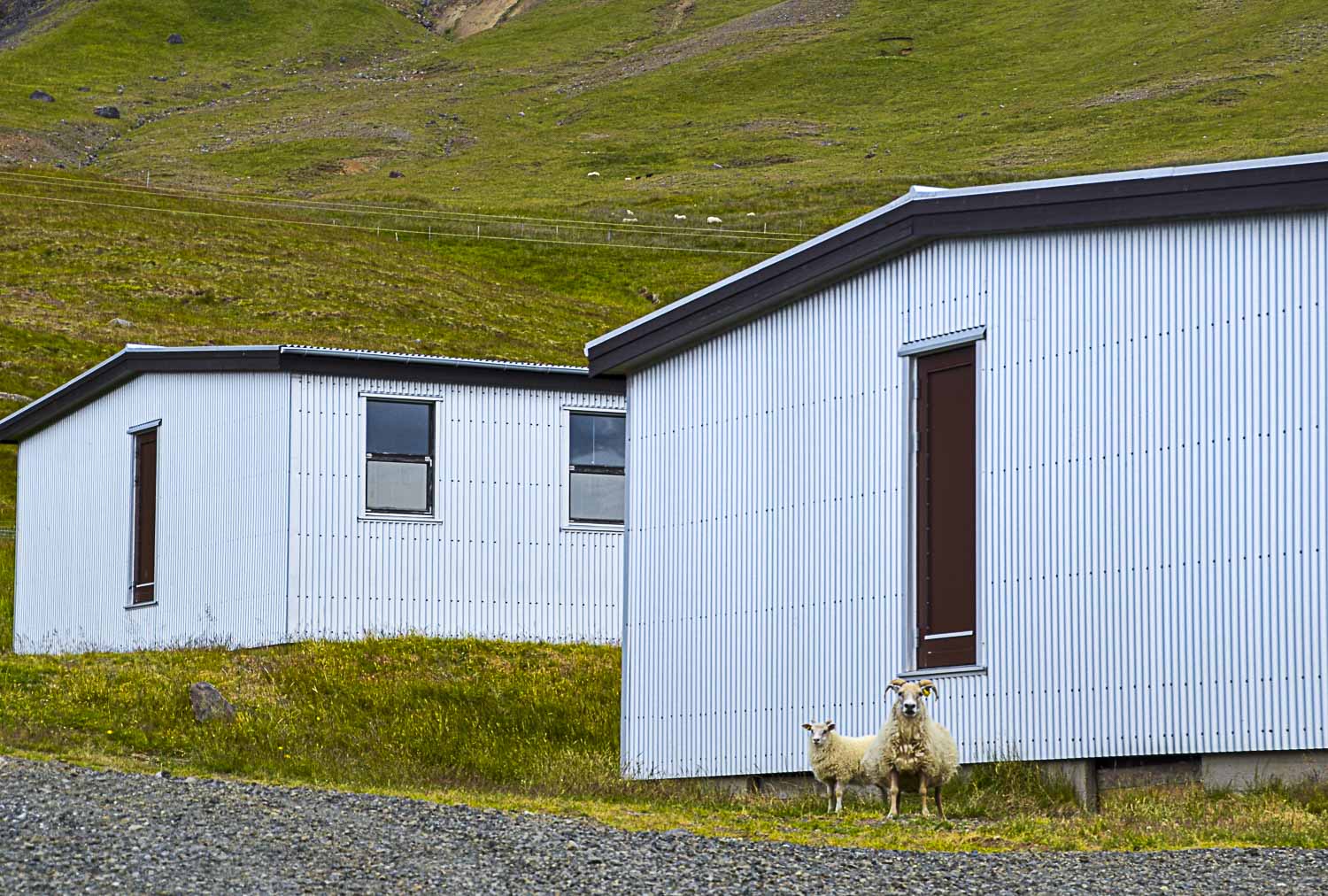
Today the old buildings, and some newer ones,  are still standing for the workers at the station, even if there were no workers this year. Only goats…

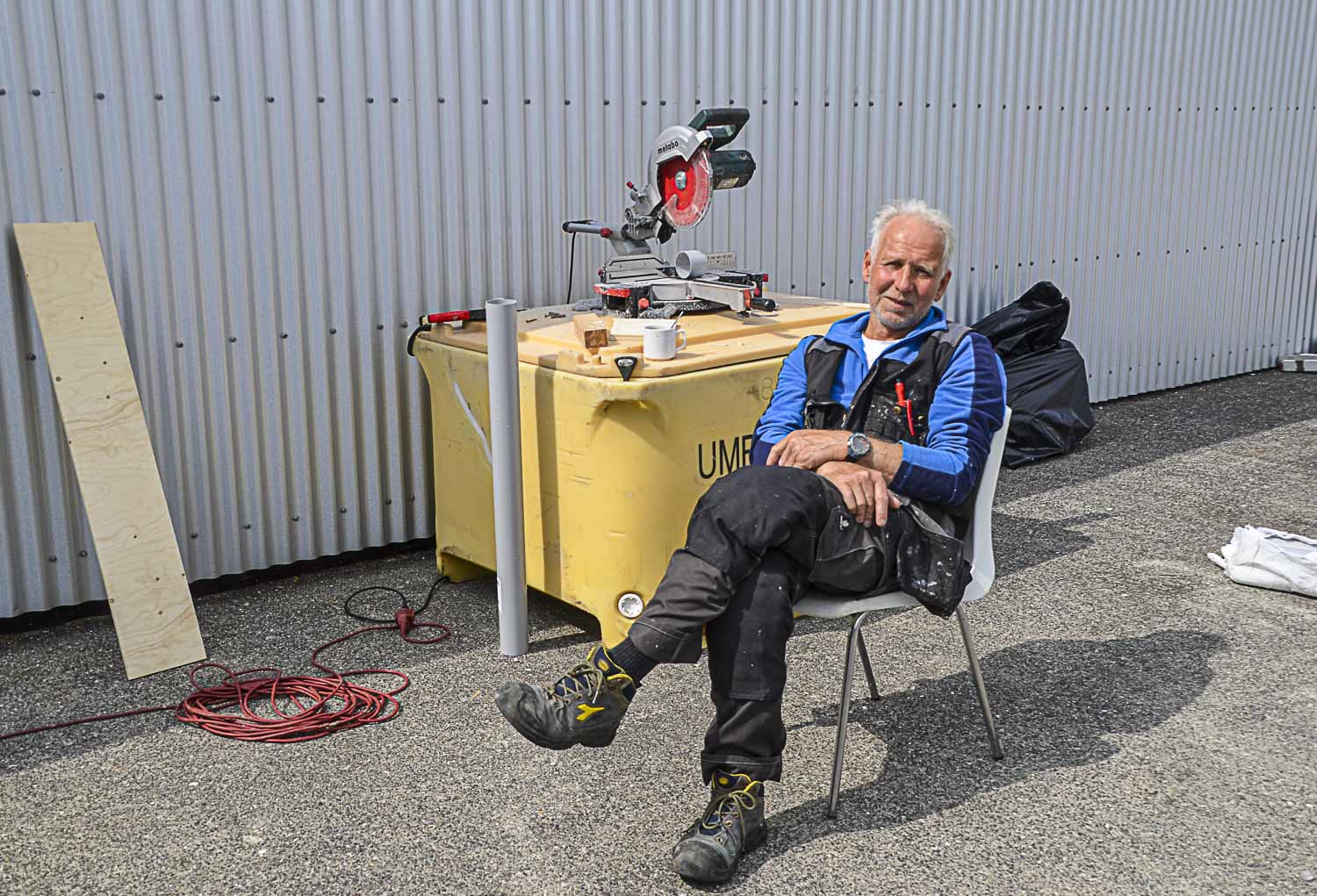
Outside the main building, we came across this lovely man and could ask him about old times, the navy men, the whales and the Japanese workers. In fact, as a young man he had worked as a whaler here himself. Now he was just trying to repair and maintain the houses.

Some of the small houses looked inhabited and we could see through the windows how cosy they were inside. A bit small, but much better than a tent. They could maybe be rented by tourists? I asked – but no, the government did not allow that. The huts were deemed too simple. We learned that they had no toilet and no kitchen. There was this main building for that purpose.


Thursday Thoughts – Centre of the Earth

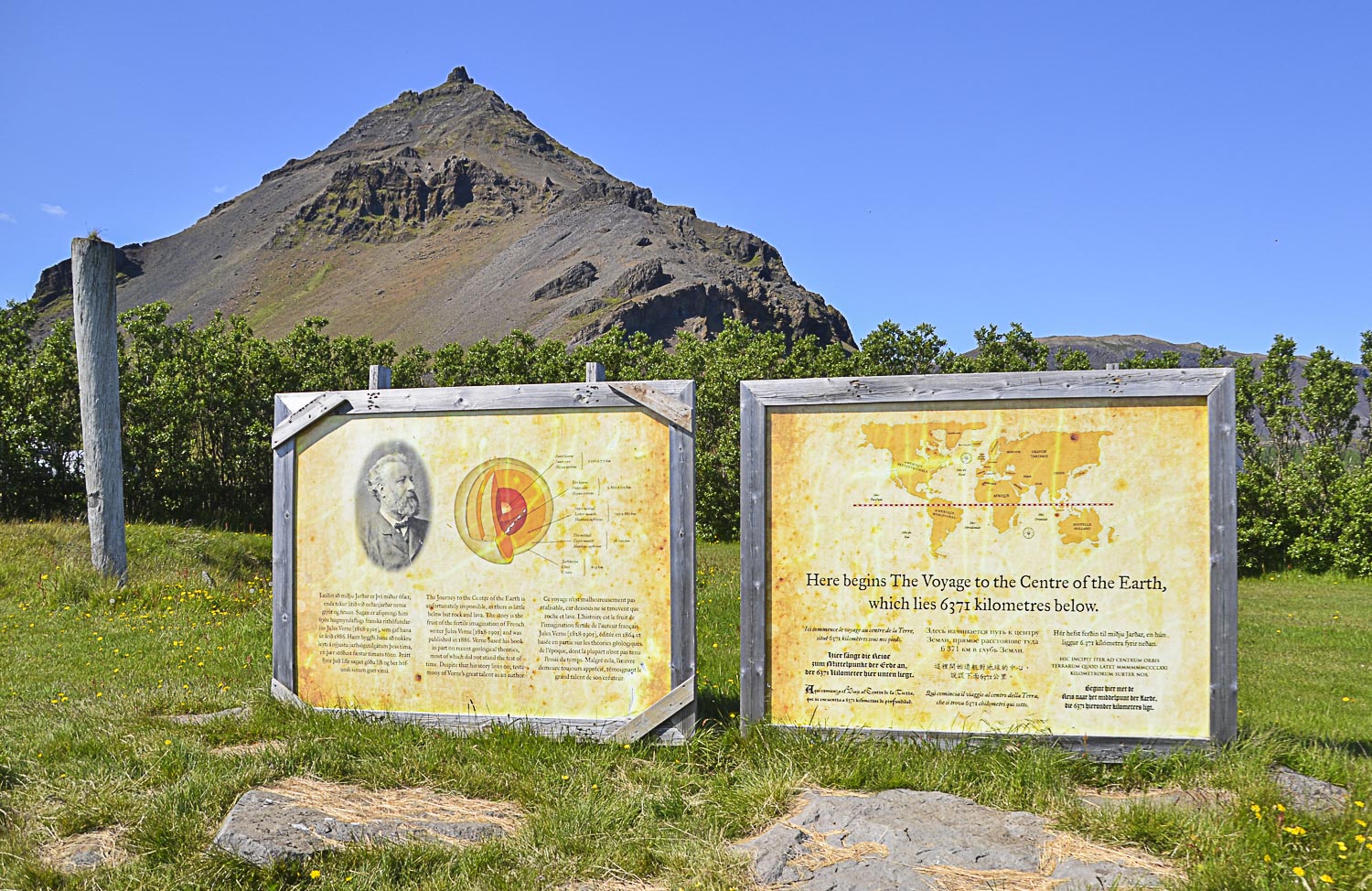
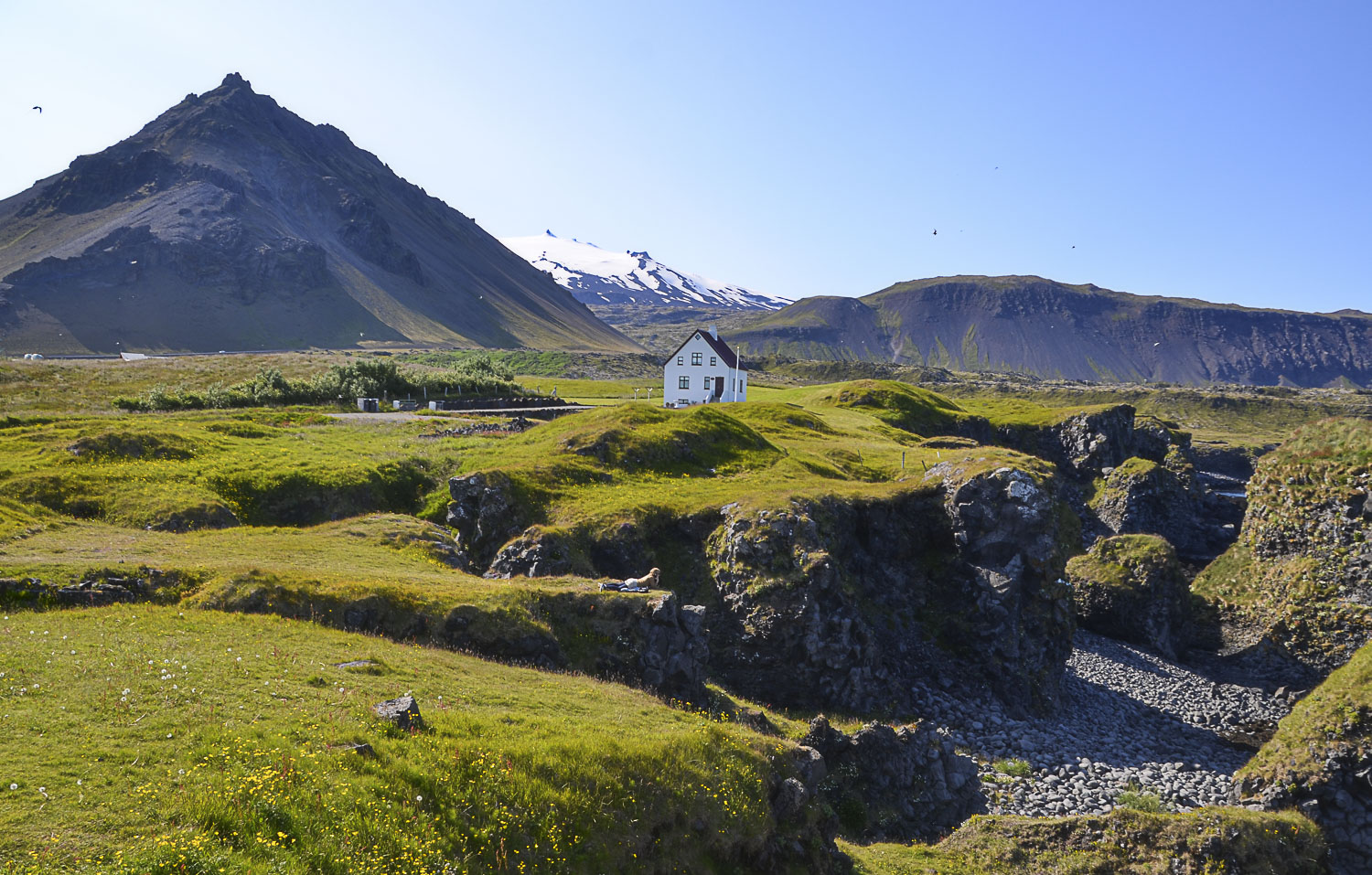
In Jules Verne’s  A Journey to the Center of the Earth, Stapi is the last stop on the route the protagonists take before they climb Snæfellsjökull and enter the interior of the planet through a tunnel in the crater.

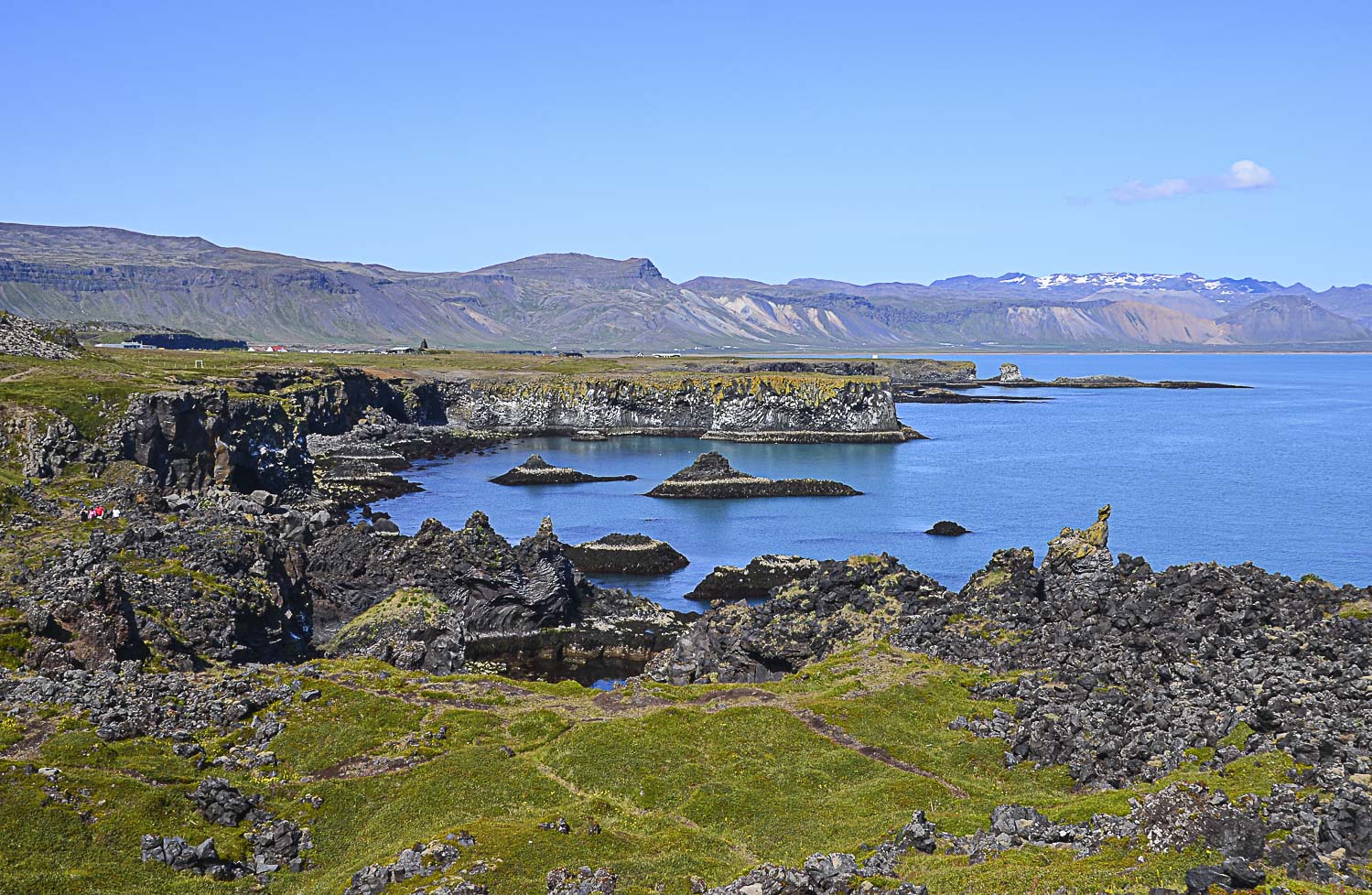
We didn’t intend to try any of these possibilities, but to hike along the coast line of the peninsula from Arnarstapi  to Hellnar.

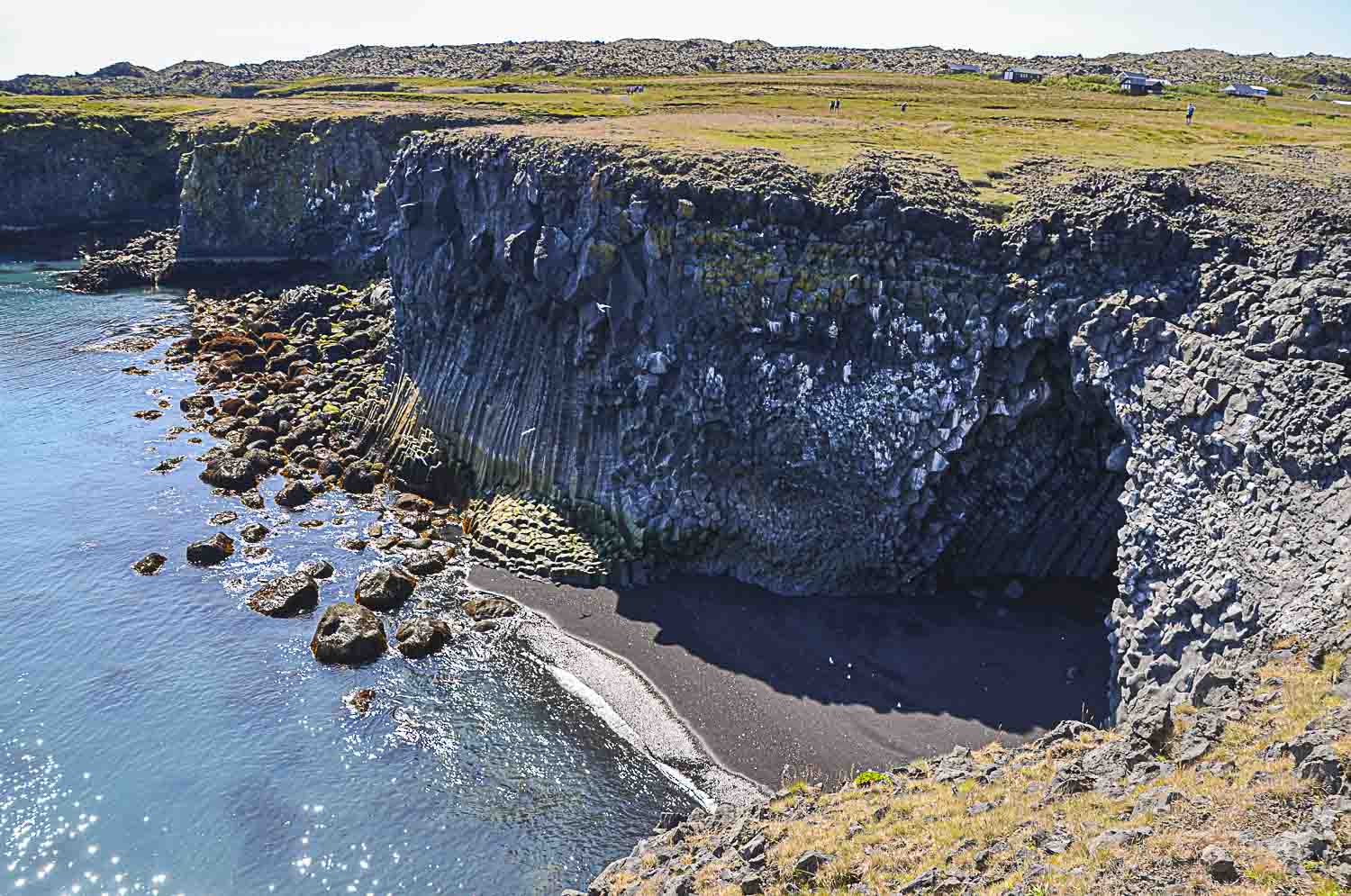
We encountered (I think you could say that…) spectacular landscapes this morning – the likes of nothing I had seen before.

Steep cliffs and birds, birds, birds…on this ca 4 km hike.

Amazing colours everywhere, almost no fellow hikers, sun, blue skies and no wind. Who could ask for more?

Island 2019 1069-Redigera

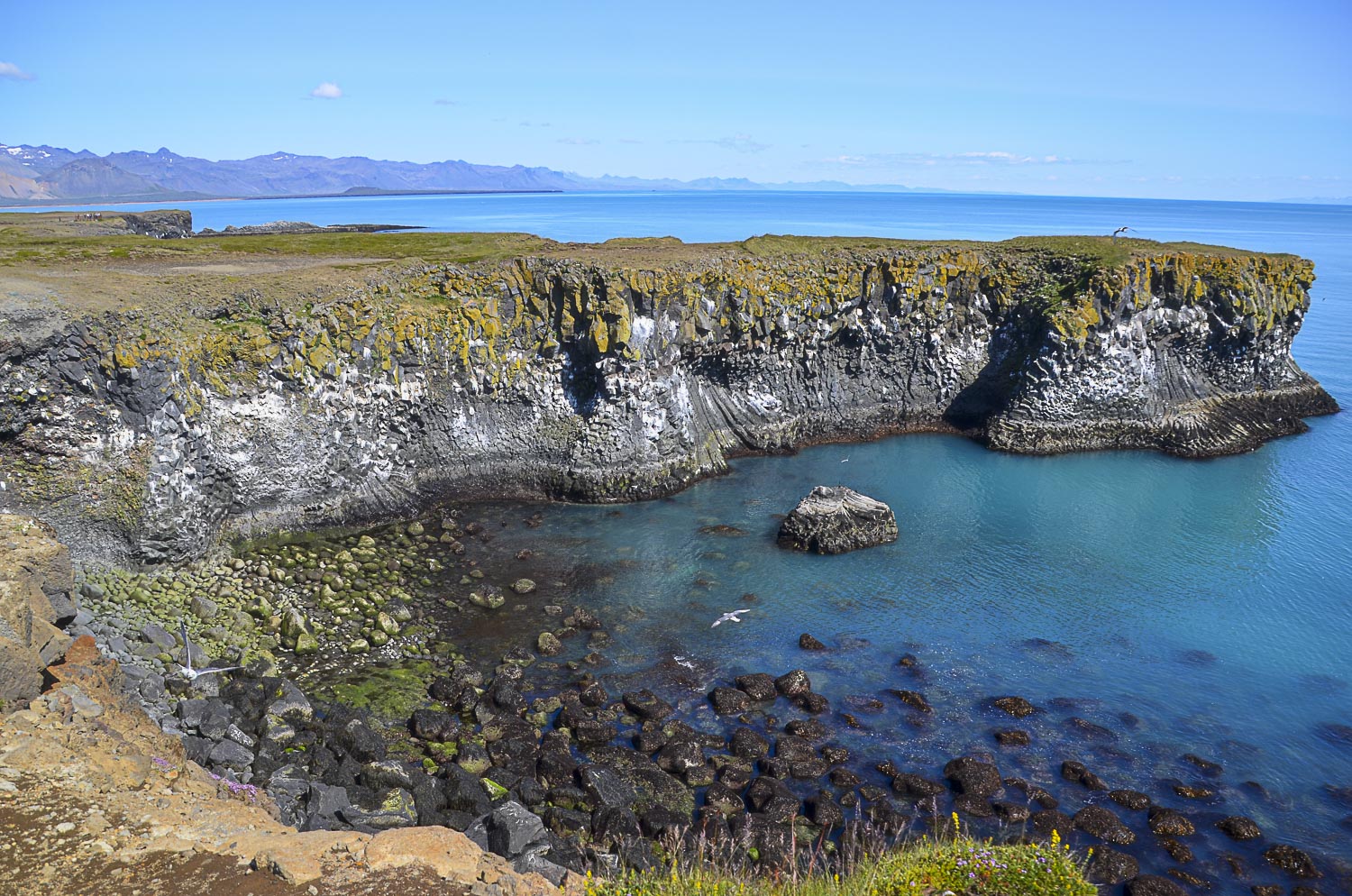
The further we went, the more the landscape opened up and the magnificent coastline became visible – with all its small rocks and islets –

– a spectacular archipelago.

Struggling through some rugged lava formations, I suddenly spotted three killer whales, orcas,  in the blue waters ahead of us. I only got one shot working…then they were gone. But wow, how happy I was! I had never seen them live, in their natural habitat.

Gatklettur Arch

Gatklettur Arch – after some searching, we finally found it on our way back to Arnarstapi.

And the soft evening light kissed the earth. I sat down among the flowers, and listened to the strong feeling of Love for this Country, the stillness in the air, the beauty of this place. I watched the young girl, lying there, contemplating – and wondered if she too had seen the orcas…. To me, they were the icing on the cake this Icelandic summer’s day.

We returned to the two villages, Arnarstapi and Hellnar, the next day – just to savour their beauty once more before heading north… There just might be another post.