Lens-Artists Challenge #278 – Unique

Amy wants us to show something unique – which means something with the quality of being unlike anything else.

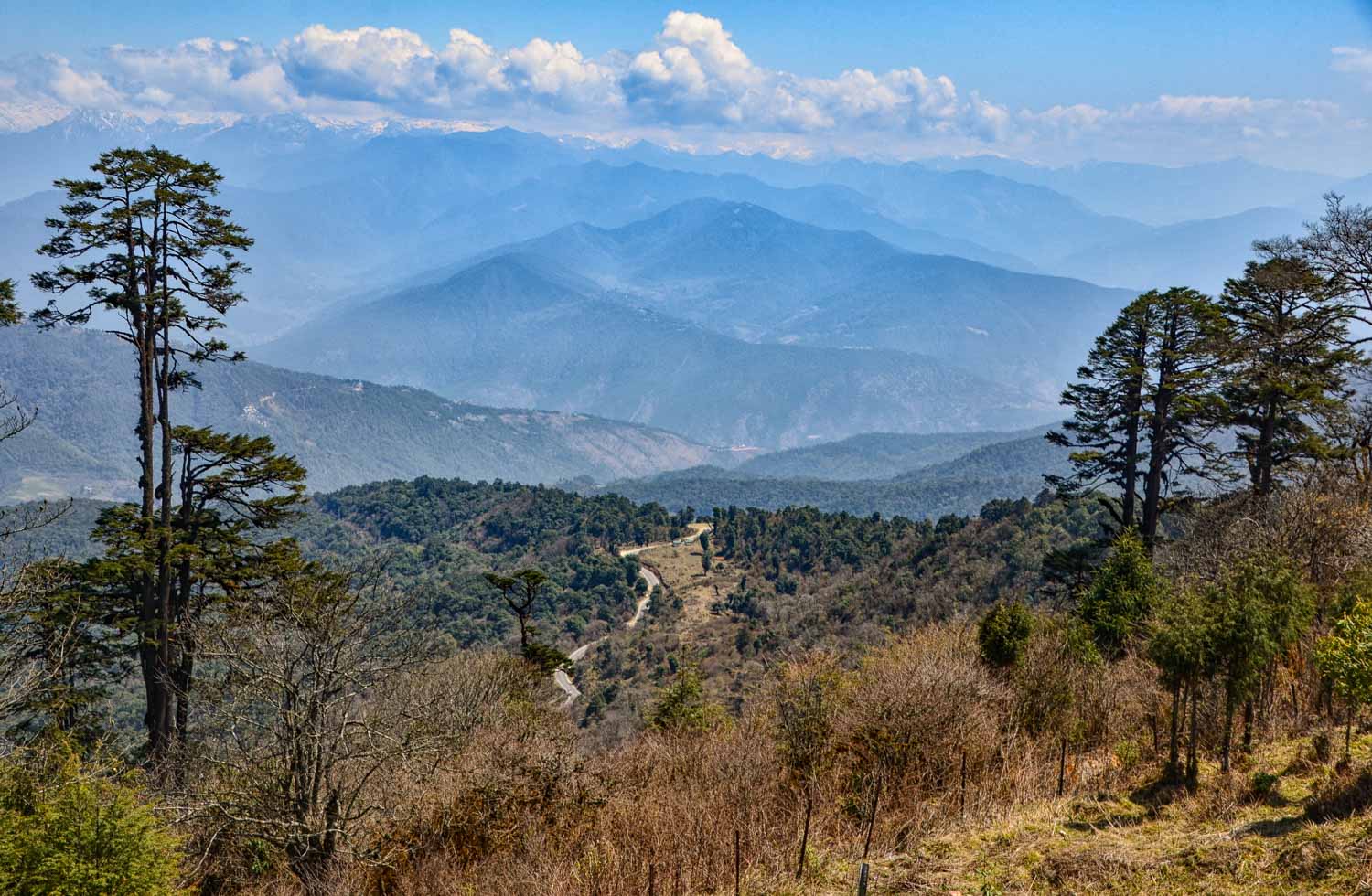
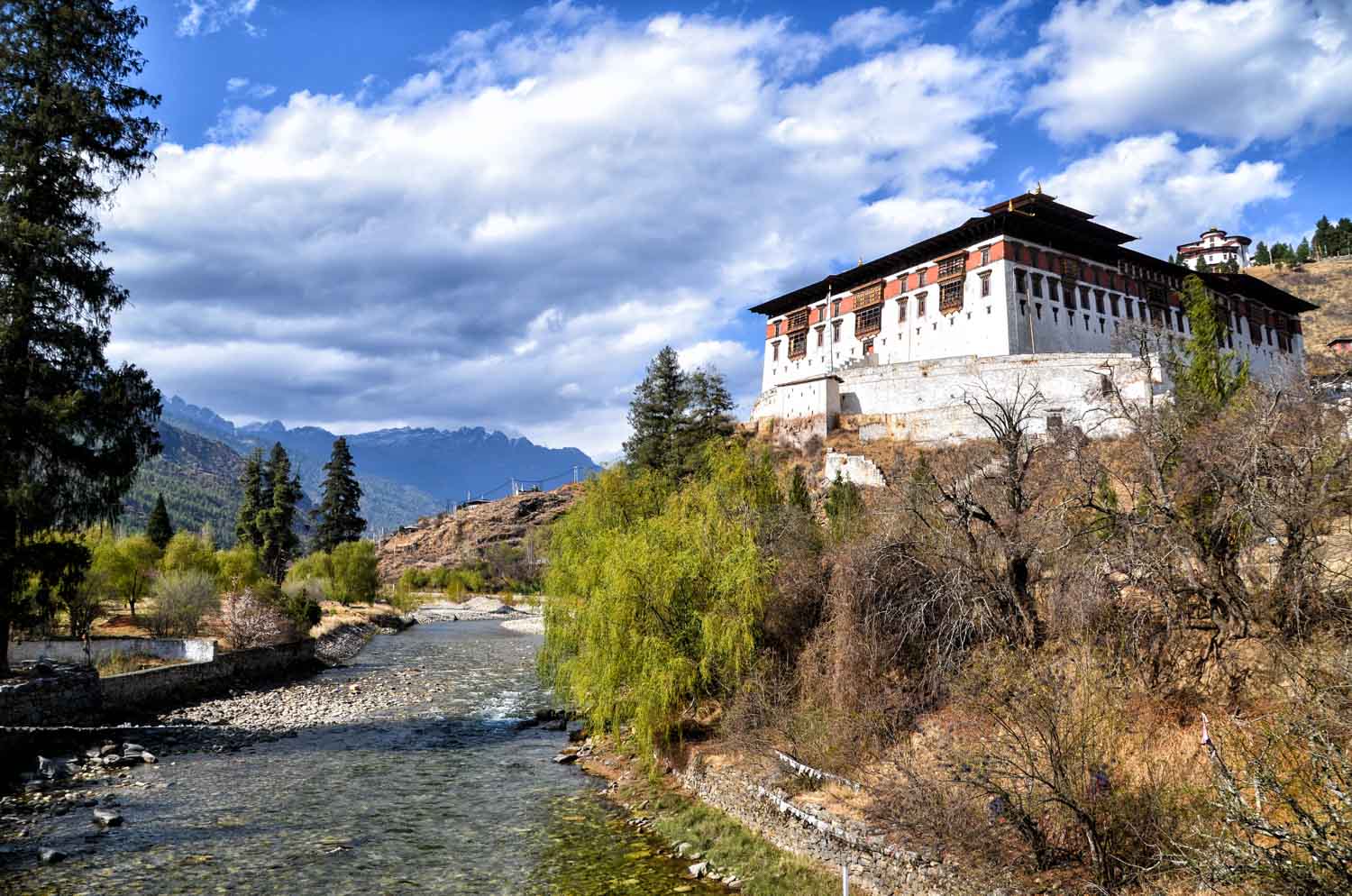
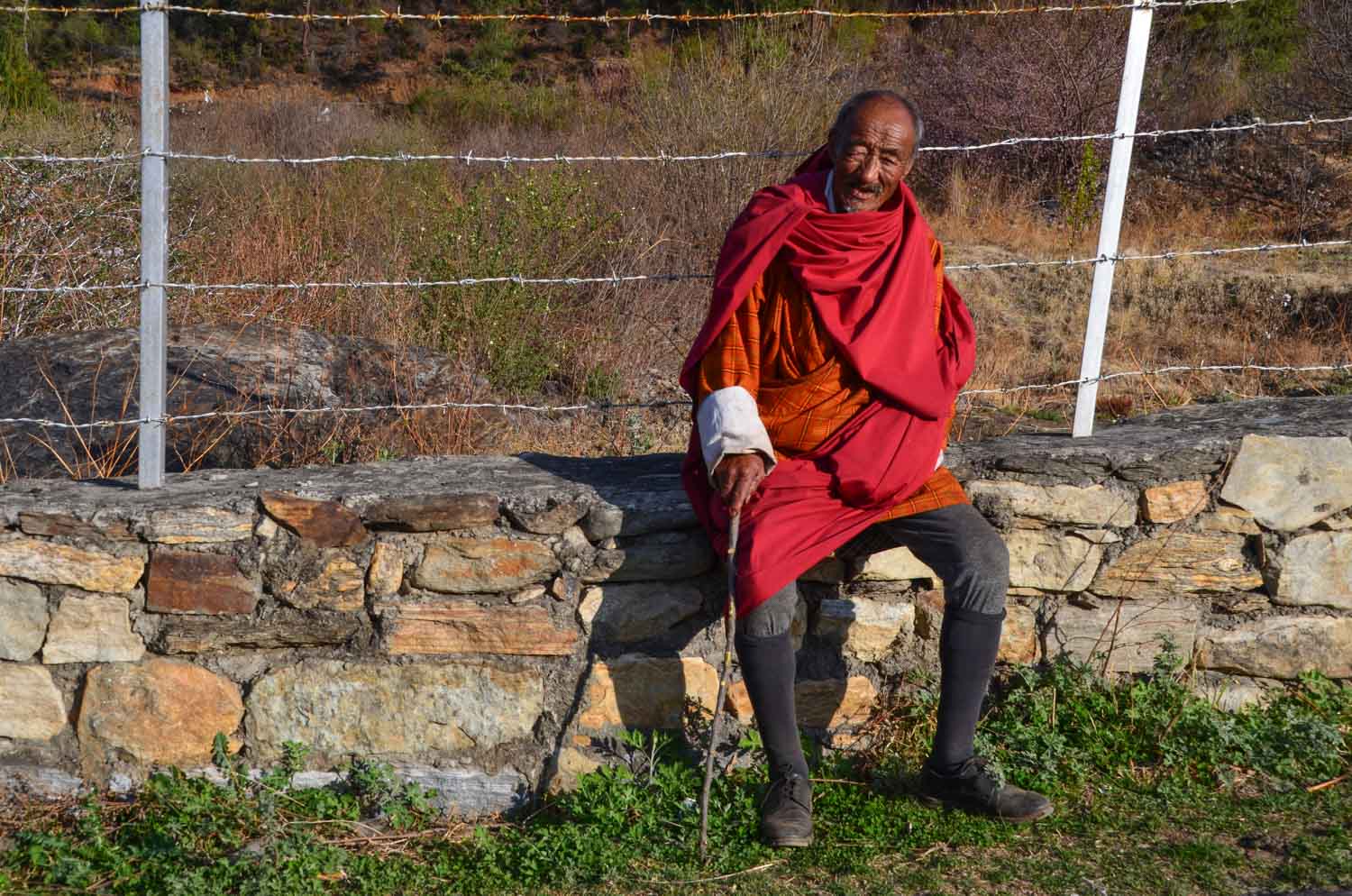
We are all unique, that we know. But I will concentrate on one country in this world that is unique in its care for our planet and its inhabitants – Bhutan. It is the only country on Earth that shows negative emissions of carbon dioxide, and its forests (70% of the country) are carbon sinks. They also let corridors of forest stand for the wildlife to easily transport themselves from the rainforest in the south and up north to the highest mountains.

This beautiful kingdom in the Himalayas have now sent people to the COP28 meeting to talk about their successful work, asking for help to continue it. Let’s hope they will listen…

Bhutan combines Gross National Happiness (explained further down) with democracy and Buddhism. A concept they try to convey to the world as well. In fact, the Resolution of Happiness was adopted by the UN’s National Assembly in 2011, leading to World Happiness Day now being celebrated across the globe annually on March 20.

Bhutan has got 800 000 inhabitants, and their capital is Thimpu. Which is, the only capital in the world without traffic lights. (2018) There is still a policeman in a box, in the middle of the street, gracefully waving the traffic in the right direction.

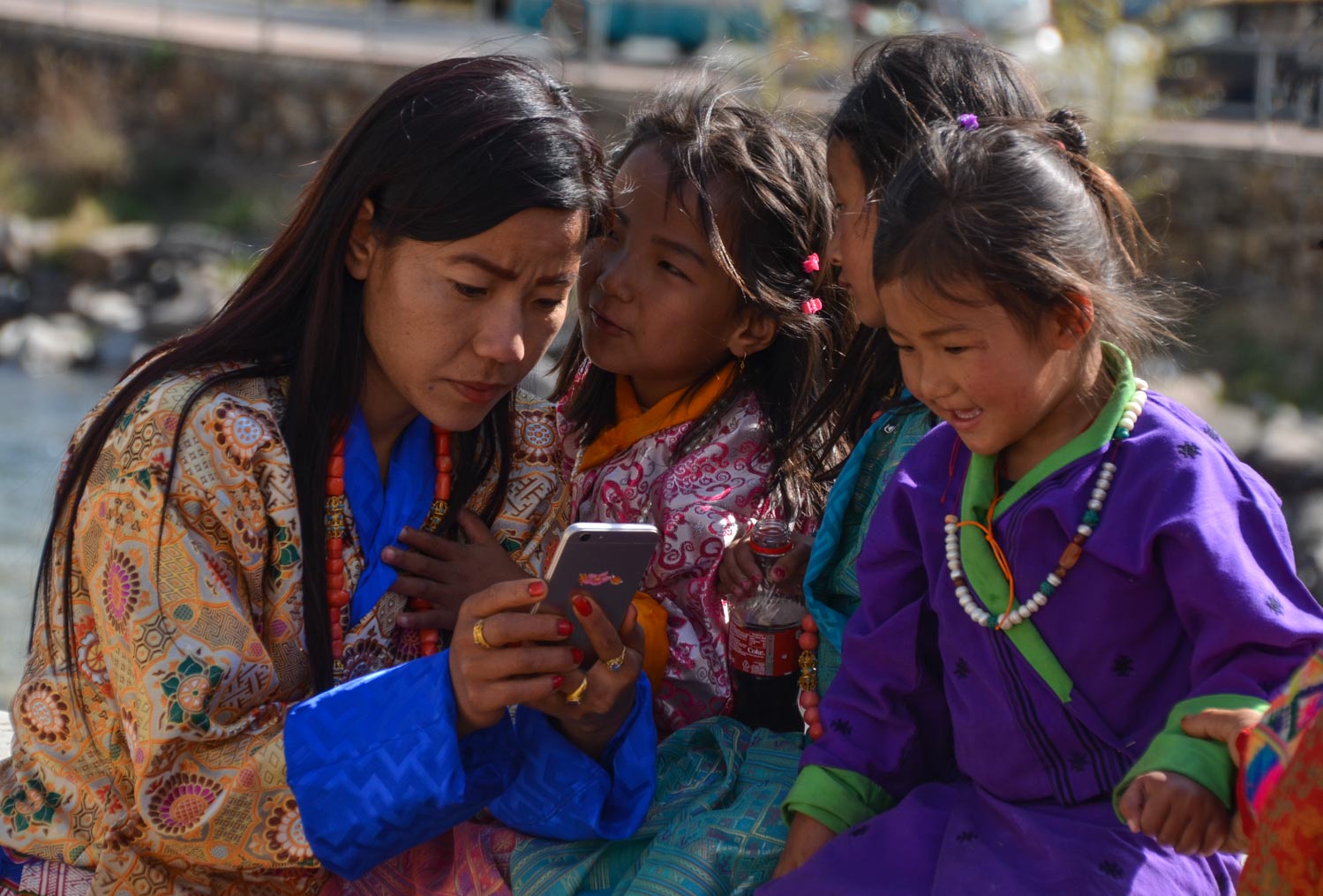
1974 Bhutan opened up to the world and modernity is now coming fast. We saw cell phones and heavy camera equipment already in Paro – and dogs on leash in Thimpu. A rapidly growing economy has resulted in increased consumerism – leading to imports mostly from India. The government decided to place a ban on many imports, including cars, but it remains to be seen if globalization and everything in its wake can be sufficiently kept at bay. Let us hope so. This tiny Himalayan nation, surrounded by much larger countries with massive populations and economies – seem to stand tall in their beliefs and try to follow the road chosen.

Gross National Happiness (GNH) in short, is:

  • based on core Buddhist and human values
  • a measurable index and a counterpoint to the economists Gross National Product
  • a philosophy placing real value on cultural heritage, health, education, good governance, ecological diversity and individual well-being

According to our local guide, Rinzen, there is a validation before a decision is taken, and after the implementation of it. If people are not getting/did not get happier out of this – the concept will be dropped.

Bhutan is the world’s only carbon-negative country. Just Imagine. And, this is true.

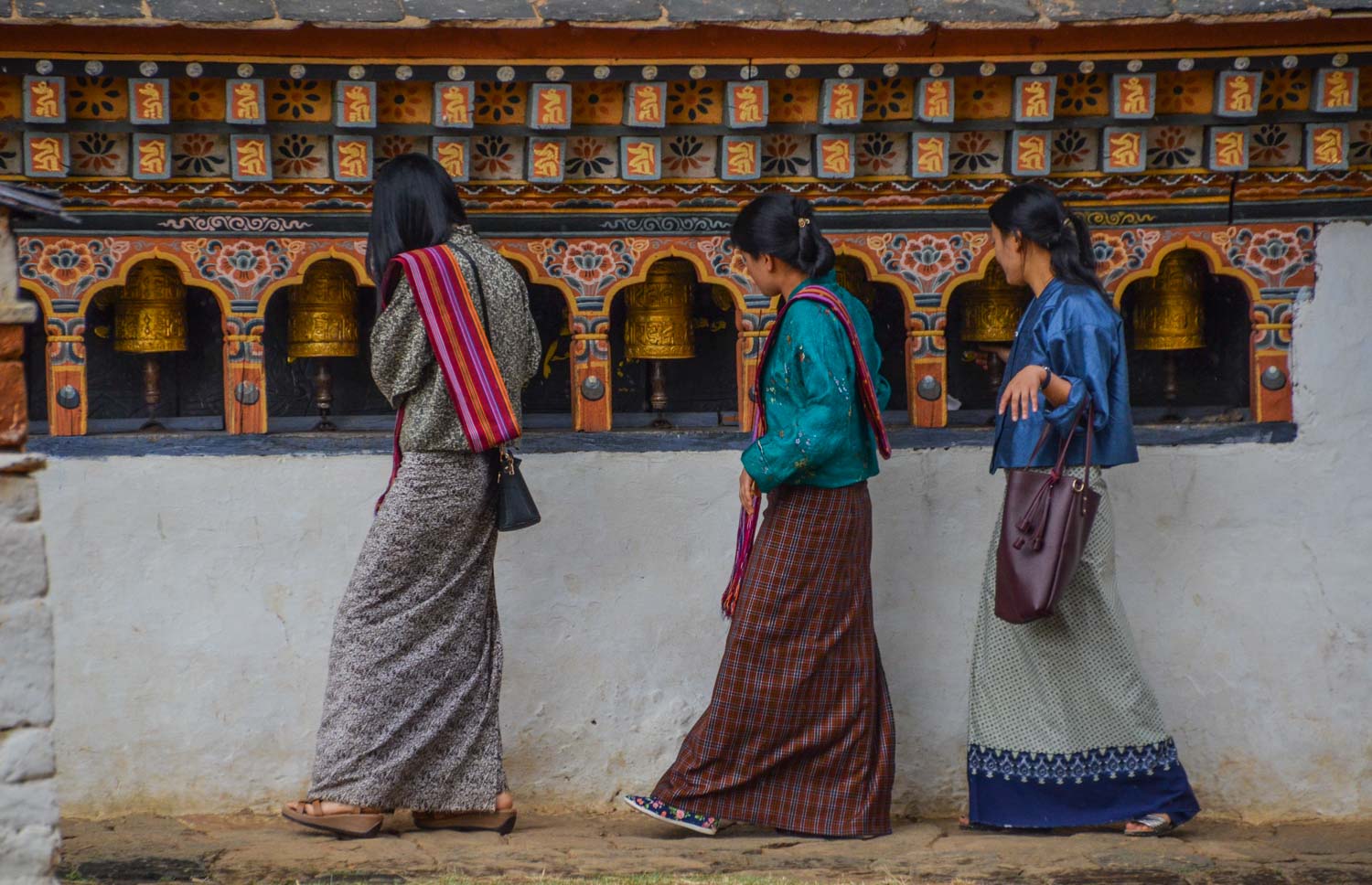
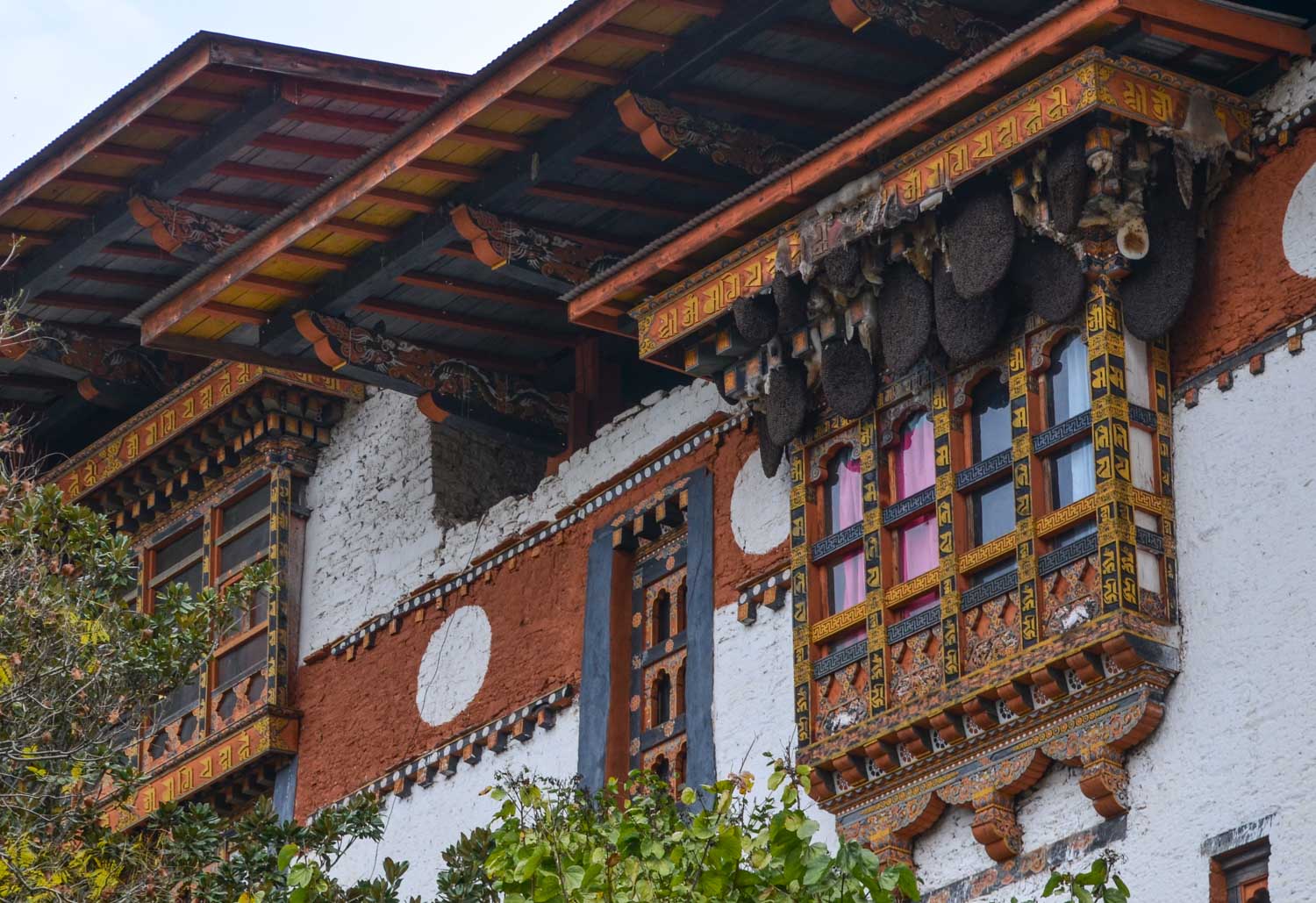
This final gallery also shows how the beautiful architecture is preserved and their love of flowers.

Thank you, Amy, for transporting me back to the most impressive journey of all my journeys. The country, the people, their vision had the greatest impact on me. I am so grateful.

We hope you will join us and share your findings, such as the uniqueness of a plant, artwork, culture, architecture, scenery, or places you have visited. Maybe special moments that are unique? Please make a link here and tag Lens-Artists so we can find your post.

Many thanks to Patti for her last week’s Empty Spaces. She has shown us beautiful examples and techniques to explore. Thanks to all of you for sharing your wonderful photos.
Next week, I, Ann-Christine/Leya will lead our challenge so be sure to visit next Saturday at noon EST.

Lens-Artists Challenge #277 – Empty Spaces

Our life is full of empty space. – Umberto Eco


Who doesn’t love open, empty spaces? Unless you are hunted by wild dogs of course.

Patti urges us to look for empty space in our photography – please visit her beautiful examples to get more inspiration! In this post, I think I might have some negative space images as well – or some that can fit both descriptions.

Empty space help us to find the object easier, and it gives us room to move and breathe. My daughter and son in the speaking tunnel In Umeå.

The two of them again, but, how often do you find the metro tunnels empty? In fact I had to wait for quite a while for this shot.

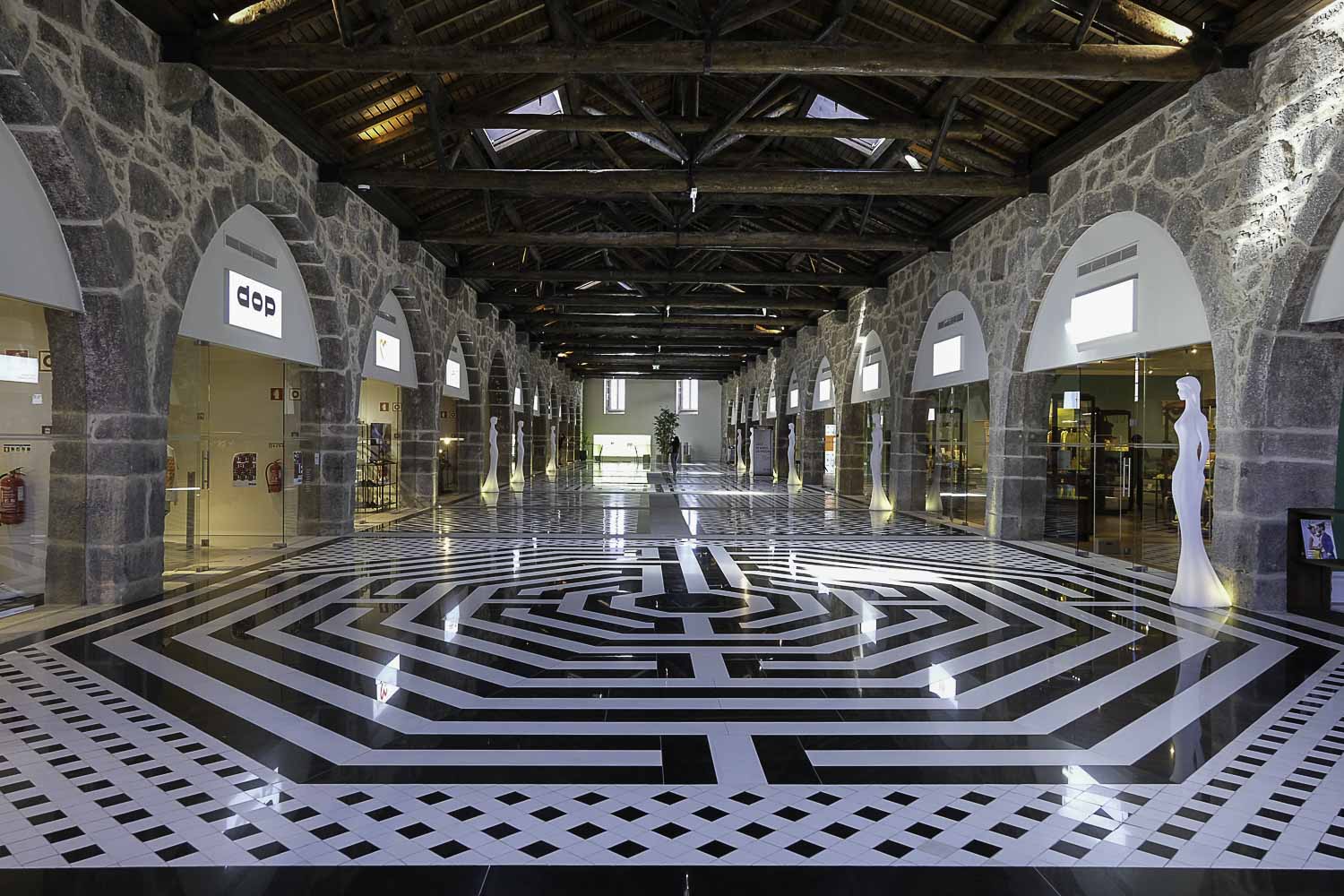
An empty space like this one, in one of Porto’s wineries, makes me want to put on a pair of nice socks and go sock skating on that shiny floor. Hopefully without breaking anything… but no – I am Not too old for this!

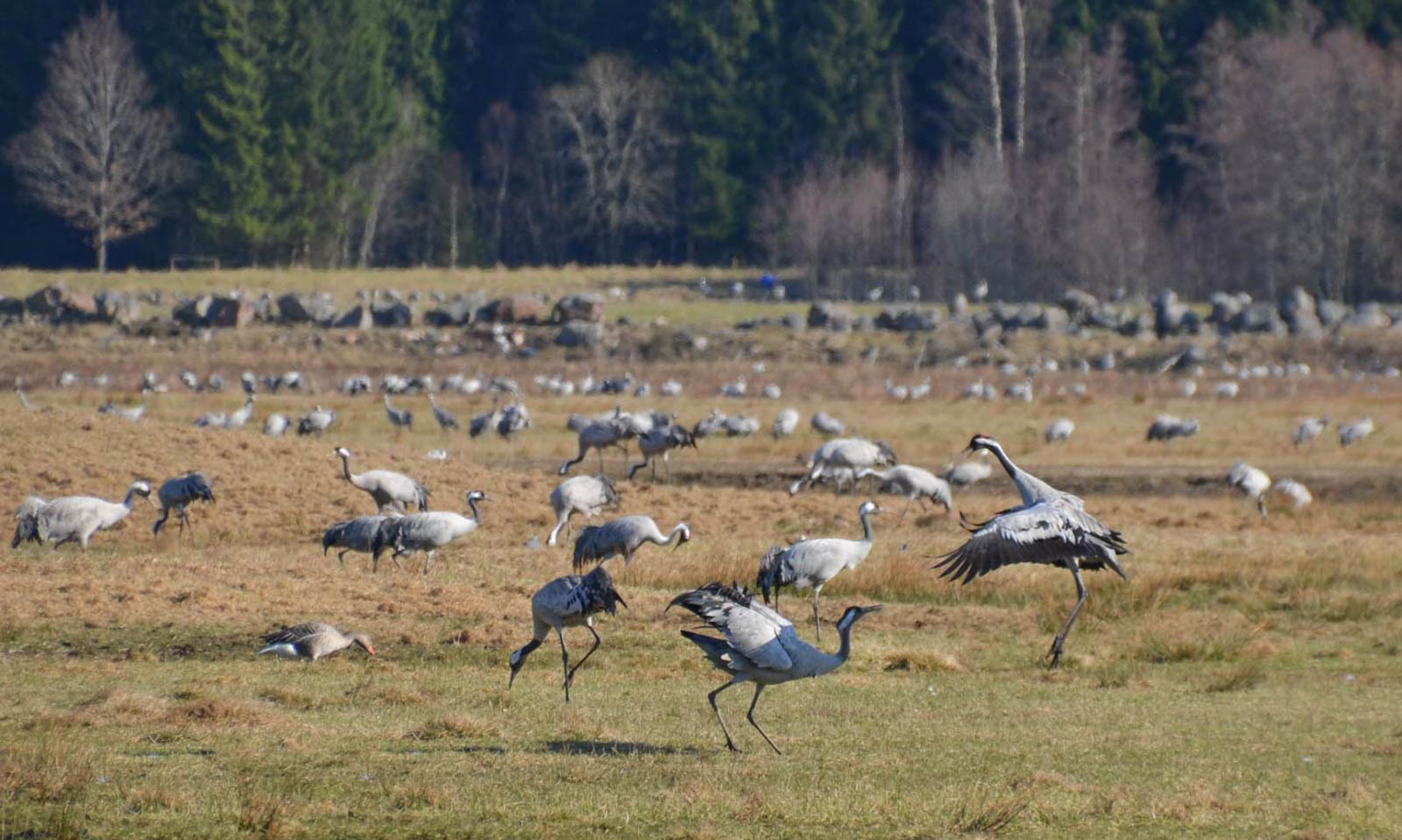
Open land and empty space outdoors lifts your eyes and your soul – you soar over the landscape. At least I always wish I could. I was waiting for the cranes at Hornbogasjön, but it was too early in the year. No real subject or object, but I was happy to get the empty space anyway.

Seascapes are much loved empty spaces, and you never get tired of the views. Open sea at the inside passage, Alaska. Our eyes are drawn to the ship first, and then further on to the mountains.

Other examples of empty spaces are for example this lawn in front of the castle…where everything in the picture leads you up to the steps and the castle entrance.

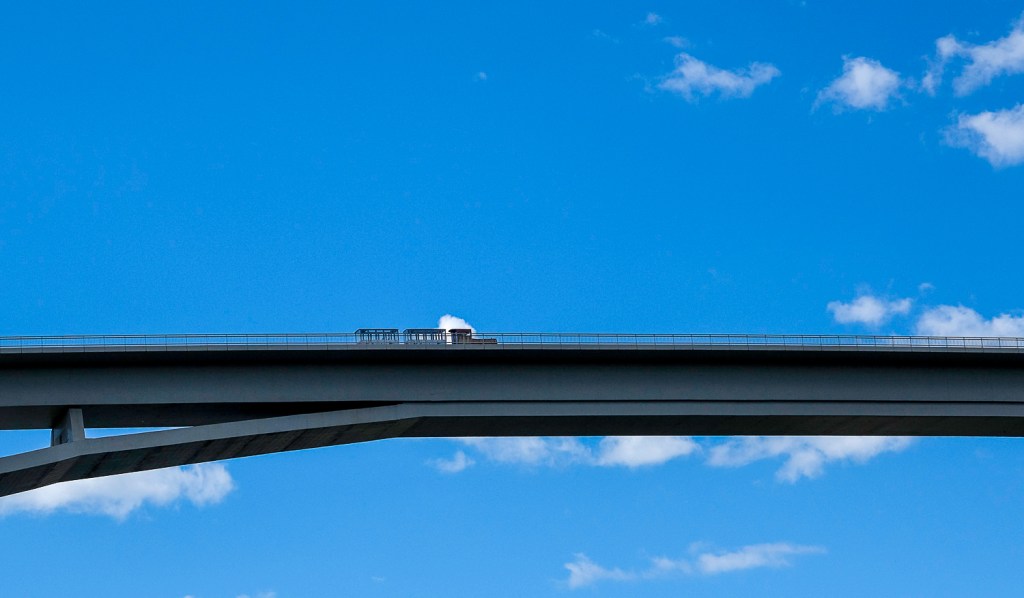
The water on both sides of the birds……and the sky over and below the bridge. These use empty space to define the object we wanted to photograph.

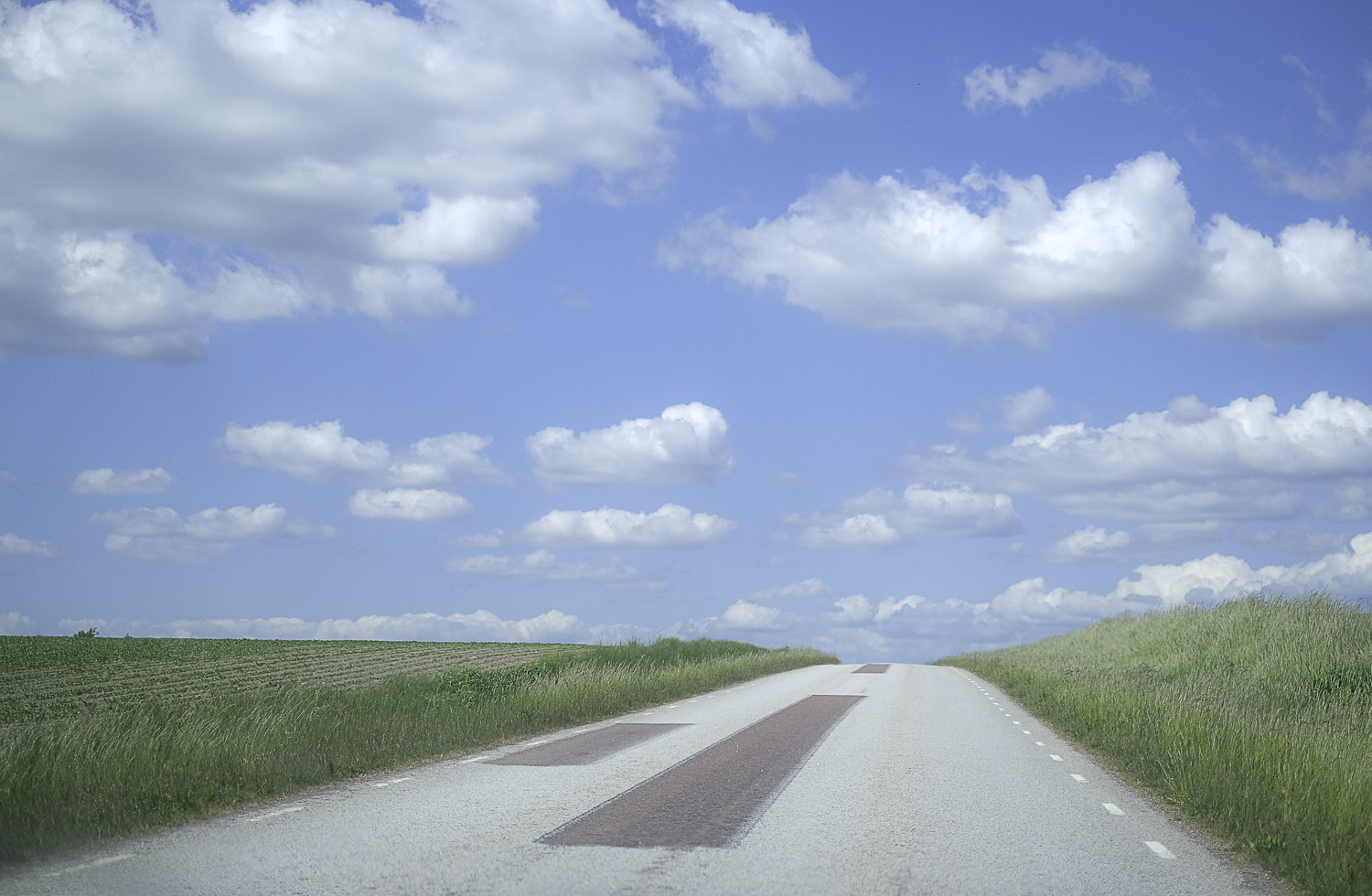
Maybe my favourites are roads and animals in empty spaces. Often because I realise the vastness of these, and how small and insignificant we humans are.

Walking alone in the desert – but in good company.

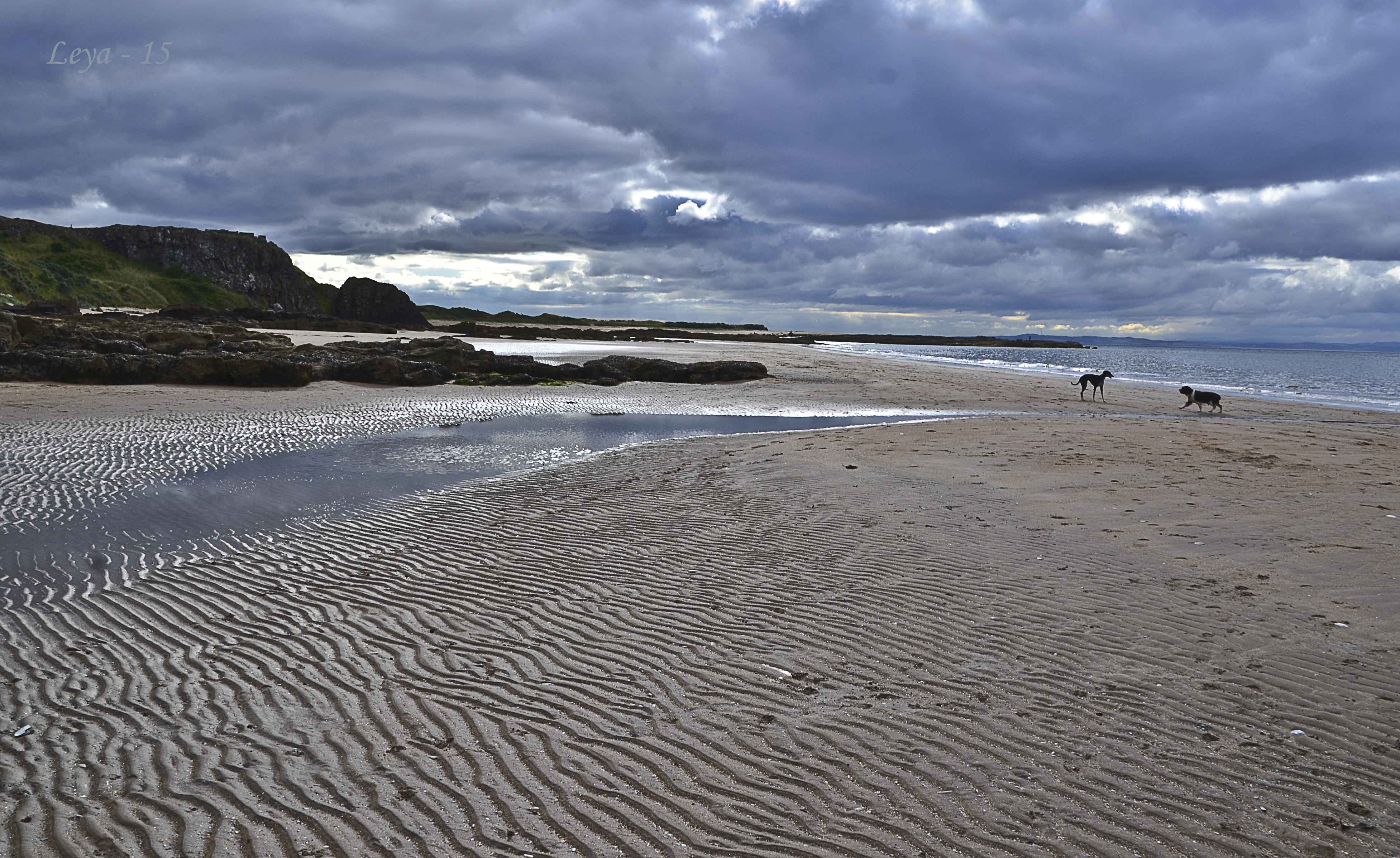
A beach is of course a wonderful choice. For anyone! Visit in the off-season and you can enjoy this view outside Edinburgh. Emptiness at its best.

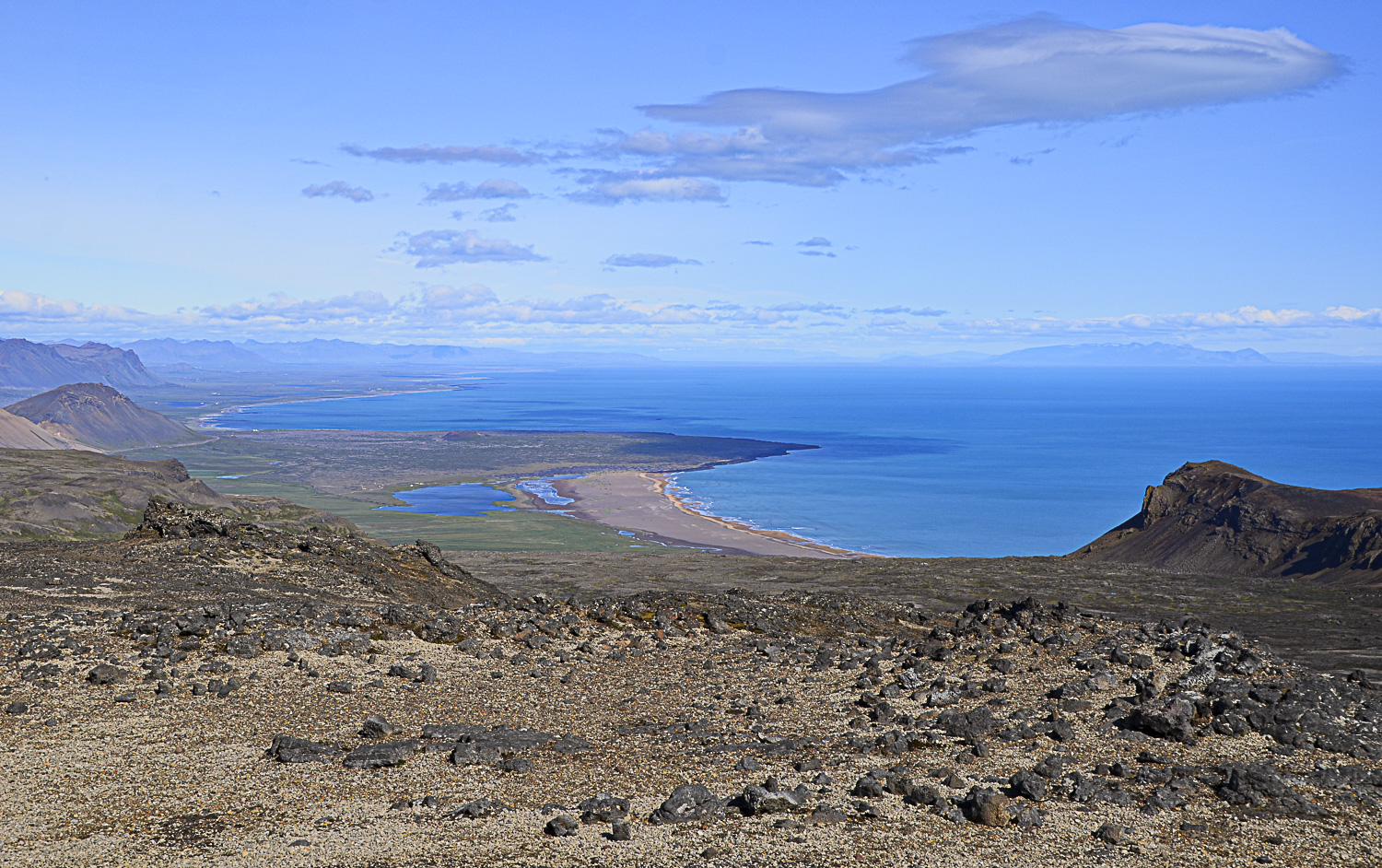
A mountain plateau in Iceland with a peak at the far end means empty space and slopes leading the eye further on.

I guess an empty space like this one, in Sofia, can mark out who is the leader – at least before the next cat arrives…

Then there are us, humans, in empty spaces in Denmark in the opener.

Patti points out that empty space can highlight and define the subject, create a more dramatic scene, and can convey a mood to our viewers. Hope to see Your choices this week! You can explore empty spaces close to home or from your archives. Any space is possible.

Include a link to Patti’s original post and be sure to use the Lens-Artists tag so we all can enjoy your photos. A special thanks to James for guest hosting last week, with a wonderful challenge inspiring us to experiment with perspective. Next week, it’s Amy’s turn to lead us. Her theme will be “Unique.”

If you’re new to Lens-Artists and would like to join, follow this link for more information.

Lens- Artists Challenge #276 – Looking up Looking Down

We welcome our guest host this week, James of JazziBee blog. He wants us to look both up and down to find interesting things…and indeed that is something at least I should do more often! So many times I have rushed ahead missing out on things above or on the ground – and many times behind me.

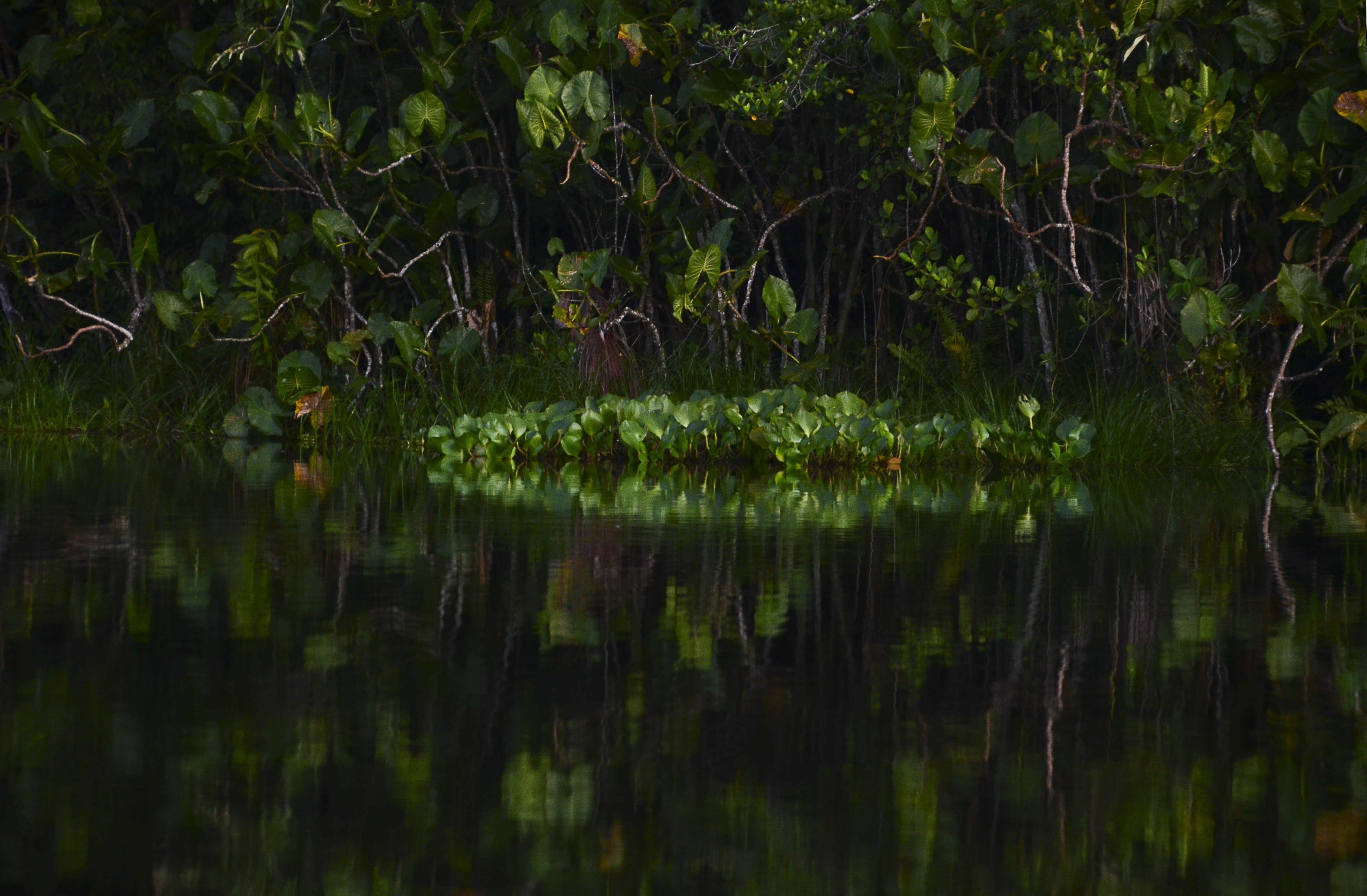
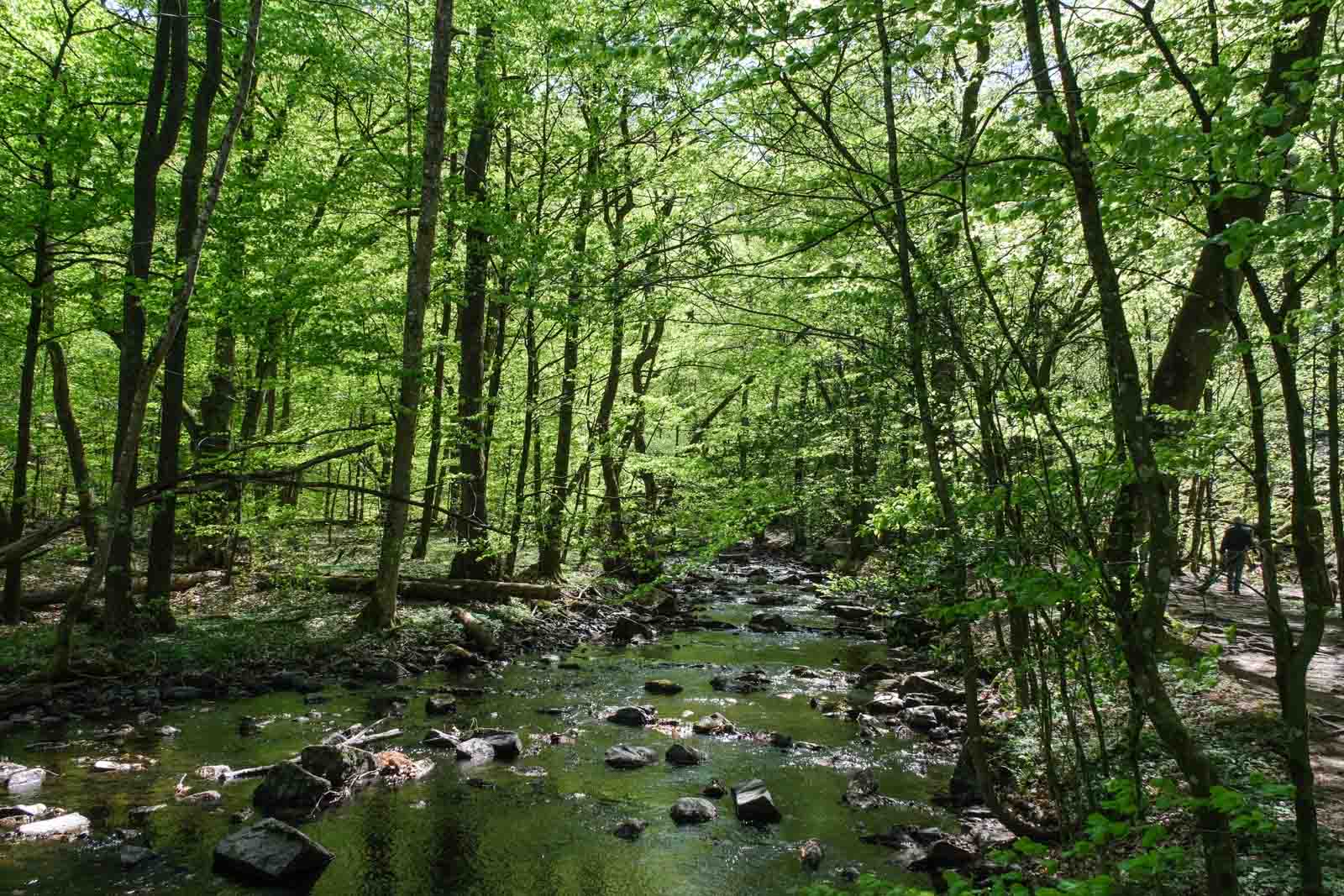
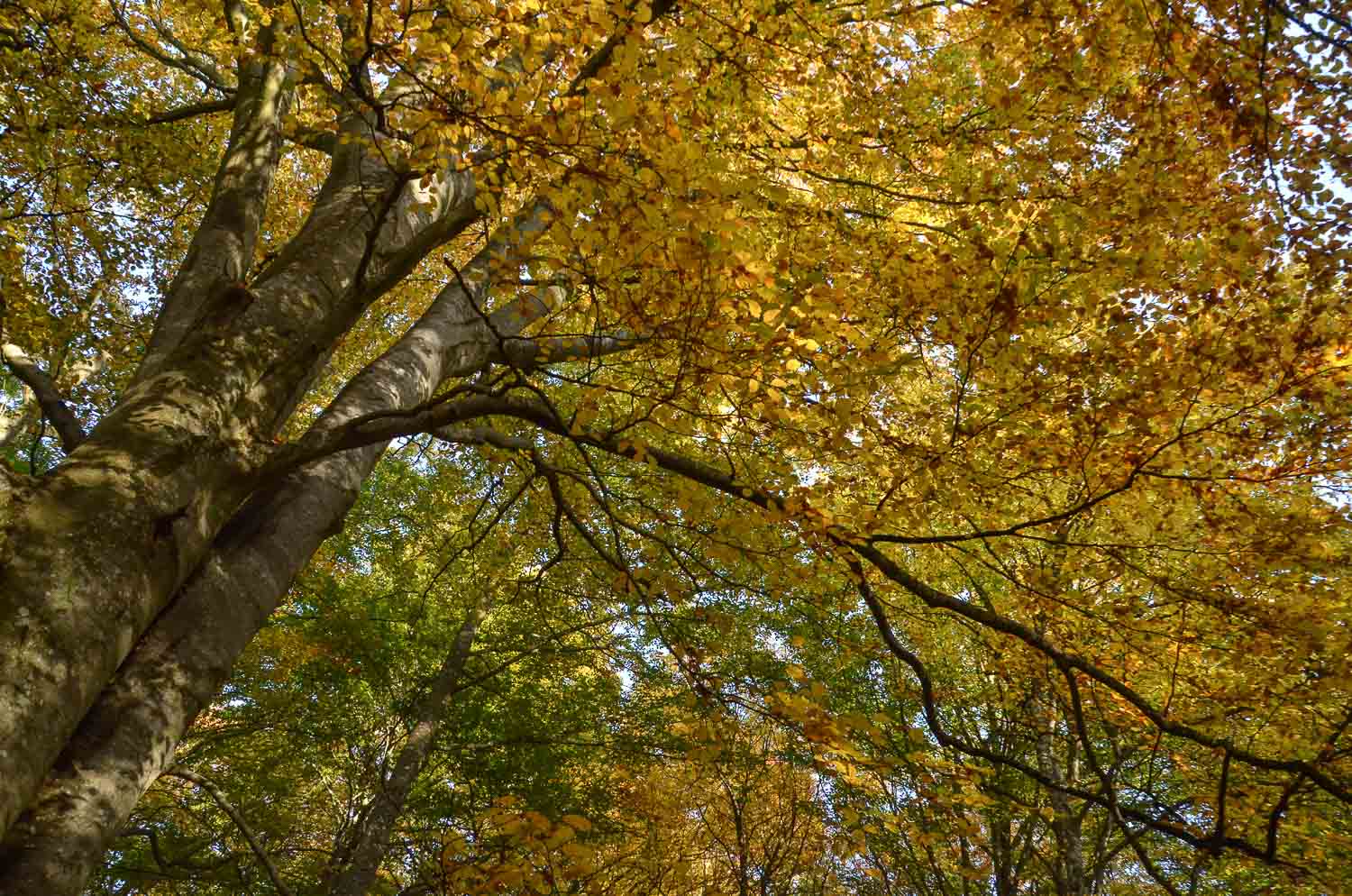
Walking in forests are rewarding, and even more so if you remember to look both up and down. It is not easy to see anything if you look sideways in a dense forest, but the Amazon canopy and forest floor are amazing. Not many plants grow in the faint light on the forest floor, but there are tiny mushrooms and ants for example. Lizards and frogs can be found on tiny leaves there too.

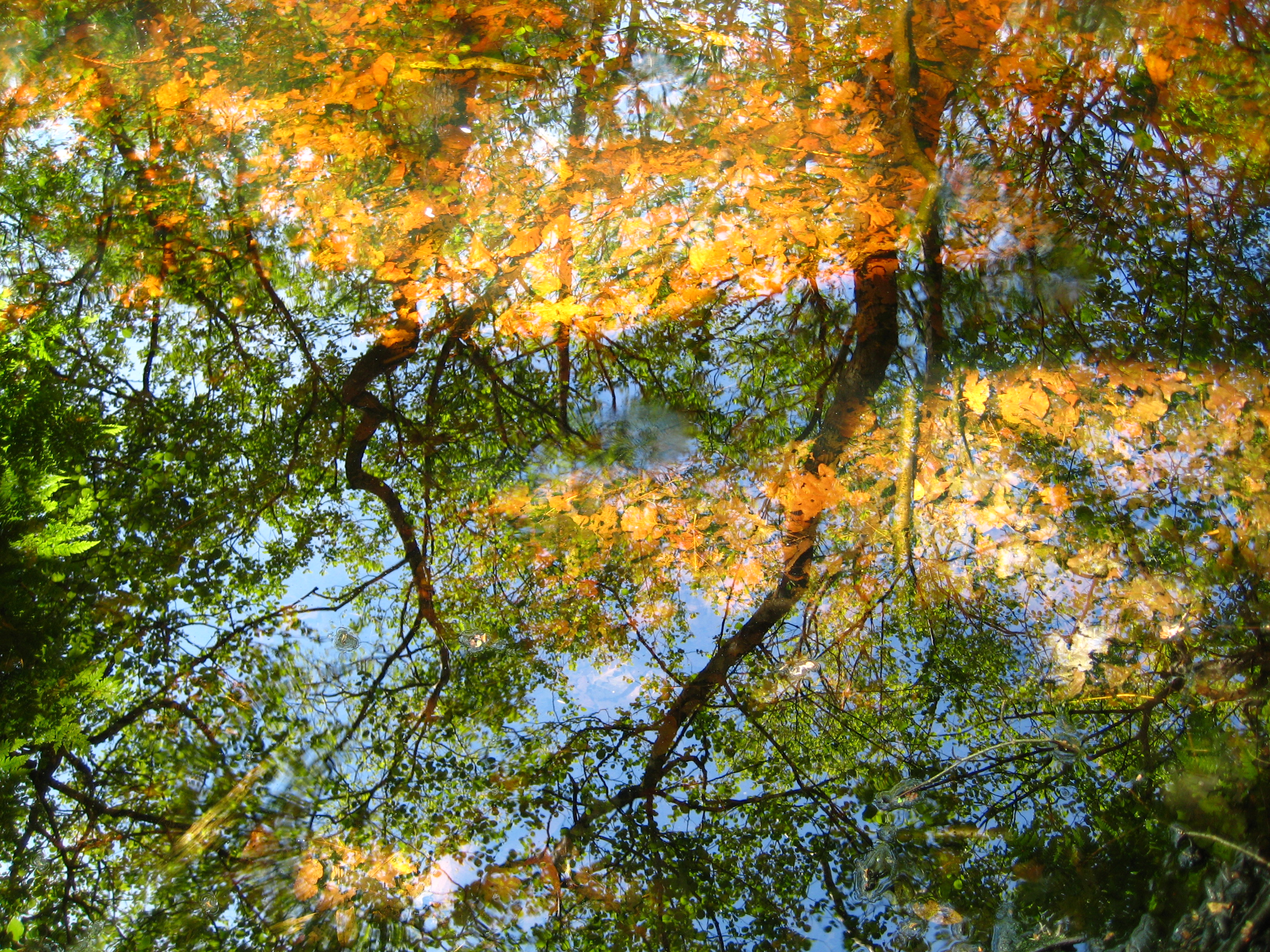
Swedish autumn usually displays a colourful canopy and looking down the water reflection and the fallen leaves make for a golden treasure.

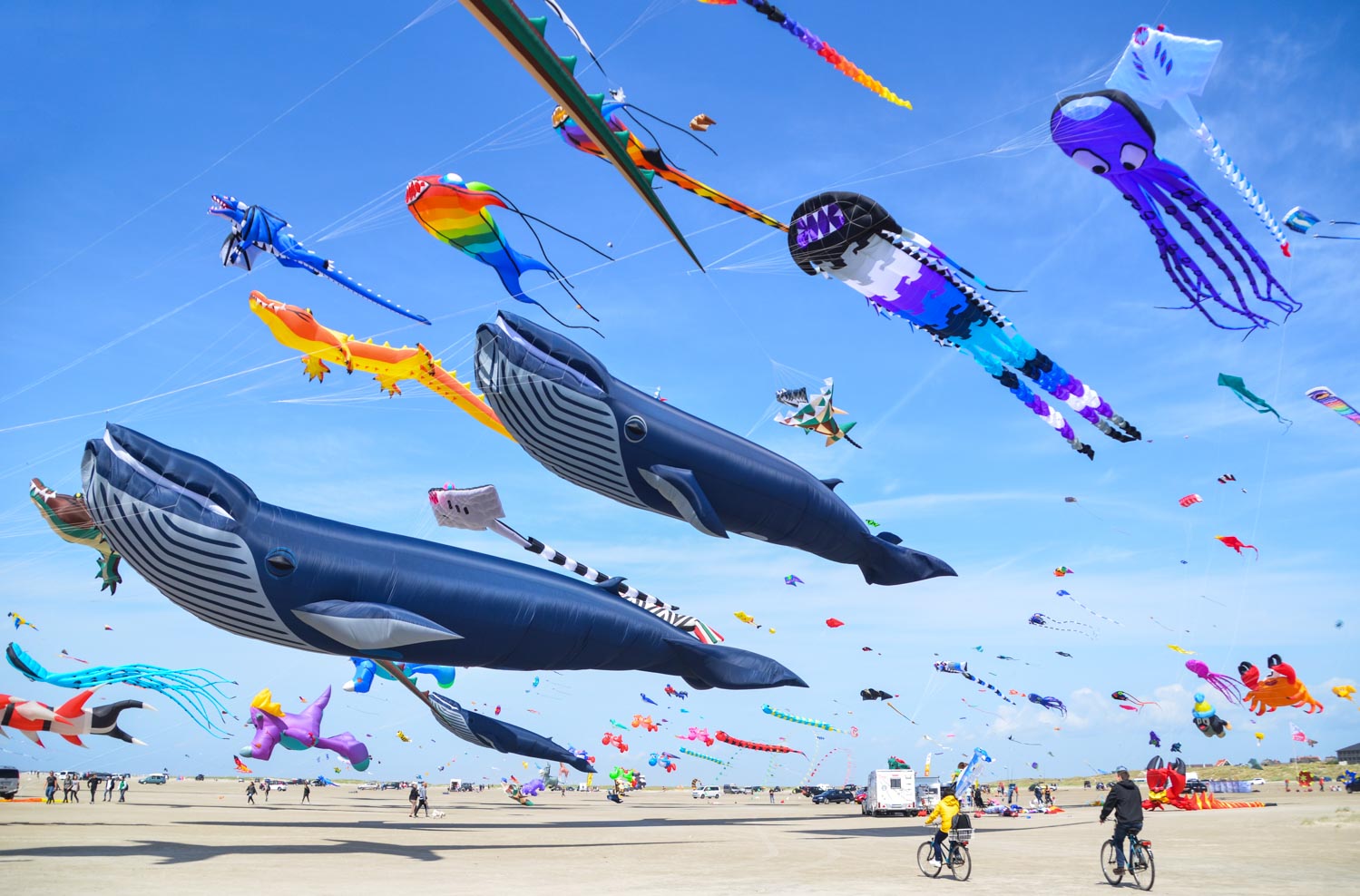
Happy Danish skies! During a kite festival you have to look up – and I guess you cannot miss out on that!

Then look down when the party is over… inflated kites look quite awesome too. The very size of them is impressive.

Finally some structures and buildings that I found really interesting to look both up and down from, from the inside as well as the outside! A fascinating Kew Gardens installation (do you see the two feet in the first one?)

And Seattle’s Space Needle. Very special both of them, and in the last image, I could look down on the girl who was looking up, and at the same time see all the way to the ground as well.

Many thanks to Anne of Slow Shutter Speed for hosting last week’s challenge ‘Fill the Frame’ – thanks also to all of you who sent in such a marvellous range of frame-filling responses. Next week’s challenge will be set by Patti, so please look in on her Pilotfish blog for inspiration.

Lens-Artistists Challenge # 275 – Filling the Frame

Anne is in the lead this week, and she has got a fabulous challenge in store for us – Filling the frame. Please visit her beautiful site for more inspiration.

Filling the frame offers a sense of completeness, clarity, inclusion, and comfort. We essentially “dive in” and experience the true essence of what the subject has to offer.

Lucas Martin

So what does it mean – to fill the frame? Let’s see…

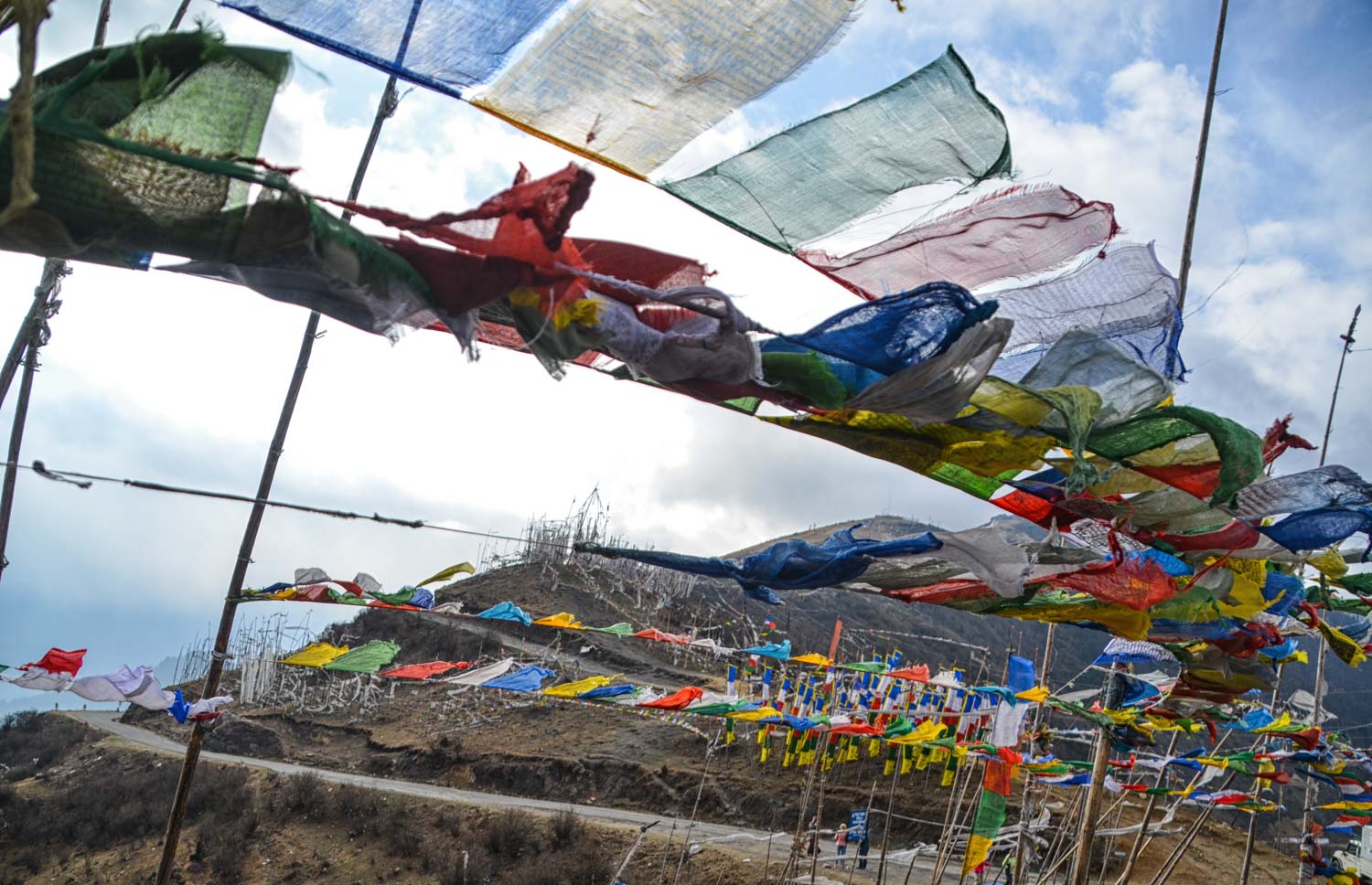
Prayer flags in Bhutan fill the frame in many respects – with cloth, letters and words.

Porto offers a staircase of sorts – it really fills up both us and the library/bookstore…

Filling the frame with a filled frame is hopefully allowed too? Beautiful stones of Georgia.

This random gallery of manmade and naturals ends with the rusty remains of a ship on a shore somewhere in Iceland. Filled with holes, but it still fills my frame. (Click to see the whole pictures)

Macro’s make us come really close, and leaves almost no empty space anywhere – maybe there is some truth in this quote from Robert Capa:

If your pictures aren’t good enough, you’re not close enough.

Fernsfernsferns – they are irresistible! Even the back side of them…

And, this is key to why I love it when an abundance of small pieces fill the frame –

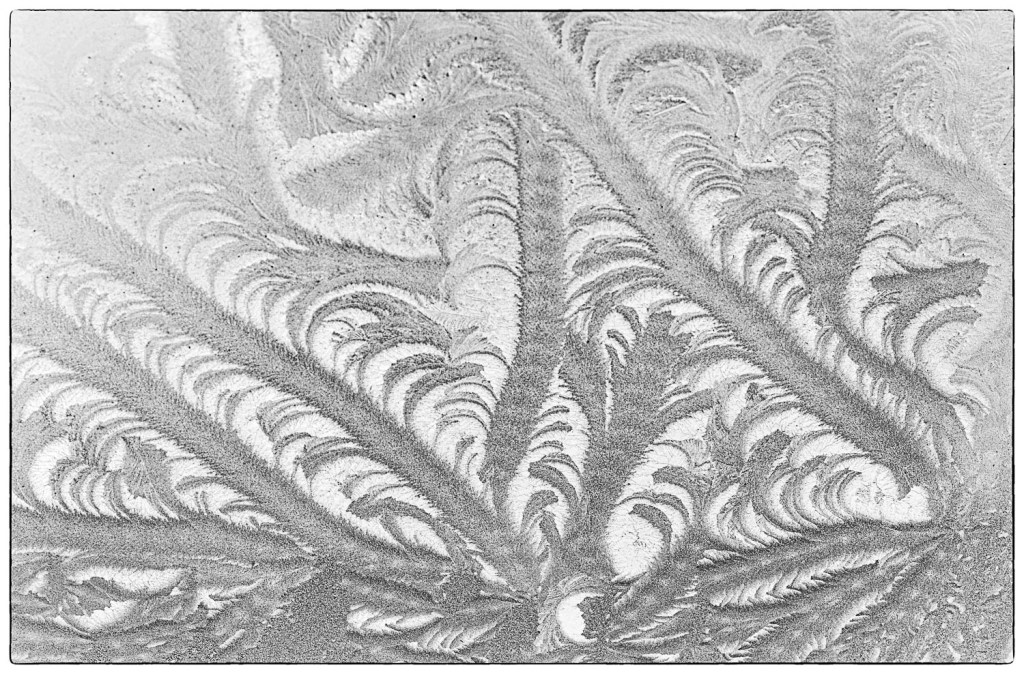
– like these Icelandic icicles. To me, maybe it is also a matter of colours. Few colours, all hues in harmony, make the frames complete – or what do you think? I left a monochrome in the header… for us to keep pondering – is this a filled frame – or not?

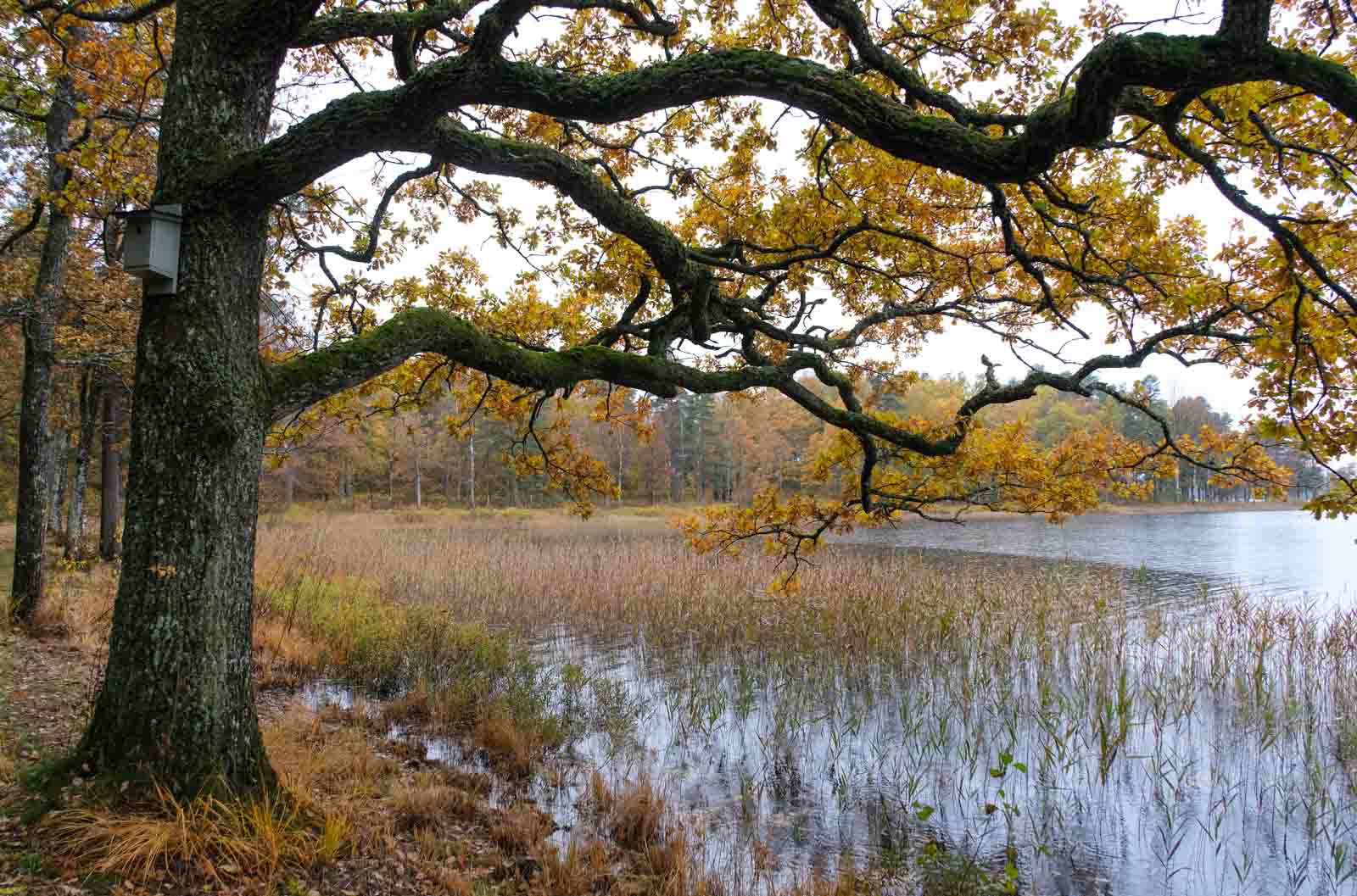
Finally, a fiery frame from our walks this weekend – Autumn filled it from ground to sky. Lucas Martin was right.

Thank you, Donna, for a marvelous asymmetry challenge last week. We’ve learned a lot and had a lot of fun, haven’t we! Next week James of Jazzibee will be our guest host, be sure to look for his site for inspiration! Remember to link to the original post and tag with Lens-Artists.

If you would like to participate weekly in our Lens-Artists Challenge, click here for more info. 

Lens-Artists Challenge #274 – Asymmetry

Donna follows up last week’s Symmetry nicely, with Asymmetry – an informal sense of balance. Asymmetry is the absence of, or a violation of, symmetry.

She asks us: ”Where do you find the imperfectly perfect?” Because, asymmetry does not mean that an image is not balanced. It just means there are different ways of balancing it.

Asymmetry is something most of our photos have, and also what makes many of our shots work. John Ruskin says : ”…to banish imperfection is to destroy expression, to check exertion, to paralyze vitality.”

In many of my own images, I use the Rule of Thirds.

Two starlings – one common in my own area, and another, maybe a common Myna, standing in the rain in a Bhutanese village.

And rules don’t have to be precisely followed either. The balanced feeling is there anyway.

Depth of Field is also a great way to showcase asymmetrical balance.

And why not an S-shaped path that draws your eyes?

Imperfections, run down areas, odd-shaped items, negative space, and light all contribute nicely. Here are some examples of those:

So glad every time I have the chance to feature one of my favourite old images – the backseat of an old wreck in Kyrkö mosse.

Harmony in the picture is the most important thing – symmetry or asymmetry. Maybe ”harmony” should sit in between those two concepts?

Asymmetry in faces are sometimes not easy to cope with. Even if we know that faces are never symmetrical, a lost eye, for example, makes a big difference to how we see the person or animal. These two friends had been playing together, when the game became too tough for the little guy. Still, he managed well for several years with only one eye. And I got used to looking at his new face when I visited my friends.

Architectural asymmetry is common in modern constructions. Harpa in Iceland, and Frank Gehry’s The Guggenheim in Bilbao and Pop Culture museum in Seattle.

Let’s finish with something from the natural world – a must of course. These two from the Butchart Gardens.

And what makes these two work? The frame and the bow shaped lines in the first one. In the second one, the nerves and then the flowers balancing colours and shapes.

A special thanks to Sofia for hosting last week’s challenge, Symmetry. She, and you, made us discover the power and harmony of symmetry. All of your posts were a feast for the eye! Next week, visit Anne of Slow Shutter Speed for more inspirational images as she leads us through the next challenge!

Lens-Artists Challenge #273 – Symmetry

Tyger Tyger, burning bright,
In the forests of the night;
What immortal hand or eye,
Could frame thy fearful symmetry?

– William Blake

The Tiger is a beauty beyond belief. And together with the lines of this well known poem, they are the first things I associate with the word ”symmetry”. The photo was taken at Nordens Ark, Sweden. Nordens Ark has participated or is currently taking part in re-population projects, to release animals born at the facility into the wild.

Sofia is our host this week, and her theme is Symmetry. She reminds us that symmetry is everywhere – if you look for it. Symmetry is an important composition tool in all kinds of art. Photography, painting, sculpture – and in fact, I believe it is essential for all our senses to reach harmony. Please visit her beautiful blog for more inspiration. Tag your own post Lens-Artists and link to Sofia’s original post!

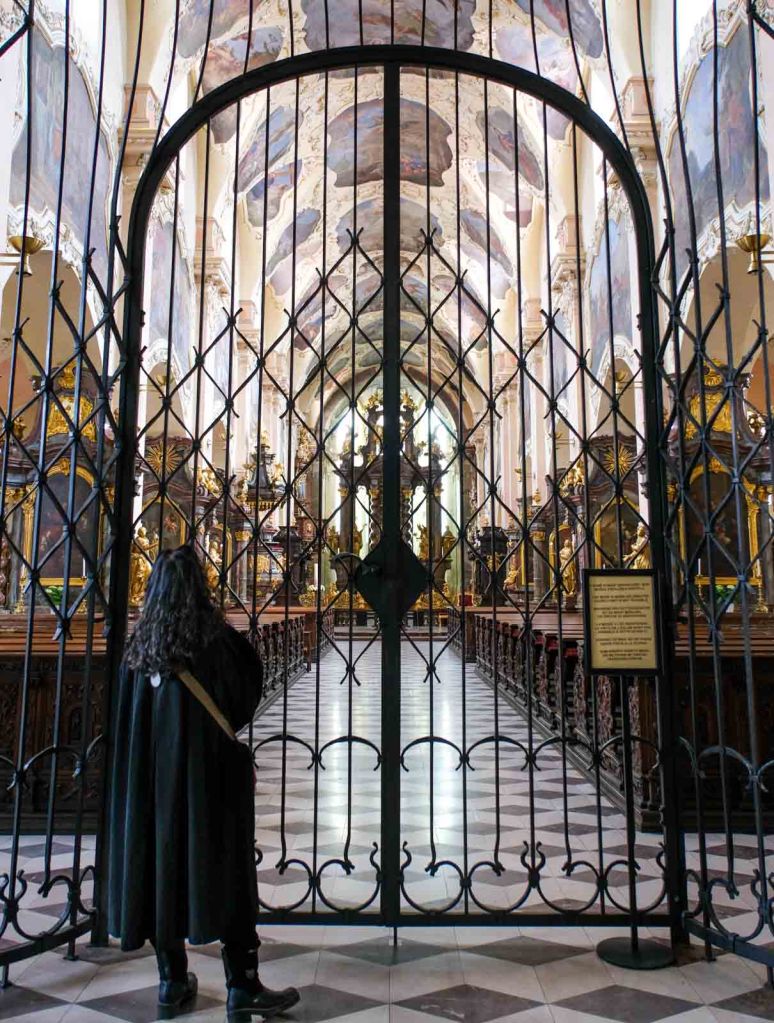
I will continue to randomly associate and ponder the concept… I realise that naturally there is no such thing as perfect symmetry, but I also thought about how for example religious buildings like churches, mosques and cathedrals meticulously use symmetry for harmony (in the congregation?). Or at least I guess that is one of the reasons for their architectural style.

Naturally doors and windows are often symmetrical – double doors in particular. They are also very popular with tourist photographers. (Thursday Doors?)

Two pictures in harmony with each other – and still so different. I found both in Prague, and to me, the first one represents human efforts to master and to reach Nature’s grandeur. The butterflies have been sorted and set behind glass in an attempt to make the composition symmetrical. A living butterfly is seemingly symmetrical, but the framed, manmade result could never compete with nature itself. I am happy to point out that we have abandoned killing butterflies and piercing them with needles – we photograph them instead.

The church ceiling is interesting in that the painters have used very irregular areas to decorate, but still arrive at a sense of symmetry. Difficult but clever.

Wine barrels in Porto – a special symmetry – maybe not perfect, but nicely done. Just don’t get them rolling…

Water and mirrors invite to beautiful symmetry. Yesterday morning’s outing gave these two – asymmetric symmetry? I believe most of us never get tired of reflections.

What’s in a name? That which we call a rose, by any other word would smell as sweet.”

– William Shakespeare

And, I don’t know about you, but somehow I look for – and use – both symmetry and asymmetri in the same image. Why? Maybe the answer is that they need one another to enhance each other.

Last week, John’s challenge gave us a chance to share billboards and signs from around the world and I hope they made you smile just as many times as they did me. Thank you all for a great, smiling week!

Next week, Donna is our host. And to follow Symmetry – we’ll have Asymmetry. Please visit Donna’s site for inspiration! Hope to see you then!

Lens-Artists Challenge # 272 – Billboards and Signs

The true sign of intelligence is not knowledge but imagination.

– Albert Einstein

John asks us to look for signs or billboards, they are everywhere. And, if you don’t capture images of physical signs, consider any photographs of metaphorical signs. Thank you, I will try a mix!

Let’s start with the season – not many colours yet, but enough to know autumn is coming..

Then some signs of power: a wall in Split, showing the old city map, and who built the city.

Another sign of power – a jaguar sitting on a Jaguar.

A gallery of different signs from our travels would be a good idea, but I haven’t got that many. Here are some signs I remember well though…

Signs from Madeira, China, Italy, Sweden, England, Scotland, New Zealand, Iceland, Alaska and Canada. Wondering about the toilet? It’s in The Elephant House in Edinburgh – the birthplace of the Harry Potter novels. (Not the toilets…) J. K. Rowling first wrote about him from a table in this café. The signs are from fans all over the world…And here is one of her own:

Hearing voices no one else can hear isn’t a good sign, even in the wizarding world.

– J. K. Rowling

I cannot leave you without two favourites from Tblisi, Georgia, a city with a warm heart for its stray cats and dogs. The dog house has got a feeding automat where you can put in some money and there will fall down dog food for the strays to munch.

We are looking forward to seeing your challenge response this week. Be sure to tag your post with Lens-Artists so we can find you in the reader, and link to John’s original post.

Many thanks to Amy for hosting last week’s challenge, “Contrasts”, and thanks to you for creative and interesting posts! Next week, it’s Sofia’s turn. If you want to join in the challenge, but aren’t sure how to get started, check here.

Lens-Artists Challenge #271 – Contrasts

Contrast is what makes photography interesting.

– Conrad Hall

This week Amy challenges us to show contrasts – please visit her inspirational site for more ideas!

My post was mostly made from our Alaska cruise, but a couple of images are from Prague. The first thing that comes to mind is black and white, here illustrated by the hanging man in Prague (…to me B&W also is connected to horror movies) and scyscrapers in Seattle.

Next up are some contrasting colours, black and white, blue and orange.

Over to Frank Gehry’s building and the Monorail built for the World Exhibition in 1962. Interesting to see it pass ”into” the building.

This is totally another kind of contrast. Architecture is fascinating, with contrasts and juxtapositions making us see, hate or appreciate.

On the road side of the same building the contrasts are in both colours, shapes and structures. The natural world/advanced architecture.

A collection of colours, silhouettes and textures. Close/sharp – faraway/blurred. Smooth water contrasting harsh cliffs – and framed/unframed is another contrast.

Finally, a before/after – colour/monochrome from Seattle harbour and seafront.

As you can see, contrasts in photography are not limited to black and white. There are architectual structures, colours/textures, daylight/nightlight – and many more. We hope you will join us sharing the contrasts you’ve captured through your lens. Please make a link to Amy’s original post and use the Lens-Artists tag so we can find you in the WP Reader.
Many thanks for all your splendid and creative On Display – posts last week. We really enjoyed your beautiful displays. I still go back and look at them… Next week, John (Journeys with Johnbo) will host LAPC #272. Be sure to visit his site for inspiration.

Lens- Artists Challenge #270 – On Display

This week I thought we would reuse an old theme – On Display. And it could almost be about anything… from a shoe shop to a garden party. Maybe you passed a lovely market with an amazing display of fruit and vegetables, or a fancy shopping center with striking design in the windows, or maybe a garden with surprising ideas.

Luckily I was visiting Sofiero Palace because of its gardening days some weeks ago. ( With Viveka, the lovely lady in one of my Thursday posts )

You attract people with the qualities you display. You keep them by the qualities you possess.

– Unknown

The royal gardens of Sofiero has its own story, and is renowned for its extensive park with 500 different varieties of Rhododendrons. King Gustaf VI and his wife, Louise Mountbatten, designed the gardens. On our visit, the display was according to the season, autumnal, with vegetables, fruit and berries, zinnias and dahlias.

We were lucky with the weather as well, so everything still looked fresh and appealing.

The dahlias were overwhelming – still growing or already picked and on display.

It’s not our art, but our heart that’s on display.

– Gary Holland

A gigantic apple tree, decorated for lunch – like a romantic painting. I wished I could have had such a lush display in my own garden. Sitting at this table with happy friends and good food – the very thought of it made my imagination swoon. I would ask all of you to be my guest!

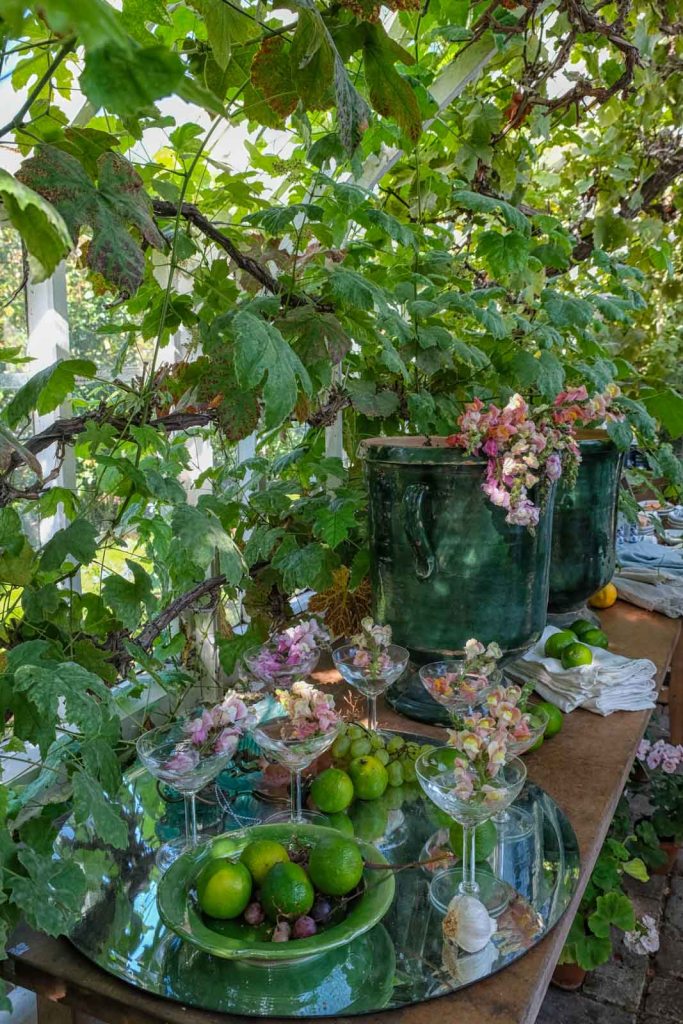
Karl Fredrik is a florist, gardener and interior designer who often is seen in different programs on Swedish TV. At Sofiero, he used a glasshouse to display his art, wine bottles, fruits and plants. And – as is his trade mark – there was MUCH of everything. I haven’t been to his home, Eklaholm, in Scania, so I was looking forward to seeing his arrangements here.

I hope you enjoy!

Let your personality and passions shine through in the objects you choose to display in your home.

– Jeremiah Brent

I was lucky to meet the busy artist himself in the doorway to the glass house – there he was with a new load of bottles! I just had to ask…and he gladly let me take a snapshot of him.

Many thanks to Patti for the fantastic On the Edge challenge – a joy to see all your inspiring posts! I hope you will join us this week too, and please use the Lens-Artists tag and link your post to mine – because now we are looking forward to seeing what You have found on display! At home or anywhere in the world.

Have fun and stay inspired – I cannot wait to see your displays!