Thursday Thoughts – El Capricho

Why do I love Antonio Gaudí? Maybe because of his love for nature’s wonders – starting when he was only a small child. His way of using nature’s forms and designs in everything he created. Making the pillars in Sagráda Família with scars like the tree trunks get when they have lost a branch, making lamps look like flowers and light spill out like waves in the sea…

In every detail he was …mirroring nature.

In Comillas, on the north coast of Spain, you will find this ”folly” – El Capricho – by Gaudí, built for Máximo Díaz de Quijano (a relative of the marquis of Comillas) in the 1880´s. You immediately recognize his style using iron structures, glazed pottery and stained glass.

Come, let’s take a ”folly” walk …

In my dreams, a dinner with Antonio Gaudí would be optional… to get the opportunity to listen to his ideas and maybe discuss nature’s impact on humans – body and soul. I would have had many, many questions…

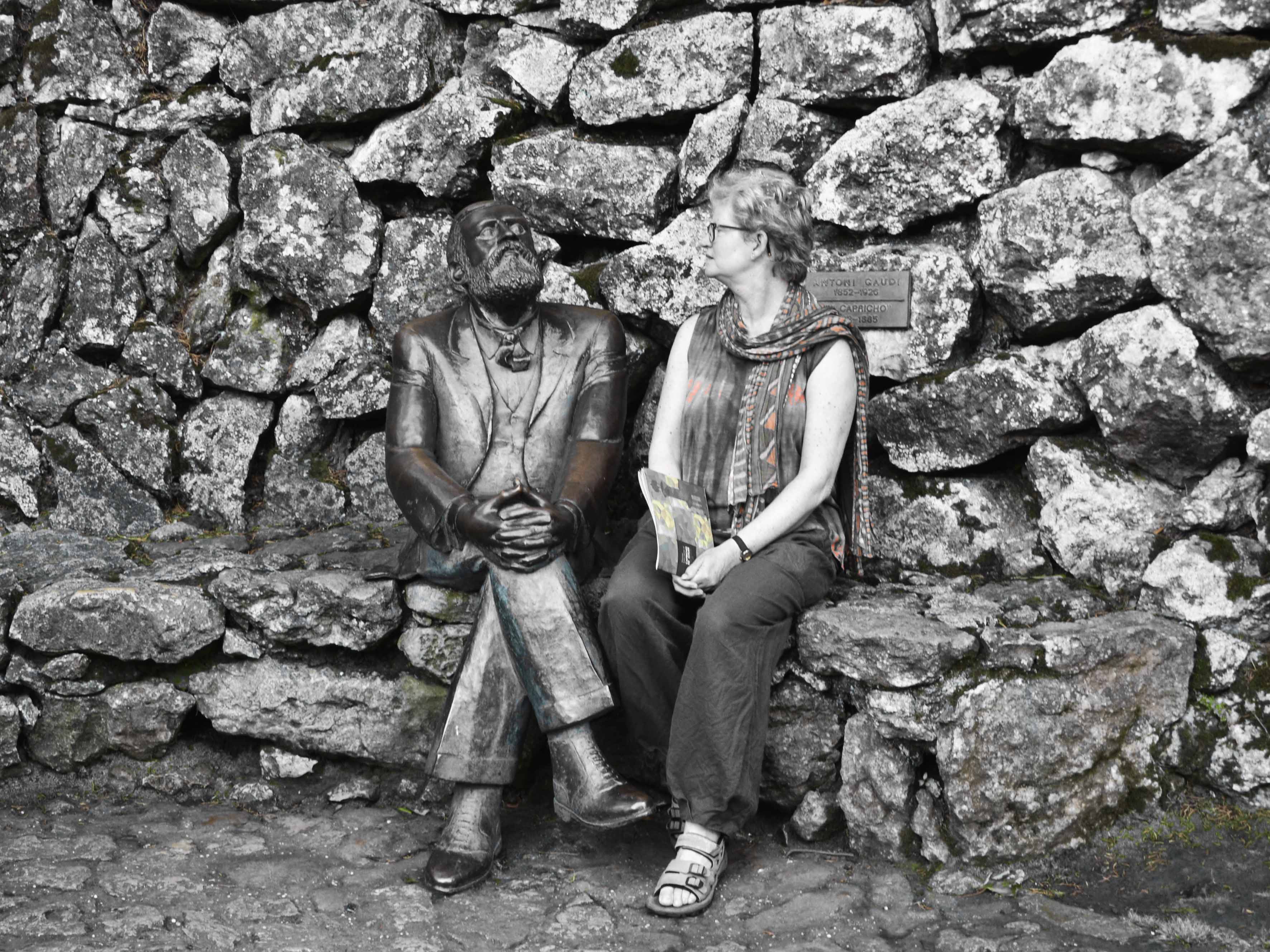
I was lucky enough to meet him in his garden, sitting there admiring his work. I tried to get some answers, but mostly we sat quietly contemplating…me admiringly of course. But, I am so thankful for having finally met him – my favourite architect.

Thursday Thoughts – The White Stork is Back!

On my trip to the northern parts of Spain, I made some lovely aquaintances…and not only with people. I was happily shocked by the numerous storks here – at least one nest in every village!

The white stork (Ciconia ciconia) is a large bird that measure on average 100–115 cm (39–45 in) from beak tip to end of tail, with a 155–215 cm (61–85 in) wingspan. The white stork is a long-distance migrant, wintering in Africa or on the Indian subcontinent. He is also a symbol of my part of Sweden.

He eats a wide range of animal prey, including insects, fish, amphibians, reptiles, small mammals and small birds. He takes most of his food from the ground, among low vegetation, and from shallow water. He is a monogamous breeder, but does not pair for life.

Both members of the pair build a large stick nest, which may be used for several years. Both parents take turns incubating the eggs and both feed the young.

The white stork benefited from human activities during the Middle Ages, but changes in farming methods and industrialisation saw it decline and disappear from parts of Europe in the 19th and early 20th centuries. Conservation and reintroduction programs across Europe have resulted in the white stork resuming breeding in the Netherlands, Belgium, Switzerland and Sweden.

In 1954 the last pair of storks disappeared from Skåne, where I live, as the wetlands were dried out. Many people wanted the beautiful bird back, and in 1989, some wetlands were restored and the Swedish ”Stork project” started. Goal: 150 pairs living free and nesting here. Important to us ”Skåningar”, as the stork is a symbol for this southern part of Sweden.

This summer 112 new storks were released from the project. As they move south, as many as 80-90 percent die flying into power lines breaking legs or wings.

The adult white stork’s main sound is noisy bill-clattering, which has been likened to distant machine gun fire. The bird makes these sounds by rapidly opening and closing its beak so that a knocking sound is made each time its beak closes. I assure you – the sound is not to be missed…when the two of them starts, it gets louder and louder.

This conspicuous species has given rise to many legends, of which the best-known is the story of babies being brought by storks. Have you ever heard of this as a child, in your country?

(Facts taken from Wikipedia and the Swedish Stork project.)

WPC: Narrow

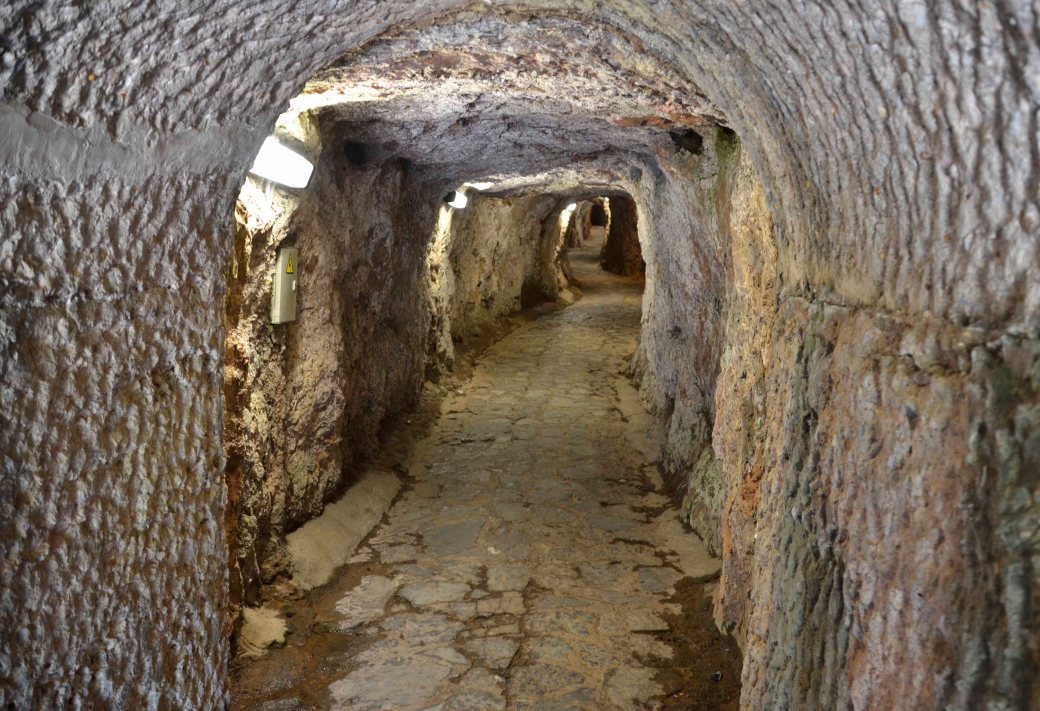
As much as I like the open landscape, I also like things narrow – unless it turns up in nightmares where I am stuck in a narrow tunnel, unable to go either forwards or backwards…

For more things narrow, click here.


The tunnel leading to  Cuevas de Valporquero, Spain. In reality – not a nightmare!

WPC: Look up

Look up! This is a very varied challenge with many possibilities. My take is all about nature – even if you might not think so…

In the header, a lamp from Gaudí’s Casa Batllo´in Barcelona. He always used Nature herself as an inspiration. Maybe a drop of water in a pool?


A Swedish autumn birch in its splendour – who would not look up?

Great tree ferns, New Zeeland, North Island.

Great tree ferns, New Zeeland, North Island.

New Zealand’s Great fern trees draws your eye…upwards.

Madrid

Madrid

In Madrid my head went dizzy when watching this tree in a spectacular swing…

Madrid

Madrid

And these well dressed trees… I just hade to peep inside for this spectacular view!

For more reasons to look up, click here.


My Illusory, Illusive Week…

Strange things this week…It all started out so well…but these are my memories …

…in my ordinary Blekinge again. Don’t we all have crazy dreams sometimes…?

Blekinge och Helsingborg 009_copy

CFFC: Bridges

Cee’s Fun Foto Challenge: Bridges

I have one special favourite of all bridges…the old Roman bridge in Switzerland, Verzasca valley. Read my post about this valley here.

Another favourite bridge, actually an aqueduct, is Pont du Gard in France. But you can no longer walk Pont du Gard. I did in 1976, on top, about 50 cm width and I had my Swedish clogs on. I guess I should be grateful to have survived that walk…

Click the link for more beautiful bridges!

The Verzasca Valley

WPC: Opposites


Opposites…often go well together. For WPC I have chosen the Moroccan desert. Many opposites to be found here. In the header the classic desert/oasis, But, in the second one maybe more subtleties…

More entries here.


Djemaa el-Fna – ”assembly of the dead”

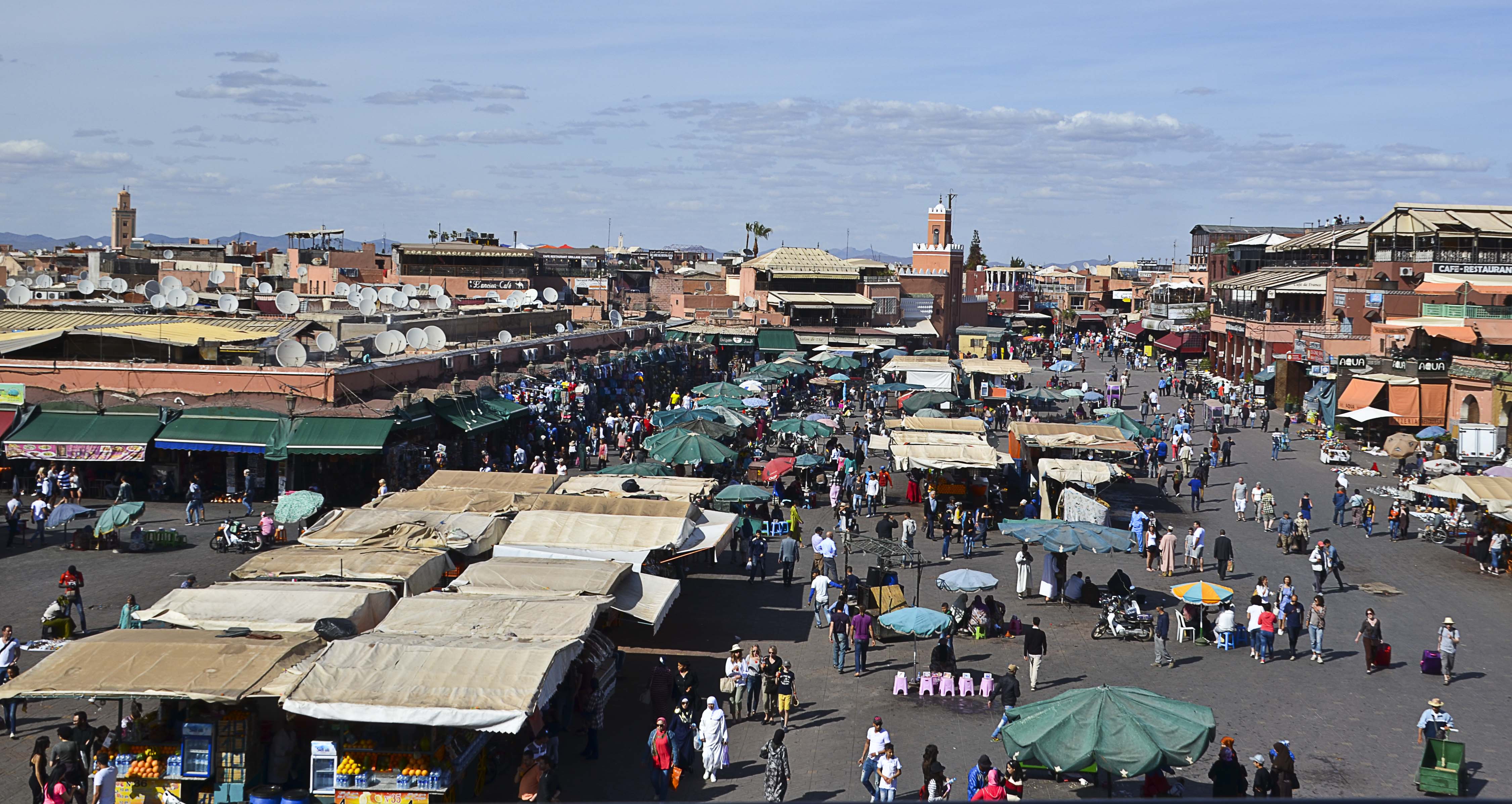
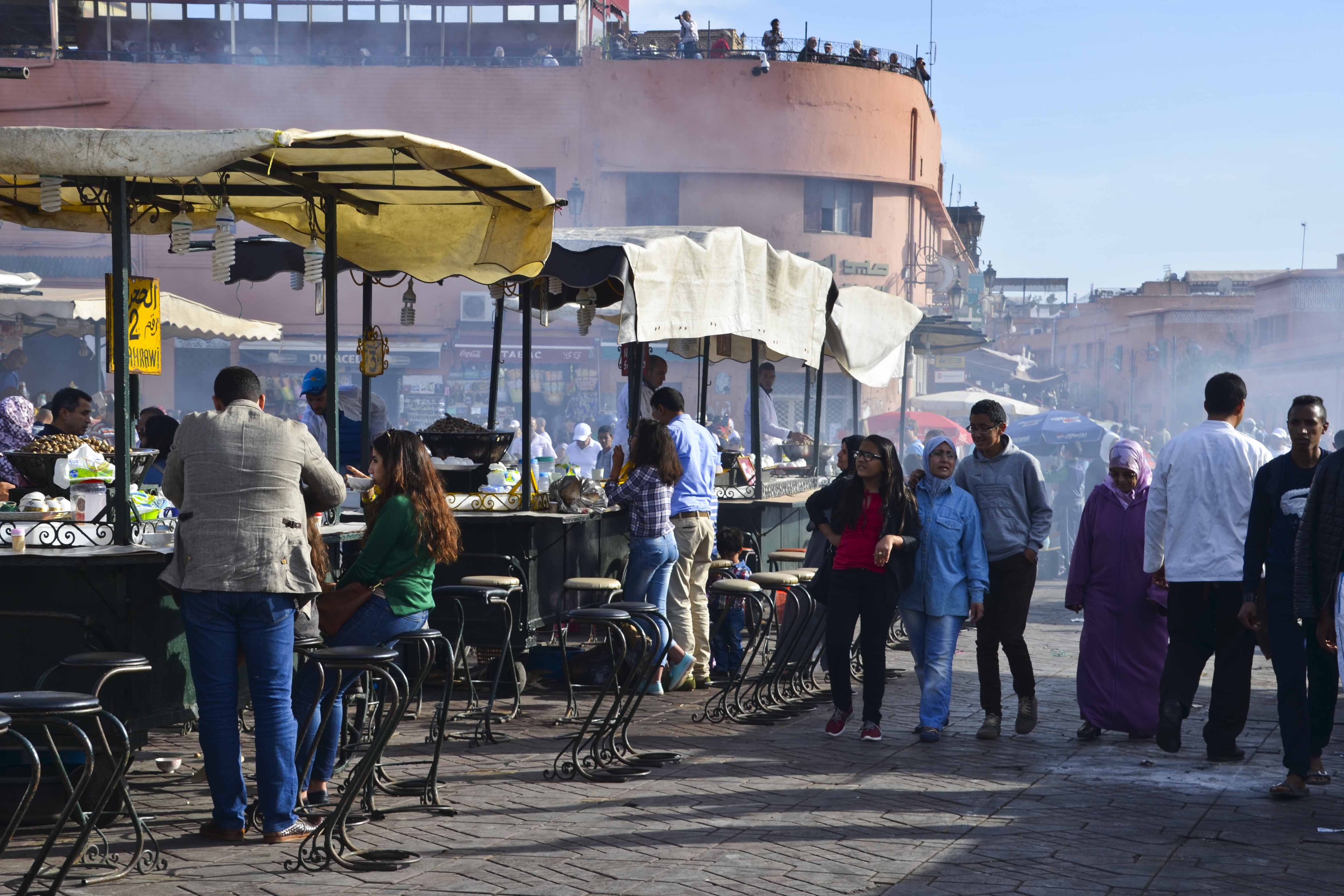
Everywhere you look in the Djemaa el-Fna, Marrakesh’s main square, you’ll discover theatre  in progress. The street theatre has a natural home here ever since this plaza was the site of public executions around AD 1050. Even if there are discussions on the origin of its name, Jemaa means ”congregation” in Arabic, probably referring to a destroyed Almoravid mosque. ”Fanâʼ” or ”finâ'” can mean ”death” or ”a courtyard, space in front of a building.” Thus, one meaning could be ”The assembly of death,” or‘assembly of the dead’.


Marocko 140_copy

It is not just a tourist attraction since many locals also enjoy the activities that make Djemaa el- Fna come alive. During the day, the square has numerous stalls, most of which sell fresh fruit juice, water and fruit.


Marocko 166_copy

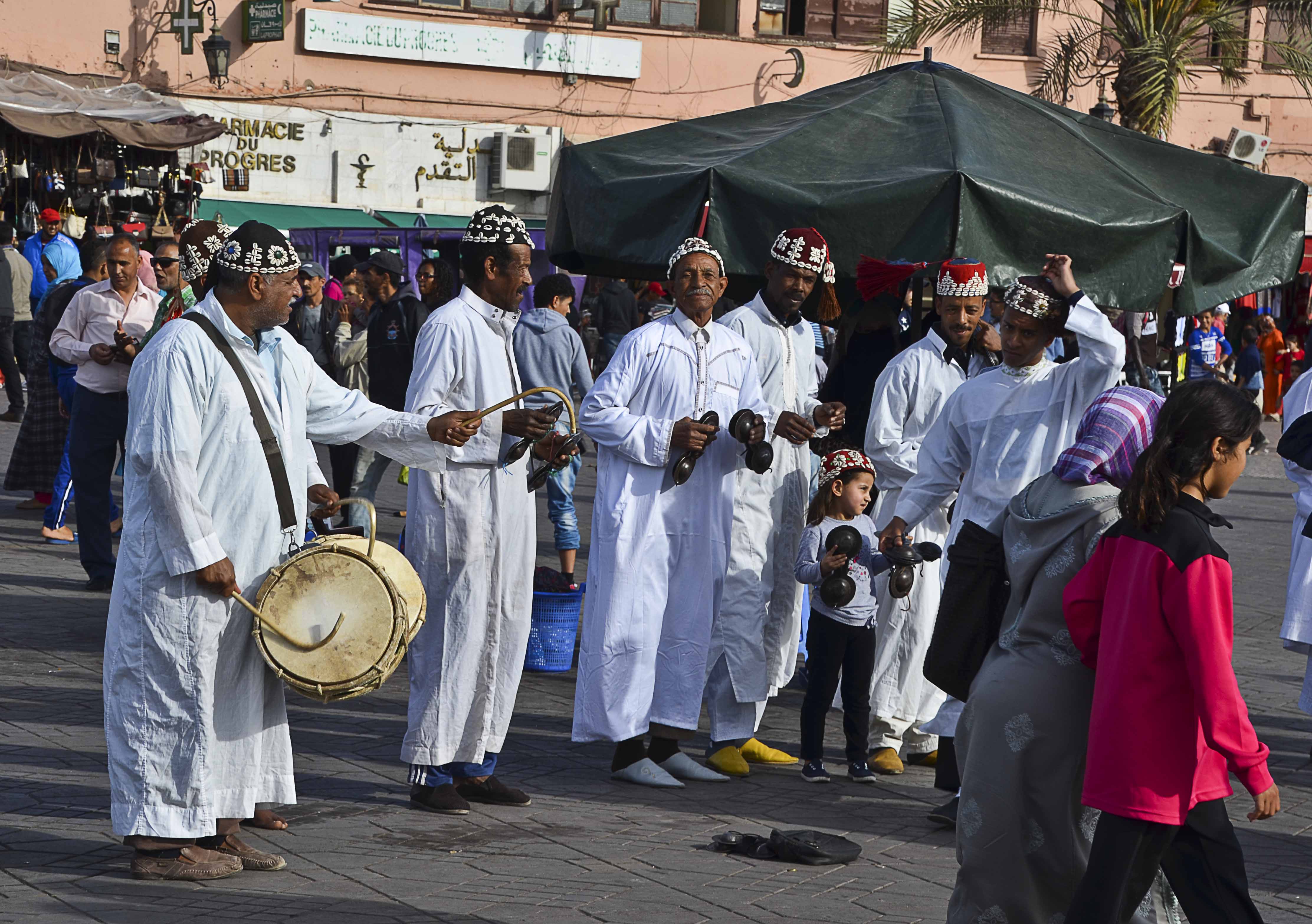
By 10am, the daily performance is under way. Snake charmers with their hissing cobras and men with chained Barbary apes, despite the protected status of these species under Moroccan law; henna tattoo artists ( women with piping bags full of henna paste, ready to paint you with “tattoos” that will last up to three months – though beware of synthetic “black henna”, which contains a toxic chemical; only red henna is natural. The Henna Café guarantees to use only natural henna).


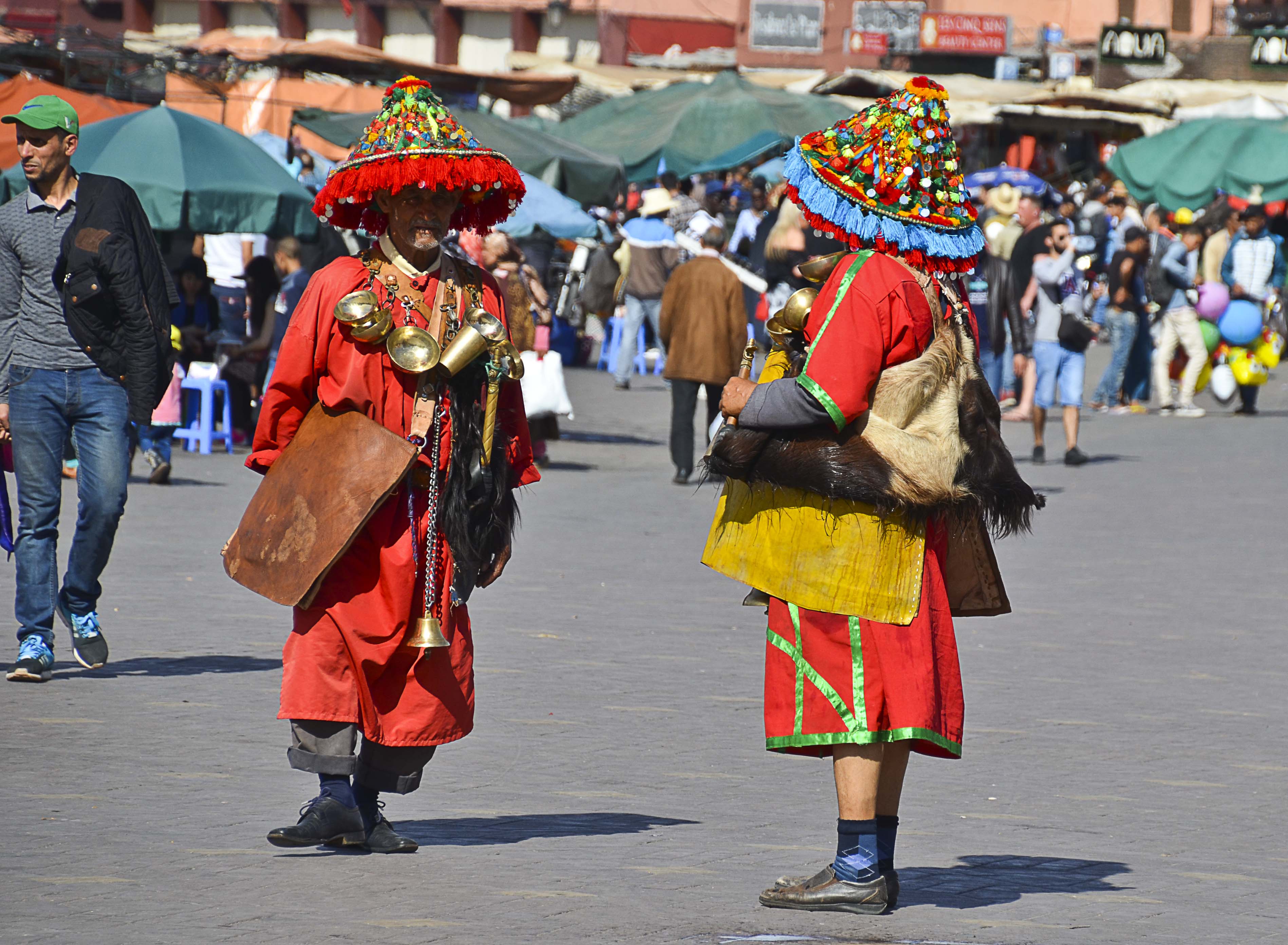
Water-sellers in fringed hats, with water-bags hanging and brass cups clanging. Medicine men display their cures, and tooth-pullers display trays of extracted molars to prove their skill. And if you wonder…fortune-tellers sit under umbrellas with packs of fortune-telling cards at the ready.

Marocko 146_copy

At dusk people come out for an evening promenade, and the square gradually fills until it becomes a whole carnival of storytellers (telling their tales in Berber or Arabic, to an audience of locals), acrobats, musicians and entertainers.  If you want a respite, you can move over to the rooftop terraces, such as the Café du Grand Balcon, or Café Glacier, for a vista over the square and all the activities, and the crowds who come to see them. Very much recommended. We enjoyed a rather expensive bottle of juice and a less expensive mint tee – having a great view without being crowded.


Marocko 165_copy

Arrive early in the evening to get a good seat. Applause and a few dirhams will encourage the performers. It’s a great show, but be prepared…taking photos immediately brings at least one man to your door…dirhams!

Marocko 163_copy

In 2001, Djemaa el-Fna was recognized by  UNESCO  in the project Masterpieces of the Oral and Intangible Heritage of Humanity – the initiative coming from people concerned about the Djemaa el-Fna. Since long known for its concentration of traditional activities by storytellers, musicians and performers, but now threatened by economic development pressures. The residents wanted protection of their traditions, and called for action on an international level. In 2001, this ”cultural space” got its protection.

In Marrakesh, this meeting place is a must. Remember – this is far from only for tourists. Most people strolling here, enjoying themselves, are locals. This is, even today, a genuine piece of Arabian Nights…no ”assembly of the dead”.


.


WPC: Earth


The challenge this week from WordPress is to “…share your vision of our glorious Mother Earth”.

I feel…we are a tiny, gloriously beautiful, island out in the great blue – surrounded by stars and the heavens. Who is at the wheel? I wish we had better control …I fear we have lost the sextant and with it, our ability of navigation.

Mother Earth

Nya Zeeland 1 1071