The history of Plovdiv spans more than eight millennia. The numerous nations that lived here have left their traces on the twelve-metre-thick (39 feet) cultural layers of the city. The earliest signs of habitation on the territory of Plovdiv date as far back as the 6th millennium BC…
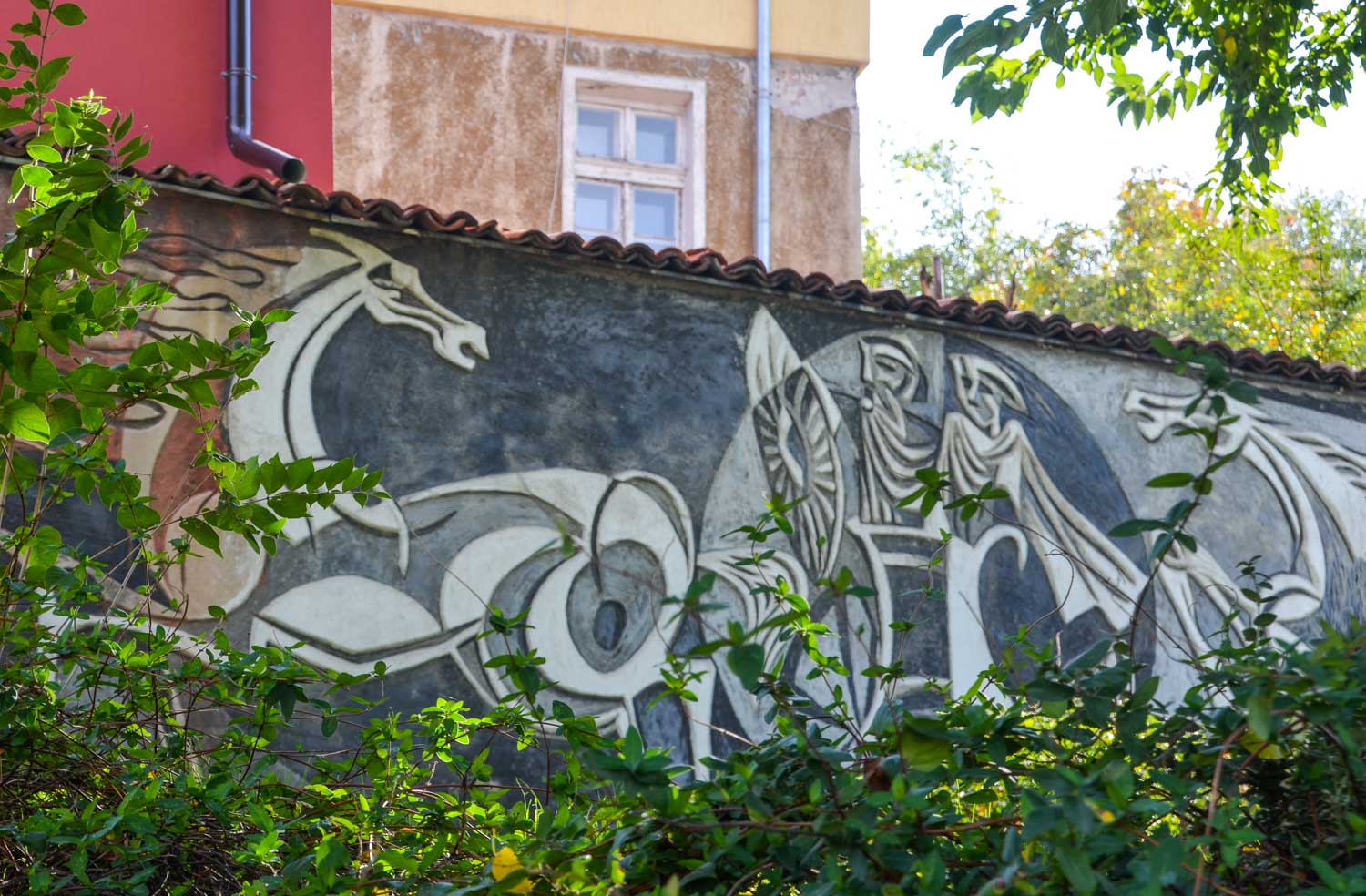
As we left the Old Town and entered the New…we realized that the whole city is a gem. Walking down the main street, a warm and sunny afternoon, the surprises unfolded – one after the other.
The Ancient Roman Stadium of Plovdiv was built in the 2nd century, during the reign of Emperor Hadrian, and lies beneath the main street from Dzhumaya Square to Kamenitsa Square. It was modeled after the stadium in Delphi. The Plovdiv stadium was approximately 240 metres (790 feet) long and 50 metres (160 feet) wide, and could seat up to 30 000 spectators. Below is the entrance to the stadium.
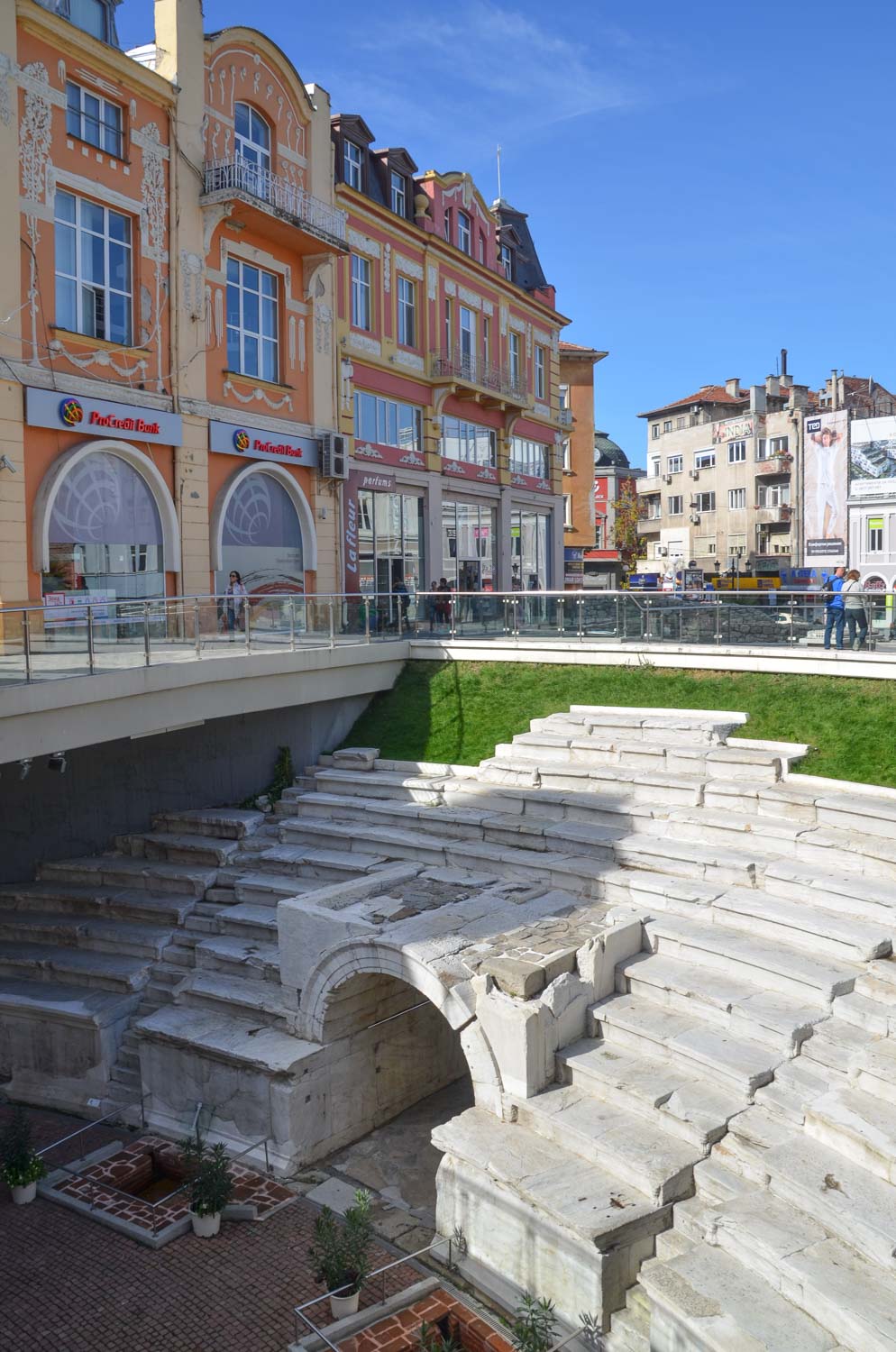
The athletic games at the stadium were organised by the General Assembly of the province of Thrace. In their honour the royal mint of Philippopolis coined money featuring the face of the ruling emperor as well as the types of athletic events held in the stadium.
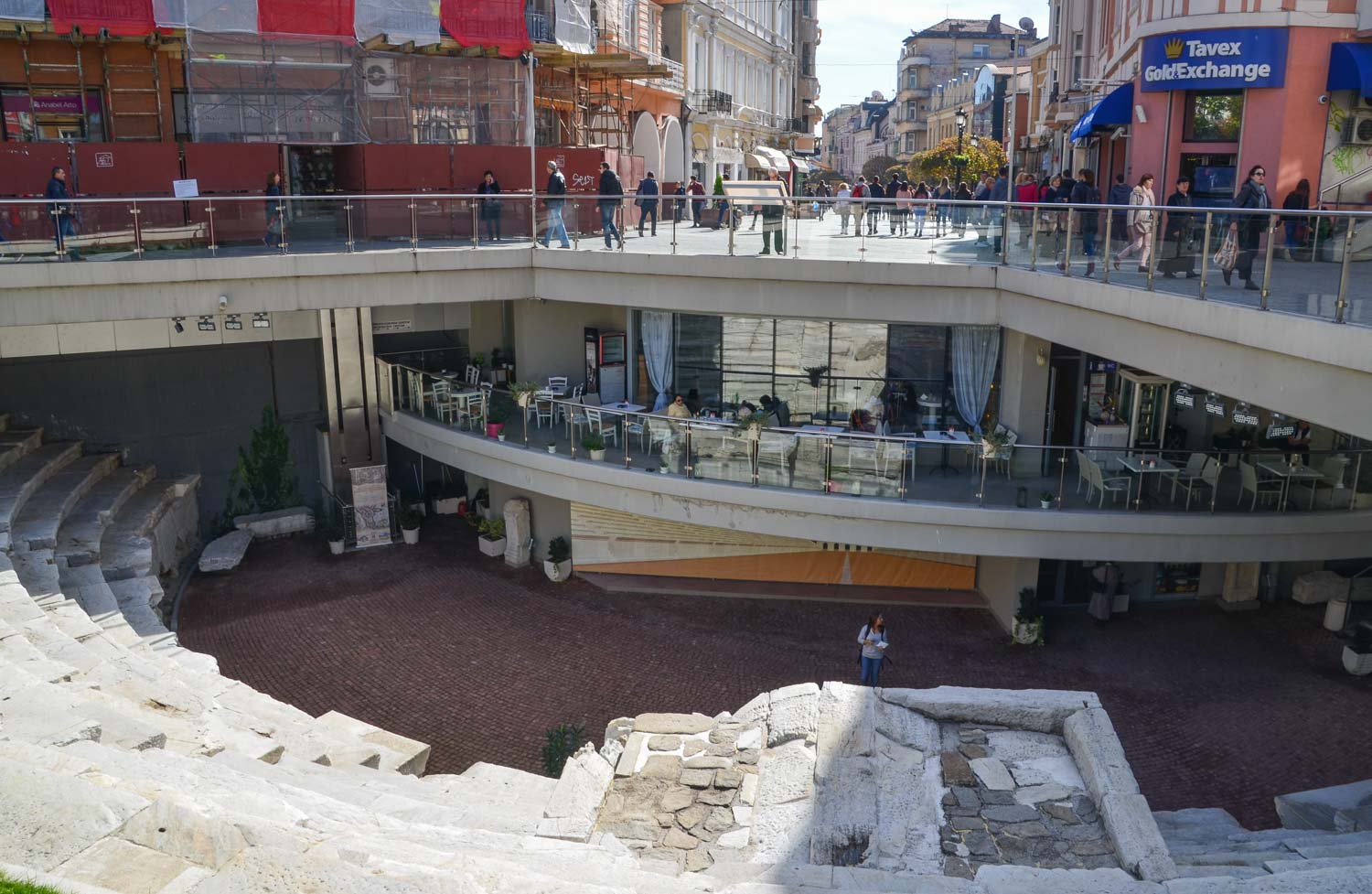
Only a small part of the northern section with 14 seat rows can be seen today; the larger part lies under the main street and a number of buildings.

But, you can step down through the layers and meet the combination old/new in a very fascinating setting, with café’s, shops and …steps and stairs from different times.

Atlas? Keeping us safe. Holding the World.
I do not think I have ever visited a city that manages to combine the Old with the New as gracefully and innovatively as Plovdiv. I more than understand the choice of this city for European Capital of Culture in 2019. I might return then… there is much more to discover here! Maybe I will see you there – 2019?
 Leya
Leya 
Du måste vara inloggad för att kunna skicka en kommentar.