Cee’s Fun Foto Challenge: Houses

Cee’s Fun Foto Challenge gives you a topic and you search your photo archives for a suitable photo and then share it on your blog and at Cee’s blog. Visit other people joining in as well. Share the love!

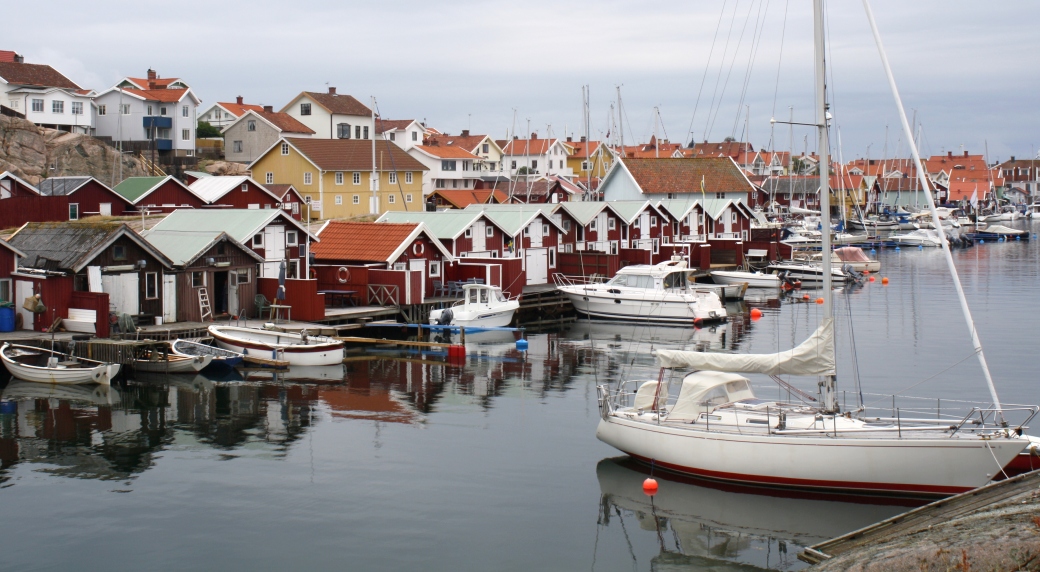
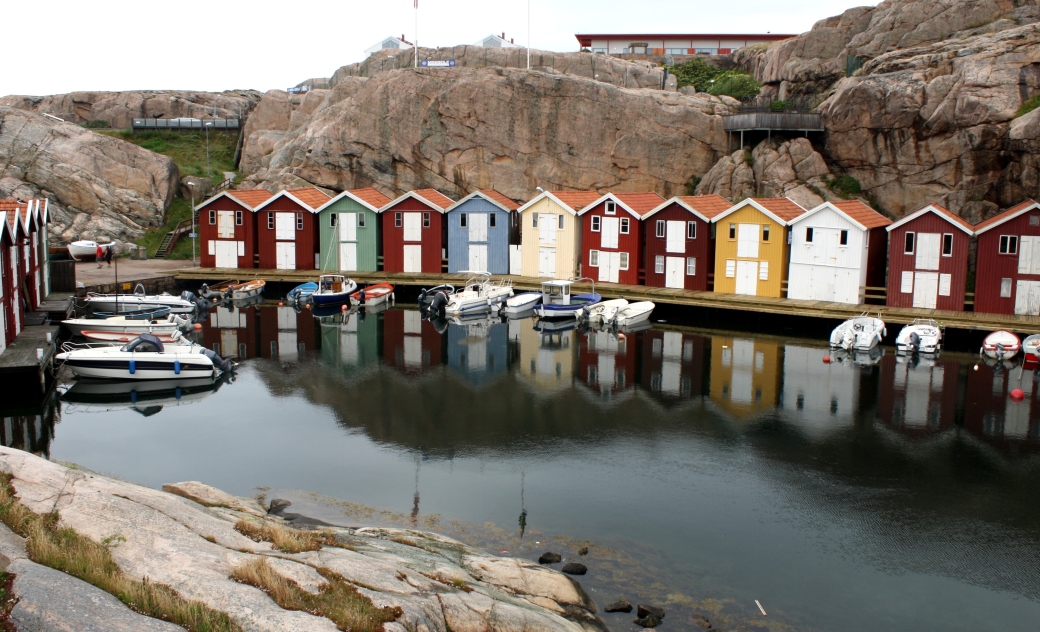
Houses are irresistable…so I just had to try and join in! These little boat houses are to be found in Smögen, Bohuslän, on the west coast of Sweden.

Smögen

Smögen

Travel theme: Architecture

Where am I to start? Great theme – but so much to choose from.

Let’s go to Iceland, to Skagafjördur and Glaumbaer farm. For hundreds of years, a farm has been standing here, being changed and rebuilt in periods in the 18th- & 19th-centuries. This style of the turf construction was universal in rural areas of Iceland until about 1900, when it was gradually replaced mainly by reinforced concrete.

Glaumbaer farm had the priest of the village living here until 1947. Interesting too, is that the first woman to give birth to a white man in America, had lived here at Glaumbaer. Her name was Gudridur Thorbjarnardottir, and she travelled with Leif Ericsson or one of the following expeditions around the year 1000. So the old documents in Iceland tell us, and they were very good at documentation, the Icelandic people.

More about Glaumbaer here: http://www2.skagafjordur.is/default.asp?cat_id=1123

More interesting architecture here: http://wheresmybackpack.com/2013/08/09/travel-theme-architecture/

Weekly photo challenge: Masterpiece

Vår planet, Jorden, är det största mästerverket av alla. Jag hyllar ständigt dess skönhet, men tänkte att jag den här gången skulle välja något tillverkat av människohand. Människans mästerverk kan aldrig nå upp till Naturens, men det finns tillfällen då jag varit mycket imponerad av vad vi har åstadkommit…

This planet, Earth, is the greatest Masterpiece of all. I always pay tribute to the glory of it, so I thought, maybe this time I would choose something made by man. Even if manmade  things never can match Nature, I am very impressed by some things I have met on my travels…and for this, I chose the magic Pothala palace in Lhasa, Tibet.

Potalapalatset (tibetanska: པོ་ཏ་ལ།; Wylie: po ta la) i Lhasa, Tibet,  var Dalai lamas ordinarie vinterresidens och den tibetanska regeringens kansli. Det är tretton våningar högt mästerverk beläget på klippan Marpori (”Den röda klippan”), omkring 3 700 meter över havet. Namnet Potala kommer från det gudomliga berget Potalaka, där boddhisattvan Chenresig skall ha sin boning. Palatset är också känt som Tse Podrang, ”palatset på bergstoppen”.

Det första palatset började byggas redan 631 av kejsar Songtsän Gampo. Det nuvarande palatset, som är av dzong-typ, består av två delar: det vita palatset, som började uppföras år 1645 på order av den femte Dalai Lama, och det röda palatset, som stod färdigt 1693.

Det vita palatset var både Dalai Lamas vinterresidens och kansli för den tibetanska regeringen, medan det röda palatset uteslutande har sakrala funktioner. I det röda palatsets västra kapell finns fem guldbeklädda chörten, där fem inkarnationer av Dalai lama finns begravda. De gula delarna är de heligaste.

Potala var residens och regeringsbyggnad fram till det tibetanska upproret 1959, när den den fjortonde Dalai lama tvingades gå i exil i Indien. Under kulturrevolutionen undgick Potalapalatset förstörelse och är därför en av de mest välbevarade historiska byggnaderna i Lhasa. Ändå förstördes eller försvann nästan alla, över 100.000 volymer med skrifter, historiska dokument och  andra konstverk från palatset när kineserna tog över.

Potalapalatset är numera ett museum öppet för allmänheten, och upptogs 1994 på Unescos världsarvslista. Världsarvet utökades 2000 att även omfatta Jokhangklostret och 2001 även Norbulingka, det forna sommarpalatset.

Kina och Tibet 2009 110

Själva byggnaden är 117m hög (300m över dalen) mäter 400m gånger 350m och dess stenväggar är alla mellan 3 och 5 meter tjocka. Man har använt koppar i grunden för att skydda vid jordbävningar. Palatset har fjorton våningar med sammanlagt över 1000 rum, 10.000 helgedomar och 200.000 statyer. Det tog endast 3 år att uppföra palatset, men interiören tog 45 år att färdigställa.

Tyvärr var det förbjudet att fotografera inomhus. Man hade också tagit bort allt som kunde visa på den nu levande Dalai lamas existens.

The building measures 400 metres east-west and 350 metres north-south, with sloping stone walls averaging 3 m. thick, and 5 m. (more than 16 ft) thick at the base, and with copper poured into the foundations to help proof it against earthquakes. Thirteen stories of buildings – containing over 1,000 rooms, 10,000 shrines and about 200,000 statues – soar 117 metres (384 ft) on top of Marpo Ri, the ”Red Hill”, rising more than 300 m (about 1,000 ft) in total above the valley floor.

The site on which the Potala Palace rises is built over a palace erected by Songtsän Gampo on the Red Hill. The Great Fifth Dalai Lama started the construction of the modern Potala Palace in 1645 after one of his spiritual advisers pointed out that the site was ideal as a seat of government, situated as it is between Drepung and Sera monasteries and the old city of Lhasa.

The external structure was built in 3 years, while the interior, together with its furnishings took 45 years to complete. The Dalai Lama and his government moved into the Potrang Karpo (‘White Palace’) in 1649.   The Potrang Marpo (‘Red Palace’) was added between 1690 and 1694. The Red Palace is the part of the Potala palace that is completely devoted to religious study and Buddhist prayer.
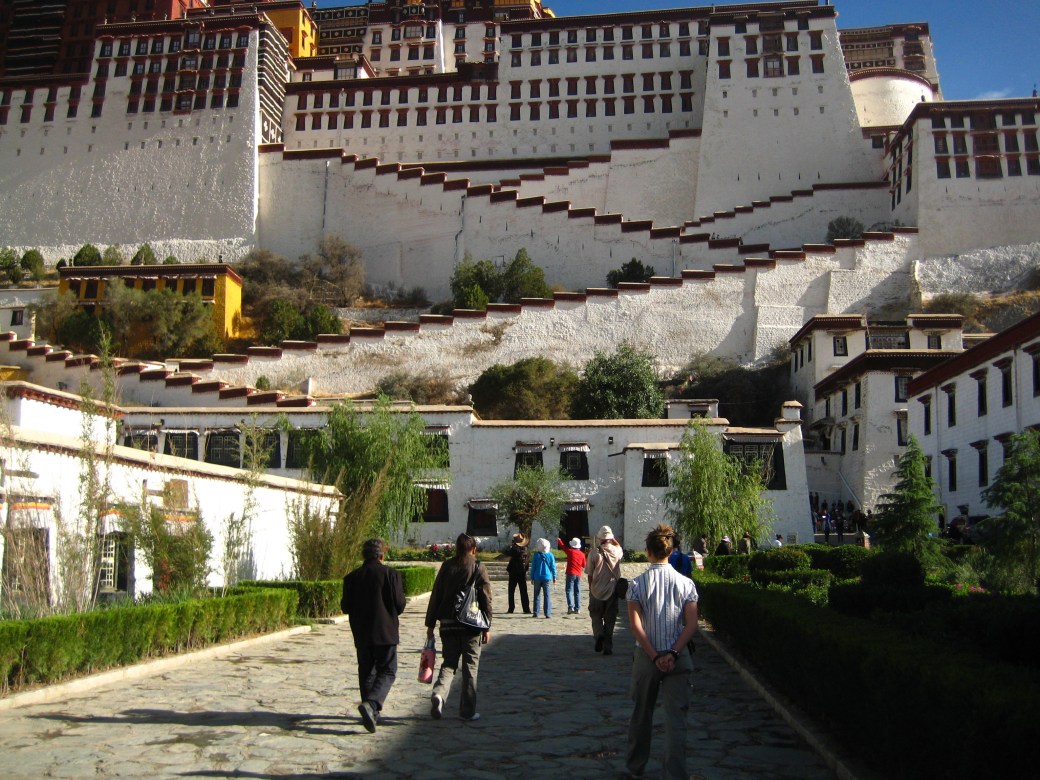
Kina och Tibet 2009 112Starting the long walk.

The palace was slightly damaged during the Tibetan uprising against the Chinese in 1959, when Chinese shells were launched into the palace’s windows.  Still, almost all of the over 100,000 volumes of scriptures, historical documents and other works of art were either removed, damaged or destroyed.

The Potala Palace was inscribed to the UNESCO World Heritage List in 1994. In 2000 and 2001, Jokhang Temple and Norbulingka,  were added to the list as extensions to the sites.

The number of visitors to the palace were raised to 2,300 daily to accommodate a 30% increase in visitorship since the opening of the Qingzang railway into Lhasa on 1 July 2006, but the quota is often reached by mid-morning.

Kina och Tibet 2009 115Mer än 320 trappsteg och fler över nötta stenar behöver du gå för att komma till de övre delarna av Potalapalatset.

More than 320 steps, walked by so many, to reach the upper parts of the Pothala palace.
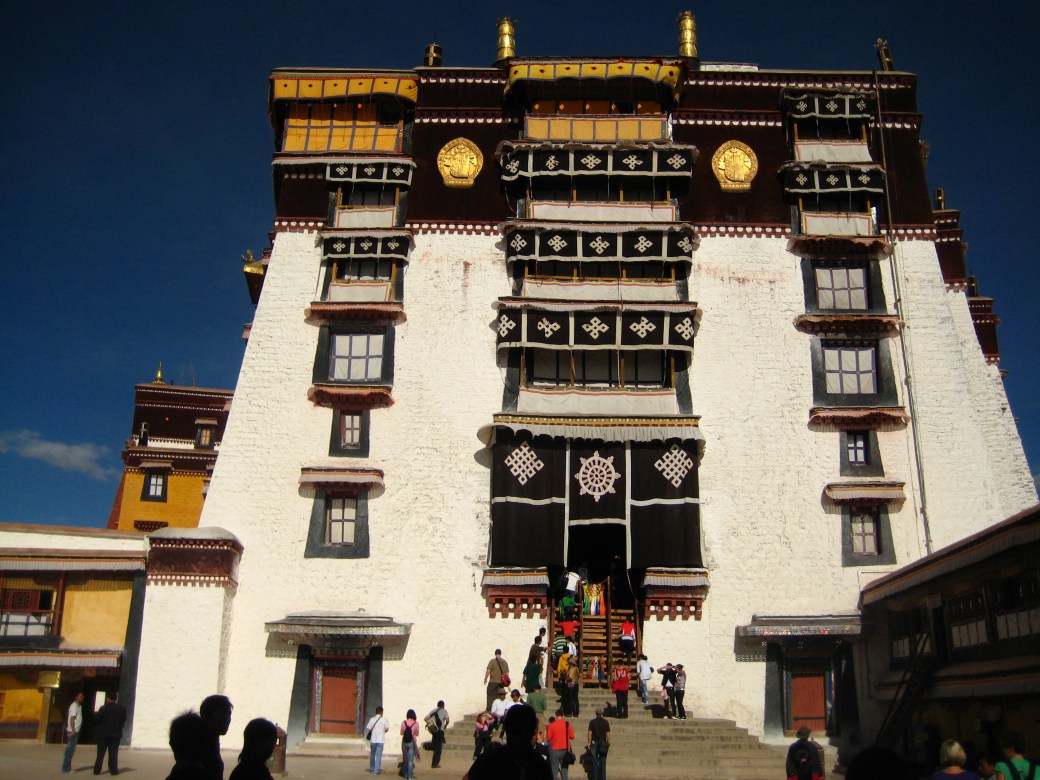
Kina och Tibet 2009 134Bara Dalai lama får gå den mittersta trappan här.

Only the Dalai Lama is allowed to walk the middle step to this building.

The White Palace or Potrang Karpo is the part of the Potala Palace that makes up the living quarters of the Dalai Lama. The first White Palace was built during the lifetime of the Fifth Dalai Lama and he and his government moved into it in 1649. It then was extended to its size today by the thirteenth Dalai Lama in the early 20th century. The palace was for secular uses and contained the living quarters, offices, the seminary and the printing house. A central, yellow-painted courtyard known as a Deyangshar separates the living quarters of the Lama and his monks with the Red Palace, the other side of the sacred Potala, which is completely devoted to religious study and prayer. It contains the sacred gold stupas—the tombs of eight Dalai Lamas—the monks’ assembly hall, numerous chapels and shrines, and libraries for the important Buddhist scriptures, the Kangyur in 108 volumes and the Tengyur with 225.

Unfortunately, we were not allowed to take photos inside the palace, and every reminder of the existence of the now living Dalai Lama was hidden or removed.
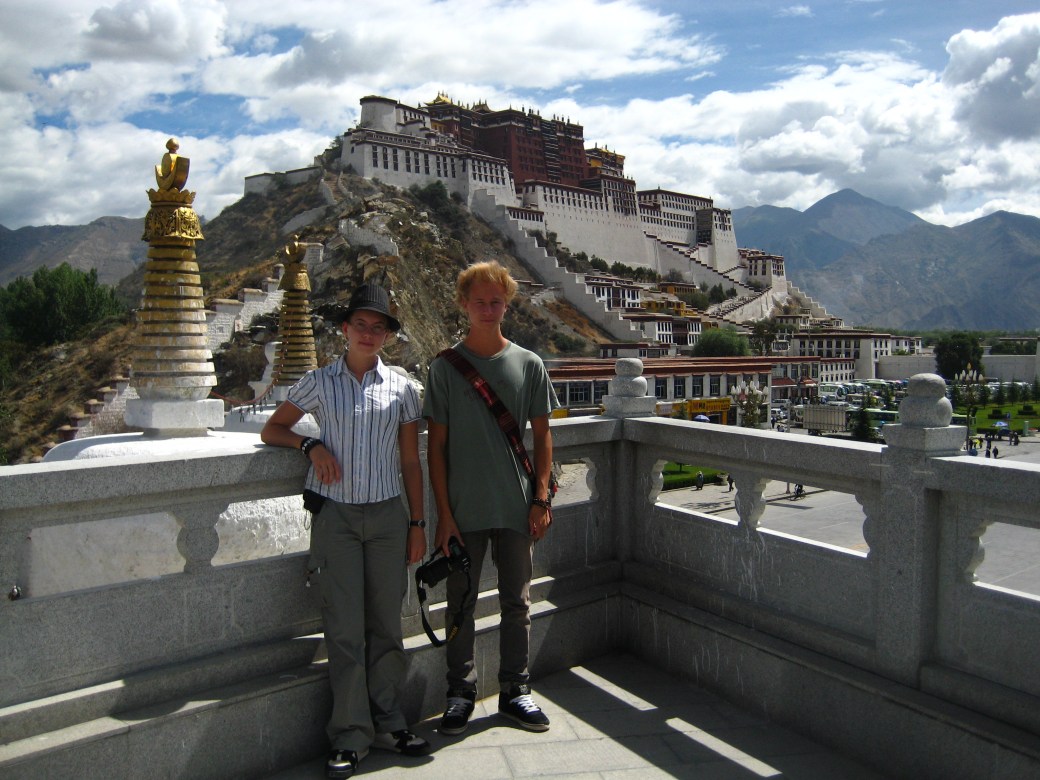
Kina och Tibet 2009 158Three masterpieces in one picture.

For more pictures of Tibet and the Pothala palace, see an earlier post:

https://lagottocattleya.wordpress.com/2011/03/14/551/

Facts and statistics from our guide on tour, Lobsang, and from Wikipedia.
Stilbrott – Breach of style

Stilbrott kan vara effektfullt och smart, men också direkt stötande för sinnena. Min åsikt är att när det gäller hus i ett gammalt område, bör man så gott det går hålla sig till den rådande stilen. Detta kan vara nog så svårt, men jag anser ändå att man bör försöka göra detta. För grannsämjan och för skönheten! Vad tycker du? Är det viktigt eller inget att bry sig om?

Våra nya grannar blev tvungna att riva det gamla huset på tomten och bygga ett nytt. De valde ett helt modernt hus mitt bland de gamla fiskarstugorna. Ägaren frågade dock oss grannar hur han kunde anpassa uthuset (vilket låg närmst vår stuga) till den gamla delen av området. Och, det blev ändå ganska bra för vår del till slut. Som granne uppskattar man mycket en sådan gest.

Breach of style can be effective and smart, but it can also be offensive to our senses – at least to the eye. In my opinion, when it comes to houses, you ought to do your utmost to make your own house fit into the style in that area.  Especially if the area is one with very old houses. It may be difficult, but, for doing right with your neighbours and for the beauty of it! What do you think? Is this important or should you not care about it at all?

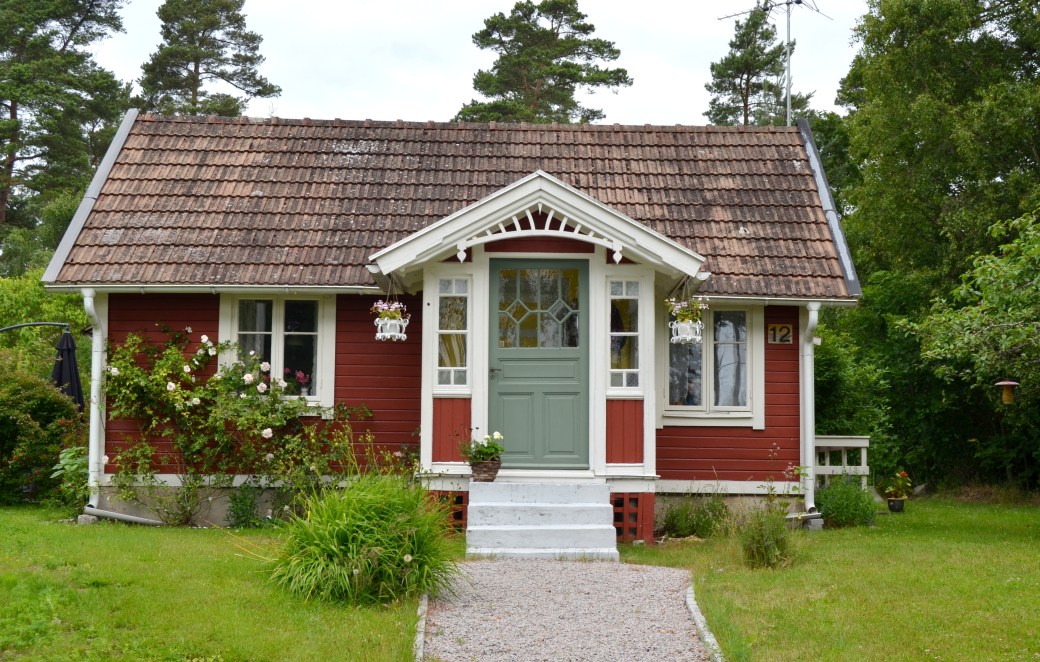
Our new summer neighbours in the area had to take down their old house and chose to build a very modern one right in between the very old fisherman’s cottages. They kindly asked us how to do with their outbuilding to keep it in the old style.  We found that very considerate, and it now fits in very well with our old cottage lying close by.

So, what do you make of these thoughts? Here are some examples to show what I mean:

Karön och sommar 2013 090

Karön och sommar 2013 093

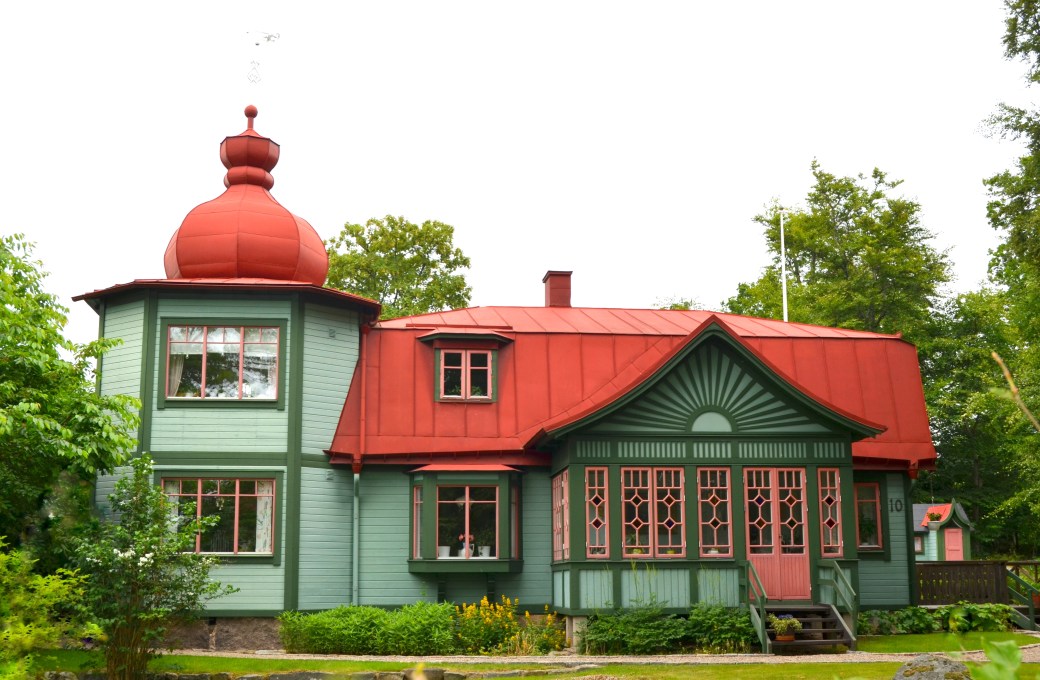
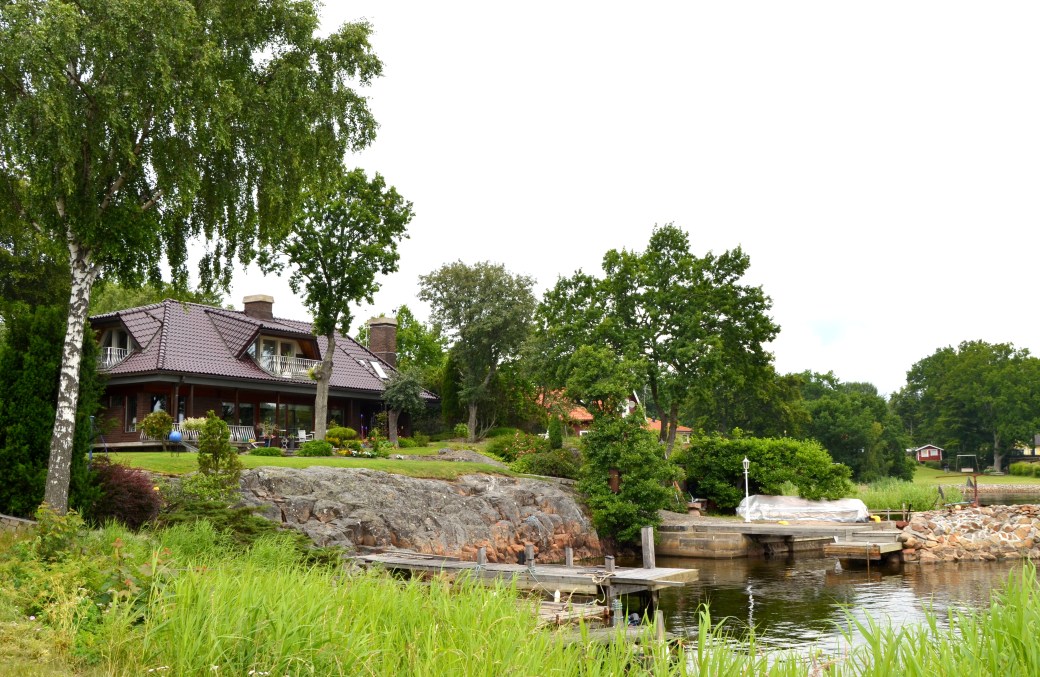
If the area is filled with these kind of gorgeous old houses or cottages, you should, in my opinion, try to avoid building houses like this:

Karön och sommar 2013 091If possible – stick to the current style here. This is a newly built house in the old fashioned style:

Karön och sommar 2013 092

Is it only me thinking unnecessary thoughts or…?

Får man fresta; eller, kombinerat fot(o)arbete – Temptation time; or, Feet, food and photography!

Får man servera en frestare i väntan på huvudrätten? Huvudrätten serveras av min medvandrare denna dag…så den tål att väntas på! Var i världen har vi varit? Hitta oss någonstans i fotona…

Waiting for the main dish…what about a teaser? The main dish will be served by the most excellent chef, soon! So, that’s worth waiting for…Where in the world have we been visiting…and who is my excellent fellow wanderer? Look in the photos…

På denna plats finns MYCKET av allt! Men, att gå en hel dag kräver sin tribut…Så, här serveras några av de godbitar vi fick oss till livs, alltmedan fötterna domnade bort…

This city has got so MUCH of everything! But, walking a whole day demands tasty food, snacks and cappucino…Here are some good treats, while our feet slowly went numb…

Did you find us? Soon all the correct answers to all your questions will be served here by…I think you know who!

Highgate Cemetery – visit to a living beauty

Highgate Cemetery in north London, England is designated Grade I on the English Heritage Register of Parks and Gardens of Special Historic Interest in England. It is divided into two parts, named the East and West cemetery. According to Wikipedia, there are approximately 170,000 people buried in around 53,000 graves at Highgate Cemetery. Highgate Cemetery is notable both for some of the people buried there as well as for its status as a nature reserve.

The cemetery is in the London Boroughs of Camden, Haringey and Islington. The nearest transport link is Archway tube station. From there, some 20 minutes’ walking will take you to the entrance.

Highgate cemetery in its original form – the northwestern wooded area – opened in 1839, as part of a plan to provide seven large, modern cemeteries, known as the ”Magnificent Seven”, around the outside of central London. The inner-city cemeteries, mostly the graveyards attached to individual churches, had long been unable to cope with the number of burials and were seen as a hazard to health and an undignified way to treat the dead. The initial design was by architect and entrepreneur Stephen Geary.

On Monday 20 May 1839, Highgate Cemetery was dedicated to St James by the Right Reverend Charles Blomfield, Lord Bishop of London. Fifteen acres were consecrated for the use of the Church of England, and two acres set aside for Dissenters. Rights of burial were sold for either limited period or in perpetuity.

London juni 2013 215

Elizabeth Jackson’s grave

The first burial was Elizabeth Jackson of Little Windmill Street, Soho, on 26 May. Our guide told us, that in those days people believed that the first person who was buried in a graveyard became a kind of protector and guardian against evil forces.

Highgate, like the others of the Magnificent Seven, soon became a fashionable place for burials and was much admired and visited. The Victorians created a wealth of Gothic tombs and buildings that occupies a spectacular south-facing hillside site slightly downhill from the top of the hill of Highgate itself, next to Waterlow Park. Being conservative and thinking English Church, they were not very interested in the ”Egyptian area”, so it took many years before anyone bought a grave there. Another interesting fact is that Victorians didn’t fancy the use of a cross on their grave – they meant that practice was for catholics only.

In 1854 the area to the east of the original area across Swains Lane was bought to form the eastern part of the cemetery. This part is still used today for burials, as is the western part.

London juni 2013 217

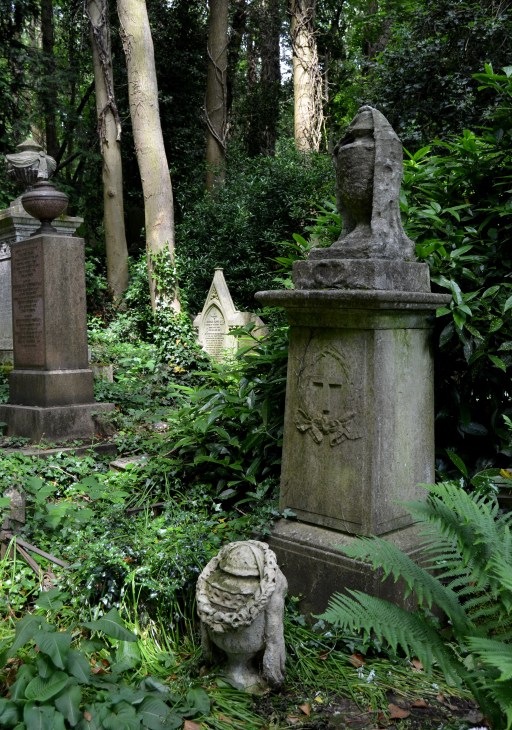
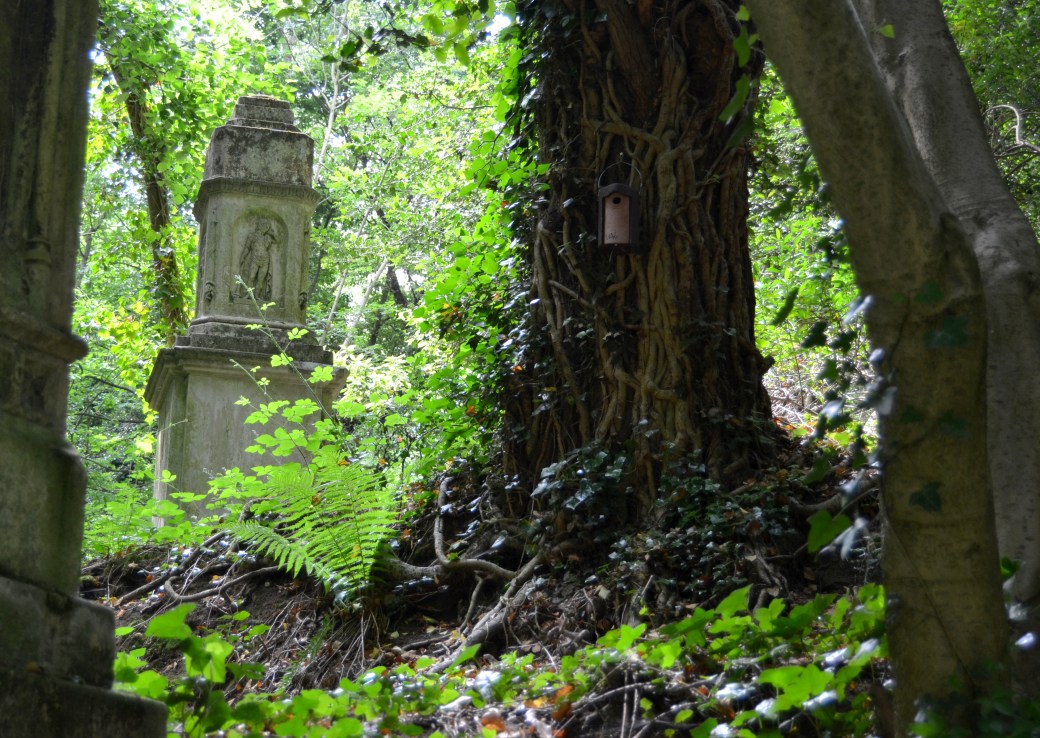
The cemetery’s grounds are full of trees, shrubbery and wild flowers, all of which have been planted and grown without human influence. The grounds are a haven for birds and small animals, and we saw many nesting boxes from the path we walked.

London juni 2013 218Entrance to the Egyptian Avenue, West Cemetery

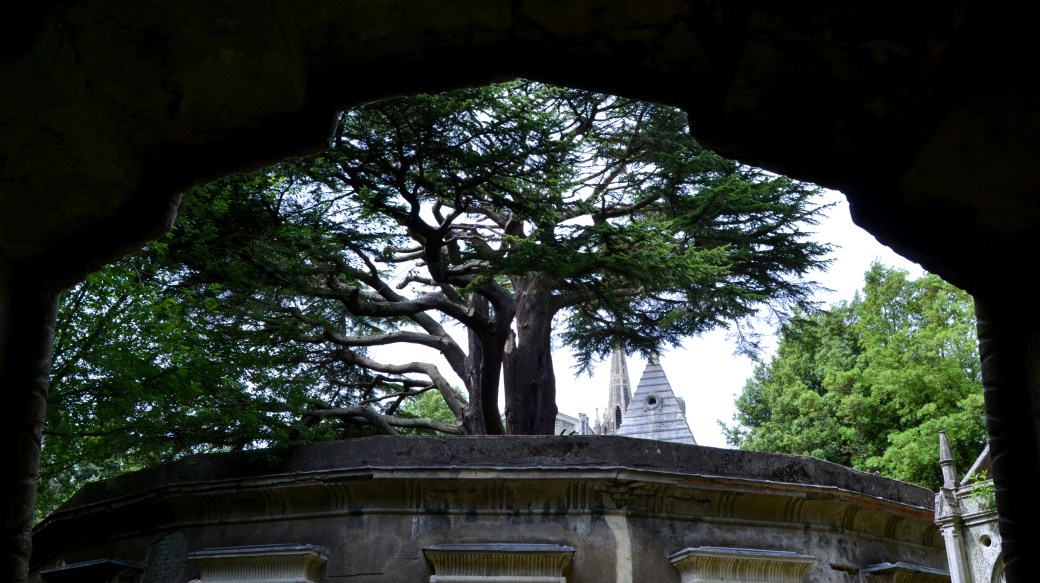
London juni 2013 222The Cedar of Lebanon

London juni 2013 230 Circle of Lebanon, West Cemetery

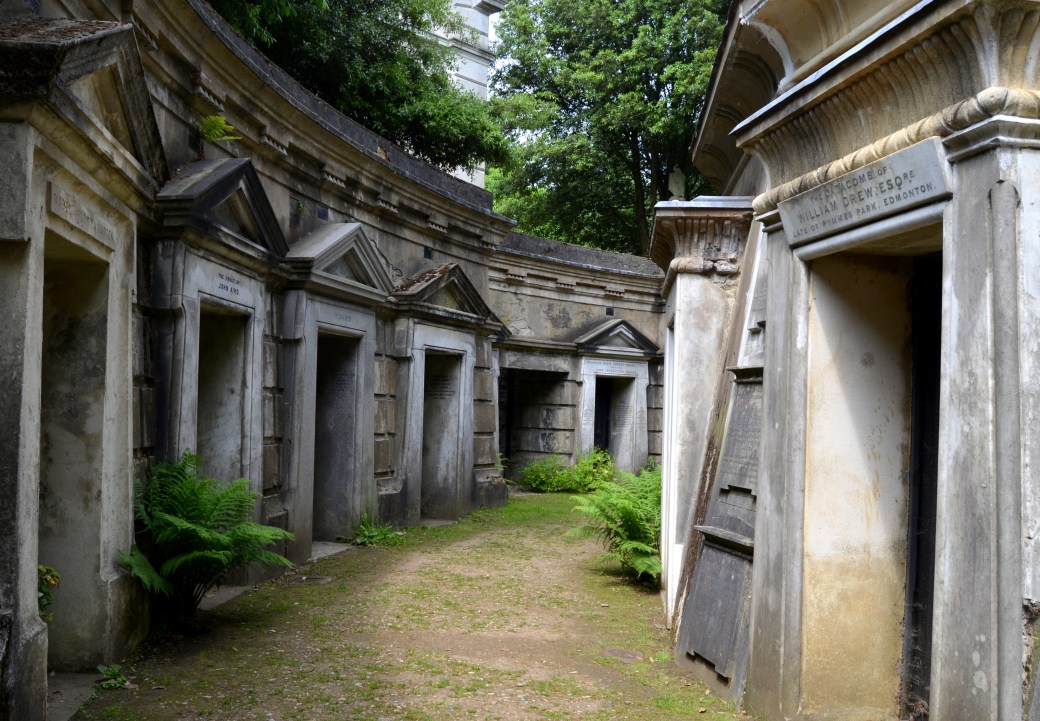
The Egyptian Avenue and the Circle of Lebanon (topped by a huge Cedar of Lebanon – according to our guide this tree is at least three hundred years old) feature tombs, vaults and winding paths dug into hillsides. For its protection, the oldest section, which holds an impressive collection of Victorian mausoleums and gravestones, plus elaborately carved tombs, allows admission only in tour groups. (Book in advance! ) Due to vandalism and souvenir hunters only visitors with a personal connection with the cemetery can tour without a guide. In the newer eastern section, which contains a mix of Victorian and modern statuary, you can visit without a guide though. The ticket bought for West is valid for walking on the East part as well.

London juni 2013 198

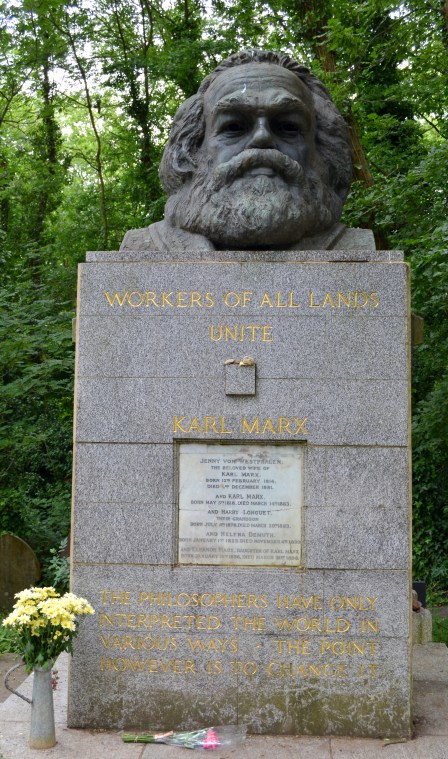
The most famous burial in the East cemetery is probably Karl Marx. The tomb of Karl Marx, the Egyptian Avenue and the Columbarium are Grade I listed buildings.

There are many other prominent figures, Victorian and otherwise, buried at Highgate Cemetery. Most of the historically notable figures lie in the Western part. Among others:

We were not allowed to take photos of new graves, so Beryl Bainbridge and Alexander Litvinenko were left in peace.

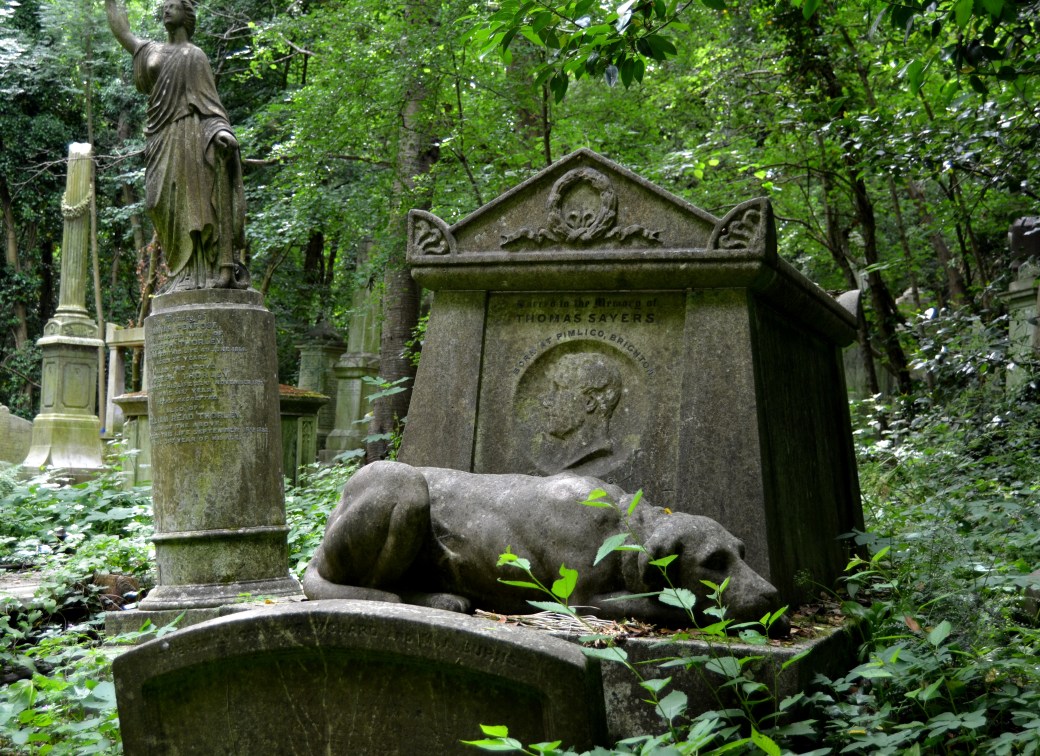
London juni 2013 249Our guide was a volunteer and very knowledgeable about the people being buried here. We got many interesting stories, and among them, one about the prize fighter Tom Sayers (1826-1865). His tomb is  guarded by the stone image of his mastiff, Lion, who also was chief mourner at his funeral. It is said that on the way to the cemetery, the dog sat in the first car with the coffin – in the front seat.

Sayers’ lasting fame depends exclusively on his final contest, when he faced American champion John Camel Heenan in a battle which was widely considered to be boxing’s first world championship. It ended in chaos when the spectators invaded the ring, and the referee finally declared a draw.

Regarded as a national hero, Sayers then retired from the ring. After his death five years later at the age of 39, a huge crowd watched his cortège on its journey to highgate Cemetery and his funeral a week later attracted some 100,000 people to Camden Town.

Highgate Cemetery was featured in the popular media from the 1960s to the late 1980s for its so-called occult past, particularly as being the alleged site of the ”Highgate Vampire”. But, as our guide said, what do vampires fear the most? Surely they would not like a place like Highgate.  Many writers of novels and film directors though, have been inspired by Highgate Cemetery. These are only a few examples:

The East Cemetery hosts some more famous names besides Karl Marx, for example:

Walking the ivy clad paths, passing old ornamented stones and silent statues, old roses and  –  a cat – follow me from East to West.

Weekly Photo Challenge: Nostalgic

Så många saker väcker nostalgin till liv, men när jag nu ska finna bilder till detta inlägg blir det genast svårare. Inte många foton finns från mitt barndomshem eller från min älskade mormors hus – tankar och minnen från barndomen finns mest inuti mig själv. Men, så fick jag chansen att besöka en av de riktigt gamla husen i närheten av vår sommarstuga.

Denna lilla stuga är från slutet av 1700-talet och dess interiör värker fram minnen som får ögonen att tåras. Här finns möbler, färger, mönster, prydnadssaker och tidningsställ som påminner om dem vi hade när jag var barn på 50- och 60-talet. Blandat med moderniteter förstås – helt enkelt gott och blandat. Få se om du inte kan känna igen dig lite grand, du också…och kan konstatera att vi vuxit till oss en aning de senaste tvåhundra åren…

So many things can make you nostalgic, but when I am supposed to show something of this in WordPress Nostalgic – I do not have any pictures. My childhood didn’t get much photographed, and when I grew older and bought a camera of my own, we had moved away from where it all started. My grandmother’s house though, was still there for a while.

But, last week I got the opportunity to visit a very old little house (or maybe cottage) some kilometres from our summer house. The owner told me that it was built in the late 18th century and is well kept. Even if it seems to be very low, because people were a great deal shorter in those days, I could stand upright inside.

The cottage is furnished almost the way my childhood house was. I grew up in the fifties and sixties, and recognized many things here, such as colours and patterns, the table, rag-rugs (my grandmother used to make those too), chairs,  and the special basket for newspapers… Oh, happy childhood – because I was really fortunate enough to have that. In my memories it will live on as long as I live.

Nerds

Nörd kommer från engelskans slangord nerd och är en stereotypisk benämning på en person som har ett fixerat intresse eller intresseområde. Enligt Wikipedia användes ordet första gången 1950 i Dr. Seuss bok If I Ran the Zoo, men då med betydelsen av en särskild djurart. På tidigt 60-tal var slanguttrycket spritt i USA och ända bort till Skottland. Fram till slutet av 1900-talet användes ordet nörd oftast negativt, men idag används ordet minst lika ofta positivt.

Nördar kan antingen beskrivas utifrån sina hobbies och intressen, eller via sin personlighet, status, sociala kompetens eller till och med sitt utseende. En vanlig uppfattning är att nördar ofta intresserar sig mer för teknik eller naturvetenskap än socialt umgänge. Det ironiska begreppet social nörd används ibland av nördar om personer som har ett starkt fixerat intresse av socialt umgänge och mänskliga relationer. Nörd kan du eventuellt kallas om du är/har:

  • Datorintresserad
  • Intelligent
  • Enkelspårig
  • Tekniskt kunnig
  • Låg social kompetens

Nördar finns naturligtvis med i populärkulturen, bland annat i filmerna Nördarna kommer! och i dokusåpor som Beauty and the Geek och FC Z. Andra exempel på nördar är Simpsons-karaktärerna Professor Frink, Lisa Simpson och Jeff Albertson.

Den internationella nörddagen firades den 25 maj…men den glömde i alla fall vi bort! Till London hade jag sällskap av två andra nördar i familjen…så vad sägs om ett allmänt nördigt galleri…?

London juni 2013 005

A nerd is a person, typically described as being overly intellectual, obsessive, or socially impaired. They may spend inordinate amounts of time on unpopular, obscure, or non-mainstream activities, which are generally either highly technical or relating to topics of fiction or fantasy, to the exclusion of more mainstream activities. Additionally, many nerds are described as being shy, quirky, and unattractive, and may have difficulty participating in, or even following, sports. ”Nerd” is a derogatory, stereotypical term, but it has also been reclaimed and redefined by some as a term of pride and group identity. Nowadays it’s often used positively as well.

According to Wikipedia, the first documented appearance of the word ”nerd” is as the name of a creature in Dr. Seuss’s book If I Ran the Zoo (1950). The slang meaning of the term dates back to 1951, found in Newsweek magazine. By the early 1960s, usage of the term had spread throughout the United States, and even as far as Scotland. At some point, the word took on connotations of bookishness and social ineptitude.

Nerds can either be described by their hobbies and interests, or by abstract qualities such as personality, status, social skills, and physical appearance. Some interests and activities that are likely to be described as nerdy are:

  • Intellectual, academic, or technical hobbies, activities, and pursuits, especially topics related to science, mathematics, engineering, linguistics, history and technology.
  • Hobbies, games, and activities that are described as obsessive and ”immature”, such as trading cards, comic books, fantasy and science fiction novels, role-playing games, tabletop games.
  • Interest in the fine arts, non-mainstream music, hobbies (i.e., collecting), or other ”obscure” interests.
  • Heavy obsession with a topic that would otherwise be mainstream (such as a popular TV show or a sport).

Well, in London I was accompanied by two other nerds in my family, and what about a short trip through some nerdiness?

Weekly Travel theme: Sculpture

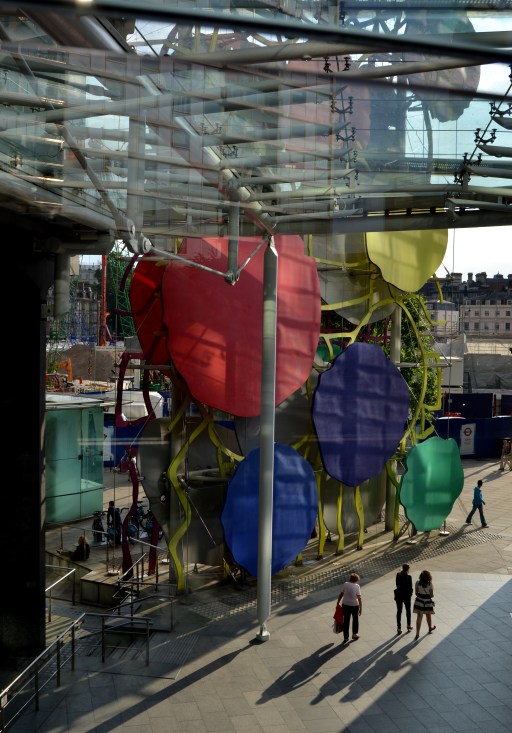
I London finns naturligtvis många fina skulpturer, men en som jag aldrig tidigare sett fann jag nära Victoria Palace Theatre där vi avnjöt musicalen Billy Elliot (rekommenderas verkligen – lysande!).

In London, a couple of days ago when visiting the Victoria Palace Theatre for the brilliant musical Billy Elliot (Go see it! And thank you for telling me about it…though I have forgotten which of you, my blogging friends, who gave me a hint? ), I came across this sculpture of considerable size, and in vibrant colours. So, sorry British Museum, but this is my choice for Ailsa’s theme: Sculpture!

London juni 2013 173

Tidig morgonvandring längs Ronnebyån – Early morning walk: Ronnebyån

Sista vandringen i Ronneby för den här gången går längs den vackra Ronnebyån med dess fantastiska trävillor. Vi går längs vattnet upp mot Ronneby centrum. Tyvärr (för fotografering alltså) genomgår min favoritvilla just nu en totalrenovering och är täckt av byggnadsställningar. Men Villa Haga är en dröm i rosa med burspråk och en glasveranda som jag knappt sett maken till någonstans. Du kan nog se hur vacker villan egentligen är.

Sedan går vi tillbaka och tittar även en bit upp från vattnet mot rosor och matchande bilar…eller kanske tvärtom?

The last Ronneby walk will take us to Ronnebyån and its fantastic villas. They are all beauties in their own way, but to my disappointment (concerning photography of course), my favourite villa, Haga, is now being restored and is covered in scaffoldings. I hope you are still able to see its splendour with bay and glass veranda, all settled in a dream of pink and white.

On returning towards Ronneby Brunnspark, we will pass magnificent roses and matching cars – or maybe vice versa?