Cheri asks us to pay attention to Lines – and my choices are natural ones as well as man made. Unfortunately the magic of the old tree is only left in photos and memories now. Last summer it finally gave in to old age.

Cheri asks us to pay attention to Lines – and my choices are natural ones as well as man made. Unfortunately the magic of the old tree is only left in photos and memories now. Last summer it finally gave in to old age.
The Divine Madman is of great importance to the Bhutanese. On almost every house you will find his imprint – a phallus symbol – painted on the wall or hanging from the roof as a wooden giant. The phallus symbol is important to ward off evil and to bring luck.

Chimi Lhakang is situated on a hill in this beautiful rural area – the small white building to the left close to the mountain.
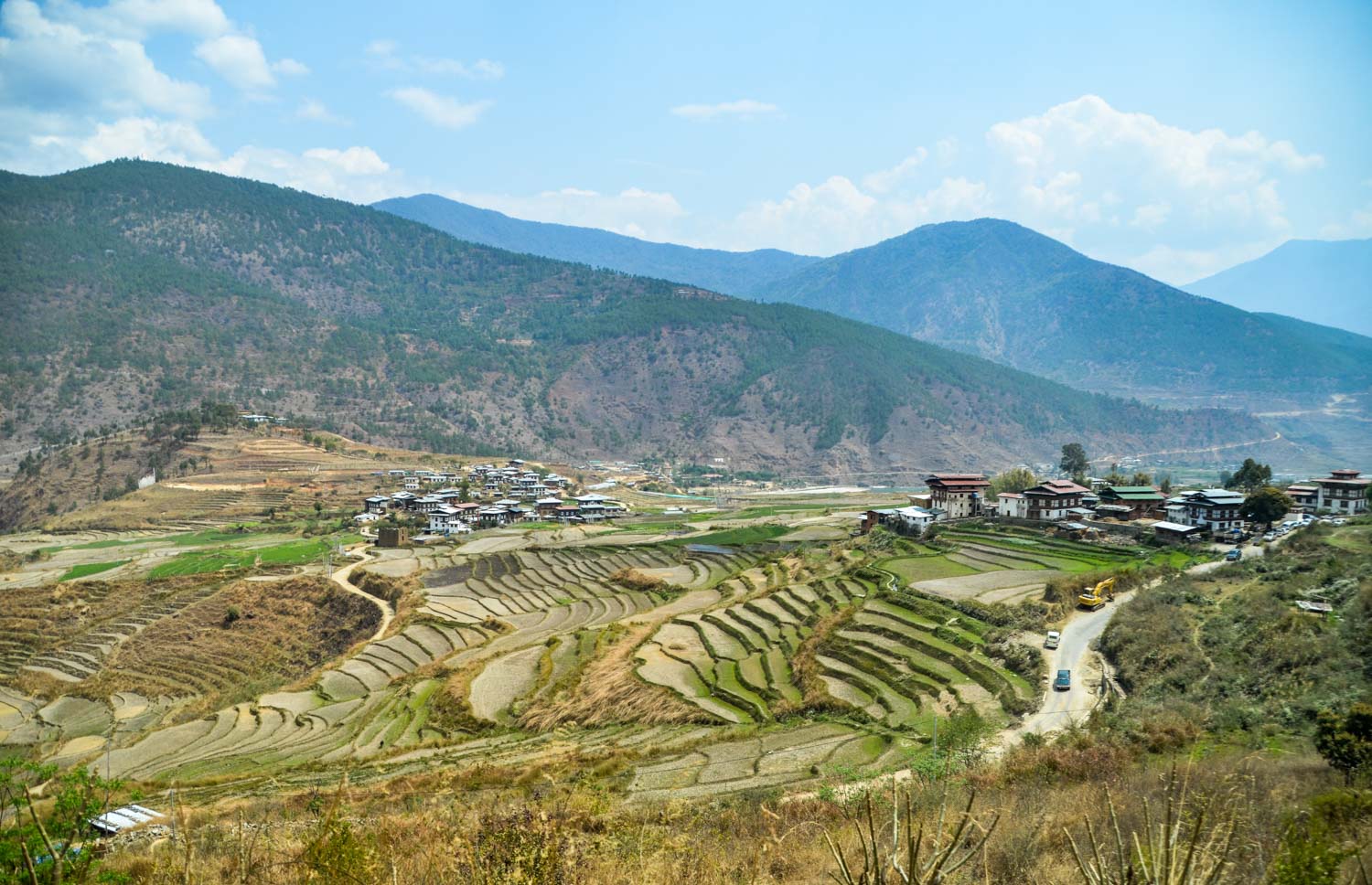
This day, we had some slow raindrops contributing to the green fields.
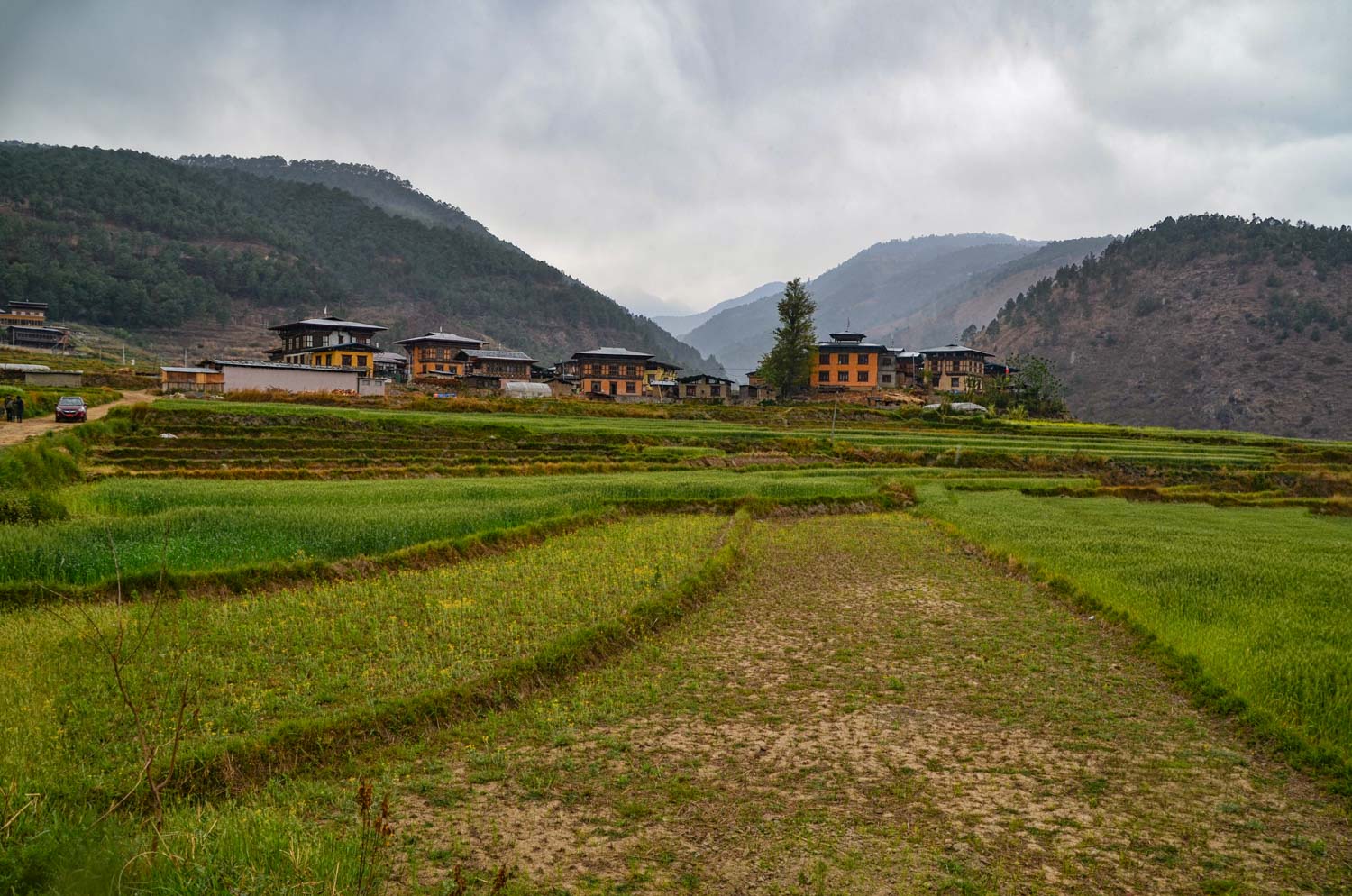
Clouds hanging low, but not a wind.
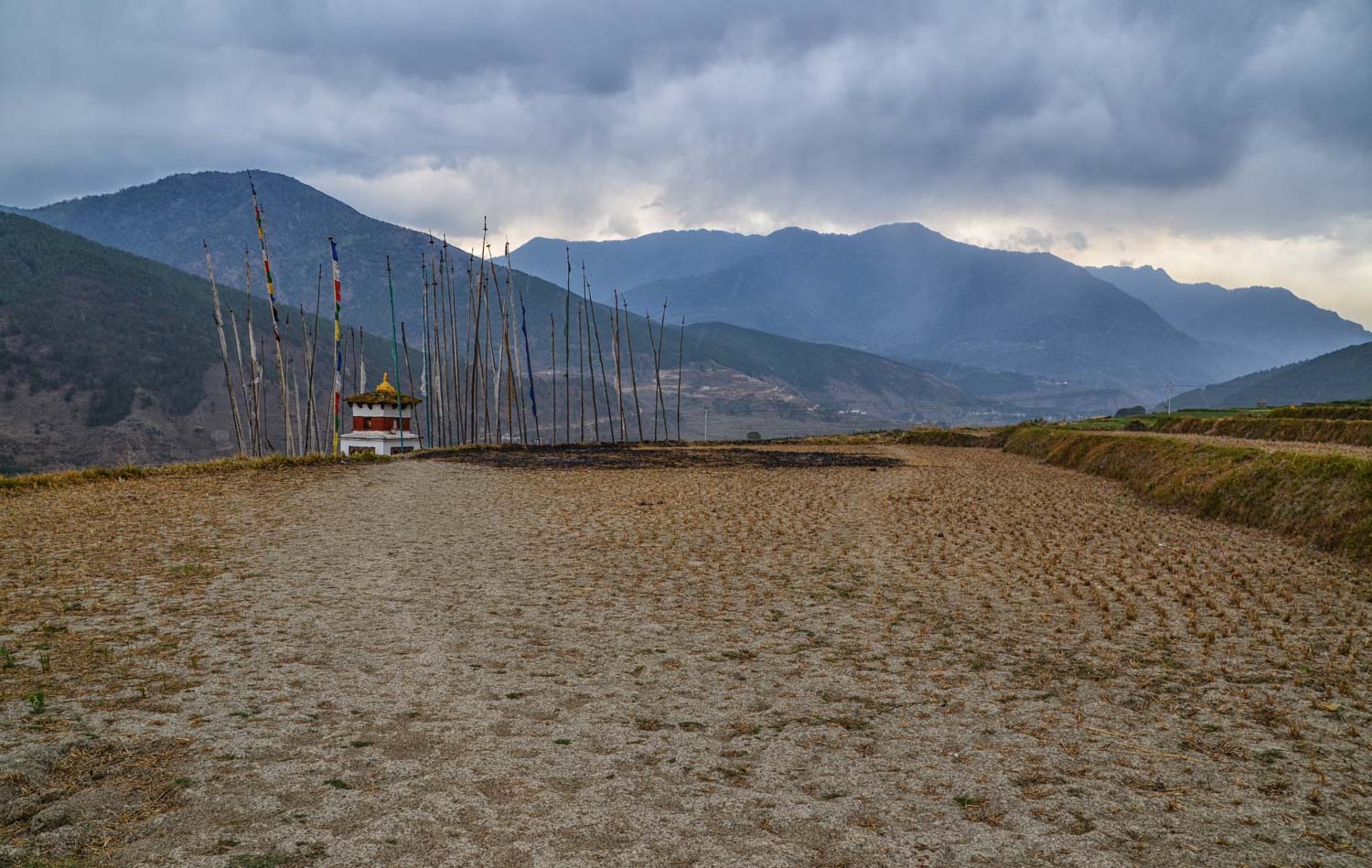
Blessings are important – even to the fields that should feed the people.
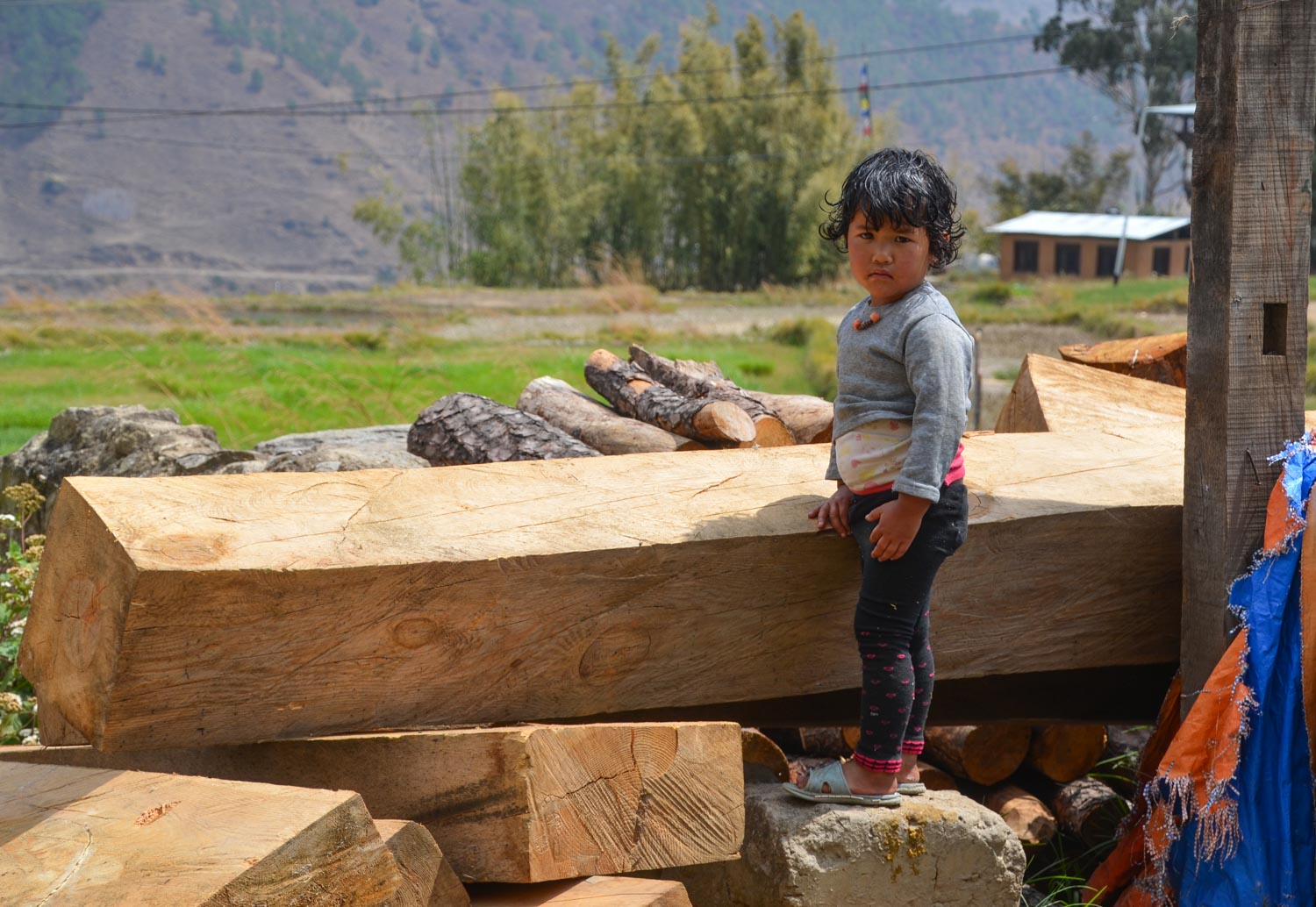
On our way up to Lobesa and the Lhakang, we had lunch and stopped by several shops selling masks and phalluses. The red mask is worn at the dances and the phallus on top is to swing out and bless people in the audience.


On reaching the temple, the rain had stopped, and young men and women were spinning the prayer wheels while circumambulating. Both men and women come to Chimi Lhakhang, and not only for fertility wishes. Often, when their child is born, they come back here to give him or her a name. Inside the temple there are bamboo sticks with names on them, if you prefer to let chance decide.
Equality is essential in Bhutan, and often it is the woman who inherits her parents. Marriage is no longer a business matter – people marry out of love. It is also no big deal with a divorce – should the couple not be happy in their marriage. And, I think I said it before – I have never seen so many men taking good care of and playing openly with their children.


At 2200 meters above sea level, Paro hosts Bhutan’s international airport and about 15000 citizens. A charming town with its most famous landmark about 10 kilometres outside town: Taktshang (Tiger’s Nest) Hermitage on the face of a sheer 1,000-metre (3,281-foot) cliff. This was our goal for the last day of our tour.
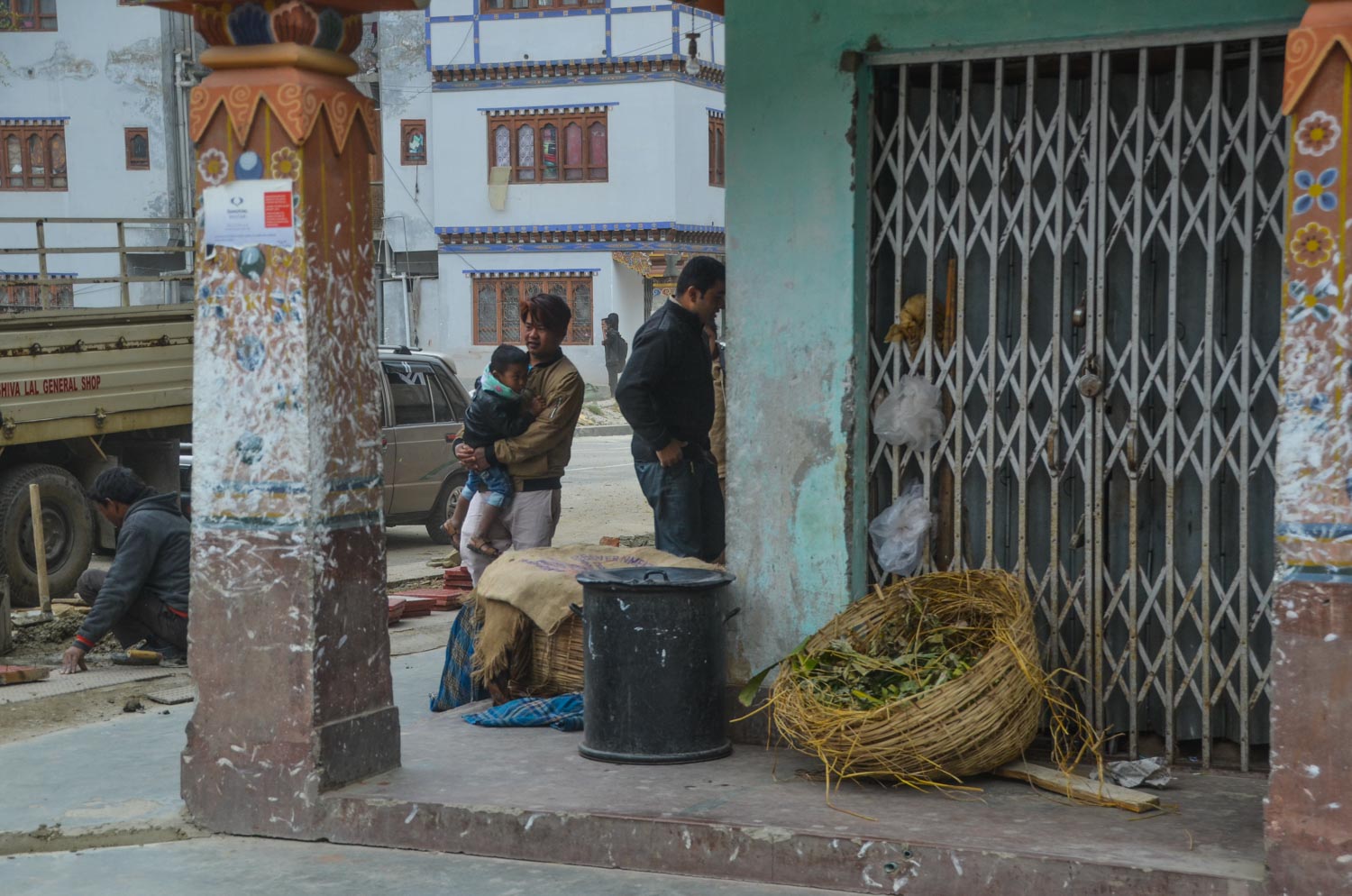
Street life is rather lively, and throughout our trip, the towns and villages were constantly expanding.

Architecture is restricted to the old ways, and no matter the material, you have to build and decorate your house according to tradition.

Roadwork everywhere too. The two, three roads connecting the villages of the valley was built by India. The workers stay for many years to keep up the road quality.
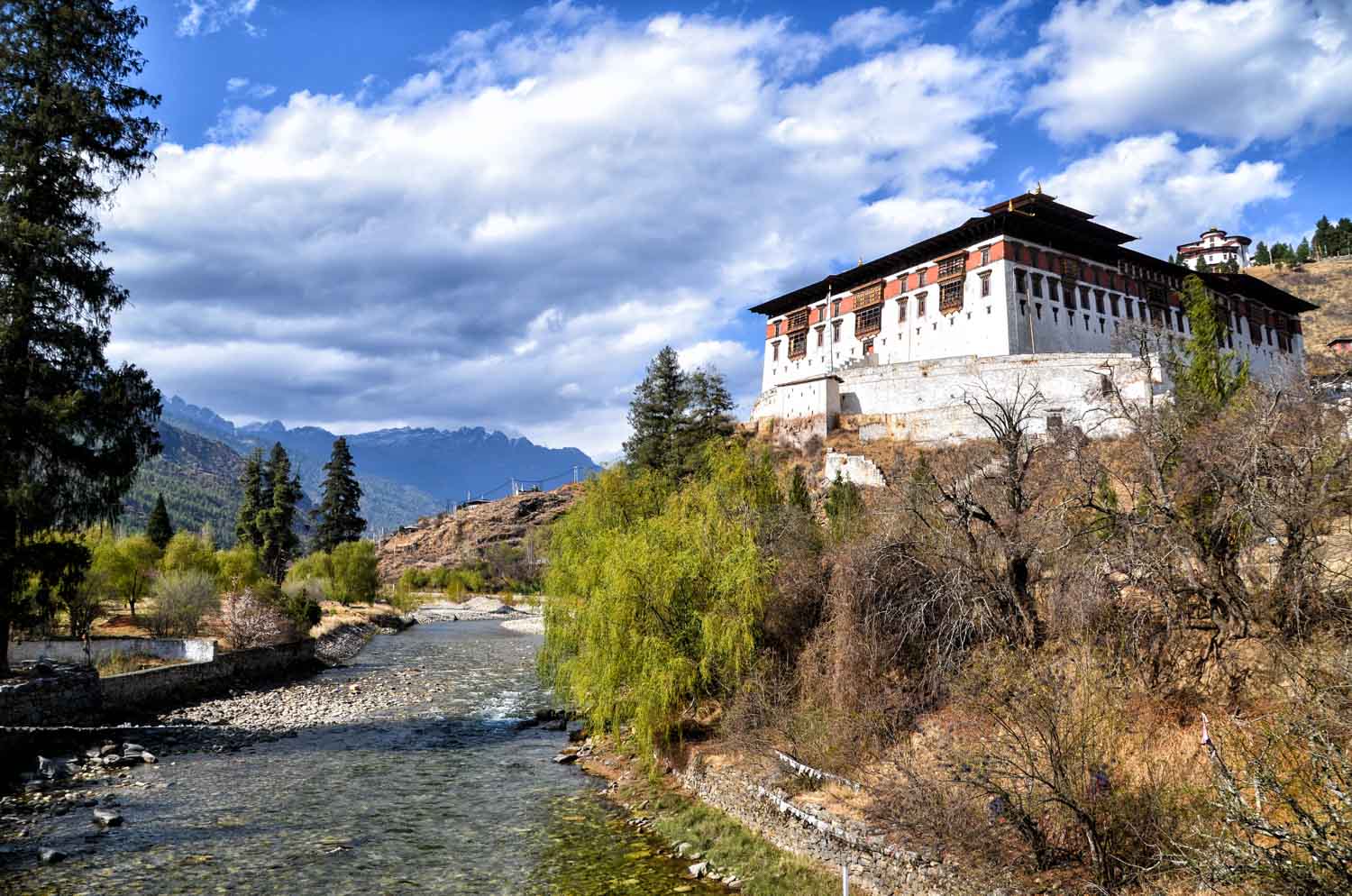
 The bridge over to Rinpung Dzong. The Dzong (a fortress/monastery) was built in the beginning of the tenth century. The famous festival, Paro Tsechu, is held here every year – and we visited on our first day in Bhutan.
We arrived in Bhutan during Paro Tsechu – one of the many colourful dance festivals in honour of Guru Rinpoche, one of Bhutan’s most important historical and religious figures. He visited Bumthang in AD 746, and is said to then have introduced Buddhism to Bhutan. Read more about Tsechus here.
 Rinpung Dzong is beautifully situated in the valley. It was built in 1644 to defend the Paro valley from invasions by Tibet. Like most dzongs, it houses the monastic body, district government offices and the local courts.

During the Tsechu festivals, people come from near and far, all wearing their most beautiful kira (women) and gho (men). It is compulsory for all Bhutanese to wear national dress in schools, government offices and on formal occasions.


The cloth is made from cotton or silk and the patterns are very colourful. The only patterns forbidden are flowered ones, but solid reds and yellow colours are also avoided, because these are colours worn by monks.


When we arrived, there was not much room for sitting close to the dancers…but some shots are acceptable. I spent most of the time helping little old ladies and children to a better view. And taking in the atmosphere!

There are many kinds of mask dances, but I remember clearest the one preparing you for the meeting with fearful creatures the first 49 days after you die. This dance will help you facing them without fear.
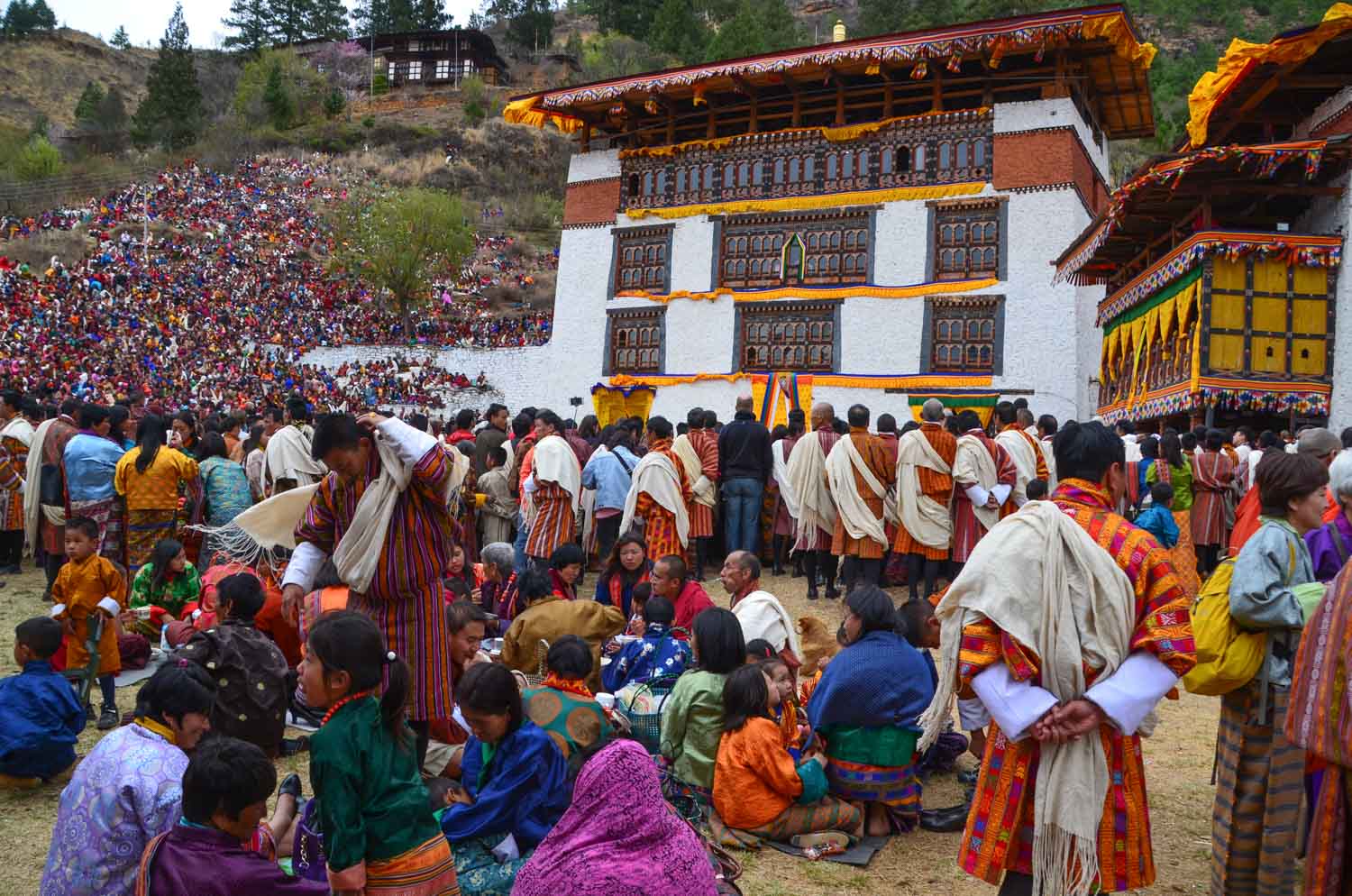
There are many pieces included in the dress code, but a very significant part is the scarf: Ordinary male citizens wear a kabney of unbleached white silk, but there are different colours for different ranks. The king, for example, wears saffron. The women wear a cloth sash called a rachu over their left shoulder.


If you look closely, you will see that it is very often the men who are taking care of the little children, carrying them or holding them. Bhutan is very particular about equality.
The Buthanese believe they will create merit by attending the tsechus and watching the ritualized dances. They share their food, exchange news and are surrounded by Buddhist teachings. The highlight is the unfurling of the thondrol, a giant thangka, before sunrise the last day. It is believed that your sins are washed away upon viewing this.

The monks have their own seats, close to the dancers.
Unfortunately we were not at the festival on its last day – so my sins are still with me…
…we flew to Bhutan, Druk Yul, Land of the Thunder Dragon. This is the country launching GNH – Gross National Happiness – instead of GNP. I asked people I met if they really were, Happy. And, they said yes, they were. I can understand why.

Through the windows I could see the Himalayas, snow capped mountains welcoming me a second time. In 1986 I went to Nepal and India, but haven’t been in these parts since. I fell in love with Nepal. And now I am passionate about Bhutan.

Paro, Buthan, is said to offer one of the three most dangerous approaches and landings in the world. You could almost reach out and touch the mountain houses…

It was difficult to take photos, but I had to try. Druk Air indeed has got some skilled pilots.
With surrounding peaks as high as 5,500 m (18,000 ft), Paro airport is considered one of the world’s most challenging airports, and only a select number of pilots are certified to land here. I heard they were 14.
Flights to and from Paro are allowed under visual meteorological conditions only and are restricted to daylight hours from sunrise to sunset. We flew early morning.
The spectacular and dangerous left turn in the valley before landing had us all holding our breath. And, in a way we never let that feeling go…
 The most beautiful airport in the world?

We were of course met by the Royal Family – portraits of the King, or of his whole family, were present everywhere in Bhutan. Even as pins on the men’s Gho (national dress).

It may be small, but the arrival hall is exquisitely decorated. Finally we are at the entrance to the land of Happiness. The last Shang-ri-La.

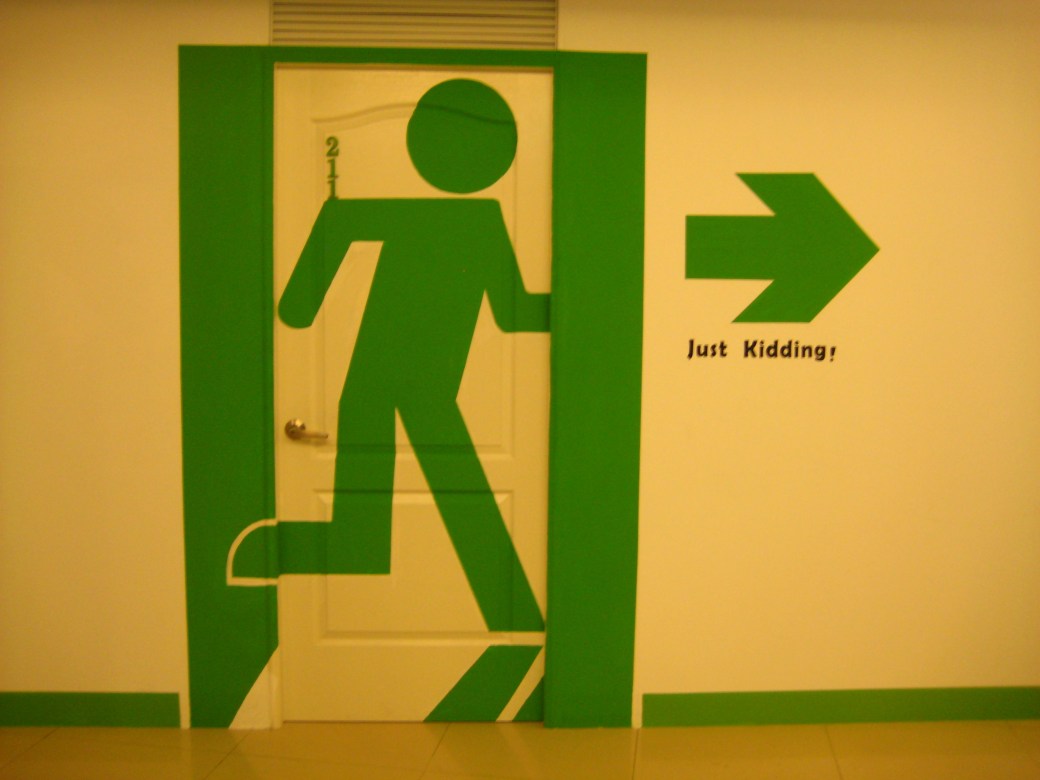
For Paula’s Thursday’s Special I give you two ways: One NZ way for penguins and one Chinese way I don’t really remember what the fun was about…?
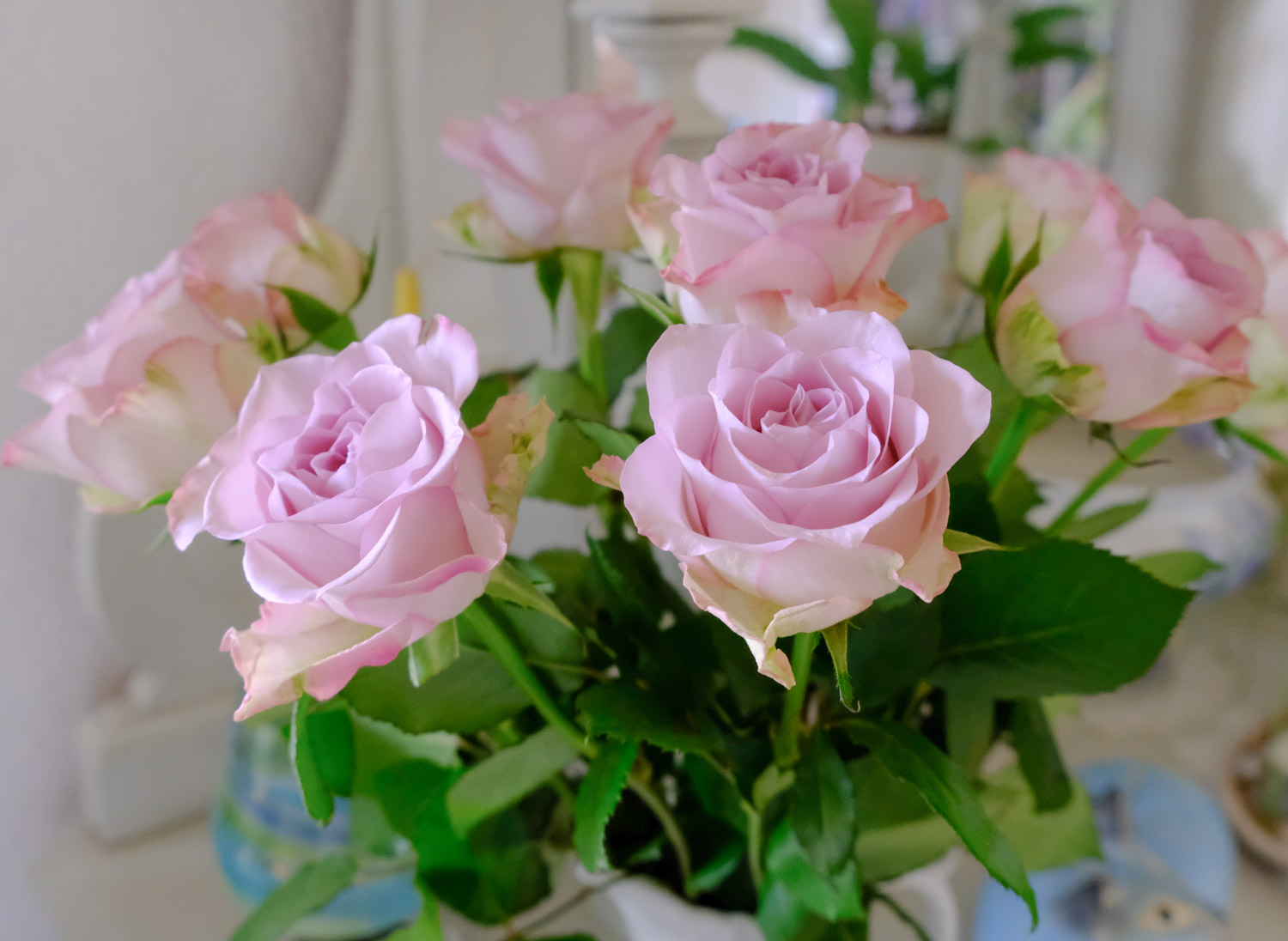
For Cee this week – Rain or Rainbows – luckily I found both!

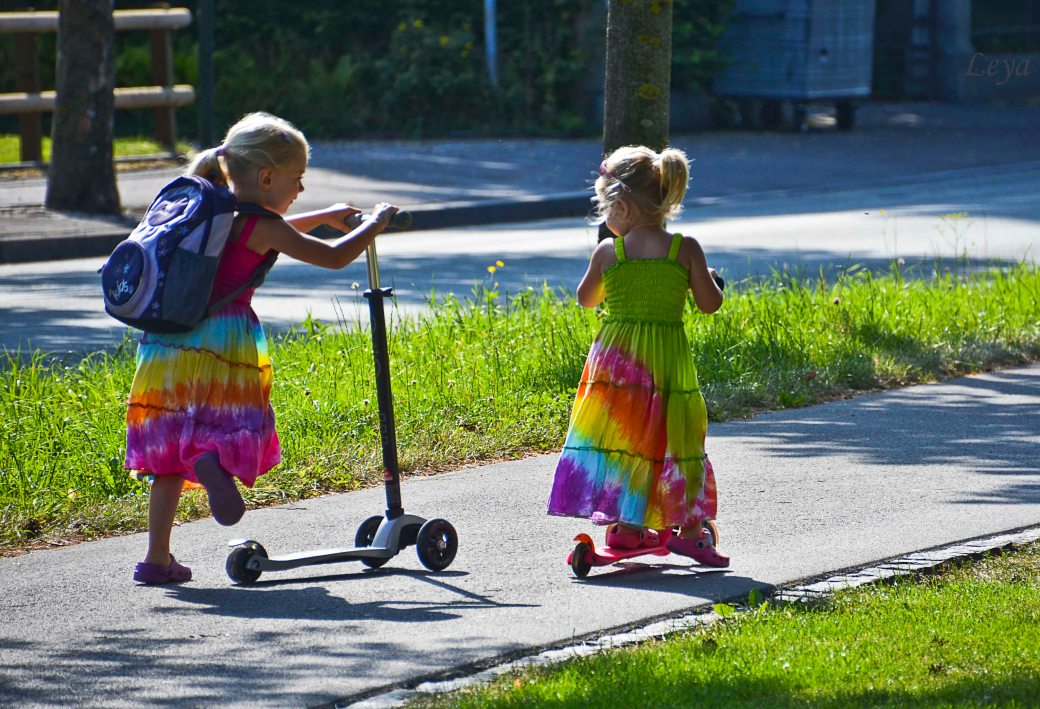
And I could not resist my pretty little Swiss girls either – surely they are little rainbows both of them?
“The distribution certificate for the film The Death of Stalin has been withdrawn,” a culture ministry spokeswoman told Agence France-Presse.
Russia’s Communist party, the second largest party in parliament, has called the film, which revolves around the vicious infighting that followed Stalin’s death in 1953, “a form of psychological pressure against our country”.
Nadezhda Usmanova, head of the Russian Military-Historical Society’s department of information, told Reuters that the film was “despicable”. “It’s a bad film, it’s a boring film, and it’s vile, repugnant and insulting,” Usmanova said.
The Death of Stalin, which picked up four British Independent Film awards last year, stars Steve Buscemi as Nikita Khrushchev, Stalin’s successor, and Michael Palin as Vyacheslav Molotov, the Soviet diplomat. Zhukov is played by Jason Isaacs.


Du måste vara inloggad för att kunna skicka en kommentar.