Time for a new shoot and quote – click here.

A man in a bookstore buys a book on loneliness and every woman in the store hits on him. A woman buys a book on loneliness and the store clears out.
Doug Coupland
Time for a new shoot and quote – click here.
A man in a bookstore buys a book on loneliness and every woman in the store hits on him. A woman buys a book on loneliness and the store clears out.
Doug Coupland
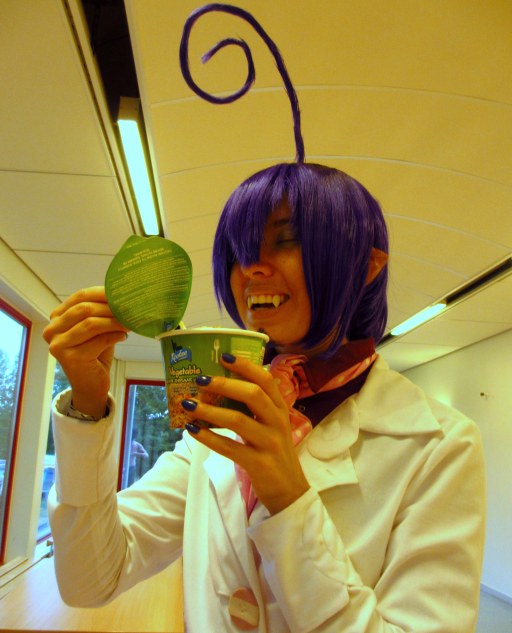
Well, what about this photo of my daughter cosplaying the famous Mephisto! I knew it would come in handy some day… Costume play – so, she made the costume herself, even the teeth and the hairdo…and the ears…
 For more White and Purple entries at Cee’s – click here.
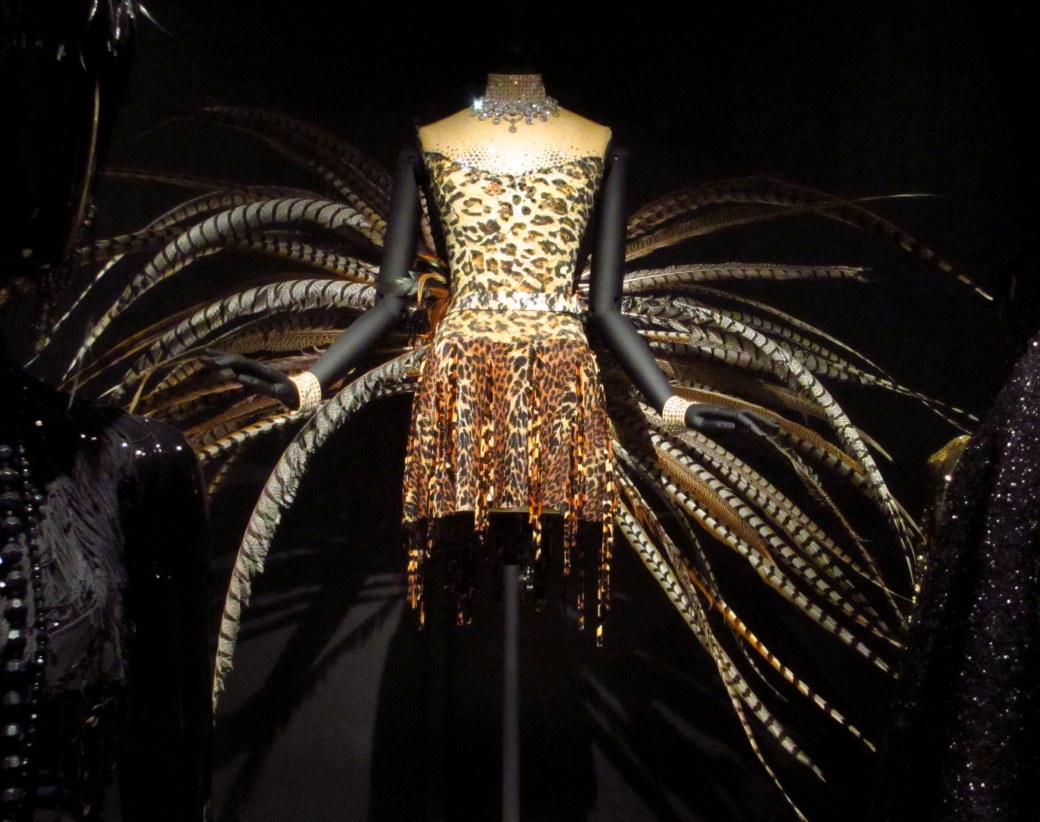
Precis som Ailsa skriver på Where’s My Backpack? Så är många tolkningar möjliga på temat Wild. Lars Wallin, vår världsberömde svenske designer, får stå för mitt bidrag – en vild klänning som fanns med på hans utställning i Kristianstad, vilken jag besökte senast. Jag hoppas att fjädrarna inte är äkta, annars har jag inget emot att kreationen är vild…

Ailsa on Where’s My Backpack? Has met some wild things lately, so that’s the new theme for this week…My choice is a wild dress made by our Swedish top designer, Lars Wallin. It doesn’t get much wilder than this…I just hope the feathers are not taken from real birds.
Somewhere in the neighbourhood of the British Museum we found a Little shop of…


A fabulous place where I – and my daughter – could have stayed for ever…The atmosphere, the patina of the old cupboards; the pencils, the bottled colours…everything.
Of course we bought some colours and sketch books, and I even bought a new pencil-box. My old faithful one is falling apart after 30 years and more of extensive use. But…I know I cannot abandon it anyway…it has stayed with me for ages, seen my university studies and…well, maybe it has brought me luck through tests and safely kept my precious pens and pencils…I am a pen-freak and have always been.
We were both so immersed in our findings, that we forgot to remember the name of this shop. I do know where it is situated, though. I will easily find it next time
Skateboarding föddes någon gång på 1940-talet bland surfarna i Californien. Ingen vet vem som konstruerade den första brädan, men de var gjorda av trälådor med rullskridskohjul på.
Skating har gått upp och ned i popularitet, men här i Sverige, i Skåne, var det inte så många som åkte när sonen började. Bilden av en skatare har för mig alltid varit positiv. Från början, i USA, tycks den ha varit ett uttryck för en rebellisk ungdom som inte ville inordna sig i samhället. Min bild av dessa ungdomar är att de utövar sin sport av sann glädje och de är sjyssta mot varandra, hjälper, stöttar och uppmuntrar varandra till nya trick och att klara allt svårare saker. Att uppfinna nya trick är en ständig utmaning, och många filmar sina åkningar och lägger ut dem på nätet.
De populäraste namnen och de stora tävlingarna arrangeras samt sponsras av skate- och klädmärken. Skateboarding har sen mitten av 1980-talet blivit en storindustri och några av de största namnen då var Tony Hawk, Christian Hosoi och Rodney Mullen.
Sonen började skata när han var 13. Han kör mest streetstil (utvecklades ur freestylen), även kallat flat ground, som är en ursprunglig stil med låg fart, många fingerflips, spins och akrobatik. Ofta var freestylebrädan då smalare, mindre och rakare, med lång tail och nose. Kända freestyleåkare är Rodney Mullen, Stefan ”Lillis” Åkesson, Boris Schwemin, Ulli Schönborn, Starsky, Bernhard, Luis Max Escarate, Paul Bakker och Georgio Czwerwinsk.
Longboard är också en favorit när vädret är fint och gatorna har bra asfalt. Då kan de dra ut några stycken på landsvägarna och bara njuta. Longboarden går snabbt med sina bredare hjul och är något tystare än vanlig skateboard.
Sonen förklarar sin kärlek med egentligen bara ett enda ord: Frihet.
Skateboarding was probably born sometime in the late 1940s or early 1950s when surfers in California wanted something to surf when the waves were flat. No one knows who made the first board, but these first skateboarders started with wooden boxes or boards with roller skate wheels attached to the bottom.
The image of the skateboarder as a rebellious, non-conforming youth has faded in recent years. My experience from my son and his friends is that they are having a positive outlook on life, prone to poking harmless fun at each other, and supporting each other to innovate, finding new places and landing new tricks.
The increasing availability of technology is apparent within the skateboarding community. Many skateboarders record and edit videos of themselves and friends skateboarding. Some of those are real works of art – like this one, showed above.
Skateboarding video games have also become very popular in skateboarding culture. Some of the oldest, most popular are the Tony Hawk series and Skate series.
My son explains his love for skateboarding with one, single word: Freedom.
Nya Zeeland förstås…var annars skulle det finnas något som lutar mer än tornet i Pisa?
New Zealand of course…where else would anything be as tilted as this?

For more tilted things, look here at Ailsa’s Where’s my backpack?
Får man servera en frestare i väntan på huvudrätten? Huvudrätten serveras av min medvandrare denna dag…så den tål att väntas på! Var i världen har vi varit? Hitta oss någonstans i fotona…
Waiting for the main dish…what about a teaser? The main dish will be served by the most excellent chef, soon! So, that’s worth waiting for…Where in the world have we been visiting…and who is my excellent fellow wanderer? Look in the photos…


På denna plats finns MYCKET av allt! Men, att gå en hel dag kräver sin tribut…Så, här serveras några av de godbitar vi fick oss till livs, alltmedan fötterna domnade bort…
This city has got so MUCH of everything! But, walking a whole day demands tasty food, snacks and cappucino…Here are some good treats, while our feet slowly went numb…


Did you find us? Soon all the correct answers to all your questions will be served here by…I think you know who!
Men, vi har varit där så många gånger…fast, det regnar ju…
But, we’ve been there so many times before…but, it IS raining…
Så det blev British Museum i alla fall – alltid intressant, men den här gången bestämde jag mig för att se det på ett lite annorlunda sätt än jag gjort förut.
So, British Museum again, then. Always interesting of course, but this time I decided to look at things from other angles than my usual ones.


Highgate Cemetery in north London, England is designated Grade I on the English Heritage Register of Parks and Gardens of Special Historic Interest in England. It is divided into two parts, named the East and West cemetery. According to Wikipedia, there are approximately 170,000 people buried in around 53,000 graves at Highgate Cemetery. Highgate Cemetery is notable both for some of the people buried there as well as for its status as a nature reserve.
The cemetery is in the London Boroughs of Camden, Haringey and Islington. The nearest transport link is Archway tube station. From there, some 20 minutes’ walking will take you to the entrance.
Highgate cemetery in its original form – the northwestern wooded area – opened in 1839, as part of a plan to provide seven large, modern cemeteries, known as the ”Magnificent Seven”, around the outside of central London. The inner-city cemeteries, mostly the graveyards attached to individual churches, had long been unable to cope with the number of burials and were seen as a hazard to health and an undignified way to treat the dead. The initial design was by architect and entrepreneur Stephen Geary.
On Monday 20 May 1839, Highgate Cemetery was dedicated to St James by the Right Reverend Charles Blomfield, Lord Bishop of London. Fifteen acres were consecrated for the use of the Church of England, and two acres set aside for Dissenters. Rights of burial were sold for either limited period or in perpetuity.
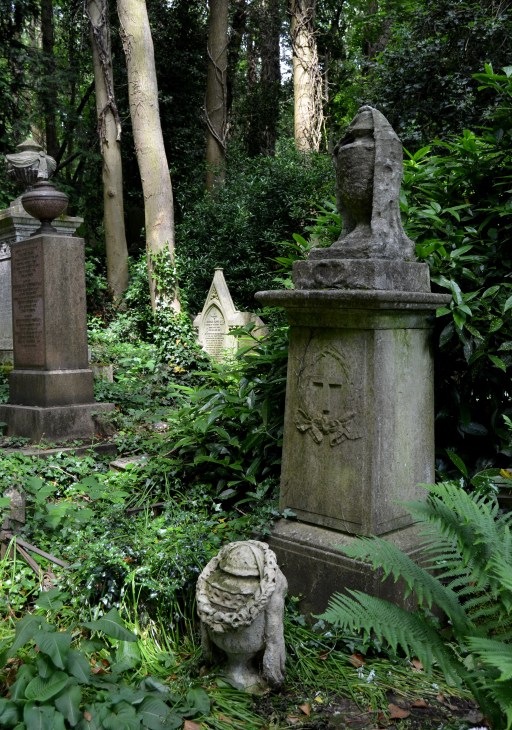
Elizabeth Jackson’s grave
The first burial was Elizabeth Jackson of Little Windmill Street, Soho, on 26 May. Our guide told us, that in those days people believed that the first person who was buried in a graveyard became a kind of protector and guardian against evil forces.
Highgate, like the others of the Magnificent Seven, soon became a fashionable place for burials and was much admired and visited. The Victorians created a wealth of Gothic tombs and buildings that occupies a spectacular south-facing hillside site slightly downhill from the top of the hill of Highgate itself, next to Waterlow Park. Being conservative and thinking English Church, they were not very interested in the ”Egyptian area”, so it took many years before anyone bought a grave there. Another interesting fact is that Victorians didn’t fancy the use of a cross on their grave – they meant that practice was for catholics only.
In 1854 the area to the east of the original area across Swains Lane was bought to form the eastern part of the cemetery. This part is still used today for burials, as is the western part.
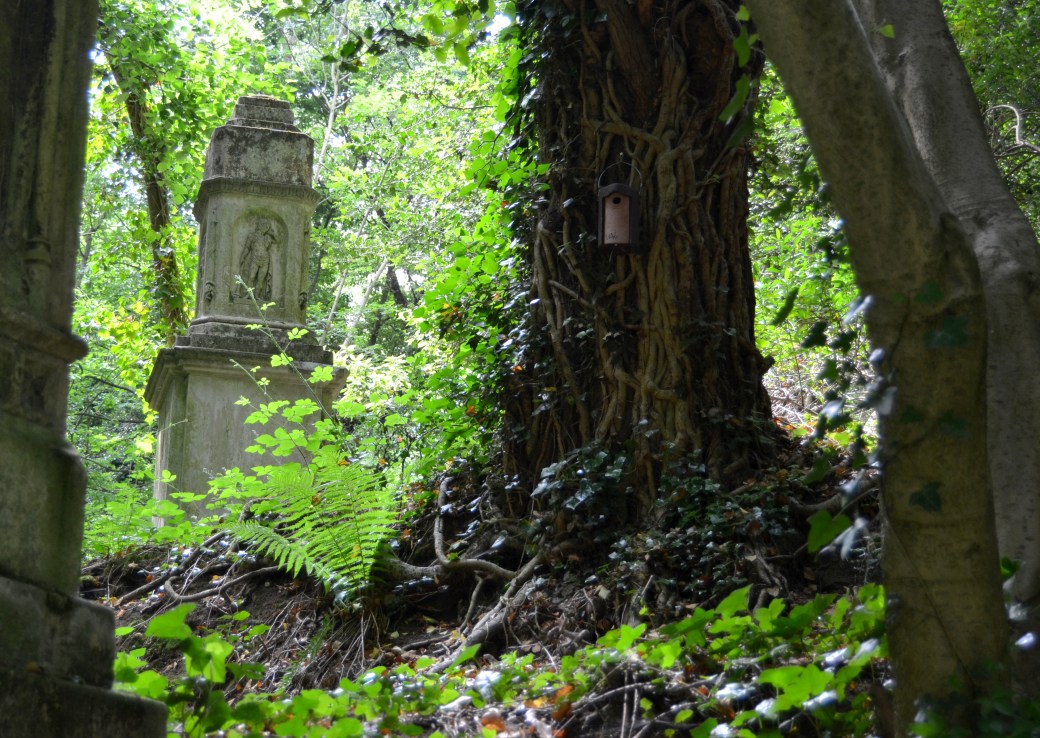
The cemetery’s grounds are full of trees, shrubbery and wild flowers, all of which have been planted and grown without human influence. The grounds are a haven for birds and small animals, and we saw many nesting boxes from the path we walked.
 Entrance to the Egyptian Avenue, West Cemetery
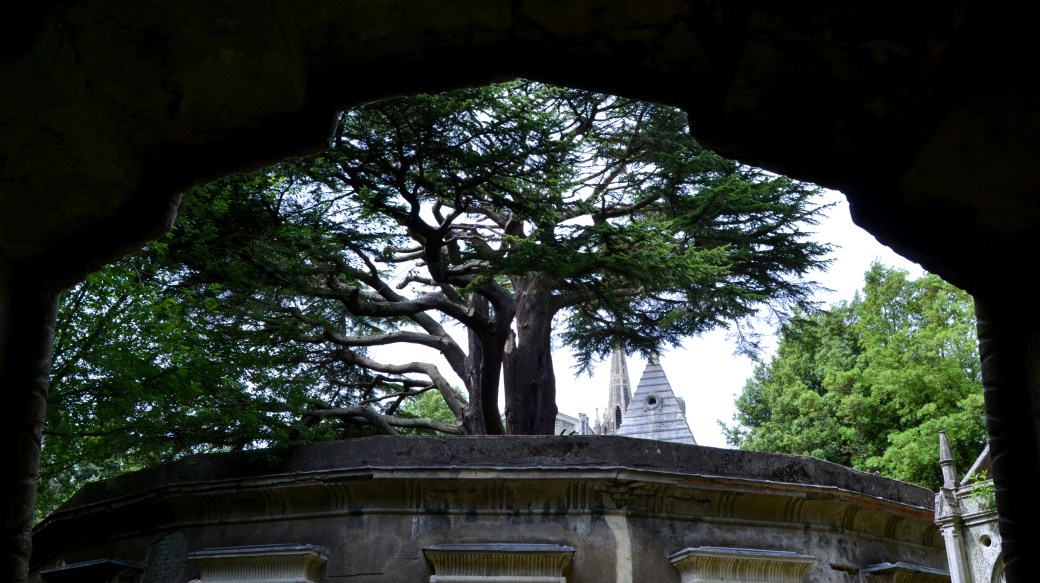 The Cedar of Lebanon
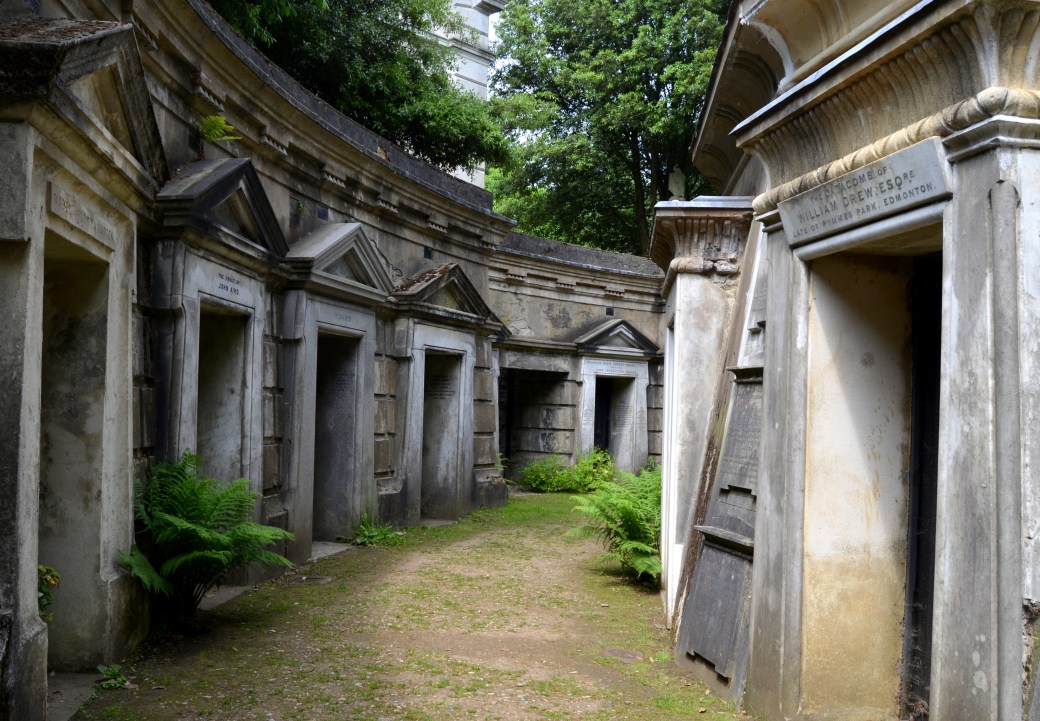 Circle of Lebanon, West Cemetery
The Egyptian Avenue and the Circle of Lebanon (topped by a huge Cedar of Lebanon – according to our guide this tree is at least three hundred years old) feature tombs, vaults and winding paths dug into hillsides. For its protection, the oldest section, which holds an impressive collection of Victorian mausoleums and gravestones, plus elaborately carved tombs, allows admission only in tour groups. (Book in advance! ) Due to vandalism and souvenir hunters only visitors with a personal connection with the cemetery can tour without a guide. In the newer eastern section, which contains a mix of Victorian and modern statuary, you can visit without a guide though. The ticket bought for West is valid for walking on the East part as well.
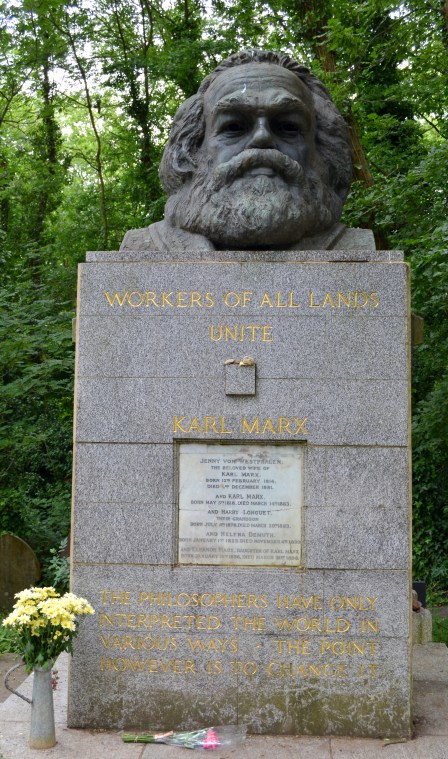
The most famous burial in the East cemetery is probably Karl Marx. The tomb of Karl Marx, the Egyptian Avenue and the Columbarium are Grade I listed buildings.
There are many other prominent figures, Victorian and otherwise, buried at Highgate Cemetery. Most of the historically notable figures lie in the Western part. Among others:
We were not allowed to take photos of new graves, so Beryl Bainbridge and Alexander Litvinenko were left in peace.
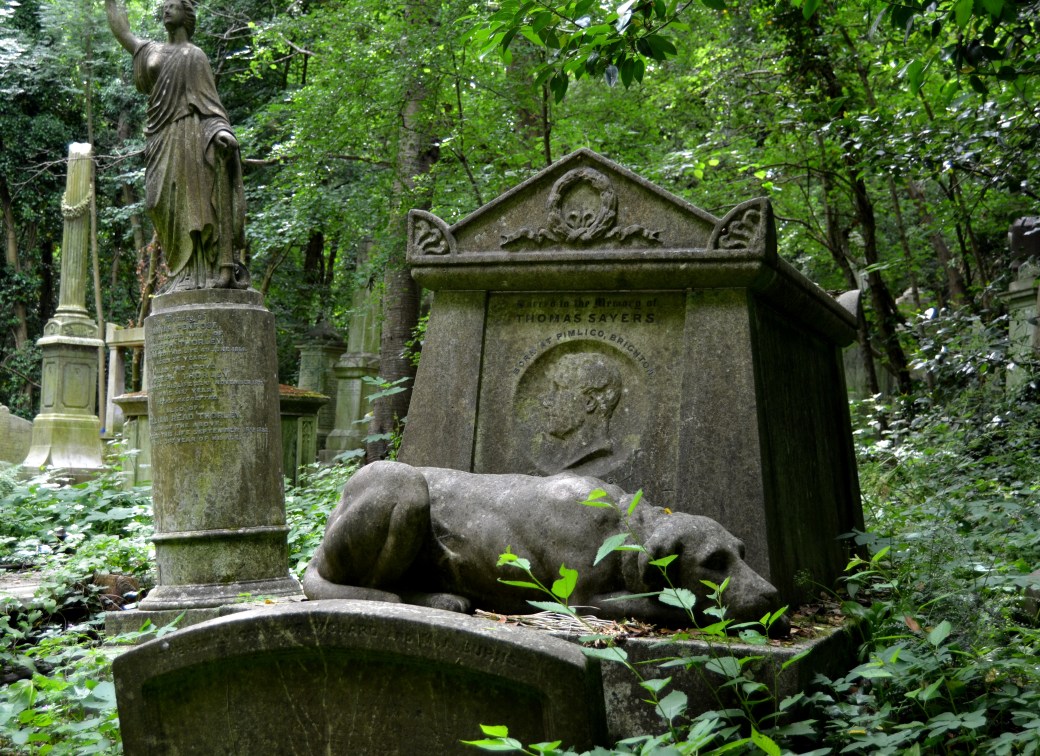 Our guide was a volunteer and very knowledgeable about the people being buried here. We got many interesting stories, and among them, one about the prize fighter Tom Sayers (1826-1865). His tomb is guarded by the stone image of his mastiff, Lion, who also was chief mourner at his funeral. It is said that on the way to the cemetery, the dog sat in the first car with the coffin – in the front seat.
Sayers’ lasting fame depends exclusively on his final contest, when he faced American champion John Camel Heenan in a battle which was widely considered to be boxing’s first world championship. It ended in chaos when the spectators invaded the ring, and the referee finally declared a draw.
Regarded as a national hero, Sayers then retired from the ring. After his death five years later at the age of 39, a huge crowd watched his cortège on its journey to highgate Cemetery and his funeral a week later attracted some 100,000 people to Camden Town.
Highgate Cemetery was featured in the popular media from the 1960s to the late 1980s for its so-called occult past, particularly as being the alleged site of the ”Highgate Vampire”. But, as our guide said, what do vampires fear the most? Surely they would not like a place like Highgate. Many writers of novels and film directors though, have been inspired by Highgate Cemetery. These are only a few examples:
The East Cemetery hosts some more famous names besides Karl Marx, for example:
Walking the ivy clad paths, passing old ornamented stones and silent statues, old roses and – a cat – follow me from East to West.


Under Londonbesöket åkte vi ut till Highgate – den fantastiskt fina kyrkogården vid Hampstead Heath. Den östra delen får man gå utan guide, vilket vi också gjorde. Ganska snart, i en slänt uppe på vänster sida om gången, fann vi denna gravsten. En mycket enkel sten, nästan oansenlig, men ett litet krus med pennor väckte vårt intresse…
During this London visit we went to Highgate, the famous cemetery near Hampstead Heath. Highgate East you are allowed to walk alone, without any guide. So, we did. Only maybe 100 metres in on the path, on our left hand, we saw this rather insignificant and undecorated stone standing on the slope, but a small jar filled with pencils soon attracted our attention…
 Vi hade en mycket bra penna med oss, men den fick sin sista vila i detta krus. Ingen av oss visste att denne fantastiske berättare var begravd på Highgate.
We had only brought one good pencil that day, but it got its last rest here, in this jar. None of us knew that this fantastic author was buried here.
 Leya
Leya 
Du måste vara inloggad för att kunna skicka en kommentar.