We arrived in Bhutan during Paro Tsechu – one of the many colourful dance festivals in honour of Guru Rinpoche, one of Bhutan’s most important historical and religious figures. He visited Bumthang in AD 746, and is said to then have introduced Buddhism to Bhutan. Read more about Tsechus here.
 Rinpung Dzong is beautifully situated in the valley. It was built in 1644 to defend the Paro valley from invasions by Tibet. Like most dzongs, it houses the monastic body, district government offices and the local courts.

During the Tsechu festivals, people come from near and far, all wearing their most beautiful kira (women) and gho (men). It is compulsory for all Bhutanese to wear national dress in schools, government offices and on formal occasions.

Often shy…

Maybe one of her first beautiful kiras

Flags flying the whole way up to the dzong

Some took the faster lane…

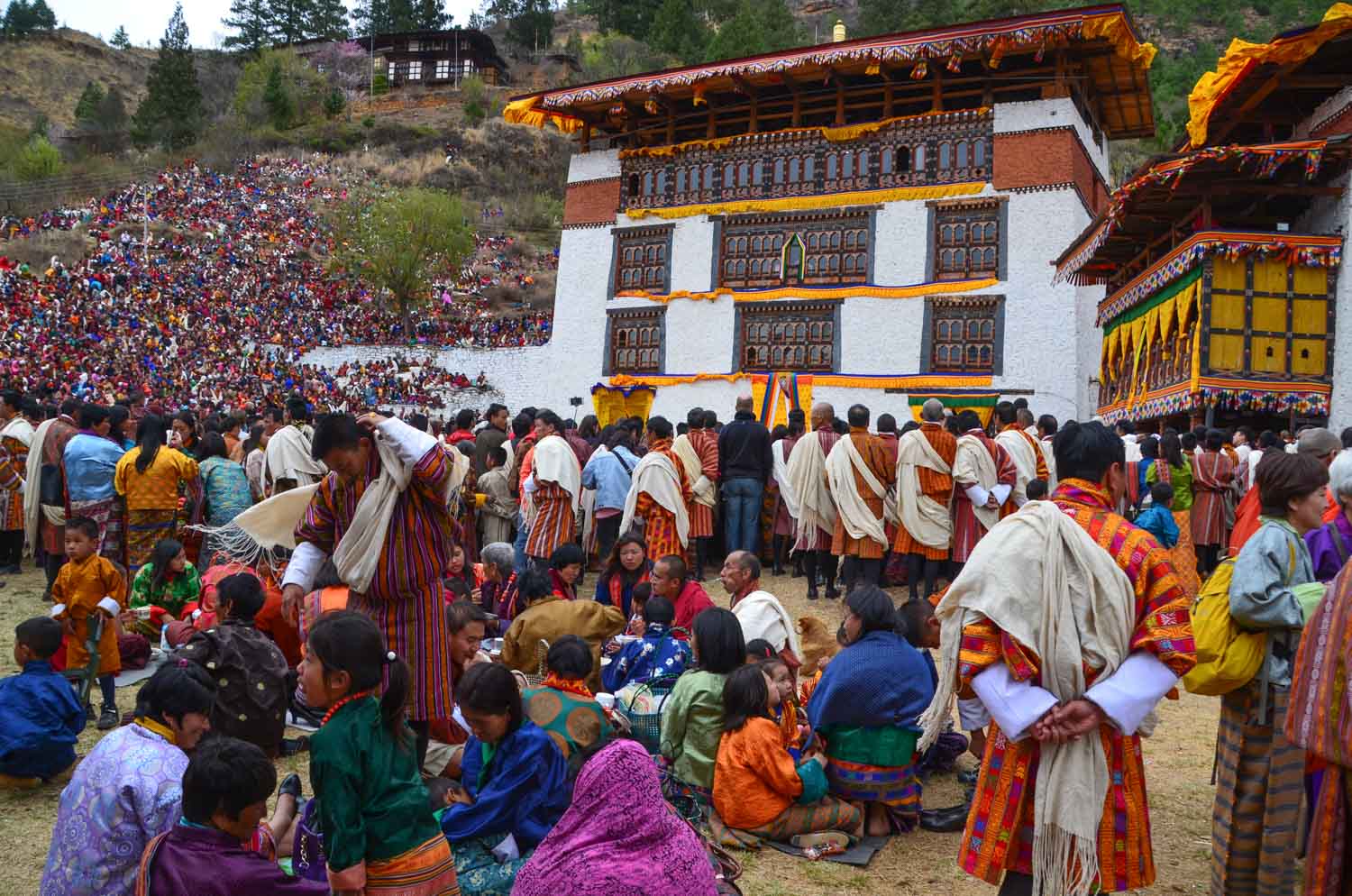
Families everywhere, sitting together eating – the leftovers went to the dogs

When asked, the children told us they loved the festivals – because they could run around playing all the time!
The cloth is made from cotton or silk and the patterns are very colourful. The only patterns forbidden are flowered ones, but solid reds and yellow colours are also avoided, because these are colours worn by monks.

The red figure to the right is an atsara (clown), who also contribute in keeping up the order and occationally gives a blessing with his wooden phallus!
When we arrived, there was not much room for sitting close to the dancers…but some shots are acceptable. I spent most of the time helping little old ladies and children to a better view. And taking in the atmosphere!
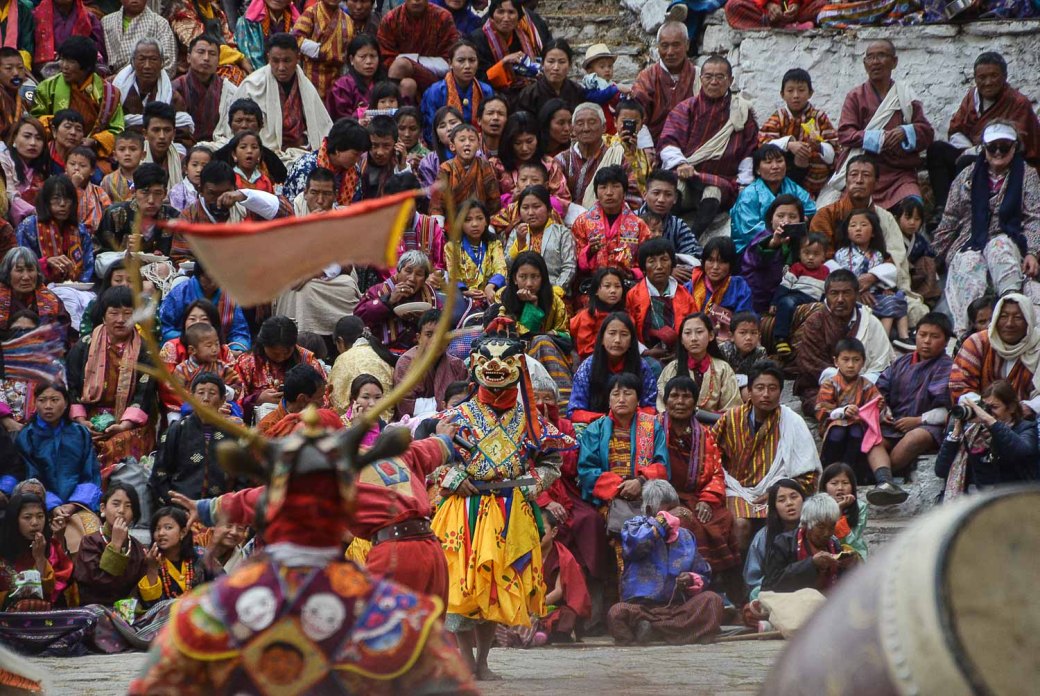
There are many kinds of mask dances, but I remember clearest the one preparing you for the meeting with fearful creatures the first 49 days after you die. This dance will help you facing them without fear.

There are many pieces included in the dress code, but a very significant part is the scarf: Ordinary male citizens wear a kabney of unbleached white silk, but there are different colours for different ranks. The king, for example, wears saffron. The women wear a cloth sash called a rachu over their left shoulder.
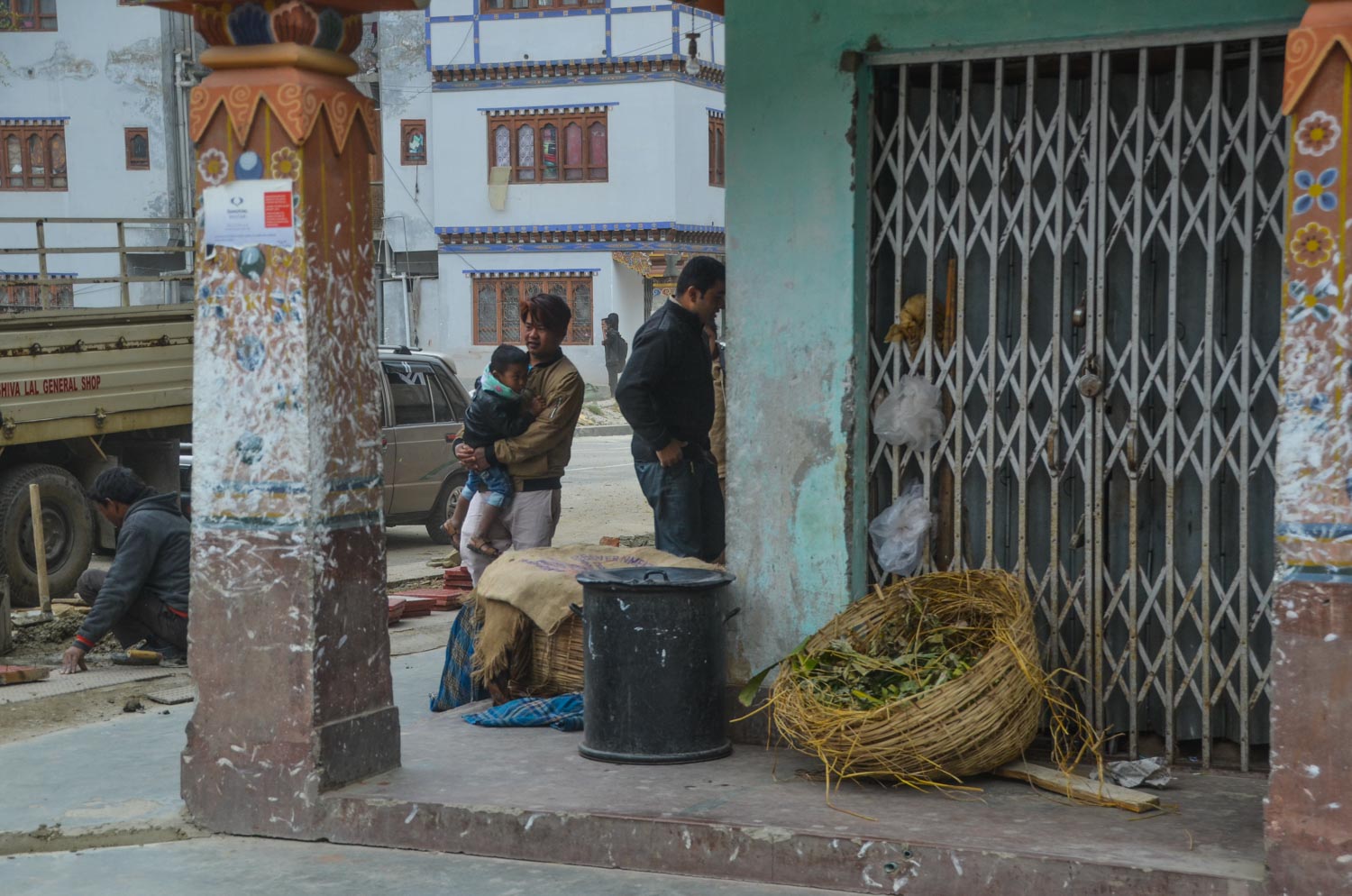
If you look closely, you will see that it is very often the men who are taking care of the little children, carrying them or holding them. Bhutan is very particular about equality.
The Buthanese believe they will create merit by attending the tsechus and watching the ritualized dances. They share their food, exchange news and are surrounded by Buddhist teachings. The highlight is the unfurling of the thondrol, a giant thangka, before sunrise the last day. It is believed that your sins are washed away upon viewing this.

The monks have their own seats, close to the dancers.
Unfortunately we were not at the festival on its last day – so my sins are still with me…



 The bridge over to Rinpung Dzong. The Dzong (a fortress/monastery) was built in the beginning of the tenth century. The famous festival, Paro Tsechu, is held here every year – and we visited on our first day in Bhutan.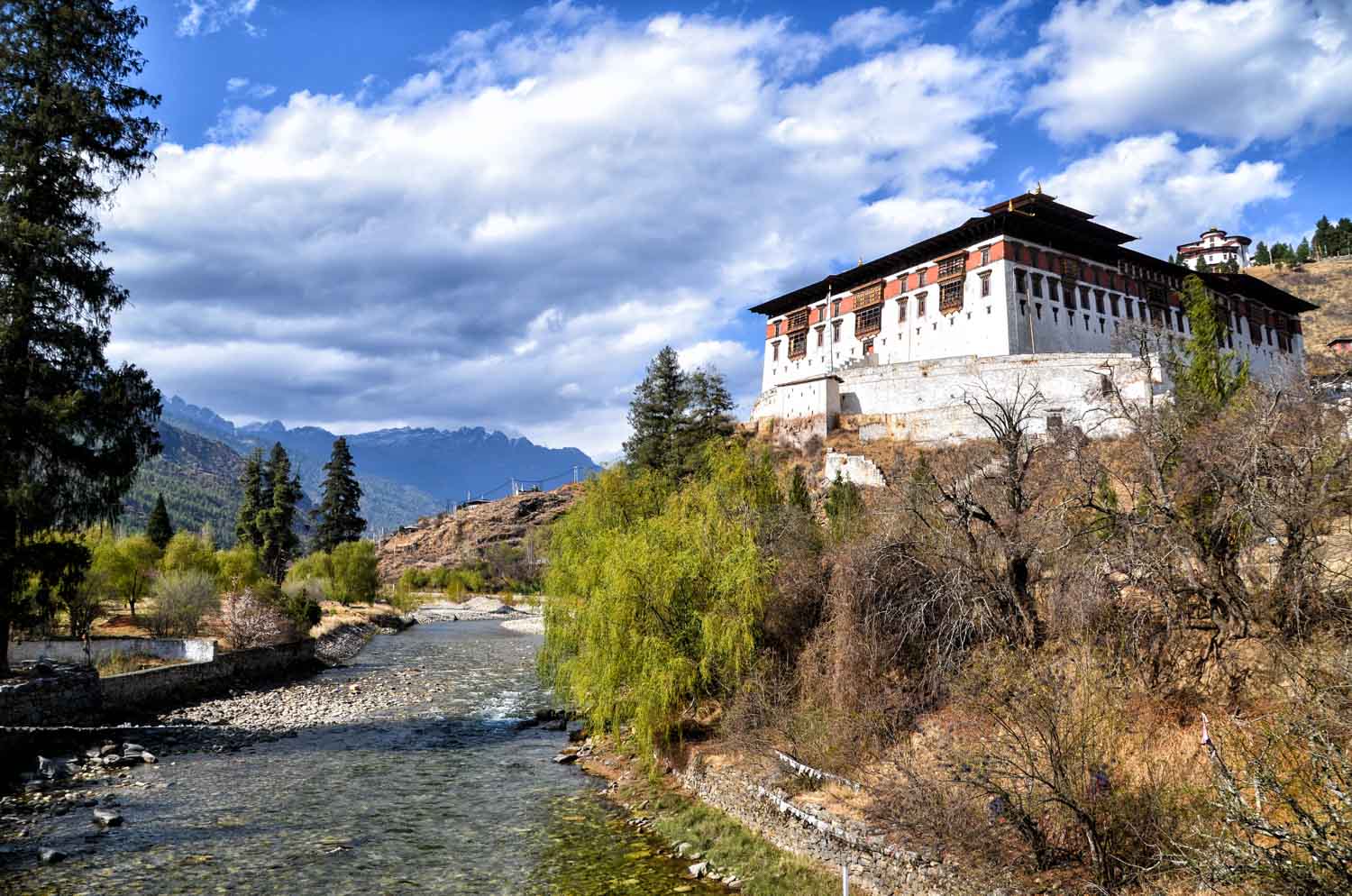




 Leya
Leya 
Du måste vara inloggad för att kunna skicka en kommentar.