Weather is an essential topic for people in Sweden. We talk about it every day. We watch the reports on any device within reach and we complain about it to anyone who might listen. So, a very interesting challenge, Cee! Click here for more weather!

Weather is an essential topic for people in Sweden. We talk about it every day. We watch the reports on any device within reach and we complain about it to anyone who might listen. So, a very interesting challenge, Cee! Click here for more weather!
As I am still in Iceland…at least in my mind – here is the frozen Gullfoss. And I assure you, it was COLD. Hang on to the tiny left corner to warm you up… For more cold things, click here and visit Cee.

As I have just been soaked in the hot pools in Iceland, I quote: ”Some Like it Hot”…
For other hot spots – click here.
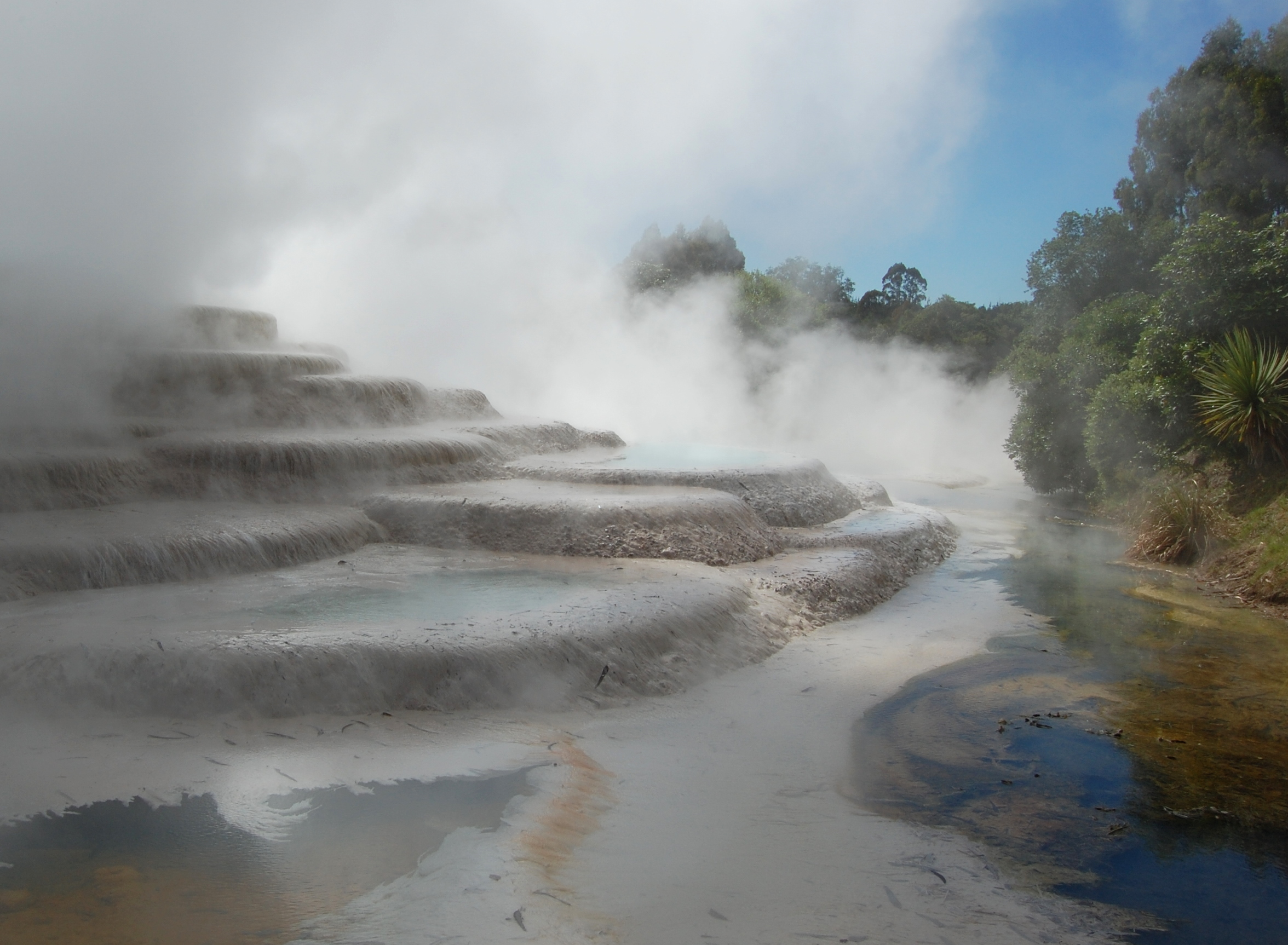
Hot pools in New Zealand and in Iceland. The difference is that you should not put your foot in the NZ pool…you might lose it.
Gullfoss (the Golden Falls) has its origin in the glacier lake Hvítávatn (the White River Lake) at Lángjökull glacier about 40km north of Gullfoss. The river Hvítá flows into a wide curved three-step ”staircase” and then abruptly plunges in two stages (11 m and 21 m) into a crevice, seemingly vanishing into the earth, 32 m down. The crevice is about 20 m wide, and 2.5 km in length, and the average amount of water running over this waterfall is 140 m³/s in the summertime and 80 m³/s in the wintertime.
Over the years, there has been much speculation about using Gullfoss to generate electricity. However, the investors’ attempts have been unsuccessful, partly due to lack of money. The waterfall now belongs to the state of Iceland,
Legend has it that Sigríður Tómasdóttir, the daughter of the former owner of the falls, Tómas Tómasson, was determined to preserve Gullfoss as it had always been, and even threatened to throw herself into the waterfall. The story of the saviour of the falls is unfortunately… not true. But beautiful it is – there is even a statue made of Sigríður, standing close to the site.
When visiting Gullfoss, one of the most popular tourist attractions in Iceland, we were in for one of the most icy cold shocks ever. The air temperature maybe 8 degrees below zero – but the strong wind made it feel like -30 something.
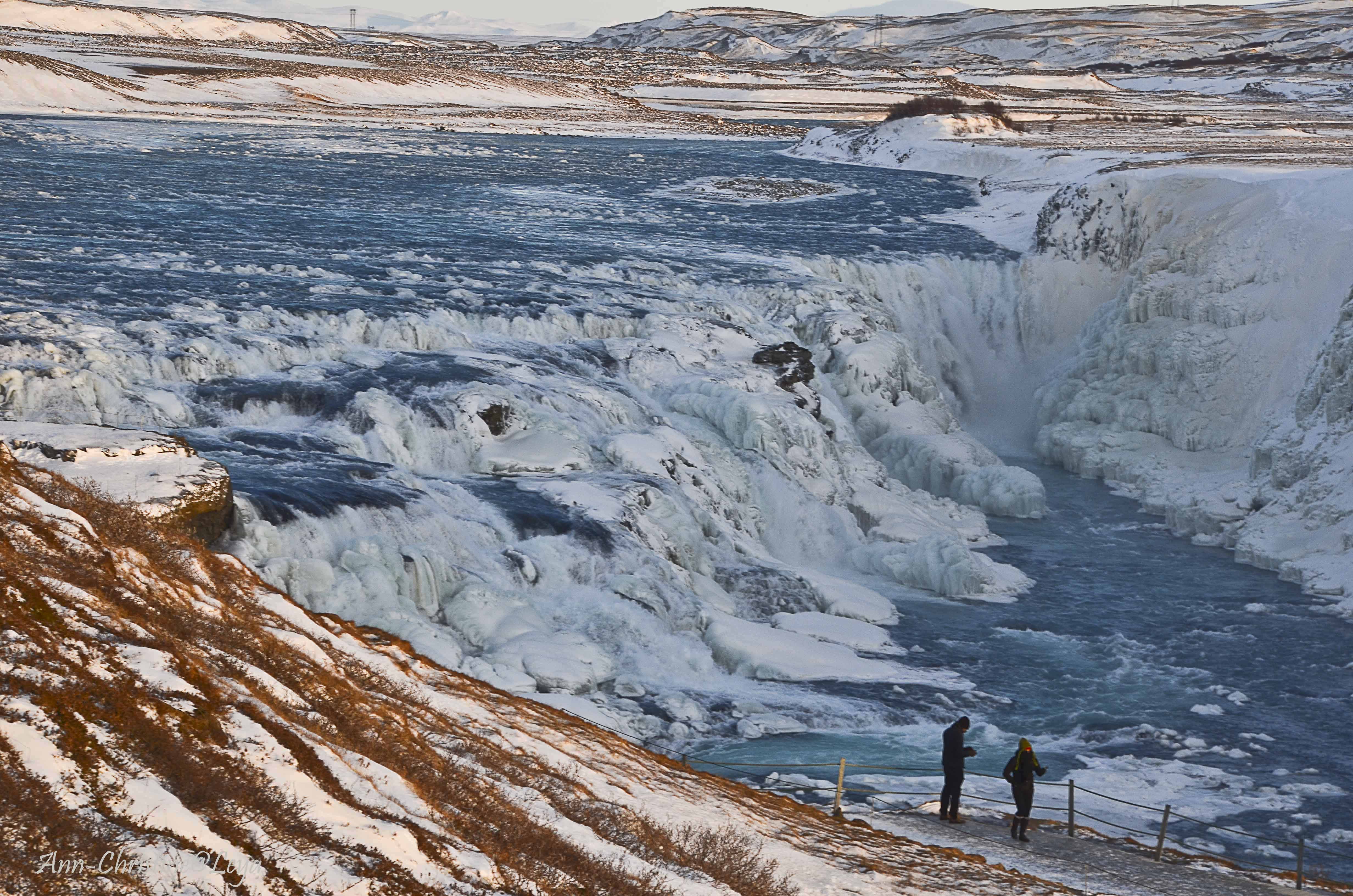
Three of us ventured out of the car, well prepared, but faces and fingers still suffered severely. Not the best circumstances for good shots – despite sun and clear sky. We ”fired” for about five minutes, then tried to reach the car without breaking any arms, legs or cameras.
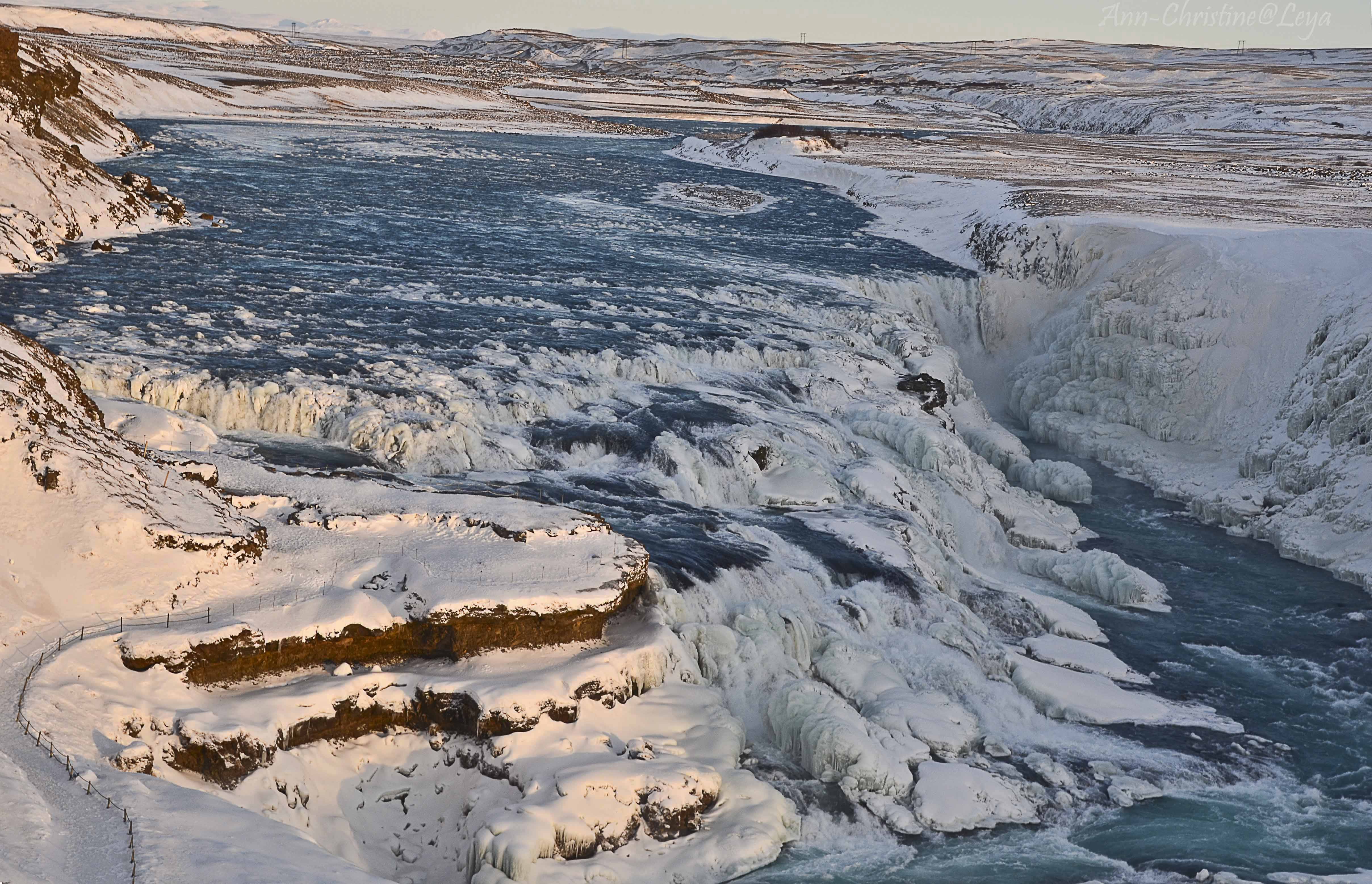
Fortunately the path to the cliffs was closed – trying to reach the ”platform” could have ended your life. During summer this spot offers a spectacular view of the falls.
But, surely you can see the golden light of the Golden Falls…even in winter?
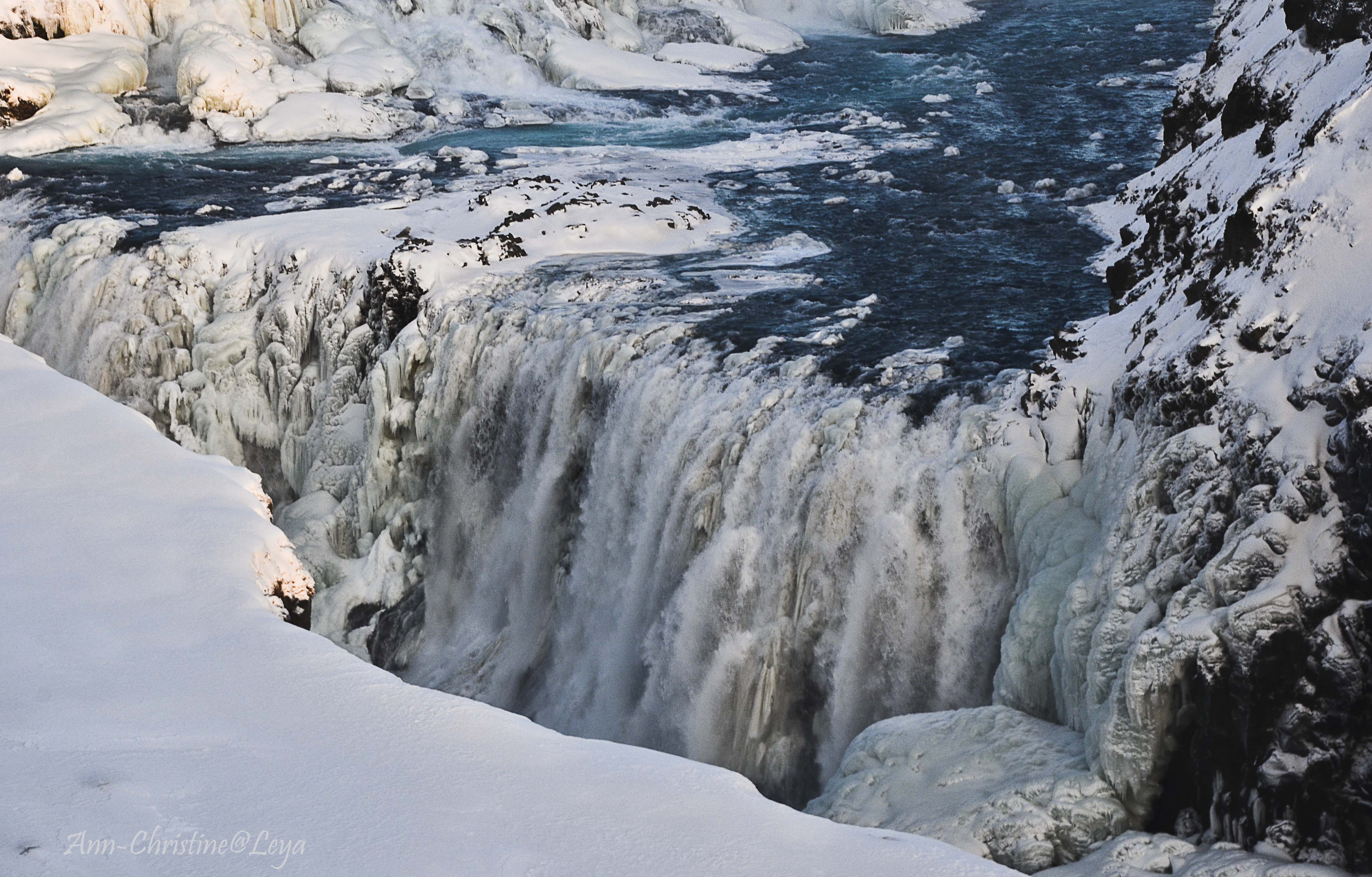
The walk to reach the rails was not successfully made by more than 10-15 people during our short stay. It was not possible to come closer for another angle of the crevice.
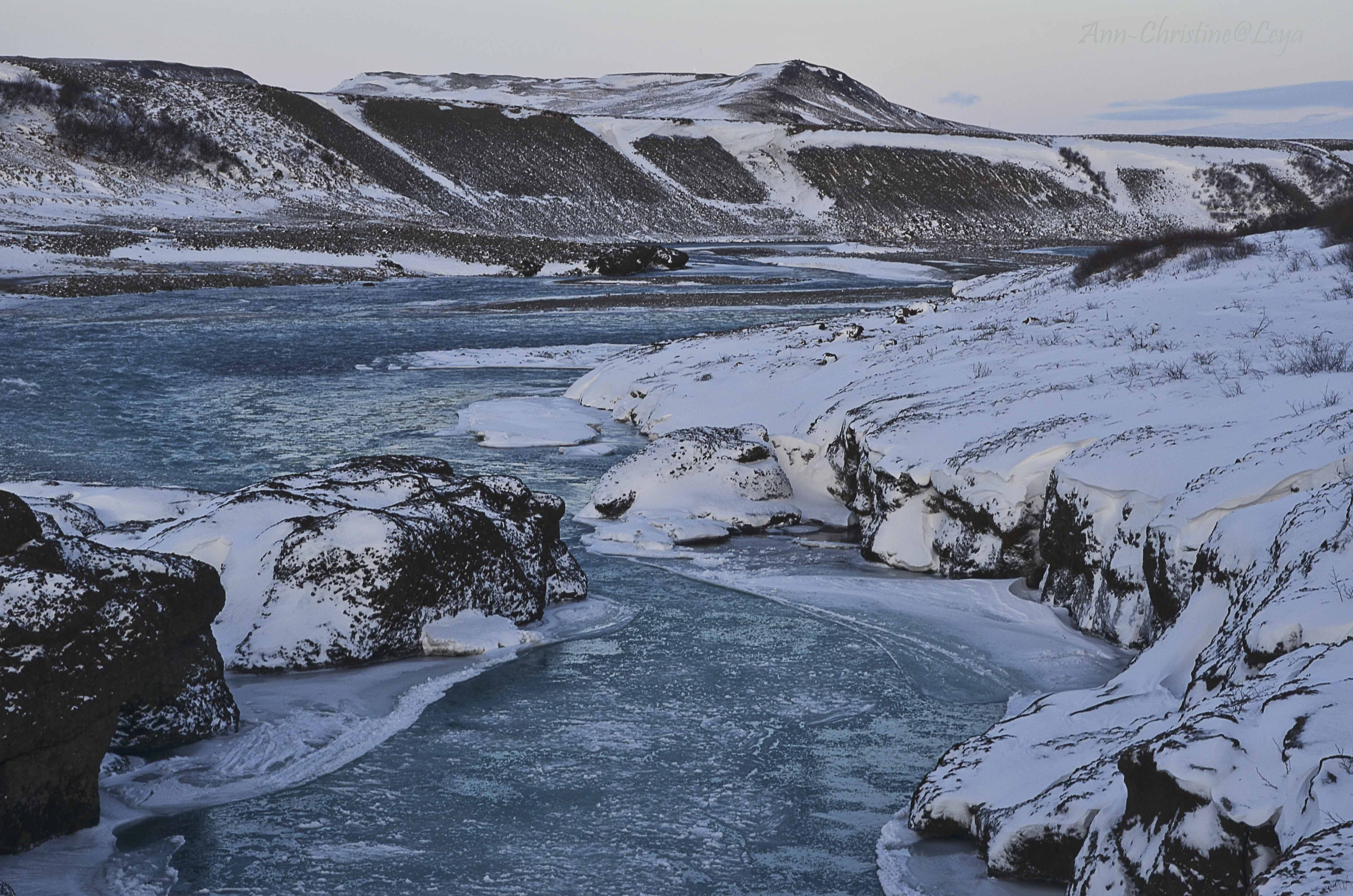
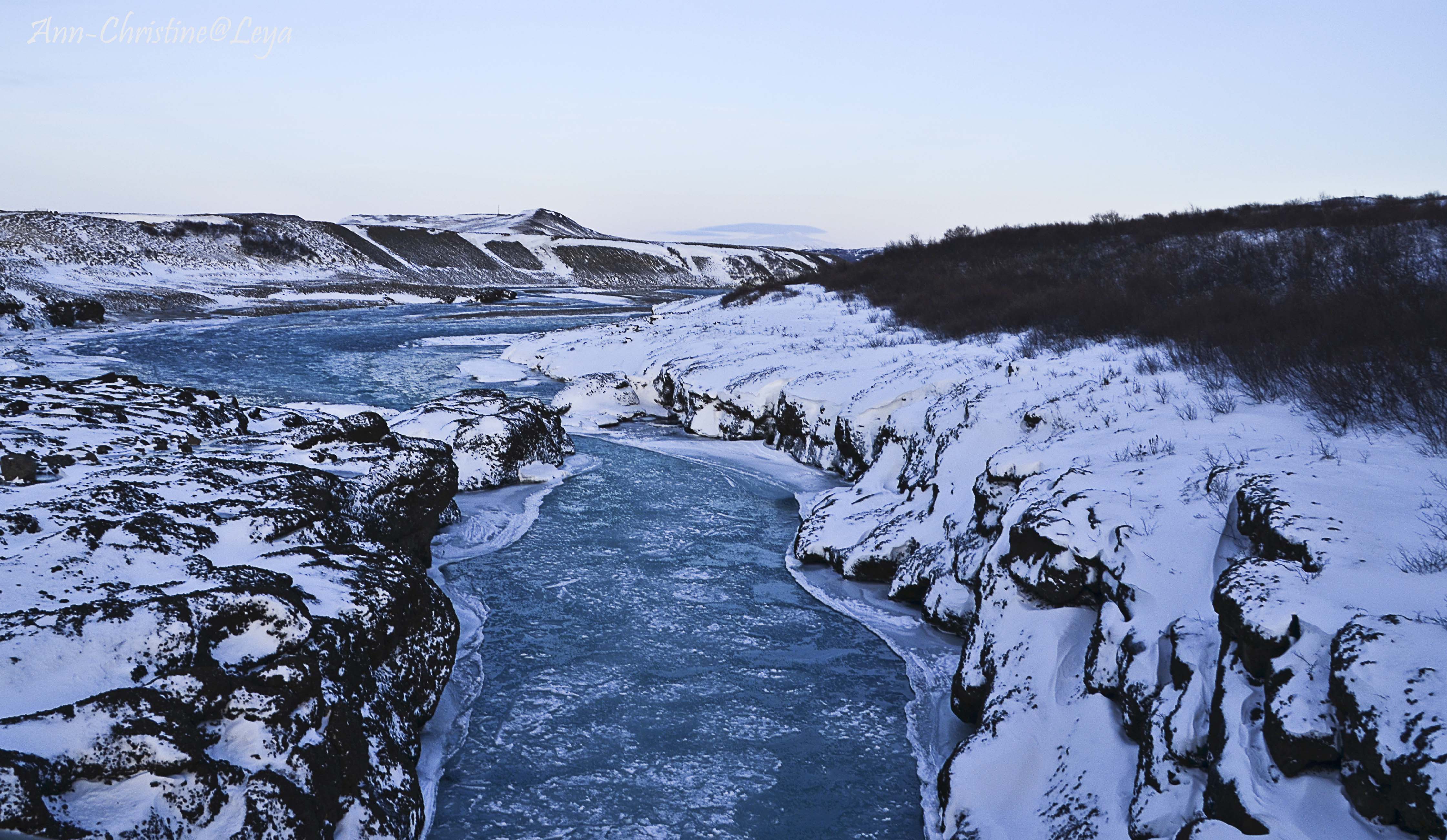
Trying to regain some body heat, we were delighted to dive into the warm car and follow the glacier river Hvitá down stream.
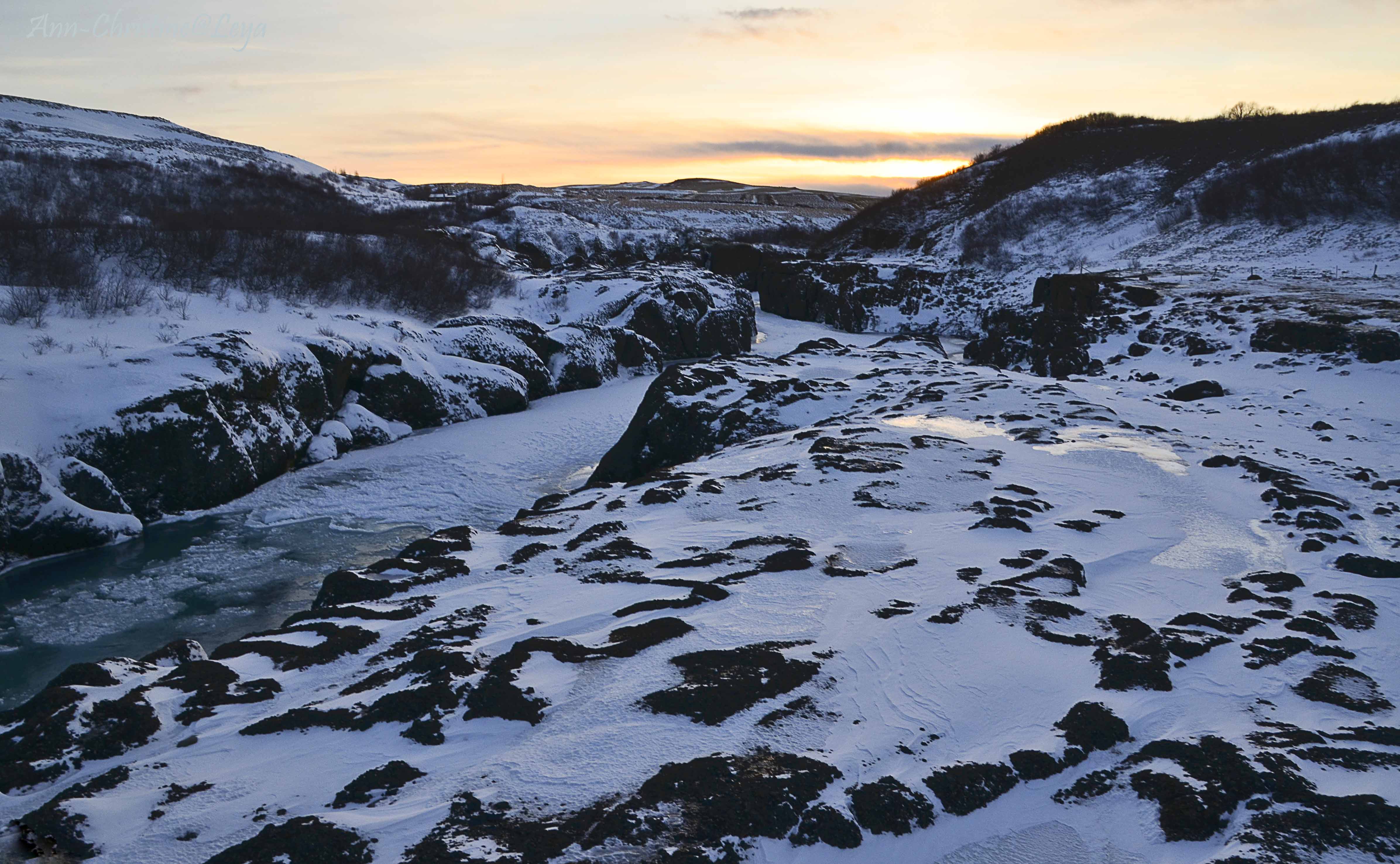
The sunset painted the surrounding landscape using mostly short sweeps of the brush…
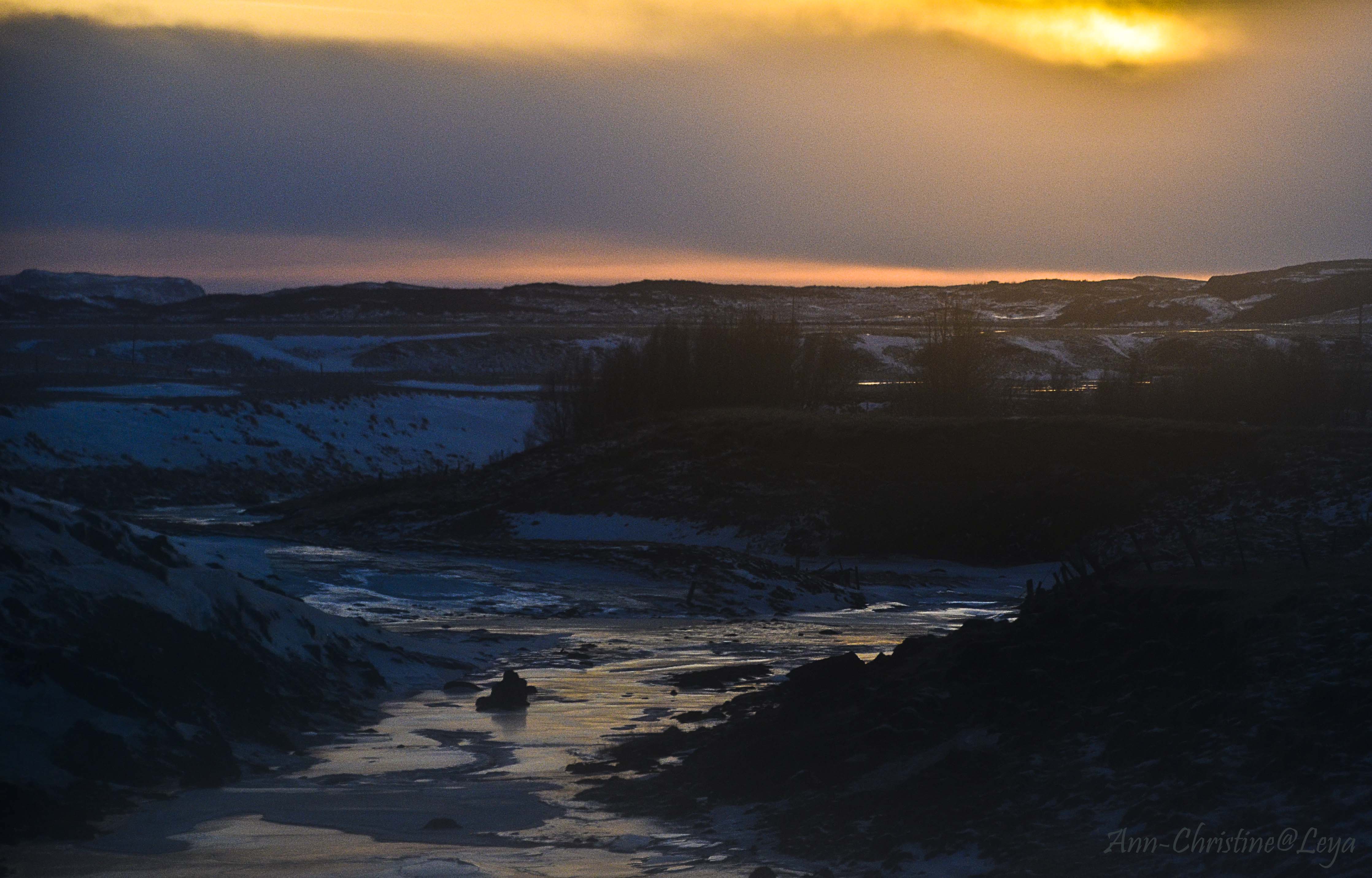
…leaving only few white light spots around the corner of the hills. Soon the Icelandic evening was upon us.
Our plan was to go to The Secret Lagoon for a hot bath – the perfect ending of any day. In fact, every day was ended off with bathing in hot pools – which is a great habit with the Icelanders. Their bathing culture is strong, and they make it clear to every visitor that they have to take off their clothes and shower thoroughly without swimsuit. This is a must before entering the pools.
Here a gallery of hot pools and earthen baked bread and hot coffee…I hope you are inspired!


Heading for the Geysir area in the cold of the morning. There is not much traffic in Iceland, and they do not sand or salt their roads.
This is post number six on Iceland, and there is one or two more to come. If you have missed out on the other ones, here are the links.
A Taste of Reykjavik, Heading for South Iceland, More South Iceland Magic, Land of Ice and Fire, Landscapes of Iceland, Thingvellir.
As usual- click the pictures to enlarge.
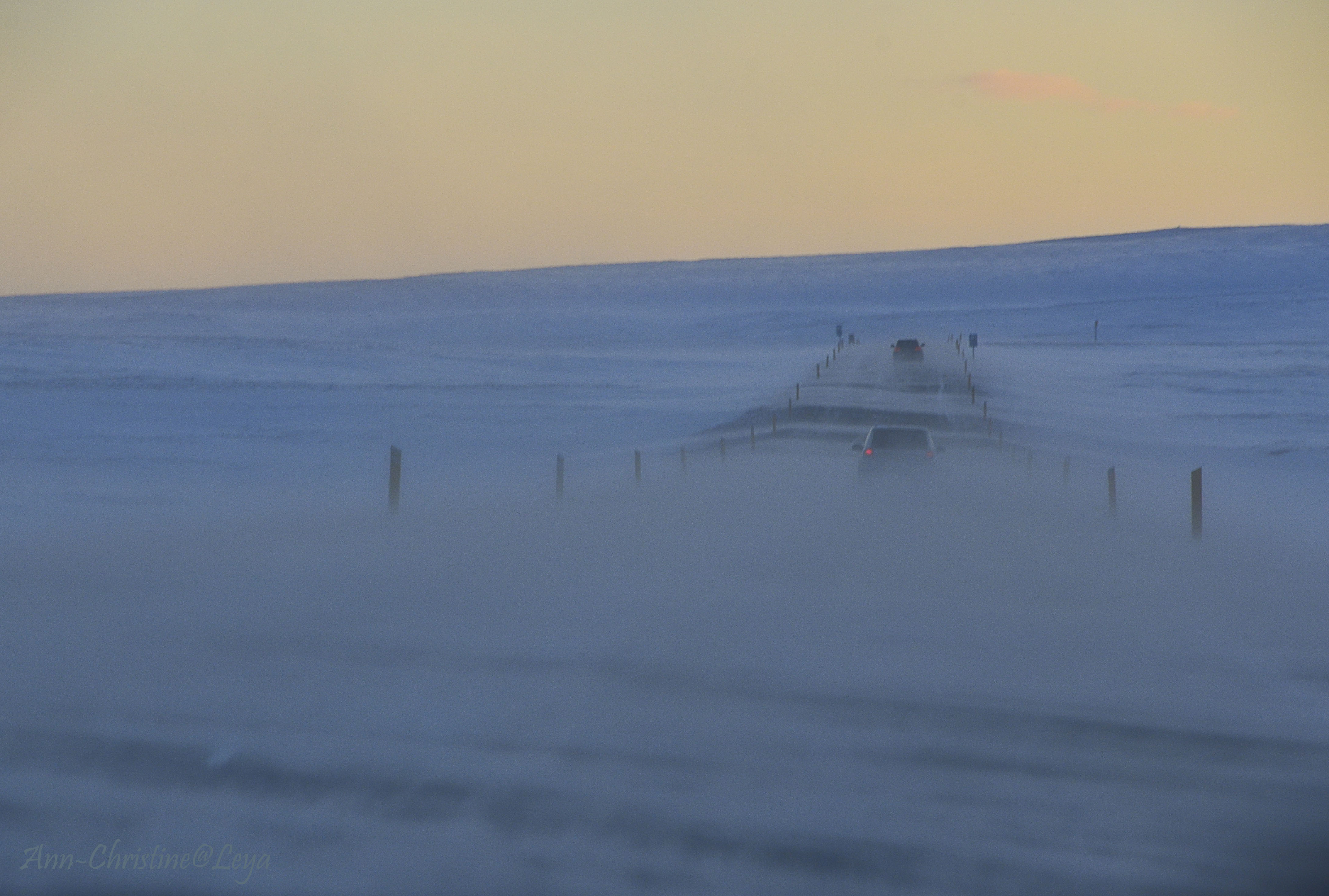
Open sky, and the coldest day so far…my hands were quite stiff from the start. Strong wind and we were told not to open more than one door at a time …
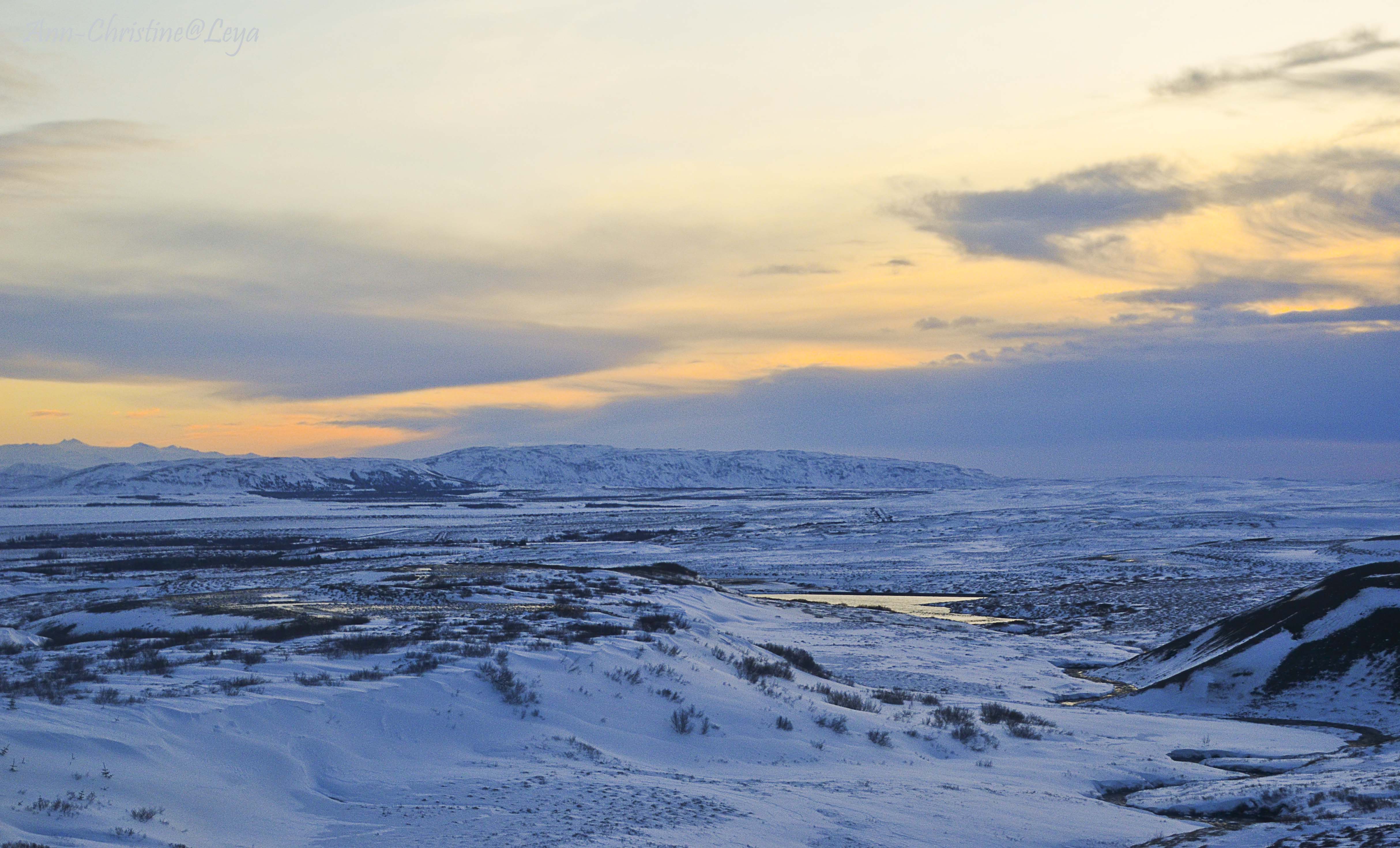
Slowly the sun opened up the landscape. – 12 degrees and no possibility to leave the car because of the icy road, the wind and the cold.
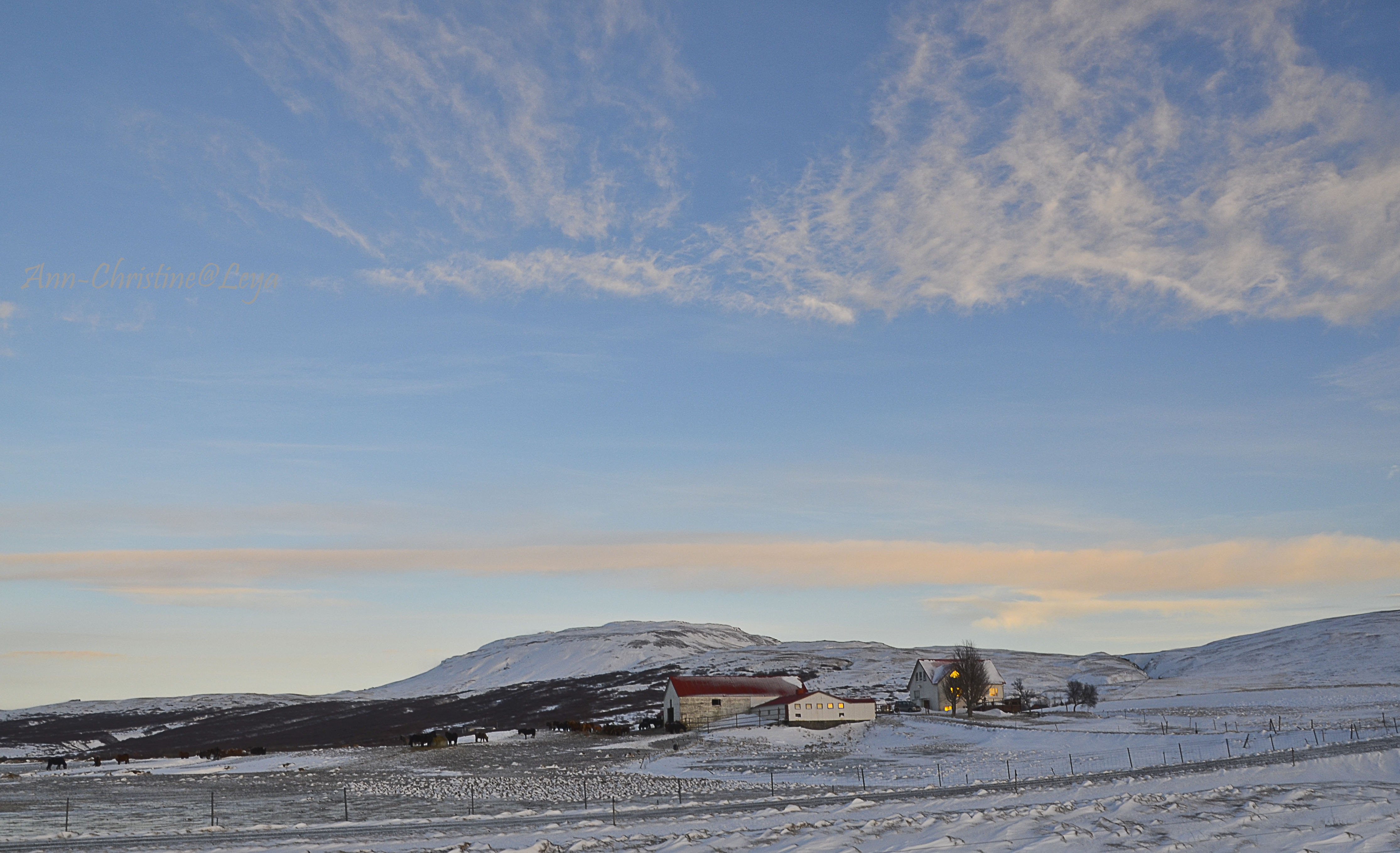
The small farmsteads all awake – the horses too.
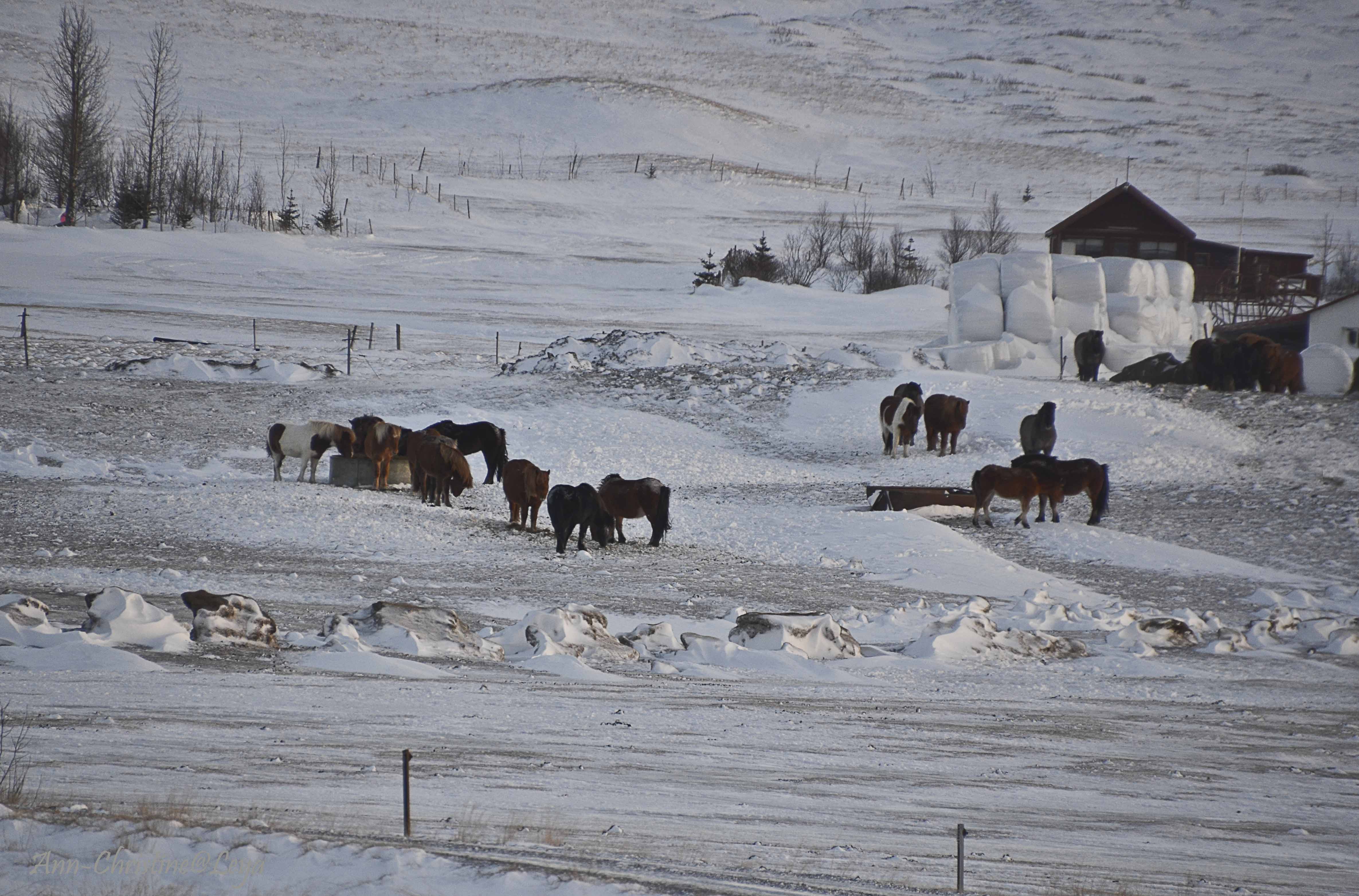
All of them a bit far from the road –
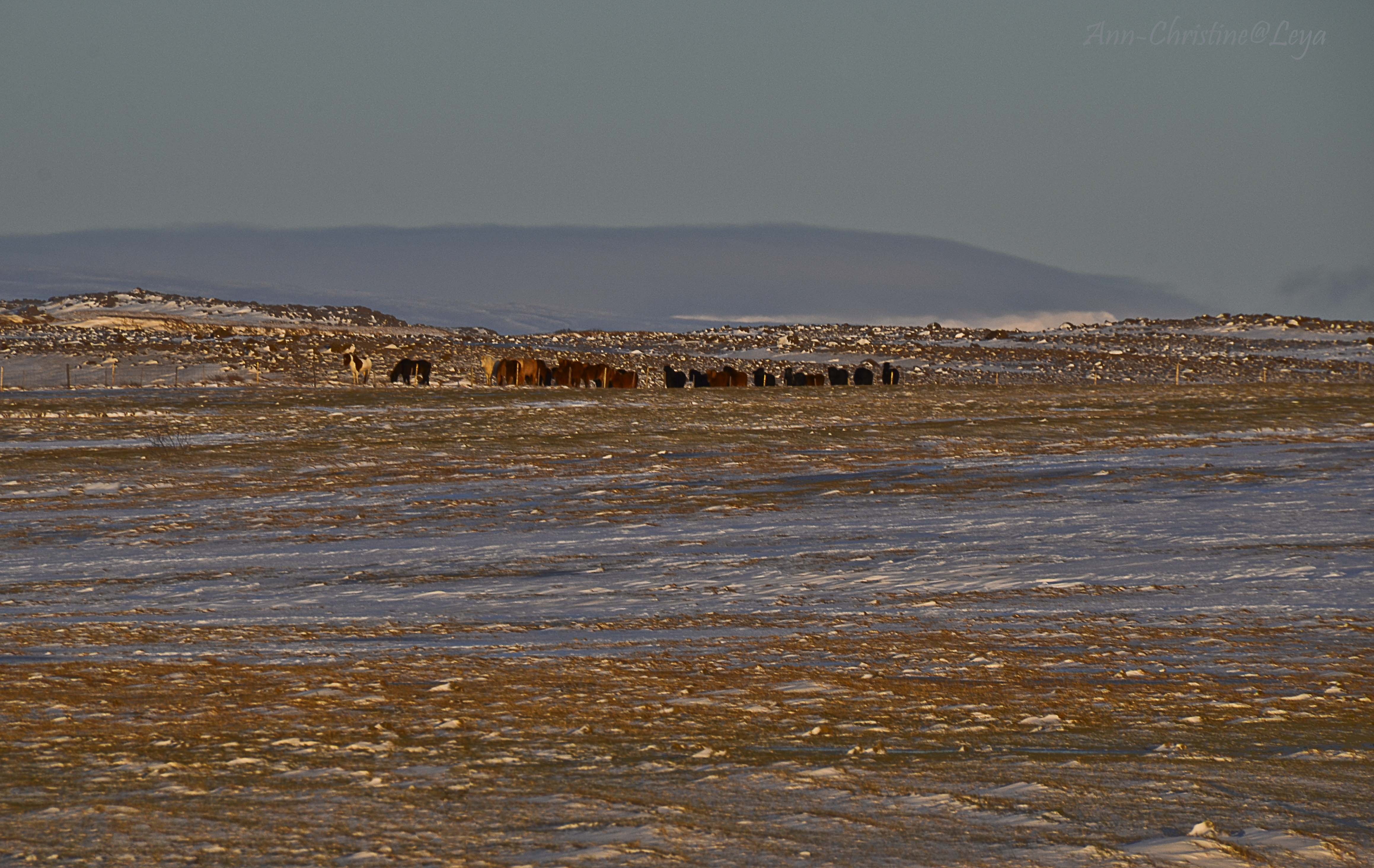
– but we waited patiently…
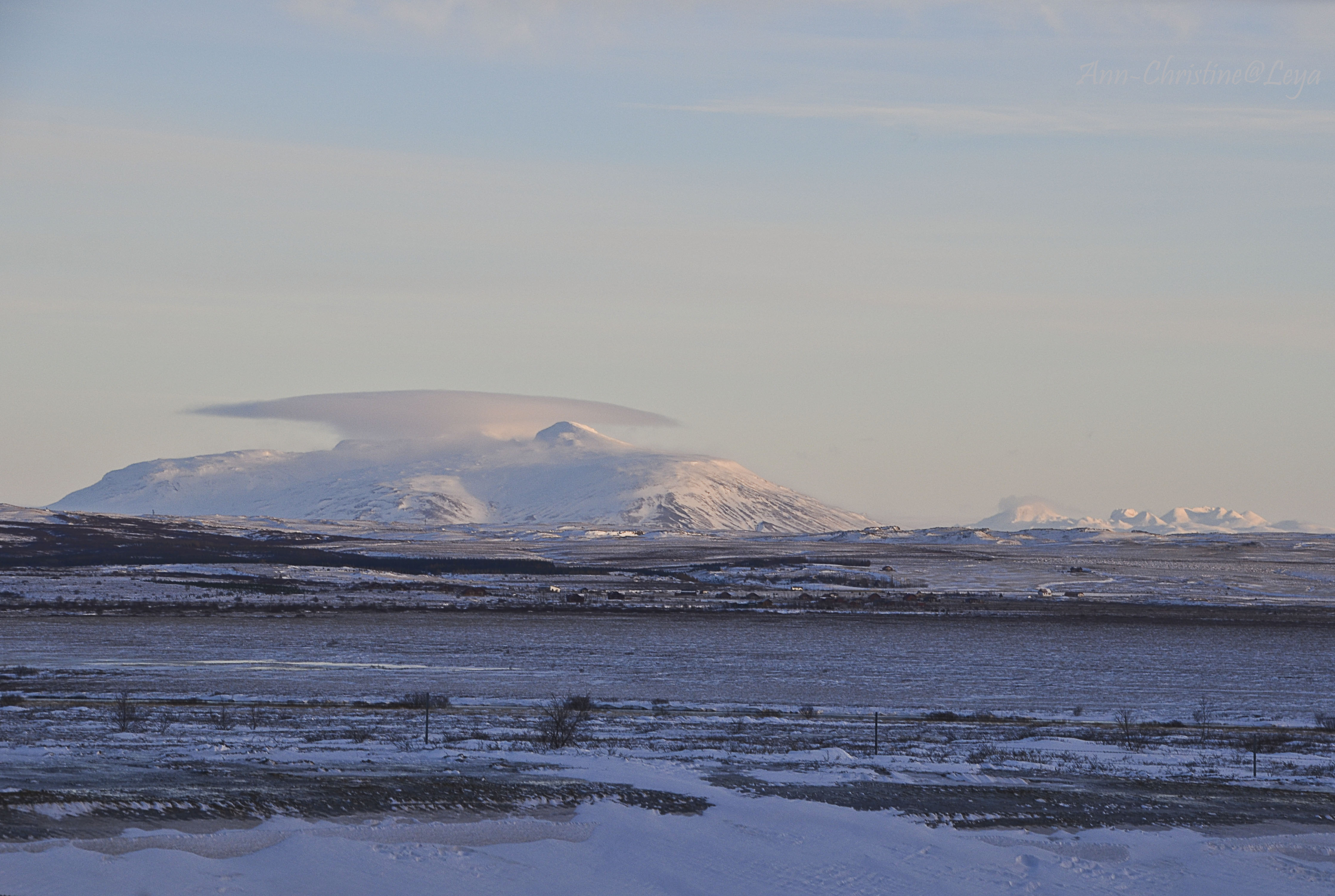 The Geysir area was not crowded with people today, so we gathered around Strokkur – that spouts every 8-10 minutes, 20-30 metres, sometimes with a double puff.
After warming up our hands and faces inside the restaurant, we talked about Geysir being the first Geysir in the world – and giving name to all existing Geysirs. He is no longer active, even if he came back to life for some months after the last volcano eruption.
Sadly enough it was impossible to walk up to Geysir this time – As you can see in the header, the ice made it nearly impossible without risking your life…
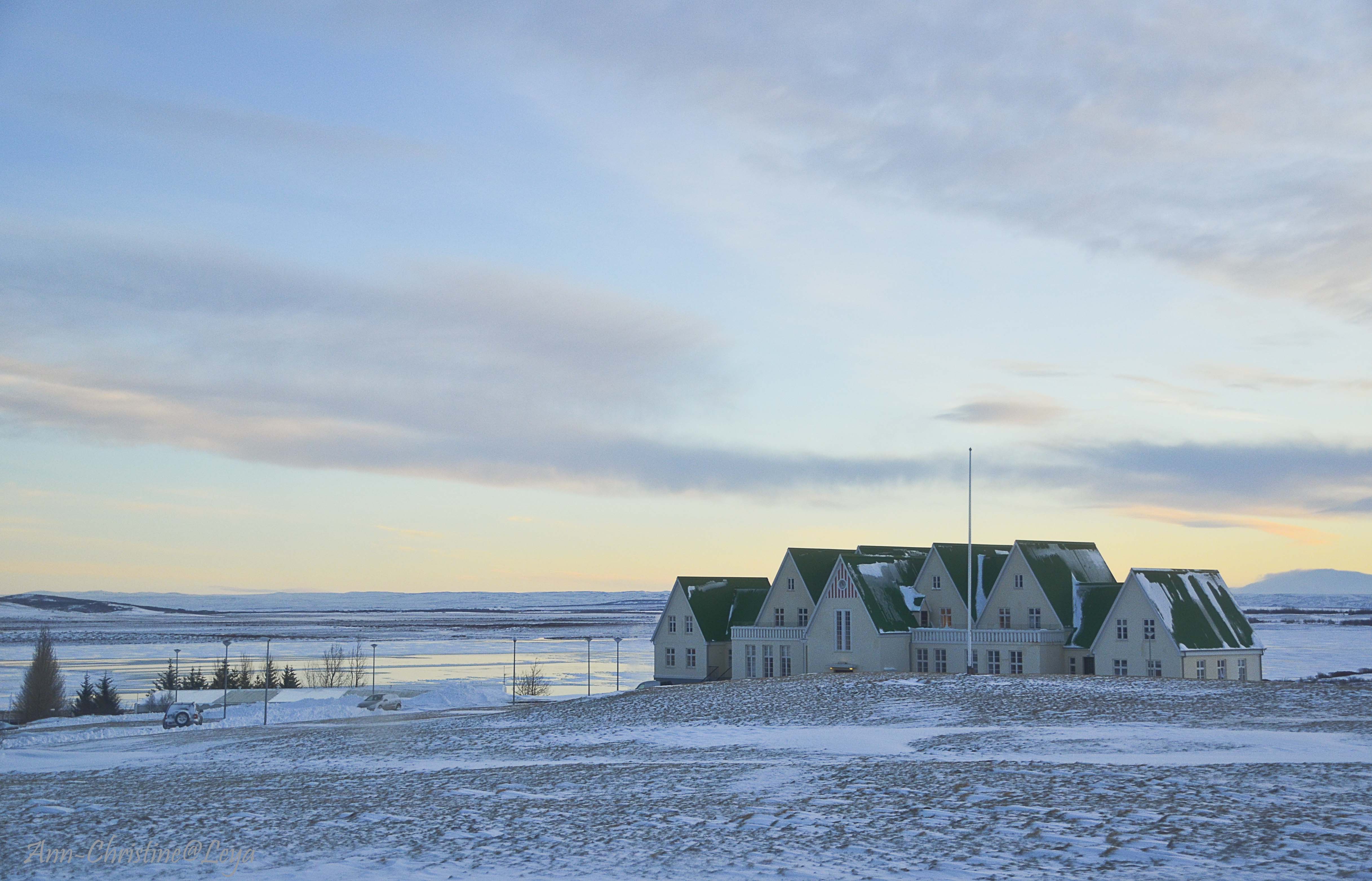
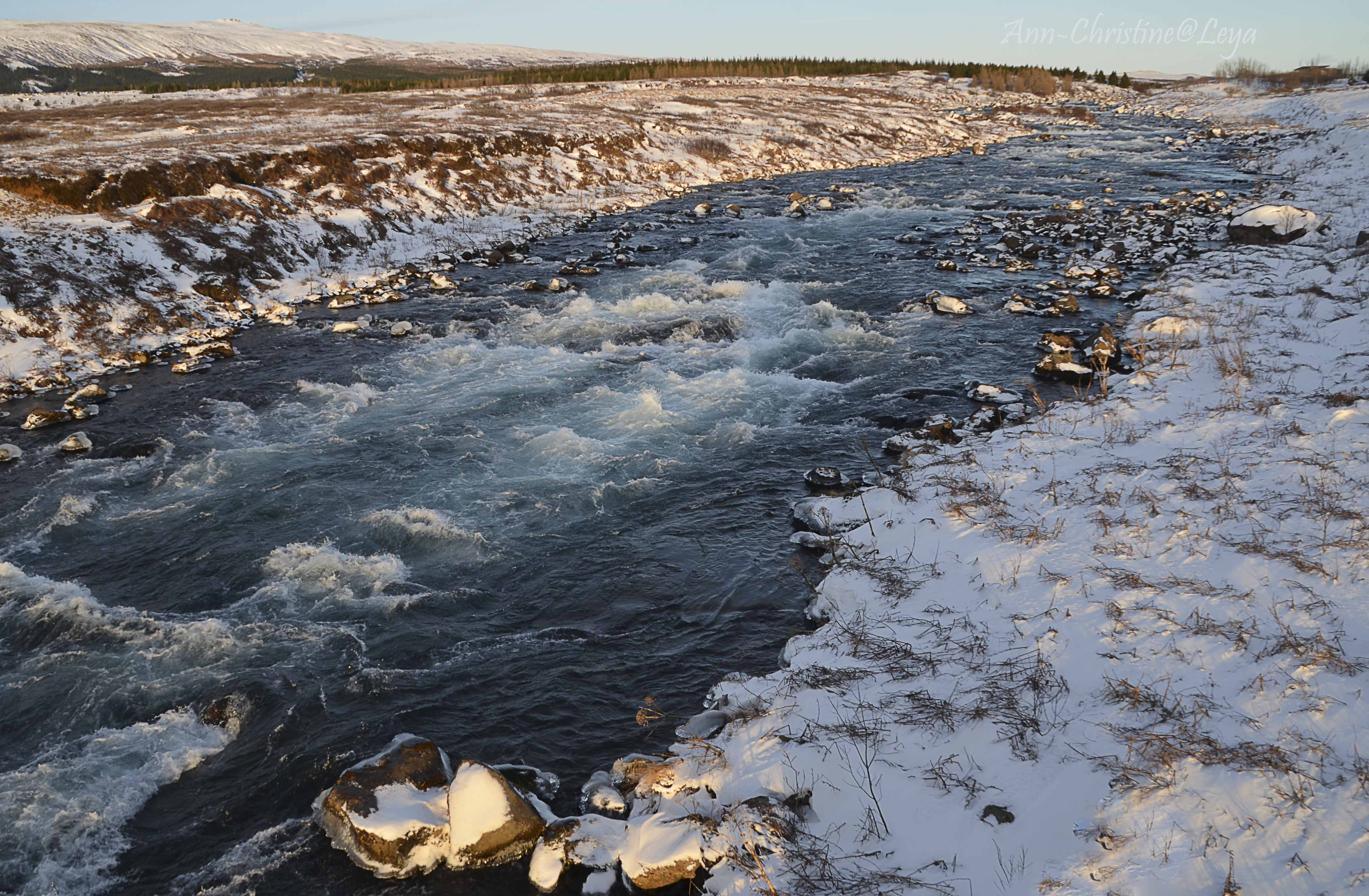
In the heated car, we headed for Gullfoss and the river Hvitá – White, in English. Many glacier rivers are named Hvitá because of their colour.
On the road we finally met Icelandic horses close-up. They were standing quite still with the tough wind coming from behind.
These horses came to Iceland with the Norse Vikings, in the 9th-10th century, and there has been no cross breeding for 1000 years. This means that there is no purer breed anywhere in the world. The Icelandic horses are small, long-lived and hardy. In their native country they have few diseases. In fact, Icelandic law prevents horses from being imported into the country and exported animals are not allowed to return.
I think you agree with me that they are also extremely beautiful!


On our way to Thingvellir this cold and beautiful morning.
Þingvellir is a site of historical, cultural, and geological importance. It lies in a rift valley that marks the crest of the Mid-Atlantic Ridge, at the northern end of Þingvallavatn, the largest natural lake in Iceland.
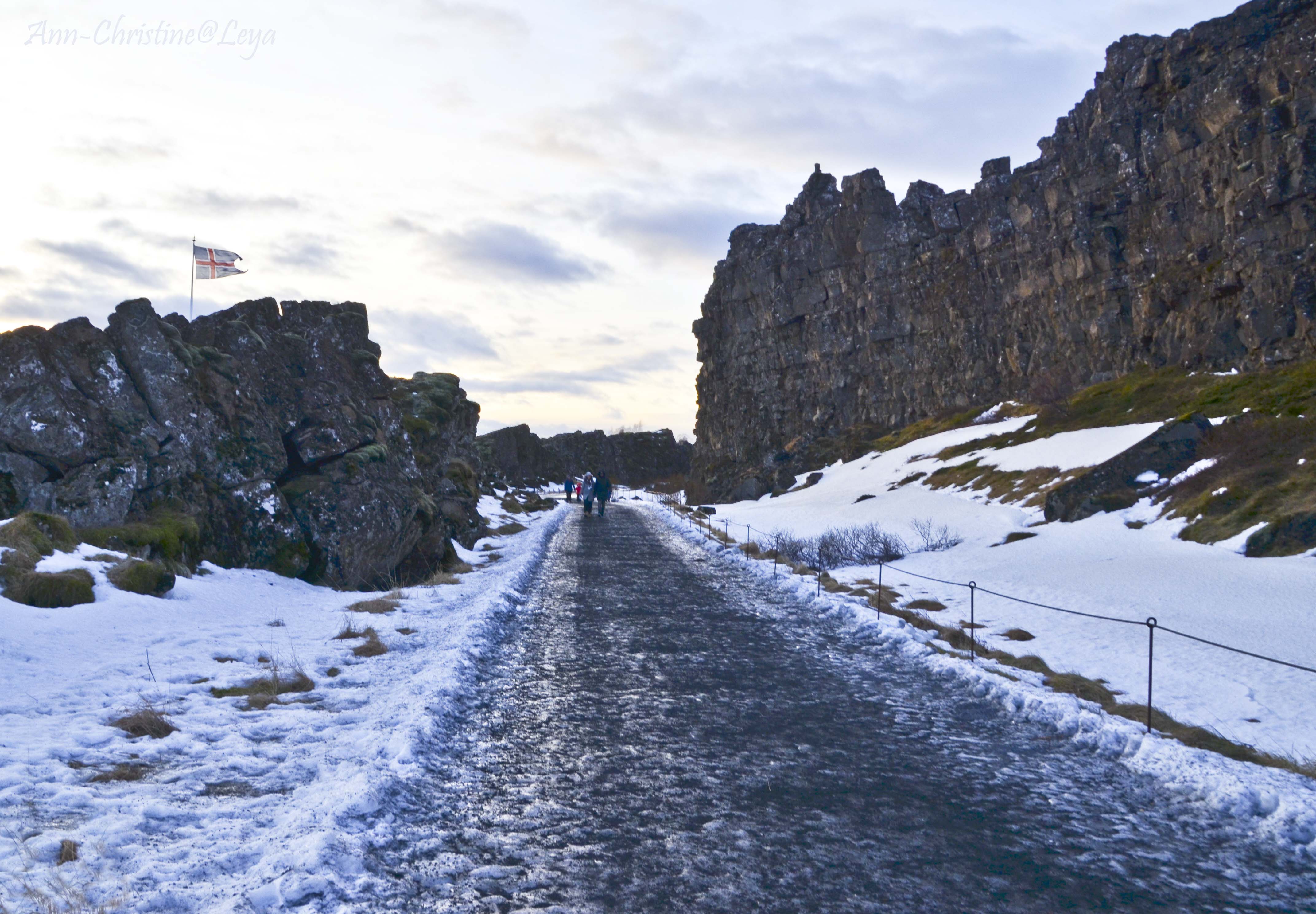
AlÞingi, the Icelandic Parliament, was established at Þingvellir in 930, and remained there until 1798. The National Park was founded in 1930, marking the 1.000th anniversary of the Althing, and became a UNESCO World Heritage Site in 2004.
The continental drift between the North American and Eurasian Plates can be clearly seen in the cracks faults which traverse the region, the largest one, Almannagjá, being a veritable canyon. This also often causes the earthquakes in the area.

According to the Book of Settlements, the settlement of Iceland began in AD 874 when the Norwegian chieftain Ingólfur Arnarson became the first permanent settler on the island. Over the next centuries, people of Norse and Celtic origin settled in Iceland, and as the population grew there was a need for a general assembly.

The foundation of the Icelandic parliament is said to be the founding of the nation of Iceland, and the first parliamentary proceedings in the summer of 930 laid the ground for a common cultural heritage and national identity. Þingvellir plays a central role in the history of the country.

Þingvellir was the centre of Icelandic culture. Every year during the Commonwealth period, people would flock to Þingvellir from all over the country, sometimes numbering in the thousands. They set up dwellings with walls of turf and rock and temporary roofing and stayed in them for the two weeks of the assembly.
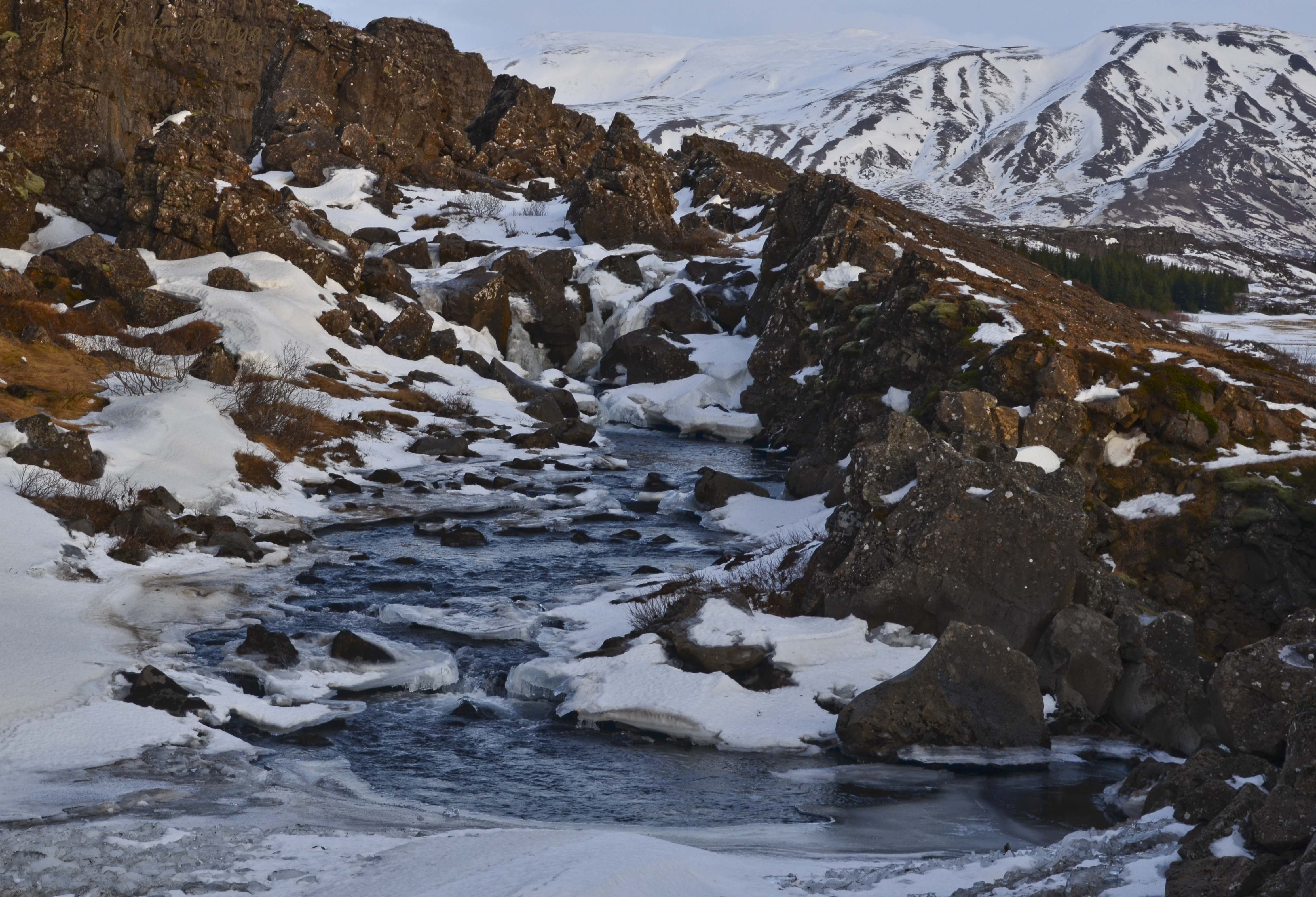
The Drowning Pool for potential witches
Although the duties of the assembly were the main reason for going there, ordinary people gathered at Þingvellir for a wide variety of reasons. There were merchants, sword-sharpeners, tanners and entertainers – and ale-makers brewed ale to them all. News was told from distant parts; games and feasts were held. Itinerant farmhands looked for work and vagrants begged.
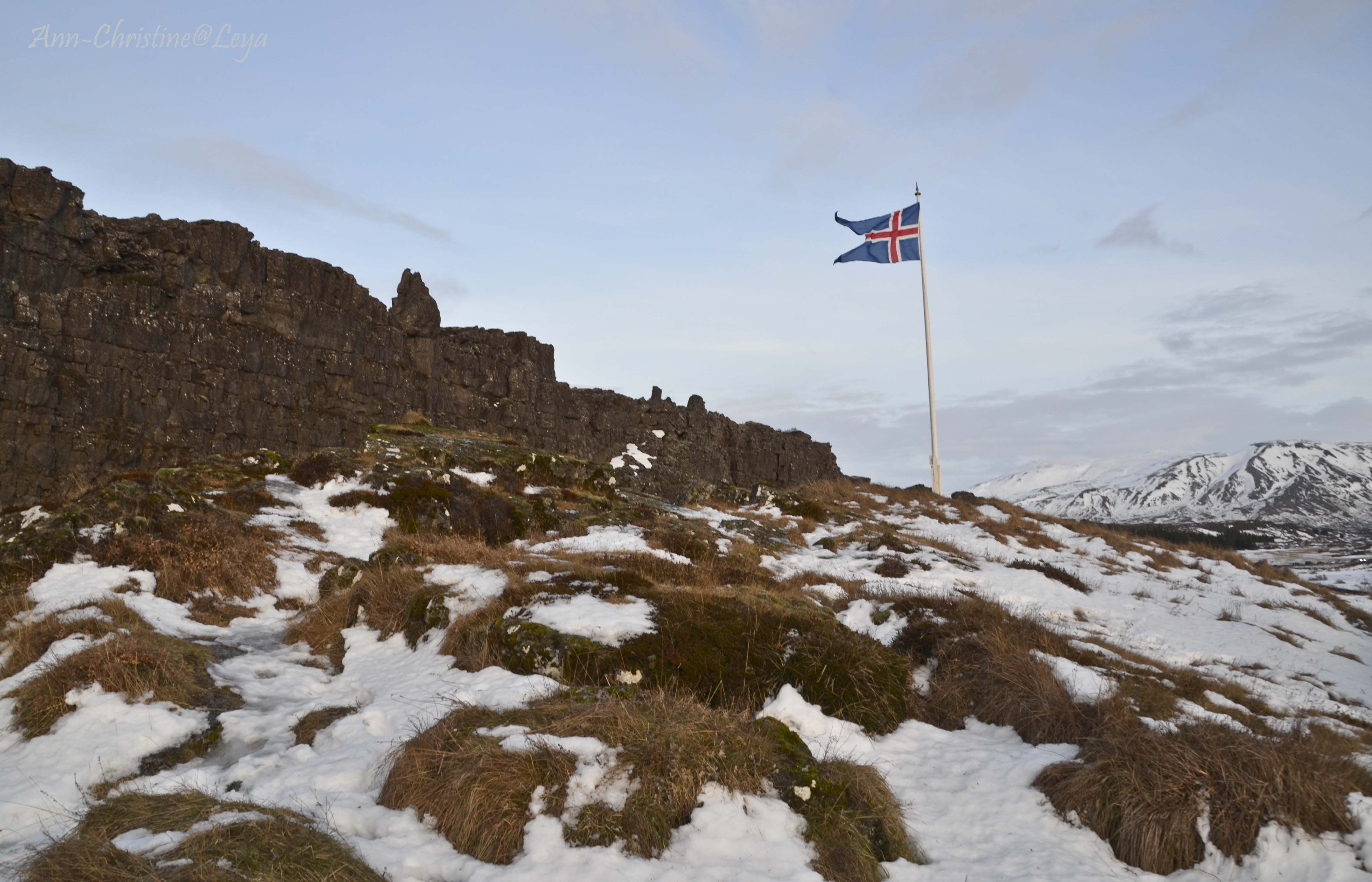
A flagpole on Law Rock marks the place where the law was recited from.
Þingvellir was a meeting place for everyone in Iceland, laying the foundation for the language and the famous literature – the Eddas and the Sagas.

A Law Rock of ones own?
In fact, still today, young people can read the old texts from the 12th century – not many languages have lasted that much unchanged. This is possible due to the conservative – and innovative and creative – use of the old words, combined with less borrowed words than any other language. As an example: vegabréf is a combination of veg (road) and bréf (letter) = passport!
The landscape around Thingvellir – magnificAent.
On leaving Vik, the landscape slowly turned into even darker earth colours. A last glimpse of the church half way up in the mountains.
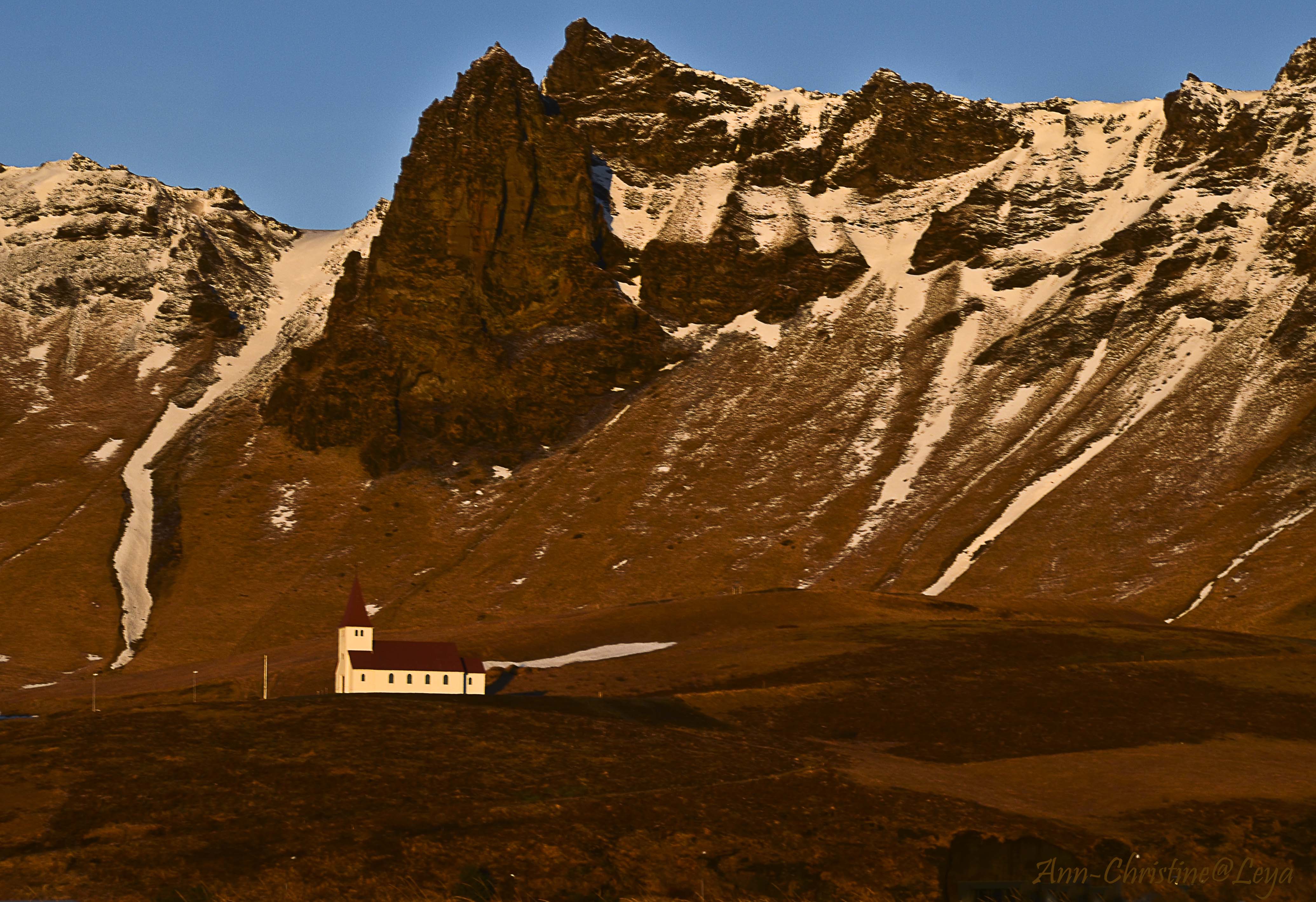
Just around the mountain ridge, the landscape opened up to the sea again.
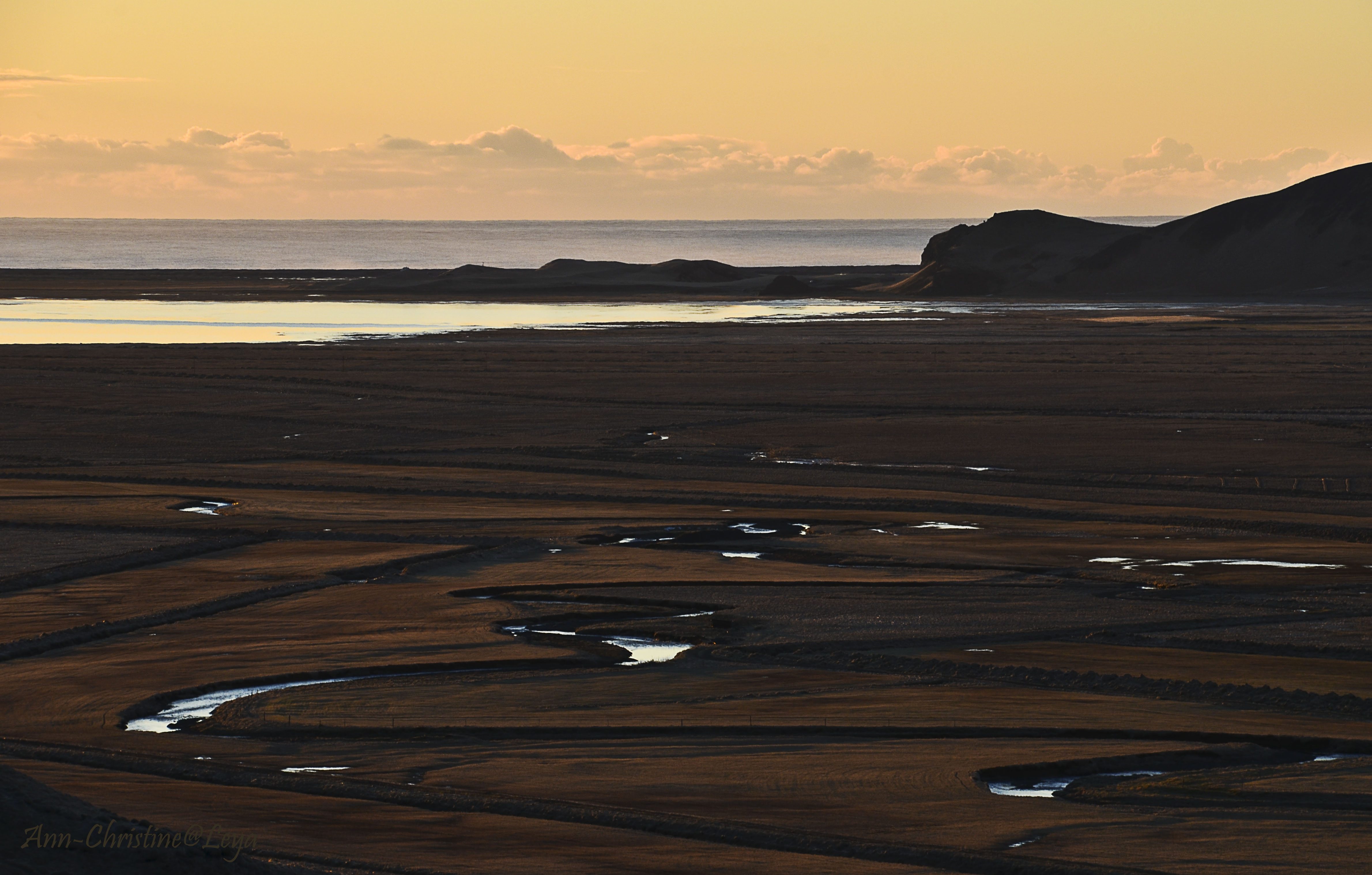
A glacier river graced the crossroads. Mýrdalsjökull in low light.

Arriving at Seljalandsfoss, Vestmannaeyar just sat in my lens…again.
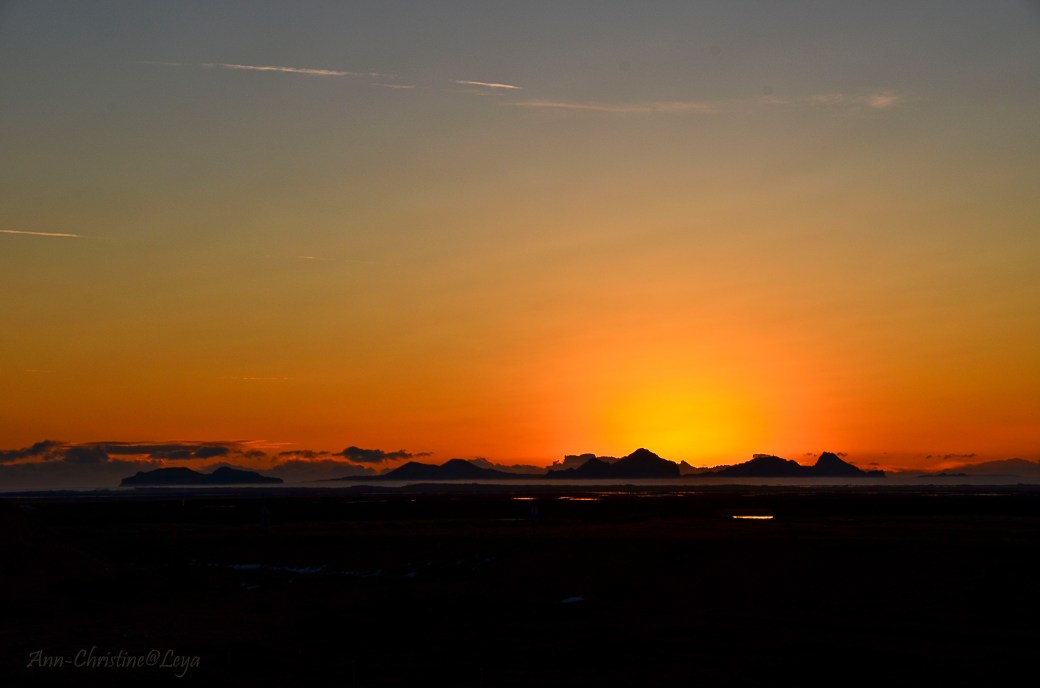
The sun setting over the faraway islands, almost made me forget the Bride’s veil, Seljalandsfoss, waiting for us on the mountain.
Fire on the left hand side – and ice on the other..
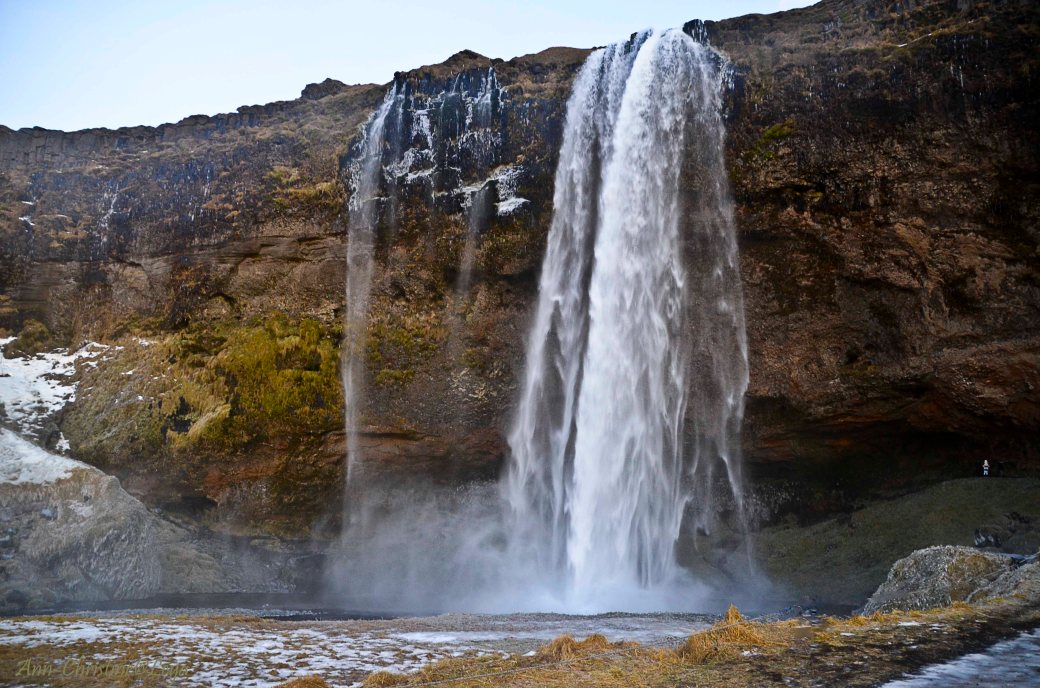
I do not understand how someone could have managed to get behind the falls this day – the icy path made us stay away from trying…But, as you can see, someone did.
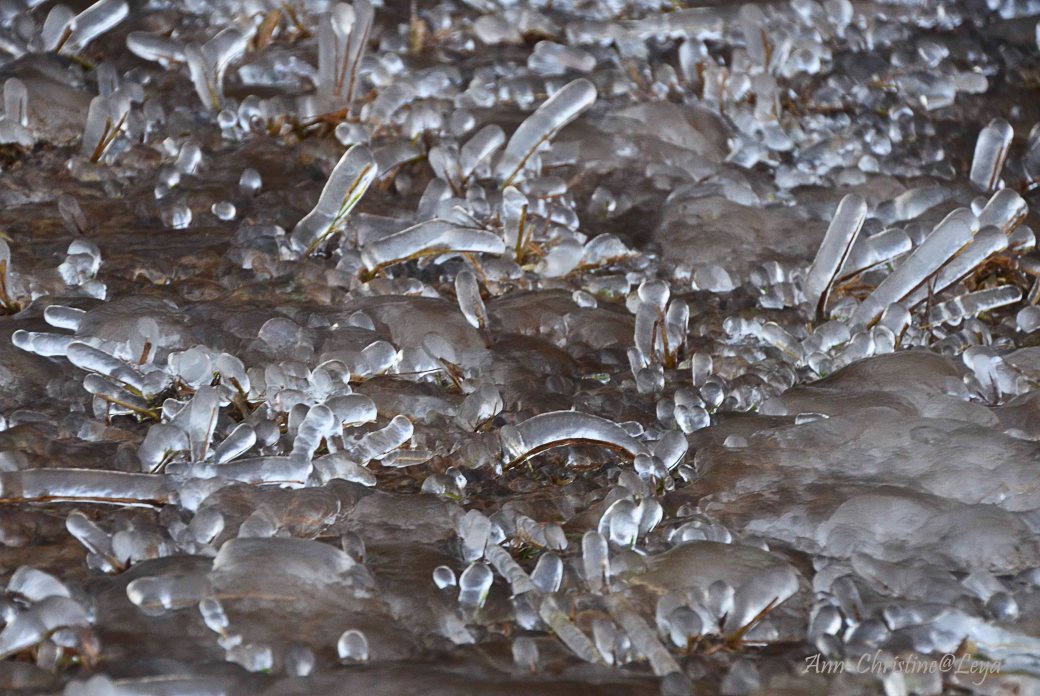
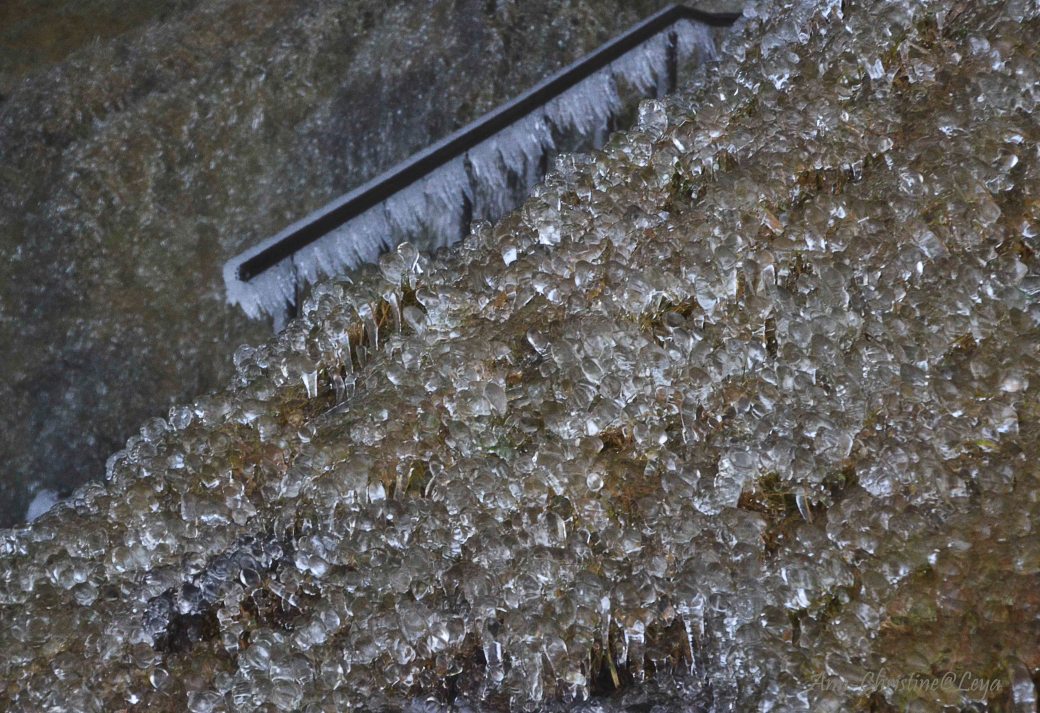
I wonder what sort of shoes you must wear to manage this! Where is the path? This is the rail to the steps…
Windows capturing the last of the setting sun over Vestmannaeyar.
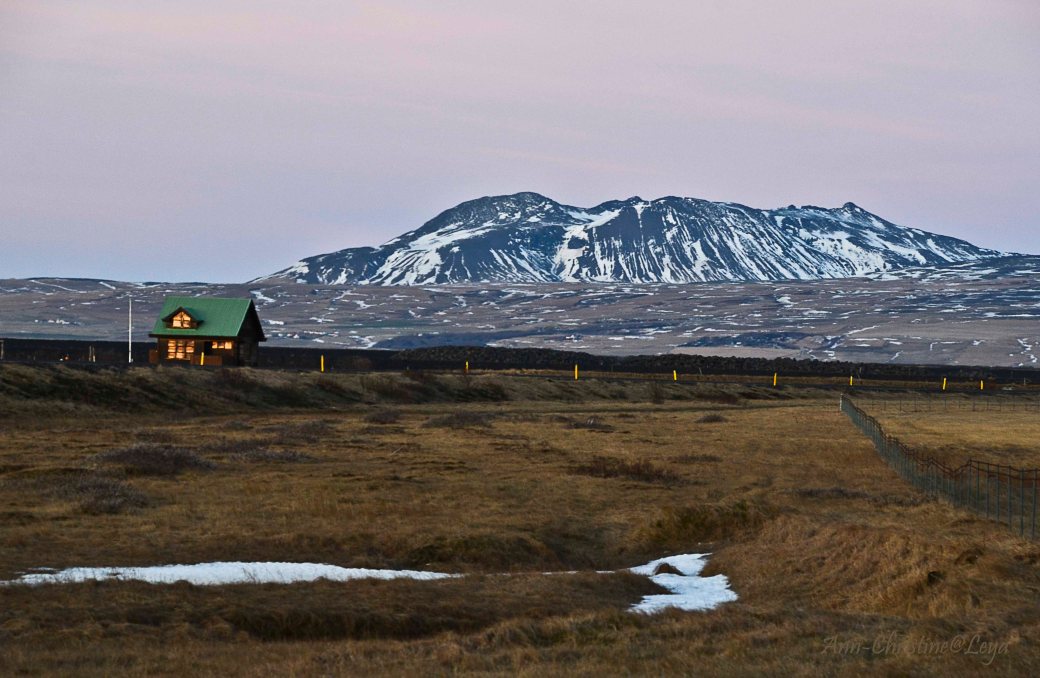
We slowly returned to Reykjavik, silent and very satisfied with this glorious day.
Silhouettes, Icelandic sun and sky – for Cee and the letter S.

The challenge this week at Sylvain Landry, is Snow. Just returned from Iceland, naturally my entry will be some sturdy, Icelandic horses. 15 degrees below zero – they stand close together against the strong wind, awaiting the night fall.

 Leya
Leya 
Du måste vara inloggad för att kunna skicka en kommentar.