Plovdiv is the second largest city in Bulgaria, with a population of about 342 000 inhabitants. Plovdiv has evidence of habitation since the 6th millennium BC, and is said to be one of the oldest cities in Europe.
The city of Plovdiv has a long history – and almost as many names as rulers – best known for Philippopolis, ”Philip’s Town”, as Philip II of Macedon conquered it in the 4th century BC and gave his name to it. The city was originally a Thracian settlement, later being invaded by Persians, Greeks, Celts, Romans, Goths, Huns, Bulgarians, Slav-Vikings, Crusaders and Turks. On 4 January 1878, Plovdiv was liberated from Ottoman rule by the Russian army. It remained within the borders of Bulgaria until July of the same year, when it became the capital of the autonomous Ottoman region of Eastern Rumelia. In 1885, Plovdiv and Eastern Rumelia joined Bulgaria.
Having read this…and more – we just had to go there. What would a city like this look like? So many conquerors and rulers, so many different ideas, art and architecture.
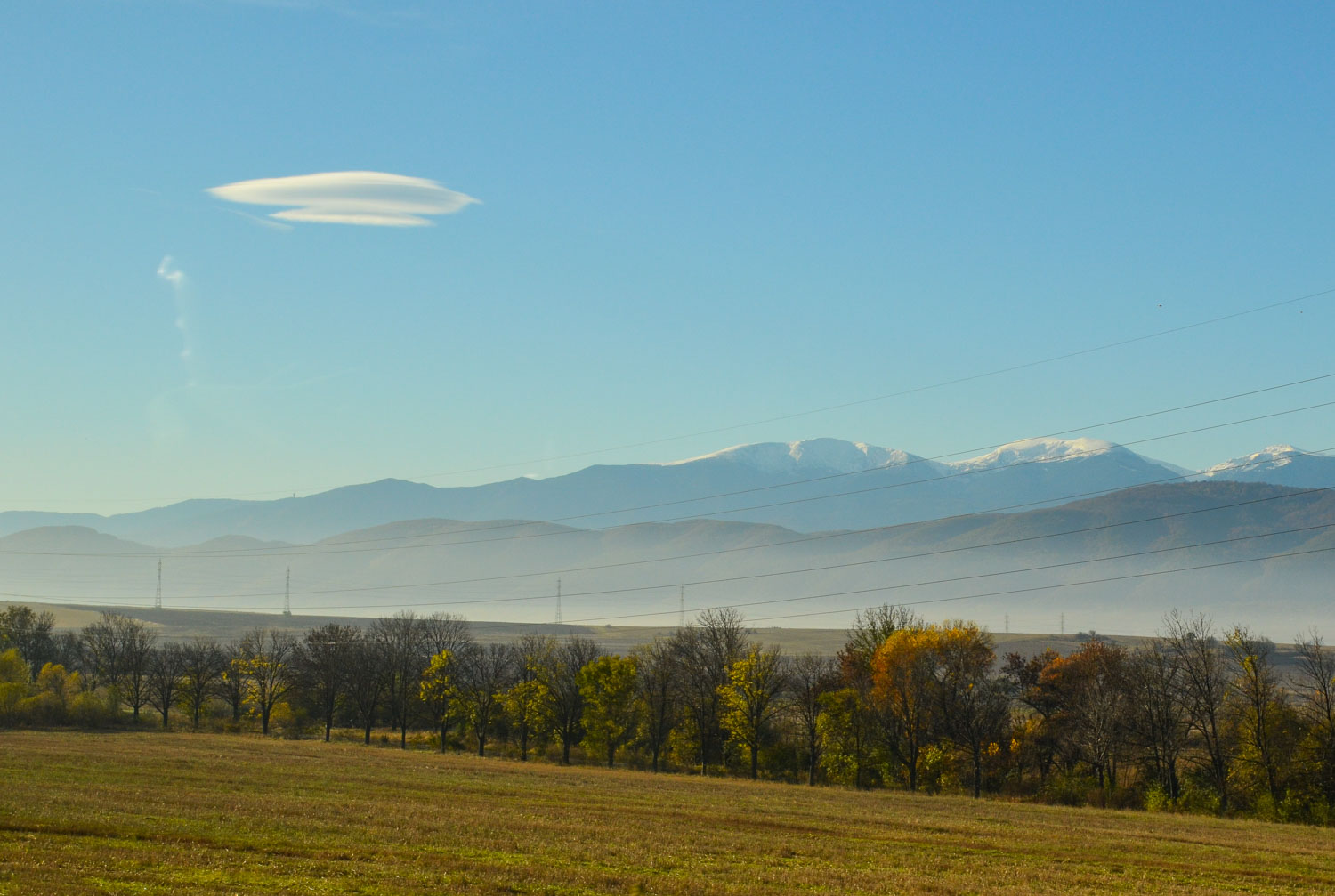
So, contemplating this on the bus, the beauty of the landscape and the snow capped mountains kept our eyes open.

The old town in Plovdiv is located on three of Plovdiv’s (originally seven) hills: Nebet Tepe, Dzhambaz Tepe and Taksim Tepe. Today there are only six hills left, because the seventh one was taken down to become cobble stones for the streets. The old town in Plovdiv is included in UNESCO World Heritage tentative list since 2004.
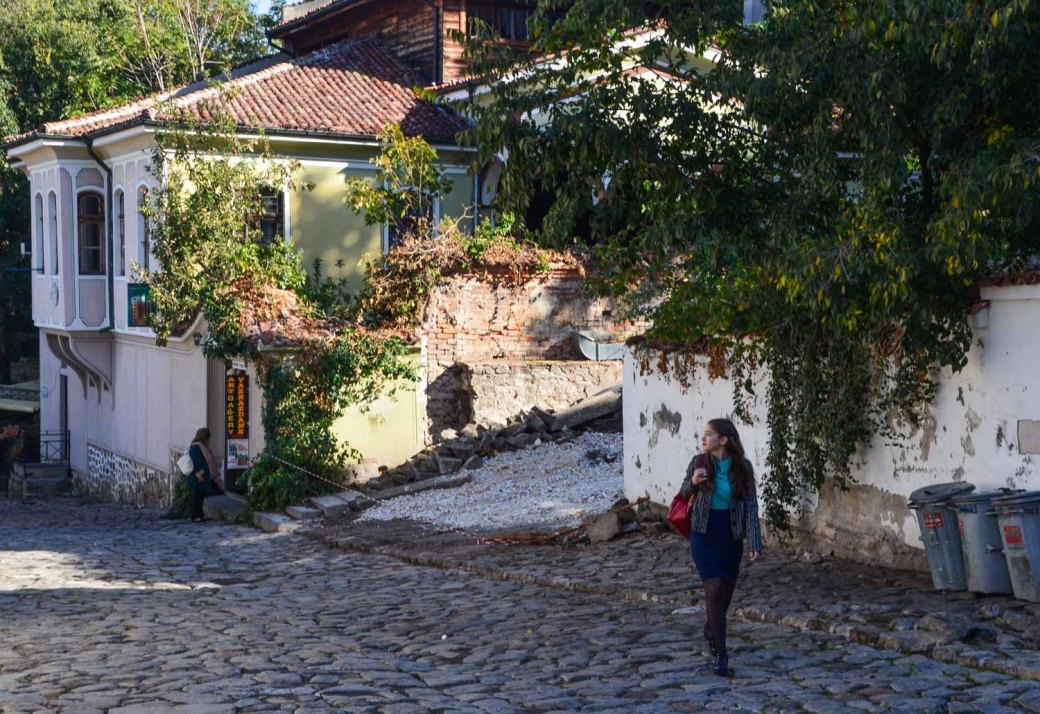
At first we could walk peacefully in the quiet streets…but then it seemed every school in the neighborhood flooded the alleyways.

A happy woman!

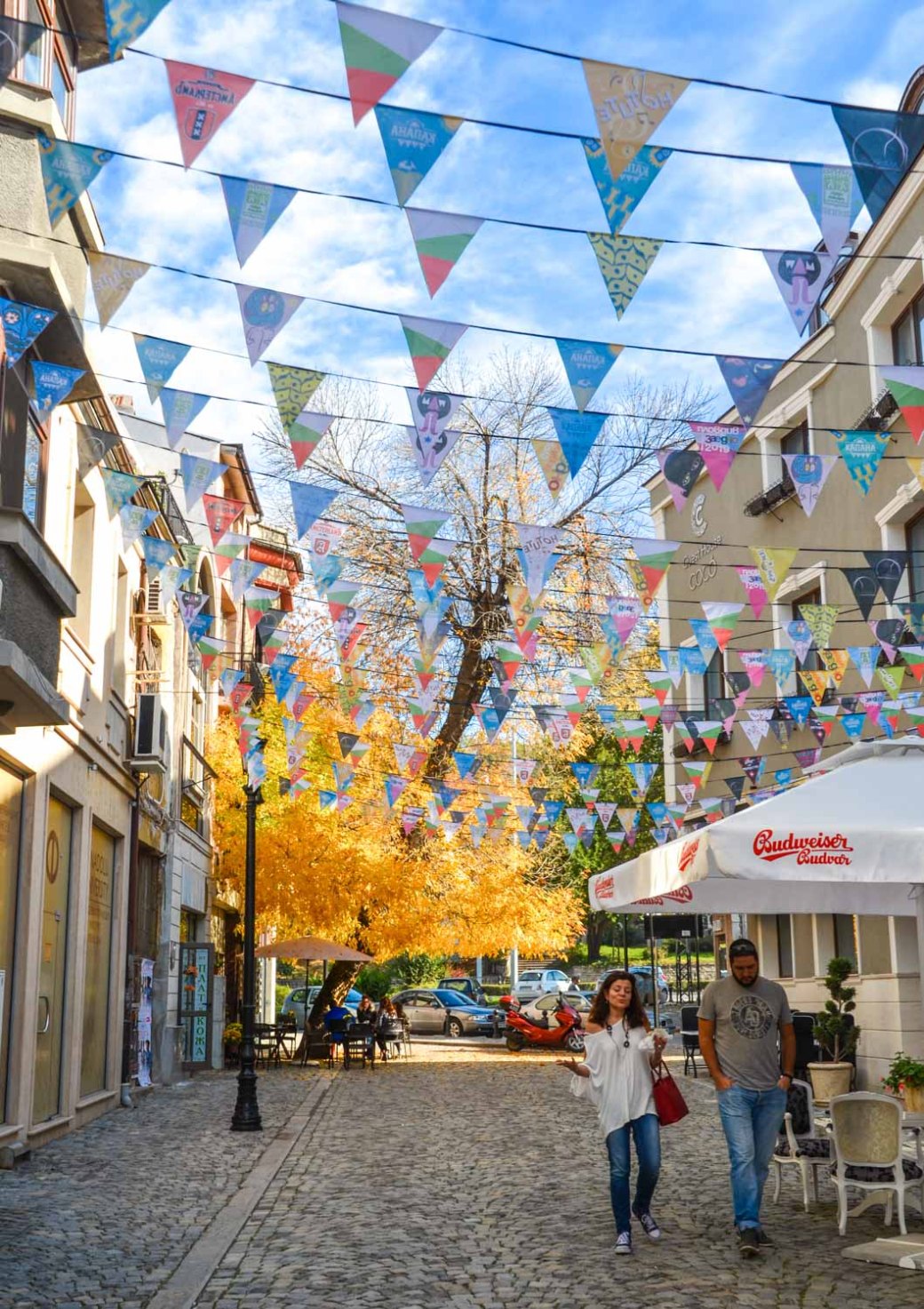
Exchanging love letters, (maybe kisses?), sugar and more…was easily done as the houses reached over the streets!

2019 – I understand why this city was elected!

Balabanov house is emblematic for the cultural life in Plovdiv. It hosts numerous events such as theatrical performances, concerts, exhibitions, literature readings. The house was built in the 19th century

The importance of Trip Advisor…….
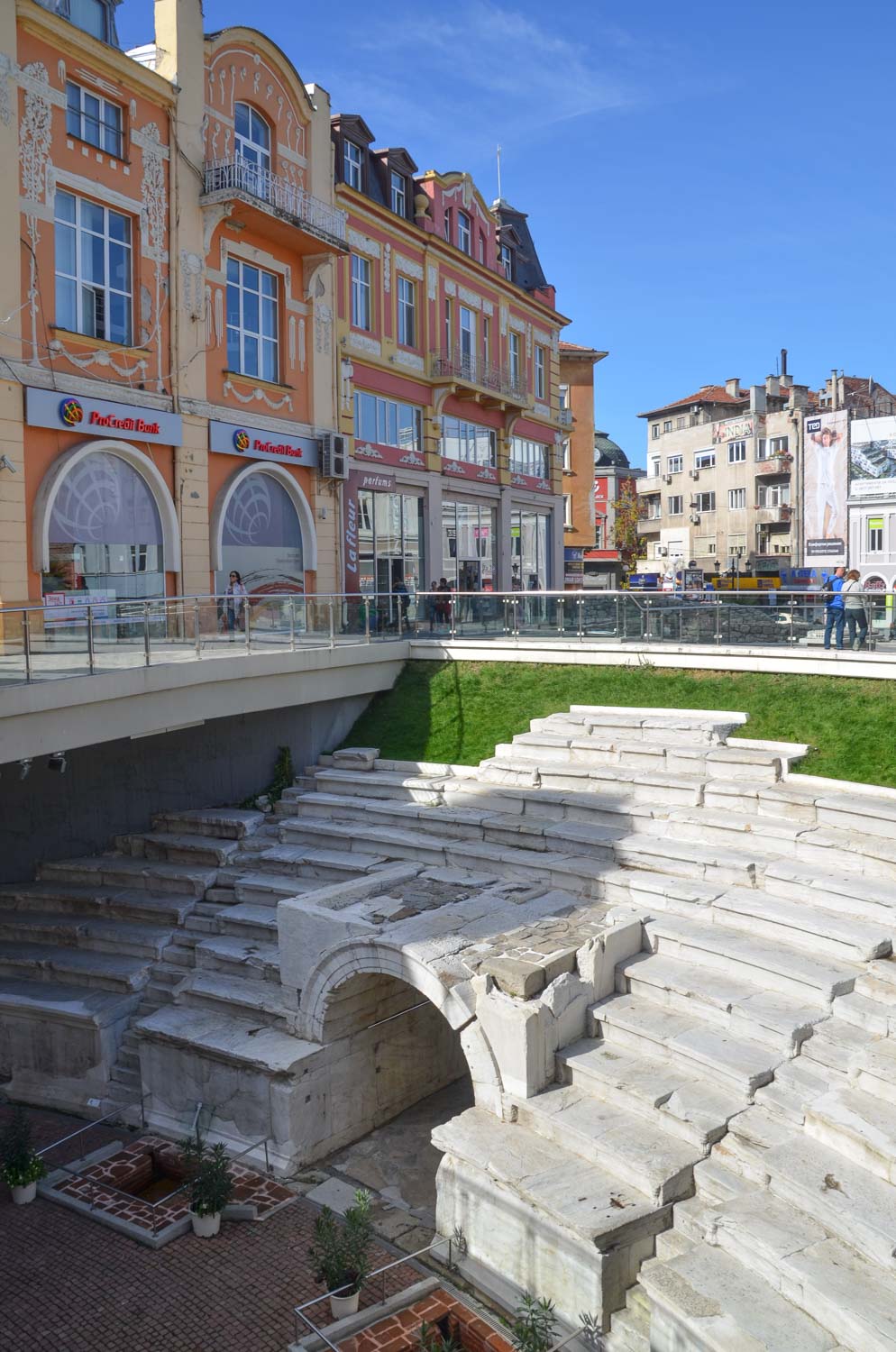
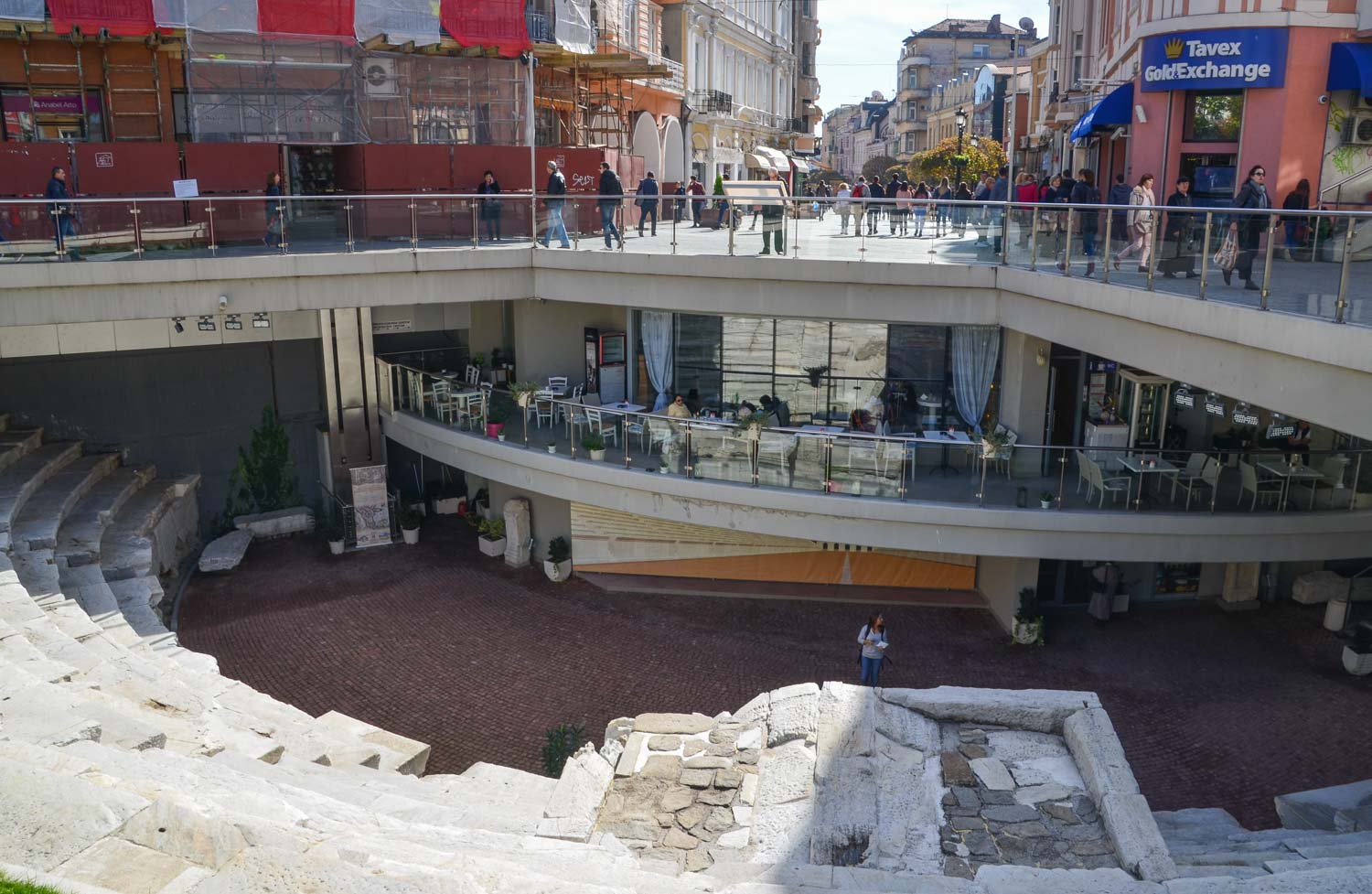
Our main goal was the ancient theatre – with seats today for 3500 people. (Originally for 5000-7000 people).

The Roman theatre of Plovdiv is one of the world’s best-preserved ancient theatres. It was constructed during Roman Emperor Trajan (reigned 98–117 AD), and it is currently in use for operas, concerts, plays and more. The theatre was restored in the 1960’s, and is one of the most valuable monuments from the ancient city of Philippopolis.

People have lived here from prehistoric times, and the place is today a combination of the culture and architecture from Antiquity, Middle Ages and Bulgarian revival.

A former monastery turned into a private house – but kept the old excavations
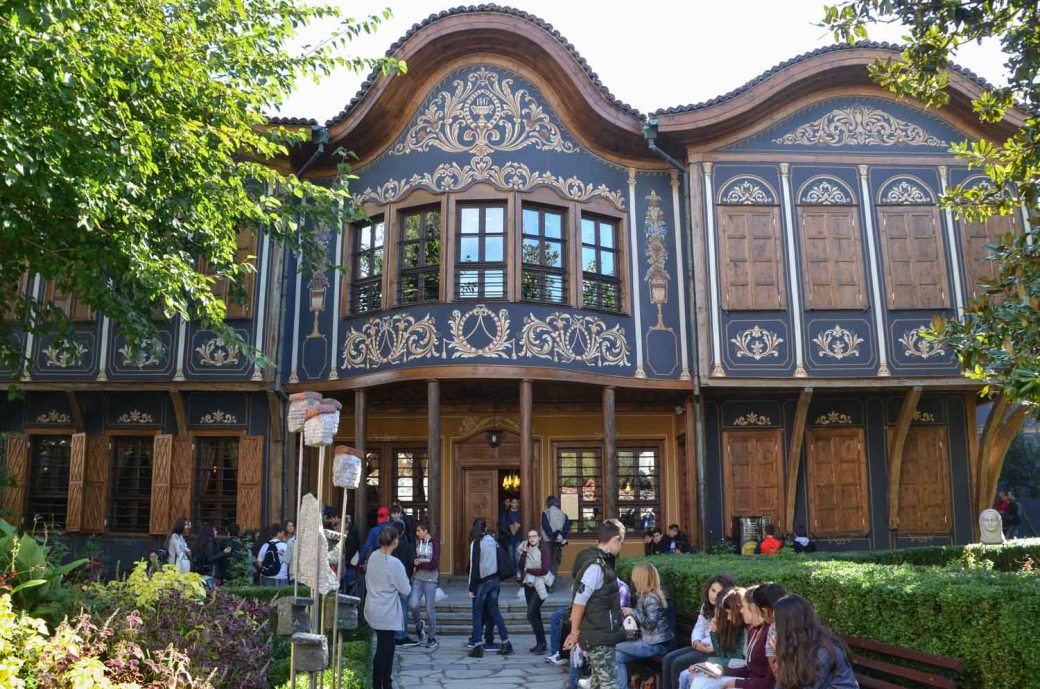
The house of Argir Hristov Kuyumdzhioglu, a merchant from Plovdiv, was built in 1847, and has been described as a prime example of Plovdiv’s mid-19th century Baroque architecture. The house has a symmetric facade; it is two stories tall on its west side and four stories tall on its east side. The Kuyumdzhioglu House spreads over 570 square metres and has 12 rooms and airy salons (where each room has a carved wood ceiling)- and 130 windows. Both the house’s interior and exterior boast sophisticated floral motives. The municipality bought the house in 1838, carried out renovations, and organized it as an ethnographic museum.
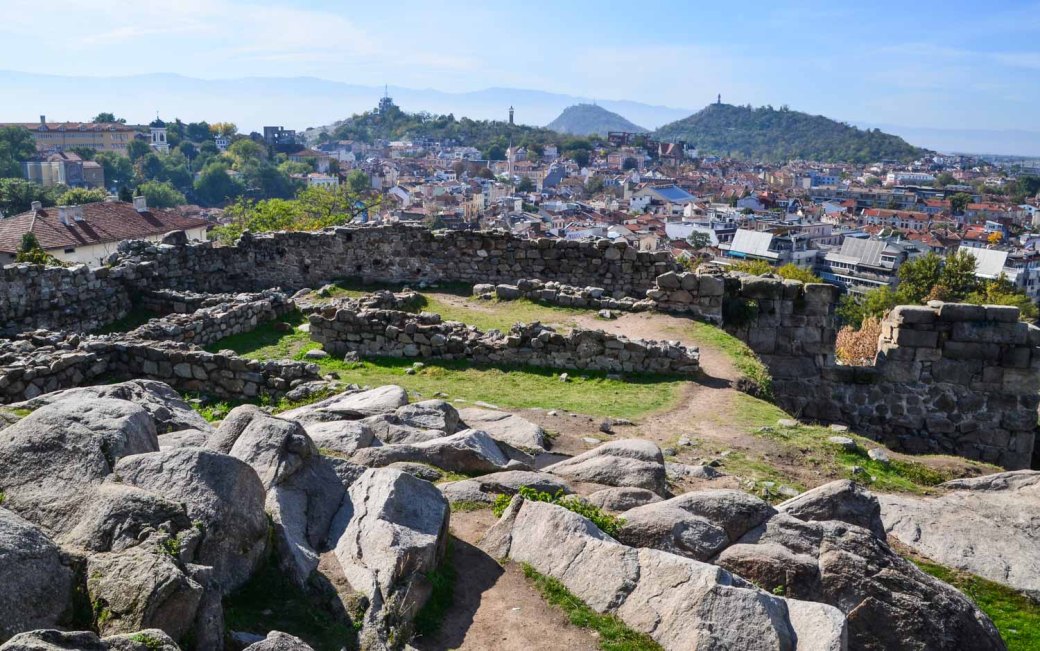
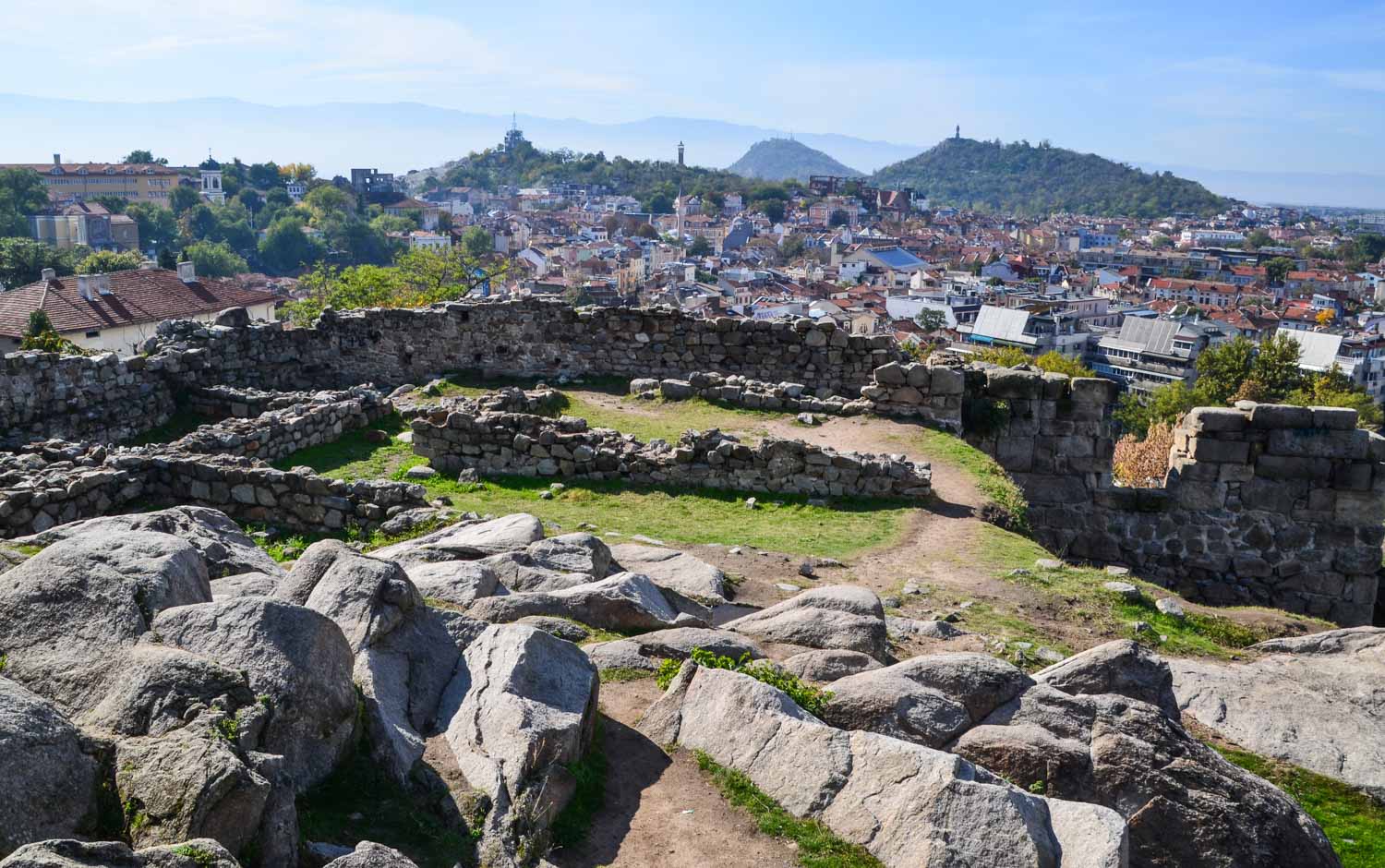
We finished our walk at Nebet Tepe, one of the hills of Plovdiv where the ancient town was founded. The earliest settlements on Nebet Tepe are dated back to 4000 BC. The site was first settled by
Thracians, later expanded by Philip II of Macedon and then the Romans. Nebet Tepe became the citadel of the town’s acropolis and there are remains of a fortress walls, towers, and a postern down to the river.
The lonely tree might not be very old, but it stands overlooking the remains of the olden days as well as the newer city. I wonder what he/she is thinking?









 Leya
Leya 
Du måste vara inloggad för att kunna skicka en kommentar.