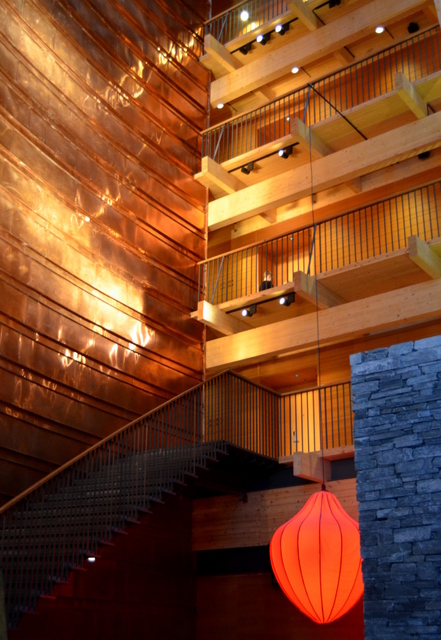
For Ailsa – Gloss – Copper and Brass
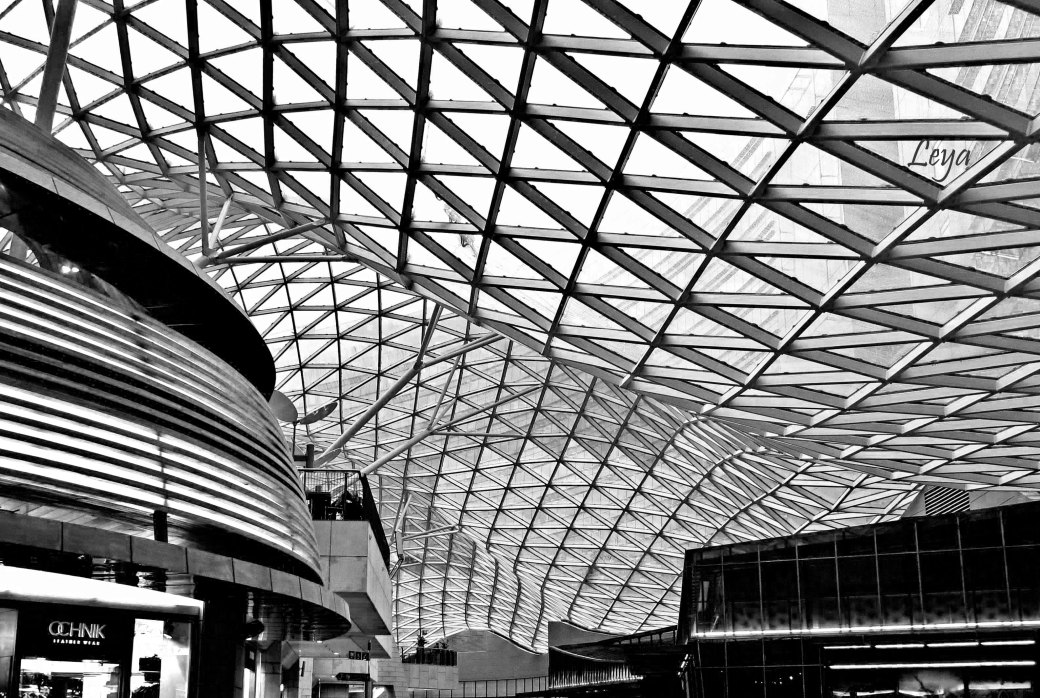
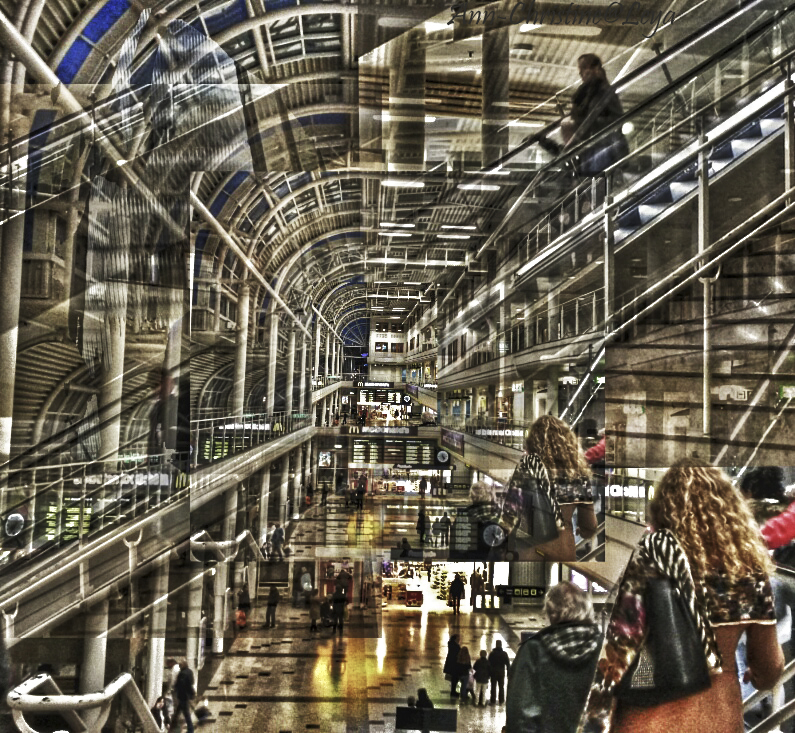
Shopping complex in Warsaw – Lines and Angles!

On our way to Thingvellir this cold and beautiful morning.
Þingvellir is a site of historical, cultural, and geological importance. It lies in a rift valley that marks the crest of the Mid-Atlantic Ridge, at the northern end of Þingvallavatn, the largest natural lake in Iceland.
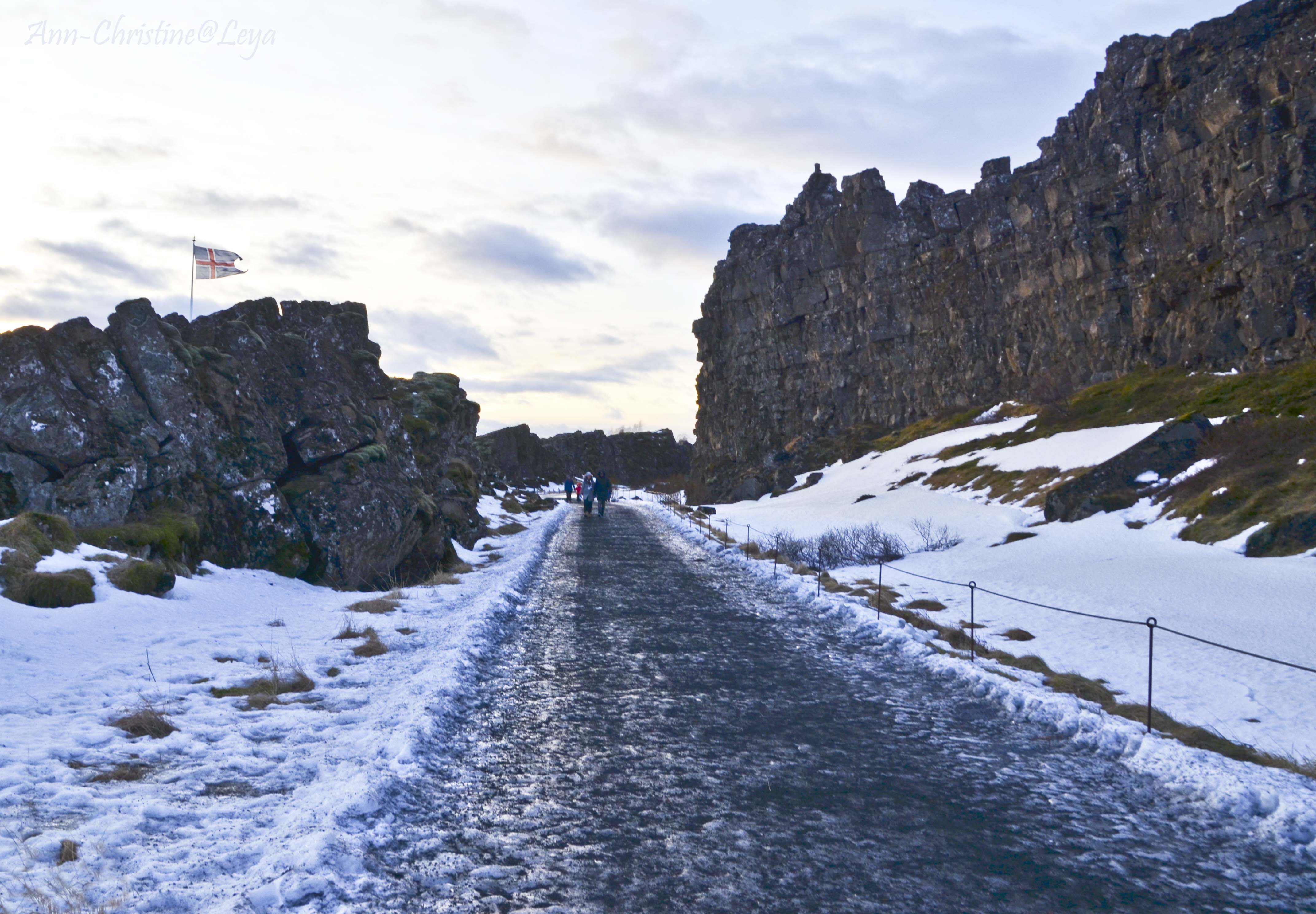
AlÞingi, the Icelandic Parliament, was established at Þingvellir in 930, and remained there until 1798. The National Park was founded in 1930, marking the 1.000th anniversary of the Althing, and became a UNESCO World Heritage Site in 2004.
The continental drift between the North American and Eurasian Plates can be clearly seen in the cracks faults which traverse the region, the largest one, Almannagjá, being a veritable canyon. This also often causes the earthquakes in the area.

According to the Book of Settlements, the settlement of Iceland began in AD 874 when the Norwegian chieftain Ingólfur Arnarson became the first permanent settler on the island. Over the next centuries, people of Norse and Celtic origin settled in Iceland, and as the population grew there was a need for a general assembly.

The foundation of the Icelandic parliament is said to be the founding of the nation of Iceland, and the first parliamentary proceedings in the summer of 930 laid the ground for a common cultural heritage and national identity. Þingvellir plays a central role in the history of the country.

Þingvellir was the centre of Icelandic culture. Every year during the Commonwealth period, people would flock to Þingvellir from all over the country, sometimes numbering in the thousands. They set up dwellings with walls of turf and rock and temporary roofing and stayed in them for the two weeks of the assembly.
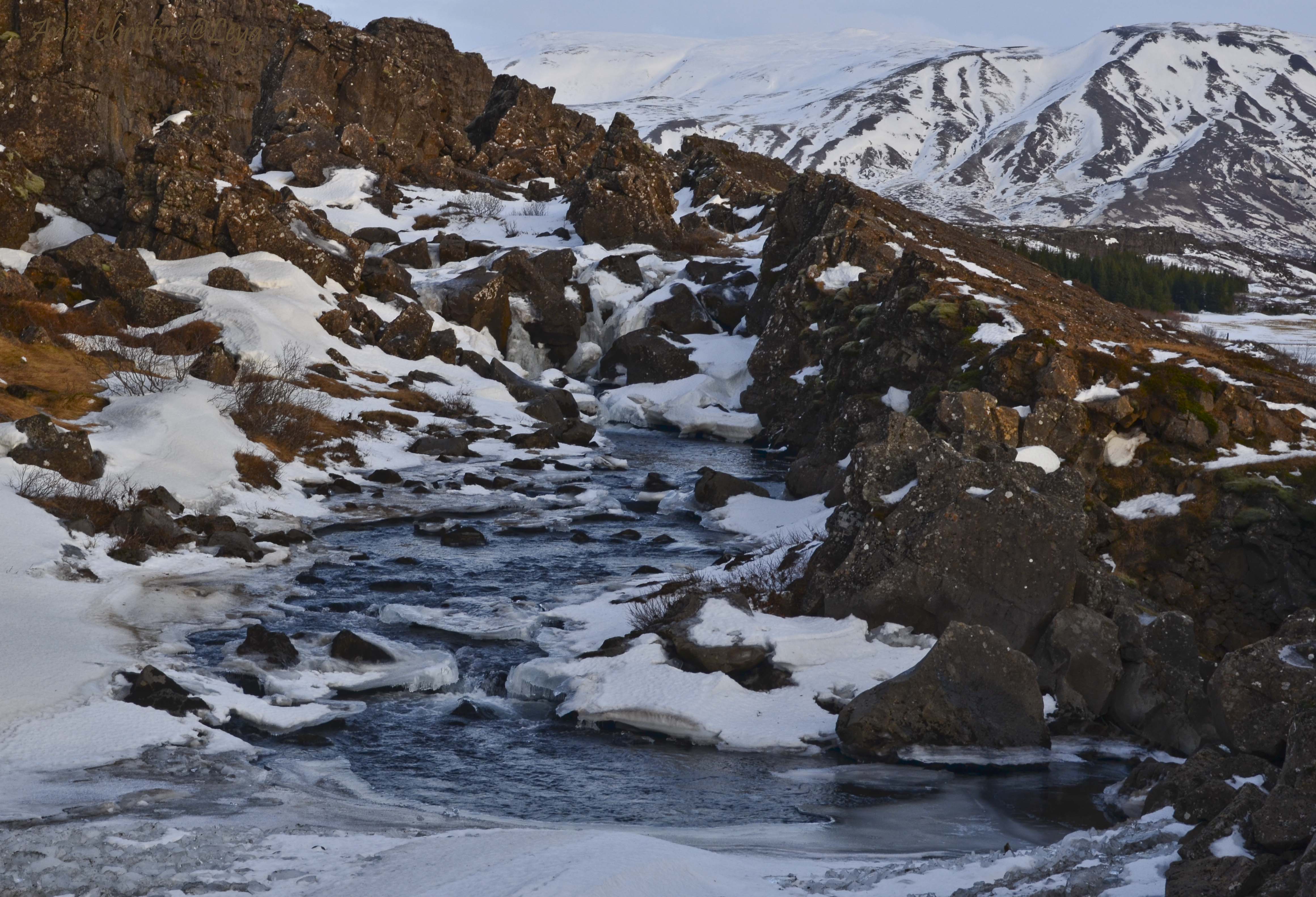
The Drowning Pool for potential witches
Although the duties of the assembly were the main reason for going there, ordinary people gathered at Þingvellir for a wide variety of reasons. There were merchants, sword-sharpeners, tanners and entertainers – and ale-makers brewed ale to them all. News was told from distant parts; games and feasts were held. Itinerant farmhands looked for work and vagrants begged.
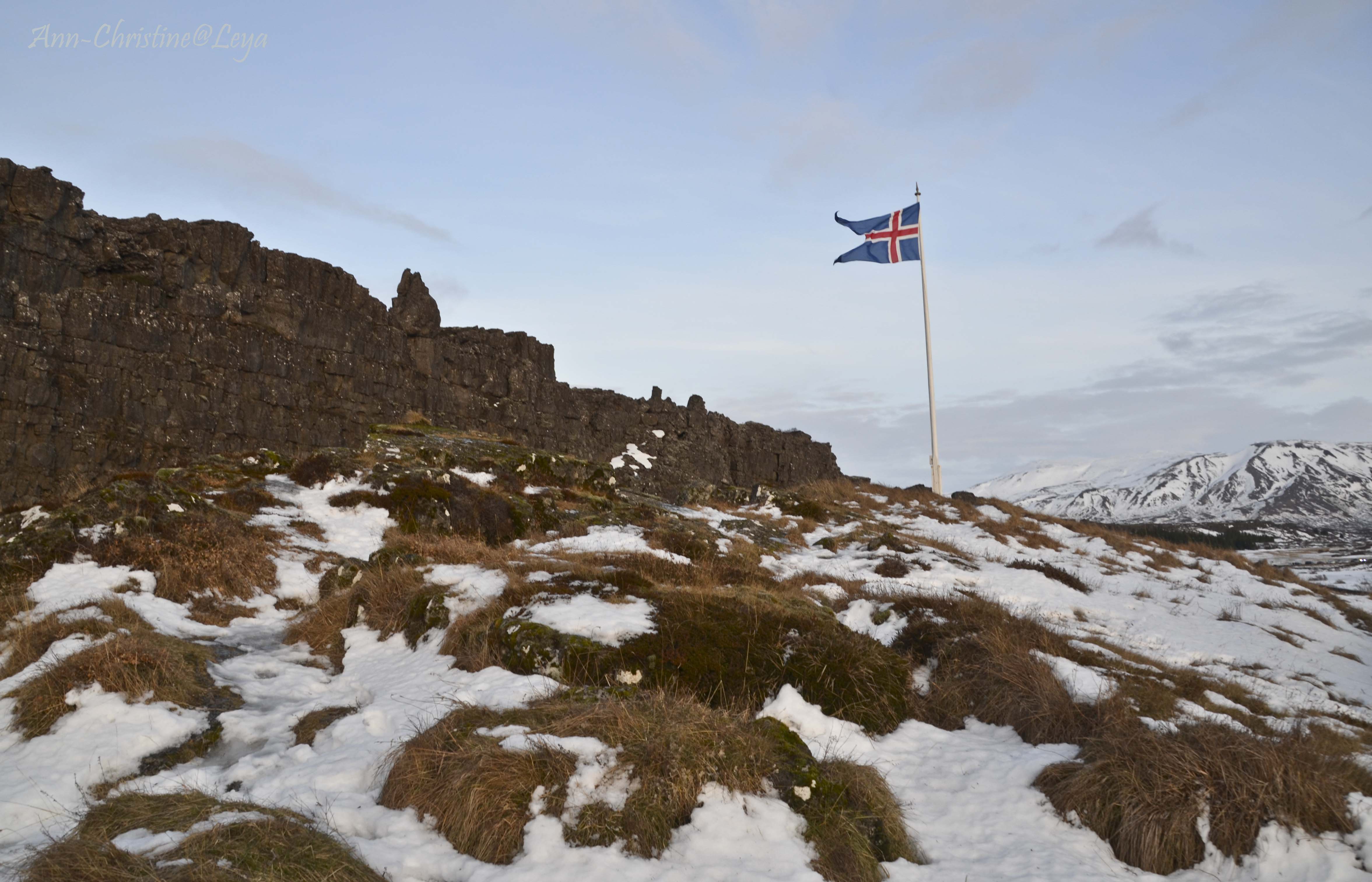
A flagpole on Law Rock marks the place where the law was recited from.
Þingvellir was a meeting place for everyone in Iceland, laying the foundation for the language and the famous literature – the Eddas and the Sagas.

A Law Rock of ones own?
In fact, still today, young people can read the old texts from the 12th century – not many languages have lasted that much unchanged. This is possible due to the conservative – and innovative and creative – use of the old words, combined with less borrowed words than any other language. As an example: vegabréf is a combination of veg (road) and bréf (letter) = passport!
The landscape around Thingvellir – magnificAent.
On leaving Vik, the landscape slowly turned into even darker earth colours. A last glimpse of the church half way up in the mountains.
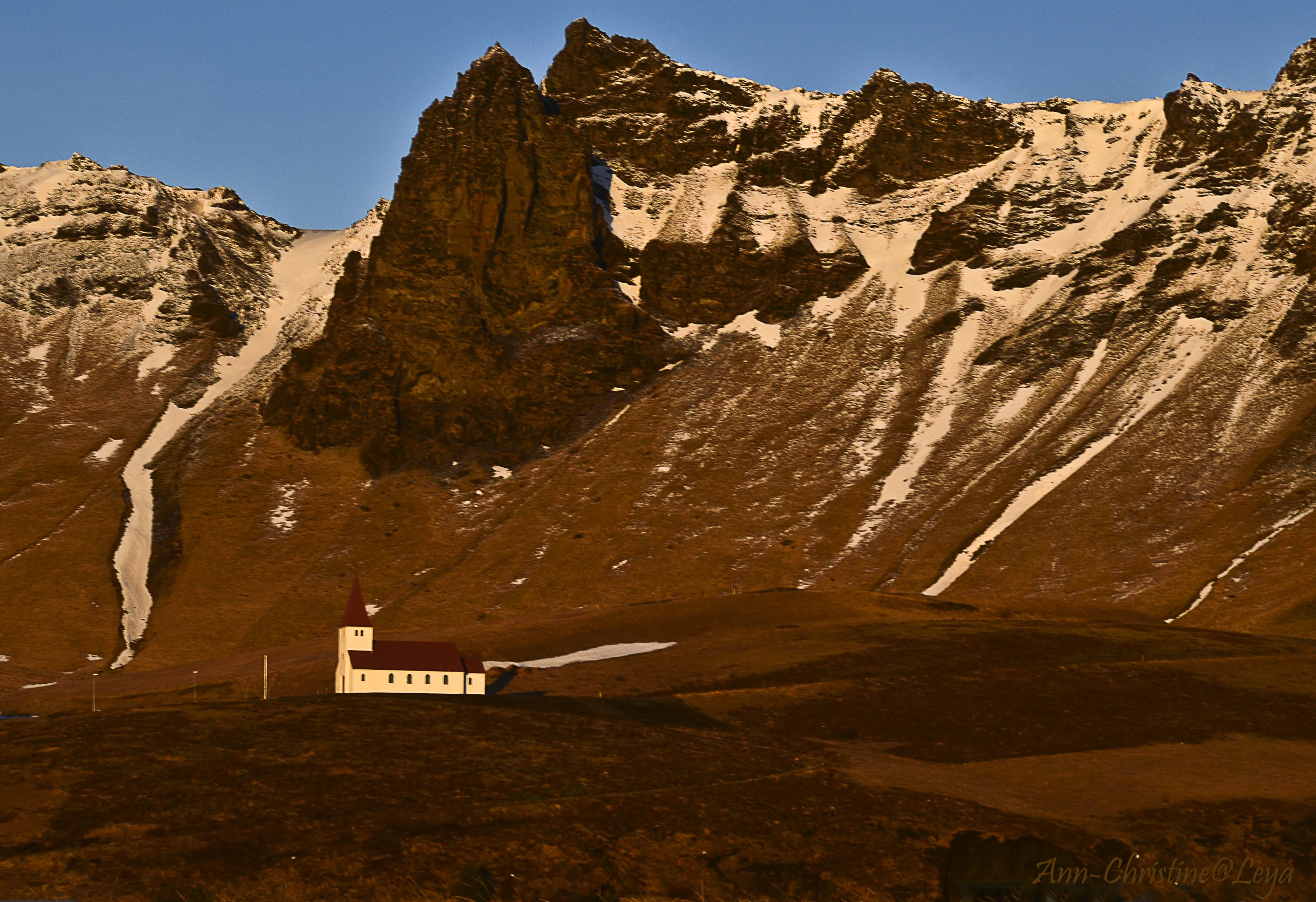
Just around the mountain ridge, the landscape opened up to the sea again.
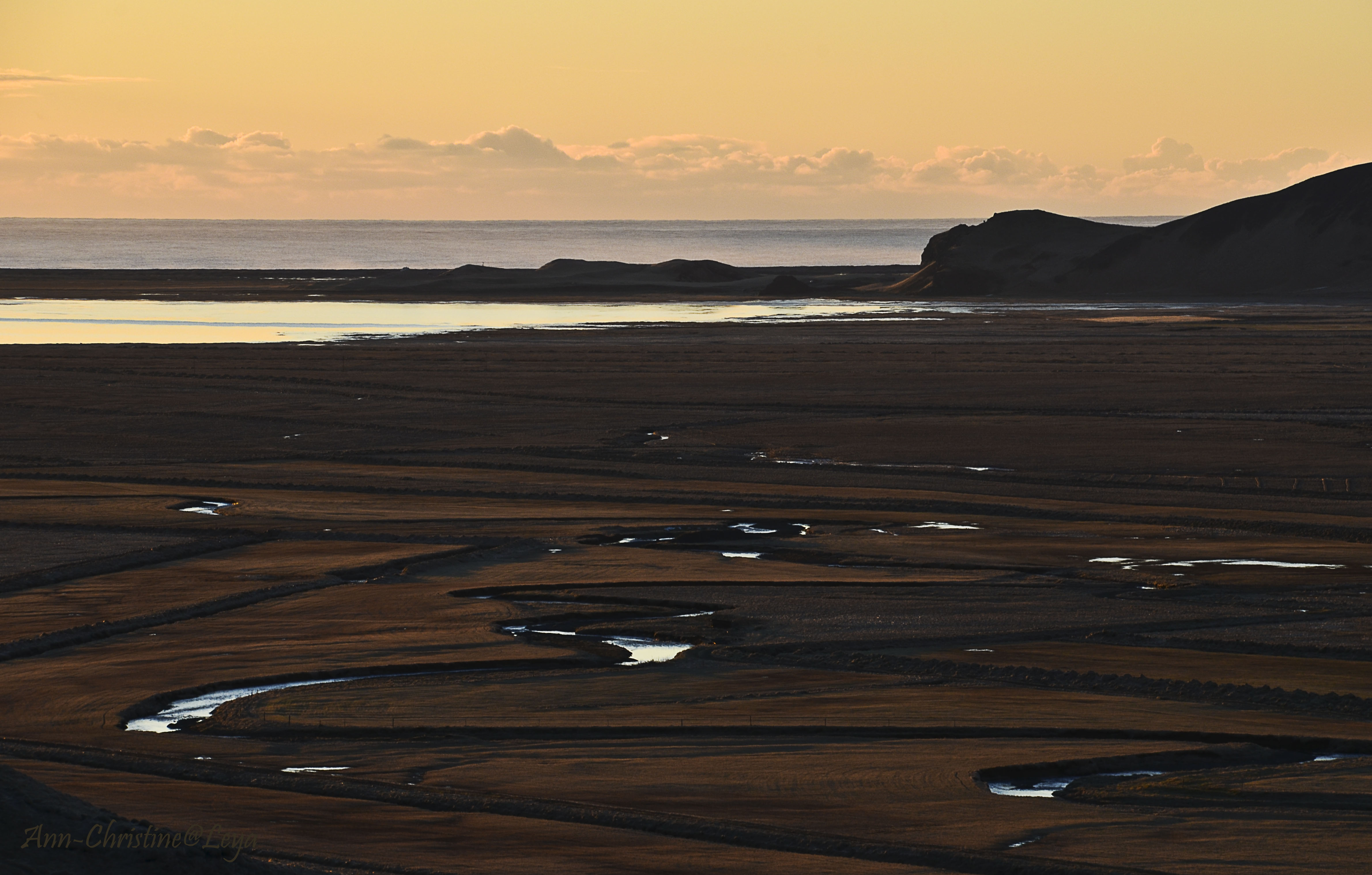
A glacier river graced the crossroads. Mýrdalsjökull in low light.

Arriving at Seljalandsfoss, Vestmannaeyar just sat in my lens…again.
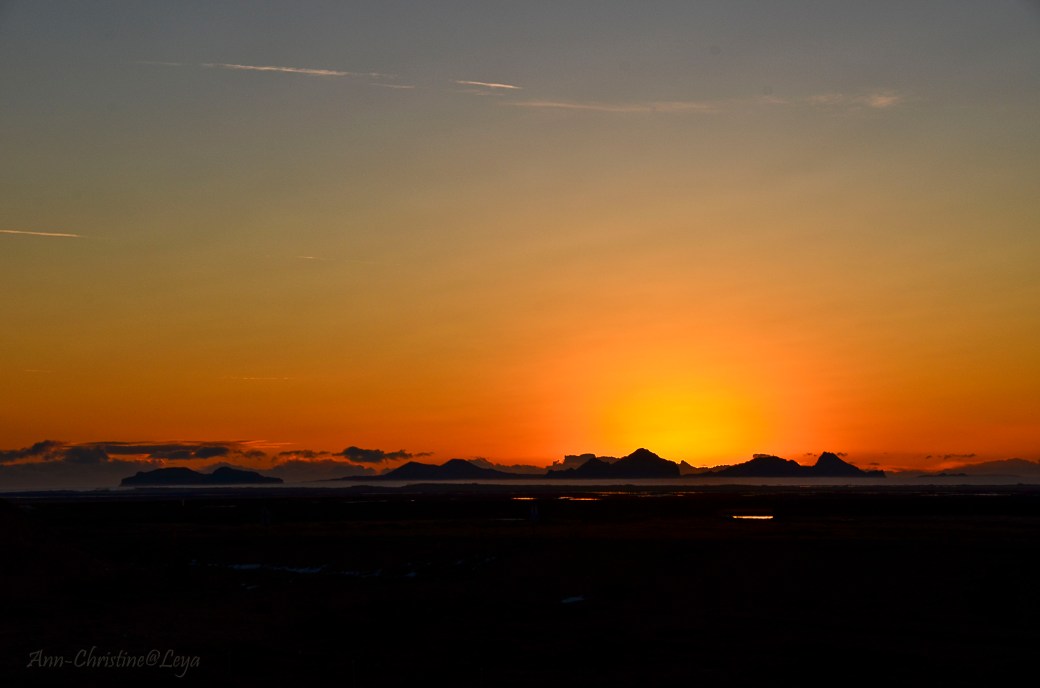
The sun setting over the faraway islands, almost made me forget the Bride’s veil, Seljalandsfoss, waiting for us on the mountain.
Fire on the left hand side – and ice on the other..
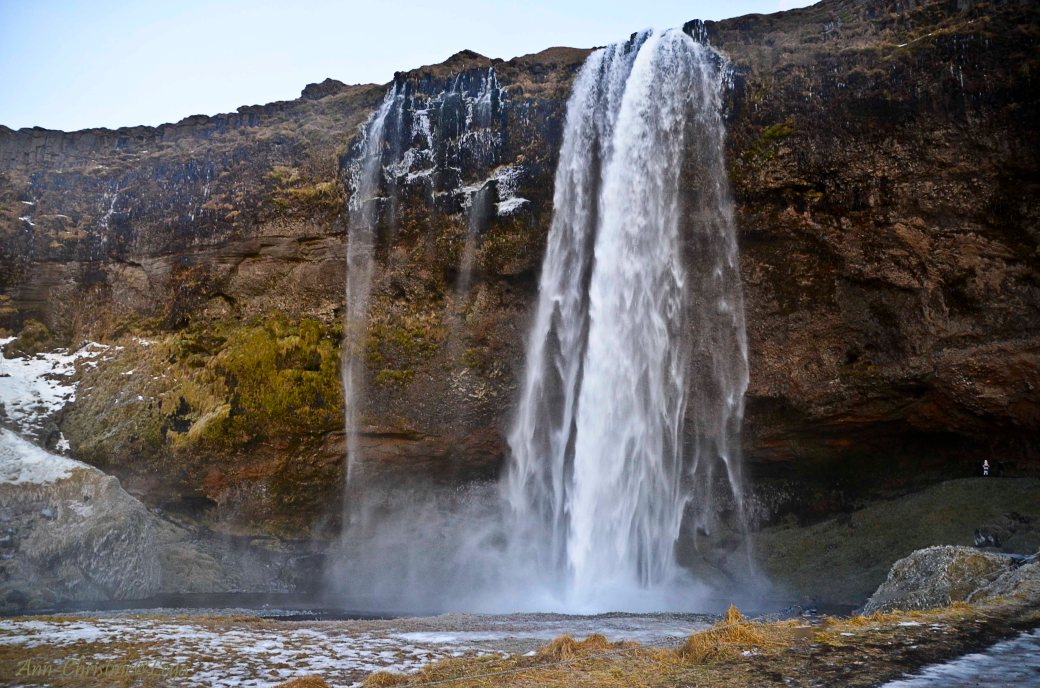
I do not understand how someone could have managed to get behind the falls this day – the icy path made us stay away from trying…But, as you can see, someone did.
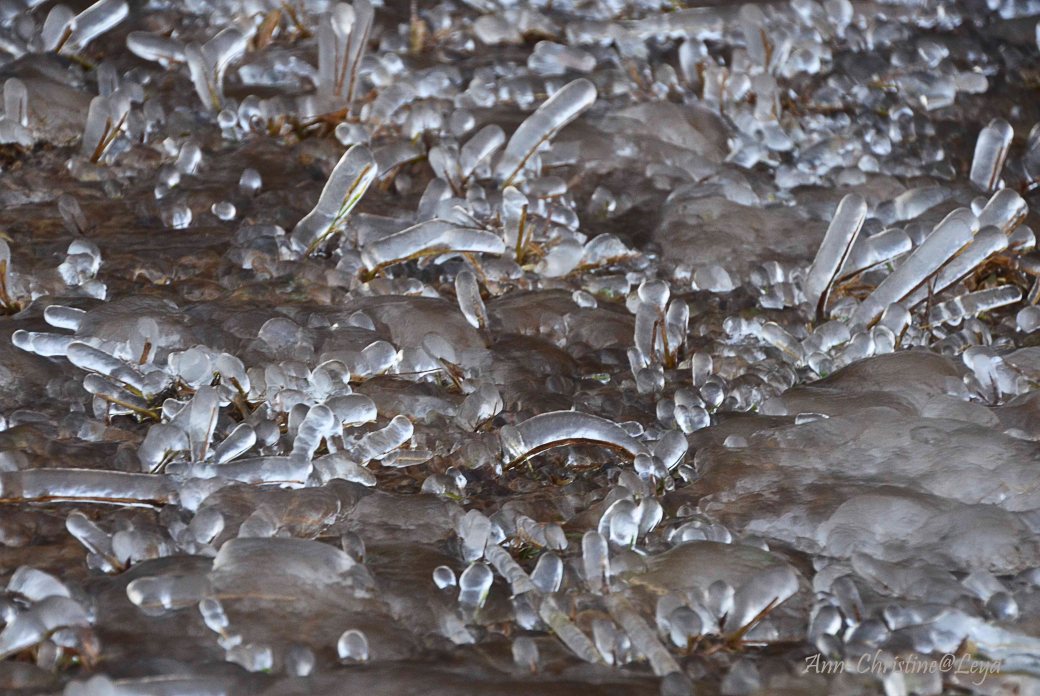
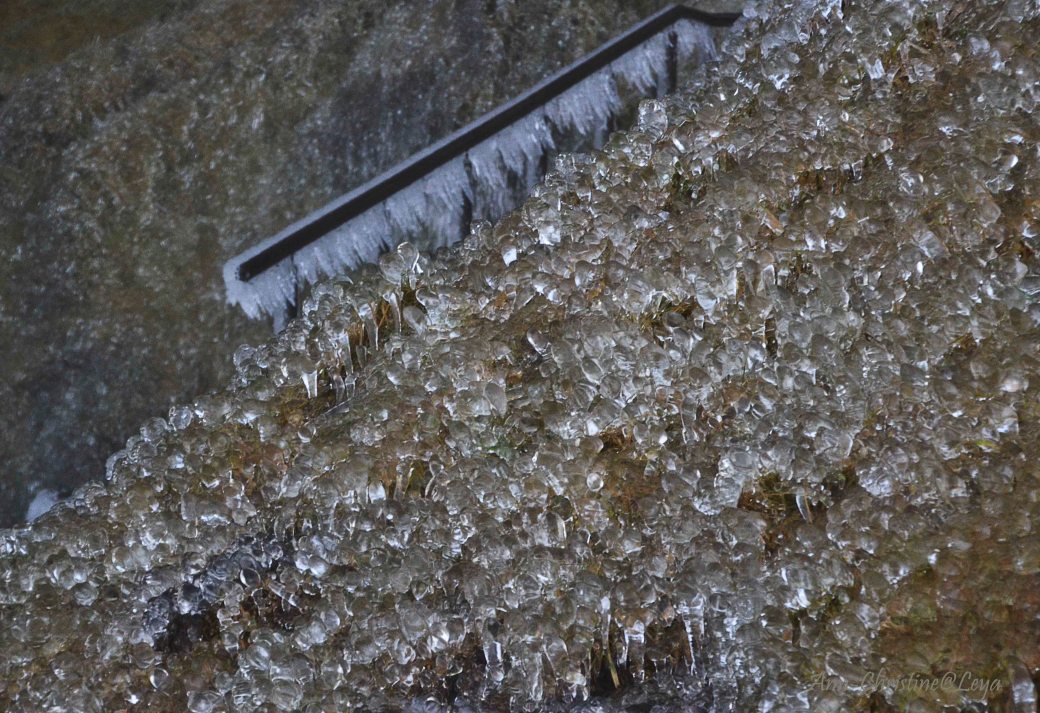
I wonder what sort of shoes you must wear to manage this! Where is the path? This is the rail to the steps…
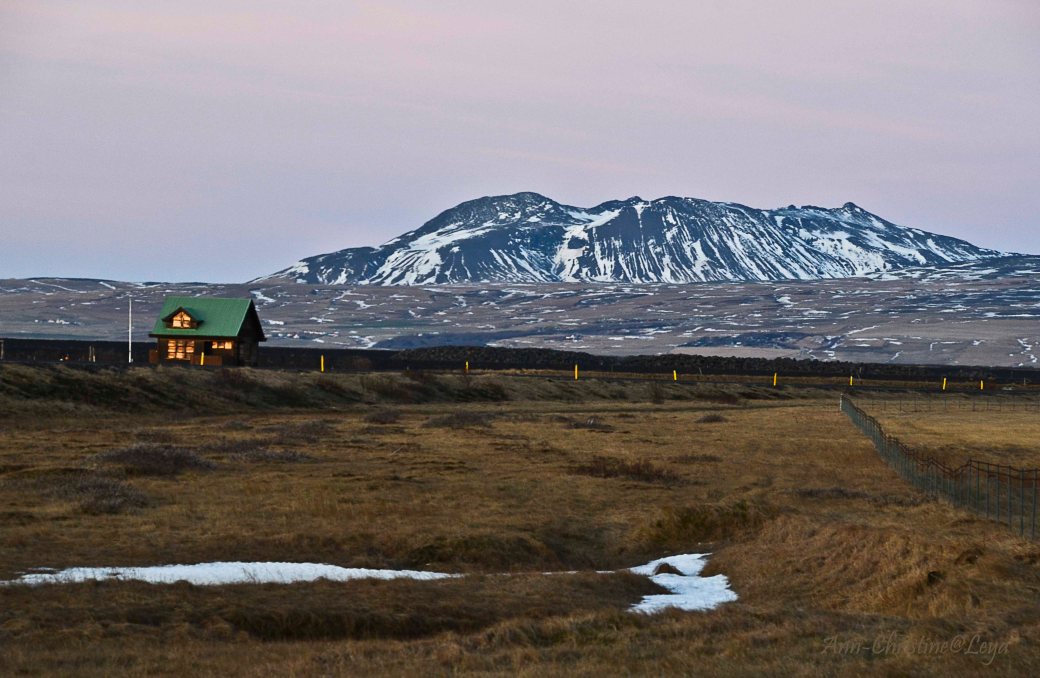
Windows capturing the last of the setting sun over Vestmannaeyar.
We slowly returned to Reykjavik, silent and very satisfied with this glorious day.
I hope for a green and brighter future, but alas…this is my potential scenario.
Silhouettes, Icelandic sun and sky – for Cee and the letter S.

Who does not love blue or purple flowers? Join in with Cee’s challenge this week!
Click here for more beauties.

The challenge this week at Sylvain Landry, is Snow. Just returned from Iceland, naturally my entry will be some sturdy, Icelandic horses. 15 degrees below zero – they stand close together against the strong wind, awaiting the night fall.

As we only had a few days in Iceland, we wanted to show our friends a piece of Route No 1. Luckily we were blessed with a sunny day, even though the sun this time of the year only is up between 11 a.m and 4 p.m.

We started off around 10 a.m to be on the road for the sunrise.

And soon, the sky turned yellow and orange, revealing the hot springs steaming.

On our right side, the sun was awakening, and I waited for the first rays to hit the mountains on our left side. A creamy lilac across the snowy white.
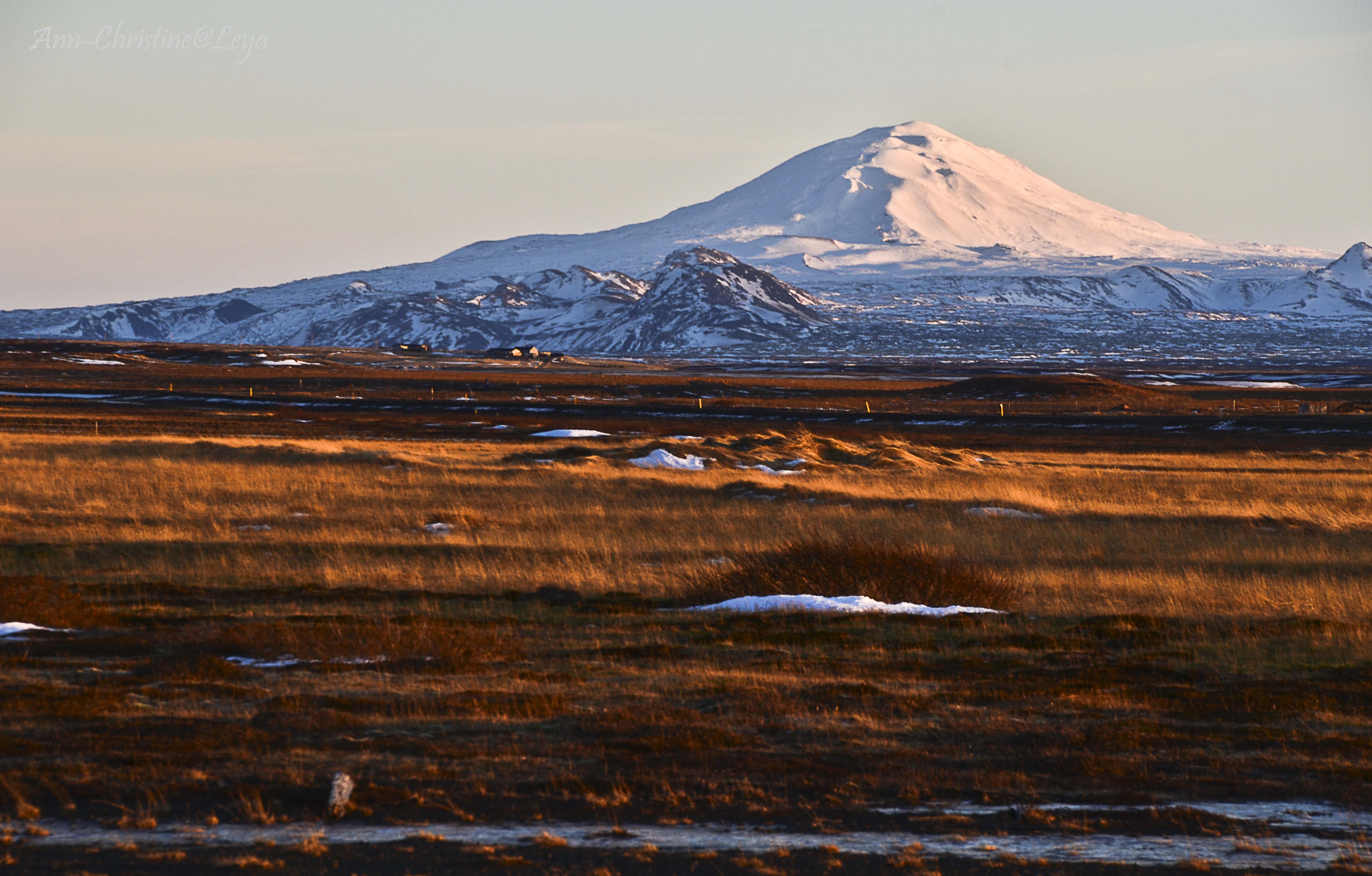
Soon Hekla, the most famous volcano – and one of the most active ones (last eruption 2000) – crowned the wheaten landscape in all her glory. The farms still there below her snowcapped face.

Faraway at sea – a glimpse of Västmannaeyar with Heimey. We wanted to go there with our friends, but unfortunately the ferries took a longer route this time of the year. And I can still, vividly, remember how heavy the sea was last time we went. And, how sick I got from it…
These islands are otherwise well worth visiting. Maybe best in summer though. Puffins and other birds nesting, and you can still see the lava stream from the latest eruption burying houses and almost the harbour as well.

Along the south coast, the road is straight and easy to drive. The beautiful low, golden light followed us throughout the journey.

For today, we finish at Eyafjallajökull. Further along the road we will visit Seljalandsfoss and Skogafoss – and of course Vik, with its black beach and roaring waves.
My greatest love in this beautiful city is of course the symbol of Reykjavik, Hallgrimskirkja (1937, 74,5 metres, and named after the Icelandic priest and writer Hallgrímur Pétursson.) by architect Guðjón Samúelsson. The church is spectacular in many ways – not only from the outside, but also the inside is serene and breathtakingly beautiful.
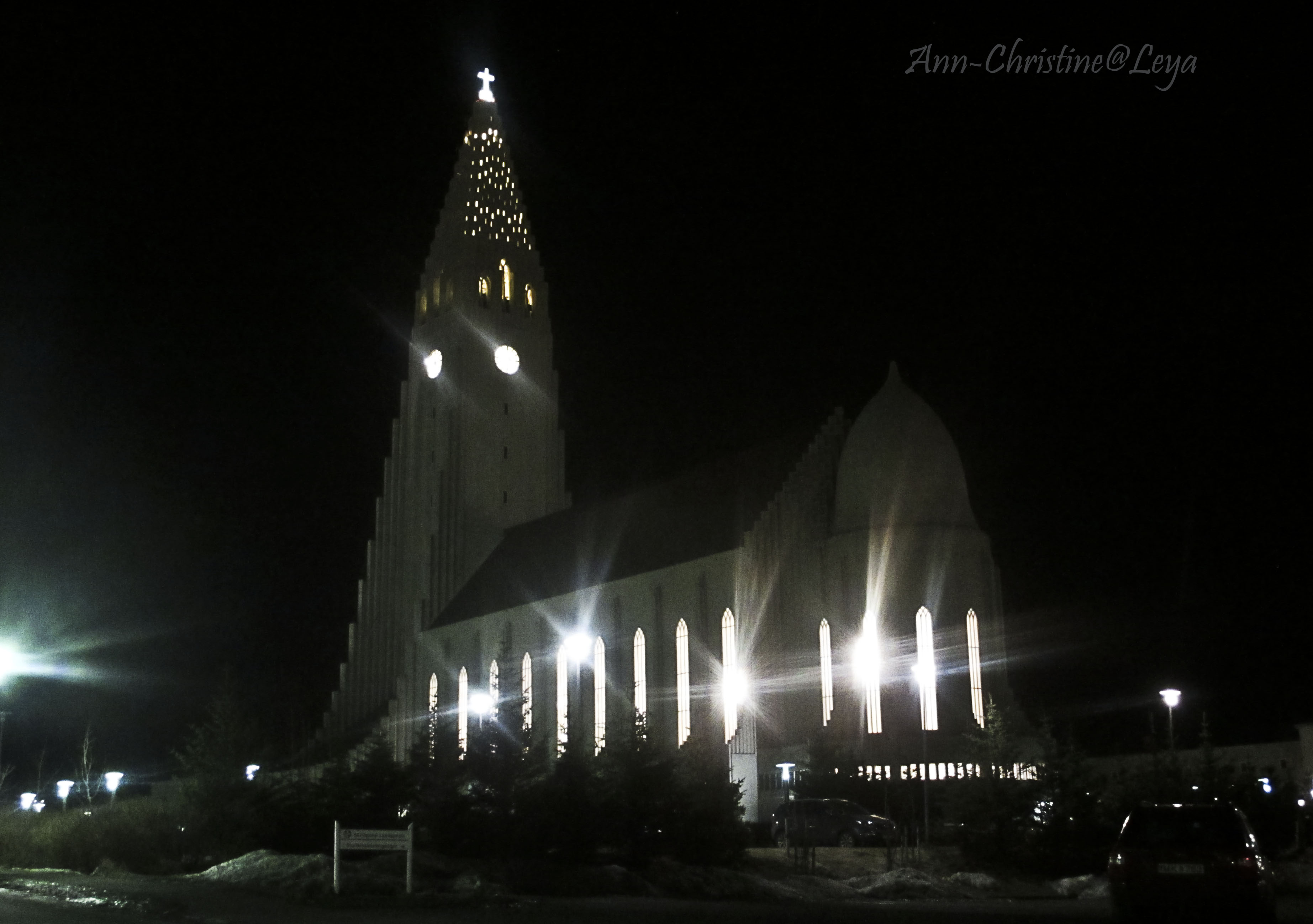
We arrived late in the evening this time, and walked slowly up to her in the freezing cold, Icelandic darkness.

In front of the church stands the Leif Eriksson statue. A gift from the US 1930 when the Icelandic Parliament, AllÞingi, celebrated its 1000 year jubilée. The Viking Leif Eriksson was the son of Erik Röde, who settled in Greenland. Leif himself was the first white man to discover America.
Let us go inside. My greatest love here is the magnificent organ.
Houses in Reykjavik have to be strongly built for the rough climate. Some old wooden houses are being restored to show the old architecture – on which of course the new one is built. But I doubt any new house here has a wooden structure.


What is difficult to see in these snowy pictures, is the typical Icelandic colourful houses. In my summer memories, Reykjavik looks like this:

Tjörnin is the lake in the middle of the city. There are always people here, playing, feeding the birds, or just walking and chatting.


The main shopping street ends with Hallgrimskirkja. And that is where we too end our snowy, first walk in Iceland and Reykjavik.


Du måste vara inloggad för att kunna skicka en kommentar.