Cee’s Fun Foto Challenge: Small Subjects

These are silk worm cocoons made into little owls. Small subjects. A present from my children bought on their trip to Japan. They always give me owl – things, knowing I love owls. Somehow it was difficult to photograph them, not only because they are about the size of a bumble bee.

Travel theme – Wood

Träd, trä och skog – vi människor kan inte överleva på Jorden utan dem. Vi har alltid tagit tillvara och använt vår skog och det material vi får av den på ett klokt sätt, men nu är det också hög tid att sluta massförstöra denna fantastiska levande organism vi alla är beroende av – växter, djur och människor.

Mitt bidrag den här gången är ett galleri, en livscykel från liten planta till fullvuxen skog, till…ja, kanske ska den ses baklänges. Förhoppningsvis kommer denna cirkel att fortsätta som den alltid har gjort. Det är vårt ansvar.

Wood – a living organism sharing our lives. We have always made use of it, and it has always been a great source of life, and of well being for mankind and our fellow travellers on this Planet Earth.

My contribution is a little gallery, a circle of life with wood. Start at the end…Let’s hope we will preserve this valuable source of life, our forests and woods – because without them, mankind will be wiped out – and with us, every living being on this planet.

Thank you, Ailsa, for another great theme!

Cee’s Fun Foto Challenge: Man-Made-Items

Well, in this world of gadgets and trinkets and whatever they are called  – but man made they all are and we are fascinated…

Weekly Travel Theme: Silver

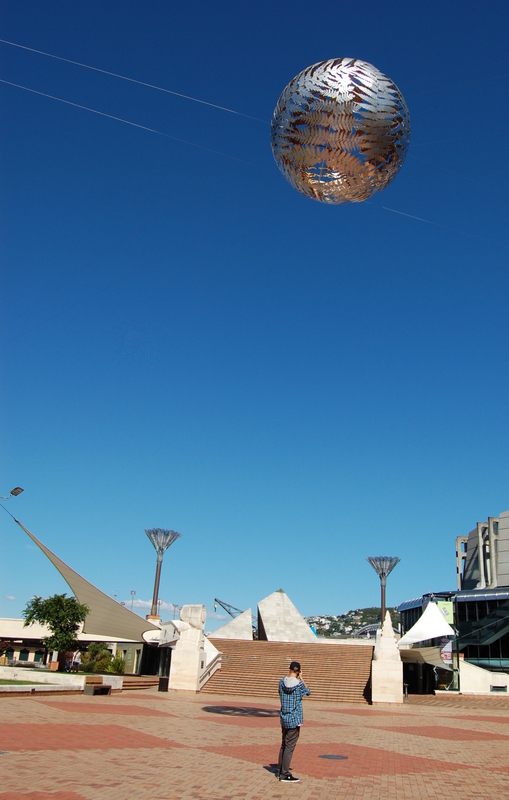
NZ – Silver fern!

For more of Silver, go to Ailsa on Where’s My Backpack? – just click the link above – or why not join in yourself!

Travel theme: Possibility

There’s always a possibility that we finally will have some snow this winter…

It would slow Totti down a bit…

…so I can outrun him!

For more and other possibilities, go to Ailsa’s place!

Weekly Travel theme: Birds

Birds are magnificent creatures – and who would not want to be able to fly? Birds are generally difficult to catch on a photo, but sometimes I’m lucky. Some of my best opportunities for photography was at Walsrode this summer, where I had a wonderful day together with my dear old friend, Anita, at the worlds’ biggest bird park in Germany.

So, Birds is the travel theme, and I will mix Walsrode with my own garden and Scarborough.

And I can assure you… Håkan sounds exactly like a duck…Totti loves him. When Totti was newly arrived 5 years ago he had a ”Håkan” in his mouth – a toy rabbit. Unfortunatley Mille got hold of Håkan several times and there wasn’t much left of him after some weeks. Finally Santa brought Totti a new Håkan this Christmas! What joy!

If you want to know more about the kite, see my entry:

https://lagottocattleya.wordpress.com/2013/04/16/gladan-the-kite/ ‎

Cee’s Fun Foto Challenge: Kind and Caring

Kind and Caring – here are some lovely friends of mine! Visit Cee for even more kindness and caring!

Winter solstice ahead – take a dogwalk with me!

The days in the Northern Hemisphere will soon be at their shortest. That turning point is always something to look forward to – The winter solstice.  This is the time at which the sun appears at noon at its lowest altitude above the horizon. This year, 2013,  it is on the 21 of December – one week left.

Today there was a thin rift in the gloomy skies and a pale ray of sun shone through. It lasted for about five minutes. They were precious. I will show you…

I only had my phone today, because I wasn’t in the mood for photography in this fog and darkness.

Anyway, we finished our day in a little town nearby, buying Christmas presents. On a shelf, these two gentlemen resided (together with three more)  Which made NZ and the charming Lonely Dog in Auckland pop up again! https://lagottocattleya.wordpress.com/2012/01/20/lonely-dog/ ‎ Sweet memories!

On our return, 3-4 p.m. it was pit black.

Weekly Photo Challenge: Community

When I read or hear the word ”community” I immediately think of bees and ants, whose communities are extraordinary interesting. On our week in Spain this autumn, we had an apartement with a terrass/balcony, on which also resided the tiniest ants. So small that they in fact were almost invisible. Until someone dropped a cheese crumb on his way out from the kitchen…

När jag hör eller läser ordet ”community” eller ”samhälle” tänker jag nog först på bin eller myror. De är intressanta varelser och jag och min familj tycker mycket om dem. Till vår stora glädje delade vi lägenhet och terrass med ett litet samhälle minimyror i Spanien. Jag tror knappast att vi hade upptäckt dem om inte någon tappat en ostsmula på väg ut från köket med frukosten…
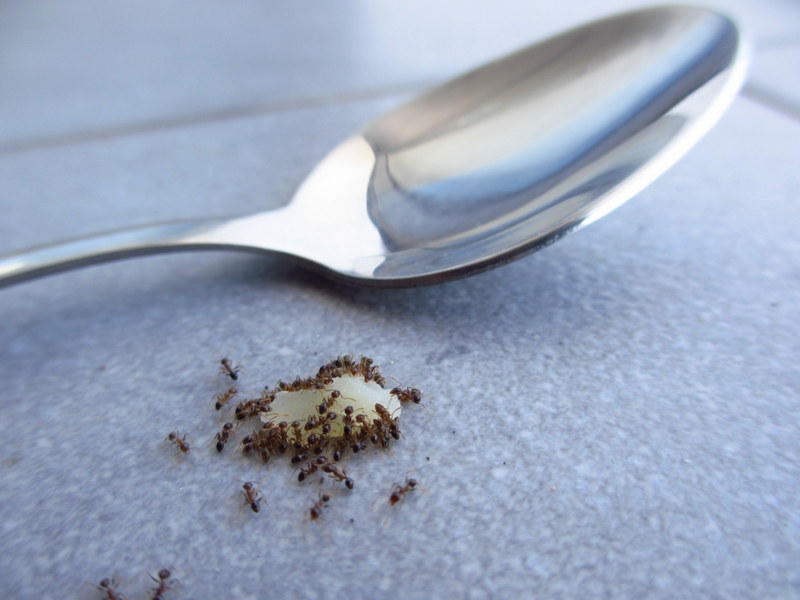
My spoon left my cup of coffee and ended up beside the ants to make you see their tininess…To see other communities, click here.

Faktiskt är vi så tokiga att vi brukar jämföra myror i olika länder vi besöker, hur stora/små de är och hur de lever. Det kan låta galet, men vi är sådana bara…

I like ants, and so do our whole family. In every country we visit we notice the size of the ants and compare them to ants in other countries. This might sound a bit weird, but that’s the way we are…

Why are they so interesting then? Well, if you peer into the deep recesses of an ant colony, you will discover an extremely well organized community with thousands of workers quietly going about their jobs. Some dig nests while others gather food or tend the young. Remarkably, every chore is done without supervision or direction, and some workers even switch jobs to meet the ever-changing needs of the colony.

How does an insect as tiny as this with a brain smaller than a poppy seed decide to carry out a particular task? The answer,  is that it has less to do with brainpower than with the ant’s extraordinary sense of smell. Scientists have found that, when a parade of patroller ants returns to the nest, their distinctive body odor cues other workers to go out and forage for food. I don’t think that this crumb of cheese had been left on the floor for more than a couple of minutes when I took this photo. And then we should remember that the distance between this crumb inside the apartment and the ant colony below the rail at the rear end of the terrace  must have been – say about 3-4 metres. So, ants use chemicals the way we use sight and sound.

Vad är det som är så intressant med dem då? Jo, hur kan en så liten varelse, med en närmast obefintlig hjärna leva i och sköta ett så välorganiserat samhälle? En del bygger i boet, andra samlar mat och ytterligare andra tar hand om de små nya myrorna. Och detta gör de helt av sig själva. De till och med byter jobb och täcker upp för varandra när så krävs. Forskare har kommit fram till att det är myrornas dofter som leder dem. De använder alltså kemi för att tala om vad som ska göras och var man finner mat. Fotot, med min tesked som storleksmätare, tog jag kanske två minuter efter att smulan tappats, och den låg inne i lägenheten. Myrorna bodde under terrassräcket kanske 3-4 meter bort – utomhus.

Från det vi förstod att vi delade lägenhet med dessa våra minsta, såg vi till att tappa några smulor då och då…och innan vi åkte tillbaka till Sverige fick de levererat en farvälsmulhög att kalasa på – alldeles vid deras egen ingång under terrassräcket.

From the moment we understood we shared apartement with these pleasant little creatures, we made sure to drop some little crumbs every now and then…and when we left for Sweden again, they got a farewell load of crumbs delivered right by their door.

Weekly Photo Challenge: Grand

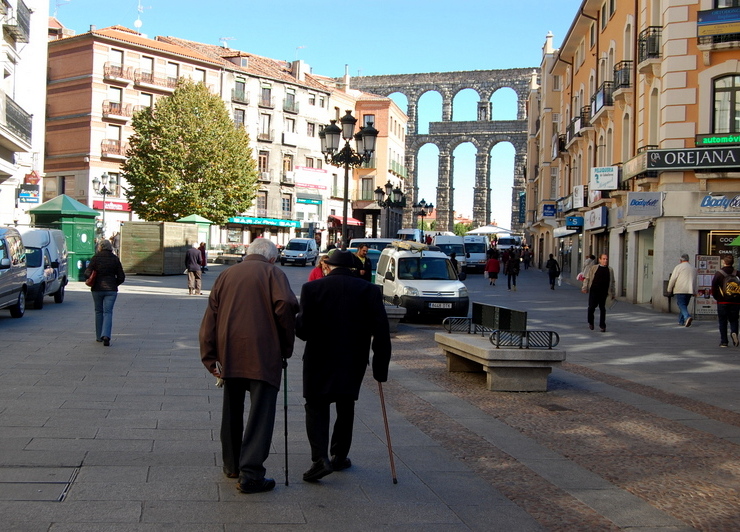
Grand – a concept with many enterpretations. A moment I will never forget, is when I was walking down this street and first layed eyes on the Aqueduct in Segovia, Spain. In front of me were these two grand old gentlemen too, and I could listen to them discussing everyday problems.

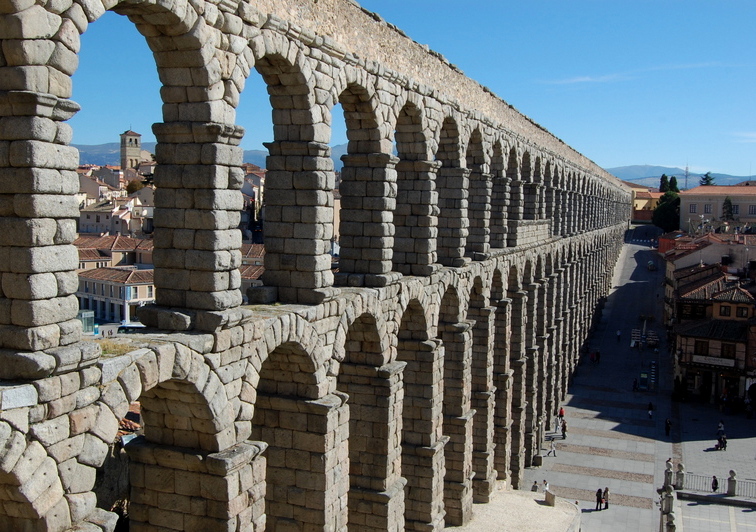
The Aqueduct’s date of construction cannot be definitively determined, but at the end of the 20th century, a German archaeologist managed to determine that actually it was the Emperor Domitian (AD 81-96) who ordered its construction.

The aqueduct transports water from Fuente Fría river, situated in the nearby mountains, some 17 km (11 mi) from the city in the region La Acebeda. It runs another 15 km (9.3 mi) before arriving in the city.

The water is first gathered in a tank known as El Caserón (or Big House), and is then led through a channel to a second tower known as the Casa de Aguas (or Waterhouse). There it is naturally decanted and sand settles out before the water continues its route. Next the water travels 728 m (796 yd) on a one-percent grade until it is high upon the Postigo, a rocky outcropping on which the old city center was built. Then, at Plaza de Díaz Sanz (Díaz Sanz Square), the structure makes an abrupt turn and heads toward Plaza Azoguejo (Azoguejo Square). It is there the monument begins to display its full splendour.
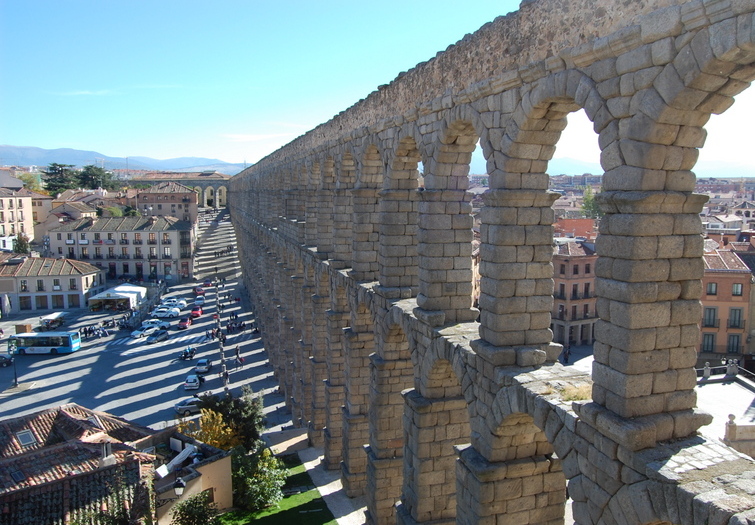
At its tallest, the aqueduct reaches a height of 28.5 m (93 ft 6 in), including nearly 6 m (19 ft 8 in) of foundation. There are both single and double arches supported by pillars. From the point the aqueduct enters the city until it reaches Plaza de Díaz Sanz, it includes 75 single arches and 44 double arches (or 88 arches when counted individually), followed by four single arches, totalling 167 arches in all. The construction of the aqueduct follows the principles laid out by Vitruvius as he describes in his De Architectura published in the mid-first century.

For me, this meeting with the ancient Aqueduct was a truly grand moment.