Thursday Thoughts – Udabno and Sighnaghi

Why Georgia ? 

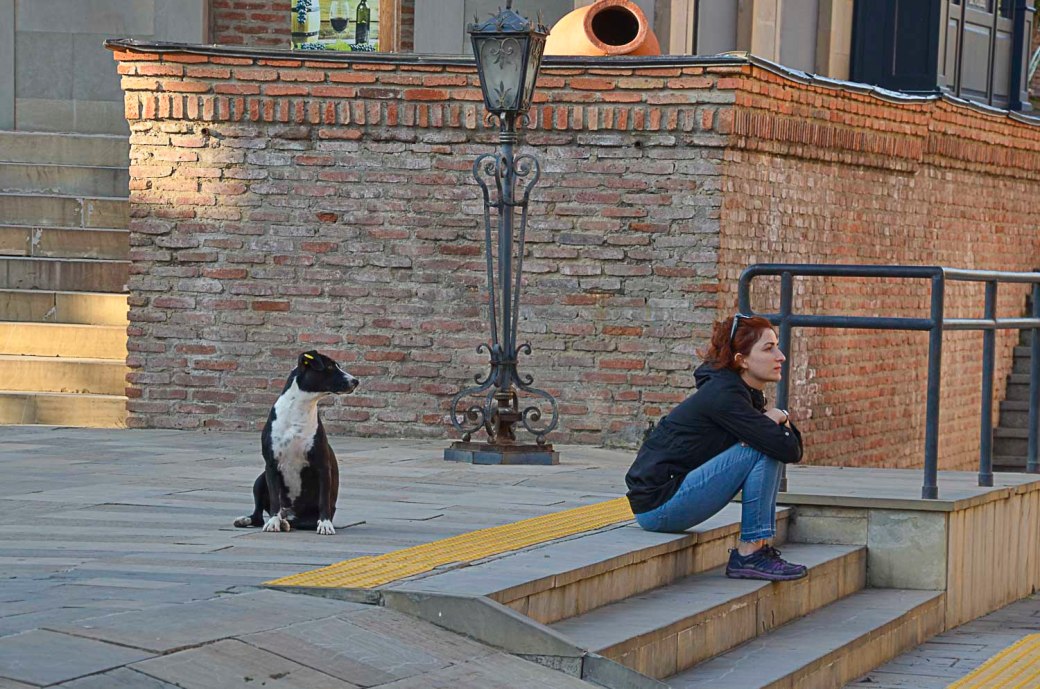
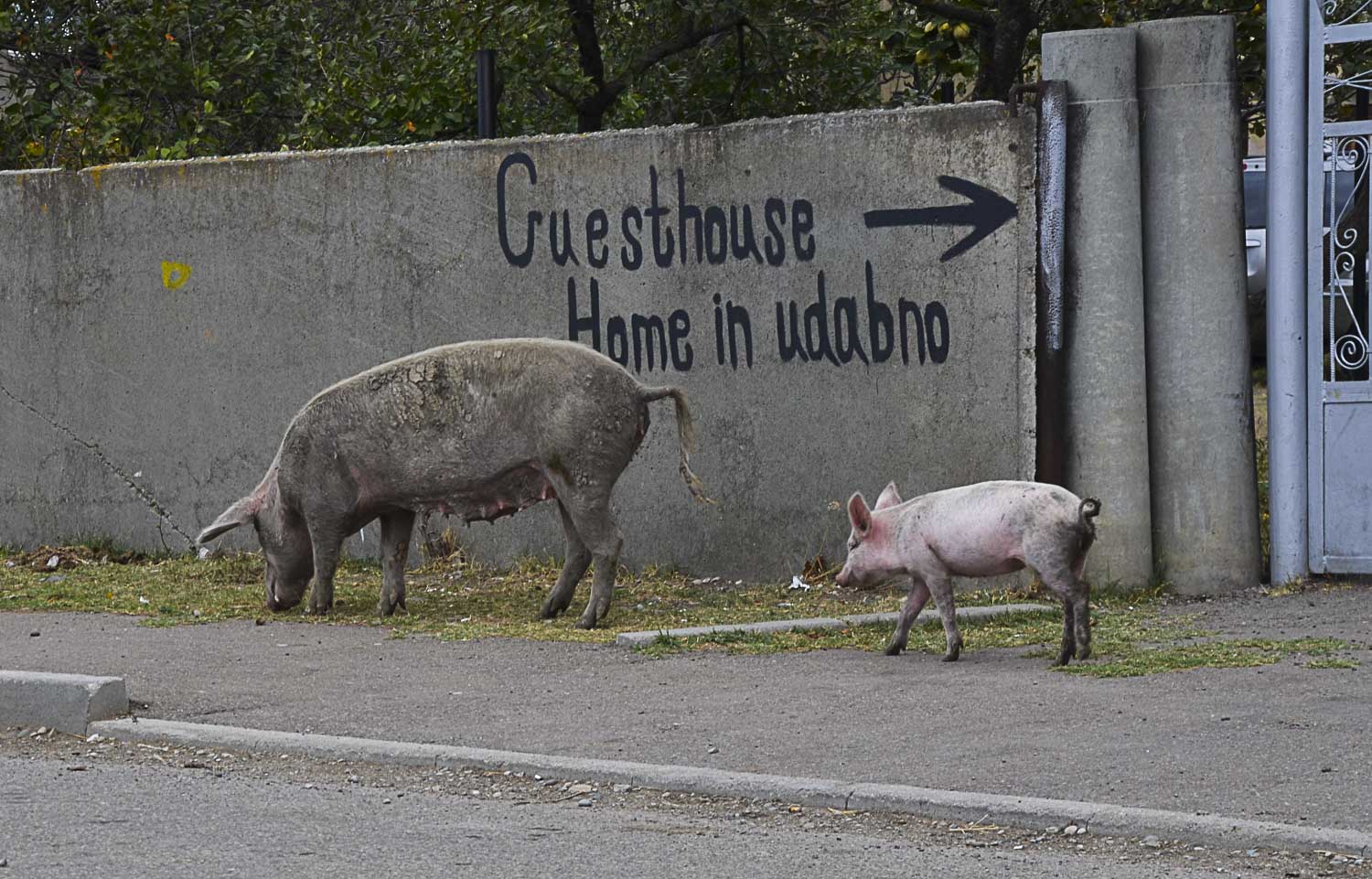
Udabno, at first sight, seems a forgotten place in the desert. Originally a Soviet built village – but then abandoned and left to the last, striving old farmers. Since about 8-10 years it has been brought to life again, by a Polish guy who fell in love with Georgia when traveling the countryside. His idea was to build a restaurant and hostel for people driving through on their way to David Gareja  (the monastery I posted on before). This turned out quite well – and his Oasis is thriving. They promise delicious Georgian food and friendly people – and on top you get dogs and cats at your feet, charming the guests.

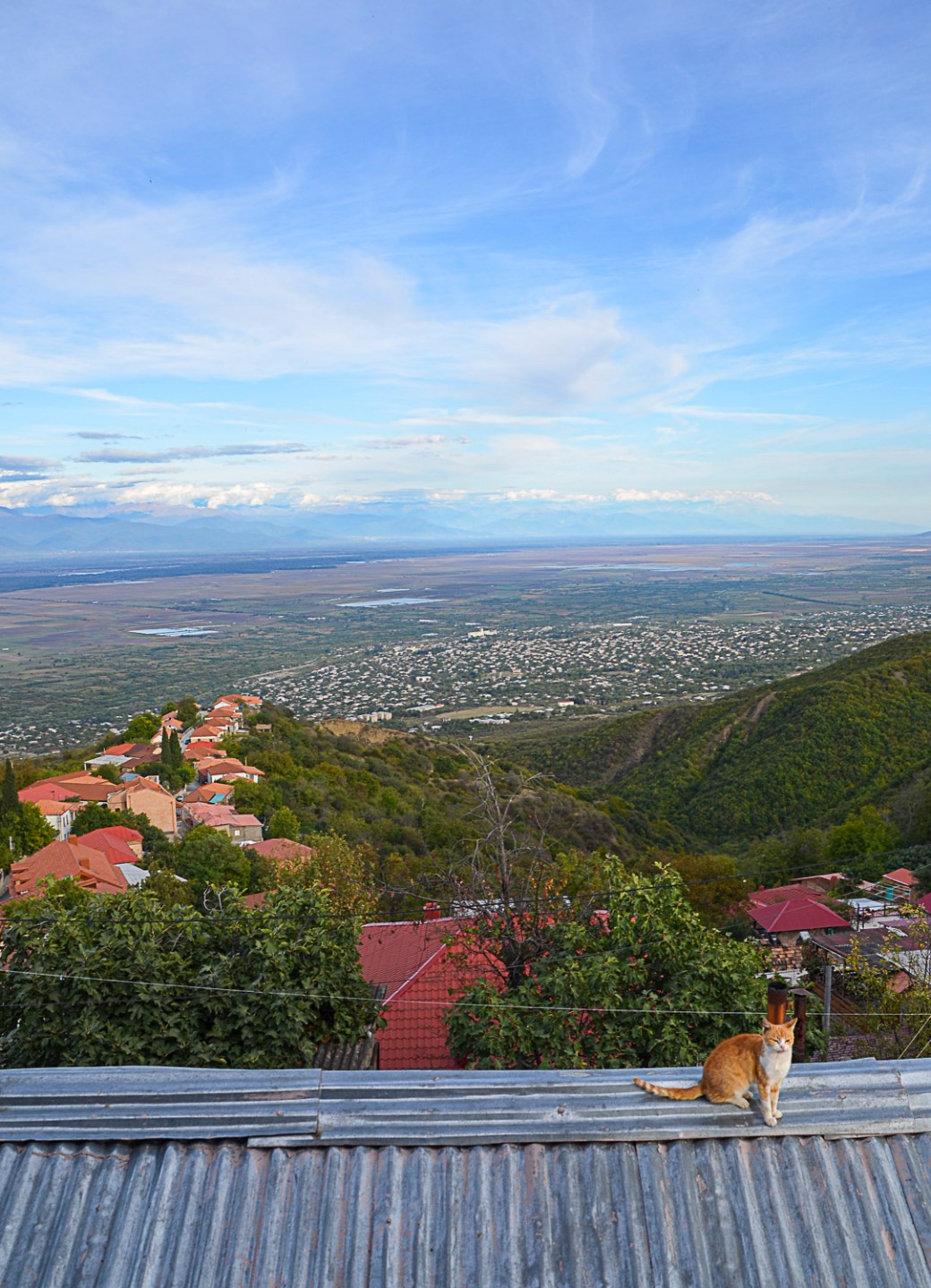
Sighnaghi, the pearl of the Kakheti region, is one of the most important villages in Georgia’s greatest wine district. The oldest parts are from the 18th century, with a 4-5 km town wall. We also heard it was considered maybe the most beautiful village in Georgia. Built 790 meters above sea level, it overlooks the glorious Alazani Valley and the Caucasus Mountains. In fact almost every part of it was restored by Italian architects, and paid for by the mighty family Sjevardnadze.
We learned that the cradle of Wine is Kaukasus, and Georgia has the oldest wine traditions in the world, second only to Armenia. 8000 years old Clay barrels for wine making have been found here. The wine making was unique – and still is today. The grapes were put in the clay barrels that were buried in the ground for fermentation – no additives…not even sugar. 100% ecological.

No wonder the wine tastes heavenly. We tried three different Saperavi wines from the  OKRO`s Wines, relaxing on a terrace overlooking a lovely cat overlooking the whole valley and the mountains. Finishing off with a mild Chacha (70% – but not noticeable).

In the end I thought the strict rules applied for making these Georgian wines exceeded all intricate EU-rules, making EU not fully able to realize the fantastic quality of these wines – and therefore not marketing them as they should. Rather interesting…
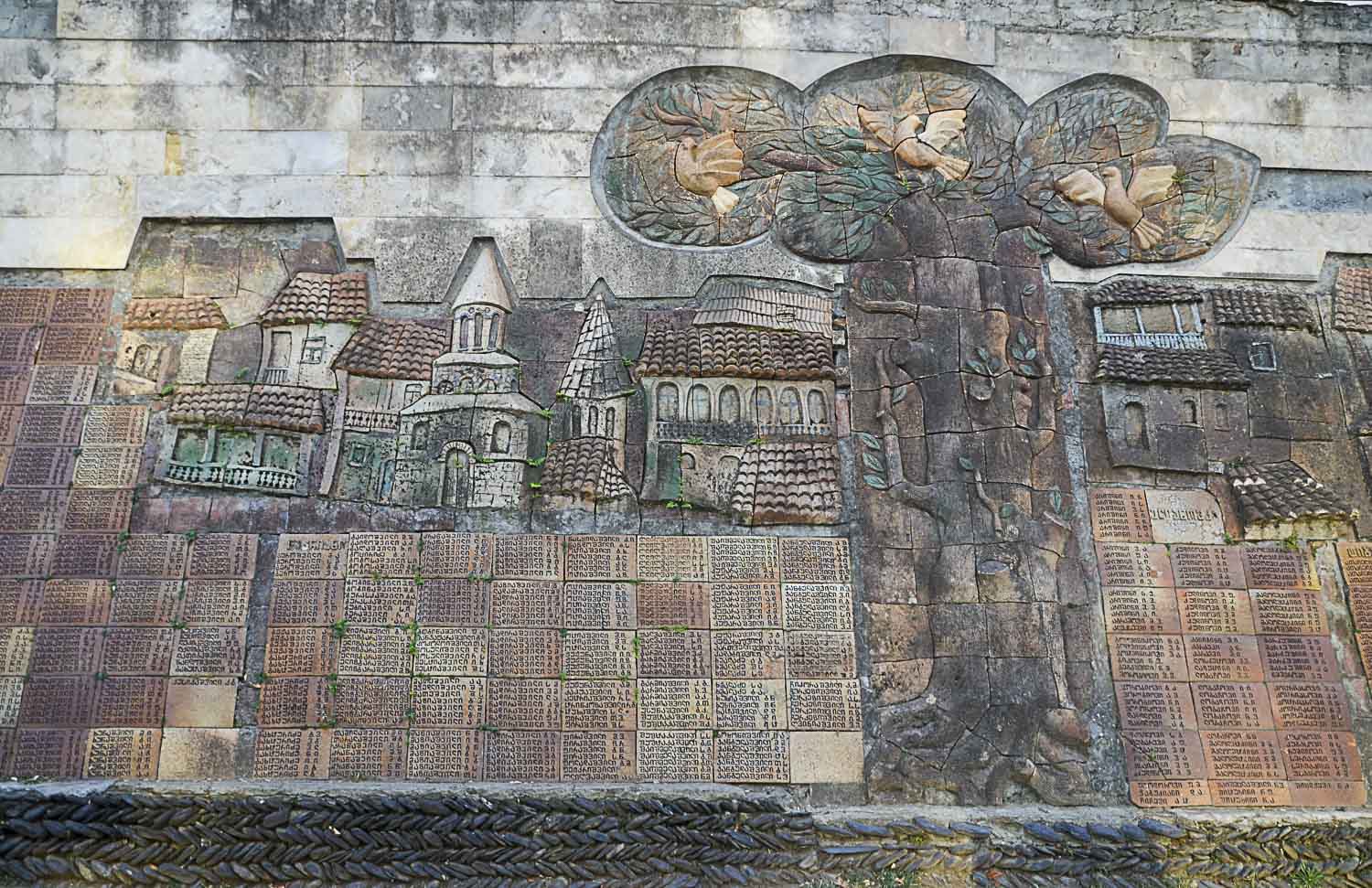
A war monument with thousands of names from the area, meant another moment of contemplation. So many horrors and so many wars this country has suffered. And still – inhabited by upright, friendly and hospitable people.
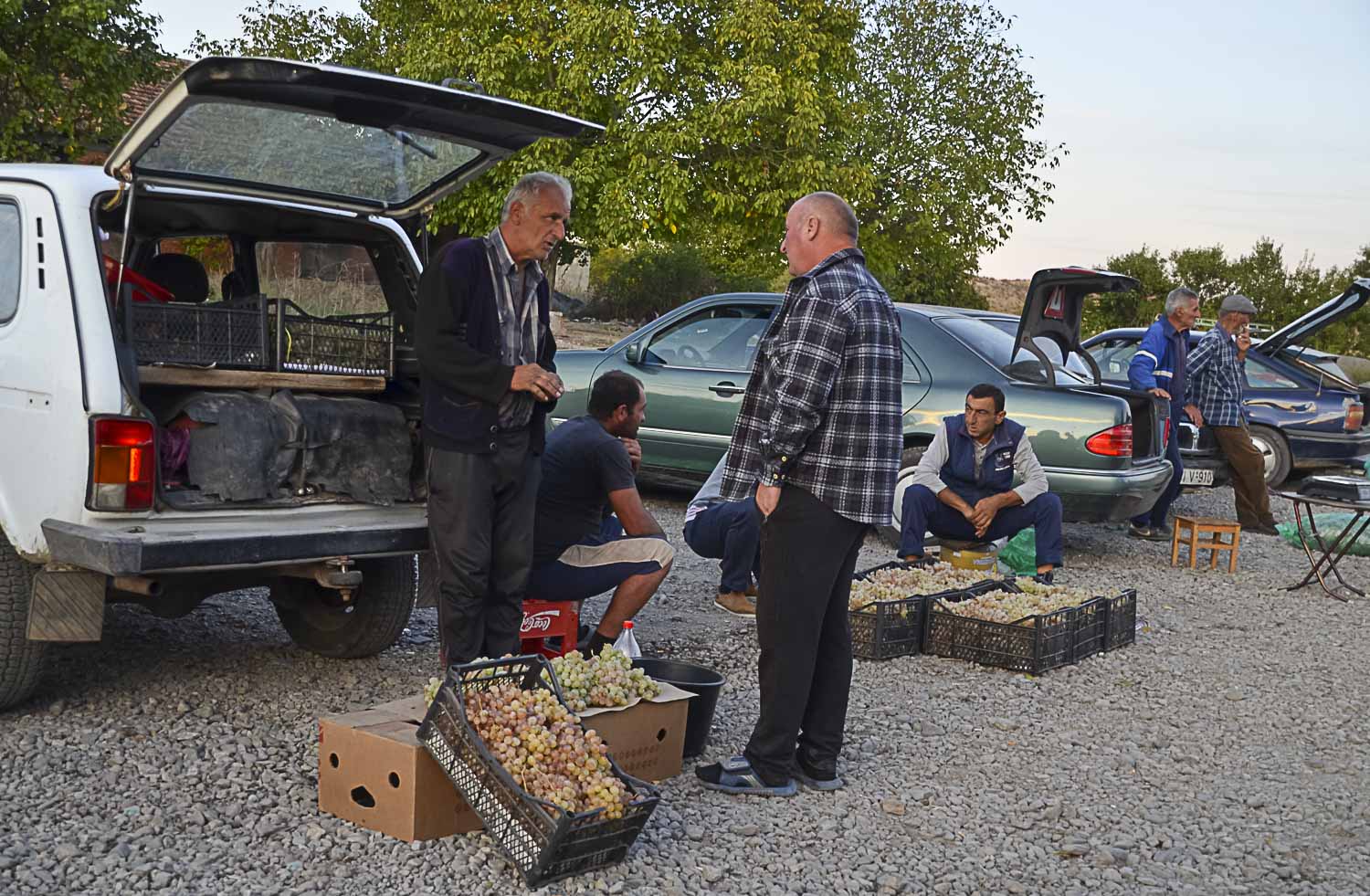
We hit the road again, and our knowledgeable guide remembered my talking about a photo of the grape vendors…This party was packing up for the night, but we stopped for a chat and a photo. Sweet guys…in the end I jumped in the car with some kilos of the sweet grapes too (not the guys!)! I was not allowed to pay anything…but hugs were free!
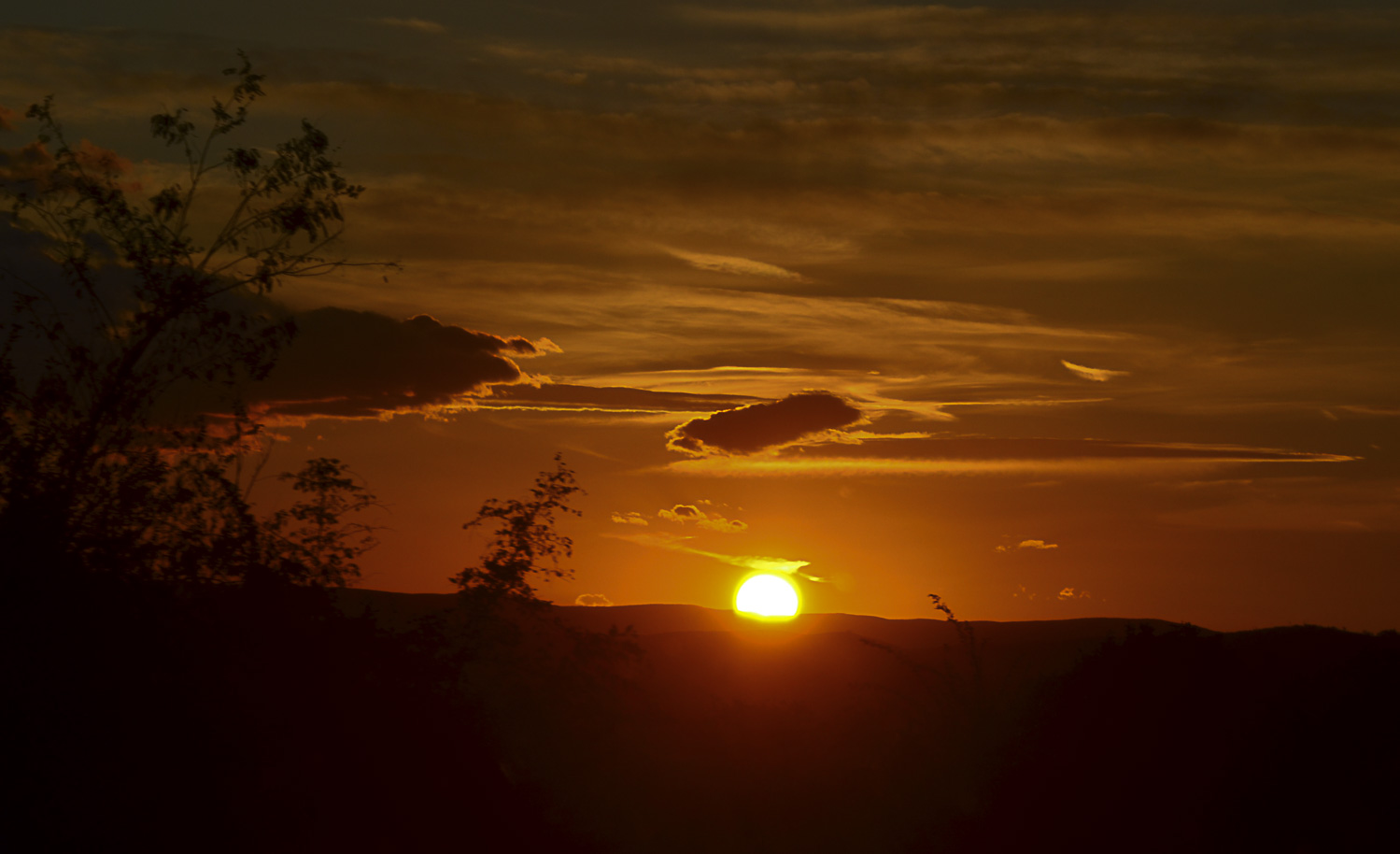
Thursday Thoughts – Hot Spot Fabrika

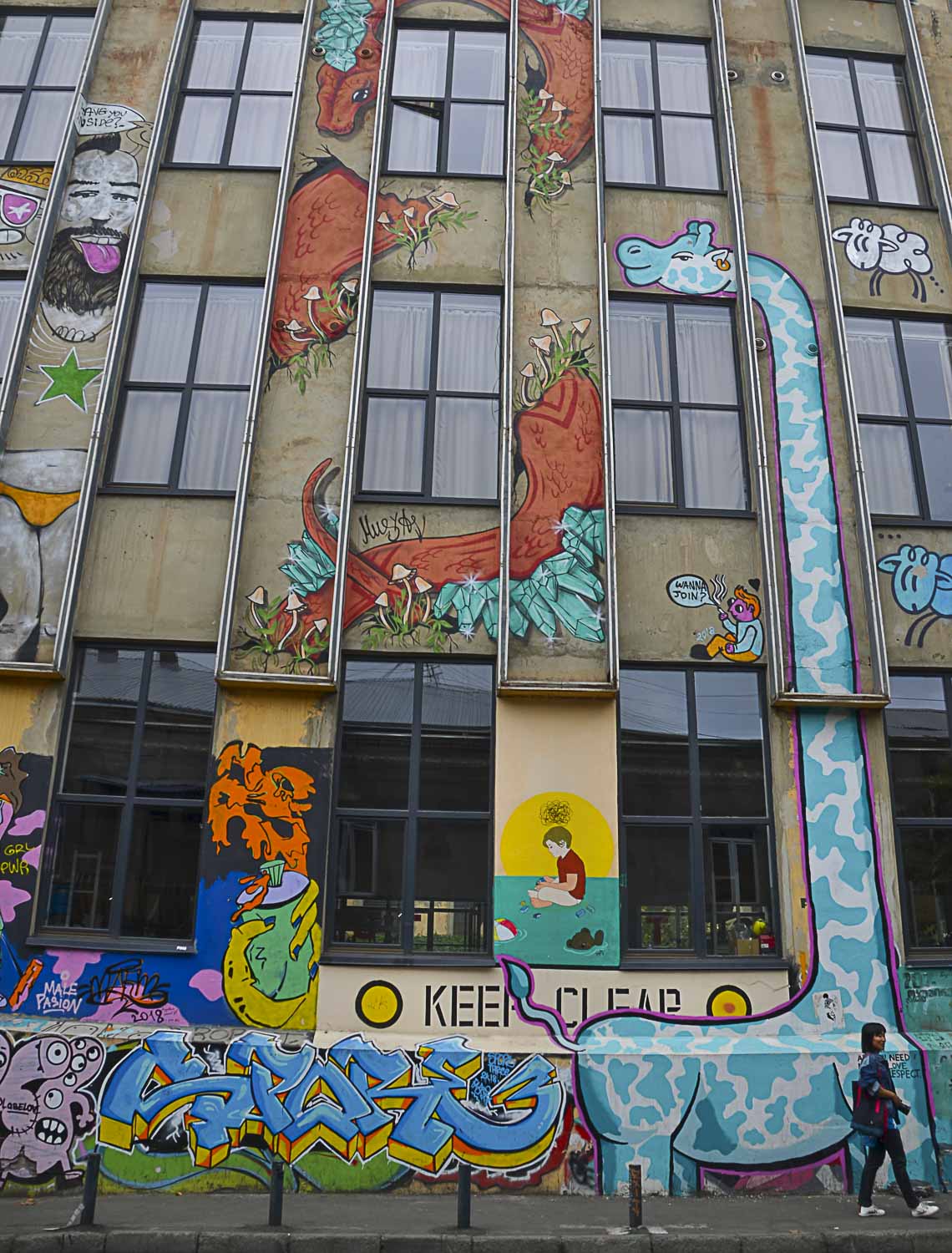
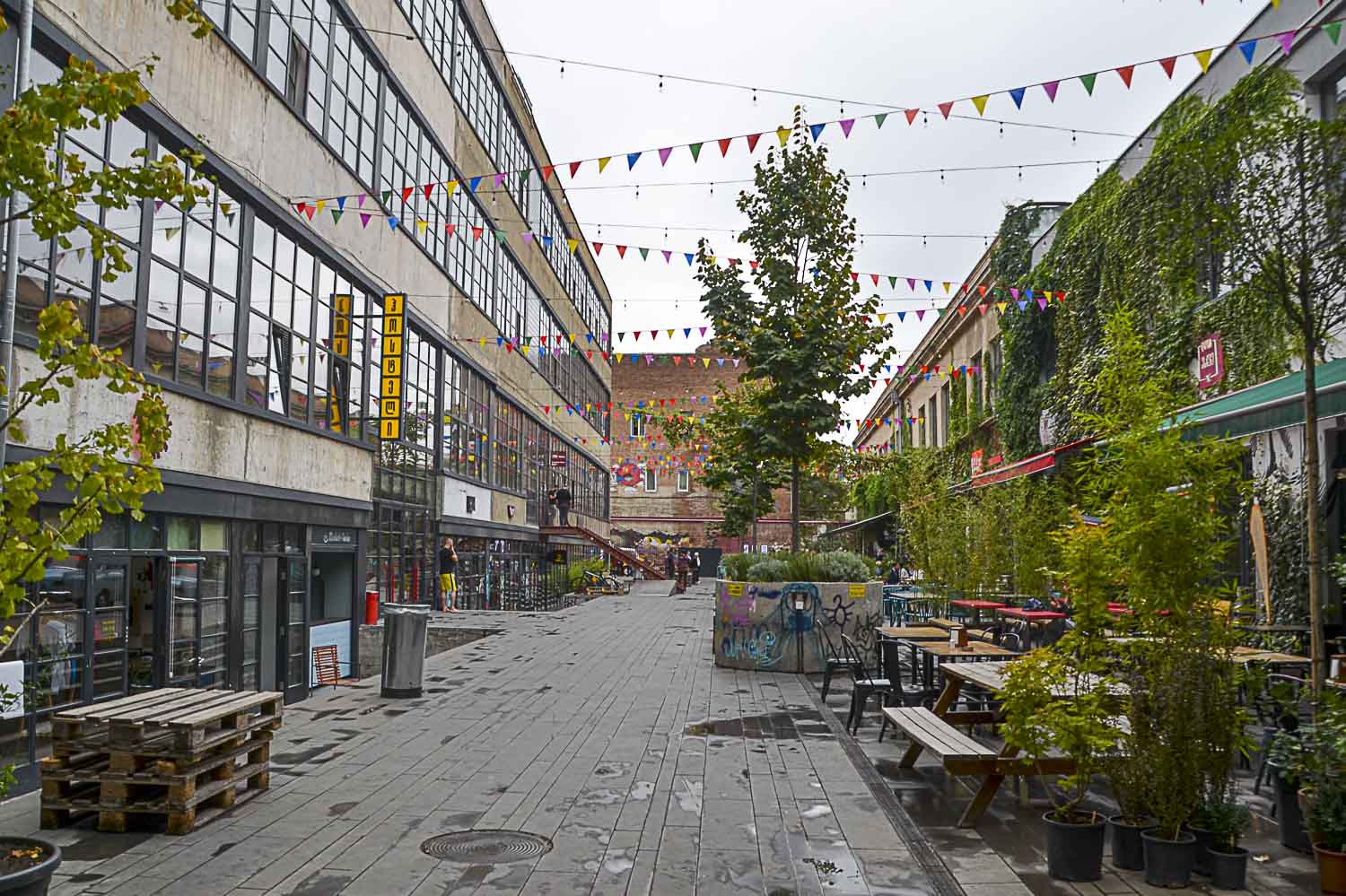
Fabrika, Tbilisi, ”Once a soviet sewing factory, has been revived and transformed into a multi-functional urban space bringing together enthusiastic individuals ready to stretch their minds with new exhilarating experiences.” This is how this urban hot spot describes itself to potential visitors – let’s have a look!
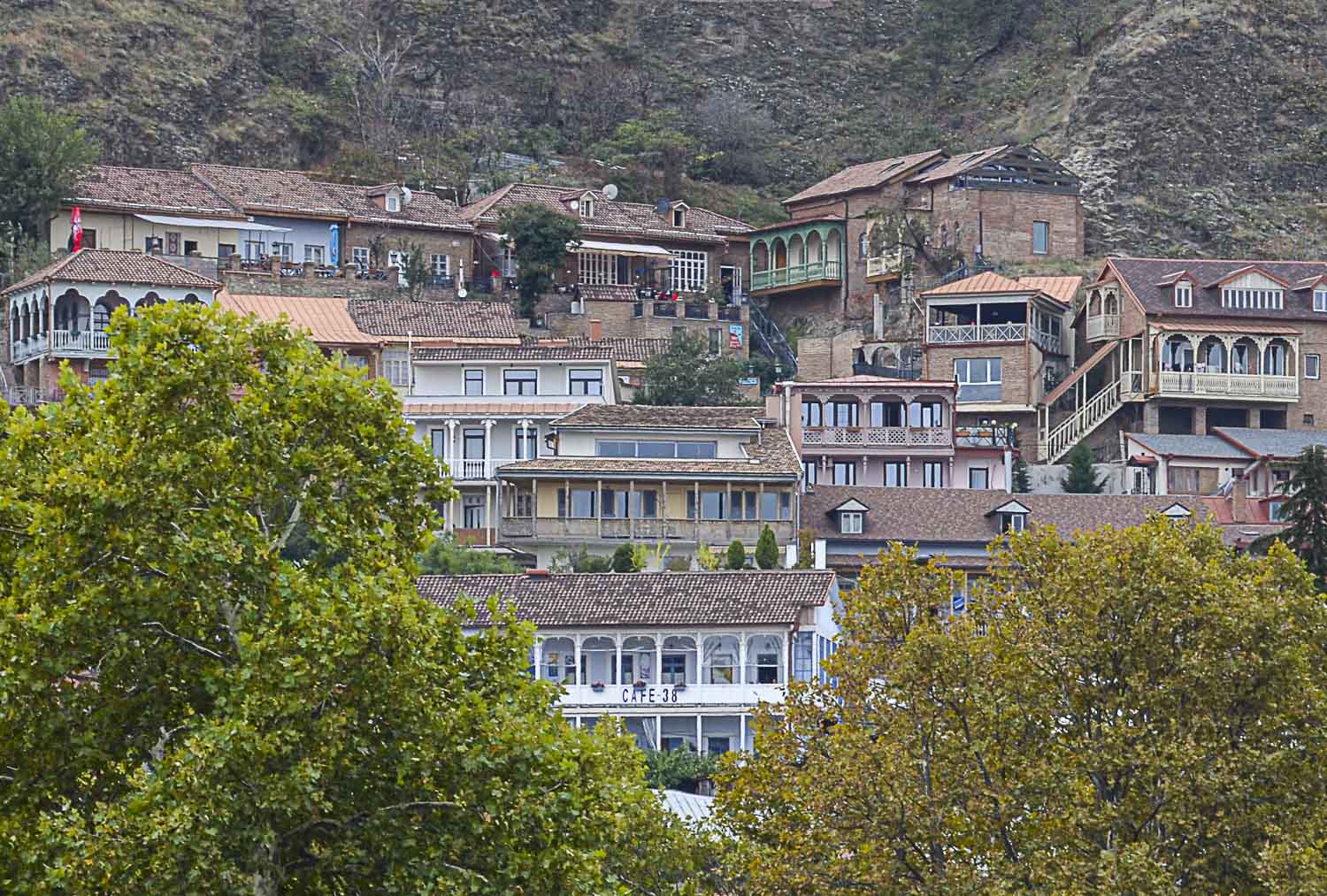
”With its striking “old-meets-new” attitude, Fabrika oozes genuinely cool soviet vibes blended with funky industrial elements.

It has become the symbol of renovation, recreation and reinvention.”

I loved the graffitti…

The spacious yard – not many there in the middle of the day, but, I could easily imagine the crowds on a hot summer’s night!

Why not step inside? Everything  so airy and colourful. Youngsters working or relaxing, playing games or just sleeping. Rather quiet at this time of the day…and no heavy music. – Which was much appreciated by me – generally there is too much music, all the time and everywhere in society. Sometimes I find it difficult to hear my own thoughts…

The hostel seemed popular, and the food was tasty. People dropping in and out every minute. Fabrika prides itself of being the creative center of Tbilisi –

…and I do believe it is. Maybe next time we will drop in a late evening for the joy of the creative process. The Georgians we met were very good at English, and I would not say no to a night of fruitful discussions on Life – over a cool drink. Before it is over.

We walked back through the streets, with the ”old-meets-new” feeling lingering all the way home. I wonder for how long Old Tbilisi will keep its ”Old” part.

Lens- Artists Photo Challenge # 74 – Abstract

It makes no difference whether a work is naturalistic or abstract; every visual expression follows the same fundamental laws. – Hans Hofmann

Patti is asking us to go Abstract – ”relating to or denoting art that does not attempt to represent external reality, but rather seeks to achieve its effect using shapes, colours, and textures.”

Over the last 30 years I have developed a taste for abstract art. But, something – ”that could have been painted by any child”, (said about a big blank canvas with a single red dot) as my mother would put it, will probably not hang on my wall.  But I am sure it will hang on someone else’s wall instead! That is one of the reasons to why art is so interesting. Now we are looking forward to seeing Your ideas of Abstract!

In the header, a work by a favorite of mine, Antoni Gaudí.

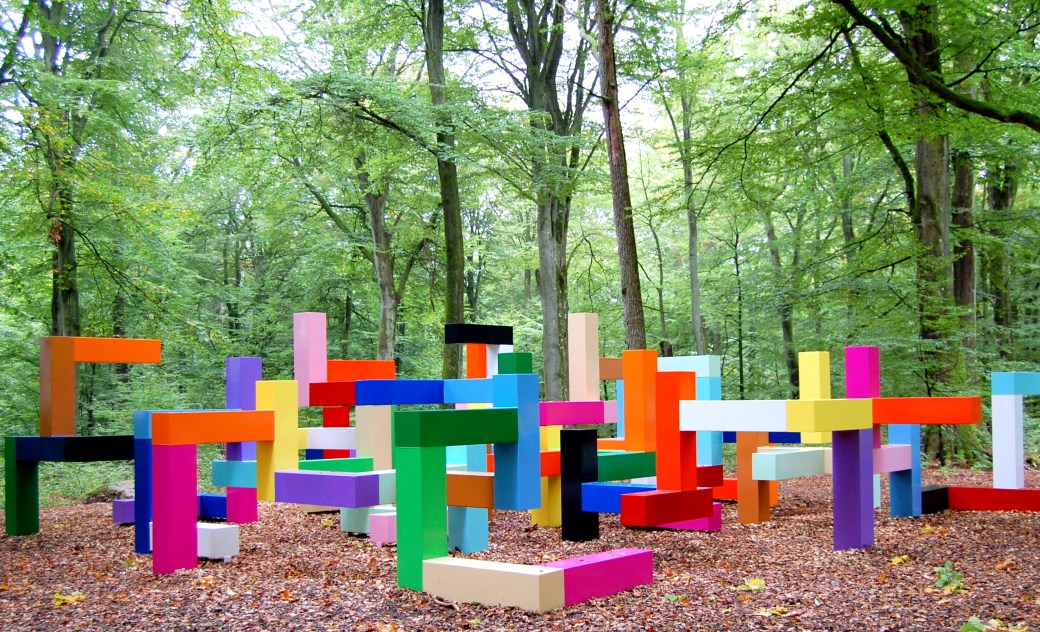
Colourful from our exhibition park in Wanås, Sweden. Much of the art exhibited here, it is allowed to climb on or walk into. Do you think some art/art forms are ”more useful” than others?

Glass from Kosta-Boda Art Hotel – a material very much ”alive”

The more horrifying this world becomes, the more art becomes abstract. – Ellen Key

People like abstract art because it makes them feel clever. –  James Acaster

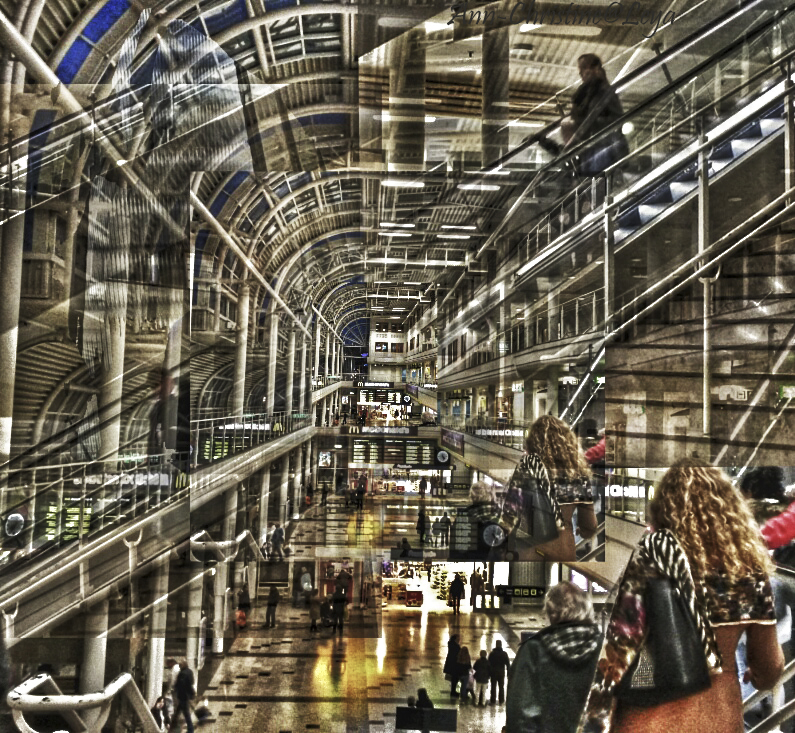
The two images above are both examples of a mix of photographic art and architecture. The first one is a phone photo from Helsingborg trainstation, processed in several apps, and the second one was made by simply tilting the photo (and raindrops on the lens).

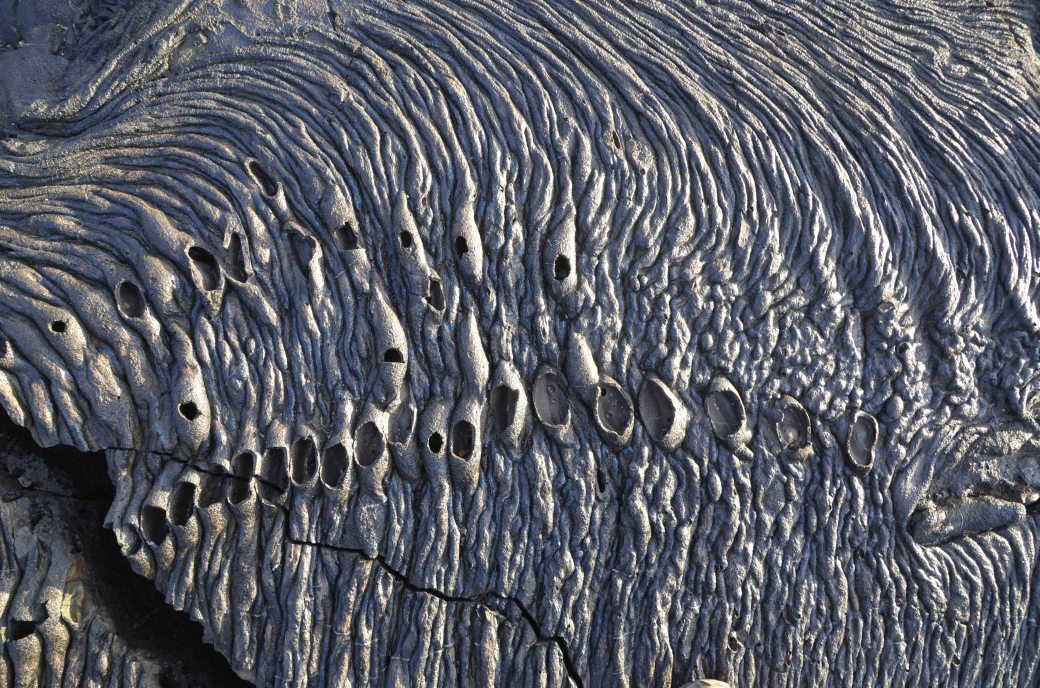
Finally, some of Nature’s own abstract art –

I used to wonder, How do artists think when they work with an abstract piece of art? Well, Pablo Picasso says that There is no abstract art. You must always start with something. Afterward you can remove all traces of reality.

– Sounds perfectly right to me.

We send our heartfelt wishes to all our Australian blogger friends who have experienced weeks of devastating fires. May the rains come soon and bring an end to the terrible fears and destruction.


Tuesday Photo Challenge – Peace

Tuesday Photo Challenge – Peace

Non-Violence is a bronze sculpture by Swedish artist Carl Fredrik Reuterswärd of an oversized Colt Python.357 Magnum revolver with a knotted barrel and the muzzle pointing upwards. Carl R. made this sculpture after singer, songwriter and peace activist John Lennon was murdered.

There are currently 16 copies of the sculpture around the world. An original standing outside the United Nations headquarters in NY.

This photo is from Lund, where I studied at the University for several years.


Thursday Thoughts – A Last Walk – Until Next Time, Aleksandr!

For the last hours of our walk together, we understood that Aleksandr had saved…

…some of the very finest of courtyards in Tbilisi. But – what is the finest is of course in the eye of the beholder. First some other special pieces we passed.

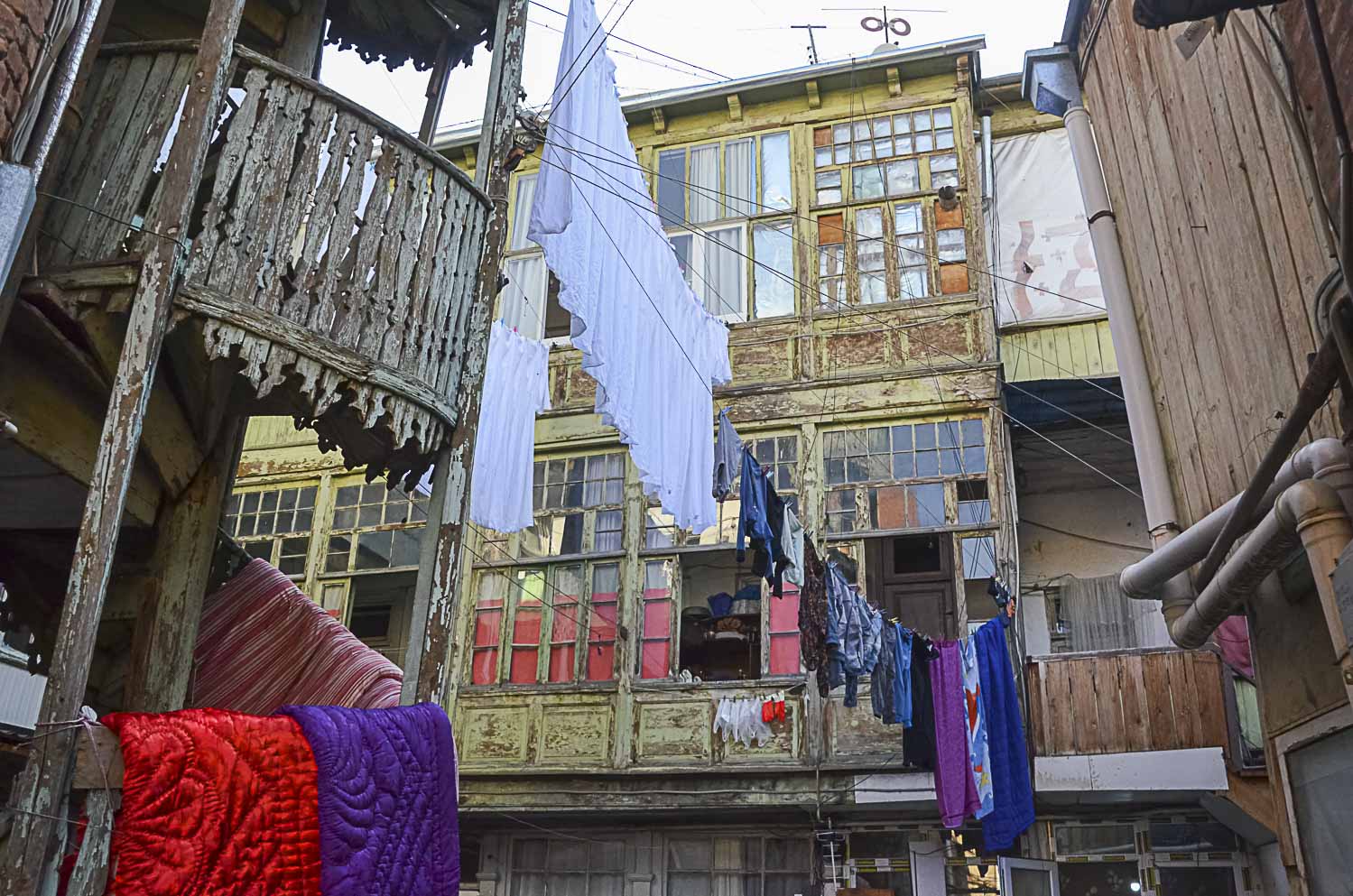
This courtyard, with a fantastic spiral staircase, was so amazing I had to return here the next day. With some luck, I found it again – but then without any laundry.

Aleksandr had earlier that day shown us some of his artwork and photos, so when we reached this well hidden courtyard – I recognized the spectacular wooden spiral staircase. I took a deep breath and started rather floating than walking in…

…to a dream. Just imagine what this place must have been like – say a hundred years ago… I hope you will enjoy this courtyard gallery of images from different angles – just could not stop myself. We stayed to talk some with the lovely family who lives here now.

They had restored the houses indoors, but the majestic staircase was for the authorities to restore…which unfortunately had not been done. I asked if they still used the staircase – the answer was Yes, and a moment later a man came running down those steps! It did Not look safe. I do hope they will save this architectural treasure for future generations. In Georgia they still have the skills and knowledge – but they should not wait too long.

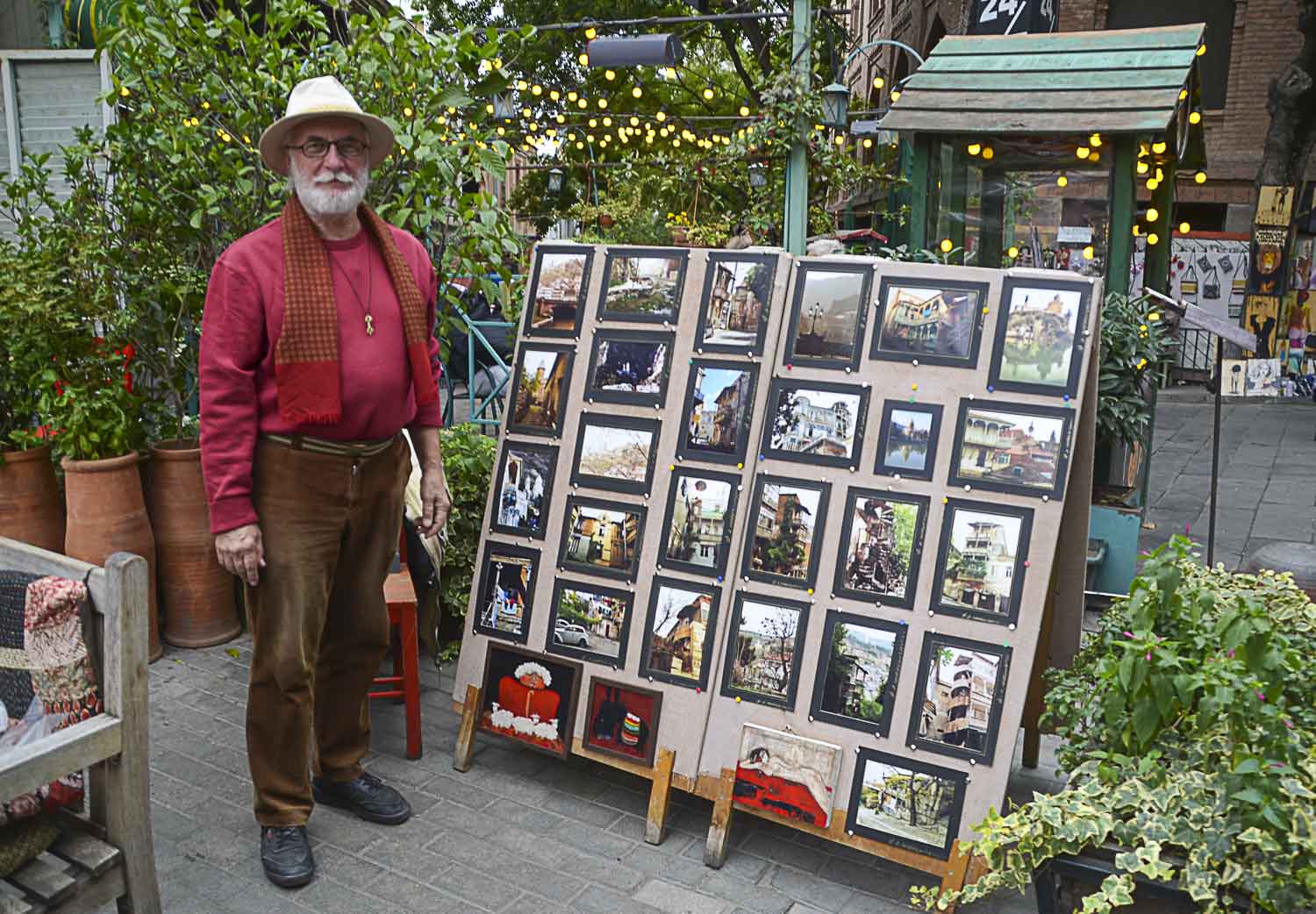
I hate goodbyes…and with Aleksandr’s passionate soul, this time it was really hard for me. We had to leave him here with his exhibition in his favorite street, next to his favorite balcony. A very special man whom I am very grateful to have met.

Thank You, Aleksandr, for your warm and generous sharing of Tbilisi ♥

Tuesday Photo Challenge – Fantasy

Tuesday Photo Challenge – Fantasy


Fantasy – a treasure for those who have it and use it creatively! For Frank this week.

Thursday Thoughts – A Walk with Aleksandr in Old Tbilisi

First of all, I want to thank Viveka of myguiltypleasures for inspiring us to go to Georgia. She went there over Christmas and totally fell in love with the city.

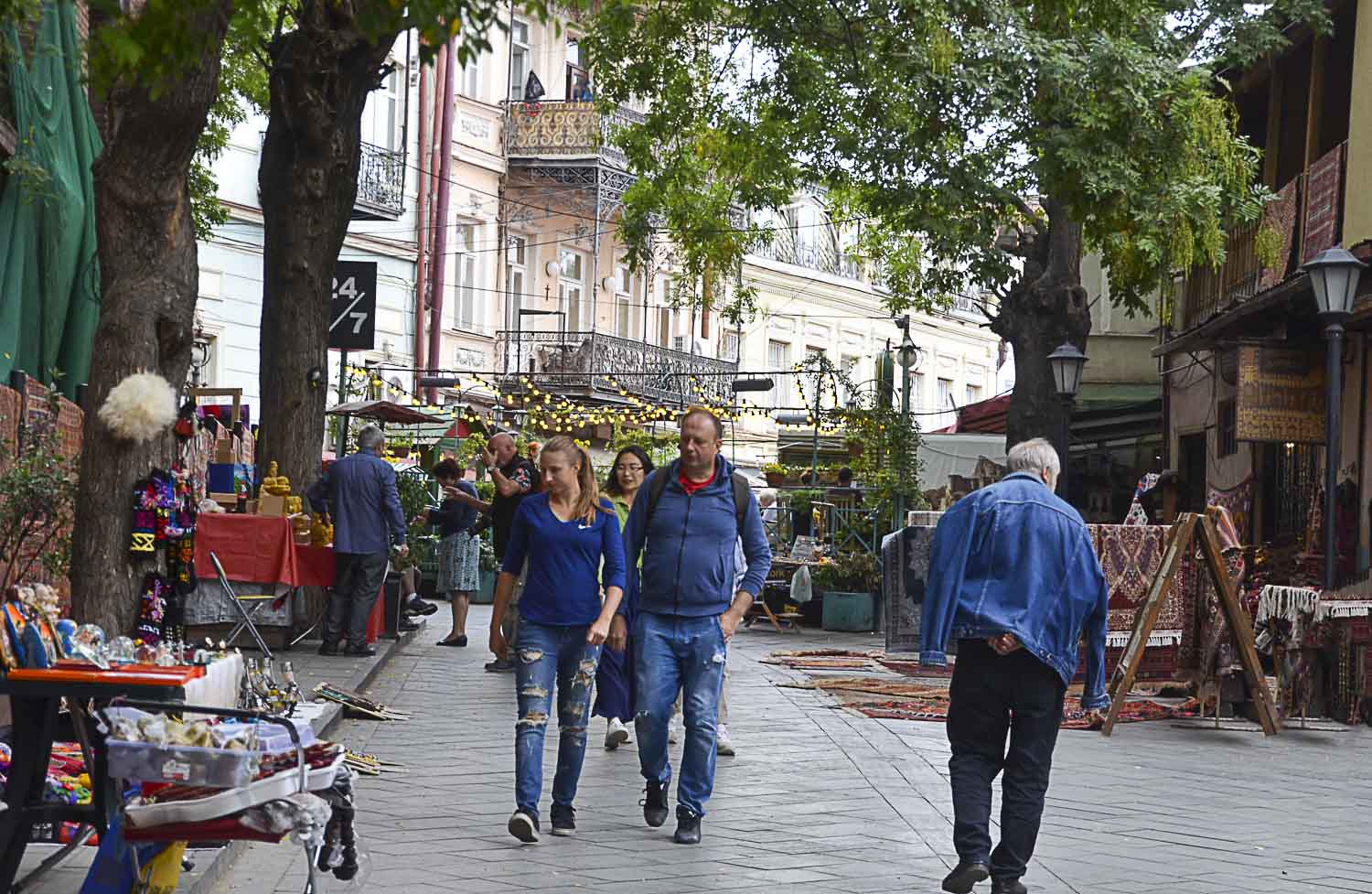
The unmistakable charm of the Old Town, the history, the people, the food and wine, brought us here. We stayed for a week, but could easily have stayed longer. I know Viveka is going again this Easter. A bit envious…I am!

We decided to have a guide for one day – a real gentleman, recommended by Viveka, who had accidentally met Aleksandr at the end of her stay. And what he doesn’t know about Old Tblisi (Old Tiflis), its history and architecture – is not worth knowing. Let’s follow him along his favorite streets!

Tblisi och Georgien 2019 516-2

Aleksandr is a well known face in Old Town, and knows every street and every house. He is a former architect – which explains his faiblesse for the Old part of the city.

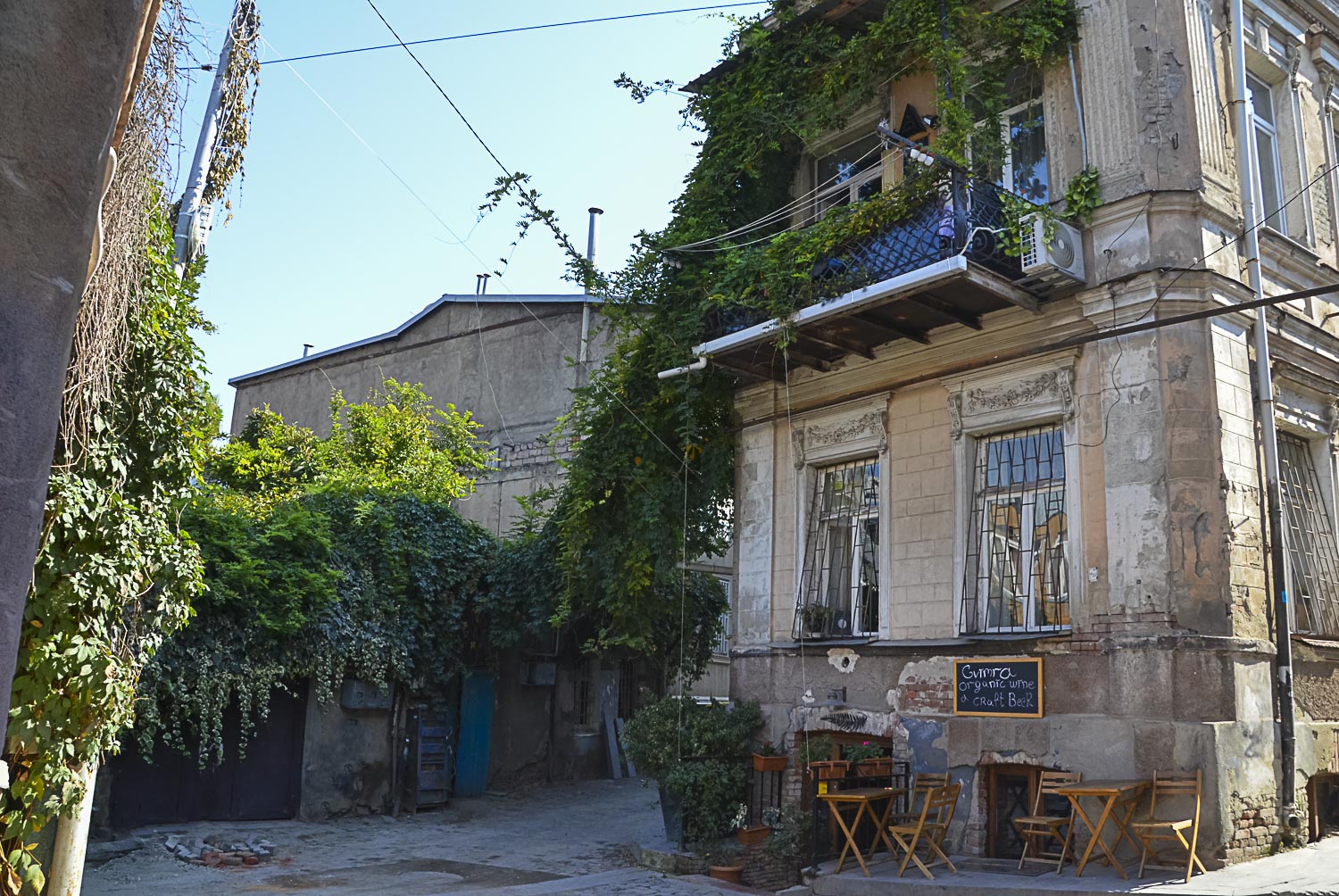
On the left hand side, according to Alexandr, you see the most beautiful balcony in town. The whole street is very beautiful – but what they are building at the end of this lovely row of balconies – I don’t know…

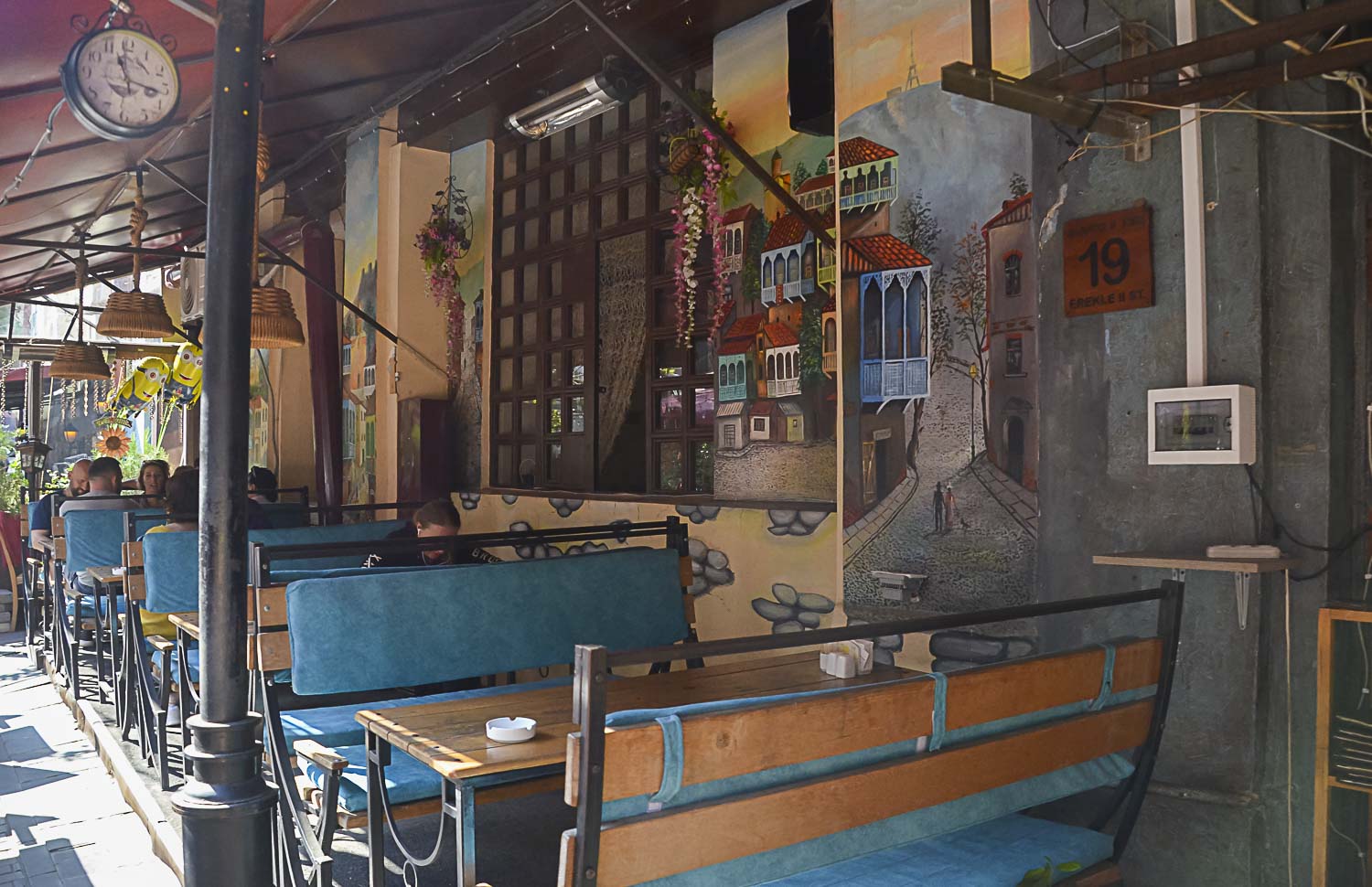
Around midday it was time to sit down for a glass of wine – resting in the shade. It was an unusually hot day for October, 27 degrees C.

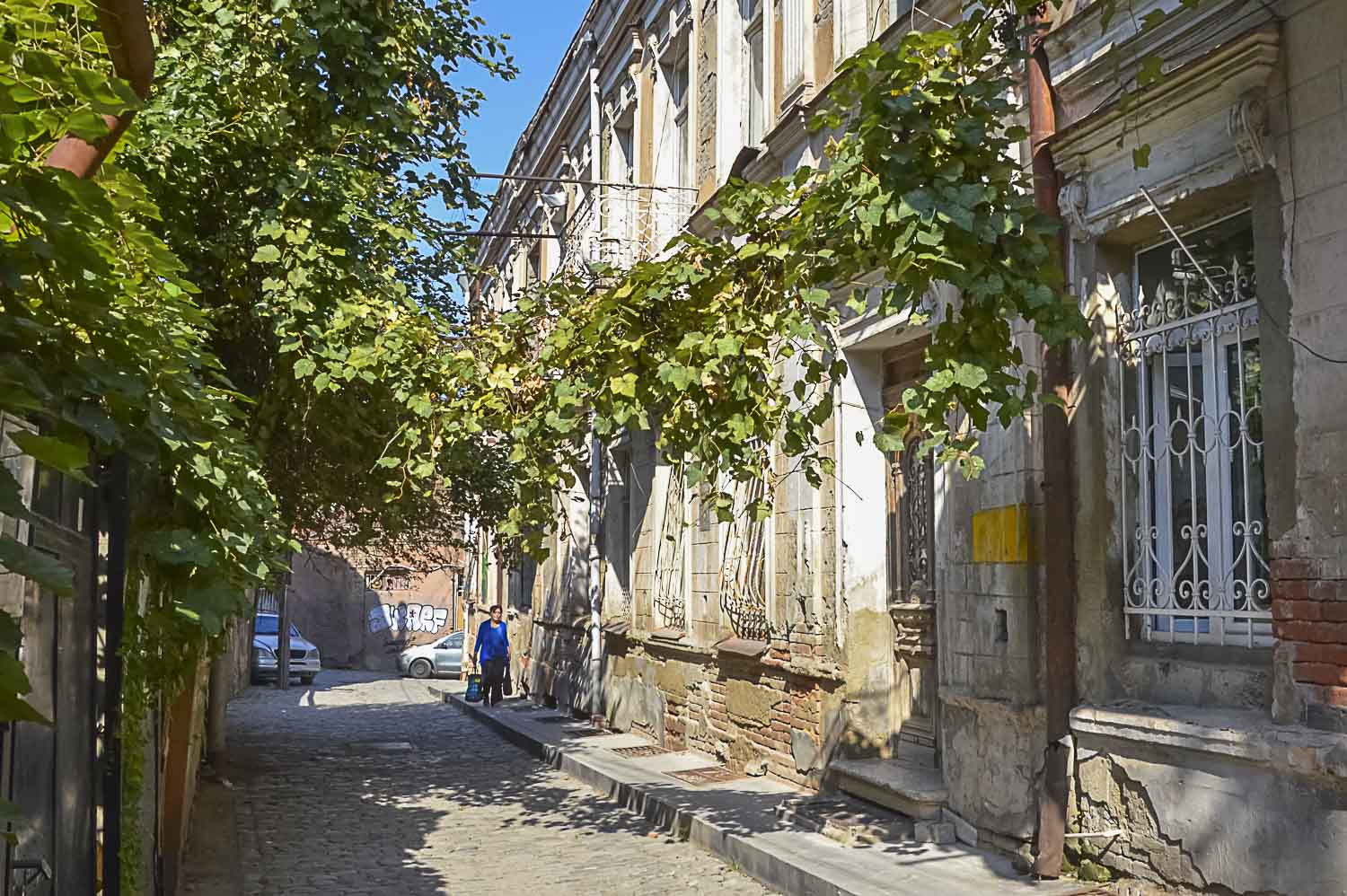
Finally… we were approaching his own favorite, Alexandre Dumas Street. Here the balconies and bay windows seem, if possible, even bigger than in other streets.

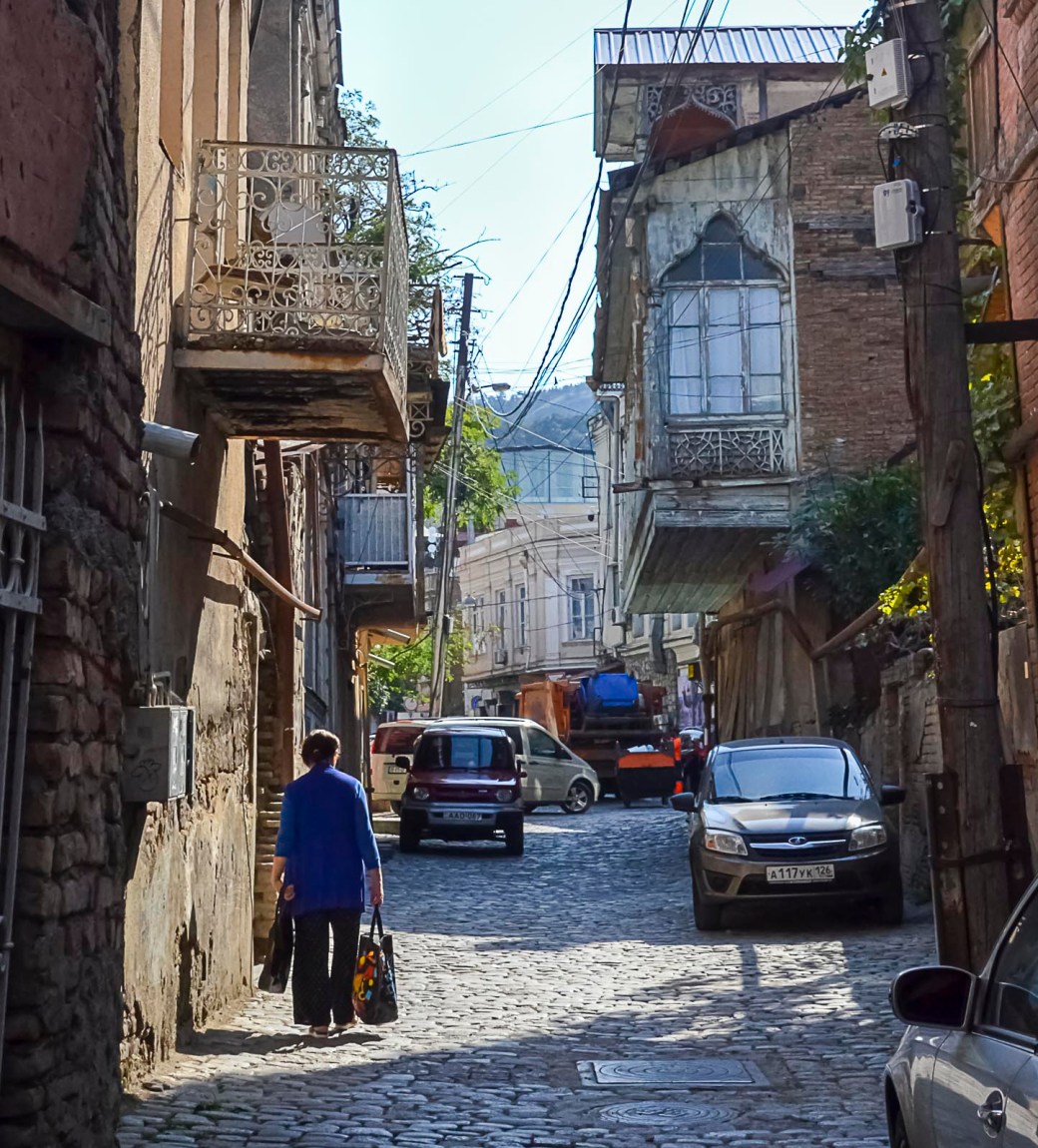
The old, cobbled Dumas is rather short and narrow. A document of times gone by – nothing yet demolished, reconstructed or changed. A short glance at Aleksandr, and the light in his eyes revealed just how much he loves his city.

tblisi-och-georgien-2019-603-3.jpg

On reaching the end though, we could see newly constructed buildings – and machines working – when the street took a left turn, and changed names.

Somewhere here we found a peaceful place to sit down and rest. Aleksandr’s tour is not over yet, but maybe next Thursday? I hope you enjoyed walking with us – you are very welcome back!

Thursday Thoughts – A Day with Georgian Historic Sites

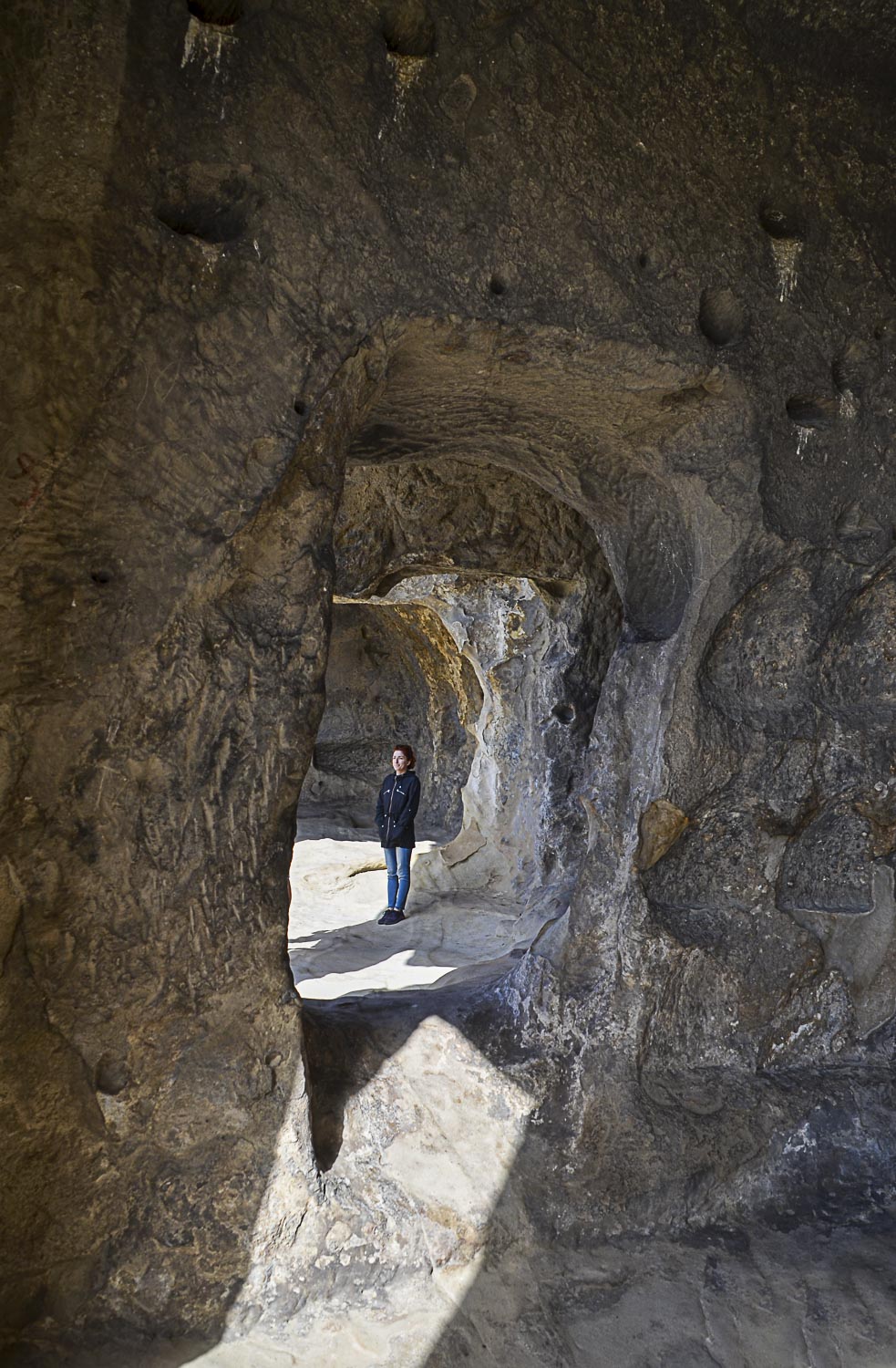
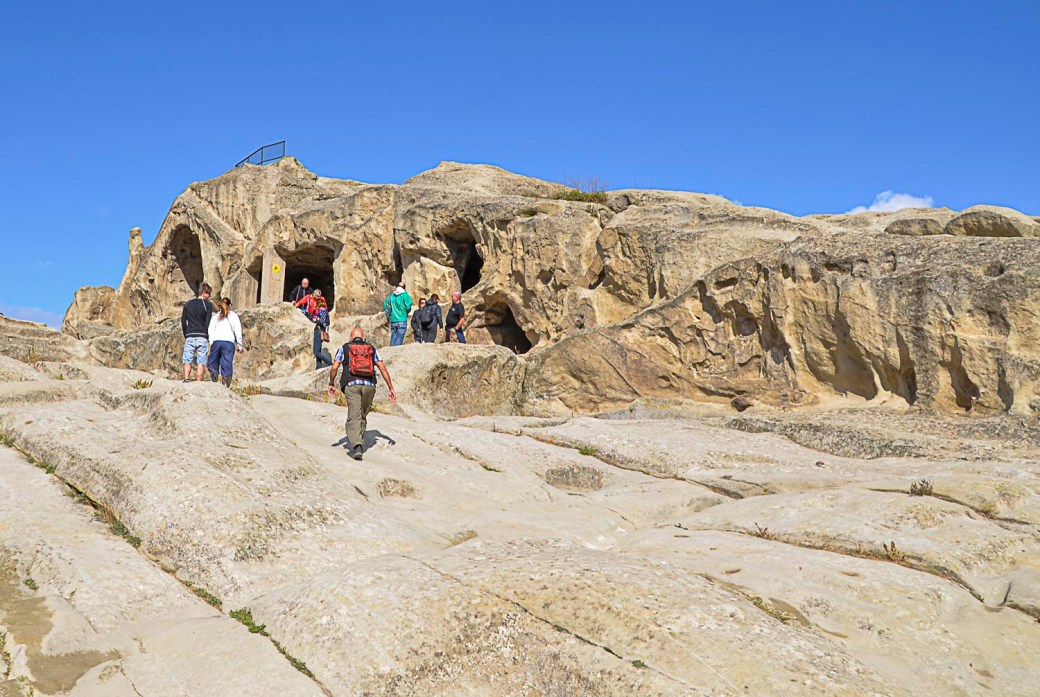
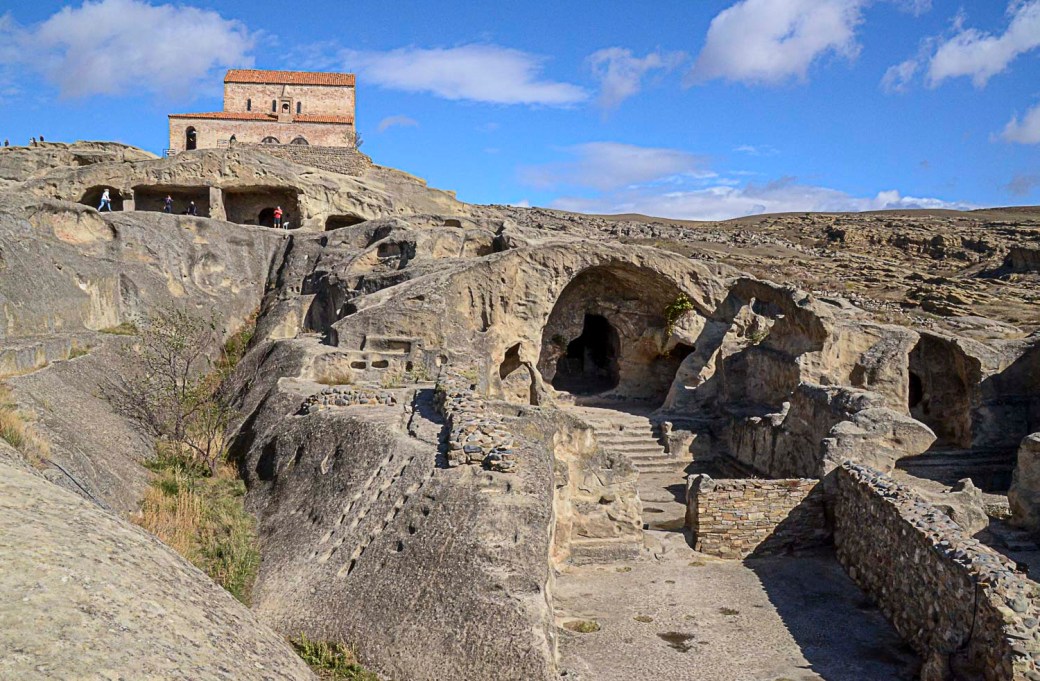
We decided to take a day out of Tbilisi – for some of Georgia’s old historic sites. Uplistsikhe is an interesting ancient rock-hewn town in eastern Georgia, built on the left bank of the Mtkvari River. It is identified by archaeologists as one of the oldest urban settlements in the country.

As our eminent guide, Katie, led us through the remains of this once 20 000 people inhabited town – she told us that even if it was almost destroyed by the Mongolians in the 13th century, the area also suffers from frequent earthquakes, which finally finished its existence.

The town contains various structures dating from the Early Iron Age to the Late Middle Ages, and is notable for the unique combination of various styles of rock-cut cultures from Anatolia and Iran, as well as the coexistence of pagan and Christian architecture.

At the summit of the complex is a Christian basilica built of stone and brick in the 9th-10th centuries. (Another photo from it last Silent Sunday.)

The quiet interior is in perfect harmony. I felt completely at peace with myself, alone in the natural light, in a translucent sphere.

Archaeological excavations have discovered numerous artifacts of different periods, including gold, silver and bronze jewellery, and samples of ceramics and sculptures. Many of these artifacts are in the safekeeping of the National Museum in Tbilisi.

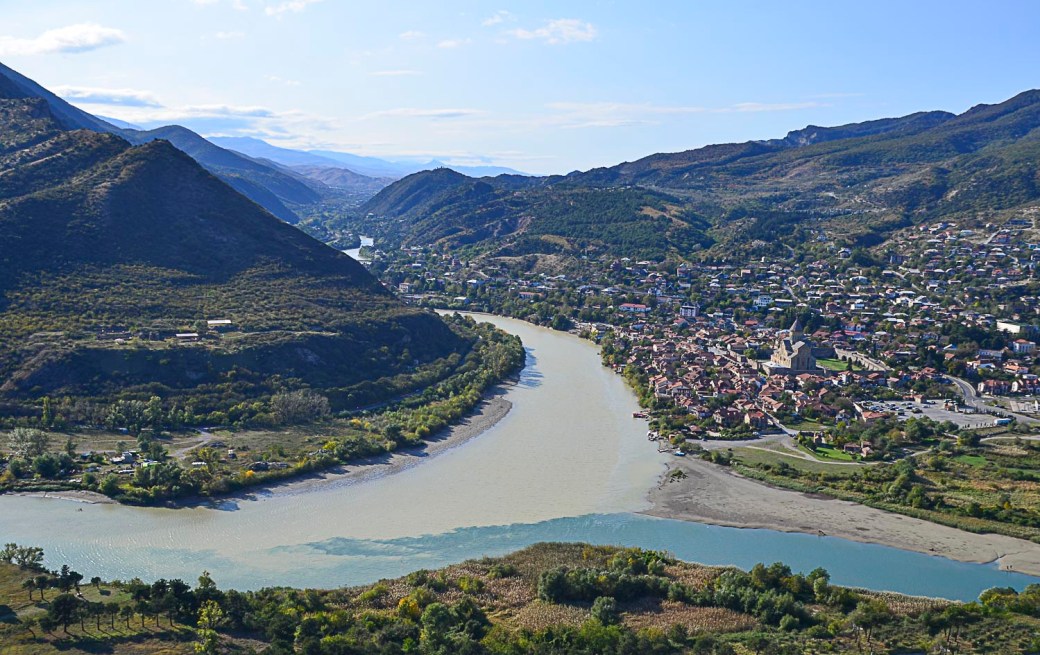
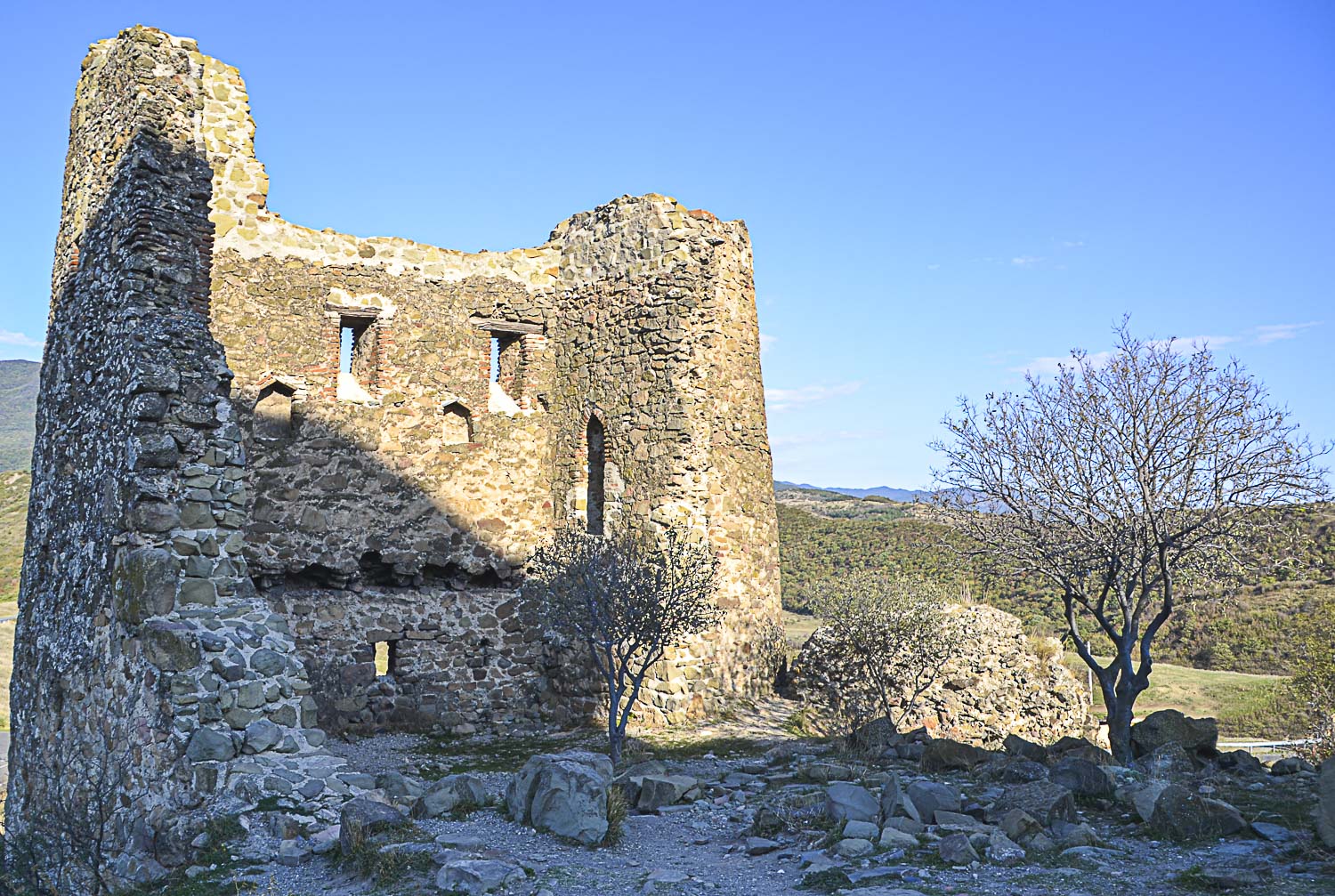
After this windy adventure, we left for Jvari Monastery (in the header, seen from Svetitskhoveli), whose name is translated as the ”Monastery of the Cross”. Jvari Monastery is a sixth century Georgian Orthodox monastery near Mtskheta, and is listed as a World Heritage site by UNESCO.

Jvari is a rare case of the Early Medieval Georgian church that survived to the present day almost unchanged. The church became the founder of its type, the Jvari type of church architecture, prevalent in Georgia and Armenia.

The monastery stands on the rocky mountaintop at the confluence of the Mtkvari and Aragvi rivers, overlooking the town of Mtskheta.

Built atop of Jvari Mount (656 m a.s.l.), the monastery is an example of harmonious connection with the natural environment, characteristic to Georgian architecture.

We ventured down to Svetitskhoveli in Mtskheta (this city also recognized by UNESCO as a World Heritage Site), one of the oldest cities of Georgia, founded by the ancient Meschian tribes in the 5th century. It was capital of the early Georgian Kingdom of Iberia from the 3rd century BC to the 5th century AD, and continued to serve as the coronation and burial place for most kings of Georgia until the end of the kingdom in the 19th century.

The Svetitskhoveli Cathedral (literally the Cathedral of the Living Pillar) is currently the second largest church building in Georgia, after the Holy Trinity Cathedral in Tbilisi. Known as the burial site of Christ’s mantle, Svetitskhoveli has long been one of the principal Georgian Orthodox churches in the region. It is considered a masterpiece of the Early and High Middle Ages.

At the end of the day, our lovely, knowledgeable guide, Katie, waited patiently for her ”sheep” to return to their master.