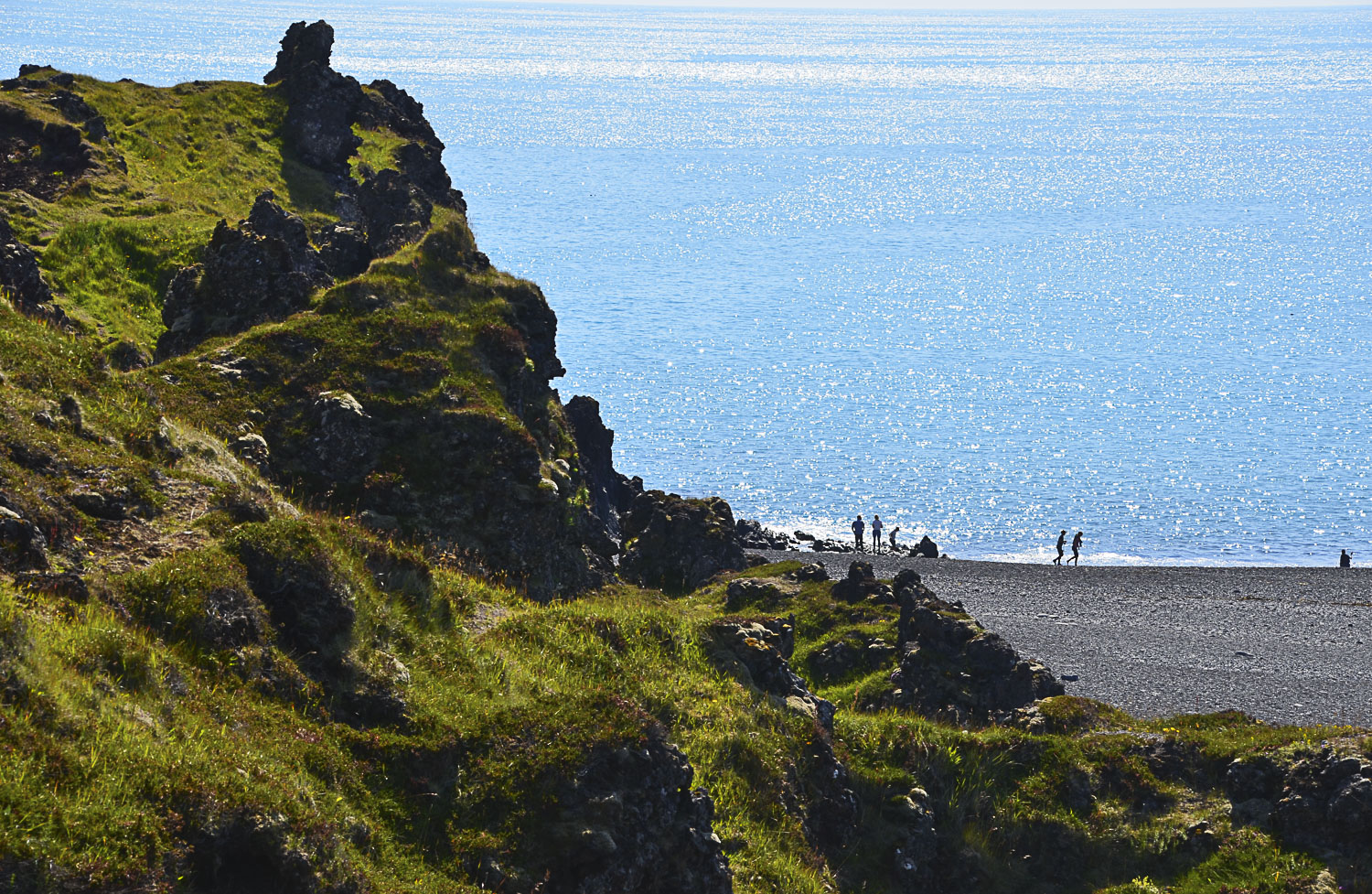
Thursday Thoughts – David Gareja Lavra

David Gareja Lavra is a historical and architectural monument within the monastic complex of David Gareja. It was built during the first half of the 6th century under the guidance of San David Gareja, one of the thirteen Assyrian monks who arrived in the country at the same time. He came to bring Christianity to Georgia, and he founded around 15 monasteries in the arid and desert like nature on the border to Azerbaijan.

David Gareja is a Georgian Orthodox monastery complex located in the Kakheti region, and the complex includes hundreds of cells, churches, chapels, refectories and living quarters hollowed out of the rock face.

Despite the harsh environment, the monastery remained an important centre of religious and cultural activity for many centuries; at certain periods the monasteries owned extensive agricultural lands and many villages. The renaissance of fresco painting chronologically coincides with the general development of the life in the David Gareja monasteries. The high artistic skill of frescoes made them an indispensable part of world treasure. From the late 11th to the early 13th centuries, the economic and cultural development of David Gareja reached its highest phase.

We left early in the morning on a private tour, because the roads were all very narrow and bumpy – no buses could go there. Road builders and machines were constantly working and in some places we had to drive in the nearby fields instead of the road.
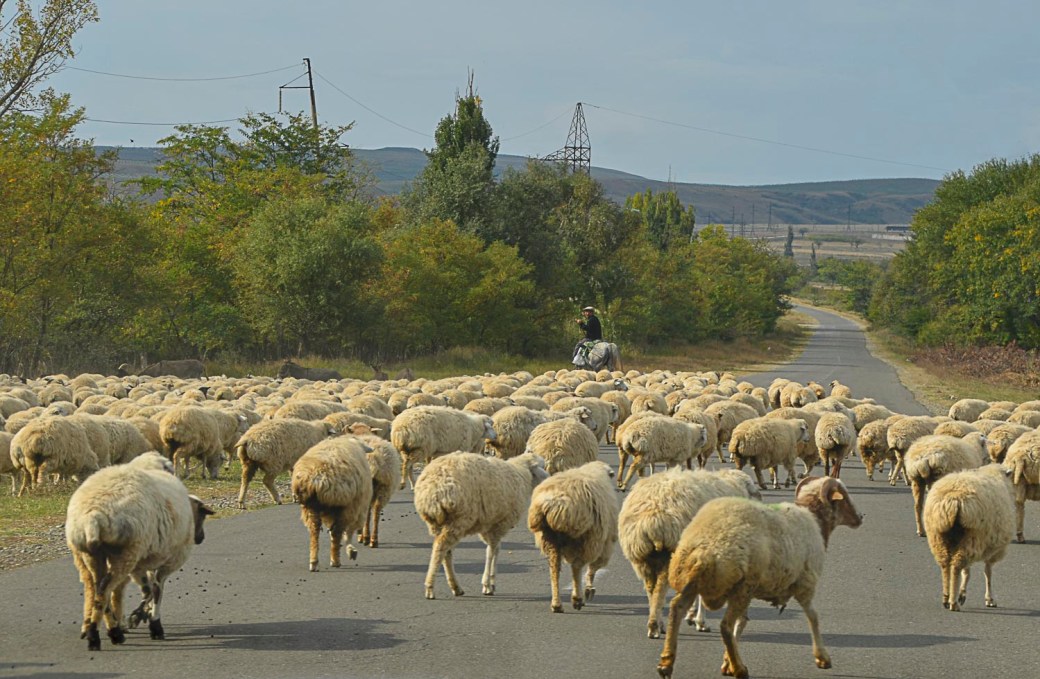
We wondered where these sheep would get any food, but loved to see them – and their shepherds on horses.
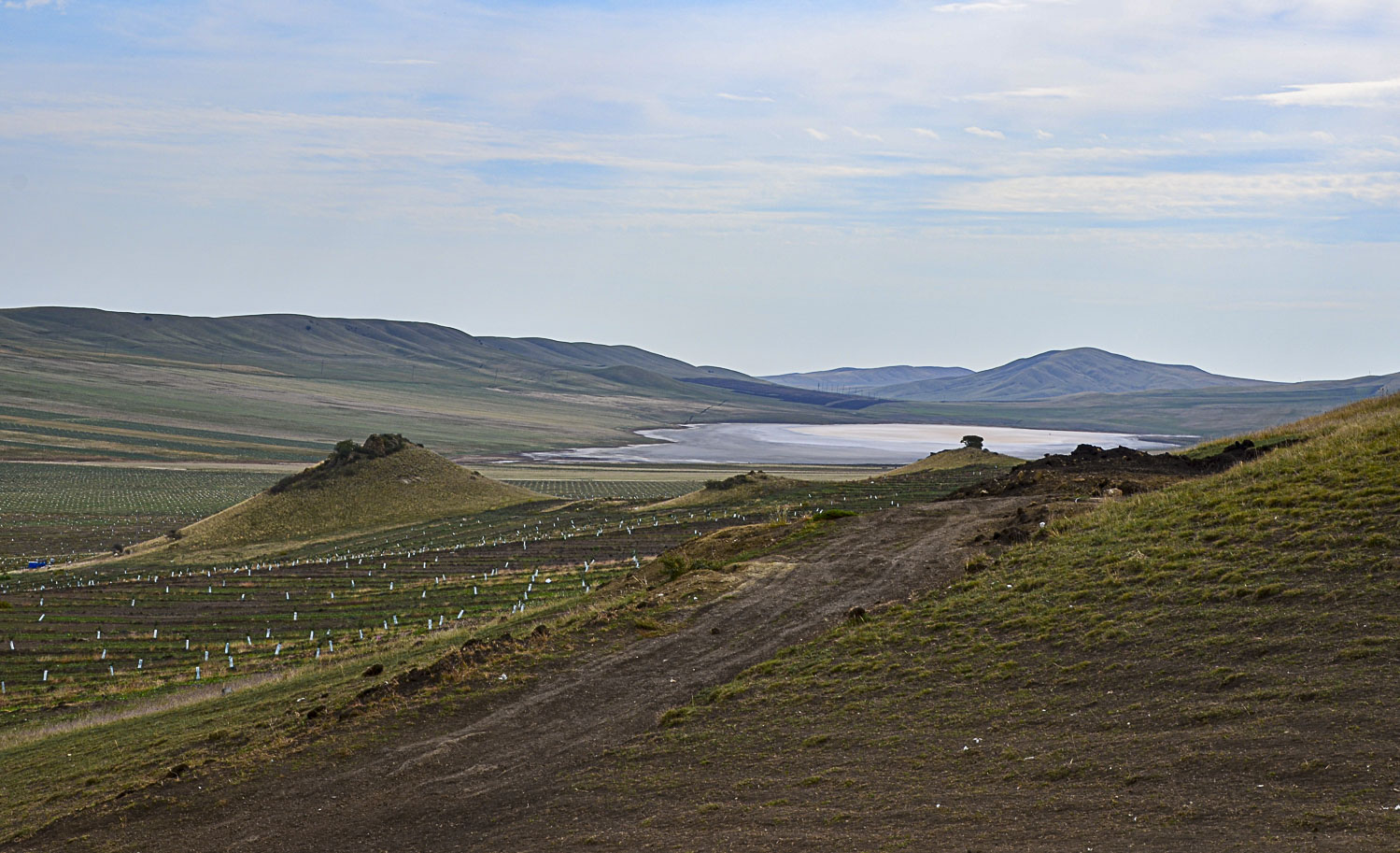
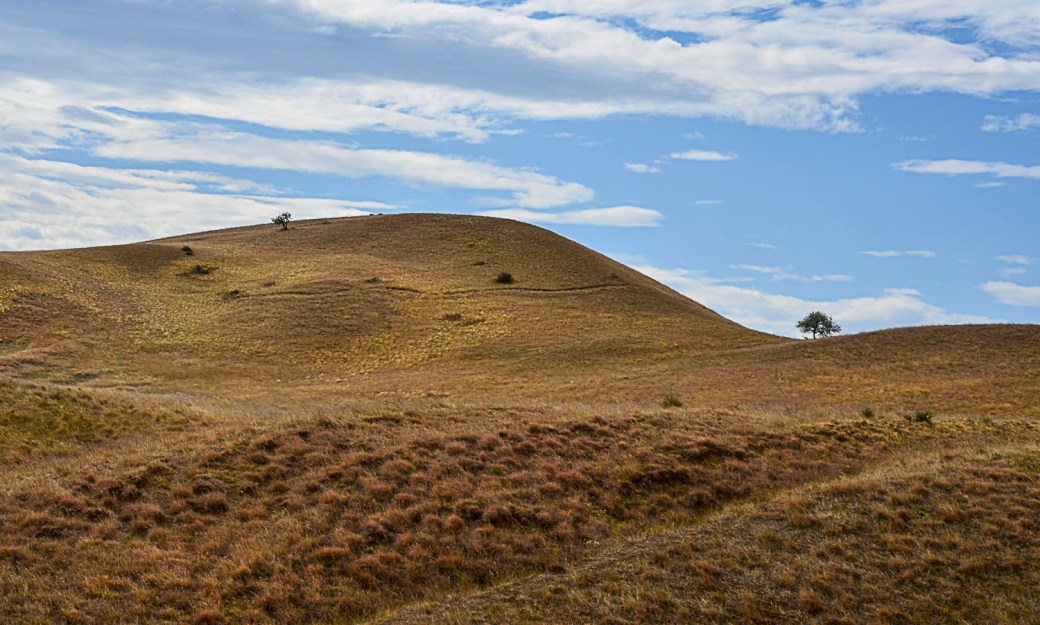
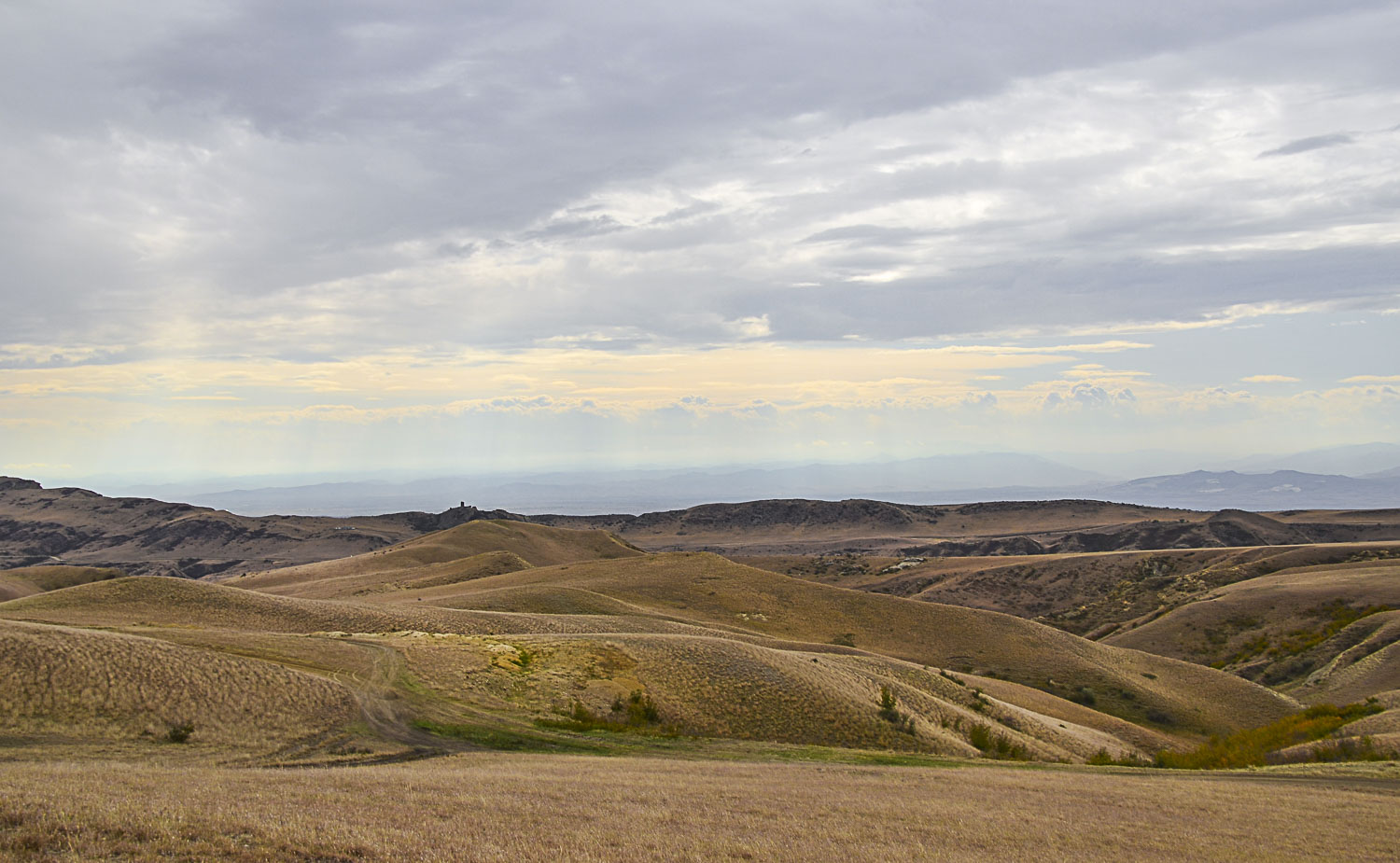
I loved the landscape, the low ridges, the long views and the serenity of the lines. We also saw gigantic areas with olive trees, according to our guide a co-operation with EU. When ready, the olives would be exported for the EU market.
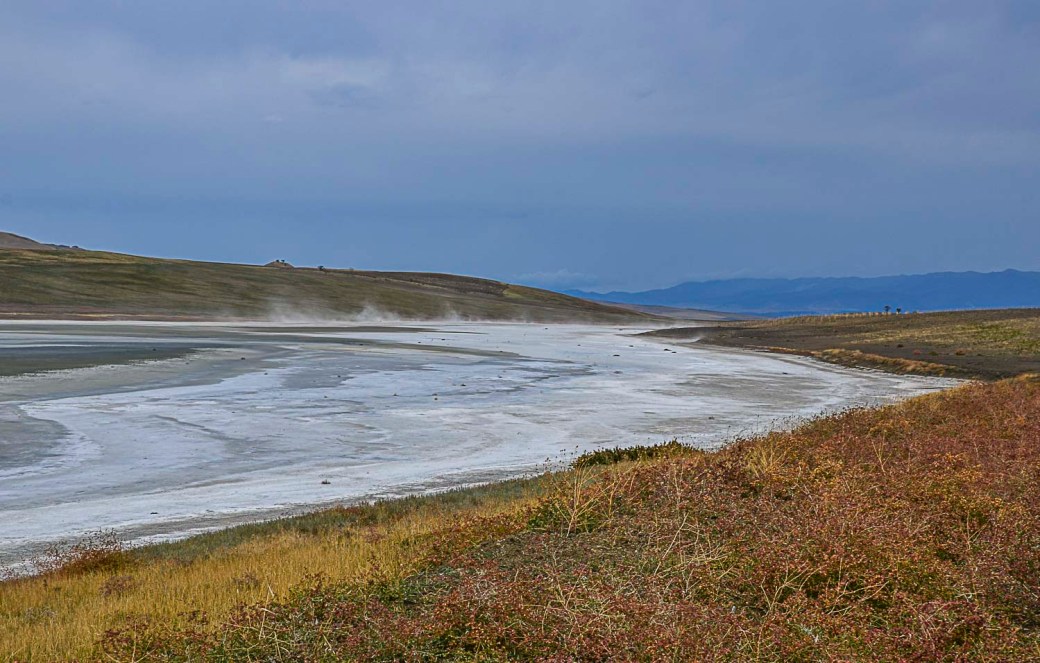
We passed some salt lakes as well. Millions of years ago, the whole area was covered in water, and today these lakes are the only remaining waters to be seen. They have no outflow in this hot and dry area, so what is left is – salt.
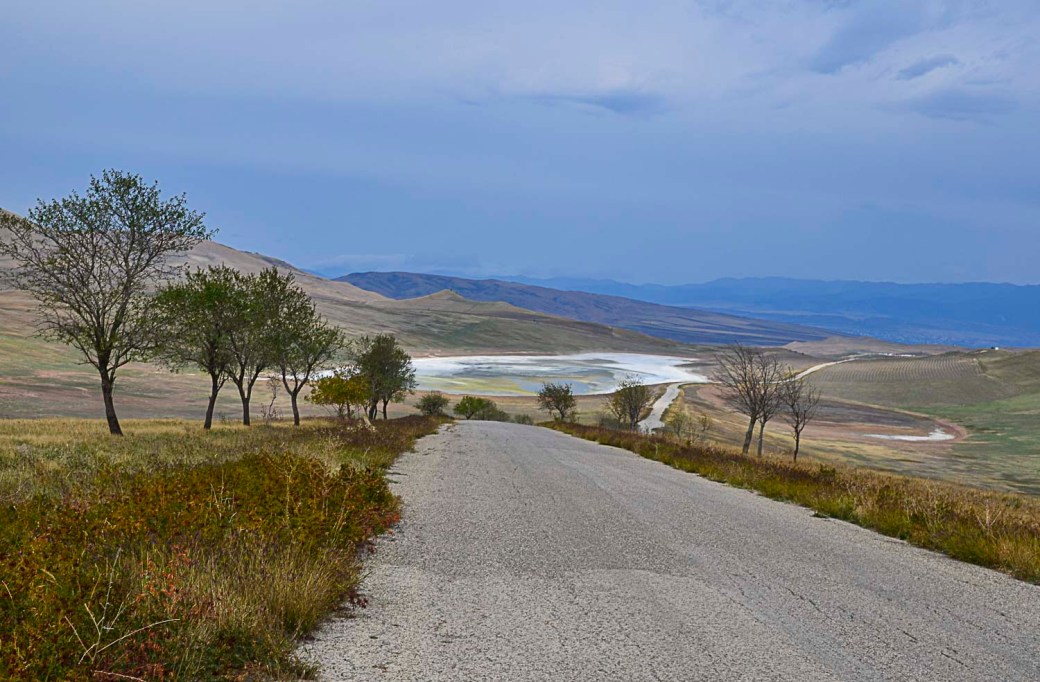
This means that the soil is saturated with salt and difficult to cultivate. Even the ground water here is too salty. In order to use it as drinking water, it has to be filtered. This windy day, salt was flying in the air, and you could feel it on your tongue when speaking.
While driving, our knowledgeable guide told us of The David Gareja monasteries and their long history of wars and vandals, destroying and rebuilding. The Mongolians och Timur Lenk were devastating, but that was nothing to the Persians killing of 6000 monks celebrating Easter in 1615. After the prayer in all 15 monasteries, all monks were locked inside the churches and killed. The rich artworks and other treasures were destroyed or stolen. After this blow, the D G monasteries never came back to their former glory.

Then, what seemed a final blow, came after the violent Bolshevik takeover of Georgia in 1921 – David Gareja was closed down and remained uninhabited. In the years of the Soviet–Afghan War, the monastery’s territory was used as a training ground for the Soviet military, that inflicted damage to the unique cycle of murals in the monastery.

After the restoration of Georgia’s independence in 1991, the monastery life in David Gareja – Lavra – was revived. Today it is the home of 13-30 monks.

We only visited Lavra, and we were not allowed to see how the monks really lived their daily life. But, the guide told us that in one of the higher located caves, the monks had their meals – kneeling at stone tables.

The area is also home to protected animal species and evidence of some of the oldest human habitations in the region.

Part of the complex is located in the Agstafa rayon of Azerbaijan and has become subject to a border dispute between Georgia and Azerbaijan, with ongoing talks since 1991. But as there are strong economic and cultural ties between Azerbaijan and Georgia, they both have peaceful intentions in the determination of borders.
On leaving the monastery, my head was filled with thoughts of how a monk’s life must be out there in the desert. I wonder how young or old they are today, what their cave cells look like and how cold it is there in the long, lonely nights. Questions without answers.

A fact is – that Georgians are, and have always been, a strong people. They have been invaded by so many other powers, countries and people, but every time they have risen again. How they have remained so friendly and good at heart is a true enigma.


Thursday Thoughts – A Last Walk – Until Next Time, Aleksandr!

For the last hours of our walk together, we understood that Aleksandr had saved…

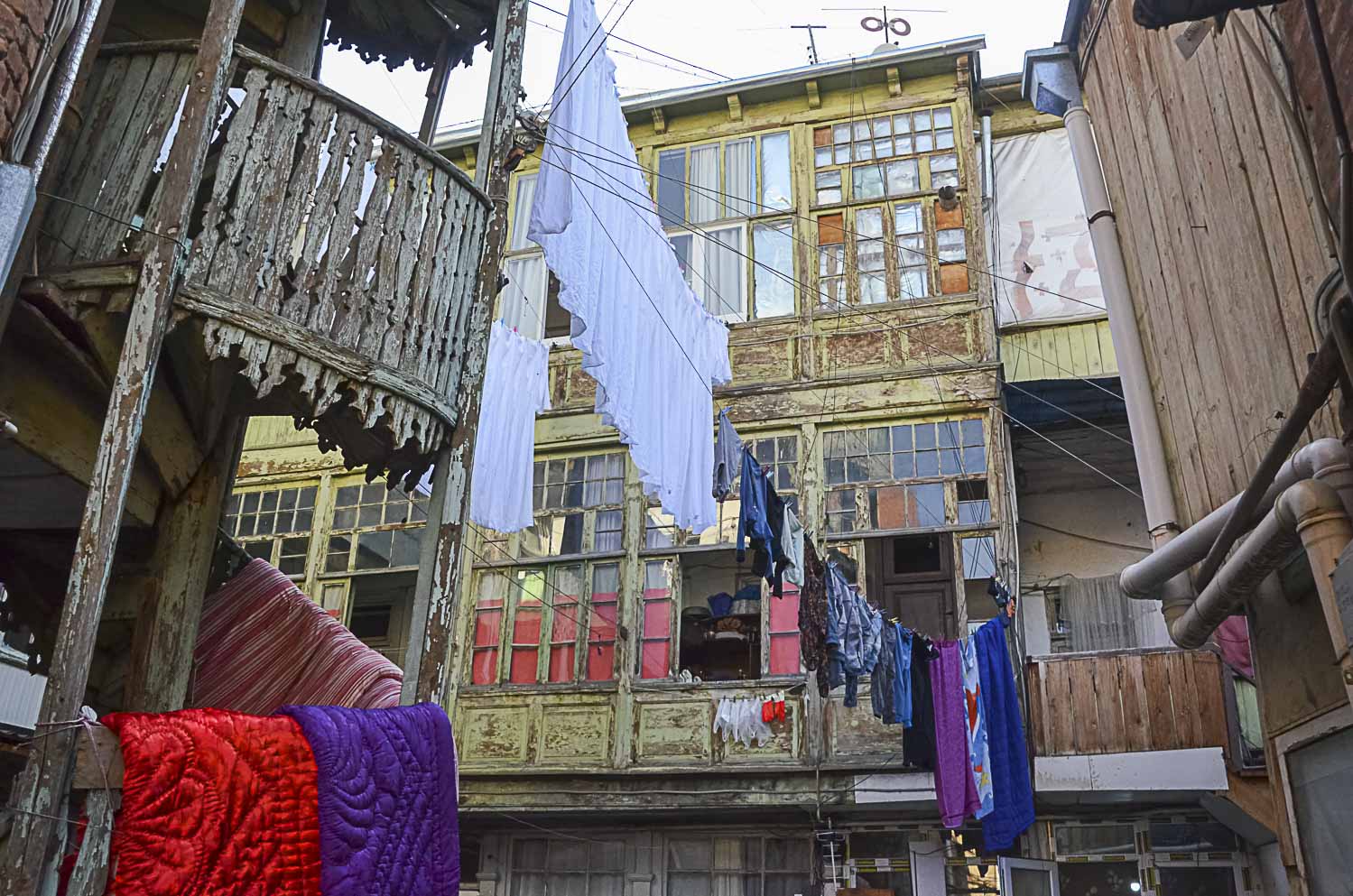
…some of the very finest of courtyards in Tbilisi. But – what is the finest is of course in the eye of the beholder. First some other special pieces we passed.

This courtyard, with a fantastic spiral staircase, was so amazing I had to return here the next day. With some luck, I found it again – but then without any laundry.

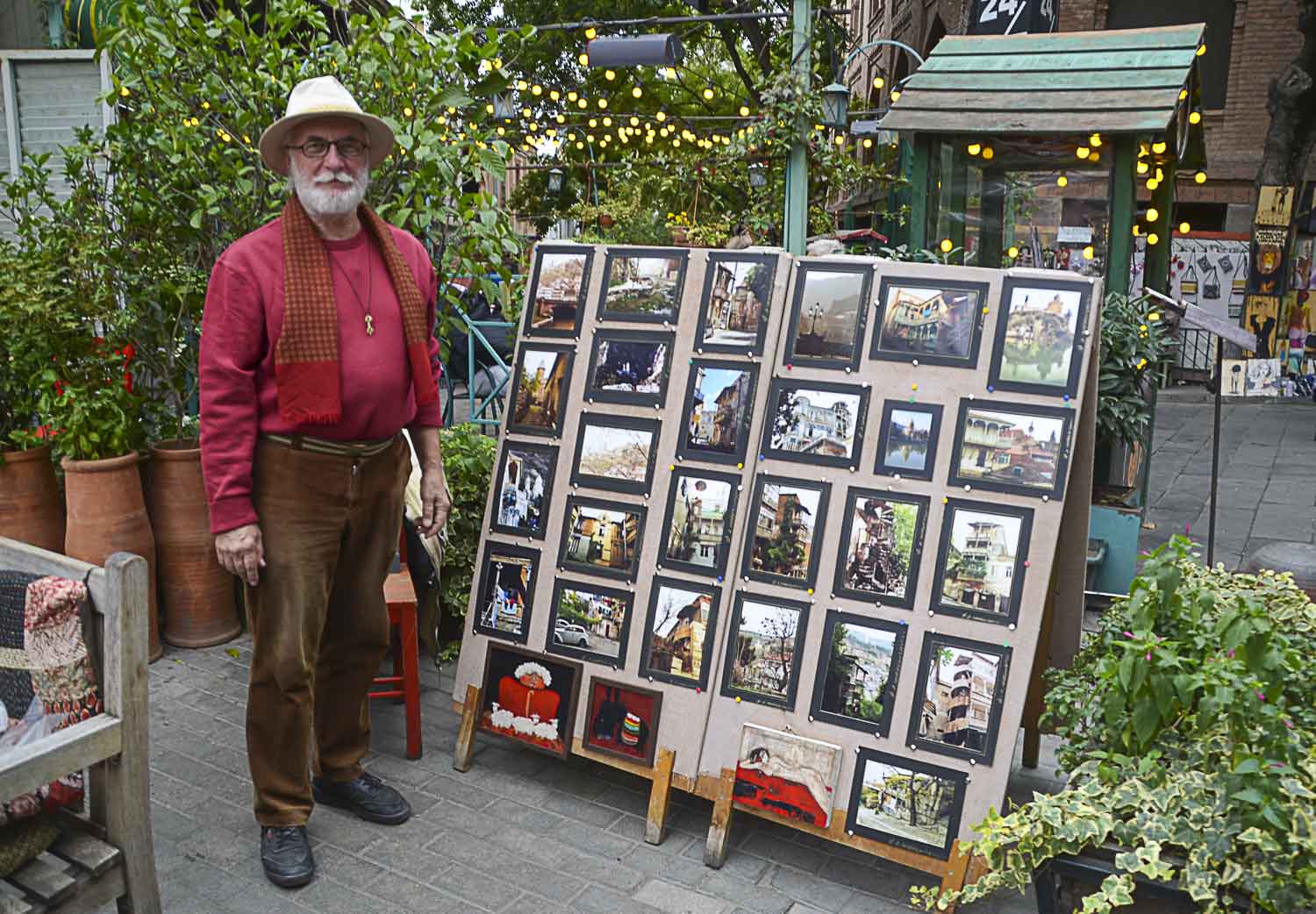
Aleksandr had earlier that day shown us some of his artwork and photos, so when we reached this well hidden courtyard – I recognized the spectacular wooden spiral staircase. I took a deep breath and started rather floating than walking in…

…to a dream. Just imagine what this place must have been like – say a hundred years ago… I hope you will enjoy this courtyard gallery of images from different angles – just could not stop myself. We stayed to talk some with the lovely family who lives here now.

They had restored the houses indoors, but the majestic staircase was for the authorities to restore…which unfortunately had not been done. I asked if they still used the staircase – the answer was Yes, and a moment later a man came running down those steps! It did Not look safe. I do hope they will save this architectural treasure for future generations. In Georgia they still have the skills and knowledge – but they should not wait too long.

I hate goodbyes…and with Aleksandr’s passionate soul, this time it was really hard for me. We had to leave him here with his exhibition in his favorite street, next to his favorite balcony. A very special man whom I am very grateful to have met.

Thank You, Aleksandr, for your warm and generous sharing of Tbilisi ♥

Lens-Artists Challenge #69 – Seeing Double

Tina’s challenge for the week sounds like this:  ”Double trouble, double-time, two’s company, take two ….  the world is filled with references to twosomes. This week, let’s double our pleasure and focus on things that come in twos.”

In fact…my first thought was of shoes – they always come it twos! These art clogs stand in a street in Malmö as a memory of one of Sweden’s most beloved actors at the beginning of the 20th century. He was from my part of Sweden, Skåne, where clogs were the only footwear needed in the old days.

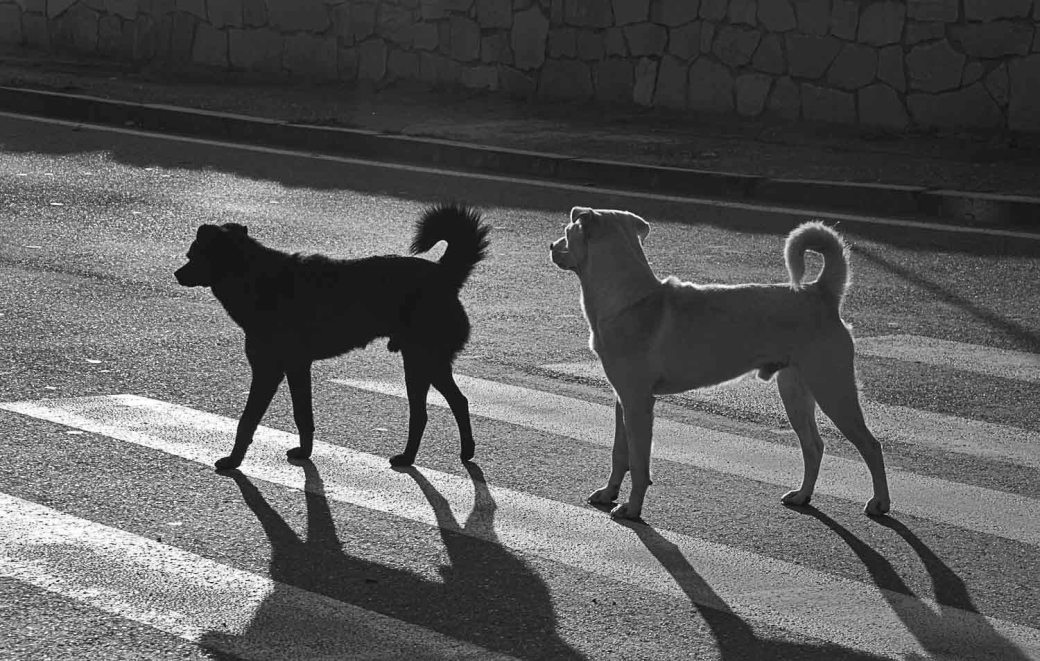
In Tbilisi, Georgia, one of the most common things to see in twos are…dogs! But in the header, two lovely young women as well, peeping out from an art studio.

As you grow older you will discover that you have two hands, one for helping yourself, the other for helping others. – Audrey Hepburn

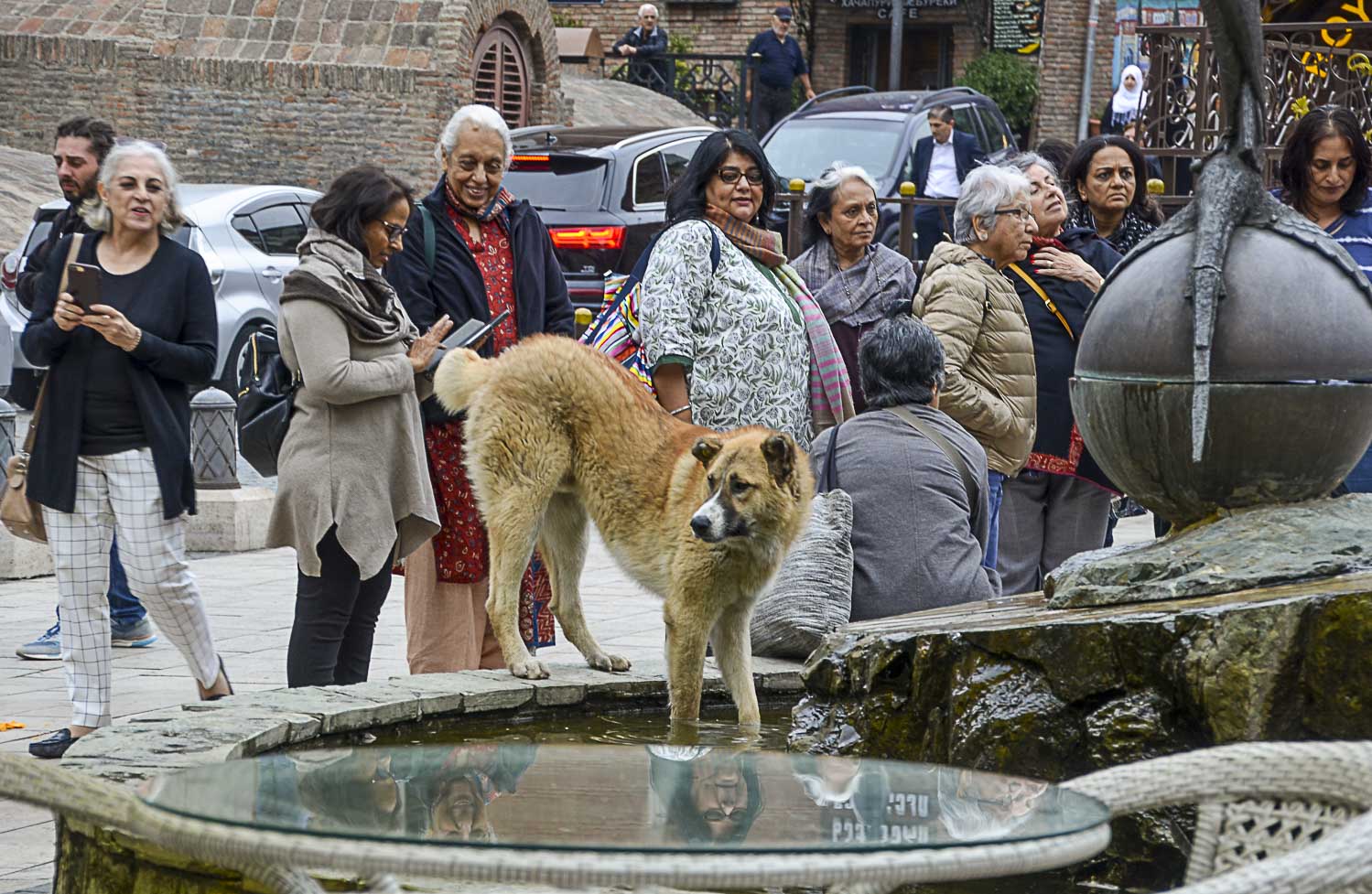
And people talked to the stray dogs, took time to feed them or to just give them a warmhearted pat. I loved how this young man kept his hand resting on the sun warmed, relaxing dog, and with his other hand using his modern, electronic device. Overall the people in Tbilisi did not use cell phones that much. ( If someone did, you almost knew it was a tourist…) They seemed to care more about the living beings around them.

Some years ago we had a pair of swans often landing at our summer house, and we were kindly allowed to admire their young – if we kept the distance of course.

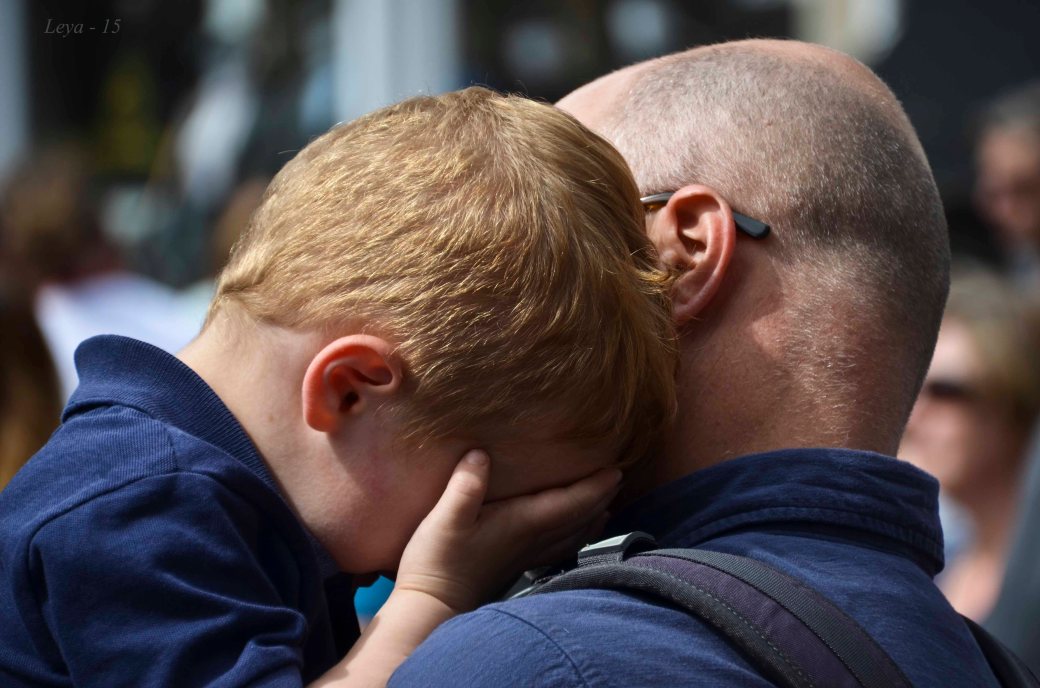
Parent and child – a loving and comforting twosomeness.

The most desired gift of love is not diamonds or roses or chocolate. It is focused attention. – Unknown

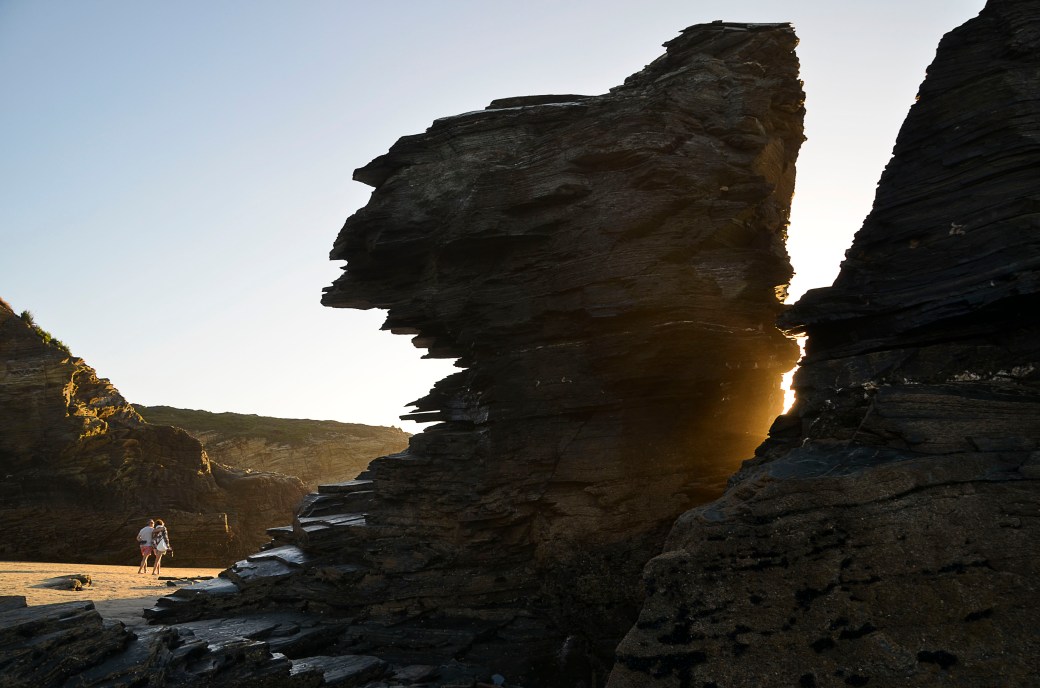
Lastly – young lovers strolling this magnificent Spanish beach towards the setting sun.

Thank you for all the lovely variety of Layers sent for Amy last week! Now – Tina, Patti, Amy and I look forward to seeing Your twosomes.


Lens-Artists Photo Challenge #67 – Candid

What I like about photographs is that they capture a moment that’s gone forever, impossible to reproduce.
– Karl Lagerfeld

Taking photos of people or animals when they have no idea that you’re doing it is called candid photography. One of the beautiful things with photography is being able to catch someone in the act. It adds natural life to your pictures. Even if my choices here are mostly in B&W, of course feel free to use what you find most suitable for your shots!

So, this week I thought we would go for candid photos of people or animals – Have fun with the challenge, and we are looking forward to seeing your candid finds!

It is always about keeping your eyes open and be prepared when an opportunity comes up – have your camera ready and just shoot.

Remember to take many photos…the digital cameras give us unique chances to choose which photos to keep or not:

Your first 1,000 photographs are your worst. – Henri Cartier-Bresson

Sometimes it might feel a bit difficult to photograph people – at least if you are a shy person, like me. A great help can be if you have a longer lens that gives you the possibility to ”hide” behind it and still get close. With a little luck, and practice, you sometimes get one of those lovely smiles – or two.

If your pictures aren’t good enough, you’re not close enough.

– Robert Capa

But, sometimes maybe you should not get too close – catching the moment is also catching your own feeling of what is in front of you…

Photography is a love affair with life. – Burk Uzzle

My photos were made in Bhutan, Morocco, Denmark and Georgia (Tbilisi).

Thank you for all the wonderful frames filled for Patti last week! If you haven’t seen her beautiful post yet – please pay her a visit!


Thursday Thoughts – Iceland, Life on Earth and at Sea

Djupalónsandur beach lets you meet sea, rocks and the remains of the British trawler Epine – that went down off the coast in 1948.

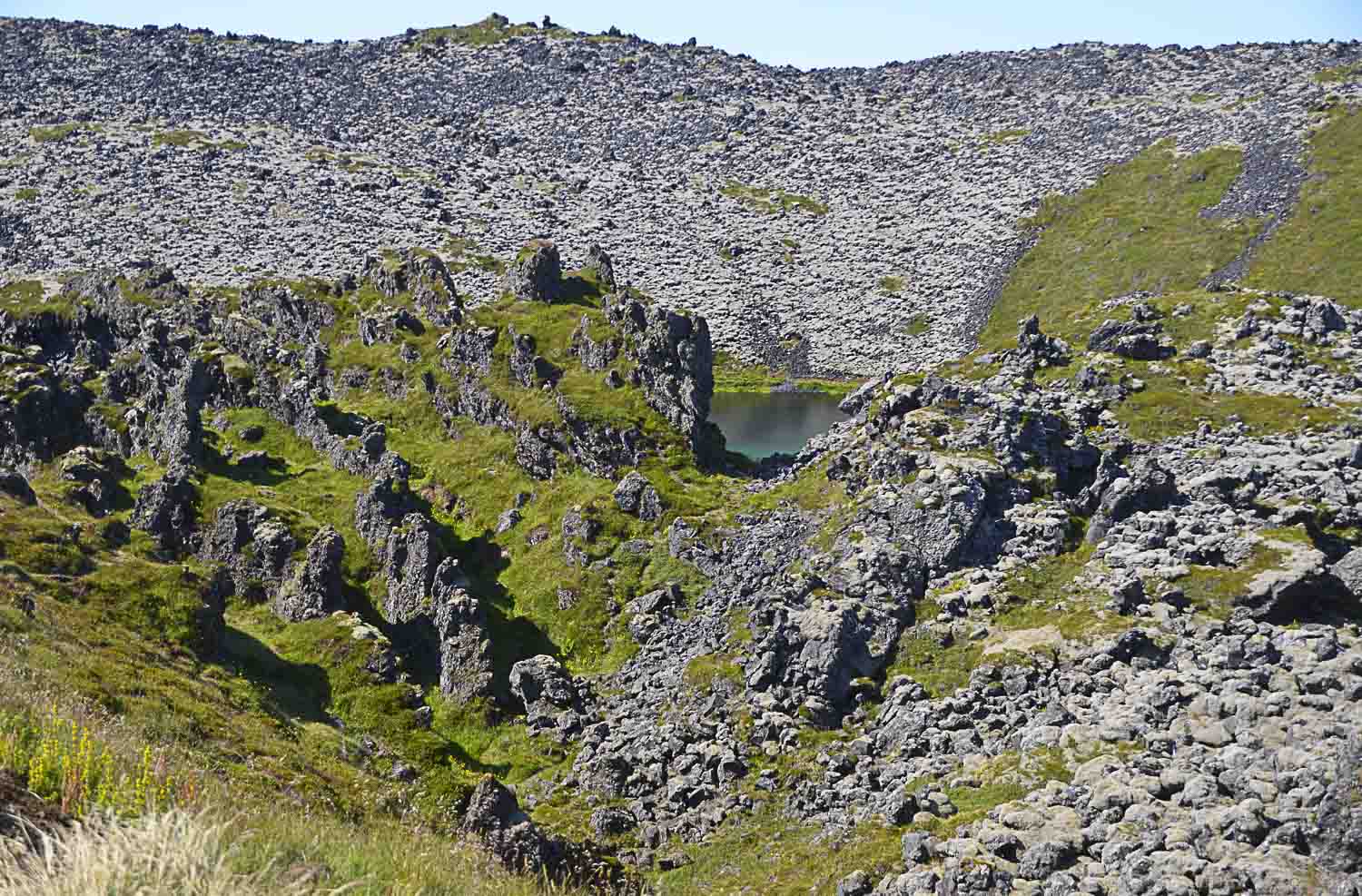
And of course there are enigmatic lava formations. You get a glimpse of snowcapped Snaefellsjökull  volcano through the holes.

Once this bay was home to one of the most prolific fishing villages on the Snæfellsnes peninsula. Today this area is uninhabited.

Except for the old rusty debris from Epine, four lifting stones still lie on the sands of Djúpalónssandur, in olden days used by fishermen to test their strength. Today tourists and children roam the beach to look at the rusty pieces, and many of them test their  abilities – and possibilities – of getting hired as seamen…

This was quite a special walk where many thoughts were coming and going… The harsh lives of seafarers and society changing fast. And, will there be any fish in the sea for our children?

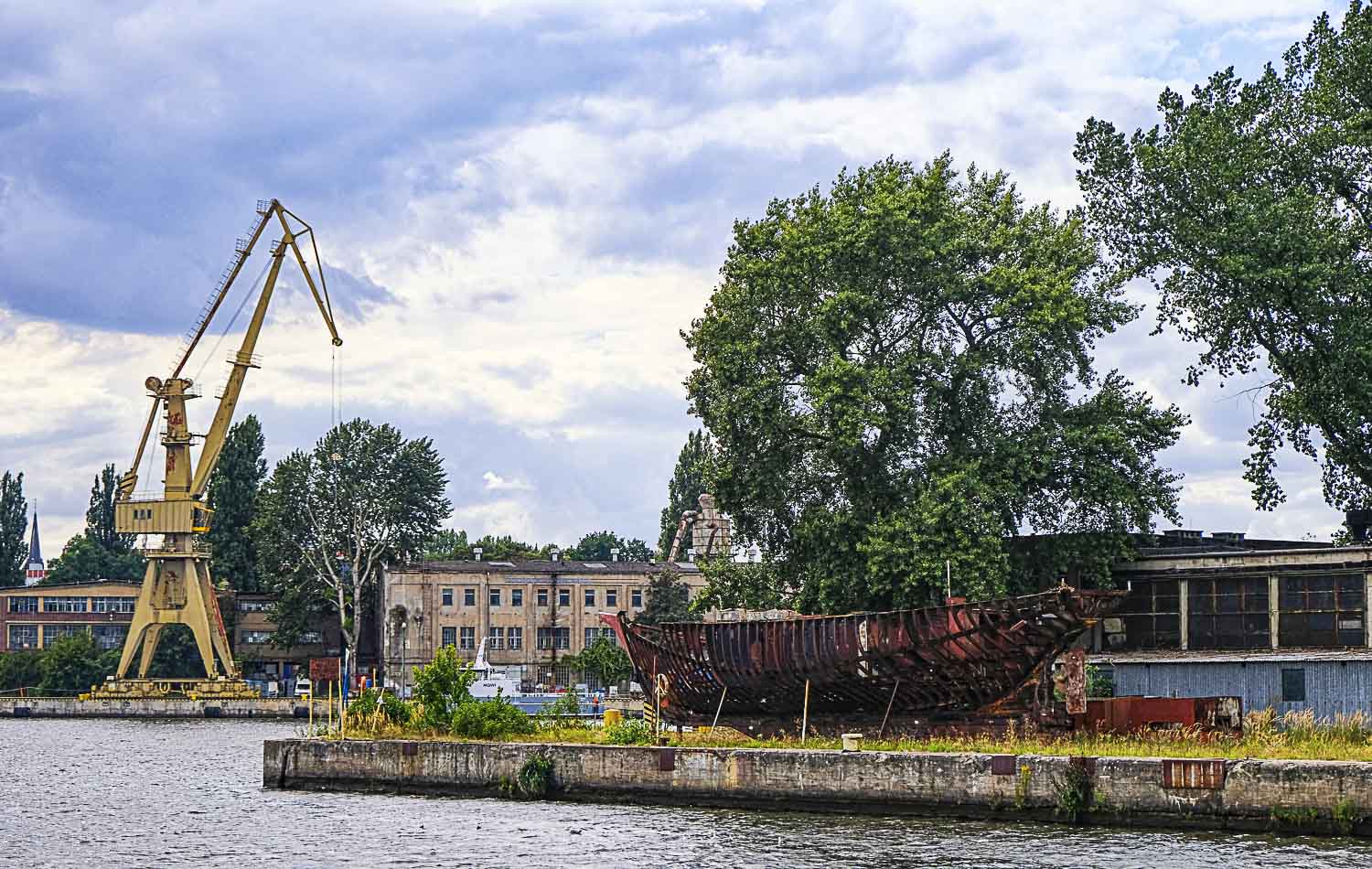
Thursday Thoughts – Water, Harbour and Water Games

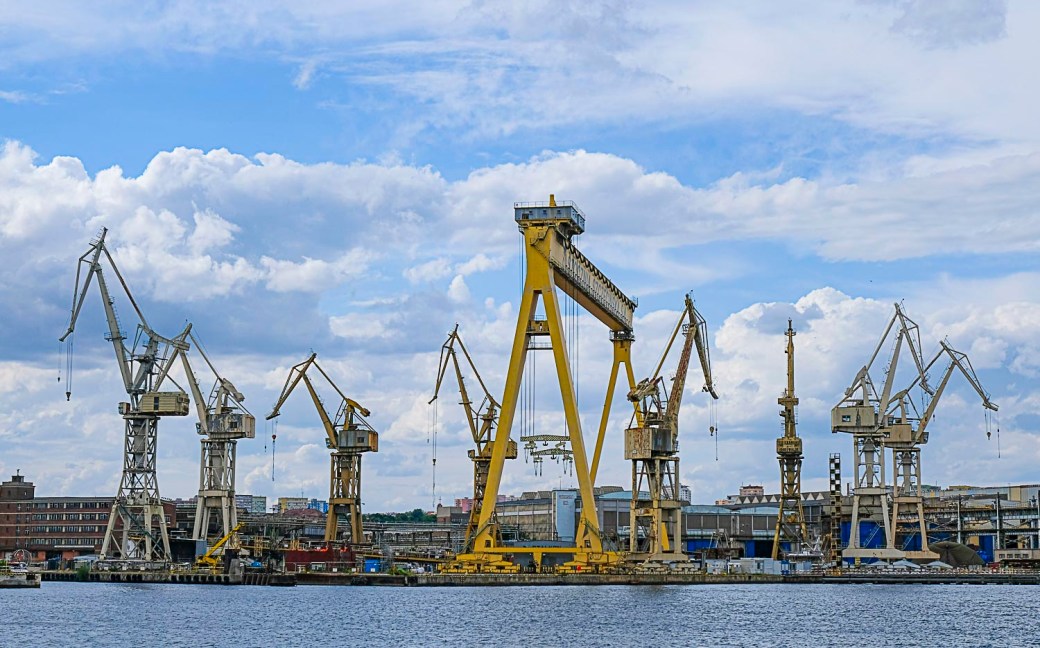
I thought I would post something of the lovely waters from Stettin/Szczecin, Poland.

We went there for a week with Viveka of My Guilty Pleasures – so she has got some splendid views from our visit!

No guide beats Viveka – and when it comes to restaurants and food…

Nothing compares to U – Wivi!

The harbour tour we had to do on our own, because Viveka was not feeling well this day.

And when walking back to our apartment, we watched some of the water games. Skilled guys, and the high diving was spectacular. Look at the bridge shot and you will find a girl diving – just below the bridge, head first. Wonder how high it was – I could not find any facts on it.

We enjoyed our stay immensely – wonderful people, city, fireworks, games, food. And company! Festivities for two days. Not expensive either – to be recommended! Poland never disappoints – and neither does Viveka. Thank you for taking us!


Lens-Artists Photo Challenge #55 – Dreamy

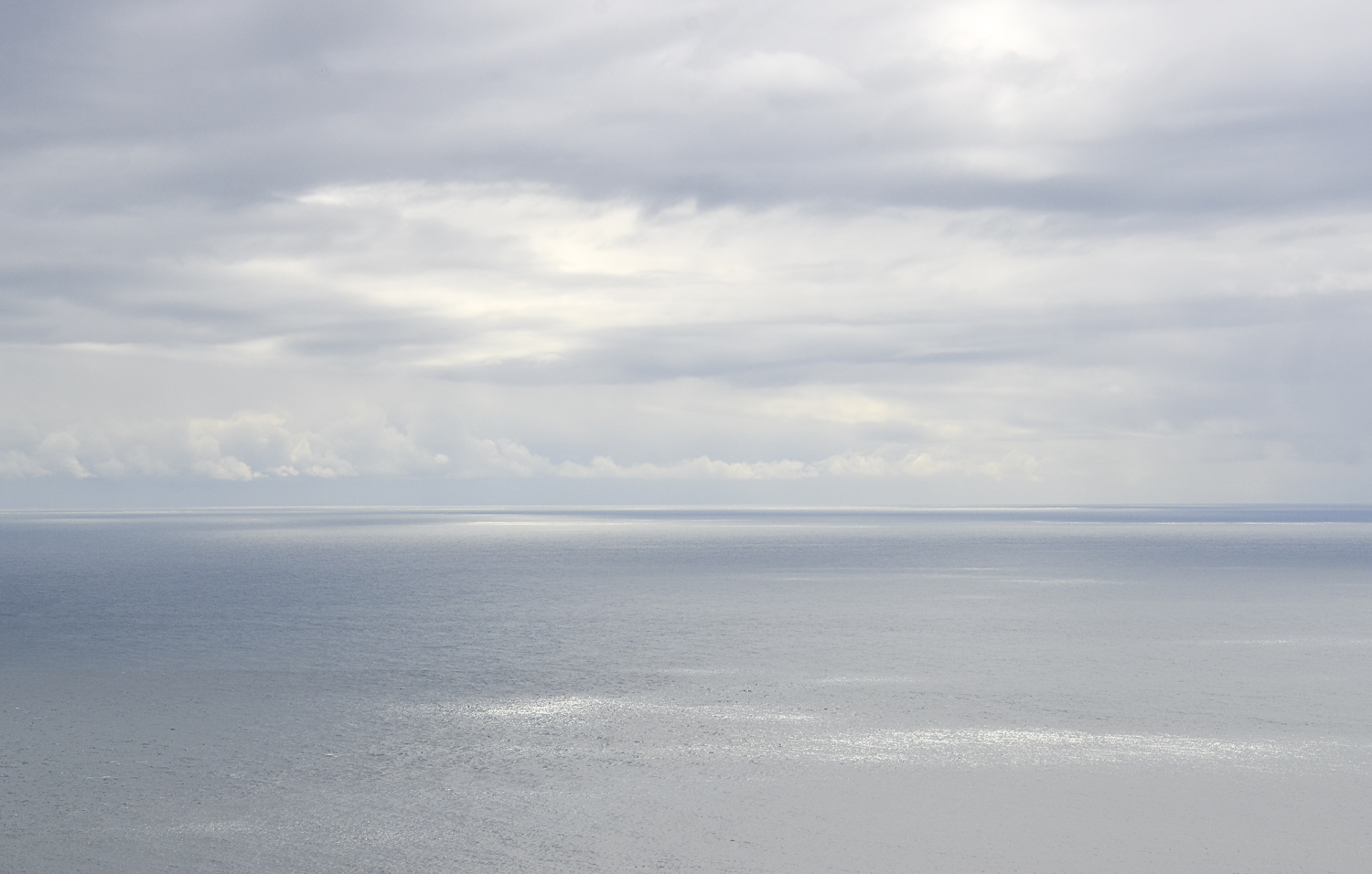
Endless ocean, blue water, dreamy sky,
tranquil beach, love in the air, mind fly high.
Debasish Mridha

I love Iceland, and spent a week and more there again this July, it was our fifth visit over the years. I love its dreamy, but often rugged atmosphere. They usually have all weathers in one day, and the landscape changes fast – and often dramatically.

island-2019-405-redigera.jpg

A lot of people tell me I’m a bit dreamy, but I like the idea of that. Of being somewhere else.

– Alex Turner

I thought I would share some of that Icelandic dreaminess with you – so this week’s challenge is  – Dreamy.


-2


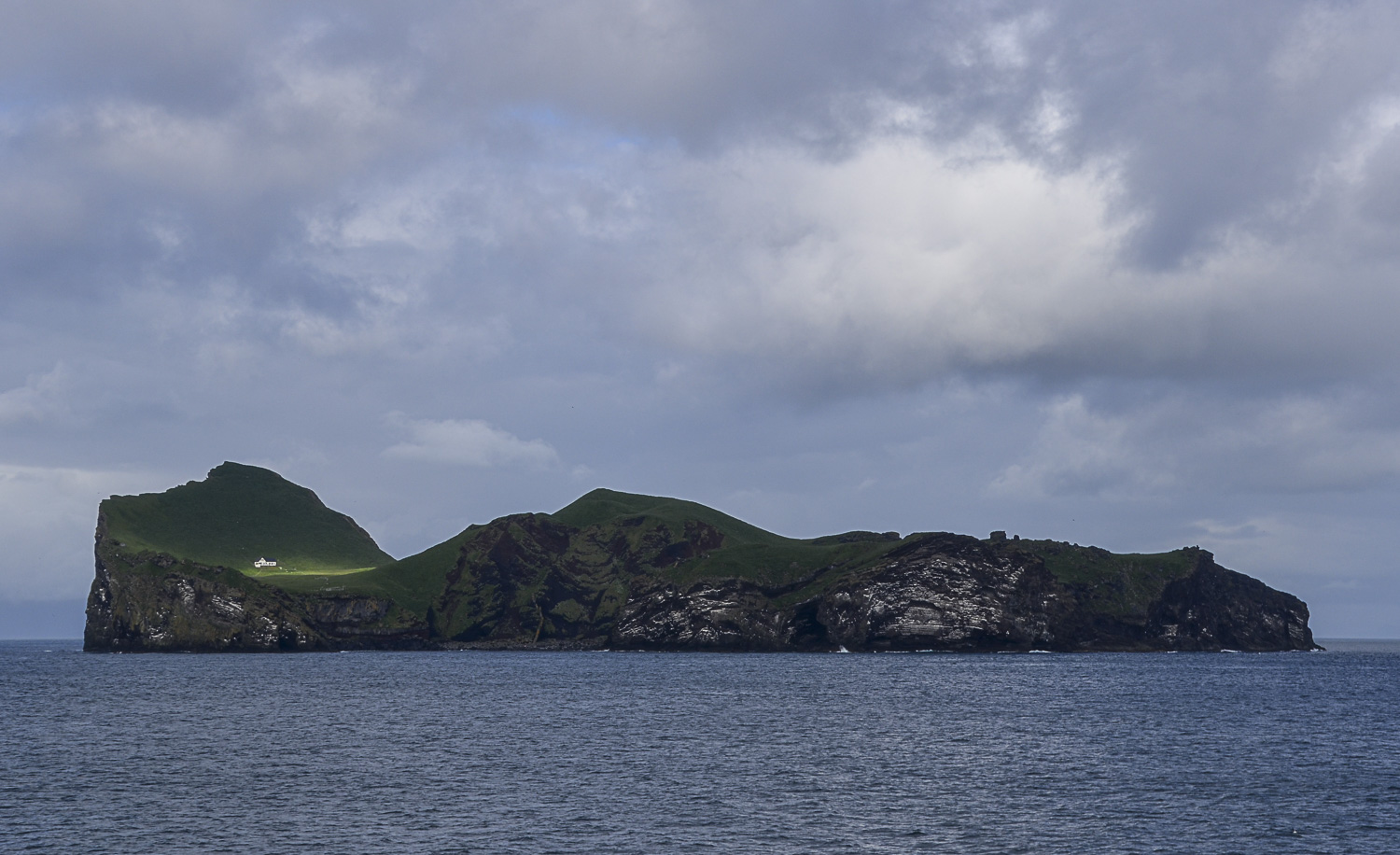
If you go to the dictionary, it says ”having a magical or pleasantly unreal quality; dreamlike.” On our way over the sea to Vestmannaeyar, this huge cliff emerged out of the fog and rain, when suddenly a ray of sun burst out through the heavy clouds and revealed a lonely farm house nesting in that emerald green. Who would have imagined? And who would be able – and want – to live out there? An enigmatic dream unveiled.


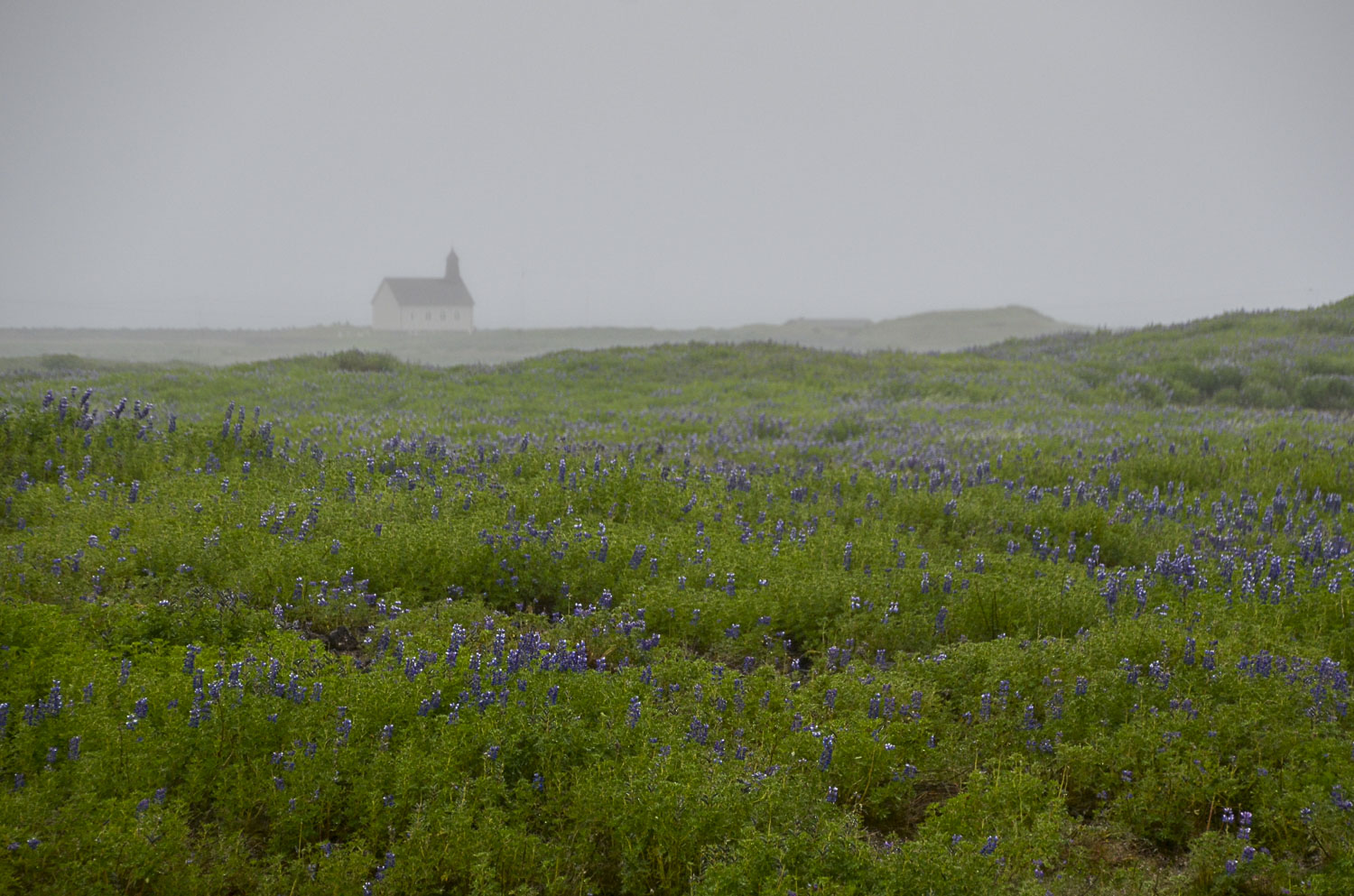
Wherever you go on Iceland, you will find lonely churches perched on mountain tops, hidden behind towering lava flows – or in fields of lupins. Looking like tiny toys placed there by a playful congregation. Often the little church is clearly visible from afar – but this one was only faintly visible in the fog. (And the lupins are of Alaskan origin…)


Dictionaries might also suggest an informal meaning of Dreamy – delightful; gorgeous. Maybe this last image belongs more in that category – or maybe in both of them. As usual, click to enlarge.

Finally, this window view, in the middle of the night, from Helgafell (Holy mountain). I wonder…were there really two tractors out there – or was I only dreaming?

There are many possibilities hidden in Dreamy – maybe you are given to or indulging in daydreaming? You might even want to illustrate one of your own dreams? Or are you one of those people who suffer from frequent nightmares (though I hope not …)? Now we are looking forward to Your interpretation of the theme Dreamy!

Last week brought us many wonderful details from you all, and thank you Patti for hosting last week’s Detail challenge.