Drizzle Dreams

Should i go out today…? I never have to wonder – I have got Totti, my lagotto.

Some days I wish I did not have to, but…often you will find yourself in another mood, in another weather. in other thoughts.

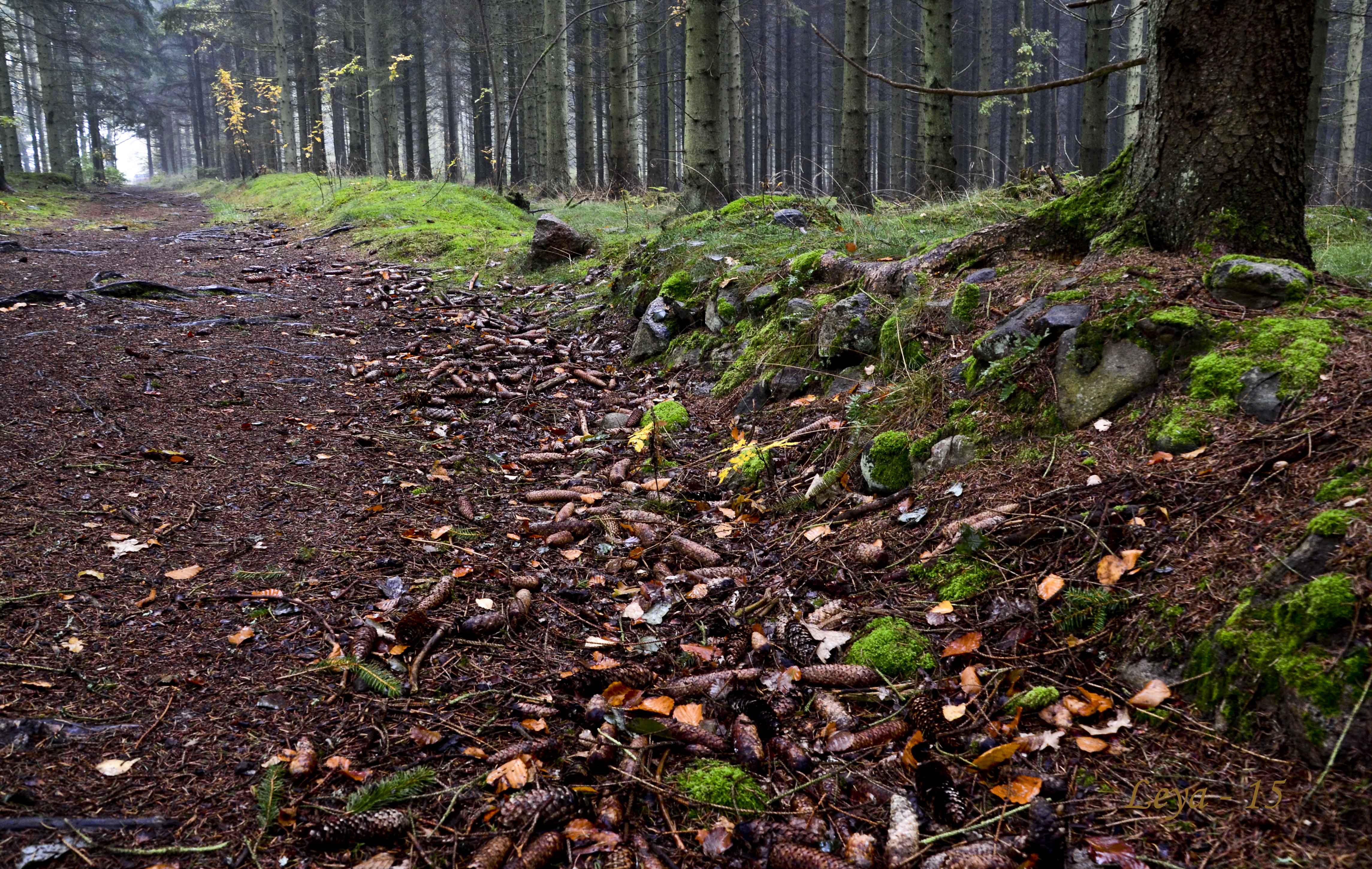
Even if I walk the same paths as the day before…

…I will find new views and new thoughts will enter my mind.

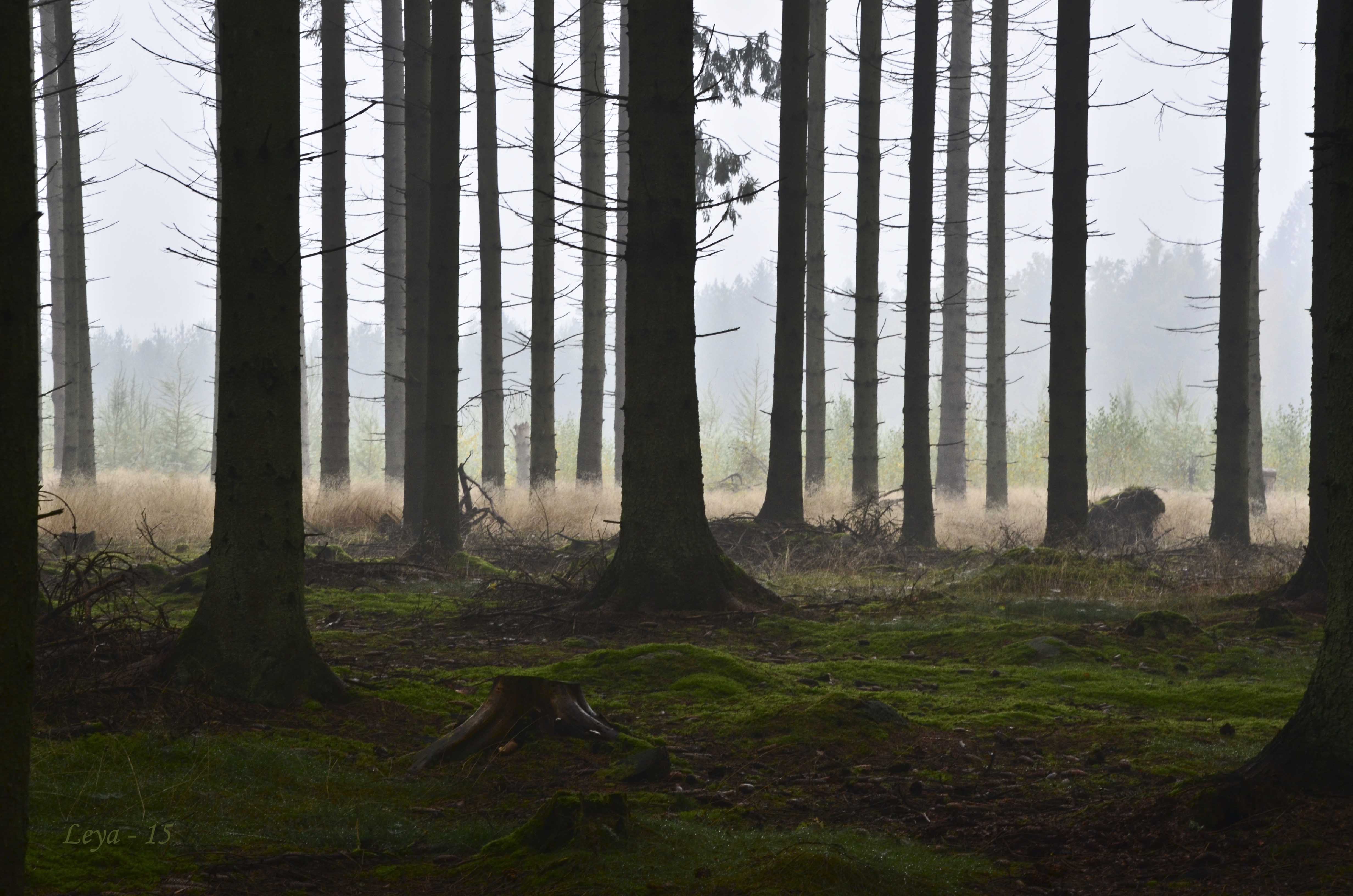
During the walk, the drizzle speeded up, and darkness laid a soft filter on everything.

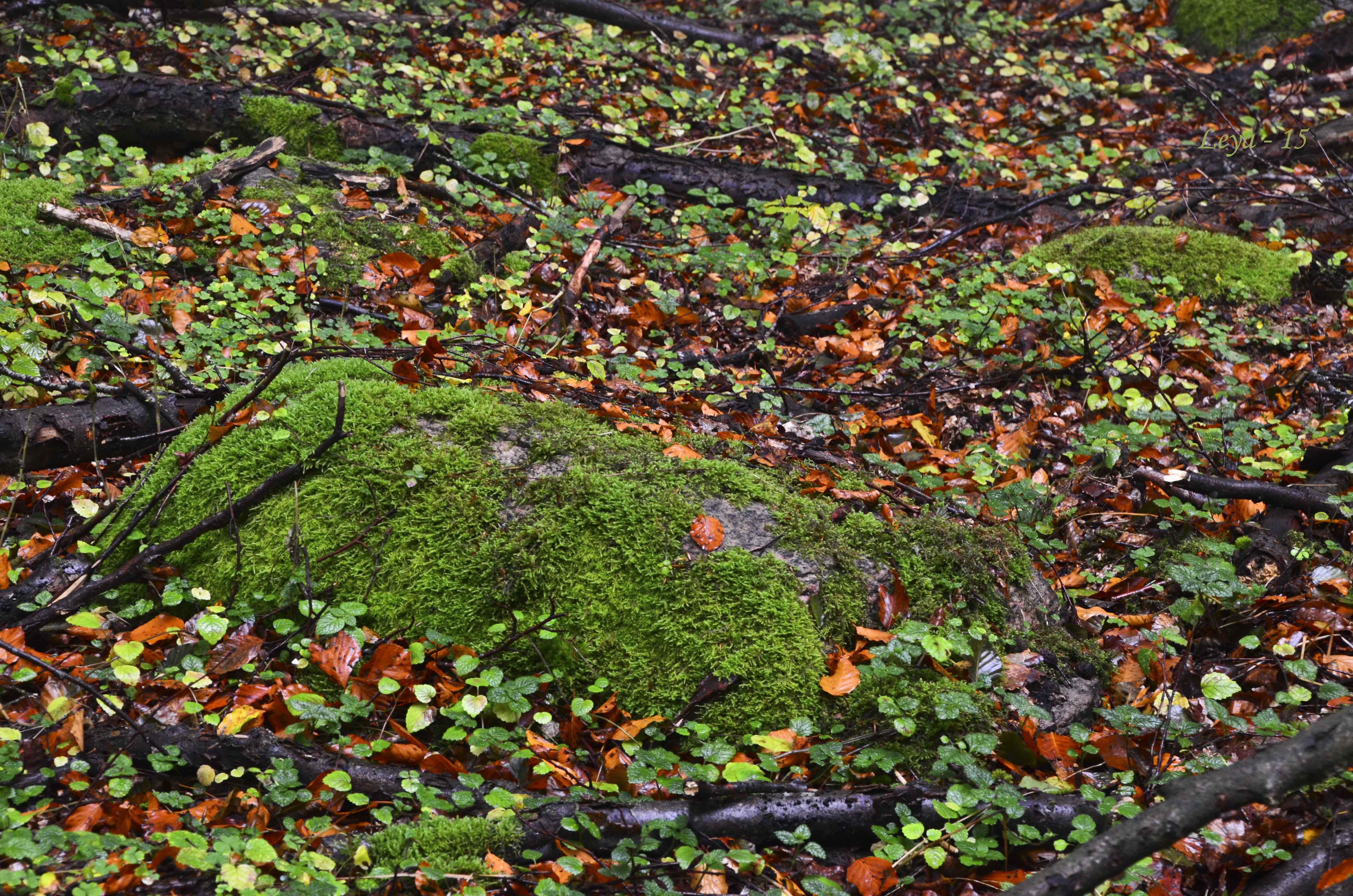
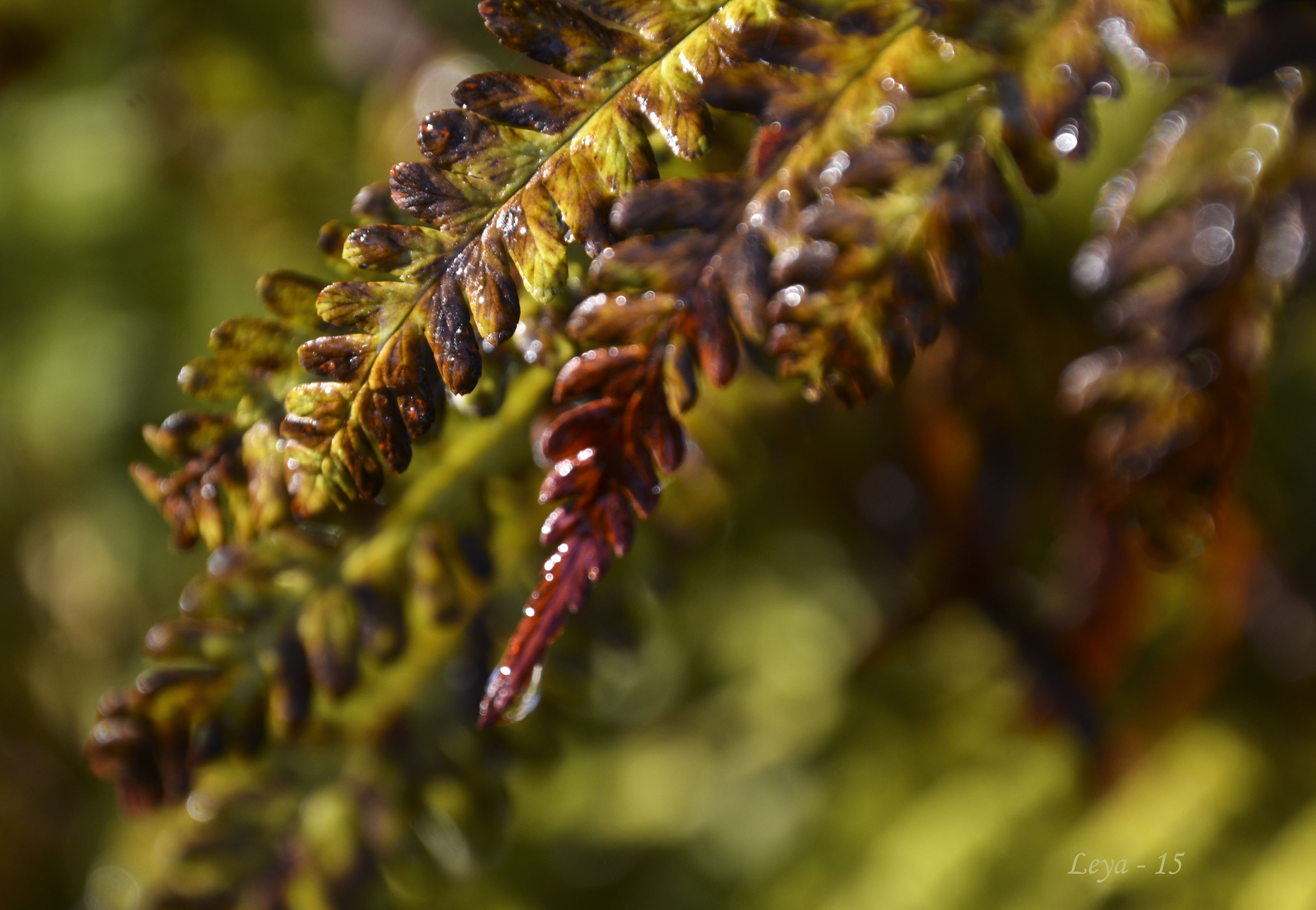
Larchtree gold is shimmering…

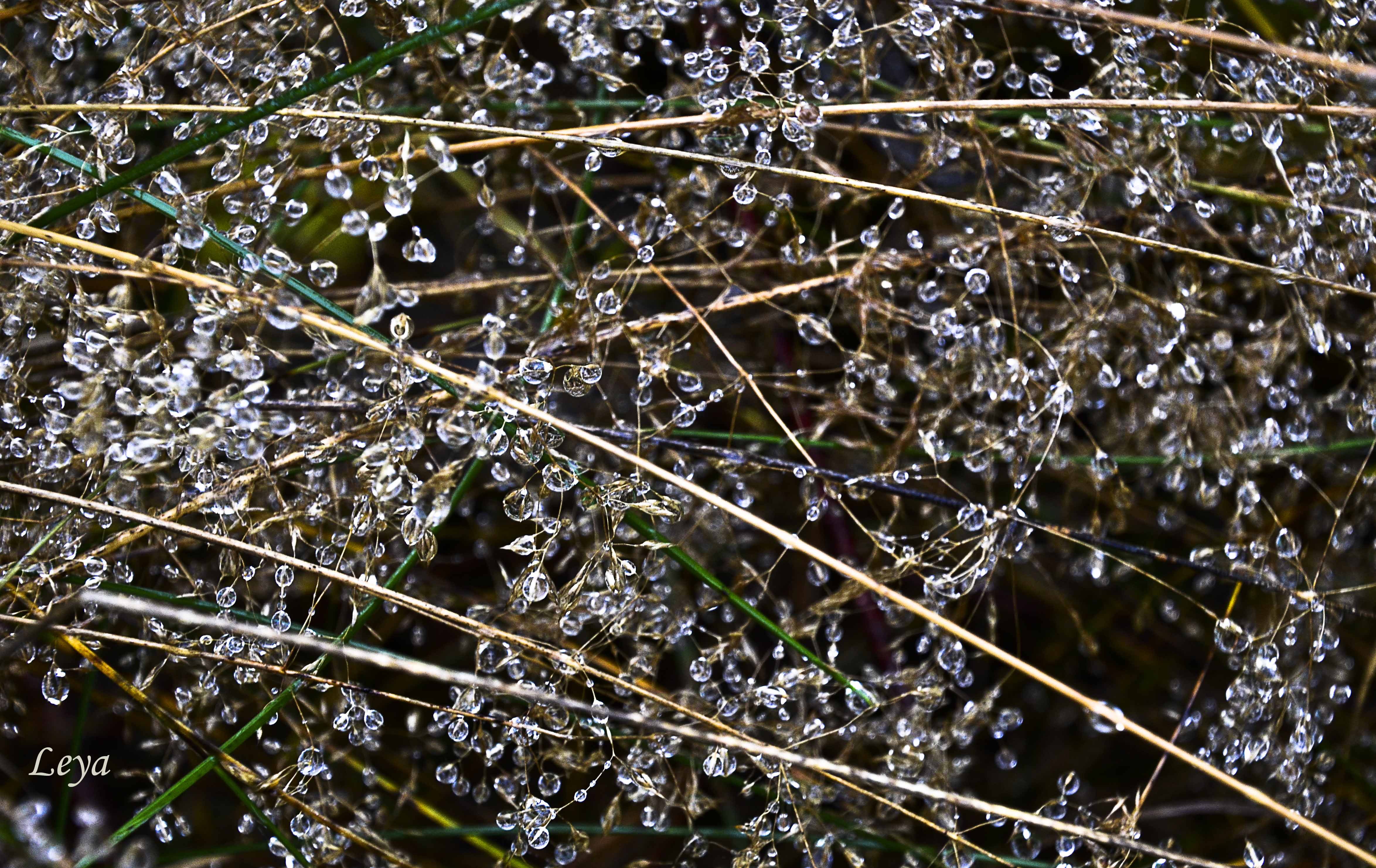
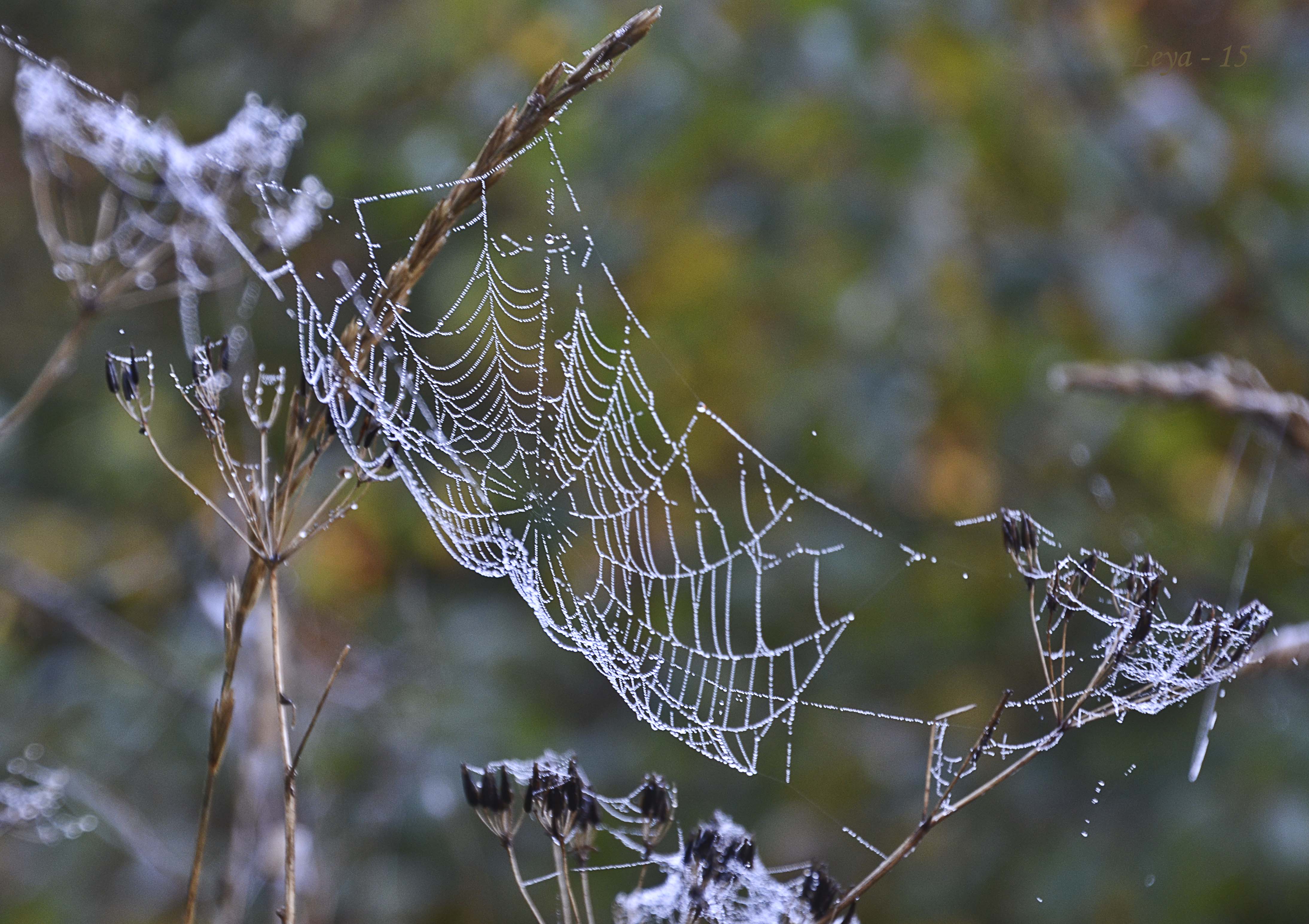
…and grass is bathing in diamonds.

There is a special light in the darkness…

…and a soft forgiveness in the silence.

An Autumn walk with my family.

WPC: Extraordinary

When in Riga, we dined at a unique, medieval restaurant named Rozengrals. Being the oldest in Riga it dates back to the 13th century. The food is genuinely medieval and cooked according to the original recipes. Everyone working there is accordingly dressed and the five big halls are all in candle light from the vaults.

So, from the outside, and the steps down into this cellar, it looked very ordinary – we thought there might be an exhibition or something down there…but it turned out to be something even more special! A restaurant.

Excellent food – the best in Riga – a truly extra(ordinary) place. To be recommended! (Click the link for more history and information, and the first part of the menu.)

Rozengrals heter den unika restaurangen. Det nämndes i skrift redan 1293 som festlokal för Rigas stadsstyre. Miljön är den äldsta i Riga, där rester av den första stadsmuren ingår. Det största rummet var ursprungligen en brunn. Det finns plats för hela 150 gäster samtidigt i fem salar. Allt känns väldigt äkta och genuint.

Rätterna är dokumenterat medeltida och tillagade enligt grundrecept. Jag tog rökt havsöringsfilé med fläder. Rätten serverades redan på 1000-talet vid det franska hovet.  Det var absolut en av våra bästa och mest originella måltider.

For more of extraordinary – click here.

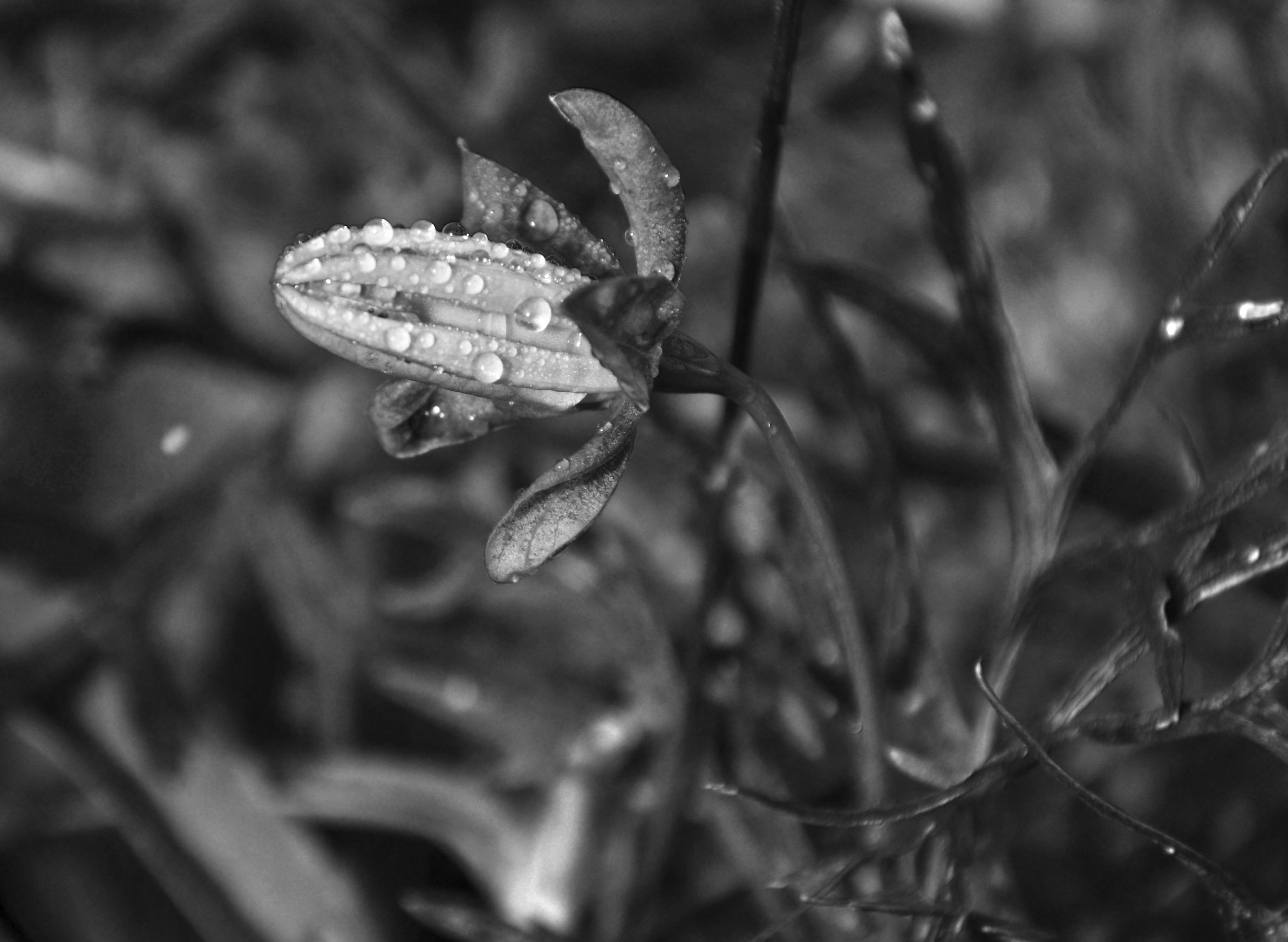
Cee’s Black & White Photo Challenge: Small Subjects

Maybe a cup of coffee is no small subject…but as a cup, it is. Even smaller are morning dew drops. Join in with Cee’s B&W and let us know how you look upon ”Small Subjects”!

Riga – a Gallery of Colour and Artistic Form

Riga is situated on the river Daugava. 2010 the inhabitants were 706 413, a third of Latvia’s population, and the city is the biggest in the Baltic area.

The header shows a picture of the House of Blackheads. The story about this building starts in the 14th century, when there were  three city guilds established: one for craft, one for trade and the third guild of the foreign traders – the Blackheads.

Riga has so much to offer a visitor – in this post I will share some of my favourite impressions from streets and corners – daytime and night time. Later posts will include architecture of old Latvia and of Jurmala – the old seaside resort, now being slowly restored to its former glory after being neglected during the Soviet time.

First out – the puppet theatre, where we were fortunate enough to sneak in and talk to one of the puppeteers. He let us take some photos but wasn’t very English speaking. Very sweet though. We understand that this art form is much more revered in the Baltic countries – they have performances every day.

WPC: Happy Place

A happy place where I can relax and get away from a busy life…WPC wants to know my secrets…and then they are secret no more. Near and far, some easily reached when needed, some only in my world of memories.

For more secrets, click here.


Veckan före midsommar 2011 020

Sitting in my garden listening to  bees humming in the flowers.

 v.44 2011 088

Walking in ”my” forest every day…

IMG_2044

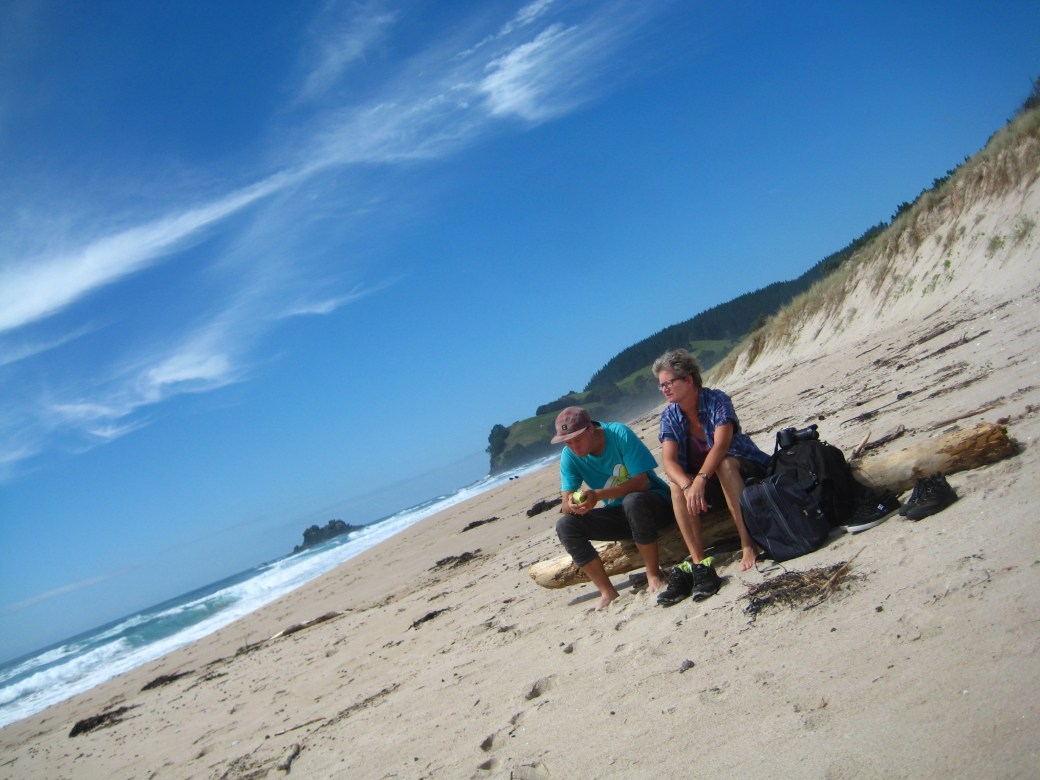
Far away…not easily reachable, but still…in my memory a place of utmost happiness.

Coromandel, NZ.

Cee’s Black & White Photo Challenge: Any Kind of Camera or Photos of Photographers

In Rome…anything might happen. This photographer was very dedicated. See more here.

Thursday Thoughts – Late

Slowing down means that I can have late, soft mornings if I like…but, I can also use the early mornings for hiking and reflecting.

Earlier this week there was an opportunity for a chilly, but sunny morning with no wind. I left my son at his job and went on to the wetlands I usually visit a couple of times each season.

The air was clear and cold, no wind, no sound.

I wondered if the birds had gone south all of them, or some would, like me, try to survive the harsh winter months. And…there they were…

When the fog lifted, I saw the cormorants – like old statues – sitting there, silently waiting.

When I was a child I was very fascinated by these spectacular birds…and I still am.

They are unreal, living statues…drying their wings.

Fascination. If you no longer can feel fascination or curiosity, I guess your life is… over.

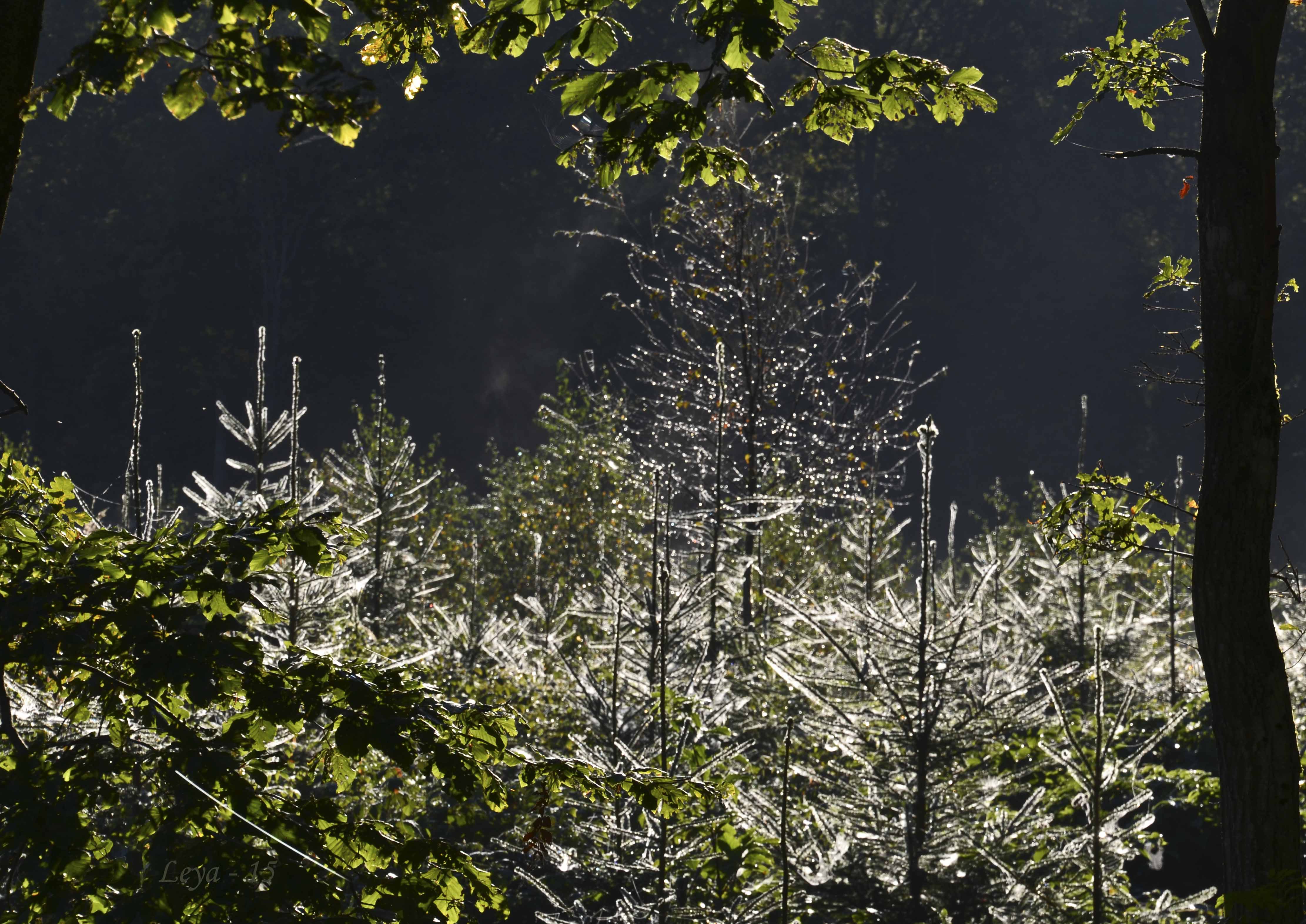
When you look closer, but still cannot perceive the fog lifting or the morning light sifting through the leaves…

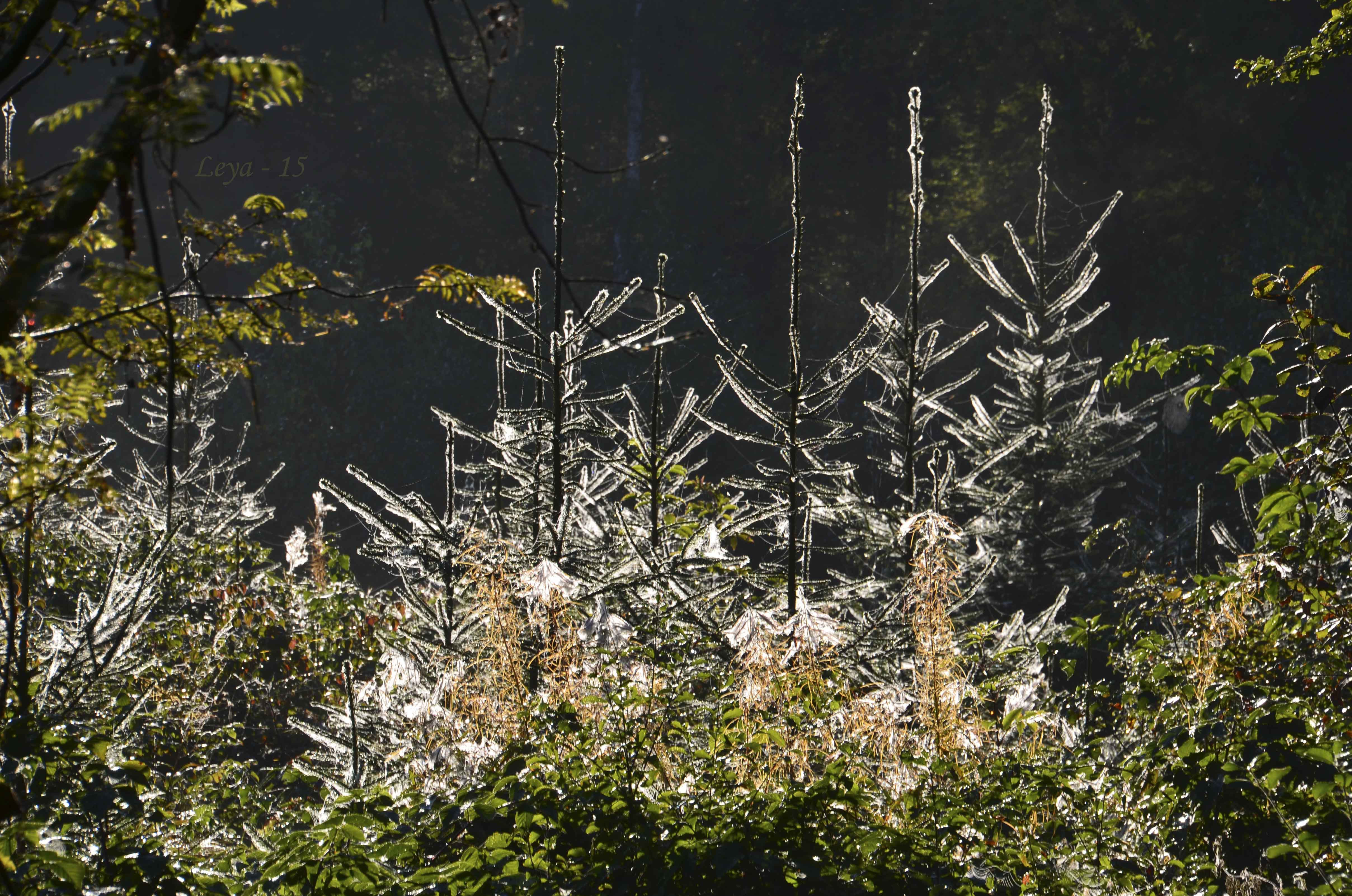
…when your first thought, walking through this morning forest no longer is: ”Why, this looks like powder snow!”…

…when you no longer stop to admire nature’s master weavers…

…or other little inhabitants on this Earth…

Then you are in danger of losing yourself…Your Self. I am so grateful I listened to my body and soul, realized where I was heading and took the consequences.

Think about it…Find your Self, do not lose yourself – if you have the possibility to choose.

Just think…this morning might not have been… mine.

SL-WEEK 14: Memory

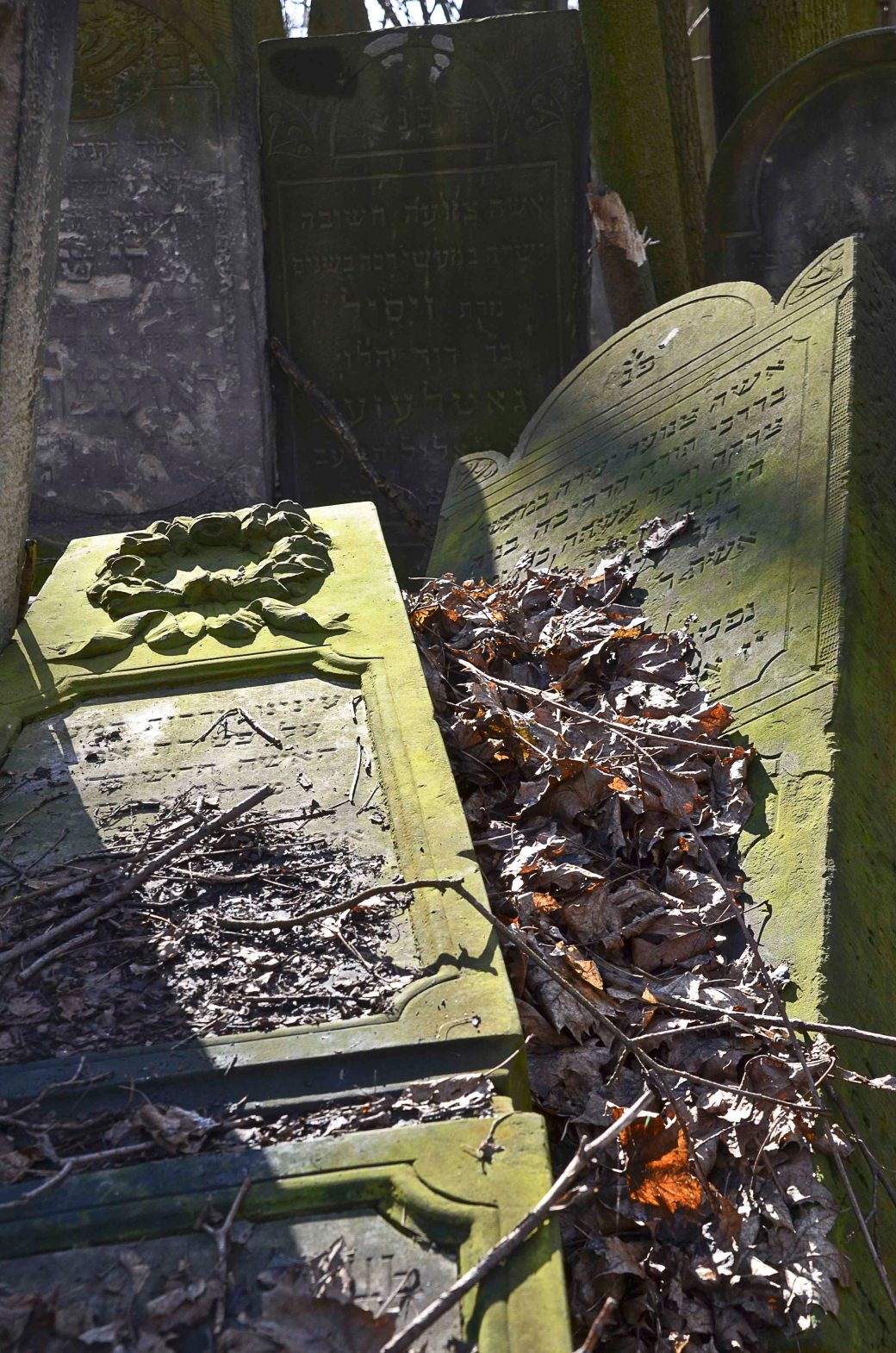
A Memory, for Sylvain Landry. One of the most heartbraking cemeteries I have visited ever – and I have visited many. This is the Jewish cemetery in Warsaw, where thousands and thousands of Jews are resting after the war massacres. Nobody left to care for the graves. Crumbling stones and solemn trees. A tragedy never to be forgotten.

Riga – Art Nouveau – Jugend

The Art Nouveau movement in Europe was the architectural answer to the literary Modernist movement, starting in the 19th century.

Smilšu iela (street) 2 – (1902). One of the best examples of Jugend in Riga. The peacock typical of Jugend style and the sculptures featuring one of the most beautiful Jugend women in Riga.

The Art Nouveau movement reached its peak in the early 20th century, which is when the majority of Riga’s Art Nouveau houses were built. Riga’s term, Jugendstil, originates from the German and Scandinavian movement named after the avant-garde periodical Jugend (”Youth”). Art Nouveau was a reaction to the 19th century Academic art, and ”was inspired by natural forms and structures, not only in flowers and plants, but also in curved lines. Architects tried to harmonize with the natural environment.” (Wikipedia)

Tirgonu iela 4

Art Nouveau and Jugend could also have other names in other countries: Art Nouveau in France, Modernismo in Spain, Sezessionsstil in Austria, Stile Liberty or Stile Floreale in Italy.

In order to preserve Old Riga, Riga’s wooden buildings and the Art Nouveau architecture, the historical centre of Riga has been designated a UNESCO World Heritage Site.

Riga is one of the largest centres of Art Nouveau, with more than a third of the buildings of its Old Town and Central District built in the style; other significant centres include Paris, Barcelona, Berlin, Vienna, Krakow, Moscow and St Petersburg.

Elizabetes iela 10A and 10B (1903, M, Eisenstein). Masks, peacocks, geometrical figures and remarkable sculptured heads set among blue tiles.

The main street for Riga’s Art Nouveau district is Elizabetes, which intersects Brivibas Boulevard. Also, Alberta and Strelnieku Streets feature great examples of the style. In total, there are over 800 Art Nouveau buildings in Riga.

Most of the Art Nouveau buildings were designed and built by Latvian architects. Buildings by one of the most famous architects, Mikhail Eisenstein (father of director Sergei Eisenstein), can be found at Elizabetes 10a and 10b, as well as at Alberta 2, 2a, 4, 8 and 13.  Strelnieku Street also features eccentric examples of the style.

In Riga, Art Nouveau might be split into two main directions, decorative and romantic-nationalistic The latter Art Nouveau style can be seen in the buildings by Latvian architects E. Laube, K. Peksens, and A. Vanags, such as those on Terbatas Street 15/17 and Brivibas Street 47, 58, and 62.

The day we had reserved for ”hunting” these architectural wonders started out in rain – so, here are featured only a few of the great buildings we tried to find.
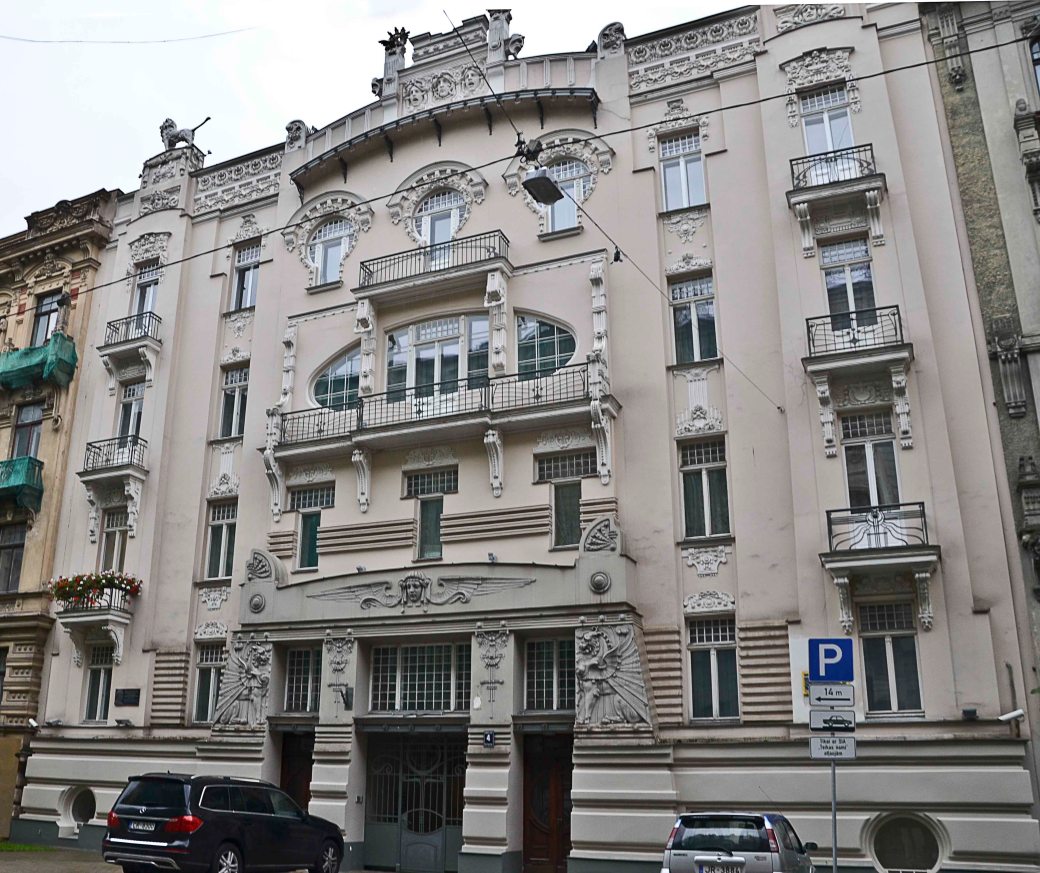
Alberta iela 4(1904, M Eisenstein) is considered to be the most elegant and original eclectic decorative Jugend house in Riga. Three Medusa heads, mouths wide open,  above the corniche, the façade covered with eagles and lions and in the middle of the building a woman’s head flying, symbolizing the sun and protection.

What is Art Nouveau then? It is defined as an ornamental style whose main motifs are nature, references to antiquity and mythology. Architecturally, it is characterised by its functional structure and a richly decorated façade, including window and door openings, bay windows, reliefs, sculptures, ornamental lines or areas and stained glass. However, the interior design is just as essential an element in Art Nouveau.

Things of great beauty might reveal a grim Latvian past …On this house we could read:

We should be rather satisfied with our finds, only having three days in total for Riga and its surroundings. Some of these houses were found just roaming around in the City Centre. Finally, some exquisite details!

Detta bildspel kräver JavaScript.