Får man fresta; eller, kombinerat fot(o)arbete – Temptation time; or, Feet, food and photography!

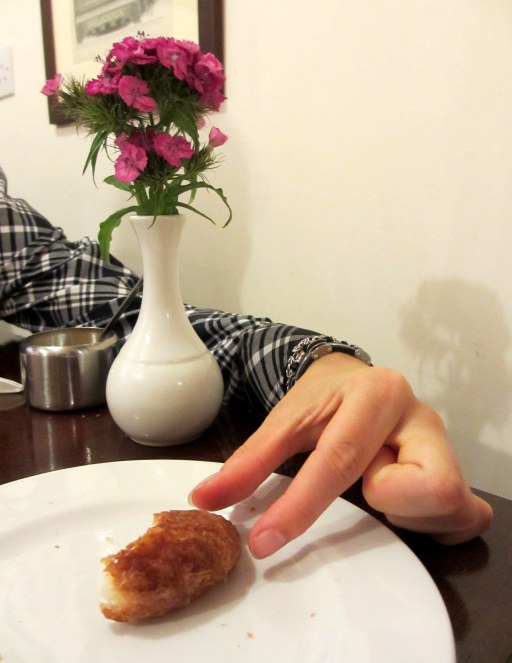
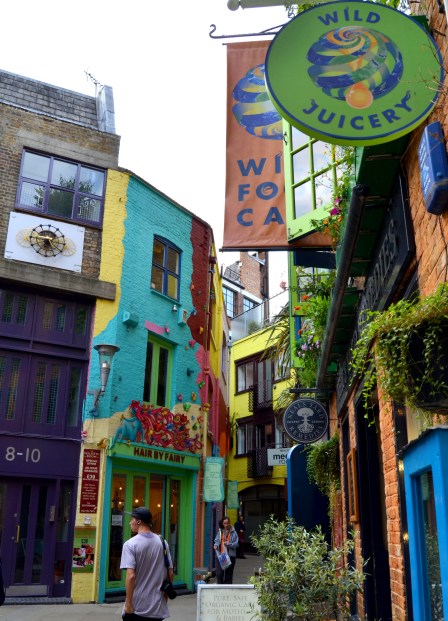
Får man servera en frestare i väntan på huvudrätten? Huvudrätten serveras av min medvandrare denna dag…så den tål att väntas på! Var i världen har vi varit? Hitta oss någonstans i fotona…

Waiting for the main dish…what about a teaser? The main dish will be served by the most excellent chef, soon! So, that’s worth waiting for…Where in the world have we been visiting…and who is my excellent fellow wanderer? Look in the photos…

På denna plats finns MYCKET av allt! Men, att gå en hel dag kräver sin tribut…Så, här serveras några av de godbitar vi fick oss till livs, alltmedan fötterna domnade bort…

This city has got so MUCH of everything! But, walking a whole day demands tasty food, snacks and cappucino…Here are some good treats, while our feet slowly went numb…

Did you find us? Soon all the correct answers to all your questions will be served here by…I think you know who!

En annorlunda dag på museet – A different day at the museum

Men, vi har varit där så många gånger…fast, det regnar ju…

But, we’ve been there so many times before…but, it IS raining…

Så det blev British Museum i alla fall – alltid intressant, men den här gången bestämde jag mig för att se det på ett lite annorlunda sätt än jag gjort förut.

So, British Museum again, then. Always interesting of course, but this time I decided to look at things from other angles than my usual ones.

BBC Nature – In pictures: Call for Brits to improve ‘tree knowledge’

BBC Nature – In pictures: Call for Brits to improve ‘tree knowledge’.

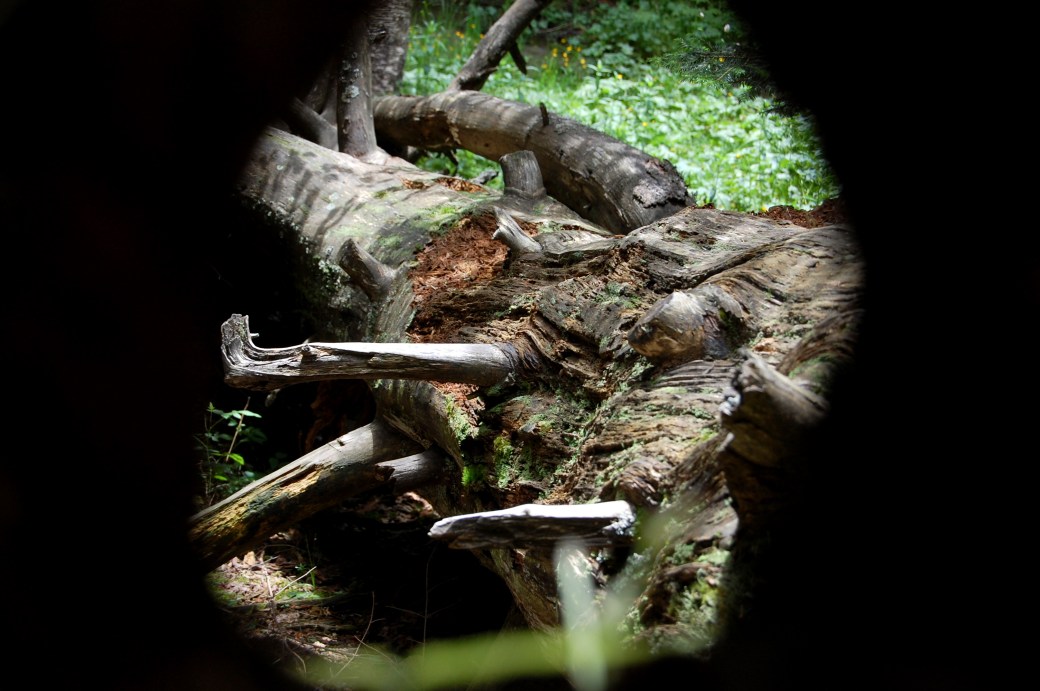
Kan du skilja en ek från en ask? Skrämmande resultat från en undersökning i Storbritannien redovisas här. Av de tillfrågade 2050 personerna kunde 43% inte identifiera en ek från ett foto på trädet och 83% kunde inte identifiera ett asklöv. The Woodland Trust vill nu via en film undervisa gemene man i trädkunskap. Man oroar sig bland annat för att inte få in rapporter om olika sjukdomar på träd – vilket man är beroende av att få från privatpersoner ute i landet.

Jag frågar mig om inte vi i Sverige kanske skulle få ett liknande resultat på en sådan undersökning?

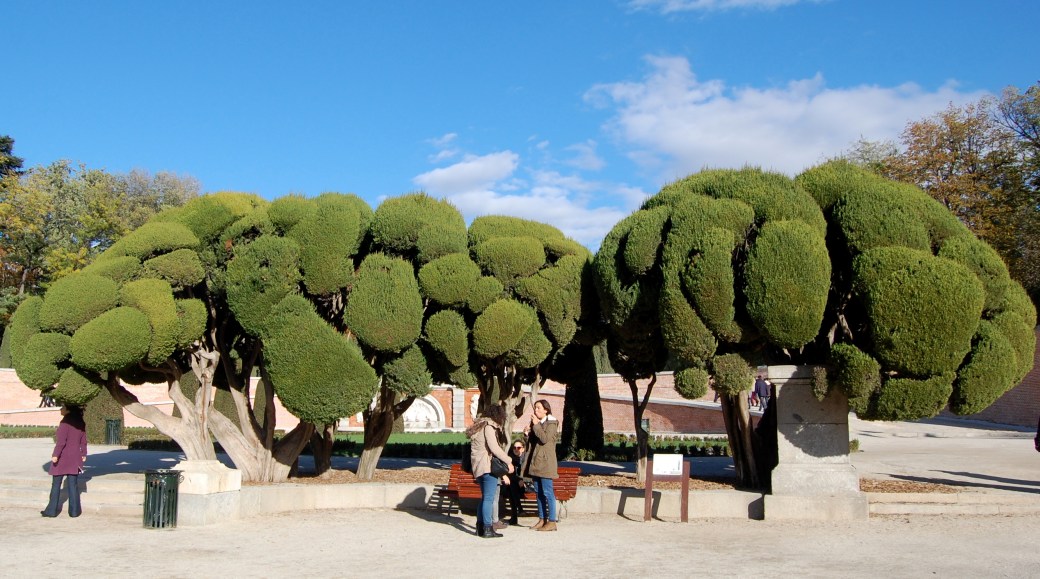
Varje dag ser jag hur vi människor avlägsnar oss alltmer från naturen och till och med kan vara rädda för den. Naturliga processer, som åldrande till exempel, kan kännas obegripliga och skrämmande för människor idag. Det urbaniserade samhället ökar gapet mellan den natur vi hör hemma i och det liv vi lever. En ekvation som inte går att lösa, trots att allt ändå är så enkelt. Studera naturen och hur djuren reagerar och lever sina liv…så lär du känna dig själv bättre. Varför inte börja med träden?

Well, what can I say? As a tree lover, I feel quite devastated reading this…The truth is, that the situation might be the same here in Sweden. This is the result of modern, urban society life.

I am convinced that the gap between nature and man soon will become so wide that we no longer understand each other. We do not consider ourselves being closely related to every living being, and we do not feel that we belong in Nature.

Some people are even afraid of Nature and its creatures…and some people cannot understand, or even stand, the natural processes in their own body. Ageing for example. I know. I meet many people every day having trouble with this.

What is there to be afraid of? Study nature and the animals – and understand yourself. Why not start with trees!

Weekly Photo Challenge: The Golden Hour

In photography, the “golden hour” is the first and last hour of sunlight of the day. Photographers venture out on sunrise hikes or sunset treks to capture a magical shot, due to the quality of the light during that time of day.

Inte bara fotografer njuter av denna första eller sista timme av sol, the Golden Hour – den Gyllene Timmen. Jag tror att det där bleka morgonljuset före och det sena, mjuka aftonskenet efter arbetsdagen ger varje människa ett lugn och en känslighet som bara detta speciella ljus kan ge. På väg hem från London blev det här min Golden Hour.

But, not only photographers love the Golden Hour. It’s the feeling that pale morning light and soft evening sun gives you – I think every human being becomes more sensitive before and after the busy working day. There’s often a stillness in the air and you feel relaxed in body and soul.

At least I did, on the flight home from London two weeks ago. So, here’s my Golden Hour.

London 2013 199

For more relaxing, click here.

Travel theme: Simplicity

Simplicity. Being simple, being clear and uncomplicated. So, clear your mind and enjoy the brilliant idea from Ailsa at Where’s My Backpack? Click the link for more of this!


Mera midsommar 2013 004

Highgate Cemetery – visit to a living beauty

Highgate Cemetery in north London, England is designated Grade I on the English Heritage Register of Parks and Gardens of Special Historic Interest in England. It is divided into two parts, named the East and West cemetery. According to Wikipedia, there are approximately 170,000 people buried in around 53,000 graves at Highgate Cemetery. Highgate Cemetery is notable both for some of the people buried there as well as for its status as a nature reserve.

The cemetery is in the London Boroughs of Camden, Haringey and Islington. The nearest transport link is Archway tube station. From there, some 20 minutes’ walking will take you to the entrance.

Highgate cemetery in its original form – the northwestern wooded area – opened in 1839, as part of a plan to provide seven large, modern cemeteries, known as the ”Magnificent Seven”, around the outside of central London. The inner-city cemeteries, mostly the graveyards attached to individual churches, had long been unable to cope with the number of burials and were seen as a hazard to health and an undignified way to treat the dead. The initial design was by architect and entrepreneur Stephen Geary.

On Monday 20 May 1839, Highgate Cemetery was dedicated to St James by the Right Reverend Charles Blomfield, Lord Bishop of London. Fifteen acres were consecrated for the use of the Church of England, and two acres set aside for Dissenters. Rights of burial were sold for either limited period or in perpetuity.

London juni 2013 215

Elizabeth Jackson’s grave

The first burial was Elizabeth Jackson of Little Windmill Street, Soho, on 26 May. Our guide told us, that in those days people believed that the first person who was buried in a graveyard became a kind of protector and guardian against evil forces.

Highgate, like the others of the Magnificent Seven, soon became a fashionable place for burials and was much admired and visited. The Victorians created a wealth of Gothic tombs and buildings that occupies a spectacular south-facing hillside site slightly downhill from the top of the hill of Highgate itself, next to Waterlow Park. Being conservative and thinking English Church, they were not very interested in the ”Egyptian area”, so it took many years before anyone bought a grave there. Another interesting fact is that Victorians didn’t fancy the use of a cross on their grave – they meant that practice was for catholics only.

In 1854 the area to the east of the original area across Swains Lane was bought to form the eastern part of the cemetery. This part is still used today for burials, as is the western part.

London juni 2013 217

The cemetery’s grounds are full of trees, shrubbery and wild flowers, all of which have been planted and grown without human influence. The grounds are a haven for birds and small animals, and we saw many nesting boxes from the path we walked.

London juni 2013 218Entrance to the Egyptian Avenue, West Cemetery

London juni 2013 222The Cedar of Lebanon

London juni 2013 230 Circle of Lebanon, West Cemetery

The Egyptian Avenue and the Circle of Lebanon (topped by a huge Cedar of Lebanon – according to our guide this tree is at least three hundred years old) feature tombs, vaults and winding paths dug into hillsides. For its protection, the oldest section, which holds an impressive collection of Victorian mausoleums and gravestones, plus elaborately carved tombs, allows admission only in tour groups. (Book in advance! ) Due to vandalism and souvenir hunters only visitors with a personal connection with the cemetery can tour without a guide. In the newer eastern section, which contains a mix of Victorian and modern statuary, you can visit without a guide though. The ticket bought for West is valid for walking on the East part as well.

London juni 2013 198

The most famous burial in the East cemetery is probably Karl Marx. The tomb of Karl Marx, the Egyptian Avenue and the Columbarium are Grade I listed buildings.

There are many other prominent figures, Victorian and otherwise, buried at Highgate Cemetery. Most of the historically notable figures lie in the Western part. Among others:

We were not allowed to take photos of new graves, so Beryl Bainbridge and Alexander Litvinenko were left in peace.

London juni 2013 249Our guide was a volunteer and very knowledgeable about the people being buried here. We got many interesting stories, and among them, one about the prize fighter Tom Sayers (1826-1865). His tomb is  guarded by the stone image of his mastiff, Lion, who also was chief mourner at his funeral. It is said that on the way to the cemetery, the dog sat in the first car with the coffin – in the front seat.

Sayers’ lasting fame depends exclusively on his final contest, when he faced American champion John Camel Heenan in a battle which was widely considered to be boxing’s first world championship. It ended in chaos when the spectators invaded the ring, and the referee finally declared a draw.

Regarded as a national hero, Sayers then retired from the ring. After his death five years later at the age of 39, a huge crowd watched his cortège on its journey to highgate Cemetery and his funeral a week later attracted some 100,000 people to Camden Town.

Highgate Cemetery was featured in the popular media from the 1960s to the late 1980s for its so-called occult past, particularly as being the alleged site of the ”Highgate Vampire”. But, as our guide said, what do vampires fear the most? Surely they would not like a place like Highgate.  Many writers of novels and film directors though, have been inspired by Highgate Cemetery. These are only a few examples:

The East Cemetery hosts some more famous names besides Karl Marx, for example:

Walking the ivy clad paths, passing old ornamented stones and silent statues, old roses and  –  a cat – follow me from East to West.

BBB Challenge: Birth of Books

There is no world without books

Profilbild för AmyThe World Is A Book...

Notes:

  • Paper was invented by the ancient Chinese in about 105 C.E  (Han Dynast) and spread slowly to the west via the Silk Road.
  • The earliest woodblock printed fragments were from China, before 220 AD.
  • Between 1041 and 1048, the first known movable type system was created out of porcelain in Bi Sheng. (Source: the wood printing in wikipedia)
  • Block printing was used in Christian Europe as a method for printing on cloth, where it was common by 1300. At around 1400, paper became relatively available.
  •  Johannes Gutenberg, Mainz in Germany, developed European movable type printing technology in 1439. Gutenberg was also credited with the introduction of an oil-based ink.             — Source: Wikipedia ”History of Printing

Ebook:

  • December 2004 Google signaled an extension to its Google Print initiative known as the Google Print Library Project , then announced partnerships with several high-profile university and public libraries
  • First generation Kindle…

Visa originalinlägg 34 fler ord

Camden Cavalcade

Marknaden i Camden, London,  besöks enligt Wikipedia av närmare 100 000 varje helg. Här finns något för alla, och vill du se verkligen precis alla sorters människor är det hit du ska åka. Vi råkade bland annat på ett glatt sällskap av äldre kvinnor i röda hattar…the British Red Hatters (se länk längre ned på sidan).

Detta område vid Regents Canal består, förutom av slussen (Camden Lock), mest av affärer och en stor utemarknad med allt mellan himmel och jord – att titta på eller köpa. Många av stånden erbjuder mat och den är både god och billig – vi köpte några olika, mycket goda Yorkshire puddings till lunch.

Marknaden var från början till för bara hantverkare, men har på senare år vuxit ut till att innehålla kläder, prylar och krims krams samt, som sagt,  god mat.

The Camden markets are a number of adjoining large retail markets in Camden Town near the Hampstead Road Lock of the Regent’s Canal (popularly referred to as Camden Lock), often collectively named ”Camden Market” or ”Camden Lock”. Among products sold on the stalls are crafts, clothing, bric-a-brac, and fast food. According to Wikipedia it is the fourth-most popular visitor attraction in London, attracting approximately 100,000 people each weekend. If you want to meet all sorts of people, this is the place to go. We even met some absolutely wonderful ladies in red hats, members of the British Red Hatters…

Originally, the Lock was a market for crafts, occupying some outdoor areas by the canal and various existing buildings. While the range of goods has since widened, with stalls selling books, new and second-hand clothing, and jewellery, the Lock retains its focus as the principle Camden market for crafts. There is a large selection of fast food stalls, where we bought some really tasty yourkshire puddings..

From 2006 a large indoor market hall was constructed in a yard between the Camden Lock Market and the Stables Market that was previously used for open air stalls. In November 2007 a large part of the Stables Market was demolished as part of a long-term redevelopment plan for the area and rebuilt as a year-round permanent market area.

Vad vi gör hela sommaren? What we do the whole summer?

Ja, vad gör vi? Här kommer en liten kavalkad av vad vi gjort hittills i alla fall.

Yes, what DO we do? Here’s a little review then…

Travel theme: Motion

Rörelse – människor och tåg på Saint Pancras, London. Sällan står allt stilla. Och när HON dyker upp hinner jag inte med – hon rör sig för fort och jag såg henne inte i tid…

Motion is this week’s theme for Ailsa’s weekly challenge. People and trains at Saint Pancras, London. Motion. When SHE turns up, rushing from a train – she’s too fast for me, and I didn’t notice her from the start…

London 2013 171 London 2013 173London 2013 176

London 2013 177