Thursday Thoughts – A Boa Vista Adventure

Quinta da Boa Vista Orchid Garden –

The best orchid collection on show all year round

The historic quinta ‘estate’ and orchid garden has been in the Garton family for over a century and is now run by Patrick Garton in Funchal, Madeira, and is open to the public and groups all year round. It was a must to visit there again. Last time was at least 30 years ago.

On our many Madeira travels we used to visit several orchid gardens, but this time we could not find any of those. We learned from a bus driver that at least one of them was burned down in the fires some years ago. And no one could answer to the question if Boa Vista was still open.

The road up to the Quinta displayed abandoned houses and gardens, and when the road finally turned into a gravel path, we began to fear the worst. Maybe the orchid garden wasn’t there at all anymore?

The BOA VISTA ORCHID GARDEN was founded in the 1960s by the late Group Captain Cecil Garton, O.B.E., in the grounds of Quinta da Boa Vista, which had been in his family for the past 100 years or so. After 30 years in the Royal Air Force, latterly spent as Air Attache in Lisbon and Madrid, he retired to Madeira where he devoted himself to developing the Quinta garden and to growing orchids. Cecil Garton’s widow, Betty (Elizabeth Hera Garton), is the daughter of Sir William Cooke, one of the pioneers of orchid breeding, particularly of Cymbidiums, besides being a collector of rare and beautiful natural species. (Madeira Web)

After some mistakes of direction, two phone calls and a lost husband – I finally reached the Quinta. It had been a looong walk uphill. I didn’t recognize the place at all – it felt a bit neglected and not many orchids blooming. The season had peaked, I knew, but still. Patrick met me in the yard, and before I could say anything at all, he delivered a litany of complaints about the status of things. Both his business and things in general.

After some 10 minutes, I almost regretted coming there. Then my husband called and wondered if I had found the place – and I described the path to him. Five long minutes later he arrived – and saved me.

We tried to remind Patrick why we were there, and could finally enter the greenhouses. I did not take many photos, since he kept me spellbound about the orchid breeding and his interesting life and work. He was very knowledgeable and scientific (Oxford degree) – a real gem. There was no question that he could not answer. After an hour or so, I understood the magnitude of his problems with the business and why he was so upset. His father had died many years ago, and in 2017 his mother – the pillar of the Quinta’s business – died. Taking care of hundreds (or thousands…) of orchids was now more or less up to Patrick alone. He was short of helping hands and had recently lost his main gardener too. ”People don’t want to work this hard anymore”, he said. And ”their education and horticultural training is of poor quality.”

I felt so sorry for him being in such a desperate situation. But, I was happy to hear he had the two Laeliocattleya orchids I wanted (they can no longer be found in Sweden). Unfortunately they were in the nursery so I could not buy them. I bought another Laeliocattleya instead – to have at least one of my favourite orchids in my own house is a must. (Also in my blog name ”Lagottocattleya”.)

Back home again I realised we had arrived at the back of the mansion and gone directly to the shop and nursery. No wonder I didn’t recognize it! I also found Patrick’s request for volunteers on the internet. Hopefully he will get help to keep up this renowned old Quinta. Had I been younger…I would have offered my help on the spot! Do you know of anyone interested?

Boa Vista Orchids welcomes volunteers; please see the contact information below.

Quinta da Boa Vista
Rua Lombo da Boa Vista
9050-126 Funchal
Telephone: (+351) 291 220 468
Fax: (+351) 291 230 309
E-mail: patrickgarton@hotmail.com

Thursday Thoughts – Madeira Gardens

Another lovely walk was through the Gardens of Quinta do Palheiro Ferreiro. A property belonging to the Blandy family.

They boast some of the most valuable and rare exotic plants on the island. Starting in 1885, the Blandy family has developed the gardens to a today’s Mecca for botanic lovers.

They are renowned among other things for the splendid Camellia selection – but unfortunately we arrived after that intense bloom. On the other hand – there was so much else to see. Here is a short gallery:

The garden is situated with a beautiful view over Funchal, and luckily we had it all to ourselves for an hour or two. I’ll give the plant names a try: First out – a Gladiolous, in a fabulous combo of colours, Gazania, then some slipper flowers (yellow and red), a crassula (Buddha’s Temple?) and some beautifully cut and trimmed hedges.

Next are bluish and pink flowers in Watsonia, Brunfelsia and I guess a Risp. The last picture shows a Japanese Pagoda tree.

This was a relaxing and interesting visit to one of Madeira’s most renowned gardens. I recommend a visit if you go to Madeira!

Thursday Thoughts – A Glimpse of Funchal

Madeira always holds a moderate and soft temperature. That’s why it is a haven for both flowers and people. We walked the old streets to see if we could still recognize something from long ago…

…and we did. The typical black and white stones and street patterns of course, but also Zarco’s house, the Portuguise who colonised Madeira. The second picture shows our first hotel in Madeira, Monte Carlo, and the next picture shows the view from there. They kindly let us in to look at the premises again, and could not believe we stayed there as early as in the 1980’s. Fond memories!

Thursday – Friday Thoughts

Well, I have problems with the internet and accessing my site, lagottocattleya. When I am finally in, I soon get thrown out again. And I am home, not in our summer house where I always have trouble with it. This has continued for a week, and I am struggling. So, finally here are my thoughts:

Bathing on the north coast of Madeira is spectacular. Natural pools and lava – open sea. 15 years ago, they were totally natural, but today there are hundreds of tourists and the pools are modelled after it.

In fact these are now the most famous sea pools in Europe, and a joy to visit. Seen from the road above, Porto Moniz doesn’t look like much…but I can assure you it is well worth an hour or two for a cooling swim.

Lens-Artists Challenge #357 Into the Woods

This week Egidio wants us to focus on the woods – and that suits me perfectly well. Hopefully you too! I walk in my forest every day, but maybe not every day in Madeira…

So, I will pick some lovely Madeira memories from June, that hopefully will add to the mystery of this green island.

The Laurissilva forest is a 20 million years old subtropical rainforest – a UNESCO world heritage,

covering about 20 % of the island. Most of the species here are endemic to Macronesia.

There are many interesting living beings in this forest woods – plants, mushrooms, lichen, birds and insects. Madeiran Chaffinches are spoiled with food from the hikers…

Madre de louro is a mushroom that grows on lager trees in Laurissilva. ”Madre de louro”, or ”Mother Laurel” is said to be good for the blood and work against rheumatism. It was even used as an insecticide.

There is something special about dense forests with high humidity. The scent, the quietness. And, I can hear the water as it trickles along the mossy stones. In Madeira the levadas add to this soothing sound – sometimes they are fast flowing, sometimes only a slow, hardly noticeable flow. And I know how good this is for my well being. Forest bathing in its true sense – and it’s no surprise that it’s origin is Japanese!

I have always loved hiking, and hopefully I will be able to keep it up even if it has become more difficult as I age. The best thing with hiking is the possibility of being alone in and with nature, for reflection and for restoring myself. Sometimes we meet a fellow hiker or two. We nod and say a soft ”hello” as we meet. I guess many of us feel the same about hiking, so talking is unnecessary.

We heard from someone in the city though, that since Covid, the levadas can even feel crowded in places…luckily we did not have to face that. This island is a hikers’ heaven and haven.

Thank you, Egidio for this beautiful challenge, and our guest host last week, Stupidity Hole, asked us to share quiet hours. You gave us more quiet times with your beautiful galleries. I hope you will join us again this week in forest bathing. Don’t forget to use the “lens-artists” hashtag when creating your post so we can easily find it in the Reader.

Next week, Tina will send us another challenge. It will go live at noon EST in the USA. Tune in to find out more about the challenge then. Please see this page to learn more about the Lens-Artists Challenge and its history. Stay well.

Thursday Thoughts – Levada do Norte

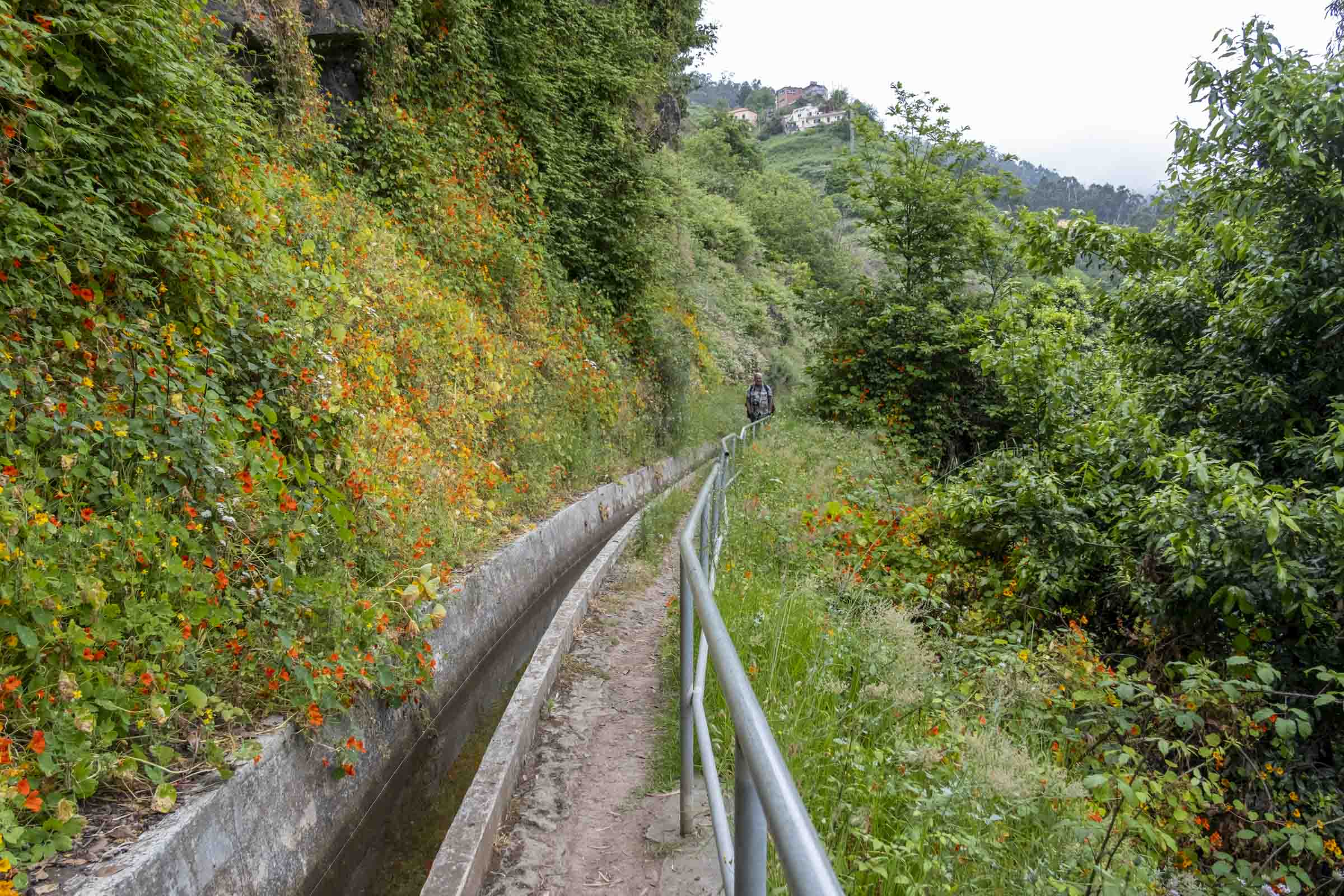
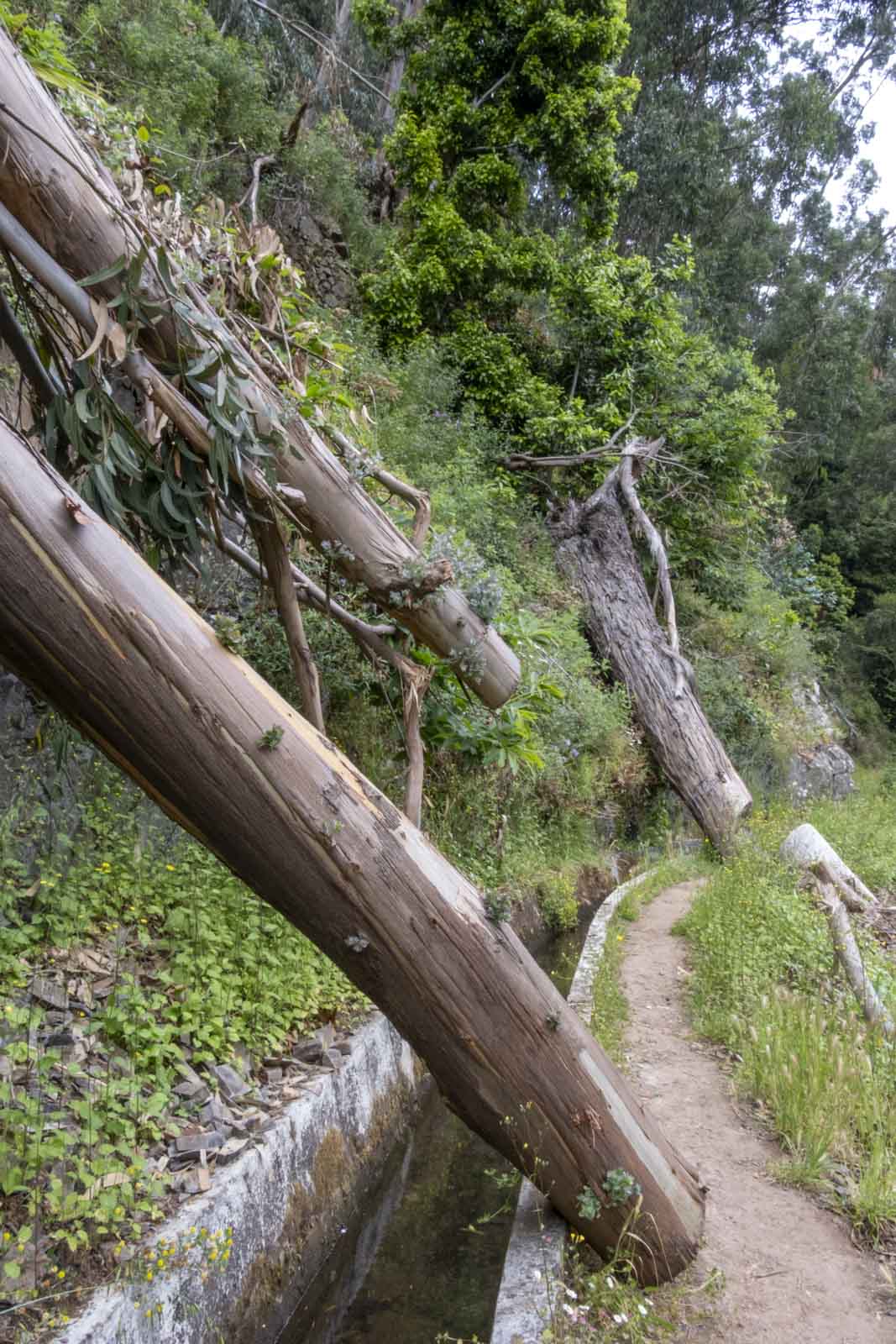
A levada is an irrigation channel or aqueduct specific to the Portuguese Atlantic region of Madeira. In the 16th century the Portuguese started building levadas to carry water to the agricultural regions in the south. Over 2,170 km (1,350 mi) of levadas were built and later provided a network of walking paths.

Due to the dangerously mountainous landscape, building levadas was often tasked to criminals and convicts from continental Portugal. Today levadas supply water and also provide hydro-electric power.

These are some scenes from a lovely levada along the south coast of Madeira. We walked this city border levada first, and later in the week returned to our favourite mountain levada. They are totally different. Ready? Let’s go!

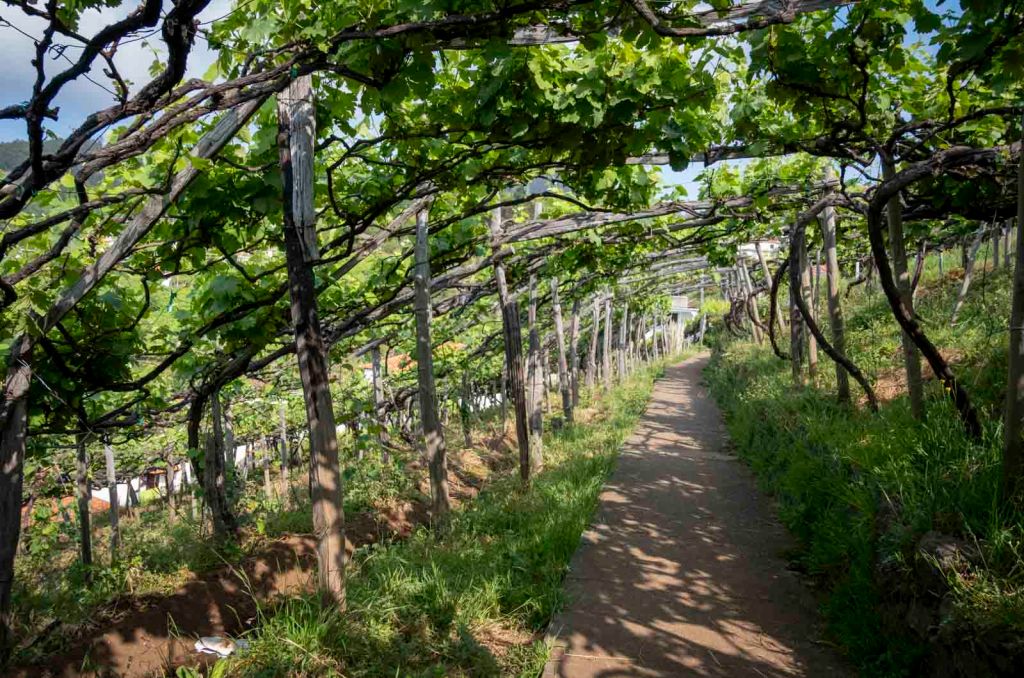
We jumped off the local bus at Estreito de Camara de Lobos. The walk starts in a vineyard. We were grateful for the shadow!

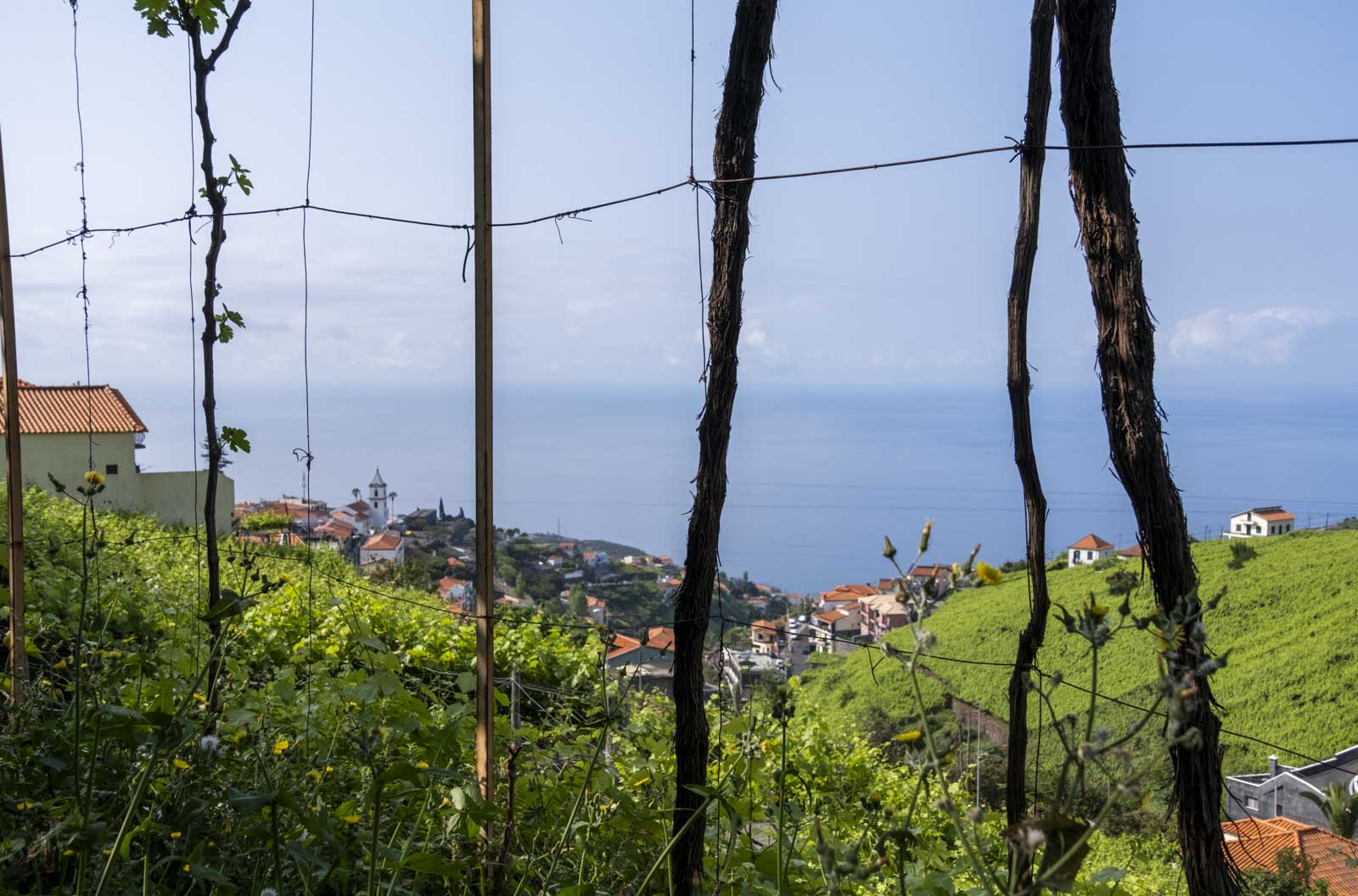
The whole walk presented splendid views over the landscapes and the ocean.

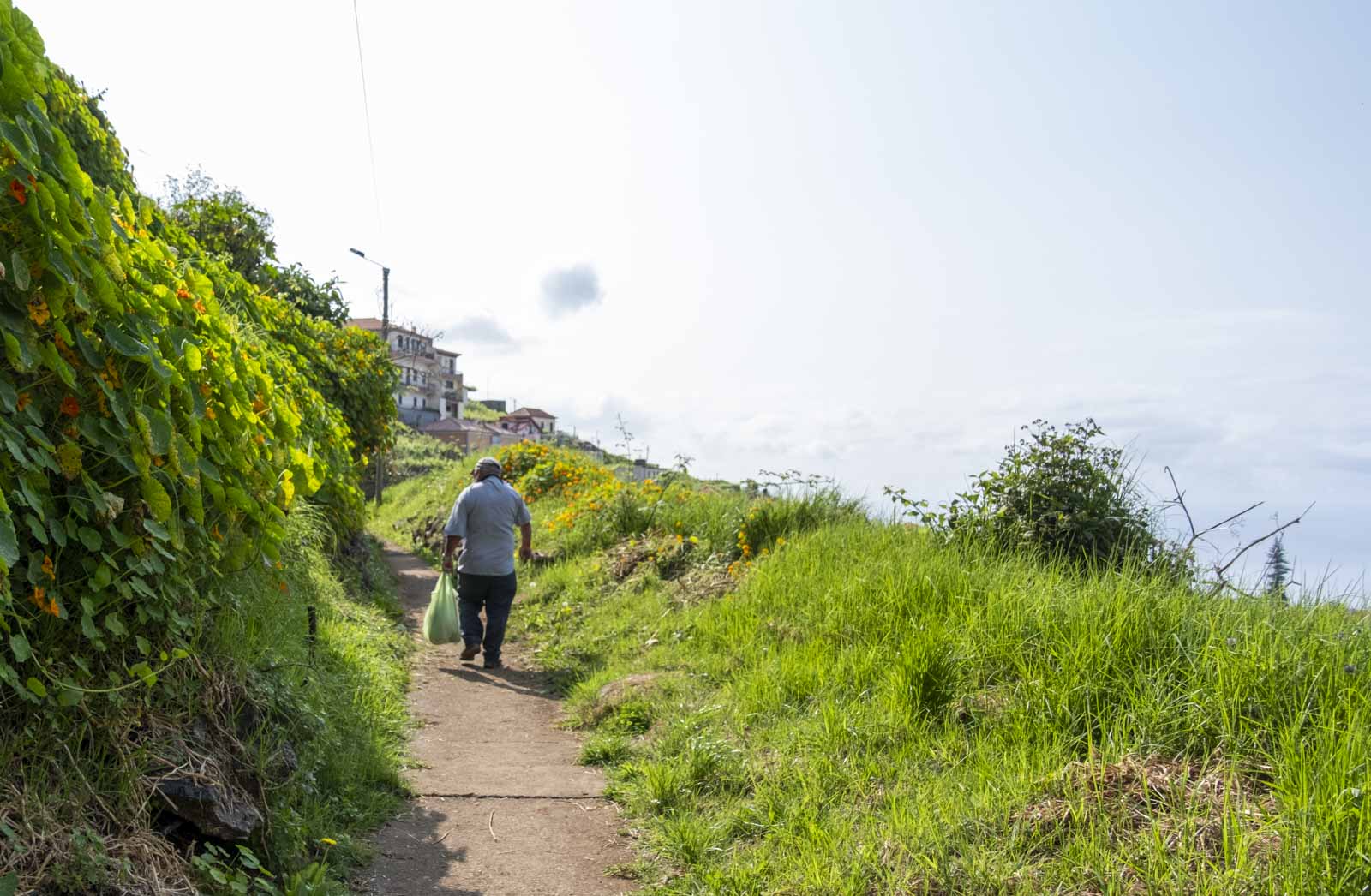
Every now and then we met a local farmer on the path.

And – curious little friends peeping out for a closer look at us.

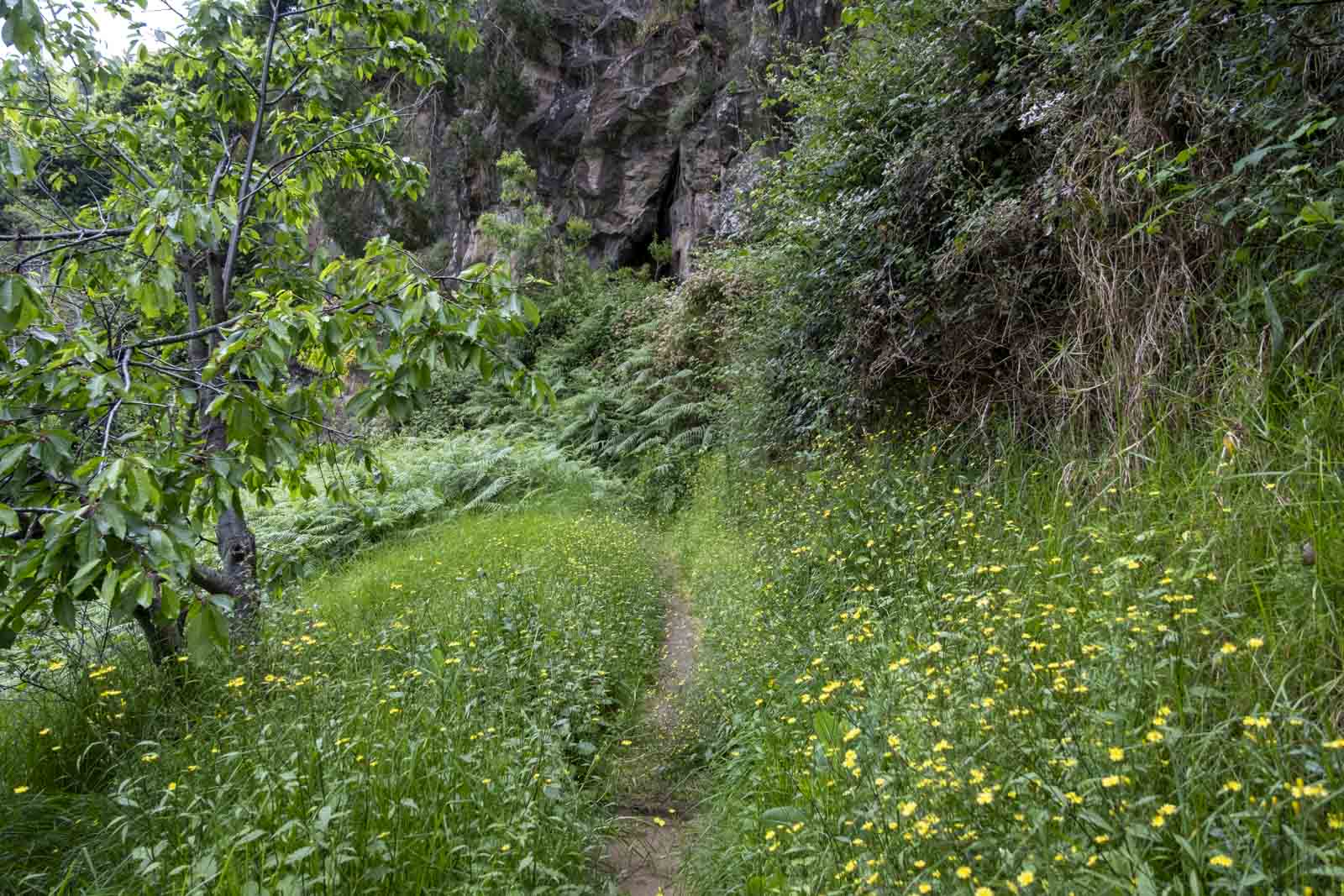
This is a very mountainous landscape, and the levada was sometimes redirected to another path because of overhanging cliffs and stones.

Workers in the heat of the day, a singing levada, fruits and berries among the flowers. And…lizards en masse!

Paths can provide easy and relaxing walks through the countryside, while others are narrow, crumbling ledges where a slip could result in injury or death. We walked the most dangerous ones in the 1980’s – today we would not take the risk.

Children played with the water of course – this little guy had built a boat for the levada – and as we passed him, we found his shoes too.

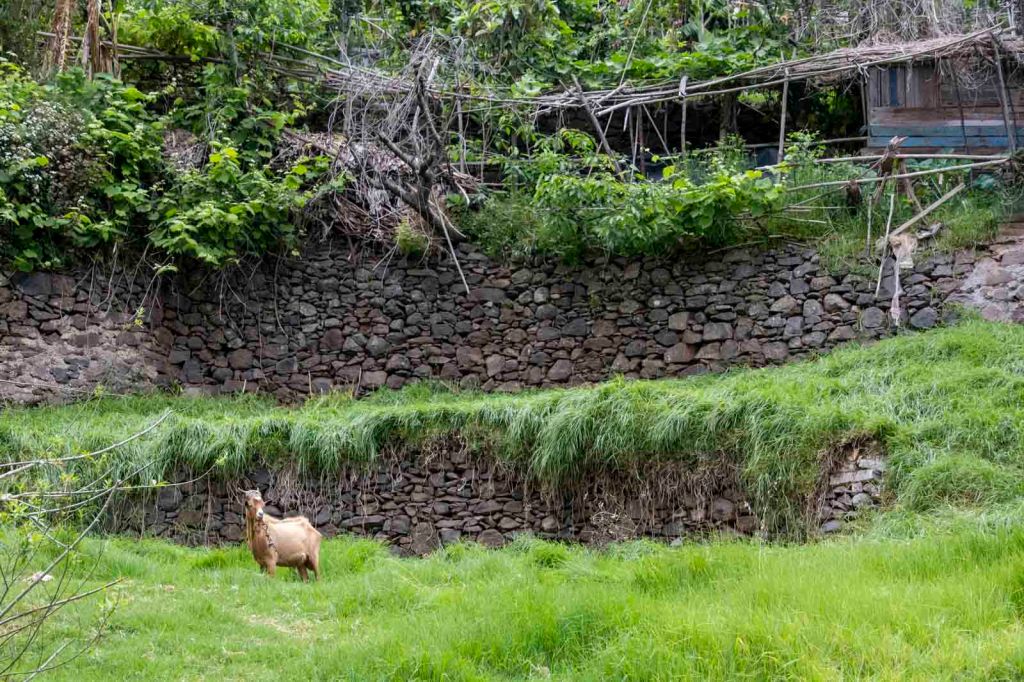
Animals are kept in little sheds – palheiros – I feel so sorry for them. Living in the mountains means not many places for grazing, and they could also slip and fall. I was so happy to find this beautiful goat in a massive field of lush grass! But, look closely at his horns – they are tied together.