
Wordless Wednesday
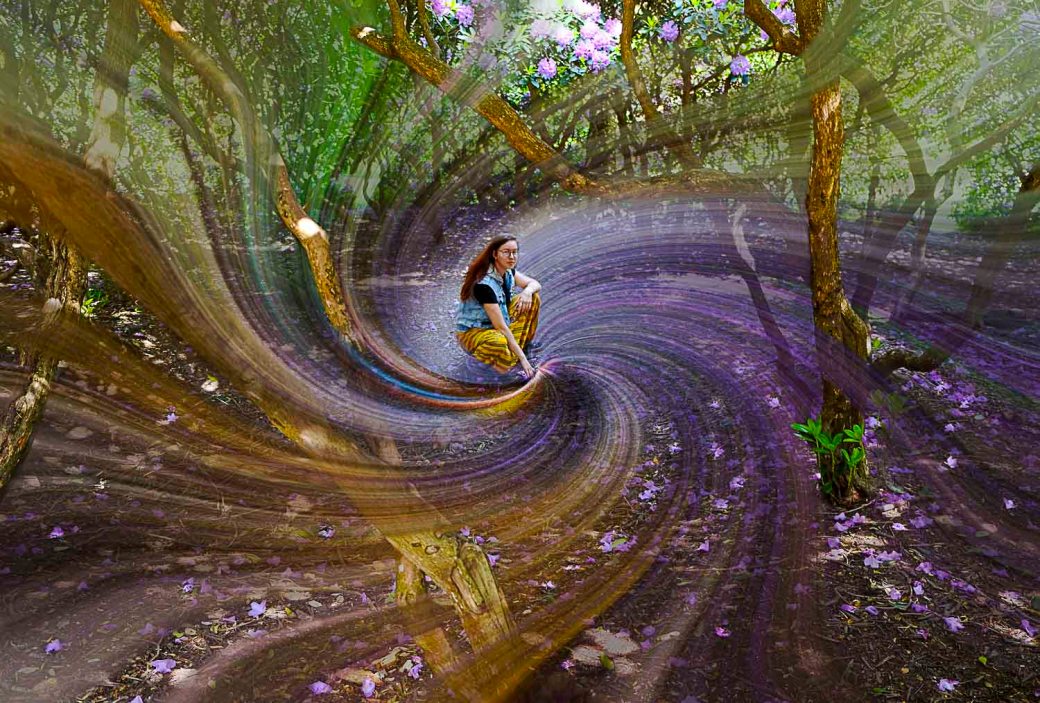
One of the most beautiful places in Skåne, Sweden, is the Hills of Brösarp.

A small taste of them – and rural harmony –

a late afternoon in Spring.

Gentle cowslips glowing in the grass. I guess you can tell, May is my favorite month.
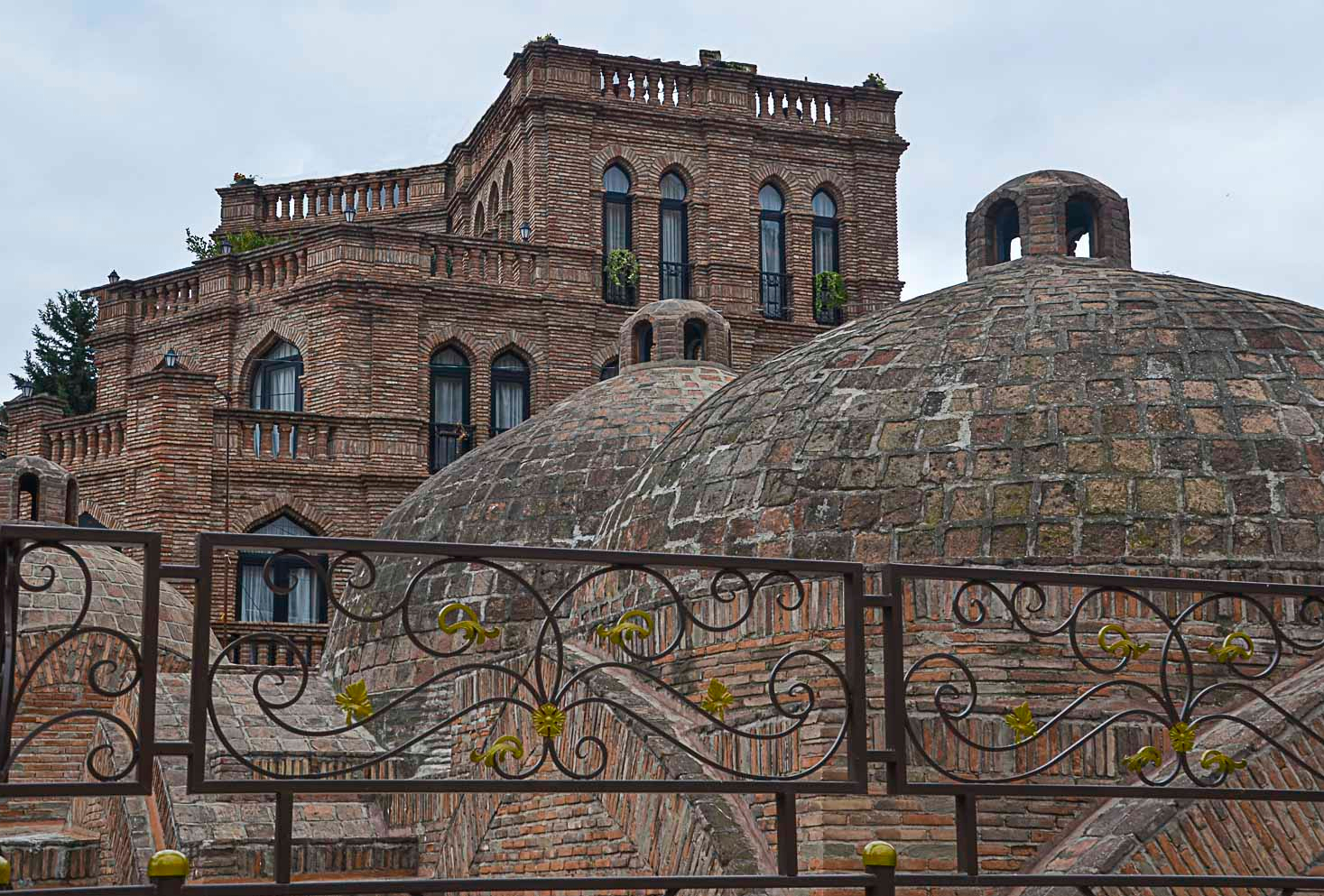
In the header, the Orbeliani bathhouse, Tbilisi.
According to the legend, the king of ancient Iberia, Vakhtang I Gorgasali, (5th C) once hunted in the forests near the first capital of Georgia – Mtskheta. After some time, he saw a pheasant, then shot and killed the bird. The king sent his falcon to find the prey, but the falcon flew away, and the king lost sight of him. In search of the two birds, the king and his hunters finally found them – in a hot water spring. Amazed with this find of sulphuric hot springs, Vakhtang decided to build his city here.
Thus, according to legend, the city of Tbilisi was founded. The word «Tbilisi» is translated from Georgian as a city of ”warm location”.

Since then, the baths have been of great value to Tbilisi – also depending upon the city’s proximity to the lucrative Silk Road. In the 13th century there were 60 baths here, but today they are reduced to less than 10.

Famous people who took baths here are Alexander Dumas and the poet Alexander Pushkin. A plaque on the entrance to the Orbeliani Baths shows a quote from Pushkin, where he describes the baths as ‘luxurious’. The bathhouse also has got a Pushkin Suite.

You are not allowed to walk on the domes… but many children did. And grown-ups taking selfies, of course setting good examples…
If you ever visit Tbilisi, I recommend you try the baths – for the feeling and for the beauty of the interior! If you ask, you might be allowed inside just for a look.
Having delighted in all your favorite photos from 2019, We would love to invite you to some Special Spot Shots!
In November 1979 the historic city of Split, Croatia, built around the Diocletian Palace, was included in the UNESCO register of World Cultural Heritage. Today, the palace is well preserved with all the most important historical buildings. It is so well hidden behind new facades and modern stores, that If you don’t know where the southern gate to the palace is – you will not find your way in!

Somewhere behind those palm trees, lies the entrance to the palace’s cellars – let’s enter – My Special Spot!
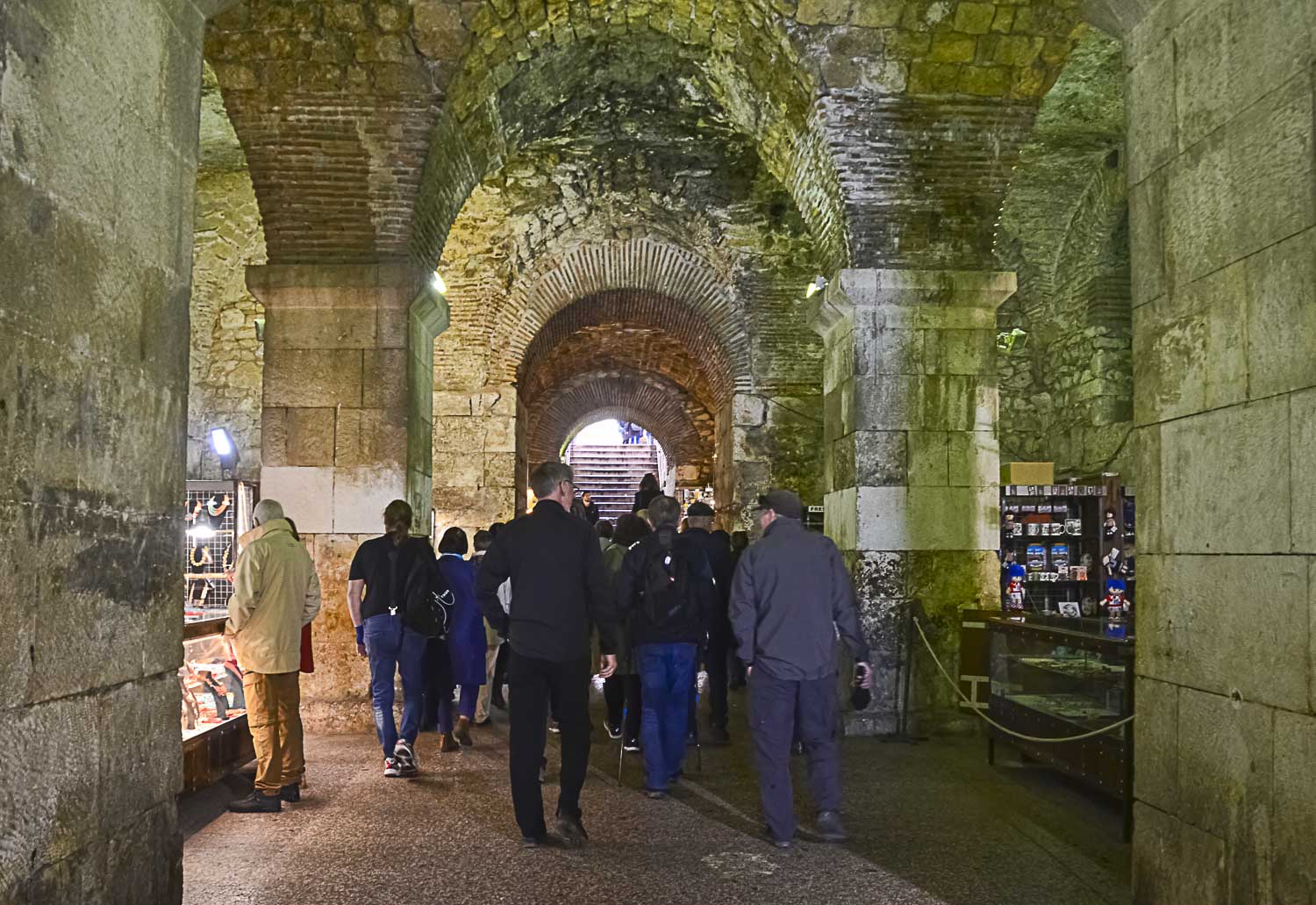
Diocletian’s Palace was built for the Roman emperor Diocletian at the turn of the fourth century AD, which today forms about half the old town of Split, Croatia. It is referred to as a ”palace”, but the term is rather misleading as the structure is massive and more resembles a large fortress: about half of it was for Diocletian’s personal use, and the rest housed the military garrison.
The construction of Diocletian’s palace is assumed to have begun around 295, and the ground plan of the palace is an irregular rectangle measuring east: 214.97 m, north: 174.74 m, south: 181.65 m

There is a legend, probably from the 10th century, telling how Croatian king Držislav (named King Solomon), captured by the Venetians, played a chess match to gain his freedom. He won all three parties and was set free, and in some versions, he also got power over the Dalmatian cities. Thus, the chessboard ended up in the Croatian flag.

The northern gate is one of the four principal Roman gates into the Palace – originally the Main gate (the Golden Gate) from which the Emperor entered the complex. The gate is on the road to the north, towards Salona, the then capital of the Roman province of Dalmatia and Diocletian’s birthplace.

The second most important gate was the Silver Gate – here seen from the monumental central square, the Peristyle, inside the palace.
The Palace was built of white local limestone and marble of high quality, most of which was from the Brač marble quarries on the island of Brač, of tuff taken from the nearby river beds, and of brick made in Salonitan and other factories. The stones we walked are the original ones – which gives you quite the feeling and perspective!
As the world’s most complete remains of a Roman palace, it holds an outstanding place in Mediterranean, European, and world heritage. Diocletian’s Palace was also used as a location for filming the fourth season of the HBO series Game of Thrones.


The old city is very much alive – not a museum.


The Palace was decorated with numerous 3500-year-old granite sphinxes, possibly originating from the site of Egyptian Pharaoh Thutmose III. Only three have survived the centuries. One is still on the Peristyle – as seen above.
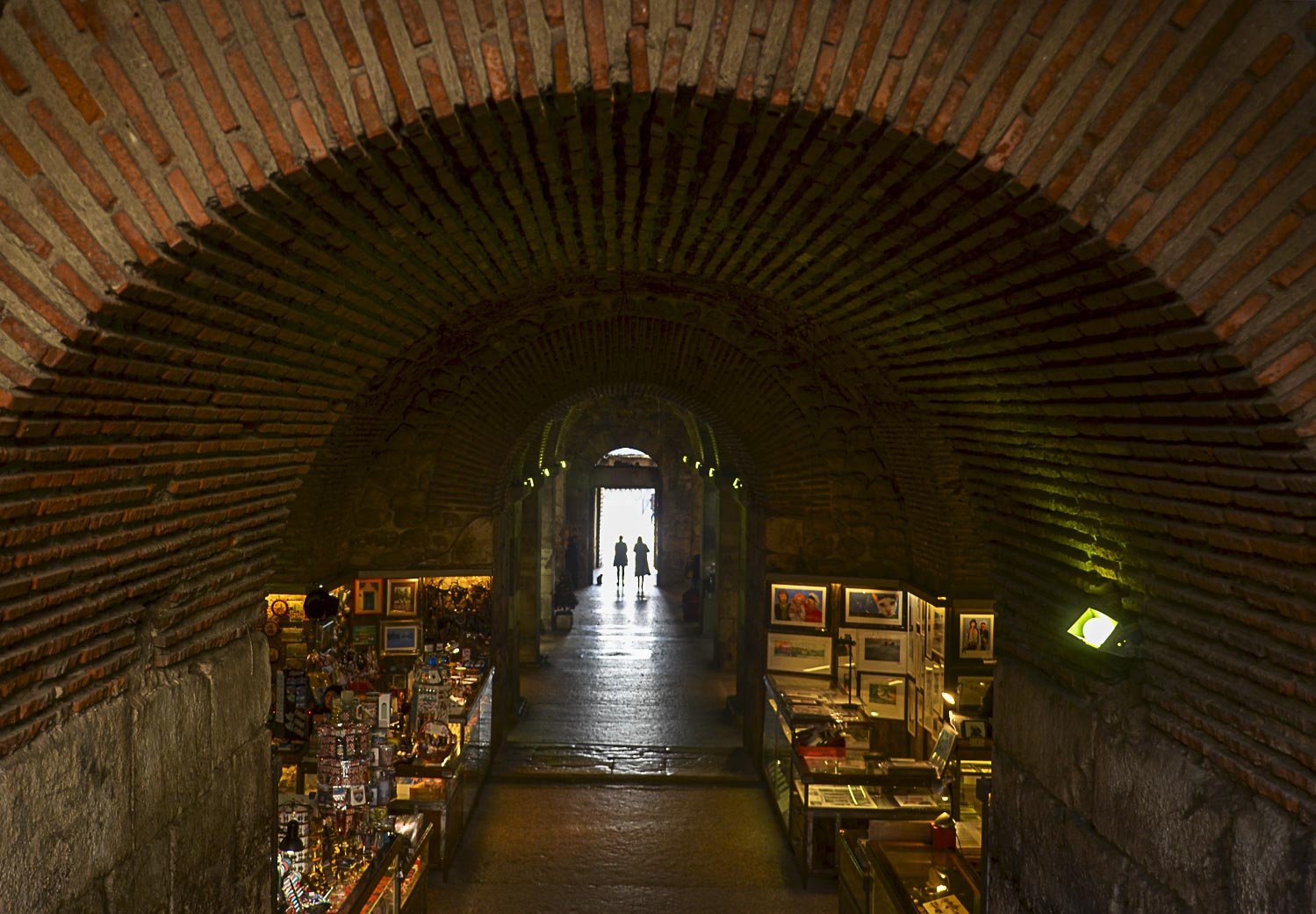
After some hours of breathtakingly being transported through history, we left by the same gate we entered, the southern gate, where the emperor used to arrive by boat. As we already had noticed, today’s modern sphinxes rule the city – the cats. This sphinx sitting on the left hand side – watching you arrive and watching you leave.

Surely he has got the true sphinx look !
Now we are looking forward to seeing Your very special spot shots – maybe a room in your home, a garden, a mountain, a city, an exhibition, a lovely café…a place that is special to you!
Thank you for so generously sharing your own 2019 with us! We have enjoyed so many interesting galleries – and it was so hard to pick just some of them, but…
Have you seen these:
Sue’s eclectic gallery
From Beyond the Window Box and Judith we get gardening and beautiful views of Berwick upon Tweed
Paulie of The Life in My Years shares some stunning memories – and life lessons – with us
Su Leslie sends a glorious gallery from New Zealand
Davide‘s gallery will surprise you
Be sure to link to my original post, (Links posted within the Reader are not working correctly) and to use the Lens-Artists tag to help us find you. And, of course please visit Amy’s blog next week for Challenge #79!
As always, Patti, Amy, Tina and I hope you will join us.
David Gareja Lavra is a historical and architectural monument within the monastic complex of David Gareja. It was built during the first half of the 6th century under the guidance of San David Gareja, one of the thirteen Assyrian monks who arrived in the country at the same time. He came to bring Christianity to Georgia, and he founded around 15 monasteries in the arid and desert like nature on the border to Azerbaijan.
David Gareja is a Georgian Orthodox monastery complex located in the Kakheti region, and the complex includes hundreds of cells, churches, chapels, refectories and living quarters hollowed out of the rock face.
Despite the harsh environment, the monastery remained an important centre of religious and cultural activity for many centuries; at certain periods the monasteries owned extensive agricultural lands and many villages. The renaissance of fresco painting chronologically coincides with the general development of the life in the David Gareja monasteries. The high artistic skill of frescoes made them an indispensable part of world treasure. From the late 11th to the early 13th centuries, the economic and cultural development of David Gareja reached its highest phase.
We left early in the morning on a private tour, because the roads were all very narrow and bumpy – no buses could go there. Road builders and machines were constantly working and in some places we had to drive in the nearby fields instead of the road.
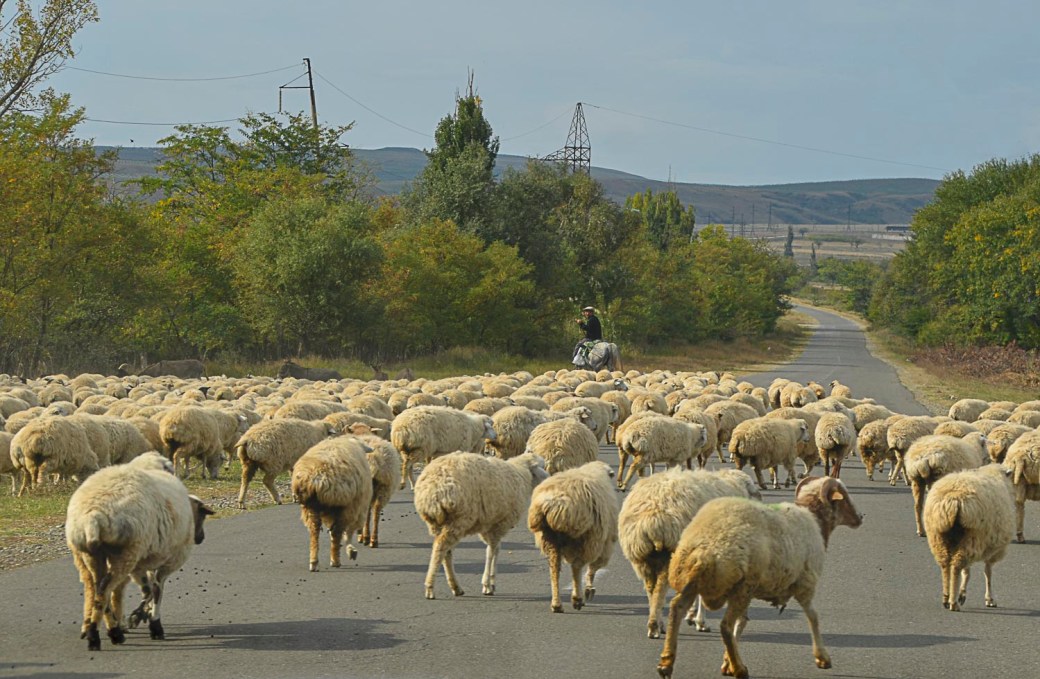
We wondered where these sheep would get any food, but loved to see them – and their shepherds on horses.
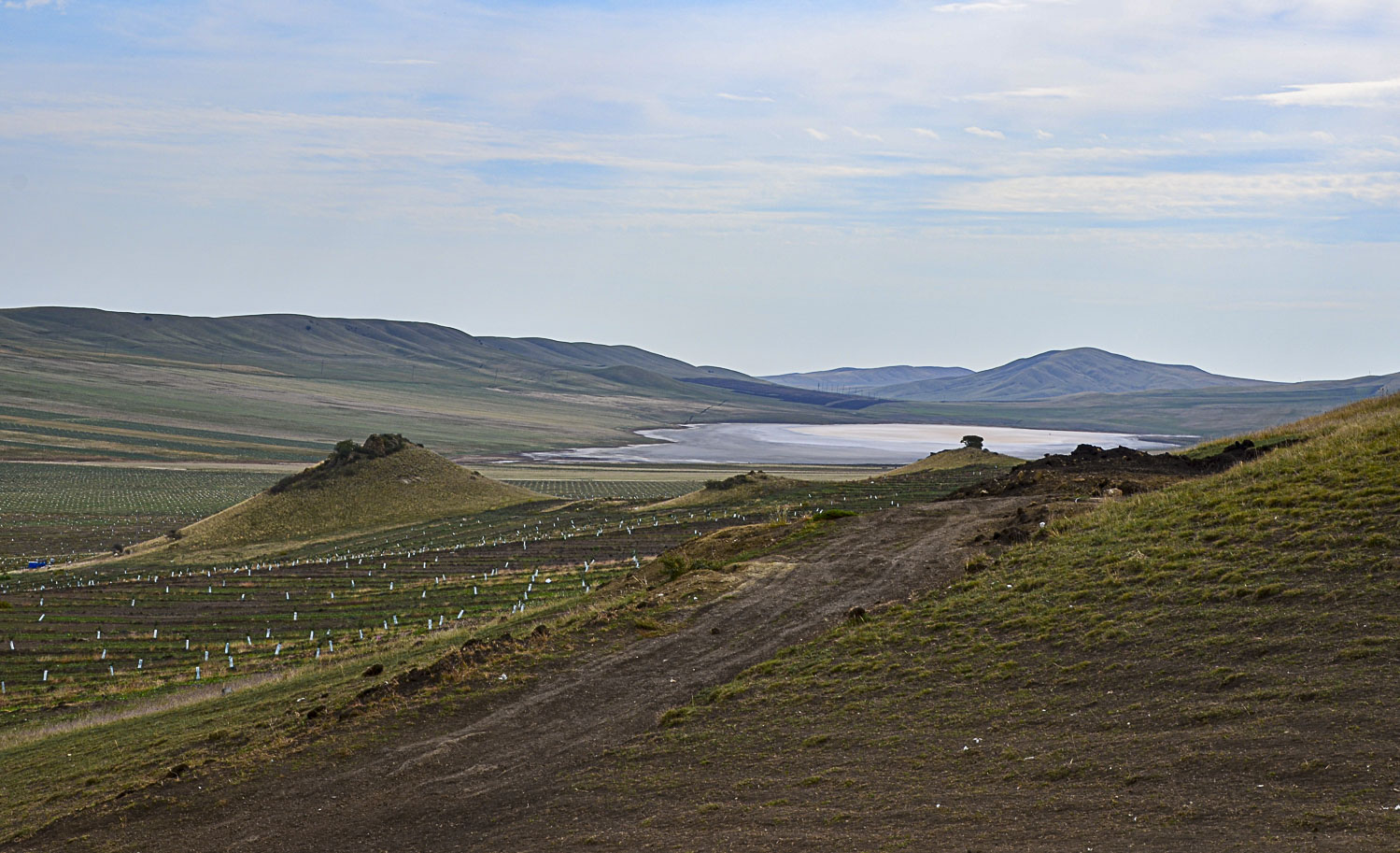
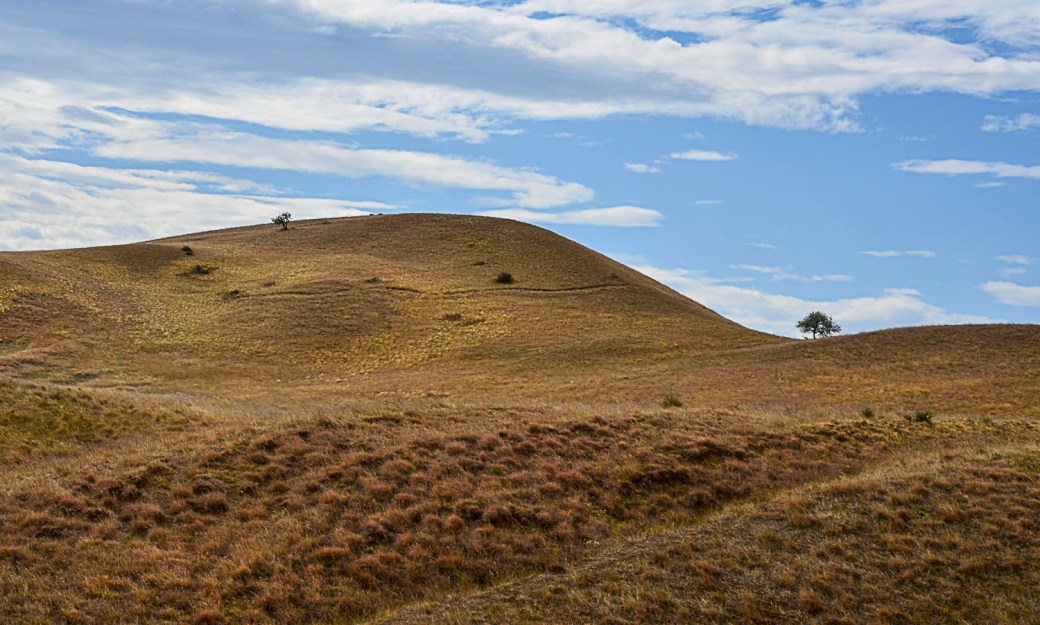
I loved the landscape, the low ridges, the long views and the serenity of the lines. We also saw gigantic areas with olive trees, according to our guide a co-operation with EU. When ready, the olives would be exported for the EU market.
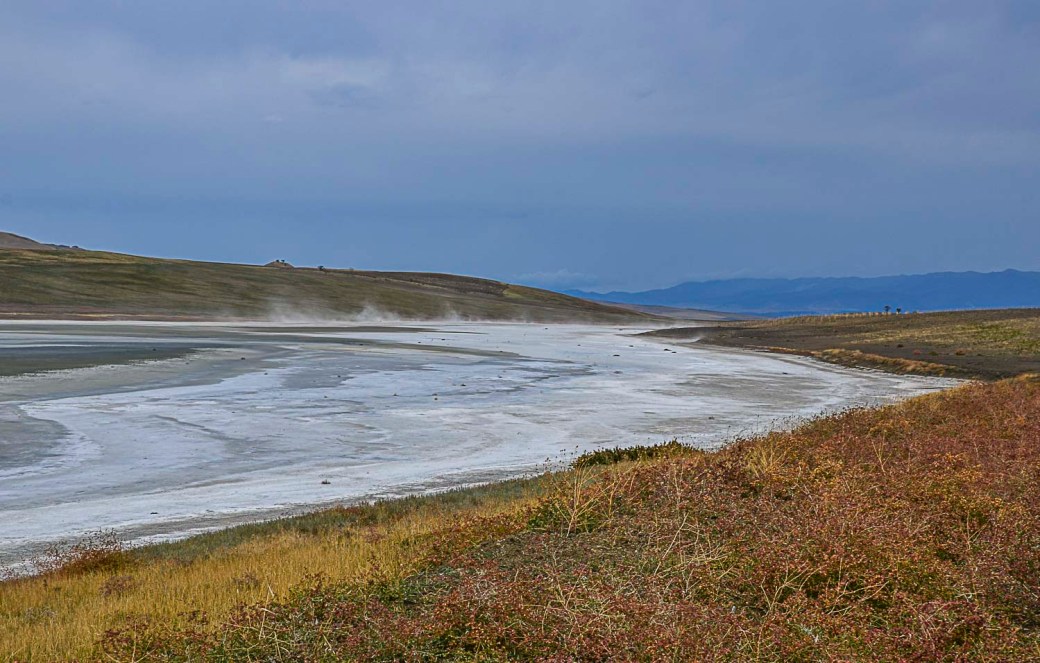
We passed some salt lakes as well. Millions of years ago, the whole area was covered in water, and today these lakes are the only remaining waters to be seen. They have no outflow in this hot and dry area, so what is left is – salt.
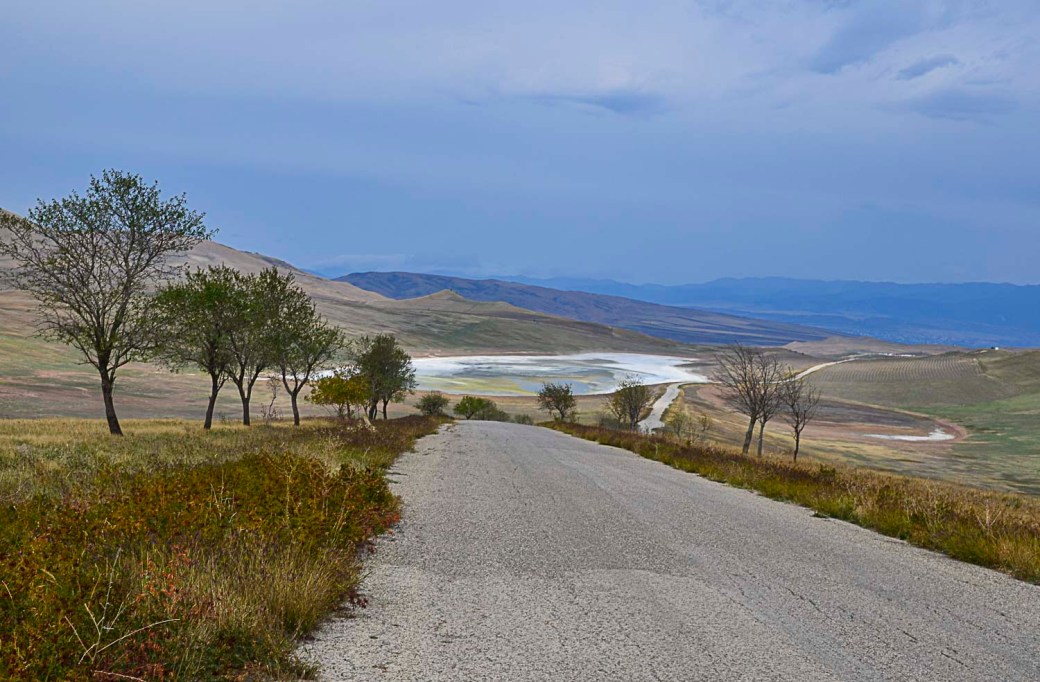
This means that the soil is saturated with salt and difficult to cultivate. Even the ground water here is too salty. In order to use it as drinking water, it has to be filtered. This windy day, salt was flying in the air, and you could feel it on your tongue when speaking.
While driving, our knowledgeable guide told us of The David Gareja monasteries and their long history of wars and vandals, destroying and rebuilding. The Mongolians och Timur Lenk were devastating, but that was nothing to the Persians killing of 6000 monks celebrating Easter in 1615. After the prayer in all 15 monasteries, all monks were locked inside the churches and killed. The rich artworks and other treasures were destroyed or stolen. After this blow, the D G monasteries never came back to their former glory.
Then, what seemed a final blow, came after the violent Bolshevik takeover of Georgia in 1921 – David Gareja was closed down and remained uninhabited. In the years of the Soviet–Afghan War, the monastery’s territory was used as a training ground for the Soviet military, that inflicted damage to the unique cycle of murals in the monastery.
After the restoration of Georgia’s independence in 1991, the monastery life in David Gareja – Lavra – was revived. Today it is the home of 13-30 monks.

We only visited Lavra, and we were not allowed to see how the monks really lived their daily life. But, the guide told us that in one of the higher located caves, the monks had their meals – kneeling at stone tables.


The area is also home to protected animal species and evidence of some of the oldest human habitations in the region.


Part of the complex is located in the Agstafa rayon of Azerbaijan and has become subject to a border dispute between Georgia and Azerbaijan, with ongoing talks since 1991. But as there are strong economic and cultural ties between Azerbaijan and Georgia, they both have peaceful intentions in the determination of borders.
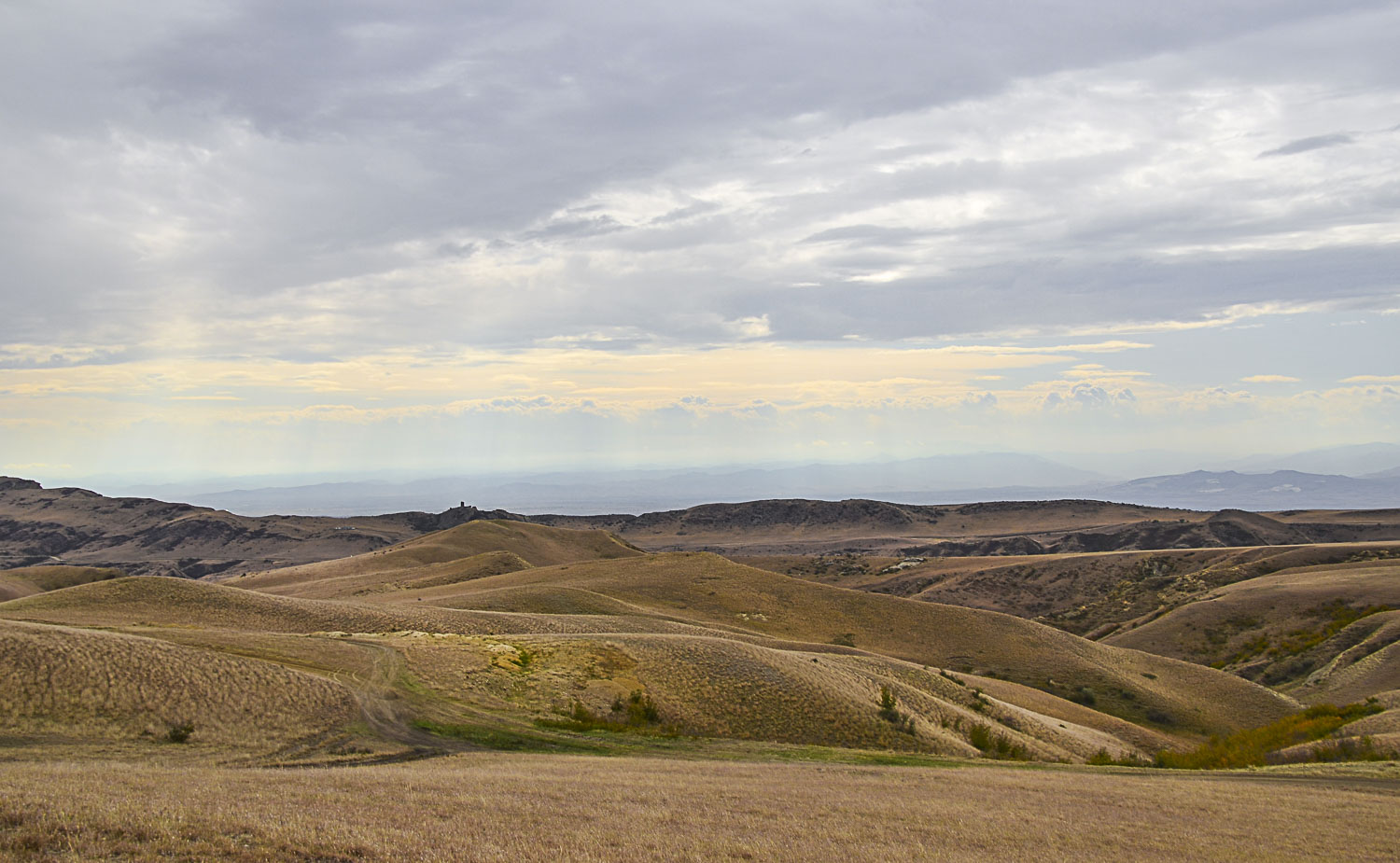
On leaving the monastery, my head was filled with thoughts of how a monk’s life must be out there in the desert. I wonder how young or old they are today, what their cave cells look like and how cold it is there in the long, lonely nights. Questions without answers.
A fact is – that Georgians are, and have always been, a strong people. They have been invaded by so many other powers, countries and people, but every time they have risen again. How they have remained so friendly and good at heart is a true enigma.
Halloween some days gone… I thought you might still have some interesting thoughts and images left for us and this challenge – things Creepy!
If you look up ”Creepy” in a dictionary, it says ” causing an unpleasant feeling of fear or unease”.
Here are some of my creepy nightmares… and in the header my worst scenario. Just how many spiders were at work weaving all those nets? And that – in my own garden…

When a sudden look down a side street – reveals an abandoned house – or, maybe not…?

When it is raining men…
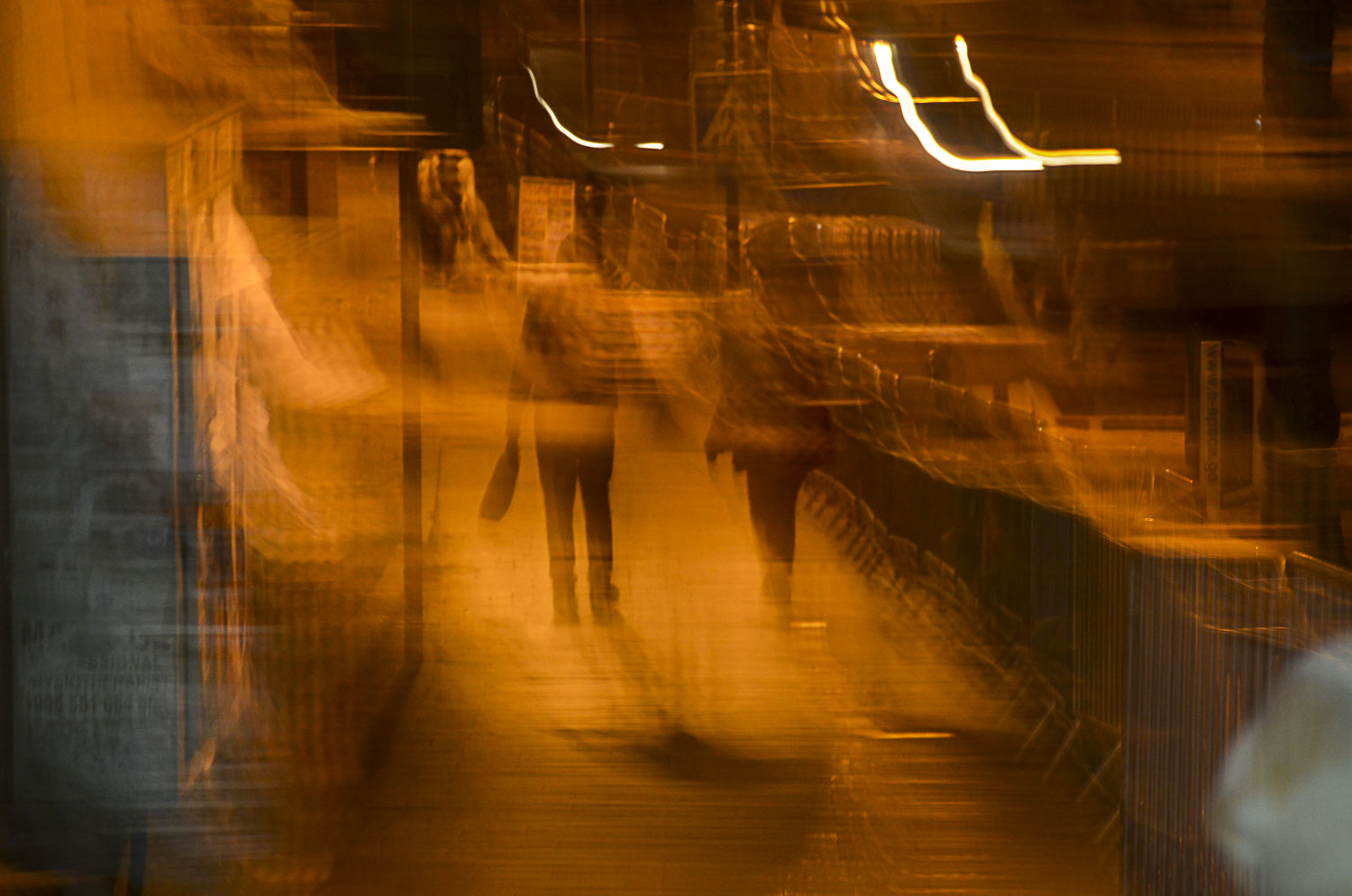
…or they suddenly dissolve in a haze – right in front of me.

Or – I have to pass through dark tunnels …and I notice someone lurking inside.

I also avoid walking in the forest late nights…no option…when there are tree trolls towering 2×5 meters high and wide.

Seeing a giant Gunnera waking up…gives at least me the creeps…

And, Totti…? Is that you?
According to a recent study, the creepiest job was working as a Clown, and among the creepiest items mentioned, were dolls. Personally I clearly can relate to ”unpredictability” as an important component of creepiness. If you are interested in reading more of this study, On the nature of creepiness, here’s a link.
We just have to remember that being ”creeped out” is deep down a good thing for our ability to survive! So – now we are looking forward to seeing Your Creepy answers!
Thank you for the many inspirational and varied entries for Patti’s Monochrome challenge! Some of you were not much used to monochrome before, but found your own ways to answer to the challenge – clever and innovative!
Have you seen these:
As always, Amy, Tina, Patti and I hope you will join us.
We happened to land in Tbilisi the day before the annual October festival – two days of celebrating the grape harvest of the year. What luck! Follow me to the market!

The whole city on its feet, night and day. The first thing we noticed was the many ”braids” of candy called Churchkhela. Delicious! (Recipe in the link.)
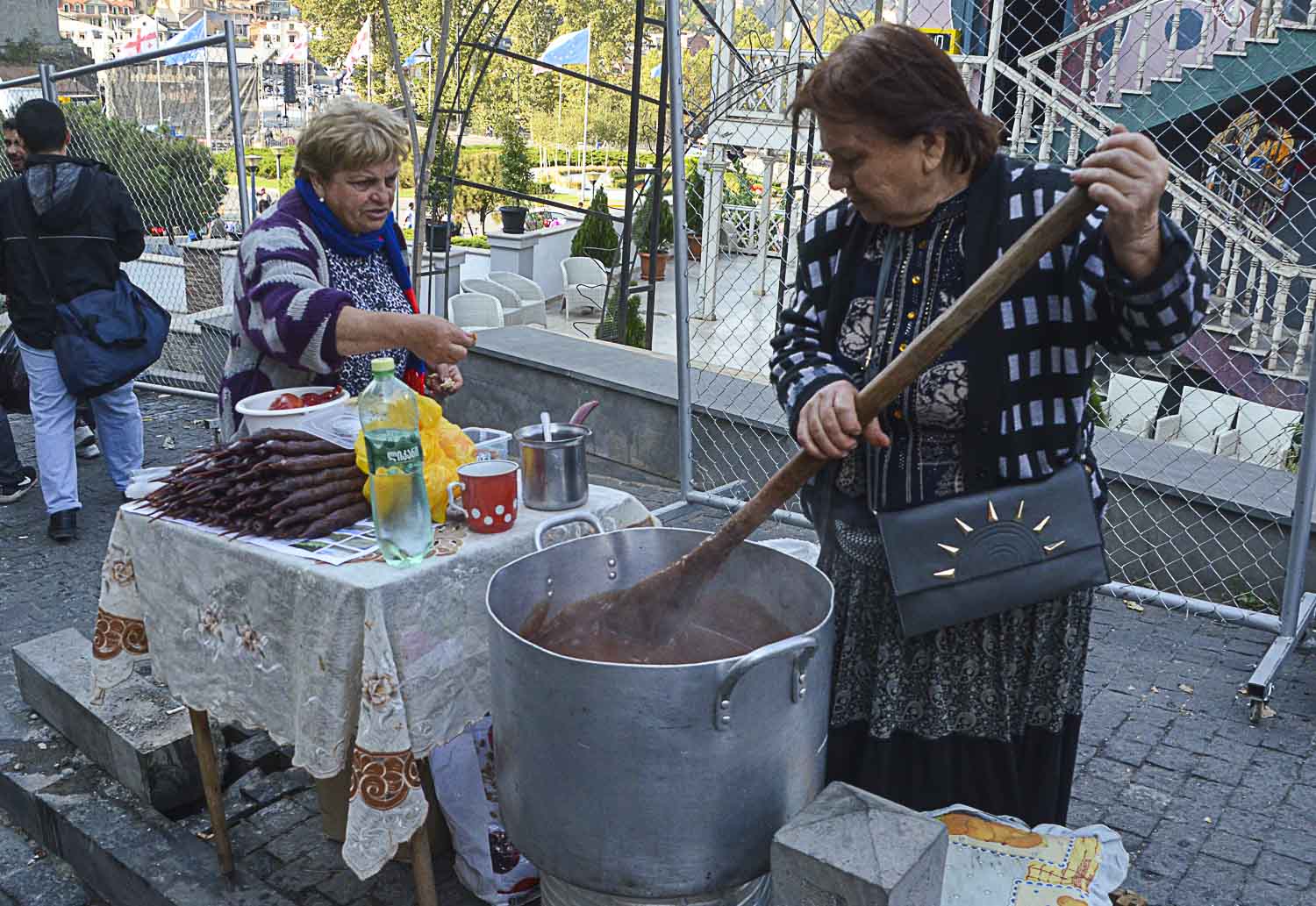
They make long threads of mostly walnuts or hazelnuts, then dip them in boiled/cooked grape juice. A long process for several layers, but oh…the taste! We bough many with us home – all colours.


The lovely ”Tree of Life”, by sculptor David Monavarlisashvili, offers so much to discover for children – and grown-ups… It greatly reminded me of one of my children’s favorite authors, Shaun Tan, his books and movies.


And the nights were warm, slowly walking the Rike Park and Peace Bridge. The bridge stretches 150 metres (490 ft) over the Kura River to create a contemporary design feature connecting Old Tbilisi with the new district. The official opening took place on May 6, 2010. Architect, Italian Michele De Lucchi.


 Leya
Leya 
Du måste vara inloggad för att kunna skicka en kommentar.