WPC: Mirror

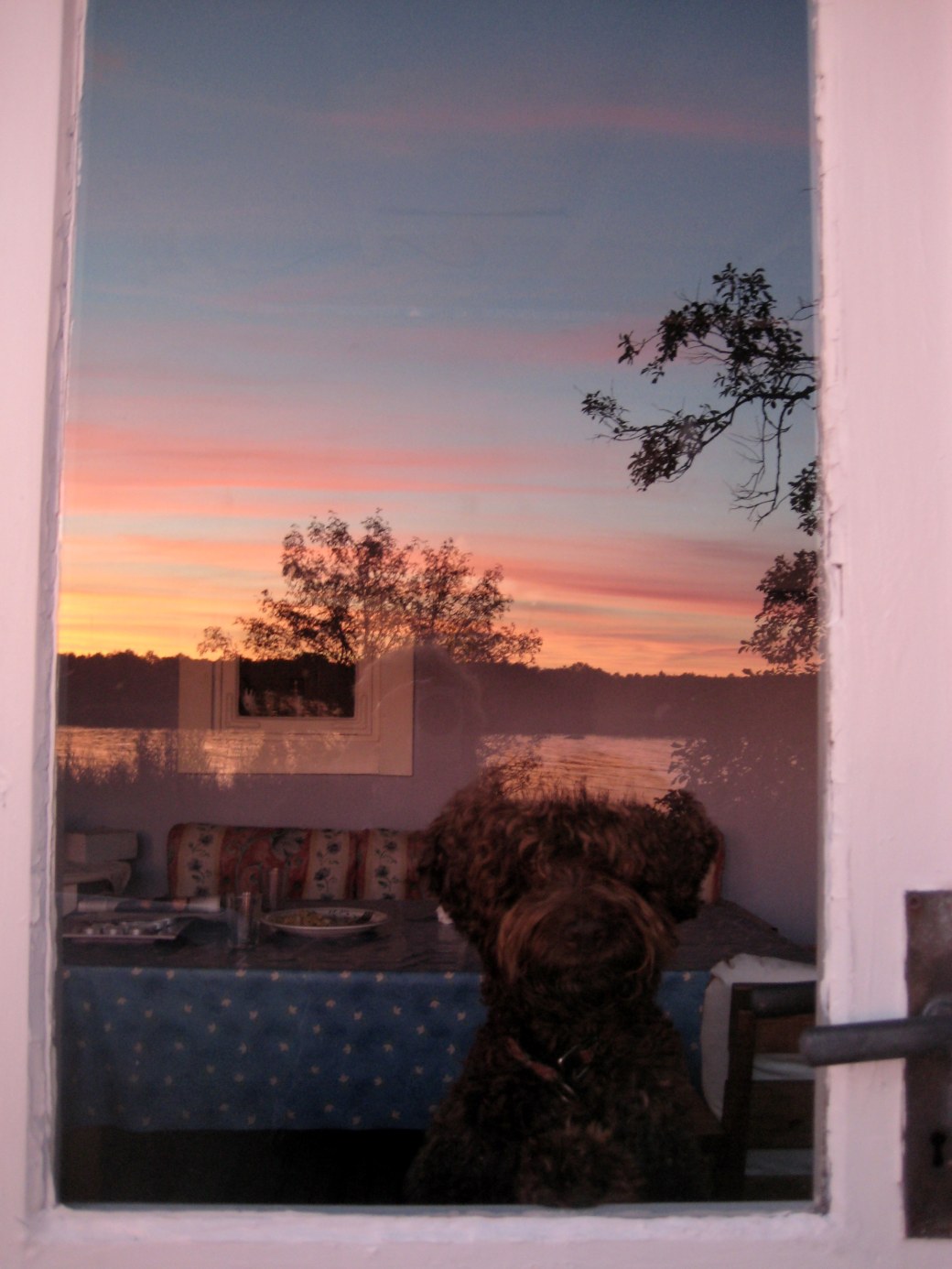
Mirror, mirror on the wall…Which is the best representation of them all?

This is a challenge where I think most people have many options in their archives – interesting…which ones do we choose?

In the header is a Bilbao photo from opposite the Guggenheim museum. There is this house mirroring a bridge with a red car passing. The other three photos I guess you have seen before – if you are following my blog.

For more of mirrors, click here.

Switzerland, the Fluela Pass in the early morning.

My beloved Mille…looking out for me, walking in the late evening.

Hamnen, Auckland. Vid fiskmarknaden.

 Auckland harbour by the fish market.

Thursday Thoughts – A Yellow Anatomy

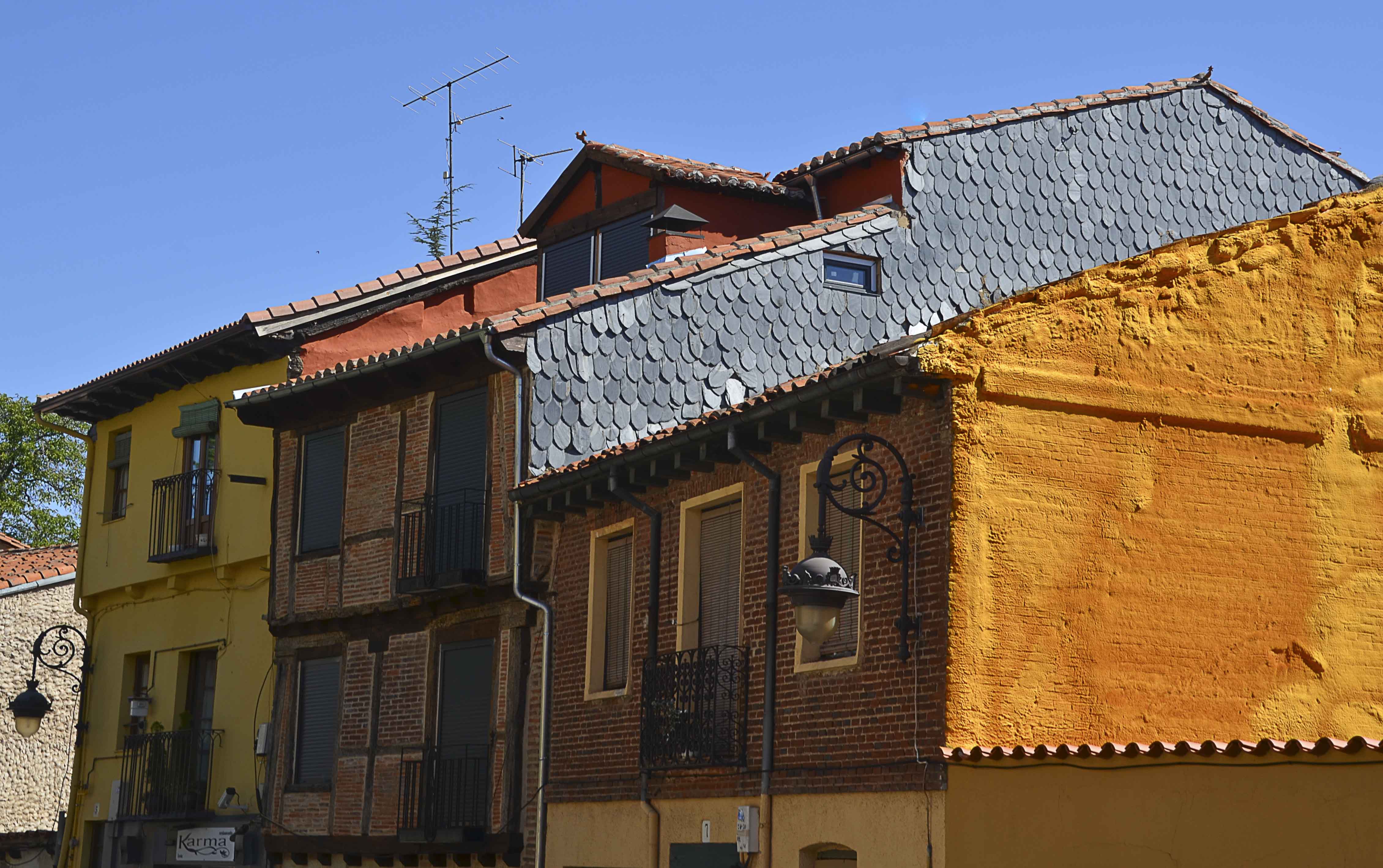
Yes, why yellow walls? Driving through the north of Spain, I recognized this almost saffron colour on a great many walls in the cities and villages.

Personally, I love this colour. Its warmth and connection to Africa and to the desert.

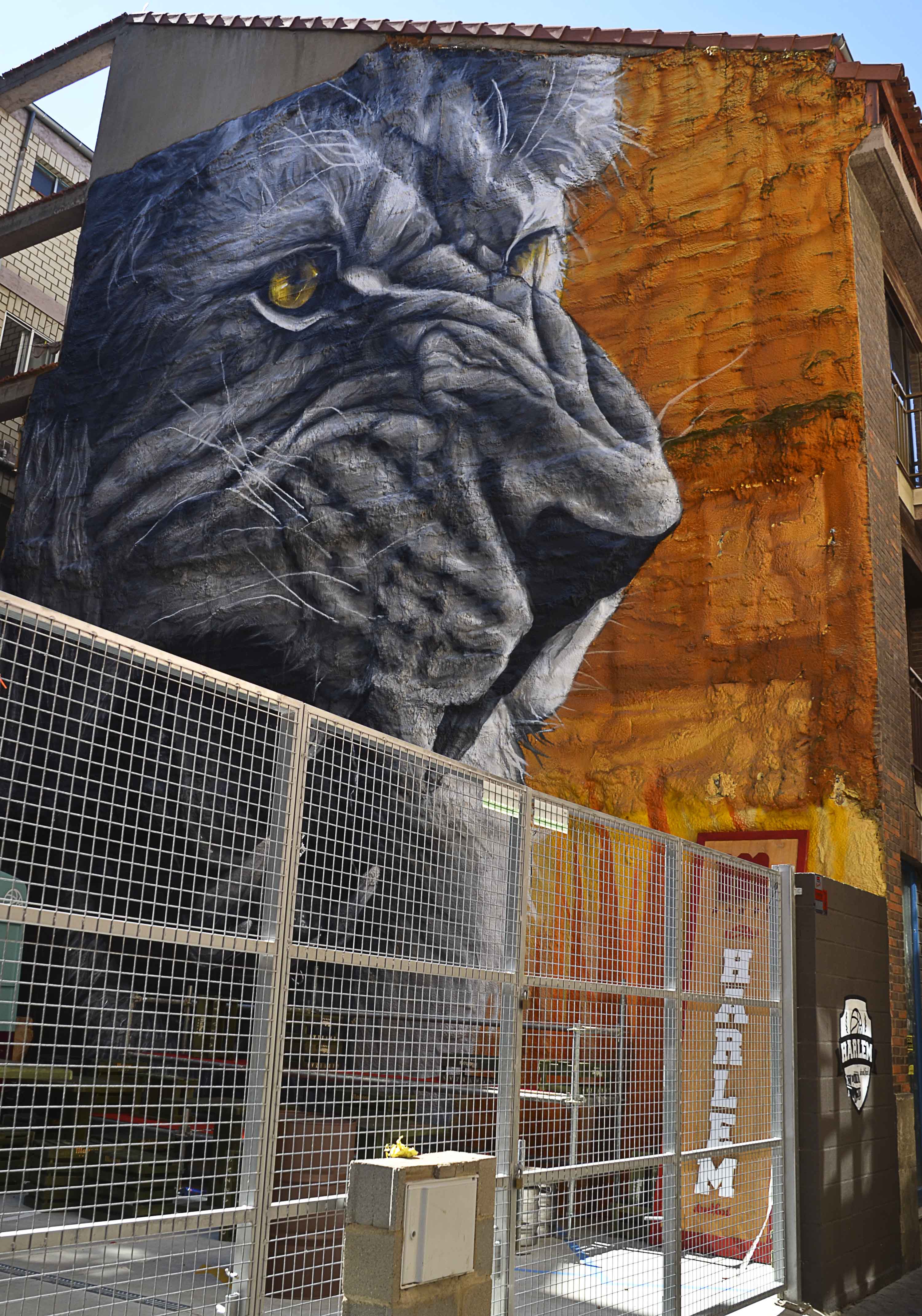
In Pamplona I found this enormous Lion on such a yellow wall – Impressive painting, and so in harmony with all that yellow. On a closer look, I found the painting even more impressive.

I still do not know why those walls are painted saffron yellow, but at least I have figured out what the colour is hiding…

…the anatomy of what once was.

The Winner Takes It All – Song of Roland

”I am watching your every step…”

Towards Pas de Rolande, where Charlemagne’s army was ambushed after the sacking of Pamplona – celebrated in the medieval poem, Song of Roland.

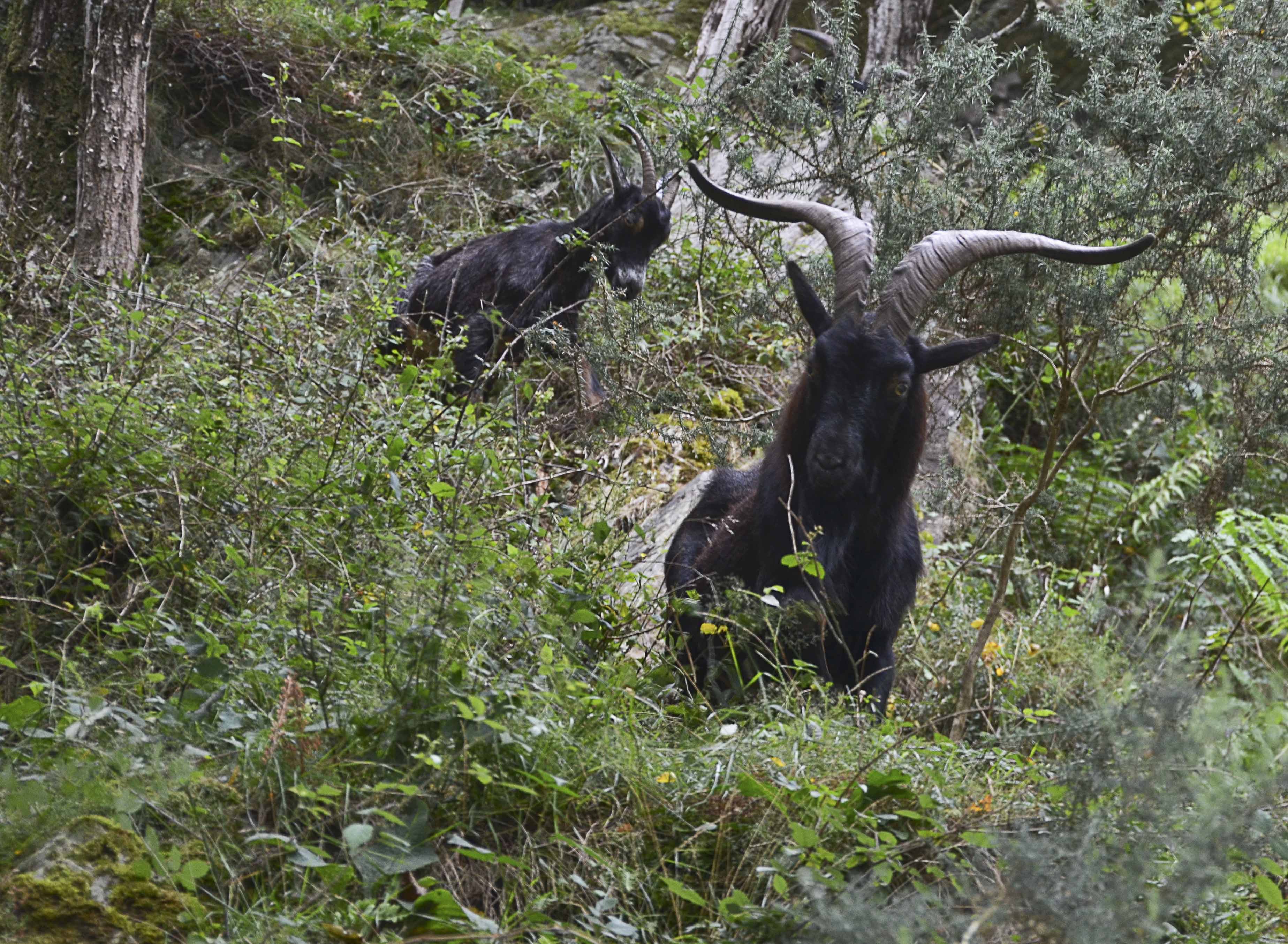
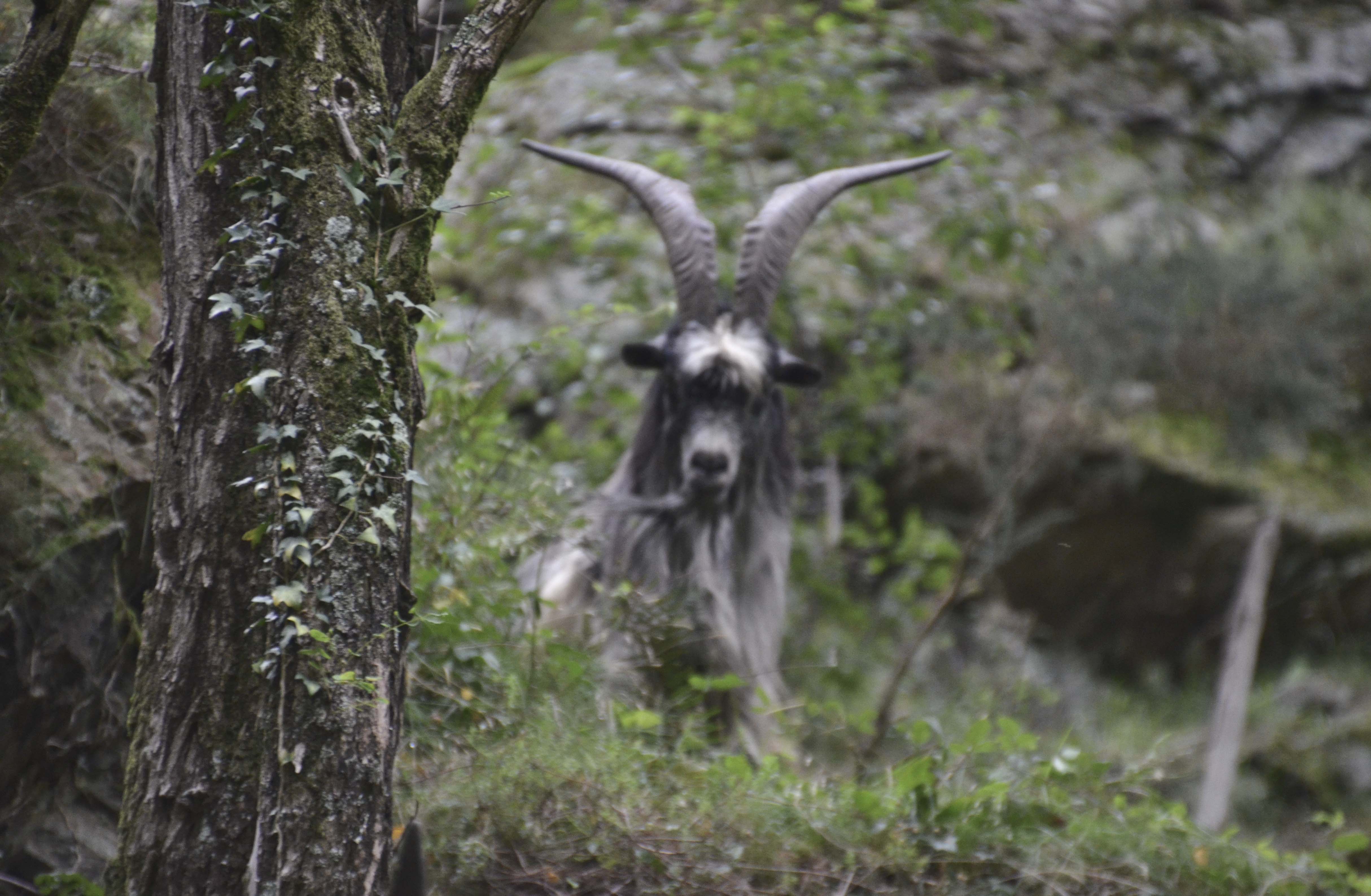
Along the road we met a herd of, what we believe was, Iberian wild goats. The gamey smell filled the air, and soon we saw them climbing the stony slopes up on our right side as well.

As they were rather close to the road, about 5-10 metres up, we could study them roaming the bushes, popping up a head every now and then.

We reached the rock formation in the gorge. According to legend, the gap once was created by Roland’s horse.

On my way back, alone, (my husband went back before me) the strong smell from the goats appeared again. And, I was lucky to witness this piece of wild life -love life!

”Well, I have seen it before…and in my  younger days I would…

…win all of those fights…”

CFFC: Hands

For Cee this week – hands. Very useful tools. Not only for showing love or affection.

They might pinch things from you when you least expect it…

And they can hold the most delicate things and creatures without hurting them…

And, they can also work fast and swiftly make the tastiest edible things…

Hands are needed.

They work well in many sayings and expressions as well: ”Give me a hand”, ”All hands on deck” etc. I believe ”hands” are useful in most languages. A Swedish example is ” Ge mig ett handtag” ( Give me some help here). How is it used in your language?

WPC: Fun

Great Fun! Fun watching them, fun playing volleyball, fun puppy love…

How I enjoyed this stay with Totti’s little ones! Thank you Michelle, for finally having Fun!


123064_242742Tottivalpar

Thursday Thoughts – The White Stork is Back!

On my trip to the northern parts of Spain, I made some lovely aquaintances…and not only with people. I was happily shocked by the numerous storks here – at least one nest in every village!

The white stork (Ciconia ciconia) is a large bird that measure on average 100–115 cm (39–45 in) from beak tip to end of tail, with a 155–215 cm (61–85 in) wingspan. The white stork is a long-distance migrant, wintering in Africa or on the Indian subcontinent. He is also a symbol of my part of Sweden.

He eats a wide range of animal prey, including insects, fish, amphibians, reptiles, small mammals and small birds. He takes most of his food from the ground, among low vegetation, and from shallow water. He is a monogamous breeder, but does not pair for life.

Both members of the pair build a large stick nest, which may be used for several years. Both parents take turns incubating the eggs and both feed the young.

The white stork benefited from human activities during the Middle Ages, but changes in farming methods and industrialisation saw it decline and disappear from parts of Europe in the 19th and early 20th centuries. Conservation and reintroduction programs across Europe have resulted in the white stork resuming breeding in the Netherlands, Belgium, Switzerland and Sweden.

In 1954 the last pair of storks disappeared from Skåne, where I live, as the wetlands were dried out. Many people wanted the beautiful bird back, and in 1989, some wetlands were restored and the Swedish ”Stork project” started. Goal: 150 pairs living free and nesting here. Important to us ”Skåningar”, as the stork is a symbol for this southern part of Sweden.

This summer 112 new storks were released from the project. As they move south, as many as 80-90 percent die flying into power lines breaking legs or wings.

The adult white stork’s main sound is noisy bill-clattering, which has been likened to distant machine gun fire. The bird makes these sounds by rapidly opening and closing its beak so that a knocking sound is made each time its beak closes. I assure you – the sound is not to be missed…when the two of them starts, it gets louder and louder.

This conspicuous species has given rise to many legends, of which the best-known is the story of babies being brought by storks. Have you ever heard of this as a child, in your country?

(Facts taken from Wikipedia and the Swedish Stork project.)
WPC: Opposites


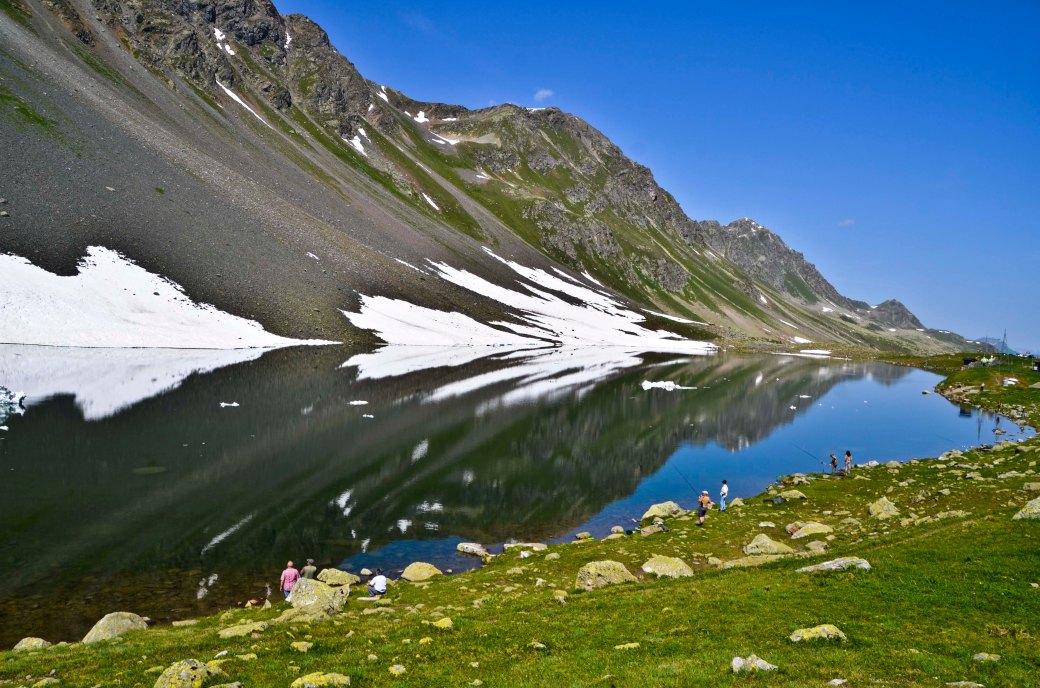
Opposites…often go well together. For WPC I have chosen the Moroccan desert. Many opposites to be found here. In the header the classic desert/oasis, But, in the second one maybe more subtleties…

More entries here.


CFFC: Events – Wild Flowers’ Day

In the header – The caterpillars of the Peacock butterfly sitting on the upper parts, and, the undersides of leaves of a nettle plant.

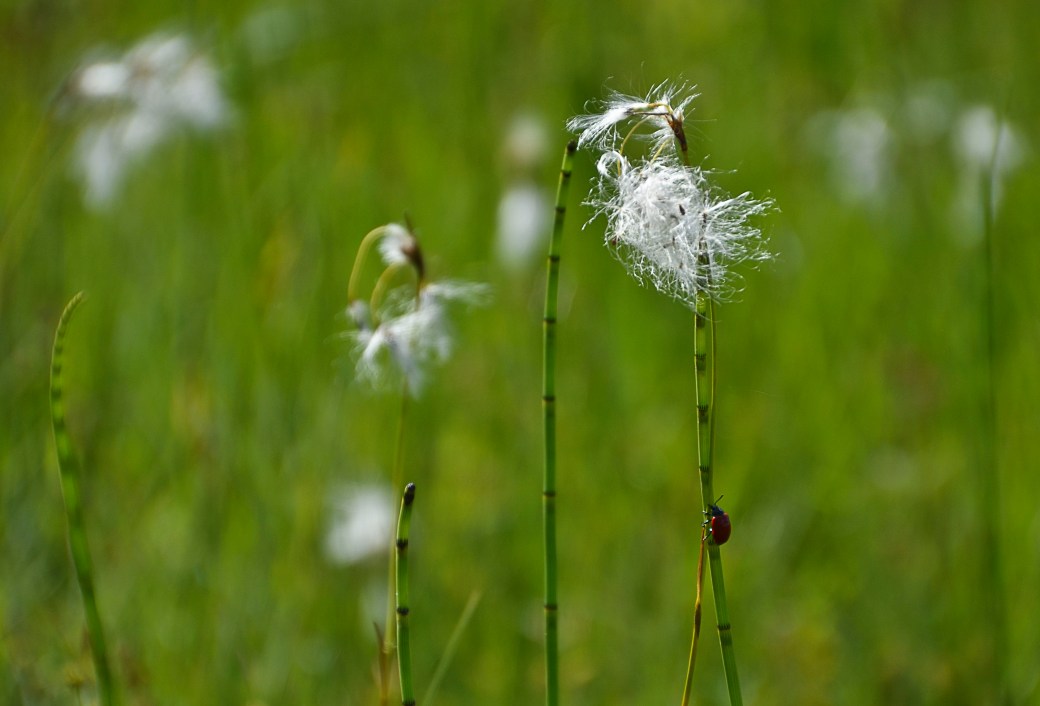
Today is the Nordic event of Wild Flowers’ Day. Originating in Denmark, the purpose is to give people the possibility of finding, learning about and enjoying the diversity of wild plants in nature, in order to have an even more intense experience when spending time outdoors.

Det samnordiska evenemanget ”De vilda blommornas dag” har sina rötter i Danmark, där det har arrangerats ända sedan år 1988. Syftet med de vilda blommornas dag är att människor skall få möjlighet att upptäcka, lära känna och glädjas åt den mångfald av vilda växter, som vår natur bjuder på, och på så sätt få en rikare naturupplevelse.


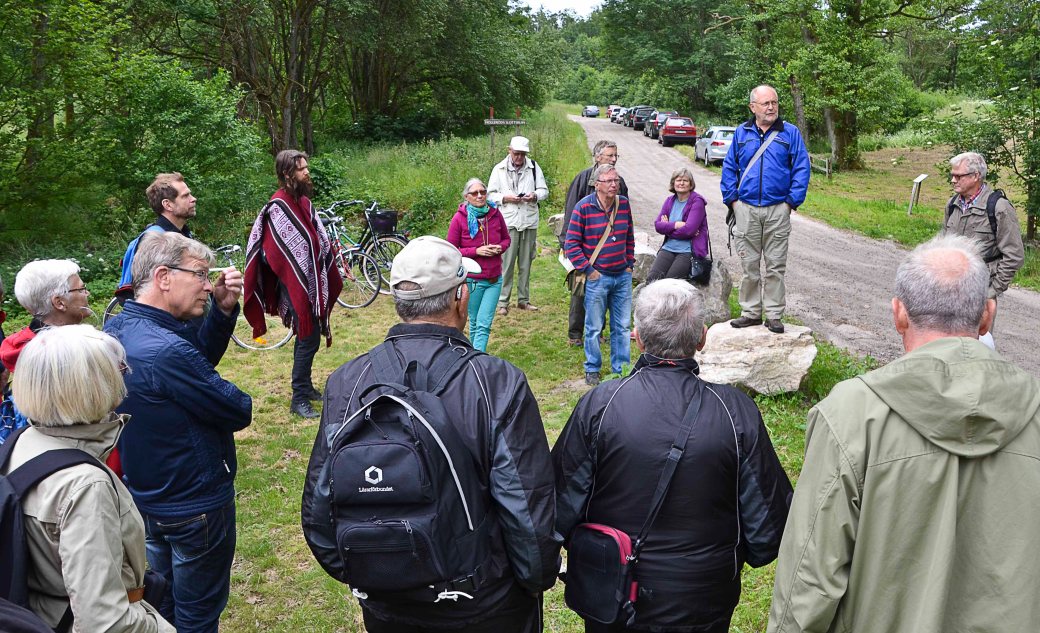
This event started at 10 a.m and the flower walk, arranged by local botanists, lasted for three hours. I’ll be happy to bring you along! For more events, click here.