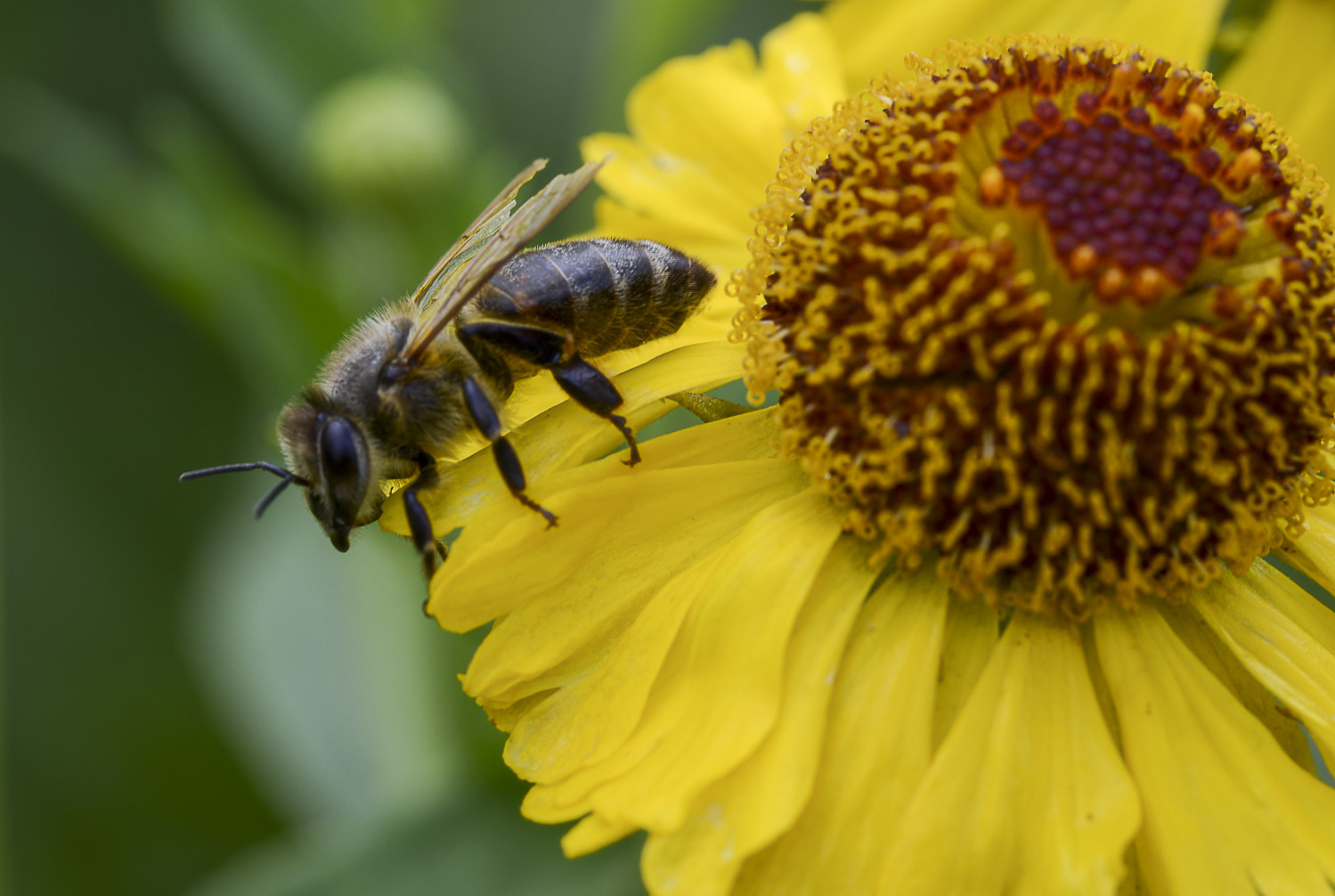
Macro Monday
Frost has taken most of my autumn flowers, and bees and butterflies are almost gone. Every now and then, there is still a glimpse of sun – and a glimpse of life.

Today is World Bee Day – build them a hotel, plant attractive trees, flowers or herbs, leave a wild space in your garden, work for farmers to leave the edges of their fields for wild flowers, and do not use pesticides!
Did you know that every third bite of your food you eat is only made possible because of pollinating bees?

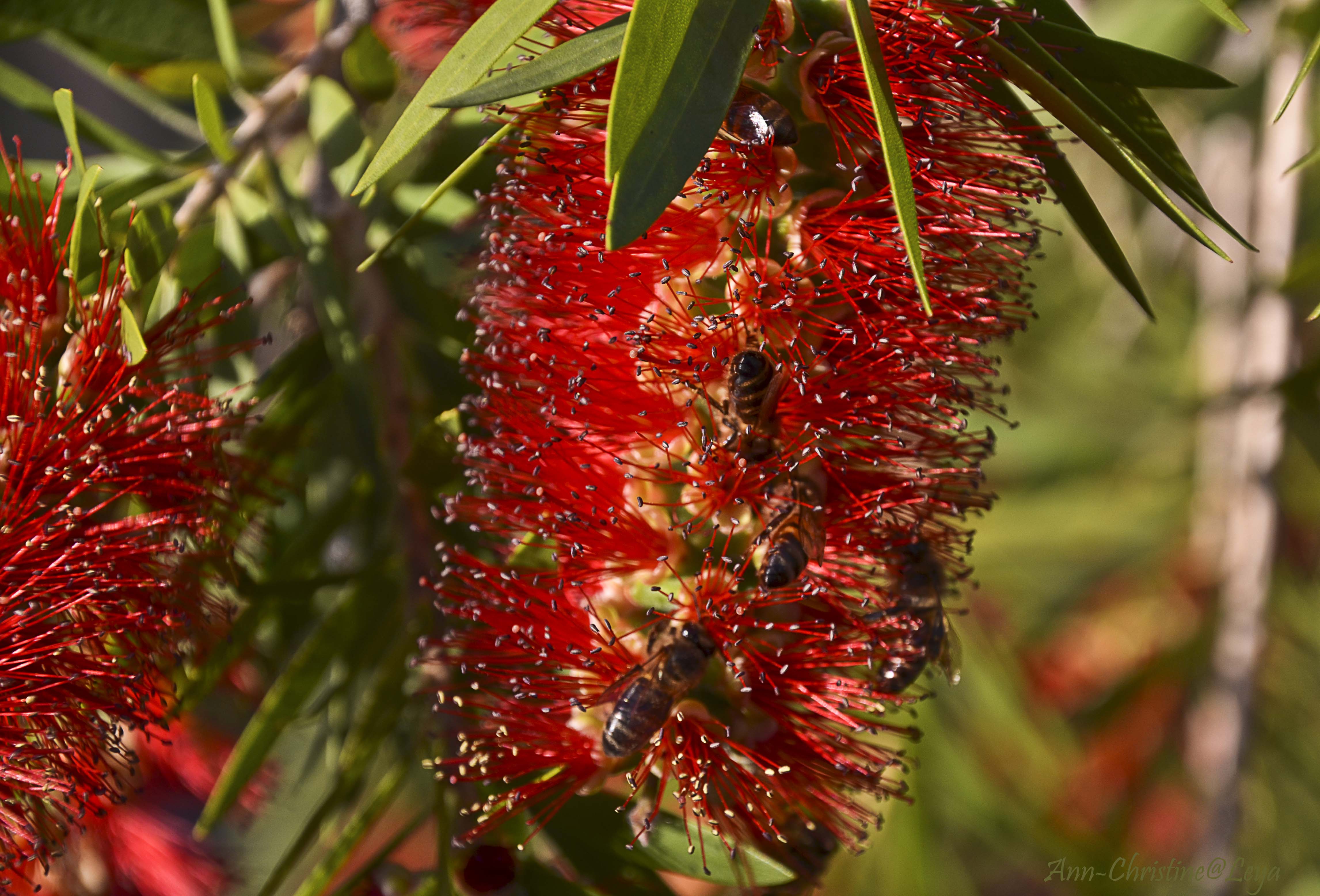
A very good choice of theme – ecology! Visit Sylvain Landry for more of this.
I’m now back from Riga, Latvia, where I met this young man, Janis, at Baltu Drava. He is a passionate bee keeper and sells his own healthy and totally ecological products. Not only honey, but for example bee bread too.
He also makes bee hives out of tree trunks, as of old. (To the left in the picture you will see one of them.)

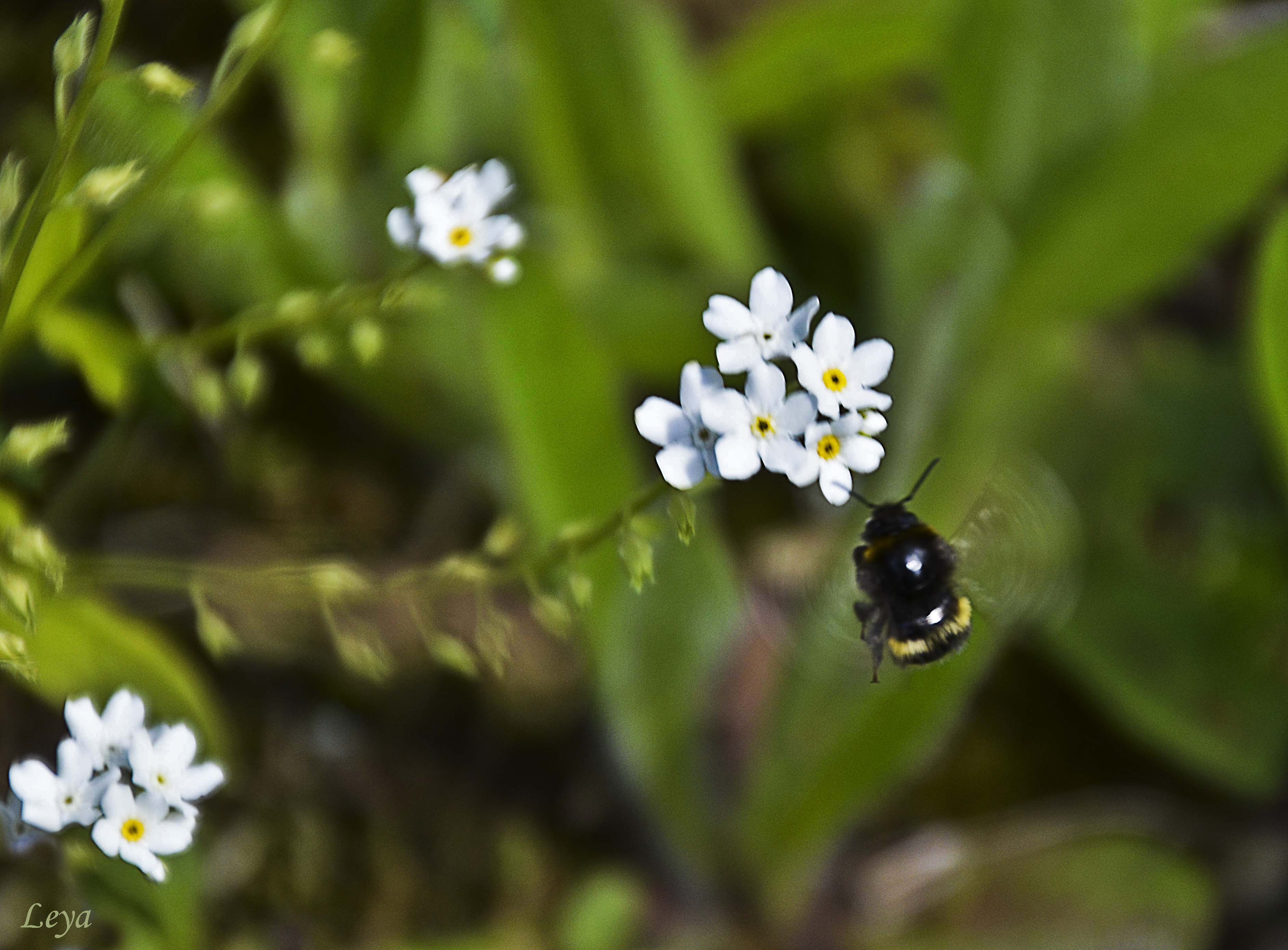
Well, some animals found in nature are wild and some are domesticised – I love them all (except spiders and cockroaches…). These I met today on my way home. Some liked being photographed while others didn’t think much of it – just flew away…
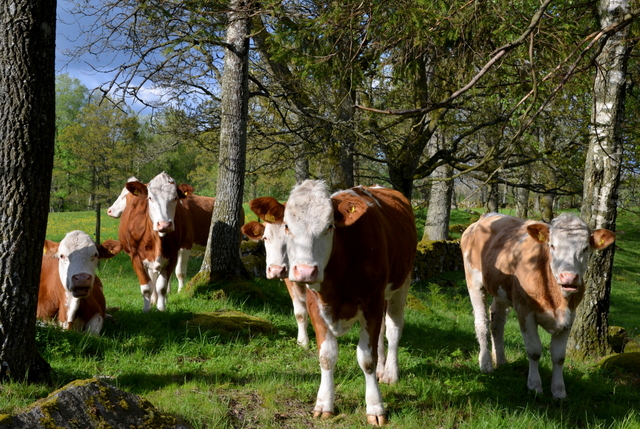
En sommarpromenad dessa veckor innebär tidig morgon och sen kväll. Mitt på dagen är det alldeles för varmt – tycker i alla fall de fyrbenta. Kameran är nästan alltid med, och tur är väl det, för blommorna torkar snabbt bort i år. Lite fägring att minnas behöver vi alla.
Kanske fler än jag har lagt märke till hur få humlor, bin och fjärilar vi har här i år – i Skåne i alla fall. Förmodligen beror detta delvis på den stränga vintern. I vårt område kunde man i dagens tidning också läsa om en man som hittat hundratals humlor döda under en lind. Experter tror att det är en silverlind, och i så fall ger humlornas mat ingen näring, utan de svälter helt enkelt ihjäl.
En annan spännande iakttagelse jag gjort dessa varma dagar är att när jag sätter på spridaren kommer fjärilar och flyger genom de tunnaste strålarna. Fram och tillbaka, svinglande upp och ner. Är det så torrt att de behöver fukt till sina vingar? Det skulle vara intressant med ett expertsvar här. Jag har aldrig lagt märke till detta beteende tidigare.
Sommarfägring är kort. För fler sommarblommor, se faialflores – min fotoblog.


Summer walks these weeks means early morning and late evening – at least that’s what the dogs tell me…My camera is always with me, and this year it’s obviously more than needed. The beautiful summer flowers are quickly fading now, shrivelling up in the hot, dry sun and wind.
I don’t know if you have noticed how few bumblebees, wasps and butterflies there are this year – at least in Sweden. We think this is because of the cold and long winter. In today’s paper I also read about a man in the neighbourhood who had found hundreds of dead bumblebees under his limetree. Experts say it might be a silver lime, and in that case the bumblebees are fooled to eat, but the food contains no nourrishment – so in fact the bees starve to death.
Yesterday I also noticed a peculiar behaviour that I hadn’t noticed before in butterflies. When I put on the sprinkler to water my flowerbed, butterflies swirled and flew up and down through the squirting water. Maybe it’s really so dry that they need this for their wings or something. It would be interesting to hear an expert’s explanation to this phenomenon.
Anyhow, here’s a small tribute to some of the wonderful summerflowers of Sweden! For more flowers from Sweden, click my photoblog, faialflores.
Det finns ca 250 arter av humlor i världen. En vanlig myt om humlor är att de enligt fysiska lagar inte borde kunna flyga, och att det är en gåta att de flyger ändå. I verkligheten karakteriseras humlans flykt av en oscillerande vinge, som mer påminner om ett helikopterblad, än en flygplansvinge. Utöver det skapar humlevingens form och rörelsemönster en luftvirvel precis ovanför vingen och den gör också att humlan får ökad lyftkraft.
Idag har jag tillbringat säkert en halvtimme med att titta på en mängd humlor som flitigt jobbade och samlade pollen i azaleor och rhododendron hos en arbetskamrat. Snabba är de, så de få foton som humlorna verkligen fastnade på är med i detta lilla galleri. I regel visade bilden bara en blomma och möjligen några humleben redan i luften när jag klickat…
There are over 250 known species of bumblebees, existing primarily in the Northern hemisphere, but they can also be found in South America. Bumblebees have been introduced to New Zealand and the Australian state of Tasmania.
According to 20th century folklore, the laws of aerodynamics prove that the bumblebee should be incapable of flight, as it does not have the capacity (in terms of wing size or beats per second) to achieve flight with the degree of wing loading necessary. It seems their wings work more like a helicopter. They also start a swirl in the air above the bee which makes it easier for the animal to take off.
So, they do fly…and they are fast! I spent maybe half an hour today at a friend’s house, trying to catch more than his beautiful azaleas …but, mostly I got just the flower and som bumblebee legs lifting when my camera had finished clicking…


 Leya
Leya 
Du måste vara inloggad för att kunna skicka en kommentar.