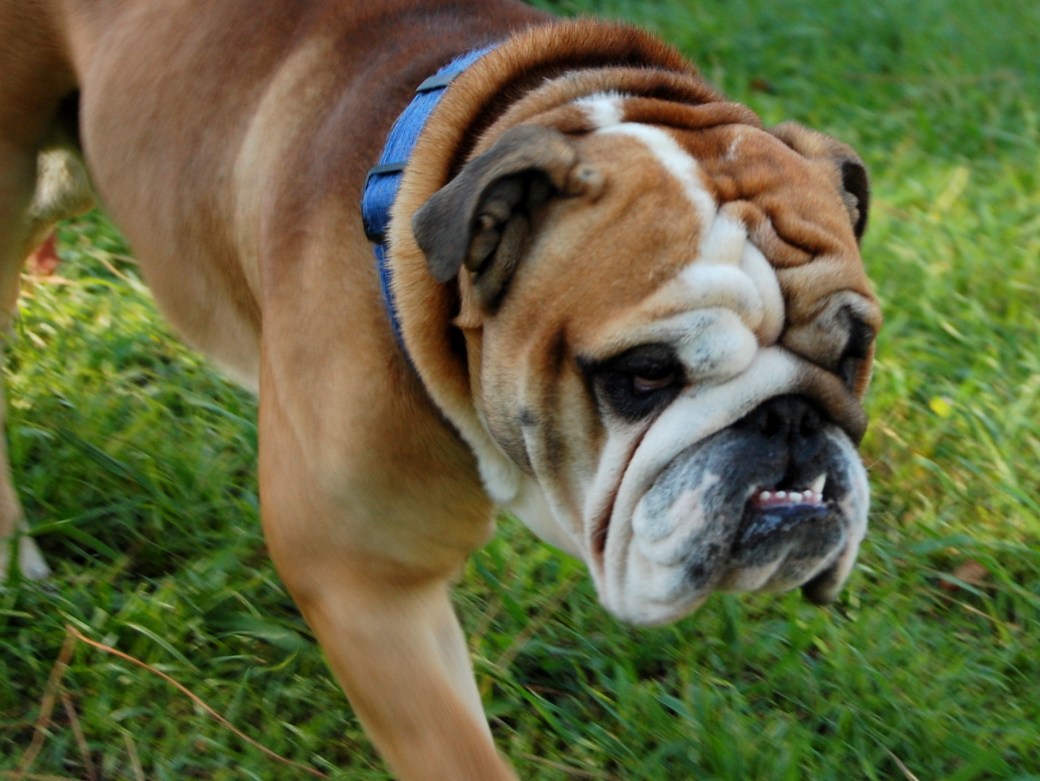
Close encounters…with animals. First, my kite, who unfortunately did not make it in the end. Then, a dog I met in the Retiro Park, Madrid.
Lastly, look at Totti’s face when he had a close encounter with one of his first puppies – priceless.
Close encounters…with animals. First, my kite, who unfortunately did not make it in the end. Then, a dog I met in the Retiro Park, Madrid.
Lastly, look at Totti’s face when he had a close encounter with one of his first puppies – priceless.
For almost a week now we have had extremely hot weather in the south of Sweden. And we know that last year was the hottest ever here – and on Earth.
Of course this gives us wonderful mornings – and evenings. Something to be grateful for.
But, northeners are not made for this. Our bodies protest. The evening walk with my dog cannot start until 7.30 p.m. He is not well prepared for the heat either (he did not come with a zipper…) – 33.5 C yesterday.
This is the end of May and the beginning of June. If we ever have those high temperatures, then it might happen some day in July or August.
It is beautiful, it is a wonderful evening by the sea, but it feels neither real nor all right.
Today we are having the biggest migration of people – ever – in Europe, and what will these climate changes bring? Yes, even more migration…people trying to save what is left of their lives and trying to get a new start, a new life, somewhere else. Some islands have already disappeared.
This is only the beginning of the end.
As always, click the pictures to enlarge – sometimes you have to click twice.
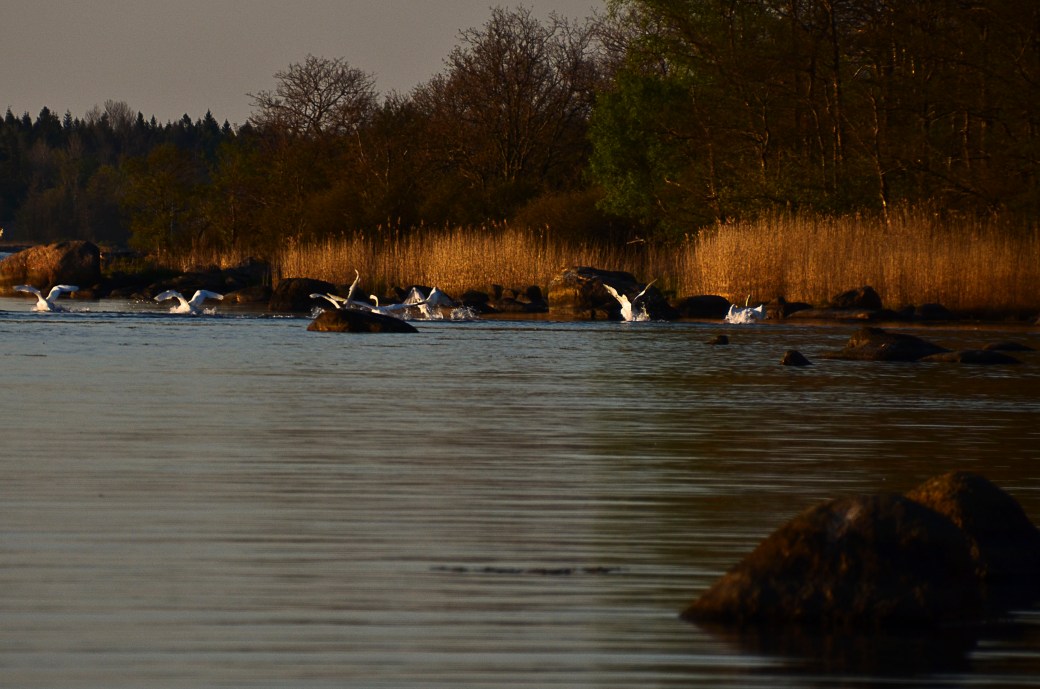
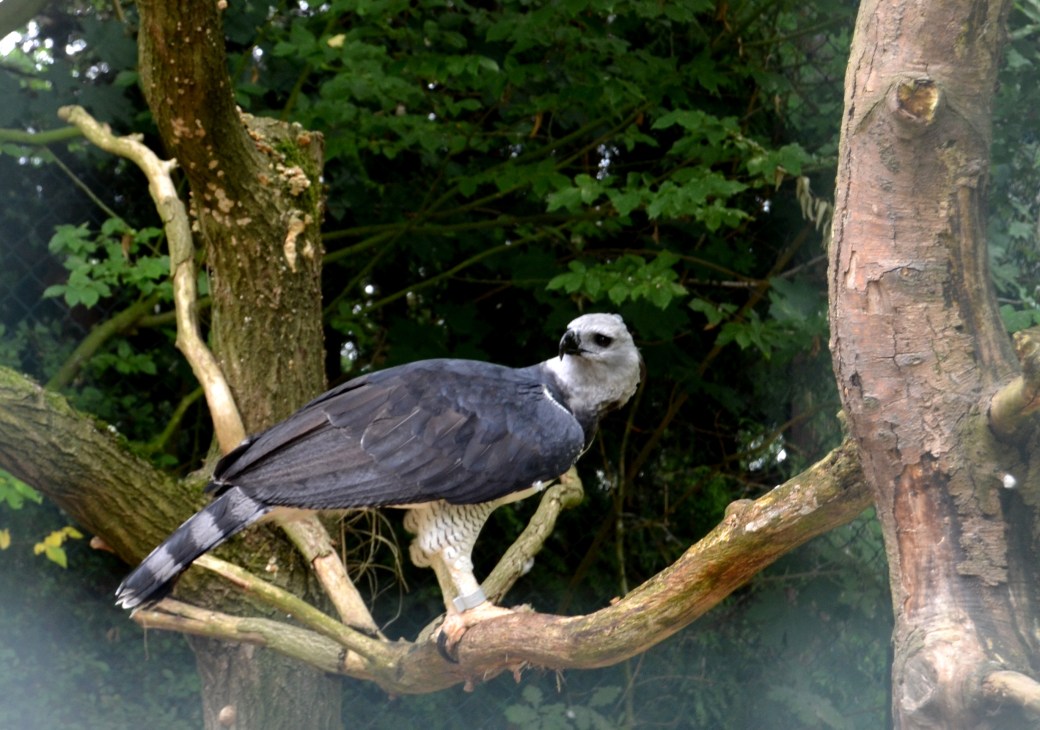
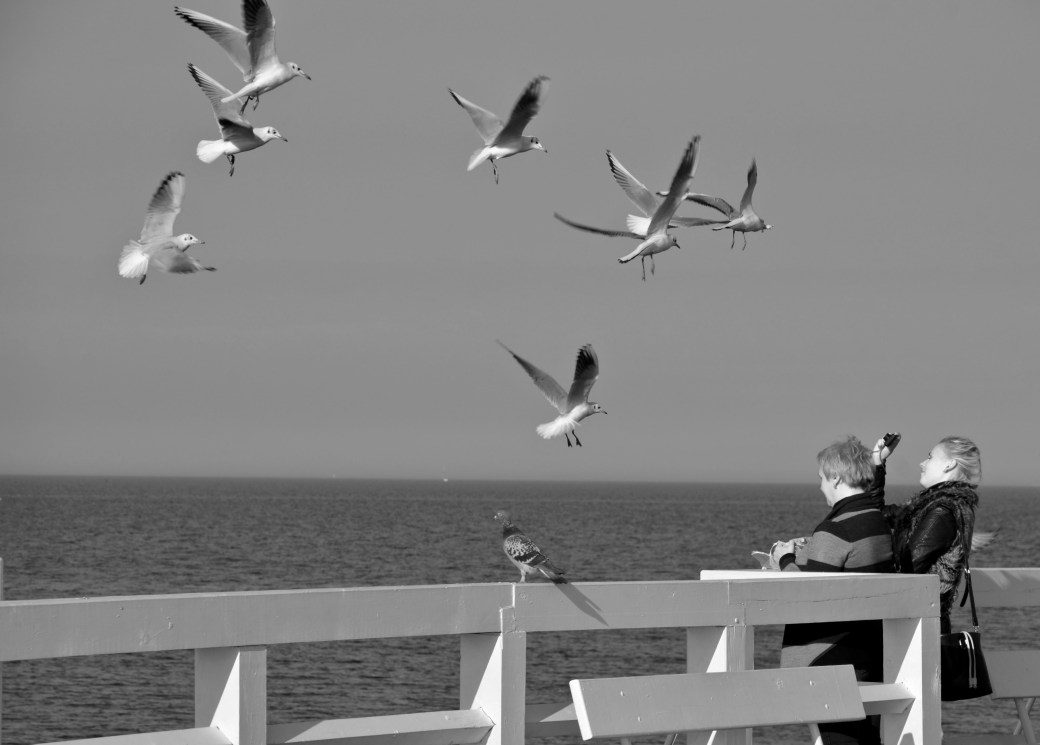
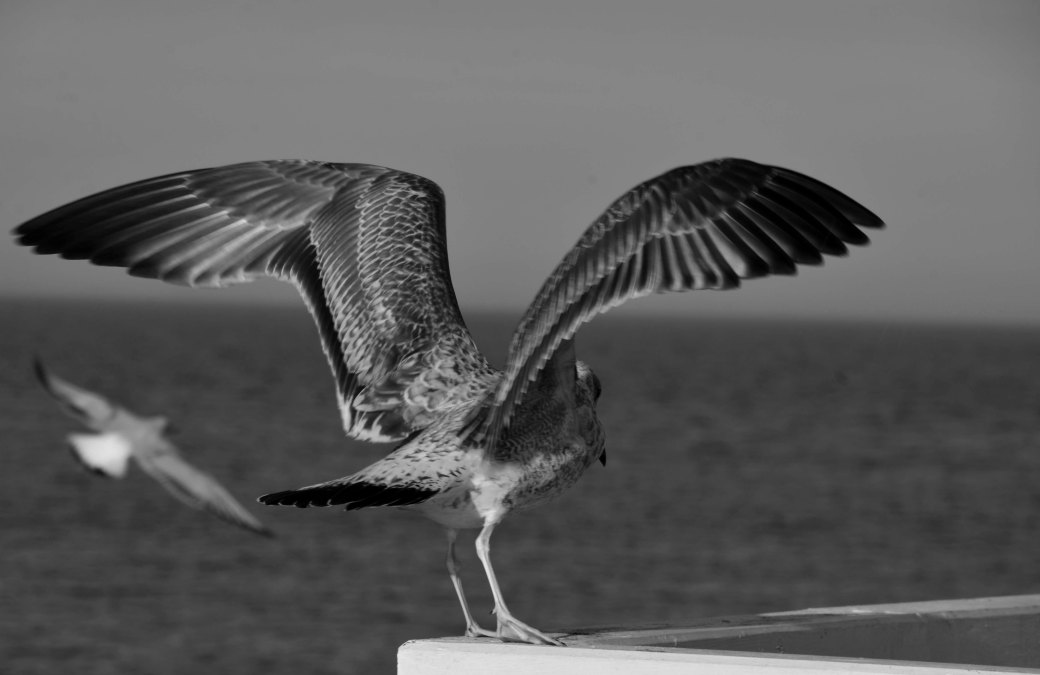
For Sylvain Landry this week – Birds. I chose the swan and the harpy Eagle. The swan is a graceful beauty, and the harpy is one of the most cruel looking birds in the world – at least according to me. Which one do you prefer?
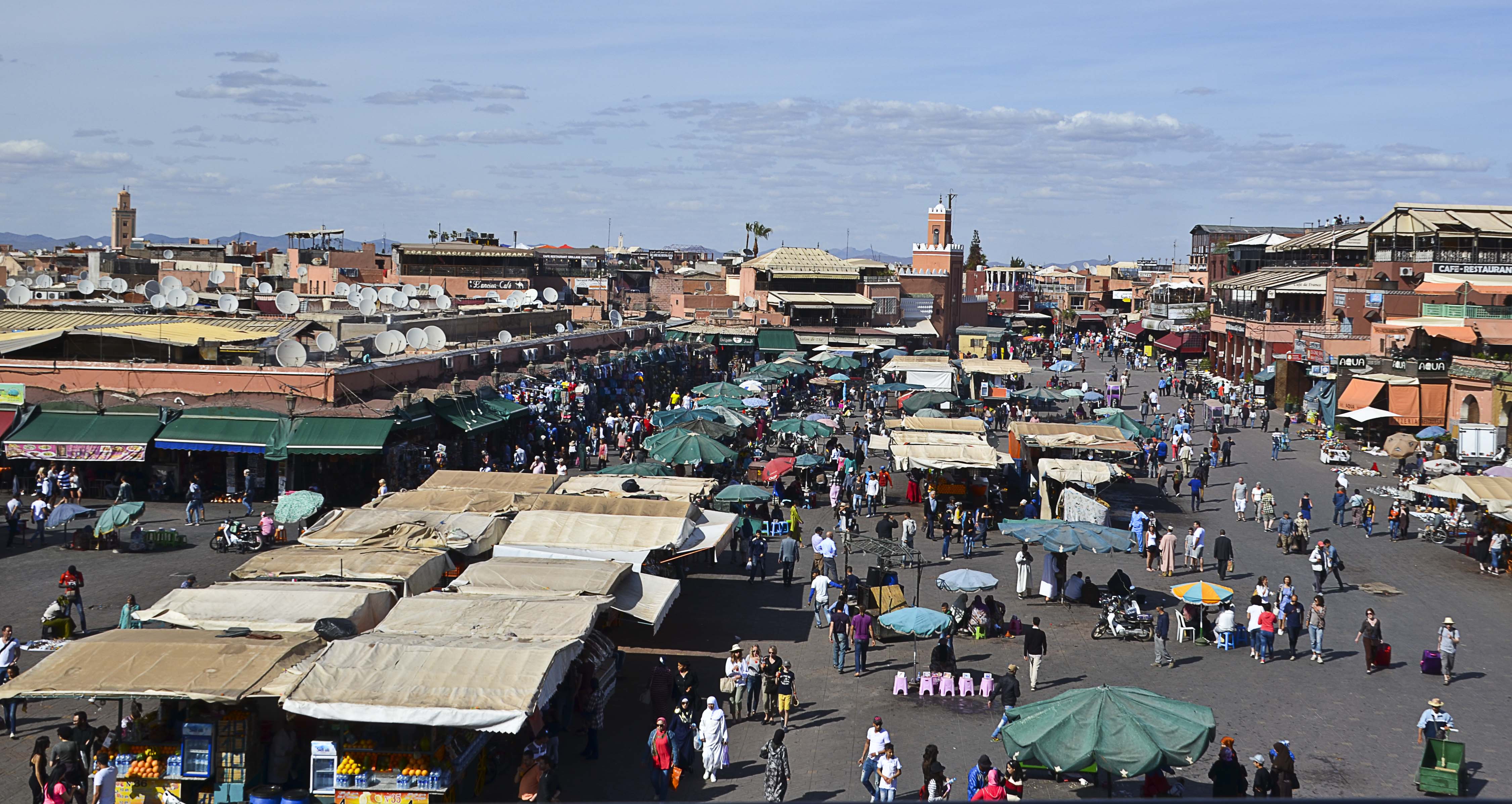
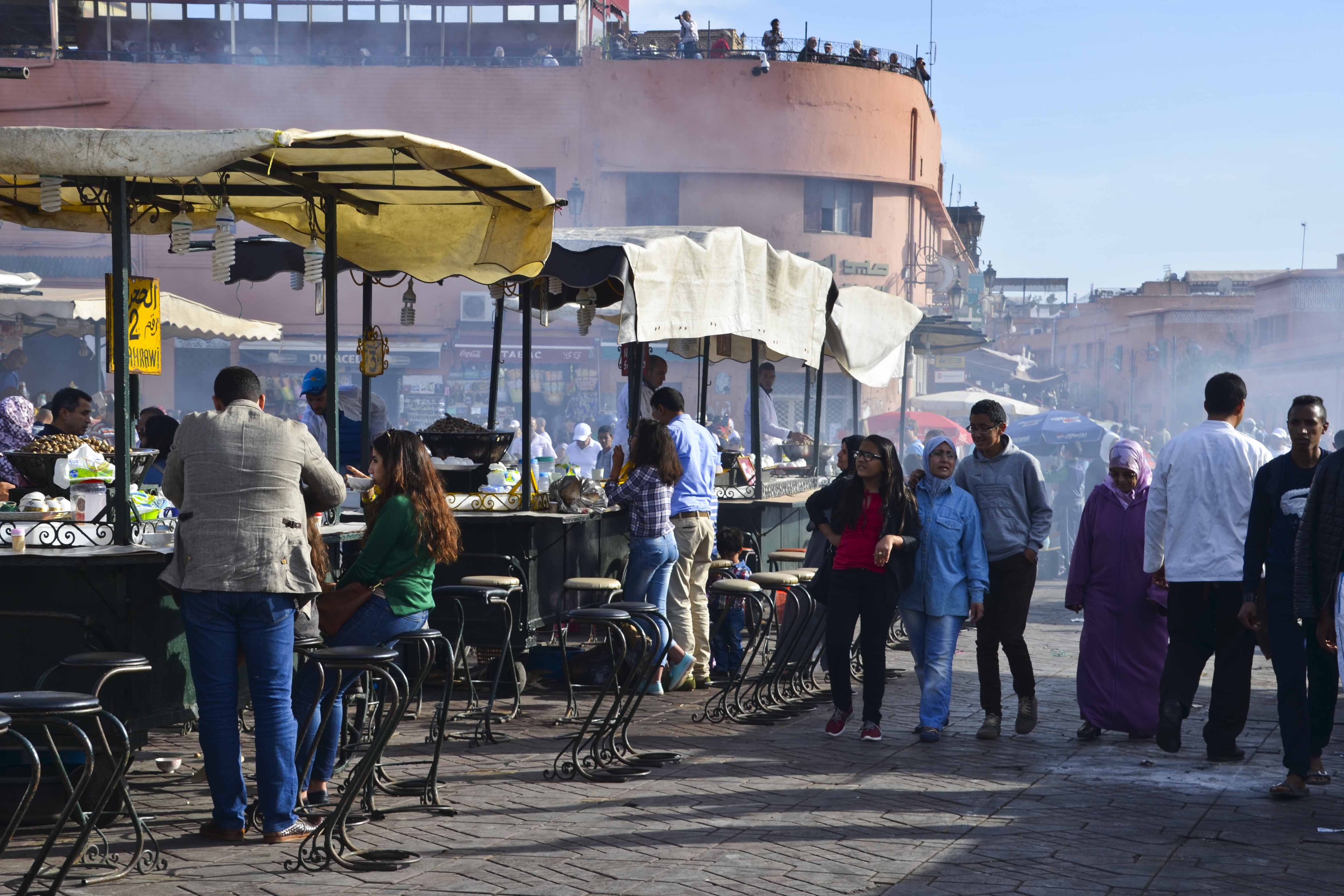
Everywhere you look in the Djemaa el-Fna, Marrakesh’s main square, you’ll discover theatre in progress. The street theatre has a natural home here ever since this plaza was the site of public executions around AD 1050. Even if there are discussions on the origin of its name, Jemaa means ”congregation” in Arabic, probably referring to a destroyed Almoravid mosque. ”Fanâʼ” or ”finâ'” can mean ”death” or ”a courtyard, space in front of a building.” Thus, one meaning could be ”The assembly of death,” or‘assembly of the dead’.
It is not just a tourist attraction since many locals also enjoy the activities that make Djemaa el- Fna come alive. During the day, the square has numerous stalls, most of which sell fresh fruit juice, water and fruit.
By 10am, the daily performance is under way. Snake charmers with their hissing cobras and men with chained Barbary apes, despite the protected status of these species under Moroccan law; henna tattoo artists ( women with piping bags full of henna paste, ready to paint you with “tattoos” that will last up to three months – though beware of synthetic “black henna”, which contains a toxic chemical; only red henna is natural. The Henna Café guarantees to use only natural henna).
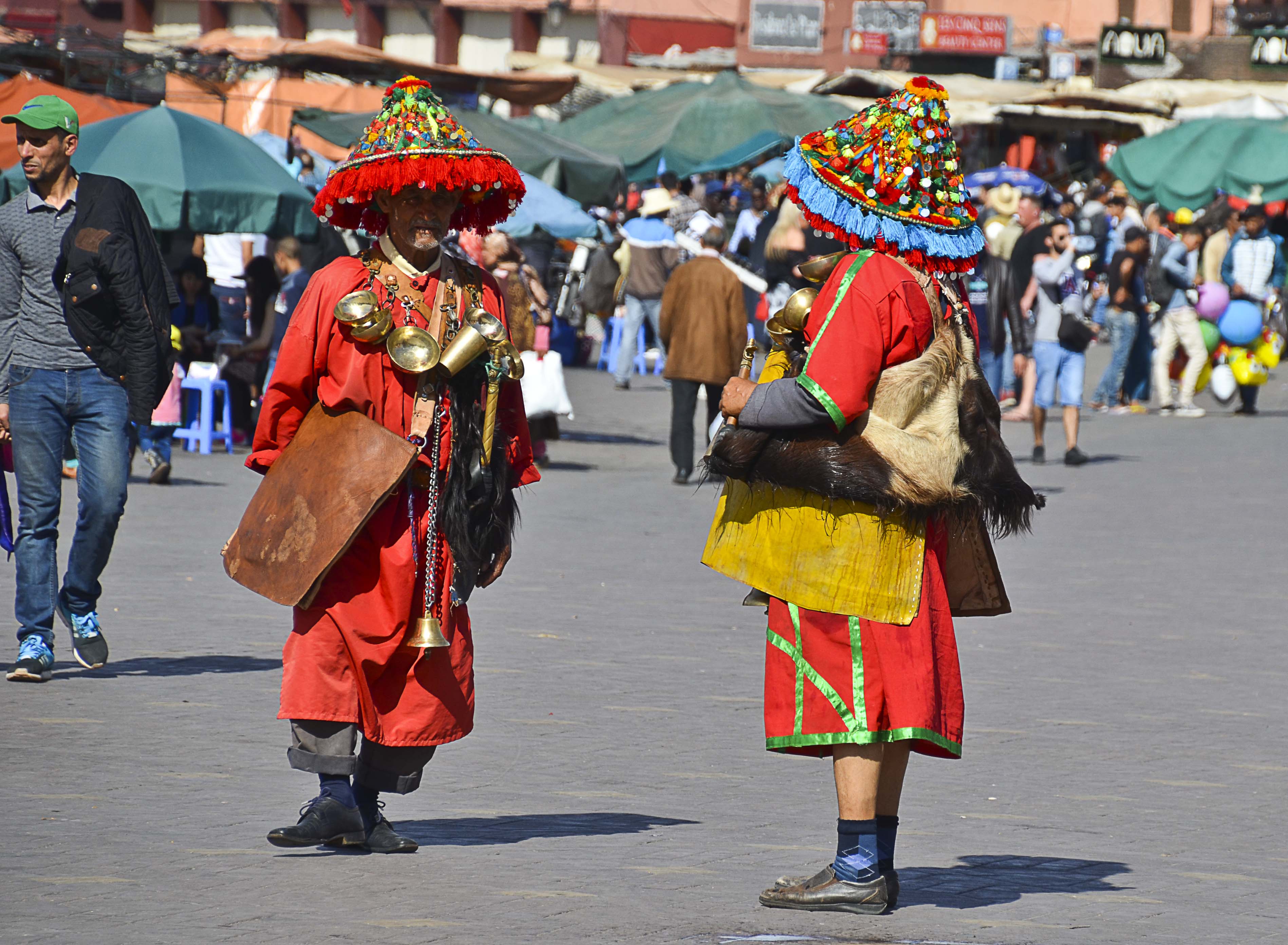
Water-sellers in fringed hats, with water-bags hanging and brass cups clanging. Medicine men display their cures, and tooth-pullers display trays of extracted molars to prove their skill. And if you wonder…fortune-tellers sit under umbrellas with packs of fortune-telling cards at the ready.
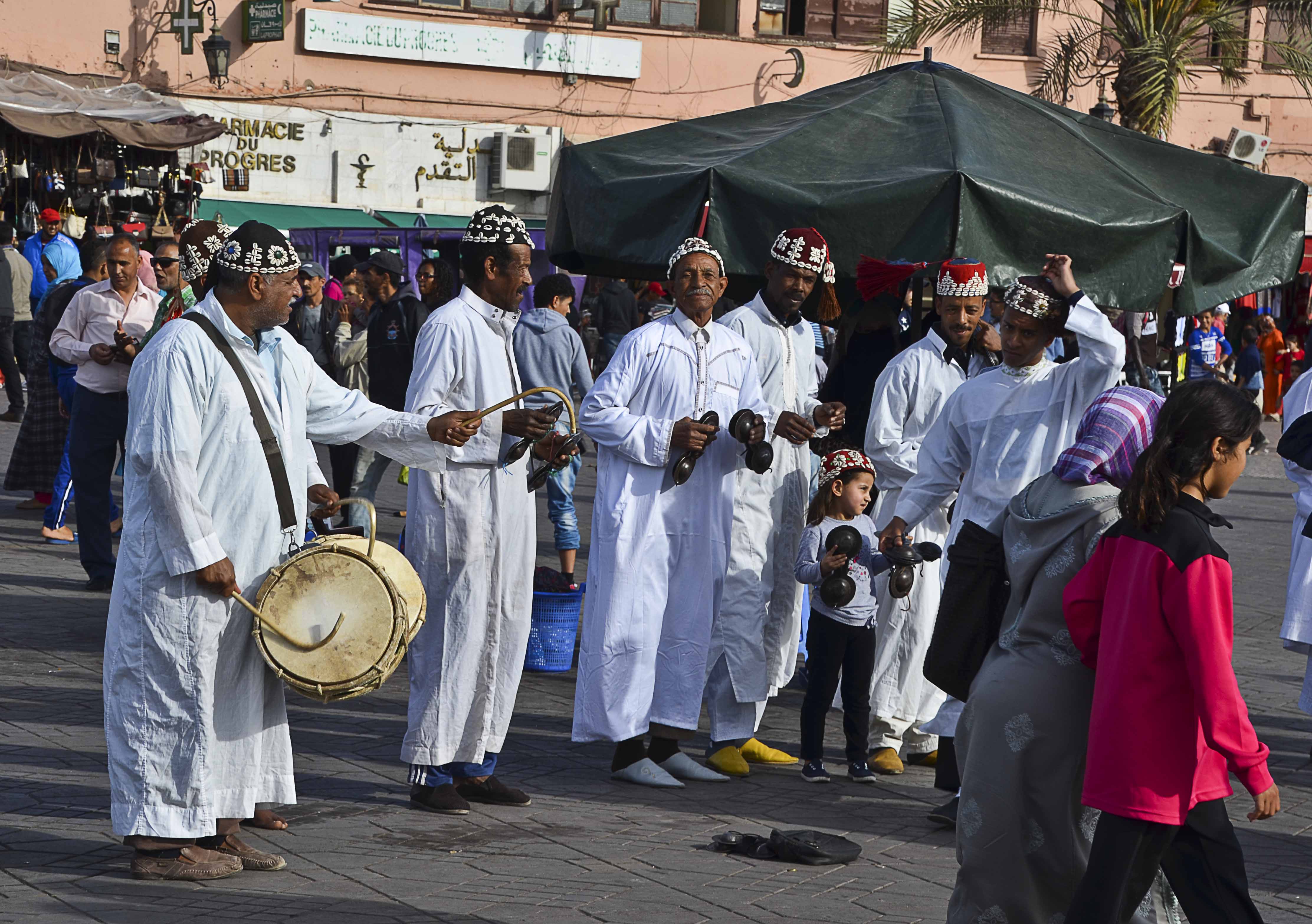
At dusk people come out for an evening promenade, and the square gradually fills until it becomes a whole carnival of storytellers (telling their tales in Berber or Arabic, to an audience of locals), acrobats, musicians and entertainers. If you want a respite, you can move over to the rooftop terraces, such as the Café du Grand Balcon, or Café Glacier, for a vista over the square and all the activities, and the crowds who come to see them. Very much recommended. We enjoyed a rather expensive bottle of juice and a less expensive mint tee – having a great view without being crowded.
Arrive early in the evening to get a good seat. Applause and a few dirhams will encourage the performers. It’s a great show, but be prepared…taking photos immediately brings at least one man to your door…dirhams!
In 2001, Djemaa el-Fna was recognized by UNESCO in the project Masterpieces of the Oral and Intangible Heritage of Humanity – the initiative coming from people concerned about the Djemaa el-Fna. Since long known for its concentration of traditional activities by storytellers, musicians and performers, but now threatened by economic development pressures. The residents wanted protection of their traditions, and called for action on an international level. In 2001, this ”cultural space” got its protection.
In Marrakesh, this meeting place is a must. Remember – this is far from only for tourists. Most people strolling here, enjoying themselves, are locals. This is, even today, a genuine piece of Arabian Nights…no ”assembly of the dead”.
.
The challenge this week from WordPress is to “…share your vision of our glorious Mother Earth”.
I feel…we are a tiny, gloriously beautiful, island out in the great blue – surrounded by stars and the heavens. Who is at the wheel? I wish we had better control …I fear we have lost the sextant and with it, our ability of navigation.
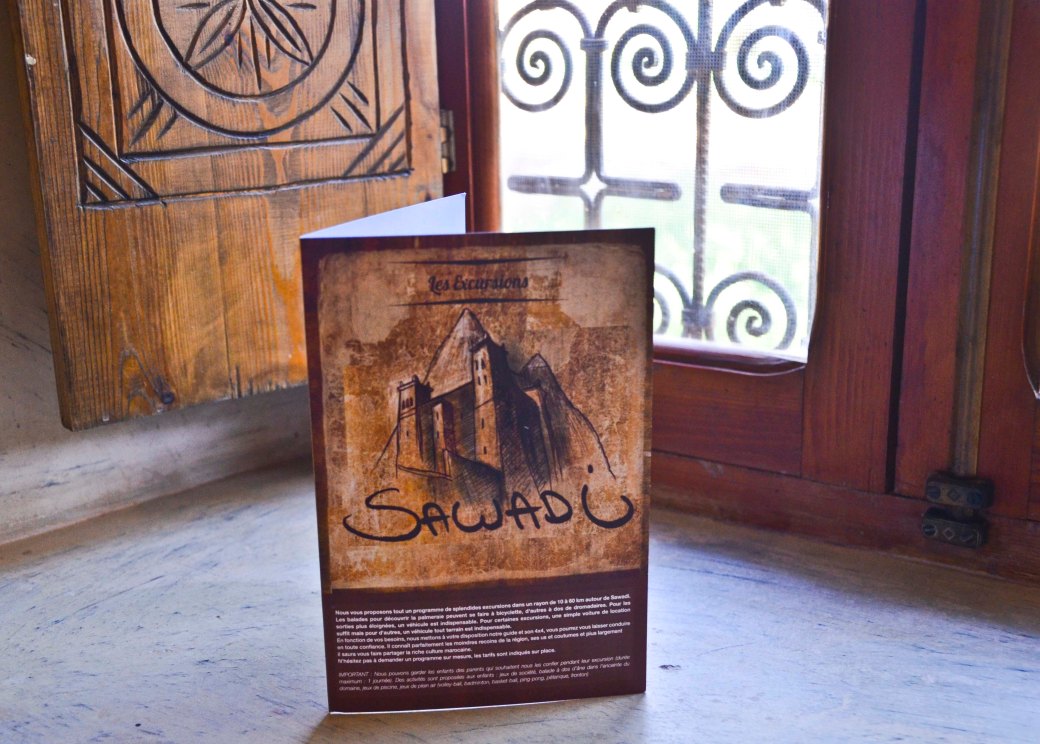
Back in 2004, Alain Ribet -a friend from Bordeaux- told me « My brother Bernard has gone quite mad: he’s bought a farm in an oasis in deepest Morocco”.
These are the words of Catherine Quenisset, the charming French lady who now, together with her husband Philippe, runs the ecolodge Sawadi in the palm grove of Skoura, Morocco. Read their story and about their sustainable concept by clicking the links above!
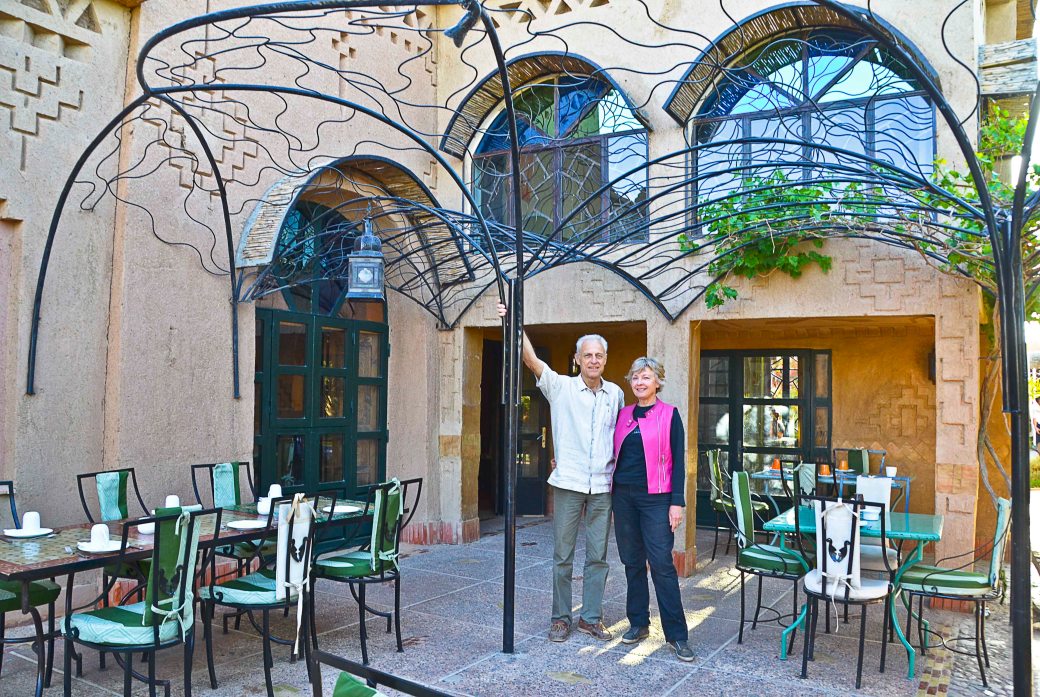
The Sawadi farm has the comfort of a riad and is implanted in a 4 hectare domain, This means a huge garden, and here they grow almost everything they need for themselves and their guests. For example roses for making rose water, flowers for the calendula oil, and all vegetables for the kitchen.
The hotel part of Sawadi includes only seven living houses, and is consciously restricted to that. In fact, Sawadi is the only establishment in Skoura to receive the “green key” a sign of their commitment to tourism and sustainable development.
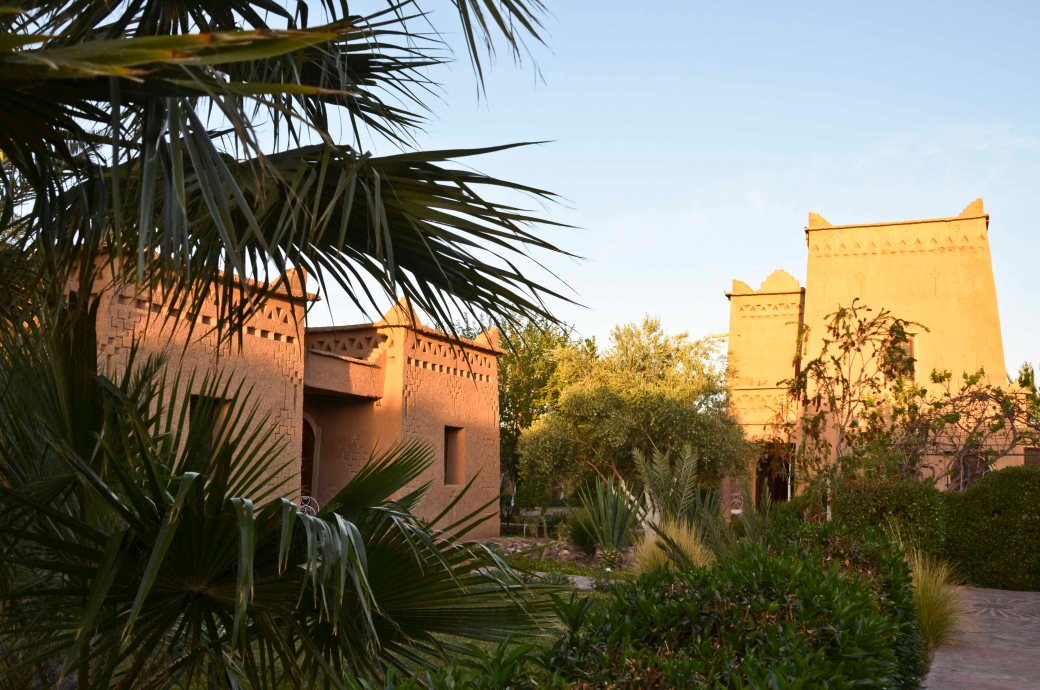
All the buildings at Sawadi have been designed and built respecting the traditional local Berber architecture. The ancestral technique means that the houses are daubed with a coating of mud and straw and they all have narrow window frames. This to make the interior of the house remain cool in summer and warm in winter. The area has a constant dry heat which also means you can visit any time of the year.
Sawadi is a place for both body and soul. Mindfulness. After leaving the luggage and changing clothes, we sat on the porch for a long time this evening. Just listening to the silence, only interrupted by the birds and the occational sound from the farm animals.
There is a beautiful pool and the kind of traditional hammam (a steam room for 3, maximum 4 people simultaneously ) you can find in the wealthy families of southern Morocco. Here they offer you a scrub and massage with the famous Argan oil.
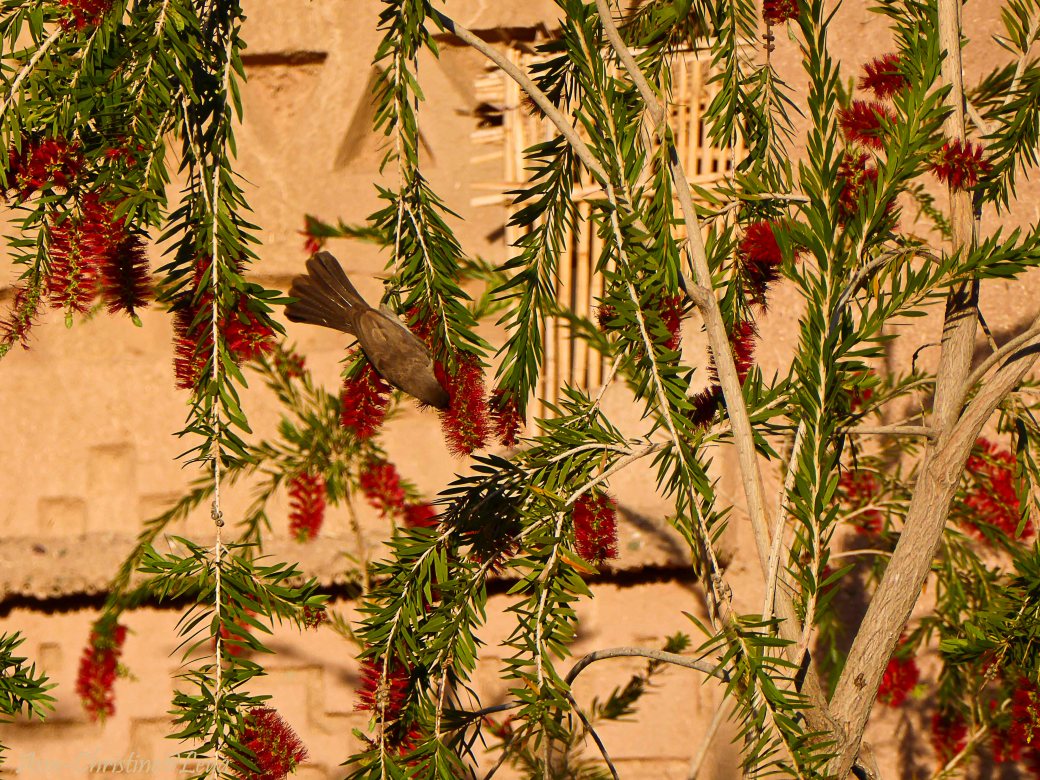
Callistemon – in abundance
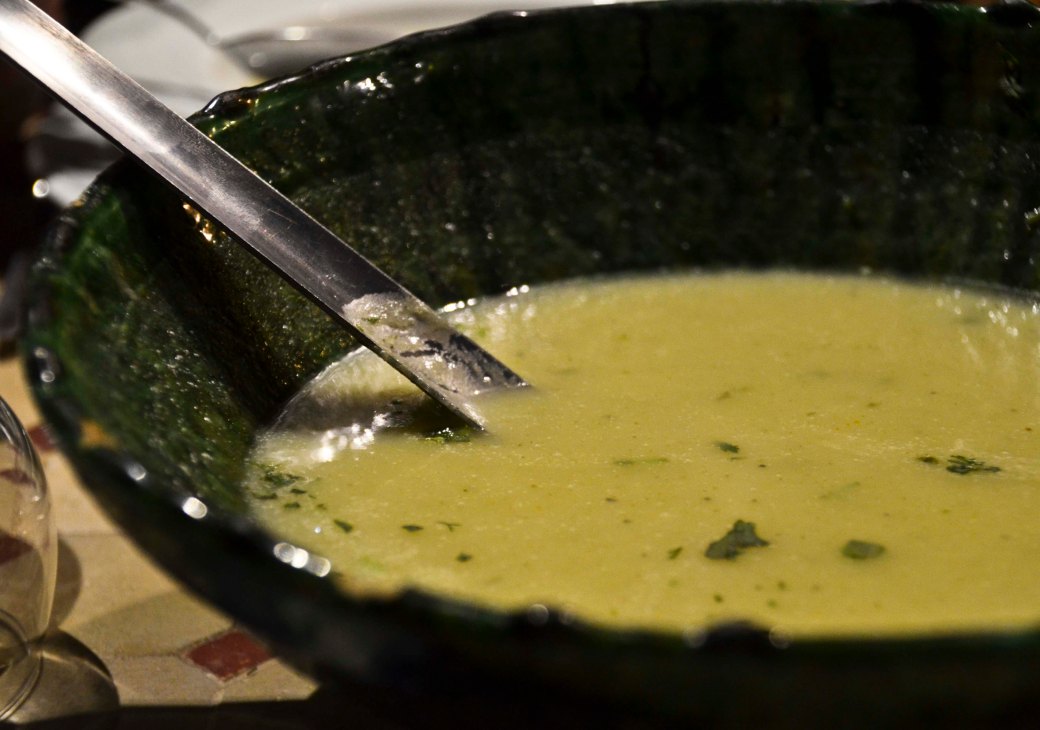
Food preparation is consistent with Sawadi’s ”natural” ideal. In Sawadi they do not use any chemical fertilizers or pesticides. This is one of the reasons to why there are so many birds on the premises – and no mosquitos.
Sawadi is situated close to several places of interest. For example Aït Ben Haddou, the Todra and Dades Gorge, the valley of the roses, the valley of Draa, Telouet, Ouarzazate, Zagora, the road of 1000 Kasbahs.
Much thought has been given to children and their families. The playground for volleyball for example, and the offer to take care of the children for a whole day, should their parents want to go hiking or visiting some of the tourist spots nearby.
After an interesting walk through the gardens, kindly guided by the gentle gardener, we returned for a delicious dinner by the pool.
Unfortunately we only had a few hours in Sawadi – late evening and early morning…So, if I ever go back to Morocco, I certainly know where to stay. Thank you again , Catherine and Philippe!
Why not join in at Ailsa’s this week – we all want to be inspired! Click here to see more!
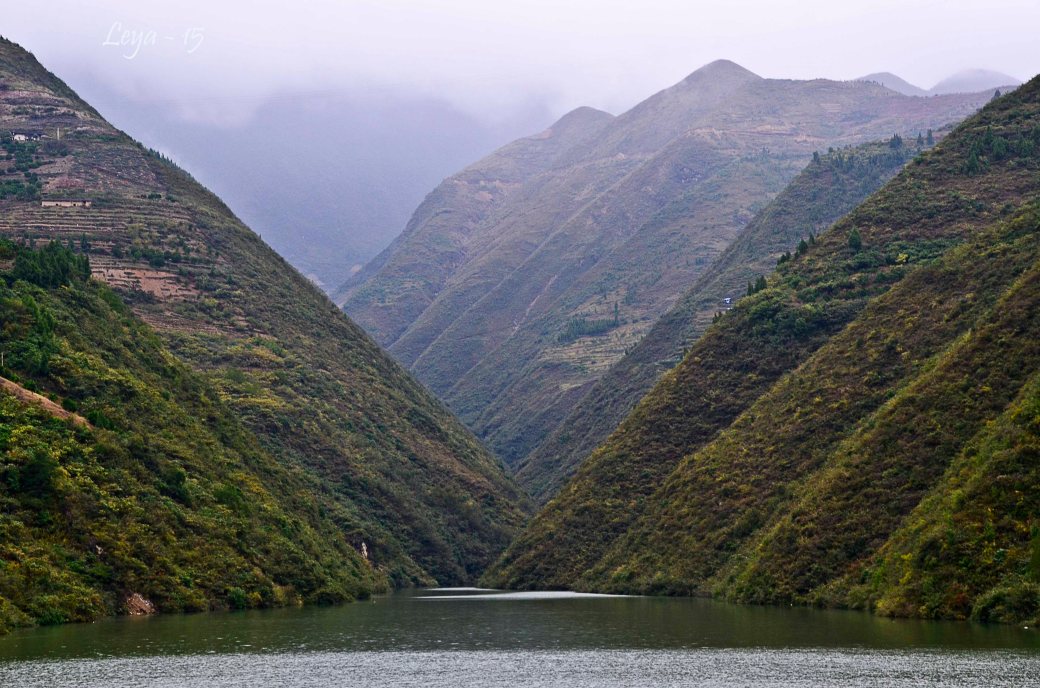
Returning from China some weeks ago, my inspiration is still centred there. Especially from Water Village (https://treetreats.wordpress.com/2015/11/21/water-village-yangtze-river-china/).
Most of all…Nature. And man made things inspired from nature.
Like Chinese silk embroidery.
Du måste vara inloggad för att kunna skicka en kommentar.