Highgate Cemetery – visit to a living beauty

Highgate Cemetery in north London, England is designated Grade I on the English Heritage Register of Parks and Gardens of Special Historic Interest in England. It is divided into two parts, named the East and West cemetery. According to Wikipedia, there are approximately 170,000 people buried in around 53,000 graves at Highgate Cemetery. Highgate Cemetery is notable both for some of the people buried there as well as for its status as a nature reserve.

The cemetery is in the London Boroughs of Camden, Haringey and Islington. The nearest transport link is Archway tube station. From there, some 20 minutes’ walking will take you to the entrance.

Highgate cemetery in its original form – the northwestern wooded area – opened in 1839, as part of a plan to provide seven large, modern cemeteries, known as the ”Magnificent Seven”, around the outside of central London. The inner-city cemeteries, mostly the graveyards attached to individual churches, had long been unable to cope with the number of burials and were seen as a hazard to health and an undignified way to treat the dead. The initial design was by architect and entrepreneur Stephen Geary.

On Monday 20 May 1839, Highgate Cemetery was dedicated to St James by the Right Reverend Charles Blomfield, Lord Bishop of London. Fifteen acres were consecrated for the use of the Church of England, and two acres set aside for Dissenters. Rights of burial were sold for either limited period or in perpetuity.
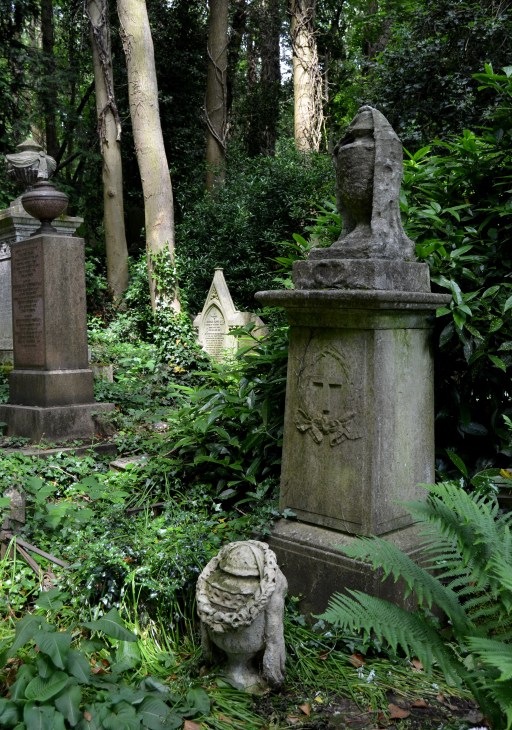
London juni 2013 215

Elizabeth Jackson’s grave

The first burial was Elizabeth Jackson of Little Windmill Street, Soho, on 26 May. Our guide told us, that in those days people believed that the first person who was buried in a graveyard became a kind of protector and guardian against evil forces.

Highgate, like the others of the Magnificent Seven, soon became a fashionable place for burials and was much admired and visited. The Victorians created a wealth of Gothic tombs and buildings that occupies a spectacular south-facing hillside site slightly downhill from the top of the hill of Highgate itself, next to Waterlow Park. Being conservative and thinking English Church, they were not very interested in the ”Egyptian area”, so it took many years before anyone bought a grave there. Another interesting fact is that Victorians didn’t fancy the use of a cross on their grave – they meant that practice was for catholics only.

In 1854 the area to the east of the original area across Swains Lane was bought to form the eastern part of the cemetery. This part is still used today for burials, as is the western part.
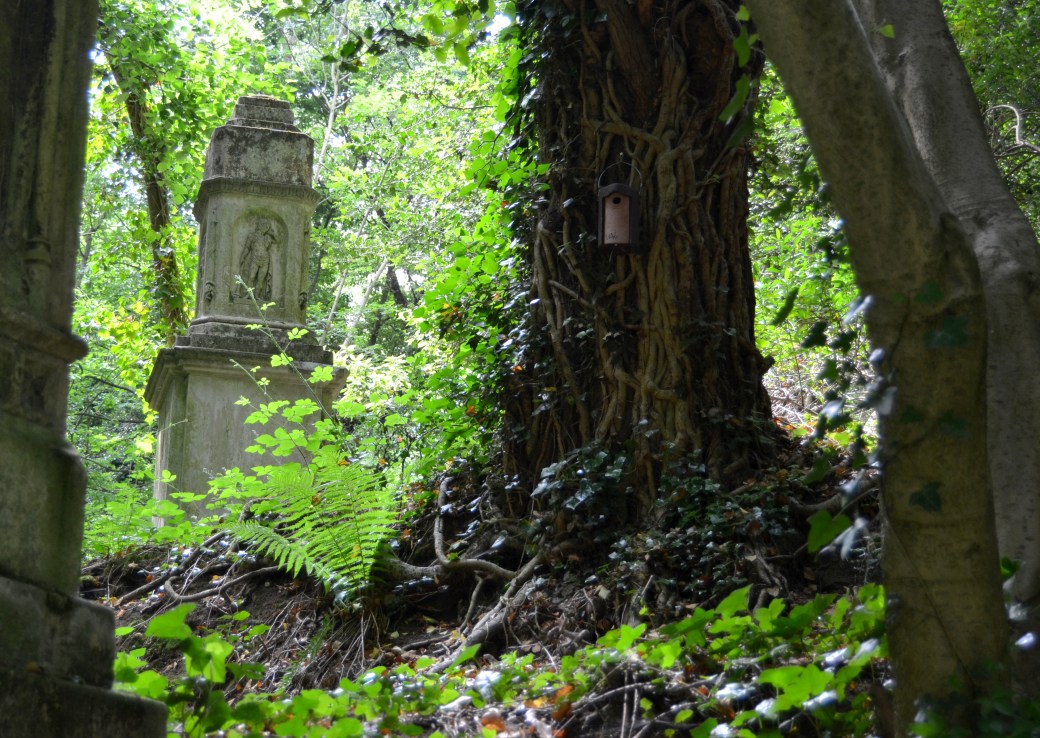
London juni 2013 217

The cemetery’s grounds are full of trees, shrubbery and wild flowers, all of which have been planted and grown without human influence. The grounds are a haven for birds and small animals, and we saw many nesting boxes from the path we walked.

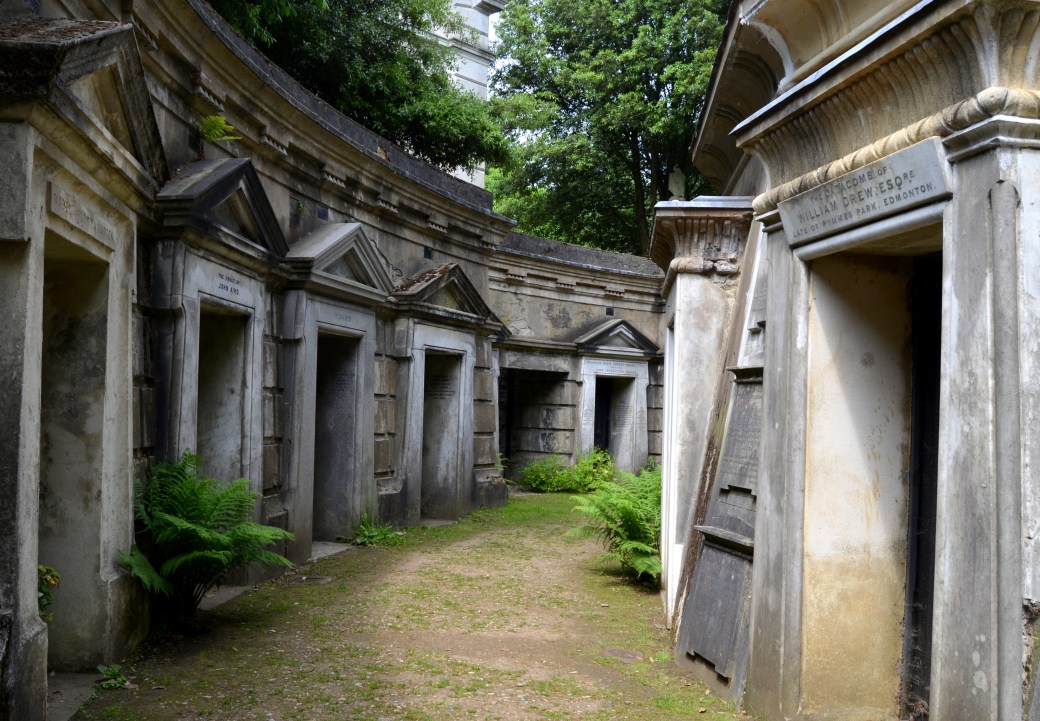
London juni 2013 218Entrance to the Egyptian Avenue, West Cemetery
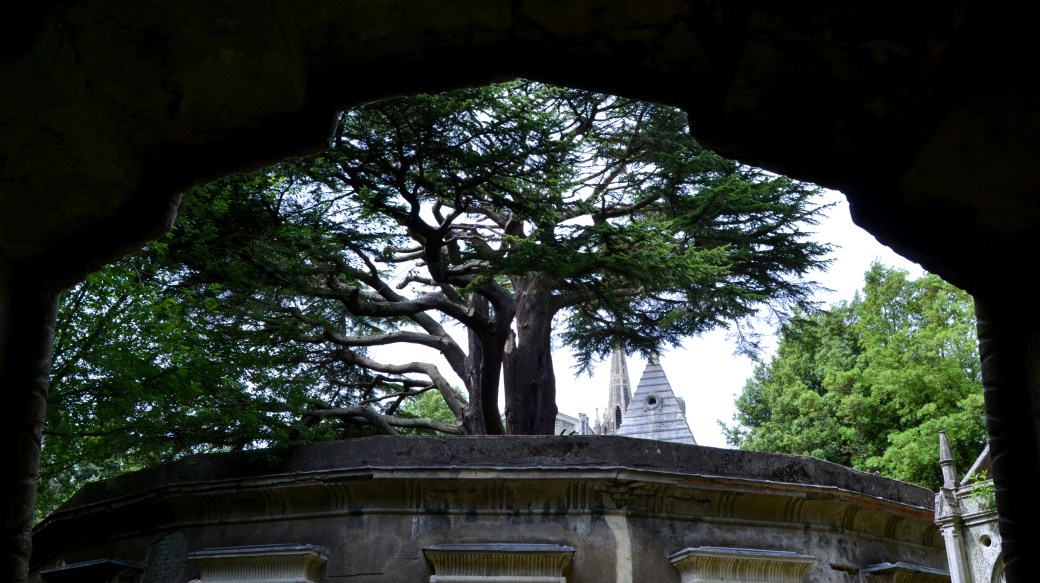
London juni 2013 222The Cedar of Lebanon

London juni 2013 230 Circle of Lebanon, West Cemetery

The Egyptian Avenue and the Circle of Lebanon (topped by a huge Cedar of Lebanon – according to our guide this tree is at least three hundred years old) feature tombs, vaults and winding paths dug into hillsides. For its protection, the oldest section, which holds an impressive collection of Victorian mausoleums and gravestones, plus elaborately carved tombs, allows admission only in tour groups. (Book in advance! ) Due to vandalism and souvenir hunters only visitors with a personal connection with the cemetery can tour without a guide. In the newer eastern section, which contains a mix of Victorian and modern statuary, you can visit without a guide though. The ticket bought for West is valid for walking on the East part as well.
London juni 2013 198

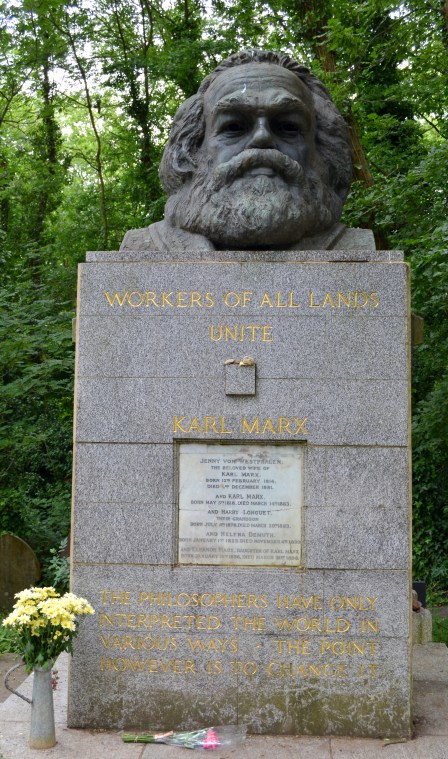
The most famous burial in the East cemetery is probably Karl Marx. The tomb of Karl Marx, the Egyptian Avenue and the Columbarium are Grade I listed buildings.

There are many other prominent figures, Victorian and otherwise, buried at Highgate Cemetery. Most of the historically notable figures lie in the Western part. Among others:

We were not allowed to take photos of new graves, so Beryl Bainbridge and Alexander Litvinenko were left in peace.
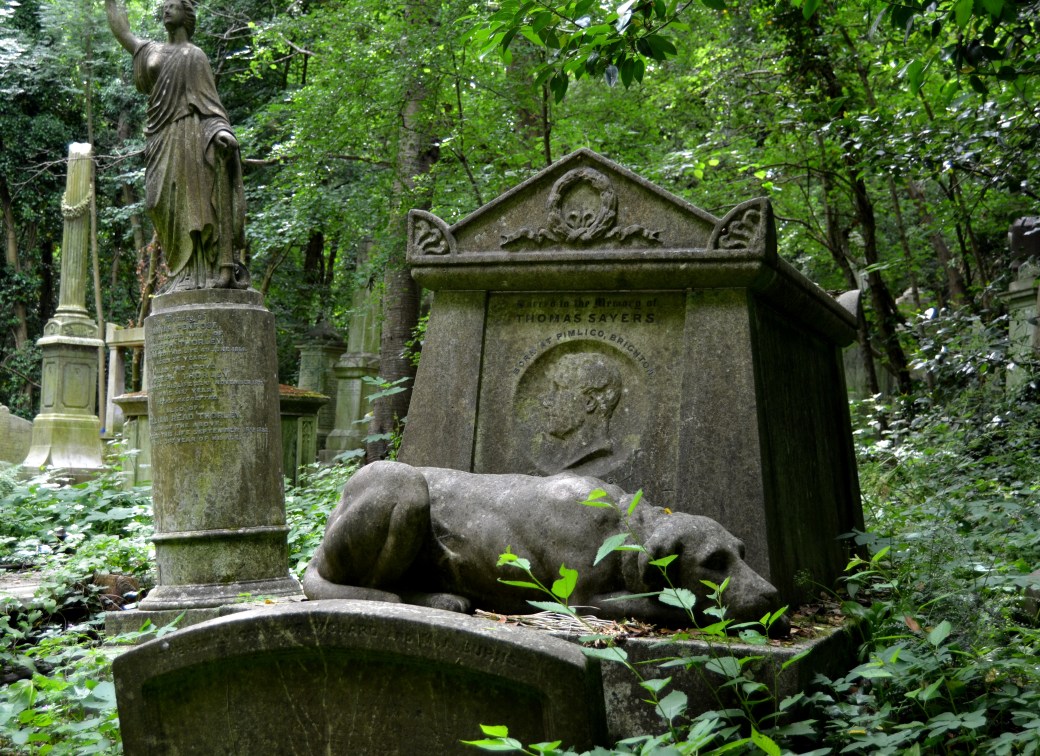
London juni 2013 249Our guide was a volunteer and very knowledgeable about the people being buried here. We got many interesting stories, and among them, one about the prize fighter Tom Sayers (1826-1865). His tomb is  guarded by the stone image of his mastiff, Lion, who also was chief mourner at his funeral. It is said that on the way to the cemetery, the dog sat in the first car with the coffin – in the front seat.

Sayers’ lasting fame depends exclusively on his final contest, when he faced American champion John Camel Heenan in a battle which was widely considered to be boxing’s first world championship. It ended in chaos when the spectators invaded the ring, and the referee finally declared a draw.

Regarded as a national hero, Sayers then retired from the ring. After his death five years later at the age of 39, a huge crowd watched his cortège on its journey to highgate Cemetery and his funeral a week later attracted some 100,000 people to Camden Town.

Highgate Cemetery was featured in the popular media from the 1960s to the late 1980s for its so-called occult past, particularly as being the alleged site of the ”Highgate Vampire”. But, as our guide said, what do vampires fear the most? Surely they would not like a place like Highgate.  Many writers of novels and film directors though, have been inspired by Highgate Cemetery. These are only a few examples:

The East Cemetery hosts some more famous names besides Karl Marx, for example:

Walking the ivy clad paths, passing old ornamented stones and silent statues, old roses and  –  a cat – follow me from East to West.

Camden Cavalcade

Marknaden i Camden, London,  besöks enligt Wikipedia av närmare 100 000 varje helg. Här finns något för alla, och vill du se verkligen precis alla sorters människor är det hit du ska åka. Vi råkade bland annat på ett glatt sällskap av äldre kvinnor i röda hattar…the British Red Hatters (se länk längre ned på sidan).

Detta område vid Regents Canal består, förutom av slussen (Camden Lock), mest av affärer och en stor utemarknad med allt mellan himmel och jord – att titta på eller köpa. Många av stånden erbjuder mat och den är både god och billig – vi köpte några olika, mycket goda Yorkshire puddings till lunch.

Marknaden var från början till för bara hantverkare, men har på senare år vuxit ut till att innehålla kläder, prylar och krims krams samt, som sagt,  god mat.

The Camden markets are a number of adjoining large retail markets in Camden Town near the Hampstead Road Lock of the Regent’s Canal (popularly referred to as Camden Lock), often collectively named ”Camden Market” or ”Camden Lock”. Among products sold on the stalls are crafts, clothing, bric-a-brac, and fast food. According to Wikipedia it is the fourth-most popular visitor attraction in London, attracting approximately 100,000 people each weekend. If you want to meet all sorts of people, this is the place to go. We even met some absolutely wonderful ladies in red hats, members of the British Red Hatters…

Originally, the Lock was a market for crafts, occupying some outdoor areas by the canal and various existing buildings. While the range of goods has since widened, with stalls selling books, new and second-hand clothing, and jewellery, the Lock retains its focus as the principle Camden market for crafts. There is a large selection of fast food stalls, where we bought some really tasty yourkshire puddings..

From 2006 a large indoor market hall was constructed in a yard between the Camden Lock Market and the Stables Market that was previously used for open air stalls. In November 2007 a large part of the Stables Market was demolished as part of a long-term redevelopment plan for the area and rebuilt as a year-round permanent market area.

Travel theme: Motion

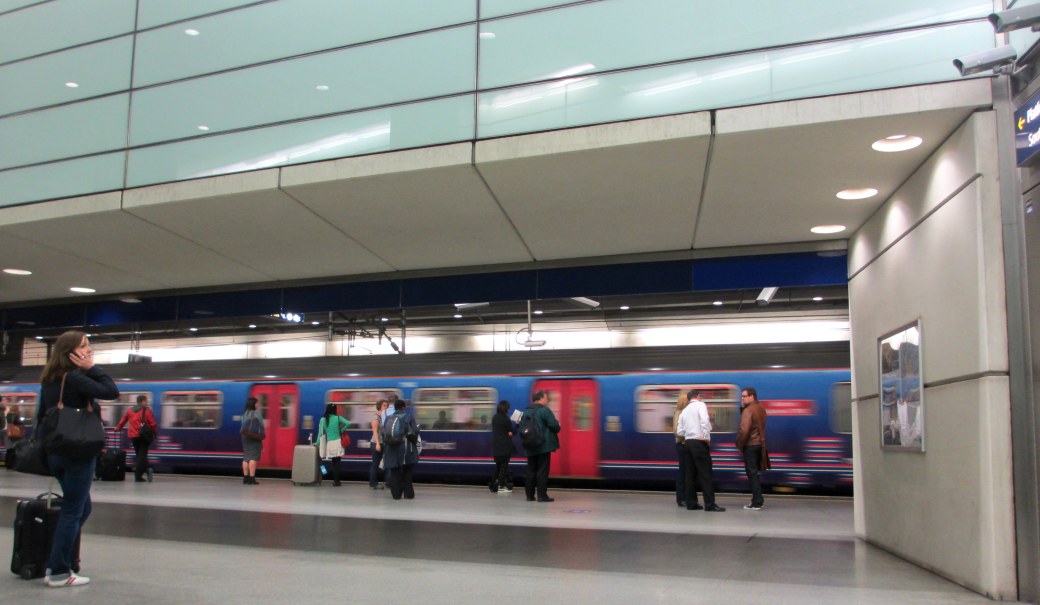
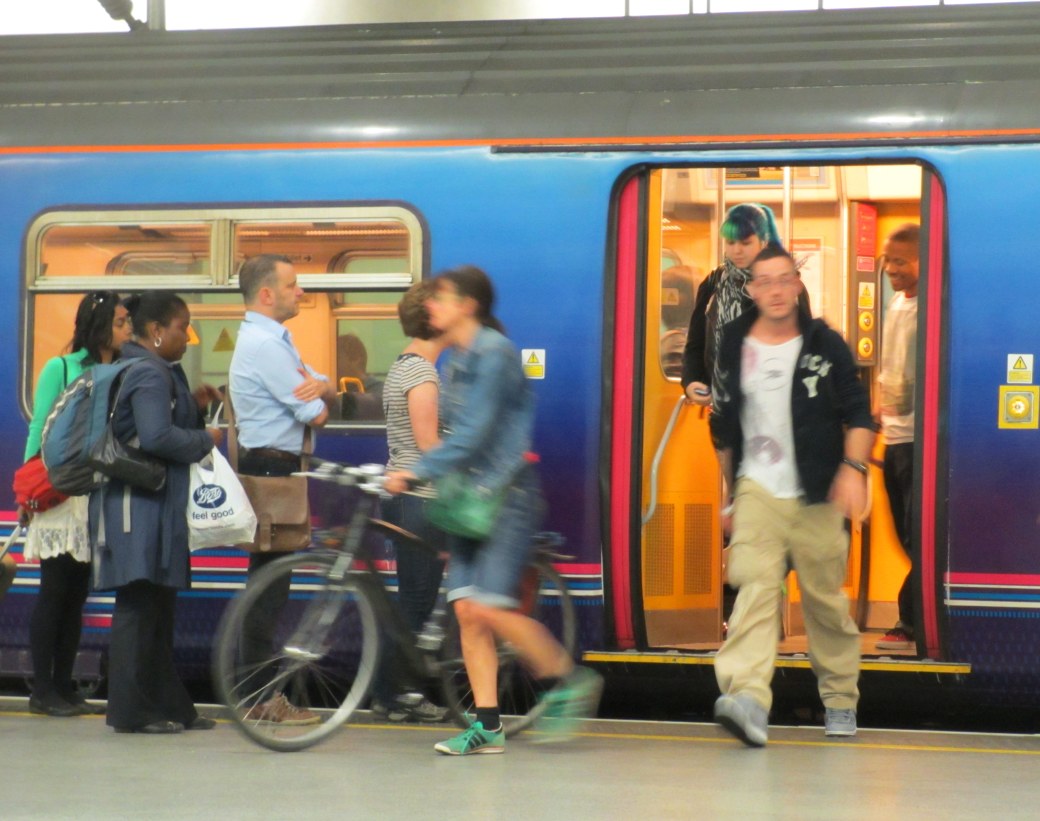
Rörelse – människor och tåg på Saint Pancras, London. Sällan står allt stilla. Och när HON dyker upp hinner jag inte med – hon rör sig för fort och jag såg henne inte i tid…

Motion is this week’s theme for Ailsa’s weekly challenge. People and trains at Saint Pancras, London. Motion. When SHE turns up, rushing from a train – she’s too fast for me, and I didn’t notice her from the start…

London 2013 171 London 2013 173London 2013 176

London 2013 177

Weekly Photo Challenge: Nostalgic

Så många saker väcker nostalgin till liv, men när jag nu ska finna bilder till detta inlägg blir det genast svårare. Inte många foton finns från mitt barndomshem eller från min älskade mormors hus – tankar och minnen från barndomen finns mest inuti mig själv. Men, så fick jag chansen att besöka en av de riktigt gamla husen i närheten av vår sommarstuga.

Denna lilla stuga är från slutet av 1700-talet och dess interiör värker fram minnen som får ögonen att tåras. Här finns möbler, färger, mönster, prydnadssaker och tidningsställ som påminner om dem vi hade när jag var barn på 50- och 60-talet. Blandat med moderniteter förstås – helt enkelt gott och blandat. Få se om du inte kan känna igen dig lite grand, du också…och kan konstatera att vi vuxit till oss en aning de senaste tvåhundra åren…

So many things can make you nostalgic, but when I am supposed to show something of this in WordPress Nostalgic – I do not have any pictures. My childhood didn’t get much photographed, and when I grew older and bought a camera of my own, we had moved away from where it all started. My grandmother’s house though, was still there for a while.

But, last week I got the opportunity to visit a very old little house (or maybe cottage) some kilometres from our summer house. The owner told me that it was built in the late 18th century and is well kept. Even if it seems to be very low, because people were a great deal shorter in those days, I could stand upright inside.

The cottage is furnished almost the way my childhood house was. I grew up in the fifties and sixties, and recognized many things here, such as colours and patterns, the table, rag-rugs (my grandmother used to make those too), chairs,  and the special basket for newspapers… Oh, happy childhood – because I was really fortunate enough to have that. In my memories it will live on as long as I live.

Nerds

Nörd kommer från engelskans slangord nerd och är en stereotypisk benämning på en person som har ett fixerat intresse eller intresseområde. Enligt Wikipedia användes ordet första gången 1950 i Dr. Seuss bok If I Ran the Zoo, men då med betydelsen av en särskild djurart. På tidigt 60-tal var slanguttrycket spritt i USA och ända bort till Skottland. Fram till slutet av 1900-talet användes ordet nörd oftast negativt, men idag används ordet minst lika ofta positivt.

Nördar kan antingen beskrivas utifrån sina hobbies och intressen, eller via sin personlighet, status, sociala kompetens eller till och med sitt utseende. En vanlig uppfattning är att nördar ofta intresserar sig mer för teknik eller naturvetenskap än socialt umgänge. Det ironiska begreppet social nörd används ibland av nördar om personer som har ett starkt fixerat intresse av socialt umgänge och mänskliga relationer. Nörd kan du eventuellt kallas om du är/har:

  • Datorintresserad
  • Intelligent
  • Enkelspårig
  • Tekniskt kunnig
  • Låg social kompetens

Nördar finns naturligtvis med i populärkulturen, bland annat i filmerna Nördarna kommer! och i dokusåpor som Beauty and the Geek och FC Z. Andra exempel på nördar är Simpsons-karaktärerna Professor Frink, Lisa Simpson och Jeff Albertson.

Den internationella nörddagen firades den 25 maj…men den glömde i alla fall vi bort! Till London hade jag sällskap av två andra nördar i familjen…så vad sägs om ett allmänt nördigt galleri…?

London juni 2013 005

A nerd is a person, typically described as being overly intellectual, obsessive, or socially impaired. They may spend inordinate amounts of time on unpopular, obscure, or non-mainstream activities, which are generally either highly technical or relating to topics of fiction or fantasy, to the exclusion of more mainstream activities. Additionally, many nerds are described as being shy, quirky, and unattractive, and may have difficulty participating in, or even following, sports. ”Nerd” is a derogatory, stereotypical term, but it has also been reclaimed and redefined by some as a term of pride and group identity. Nowadays it’s often used positively as well.

According to Wikipedia, the first documented appearance of the word ”nerd” is as the name of a creature in Dr. Seuss’s book If I Ran the Zoo (1950). The slang meaning of the term dates back to 1951, found in Newsweek magazine. By the early 1960s, usage of the term had spread throughout the United States, and even as far as Scotland. At some point, the word took on connotations of bookishness and social ineptitude.

Nerds can either be described by their hobbies and interests, or by abstract qualities such as personality, status, social skills, and physical appearance. Some interests and activities that are likely to be described as nerdy are:

  • Intellectual, academic, or technical hobbies, activities, and pursuits, especially topics related to science, mathematics, engineering, linguistics, history and technology.
  • Hobbies, games, and activities that are described as obsessive and ”immature”, such as trading cards, comic books, fantasy and science fiction novels, role-playing games, tabletop games.
  • Interest in the fine arts, non-mainstream music, hobbies (i.e., collecting), or other ”obscure” interests.
  • Heavy obsession with a topic that would otherwise be mainstream (such as a popular TV show or a sport).

Well, in London I was accompanied by two other nerds in my family, and what about a short trip through some nerdiness?

Covent Garden

Ett kort besök i Covent Garden är ett måste på varje Londonresa. Den här gången uppträdde en mycket säker Charlie Chaplinkopia som drog ned en del skratt. Inte minst på grund av att han enrollerade en charmerande liten flicka ur publiken och gjorde henne till sin assistent. Alltid publikfriande!

Lite kockskoj och till sist en ung man med mycket vacker röst som underhöll med några av operavärldens absoluta glansnummer. Avkopplande!

No London visit is a London visit without visiting Covent Garden. This time a Charlie Chaplin copy was very entertaining, much because of his charming little assistant from the audience. Then some fun made of chefs… and others in the kitchen, and last but not least – a voice! A young man singing the most beautiful opera. He was so good that he might win ”Britain’s got Talent” , had he entered the competition. (Maybe he had already?)

According to Wikipedia, the first record of a ”new market in Covent Garden” is in 1654 when market traders set up stalls against the garden wall of Bedford House.The Earl of Bedford acquired a private charter from Charles II in 1670 for a fruit and vegetable market, permitting him and his heirs to hold a market every day except Sundays and Christmas Day.The original market, consisting of wooden stalls and sheds, became disorganised and disorderly, and in 1830 Charles Fowler designed the neo-classical market building that is the heart of Covent Garden today. Further buildings were added—the Floral hall, Charter Market, and in 1904 the Jubilee Market for foreign flowers was built.

By the end of the 1960s, traffic congestion was causing problems for the market,  The following year the market relocated to its new site, New Covent Garden Market, about three miles (5 km) south-west at Nine Elms. The central building re-opened as a shopping centre in 1980, with cafes, pubs, small shops and a craft market called the Apple Market. The beautiful hall where the opera singer entertained us (the last picture) is the former vegetable market.

Another market, the Jubilee Market, is held in the Jubilee Hall on the south side of the square.The market halls and several other buildings in Covent Garden have been owned by the property company Capital & Counties Properties (CapCo) since 2006.

Weekly Travel theme: Sculpture

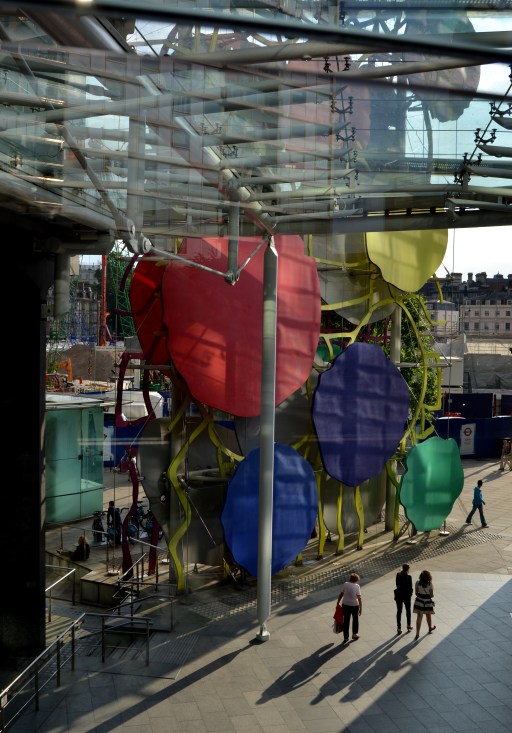
I London finns naturligtvis många fina skulpturer, men en som jag aldrig tidigare sett fann jag nära Victoria Palace Theatre där vi avnjöt musicalen Billy Elliot (rekommenderas verkligen – lysande!).

In London, a couple of days ago when visiting the Victoria Palace Theatre for the brilliant musical Billy Elliot (Go see it! And thank you for telling me about it…though I have forgotten which of you, my blogging friends, who gave me a hint? ), I came across this sculpture of considerable size, and in vibrant colours. So, sorry British Museum, but this is my choice for Ailsa’s theme: Sculpture!

London juni 2013 173

Weekly Photo Challenge: Companionable

The Weekly Photo Challenge this week is companionable. These two friends are, indeed. They have each other, and here they are companions to my mother too!

Indienresenärer och bokarna slår ut 2011 059

003 Fler uteliggare 018

More lovely furs from lovely blogs are here!

Tidig morgonvandring längs Ronnebyån – Early morning walk: Ronnebyån

Sista vandringen i Ronneby för den här gången går längs den vackra Ronnebyån med dess fantastiska trävillor. Vi går längs vattnet upp mot Ronneby centrum. Tyvärr (för fotografering alltså) genomgår min favoritvilla just nu en totalrenovering och är täckt av byggnadsställningar. Men Villa Haga är en dröm i rosa med burspråk och en glasveranda som jag knappt sett maken till någonstans. Du kan nog se hur vacker villan egentligen är.

Sedan går vi tillbaka och tittar även en bit upp från vattnet mot rosor och matchande bilar…eller kanske tvärtom?

The last Ronneby walk will take us to Ronnebyån and its fantastic villas. They are all beauties in their own way, but to my disappointment (concerning photography of course), my favourite villa, Haga, is now being restored and is covered in scaffoldings. I hope you are still able to see its splendour with bay and glass veranda, all settled in a dream of pink and white.

On returning towards Ronneby Brunnspark, we will pass magnificent roses and matching cars – or maybe vice versa?

Doftträdgården, Japanska trädgården och Rosenträdgården

The Scented Garden, The Japanese Garden and The Rose Garden. I have to give you a tiny hint of their beauty as well. So, we are back in Ronneby Brunnspark. Follow me on the walk, and you will catch a glimpse of the little lake and the flea market as well! Let’s start where the gulls are sitting, pass the pondering horse (Bäckahästen) and stroll for a while in The Scented garden first…