
On our way to Thingvellir this cold and beautiful morning.
Þingvellir is a site of historical, cultural, and geological importance. It lies in a rift valley that marks the crest of the Mid-Atlantic Ridge, at the northern end of Þingvallavatn, the largest natural lake in Iceland.
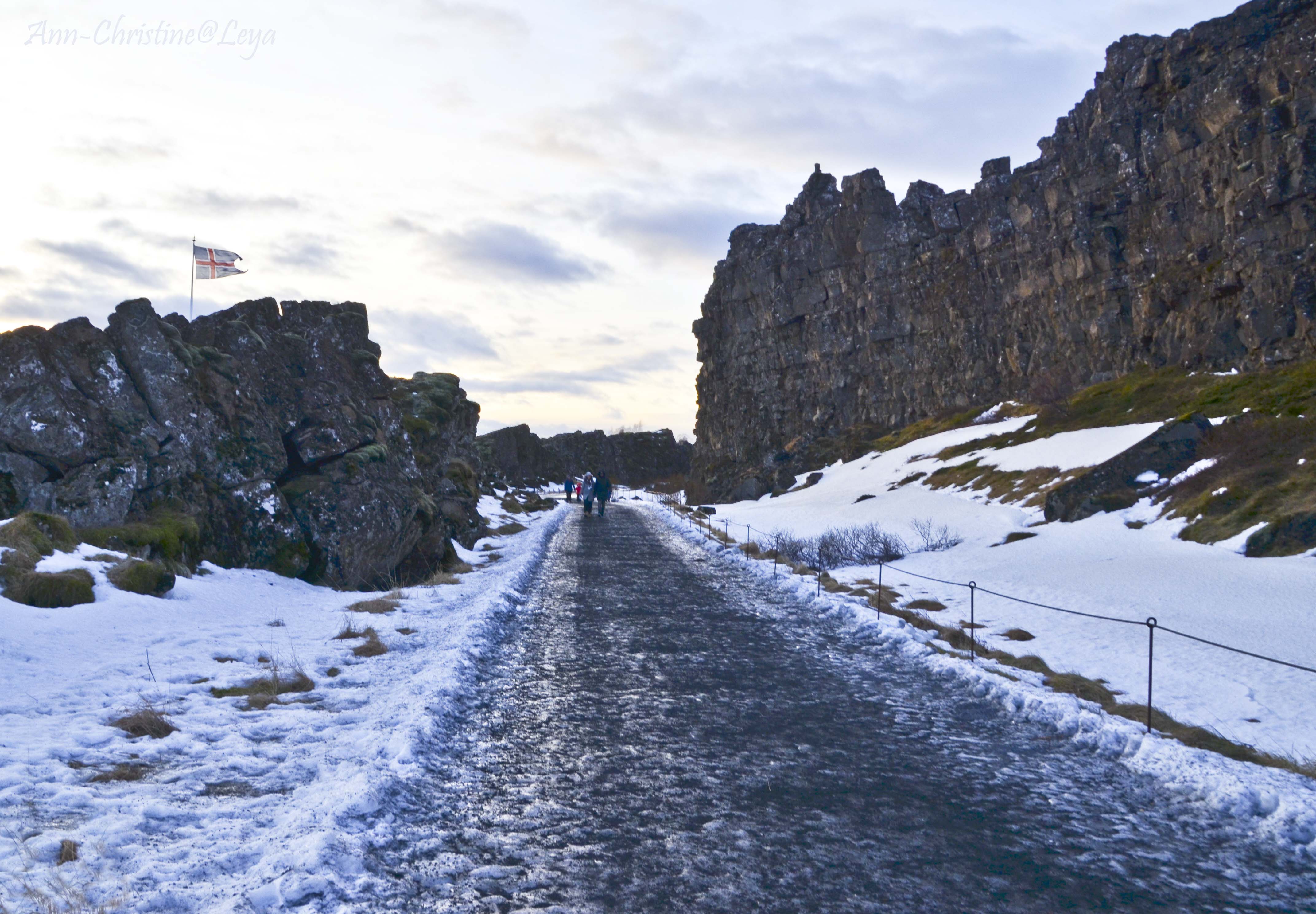
AlÞingi, the Icelandic Parliament, was established at Þingvellir in 930, and remained there until 1798. The National Park was founded in 1930, marking the 1.000th anniversary of the Althing, and became a UNESCO World Heritage Site in 2004.
The continental drift between the North American and Eurasian Plates can be clearly seen in the cracks faults which traverse the region, the largest one, Almannagjá, being a veritable canyon. This also often causes the earthquakes in the area.

According to the Book of Settlements, the settlement of Iceland began in AD 874 when the Norwegian chieftain Ingólfur Arnarson became the first permanent settler on the island. Over the next centuries, people of Norse and Celtic origin settled in Iceland, and as the population grew there was a need for a general assembly.

The foundation of the Icelandic parliament is said to be the founding of the nation of Iceland, and the first parliamentary proceedings in the summer of 930 laid the ground for a common cultural heritage and national identity. Þingvellir plays a central role in the history of the country.

Þingvellir was the centre of Icelandic culture. Every year during the Commonwealth period, people would flock to Þingvellir from all over the country, sometimes numbering in the thousands. They set up dwellings with walls of turf and rock and temporary roofing and stayed in them for the two weeks of the assembly.
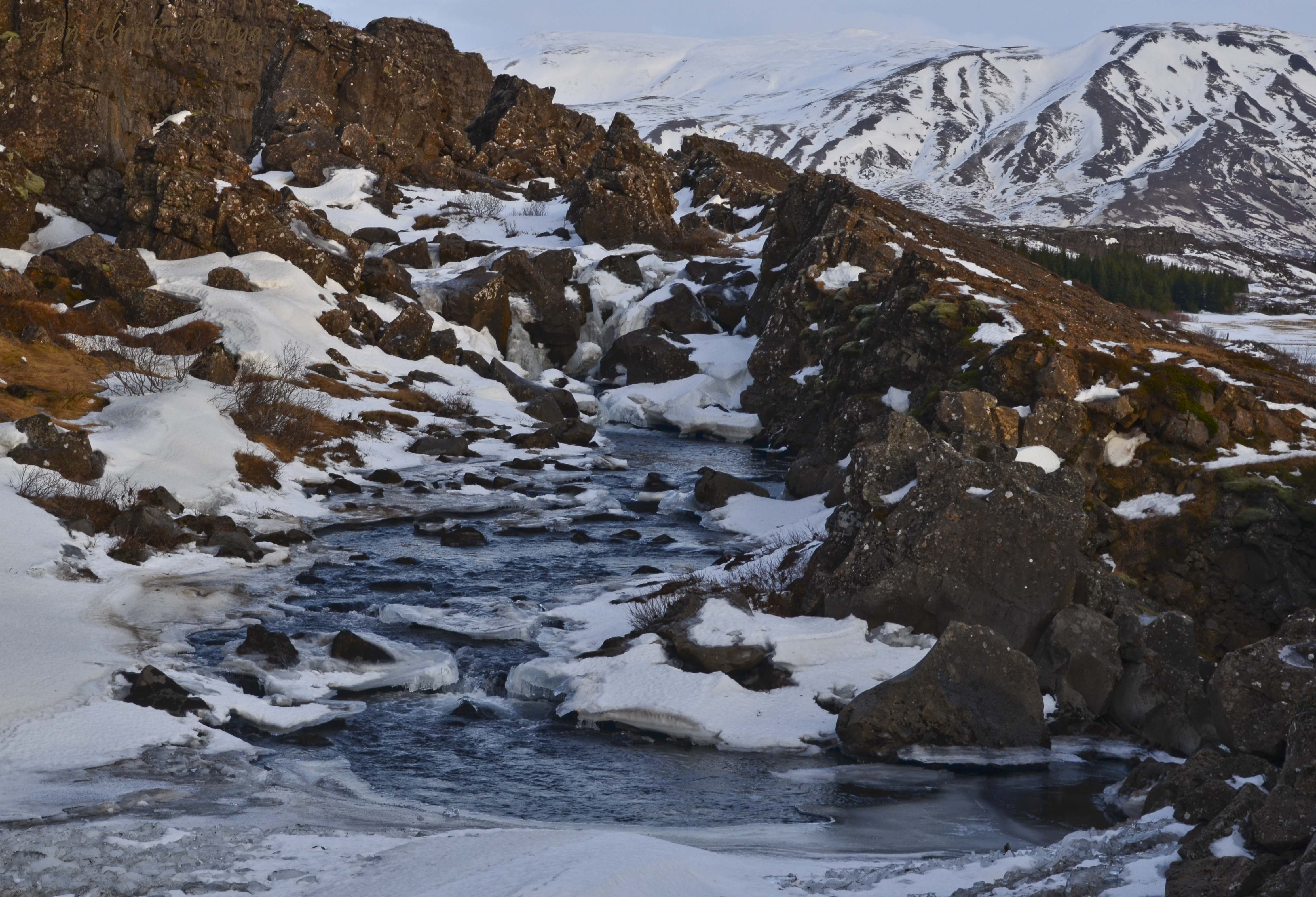
The Drowning Pool for potential witches
Although the duties of the assembly were the main reason for going there, ordinary people gathered at Þingvellir for a wide variety of reasons. There were merchants, sword-sharpeners, tanners and entertainers – and ale-makers brewed ale to them all. News was told from distant parts; games and feasts were held. Itinerant farmhands looked for work and vagrants begged.
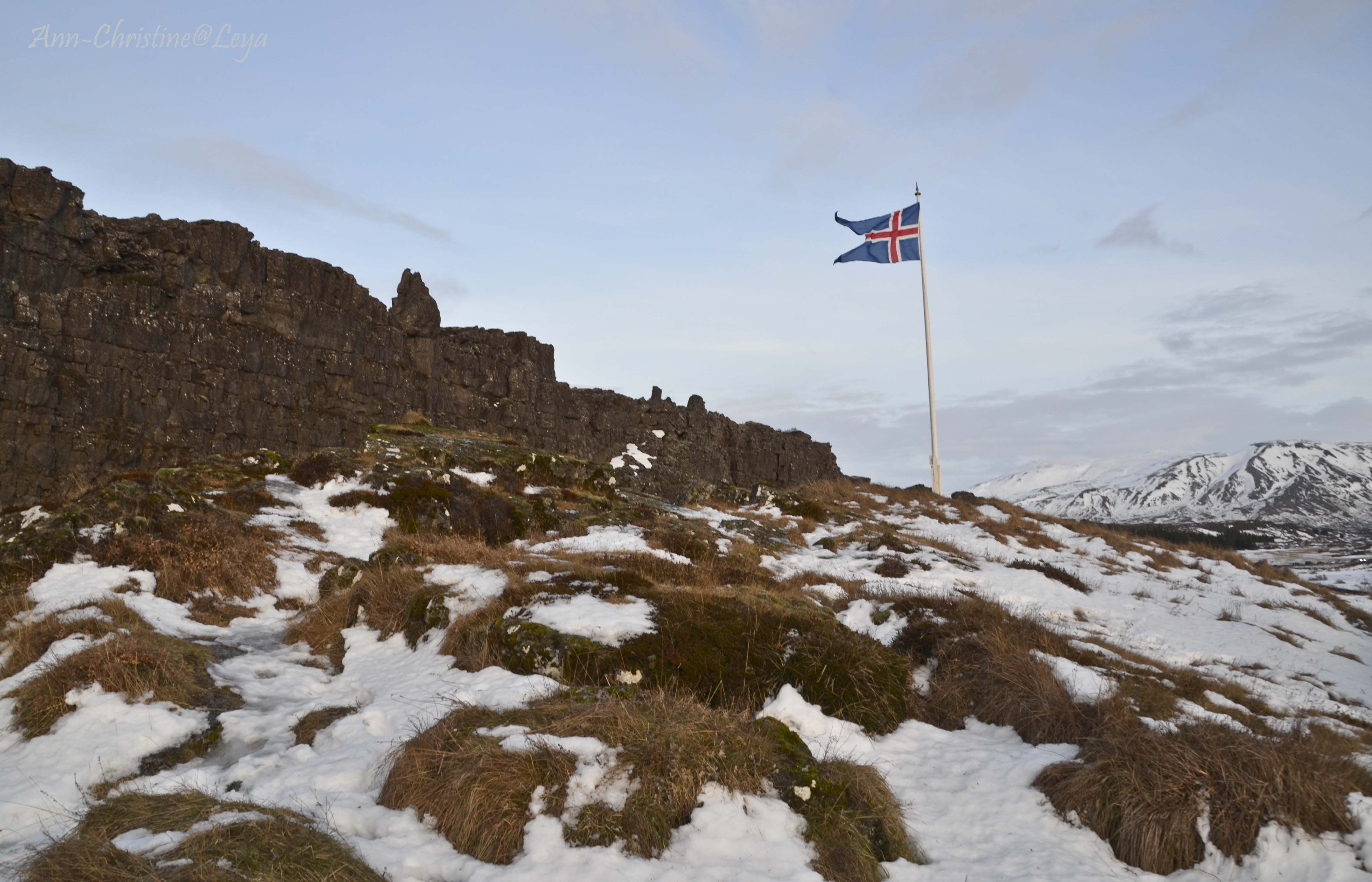
A flagpole on Law Rock marks the place where the law was recited from.
Þingvellir was a meeting place for everyone in Iceland, laying the foundation for the language and the famous literature – the Eddas and the Sagas.

A Law Rock of ones own?
In fact, still today, young people can read the old texts from the 12th century – not many languages have lasted that much unchanged. This is possible due to the conservative – and innovative and creative – use of the old words, combined with less borrowed words than any other language. As an example: vegabréf is a combination of veg (road) and bréf (letter) = passport!
The landscape around Thingvellir – magnificAent.
 Leya
Leya 
Pingback: Lens-Artists Photo Challenge #31: Landscapes | Leya
I am enjoying learning more about Iceland and its history. Did you need special footwear for this trip to cope with the icy paths?
We had extra ”spikes” and boots, but our friends are not that good at walking, so we made it easier for us. They were really here for the baths in the hot pools. Both of them preferably go to warmer places …but we convinced them to join us on this trip.
Hope i will be one day there..
I hope so too!
Pingback: Strokkur, Ice and Horses | Leya
Enjoyed the historical overview and really appreciated the wonderful photo album.
Underbara bilder på ett vackert land. Skall se om det finns någon lämplig resa.
Wow – har jag övertygat dig? Det finns weekendresor också. Då hinner du göra Gyllene Cirkeln med de största attraktionerna.
Tack så mycket för all historia. Jättespännande att läsa och att se dina vackra foton till. Underbart!
Tack, Lena! Det blir två eller tre poster till. Hoppas kunna locka fler att åka dit!
Härligt! Och tänk att det tror jag du kan.
Such magic in those scenes, Ann Christine with those layers of history going back to 930 AD. Primordial too with those tectonic plates shifting along that rift! How would you describe the sense of place?
The ”sense of place”…I do not really know how/what you mean by that? I bit more info I need…sorry.
Yes ‘sense of place’ has a pretty broad definition as well as being subjective. I’m wondering whether you could sense an atmosphere with that extraordinary geographic ‘rift’ and maybe the layers of history added to that context. Maybe a sense of the primordial drawing in, attracting people gatherings. It’s pretty amazing that the Althing founding went back all those years and the democratic process carried on throu
Sense of place – Yes. Definitely. But it was more poignant the first time I came here in the 80’s. For me, that is. But it is easy to imagine why this place was chosen for the Althing. The cliffs and the water, the great rift getting broader every year…Magic must have been in their minds. It was not possible to climb there in winter, but I remember climbing to the top and gazing out on the summery Thingvallavatn. Imagining all the chiefs coming on horseback with their men and traders. All those years…and still, today, people read the old texts from these days. That, is Magic.
Thanks for this description, Ann Christine
Had another look at your photos – takes a grip of the imagination 😊
🙂
Beautiful scenes Ann-Christine.
Love this country.
There is a rugged and quiet beauty as shown in your photographs. Same as in Poppy’s when she was there. All natural and untouched by industrialized machines.
True – all natural. That is what makes me want to go there again and again…
Beautiful images.
Thank you, Emilio.
Breathtakingly beautiful landscapes Ann-Christine, thanks for sharing your impressions with us!
I’m glad you enjoy it! Totally different from where you are – but in a way, maybe not? I’m planning for another two-three posts.
I think Iceland’s landscapes are unlike anything I’ve ever seen. Looking forward to more, Ann-Christine!
Coming soon…
Tack för den underhållande och lärorika läsningen. Bilderna är helt underbara. De har verkligen gjort det bra som bevarat språket så väl!
Tack! Det är ett fantastiskt språk – vackert också. Men en smärre plåga att lära sig…de har nämligen bevarat alla äldre böjningsformer också. När jag läste på 90-talet var vi en grupp på ca 30 st i Lund. Efter två lektioner var mindre än hälften kvar – och på slutet var vi mindre än tio. Tuff isländska som höll den! Hon startade introduktionen med orden: ”Välkomna! Jag har kört den här kursen några år här på universitetet, och den är mycket jobbig. Så, nästa kurstillfälle är ni bara halva gruppen. Och hon hade ju rätt…Man klarade det bara på rent råplugg. Och stark vilja förstås!
Kommer Du ihåg något av det? Kul att Du fullföljde, i vilket fall. Jag kommer ihåg ordet för toaletter nu, tack vare alla skyltar.
Från det ena till det andra, läste jag härom dagen att Påven ska komma till Lund i oktober!
Jag kommer ihåg så att jag kan förstå lite talat och skrivet – men prata…nejnejnej…Och så lär jag mina elever lite roliga sammansättningar när vi läser om Eddan och Njal. Påven kommer – jag såg också det. Spännande egentligen. Kanske man skulle lyssna på honom då.
Blir säkert mycket folk där.
Jag följde hans resa i USA, på CNN.