Silent Sunday


I prefer the mystic clouds of nostalgia to the real thing, to be honest. – Robert Wyatt
Tina is hosting this week, and she wants us to be Nostalgic. This is a feeling that easily comes to me, touches me, just like tears do. Nostalgia is such a unique phenomenon because it fuses both positive and negative experiences and emotions.
The word nostalgia is a Greek compound, meaning ”homecoming”, a Homeric word, and ”pain” or ”ache”, and was coined by a 17th-century medical student to describe the anxieties displayed by Swiss mercenaries fighting away from home. Today its meaning is a bit different. So, my Nostalgic will be entirely about my own life.
I don’t have any digital photos of my grandmother, but my childhood was so much about her. My nostalgic memories always take me to her garden and the flowering apple trees, pear trees, cherry trees, plum trees and …her sweet voice and contagious laughter.
I always make a distinction between nostalgia and sentimentality. Nostalgia is genuine – you mourn things that actually happened. – Pete Hamill
After my grandmother, my first Lagotto, Mille, evokes my nostalgic memories. He was such an impressive dog who hit all your senses already in the first blow. You did not stand a chance. He will be forever remembered by everyone who met him.
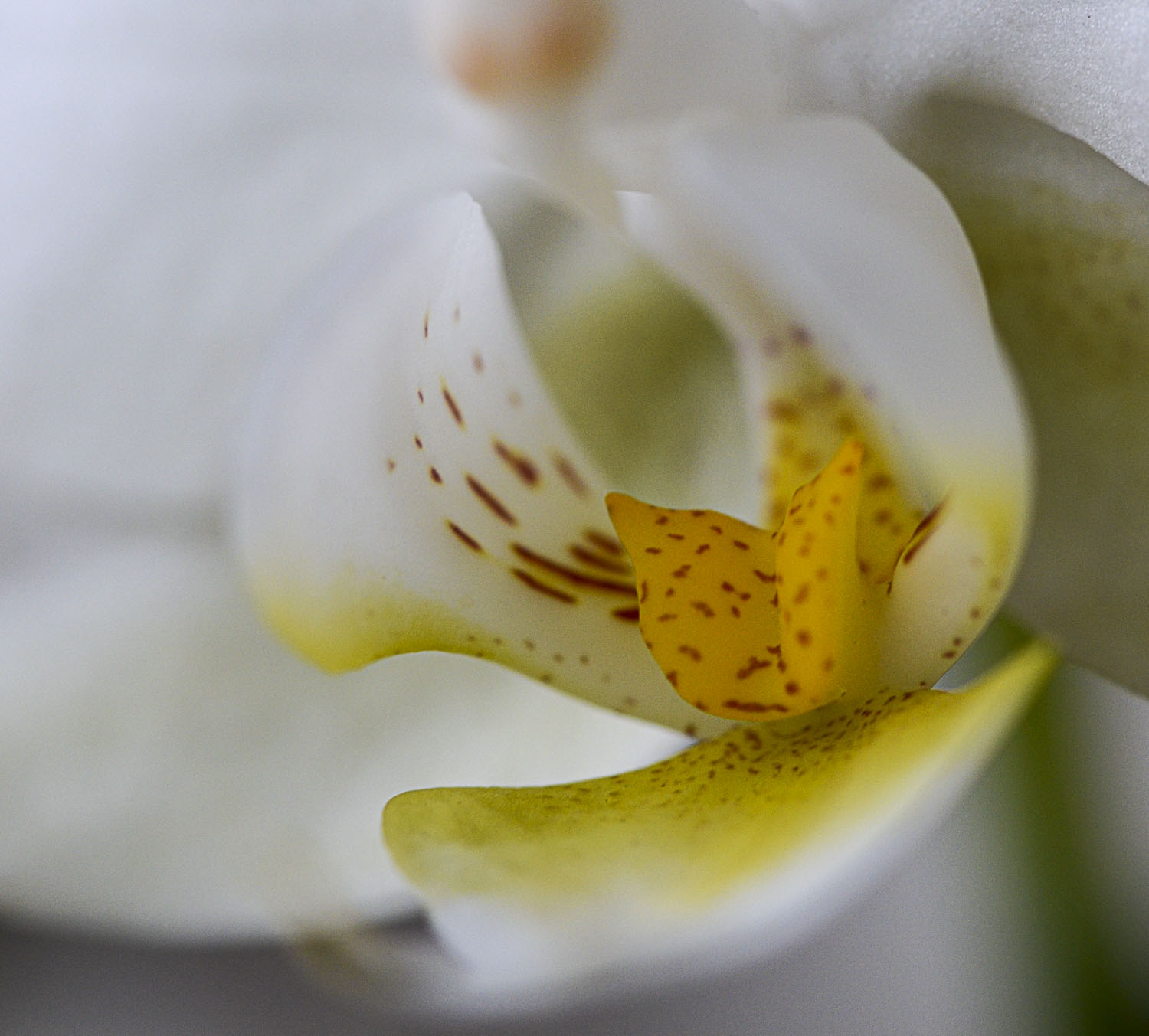
Can you feel nostalgic about one single flower? I can! Many years ago I had a fantastic favorite orchid – a Cattleya hybrid, ”Tropical Pointer”. I had it for several years and it came back again and again with a multitude of flowers. I think of it as a He – don’t know why. He just flowered himself to death (if you can say it that way…). And like everything else in this world, you can never get the same thing twice. I kept searching for a new Tropical Pointer, in every garden center, in every country I visited, but new hybrids come every year – and the old ones are forgotten…
Nostalgia is a very human trait. – Stephanie Coontz
My beloved apple tree – a bit of a warden tree for this house (about 100 years old). Nostalgia hits me when looking at it in its former glory. You who follow my blog know it is the same tree (but lying down, 2019) in the Creepy post.
Finally, we had some foreign guests in town when the children played in different orchestras, some 15 years ago. A big meeting with other European countries brought a couple of young guys our way. They stayed at our house for some nights while the festivities lasted. This young man was an avid accordion player – every time I look at the photo, I can feel his love for music and for his instrument warming my heart.
In the header, one of the very few photos of my whole family together. Nostalgia over all those years we still traveled together, and how excited we were over reaching our dream – Tibet.
Thank you, Tina, for hosting this week instead of me! And, as always, Amy, Tina, Patti and I thank you for your continued support of our photo challenge.
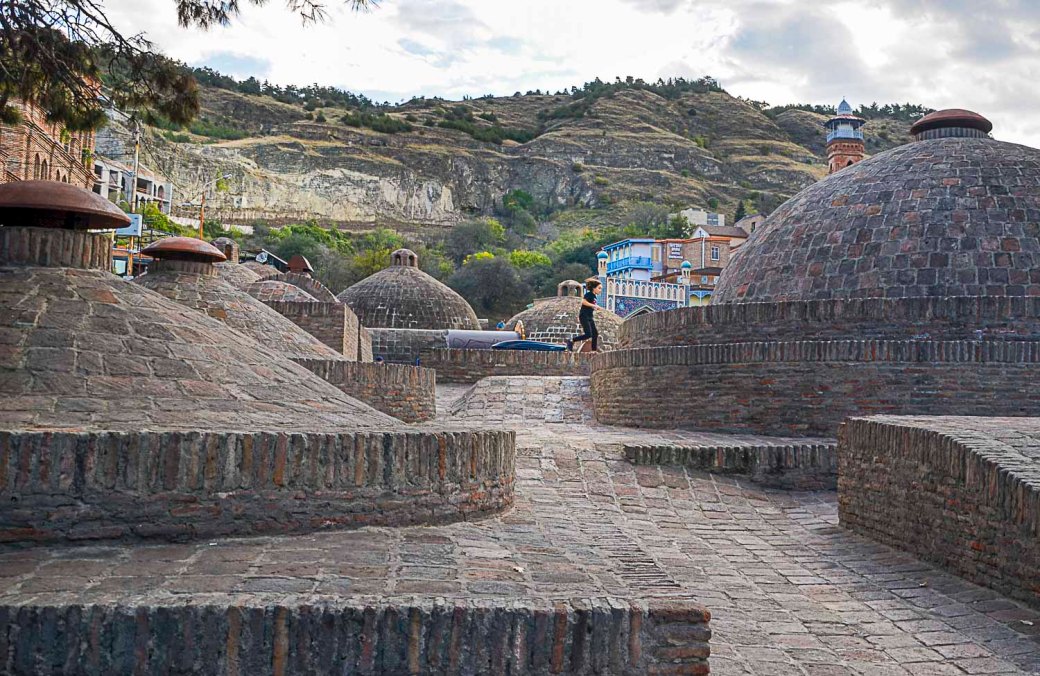
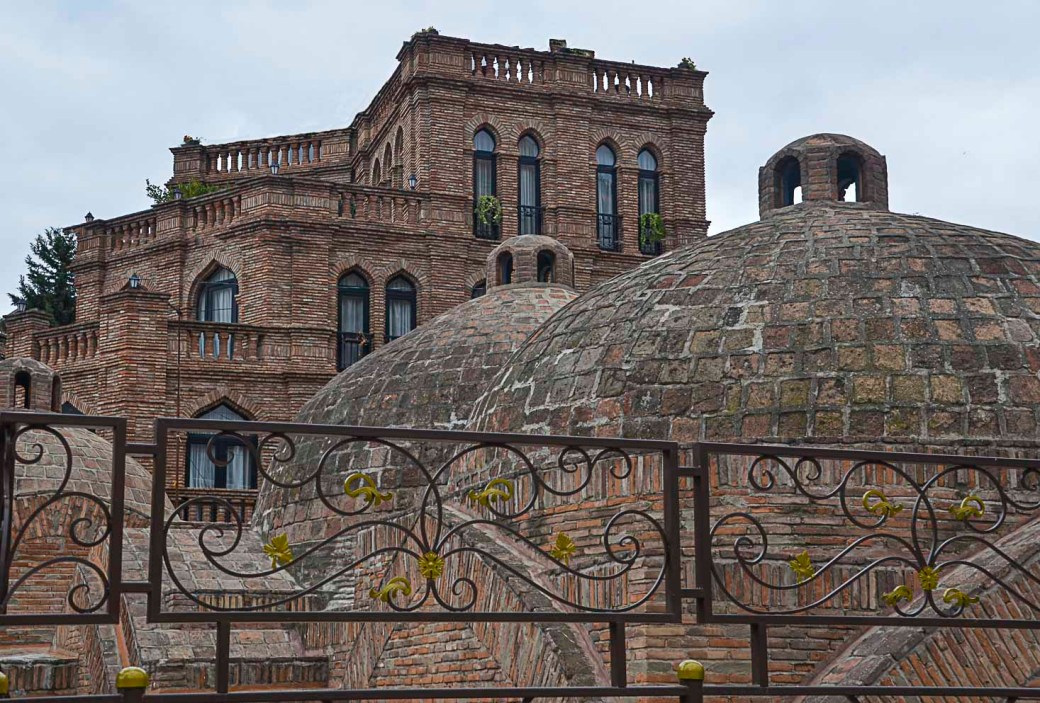
Fabrika, Tbilisi, ”Once a soviet sewing factory, has been revived and transformed into a multi-functional urban space bringing together enthusiastic individuals ready to stretch their minds with new exhilarating experiences.” This is how this urban hot spot describes itself to potential visitors – let’s have a look!
”With its striking “old-meets-new” attitude, Fabrika oozes genuinely cool soviet vibes blended with funky industrial elements.
It has become the symbol of renovation, recreation and reinvention.”
I loved the graffitti…
The spacious yard – not many there in the middle of the day, but, I could easily imagine the crowds on a hot summer’s night!
Why not step inside? Everything so airy and colourful. Youngsters working or relaxing, playing games or just sleeping. Rather quiet at this time of the day…and no heavy music. – Which was much appreciated by me – generally there is too much music, all the time and everywhere in society. Sometimes I find it difficult to hear my own thoughts…
The hostel seemed popular, and the food was tasty. People dropping in and out every minute. Fabrika prides itself of being the creative center of Tbilisi –
…and I do believe it is. Maybe next time we will drop in a late evening for the joy of the creative process. The Georgians we met were very good at English, and I would not say no to a night of fruitful discussions on Life – over a cool drink. Before it is over.
We walked back through the streets, with the ”old-meets-new” feeling lingering all the way home. I wonder for how long Old Tbilisi will keep its ”Old” part.
It makes no difference whether a work is naturalistic or abstract; every visual expression follows the same fundamental laws. – Hans Hofmann
Patti is asking us to go Abstract – ”relating to or denoting art that does not attempt to represent external reality, but rather seeks to achieve its effect using shapes, colours, and textures.”
Over the last 30 years I have developed a taste for abstract art. But, something – ”that could have been painted by any child”, (said about a big blank canvas with a single red dot) as my mother would put it, will probably not hang on my wall. But I am sure it will hang on someone else’s wall instead! That is one of the reasons to why art is so interesting. Now we are looking forward to seeing Your ideas of Abstract!
In the header, a work by a favorite of mine, Antoni Gaudí.
Colourful from our exhibition park in Wanås, Sweden. Much of the art exhibited here, it is allowed to climb on or walk into. Do you think some art/art forms are ”more useful” than others?
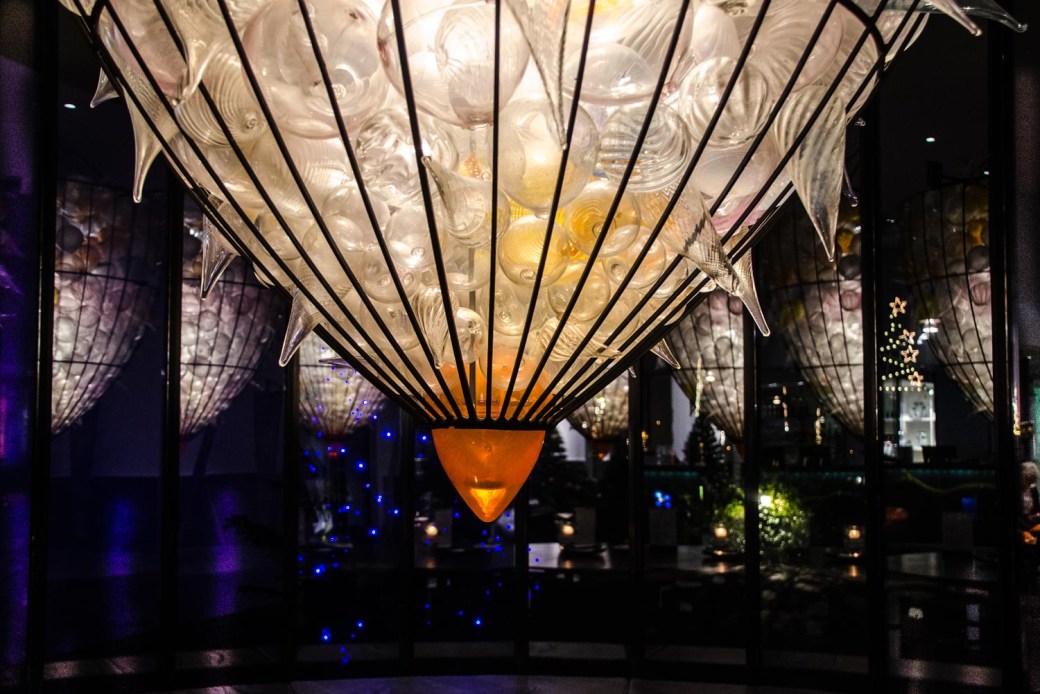
Glass from Kosta-Boda Art Hotel – a material very much ”alive”
The more horrifying this world becomes, the more art becomes abstract. – Ellen Key
People like abstract art because it makes them feel clever. – James Acaster
The two images above are both examples of a mix of photographic art and architecture. The first one is a phone photo from Helsingborg trainstation, processed in several apps, and the second one was made by simply tilting the photo (and raindrops on the lens).
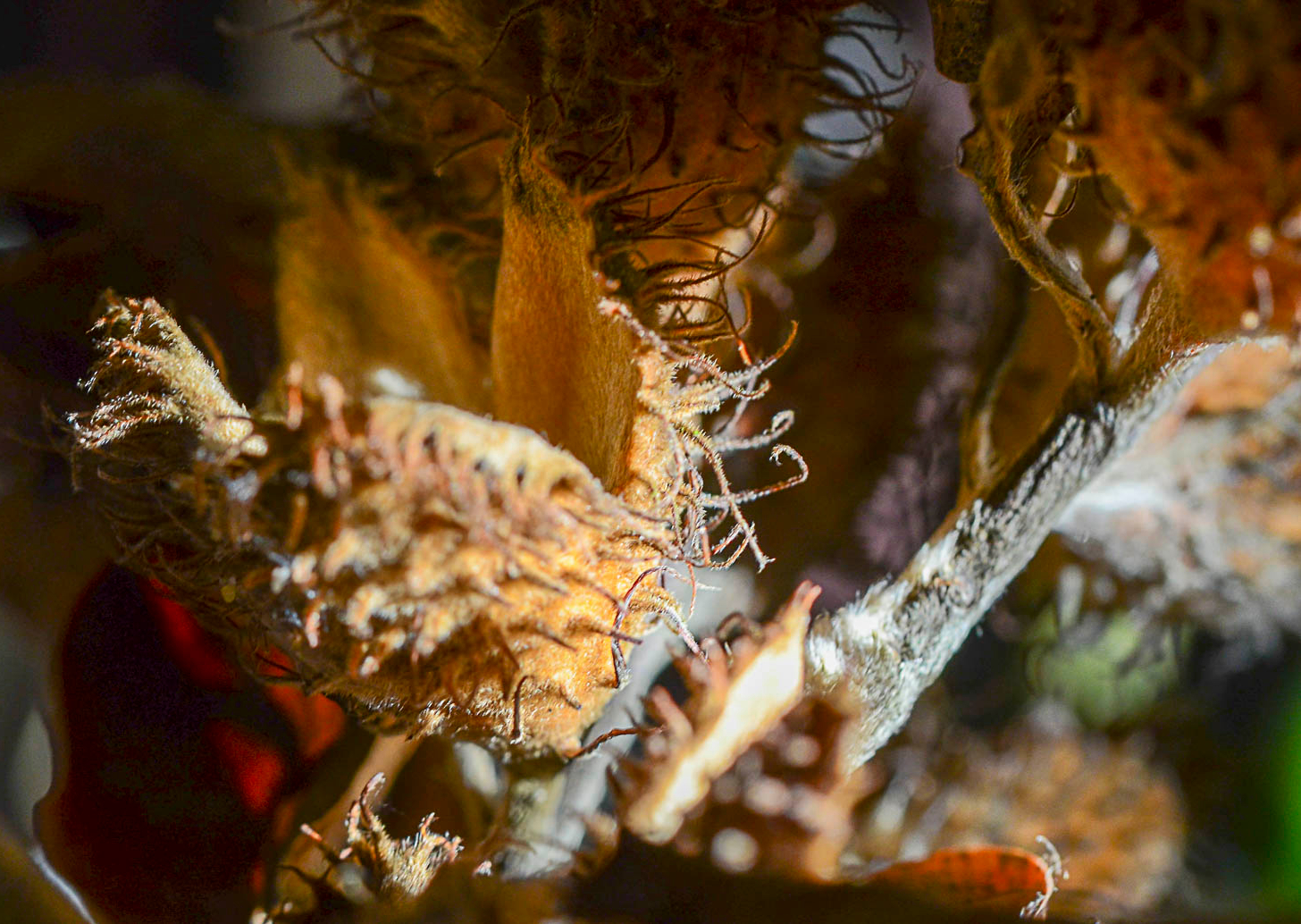
Finally, some of Nature’s own abstract art –
I used to wonder, How do artists think when they work with an abstract piece of art? Well, Pablo Picasso says that There is no abstract art. You must always start with something. Afterward you can remove all traces of reality.
– Sounds perfectly right to me.
David Gareja Lavra is a historical and architectural monument within the monastic complex of David Gareja. It was built during the first half of the 6th century under the guidance of San David Gareja, one of the thirteen Assyrian monks who arrived in the country at the same time. He came to bring Christianity to Georgia, and he founded around 15 monasteries in the arid and desert like nature on the border to Azerbaijan.
David Gareja is a Georgian Orthodox monastery complex located in the Kakheti region, and the complex includes hundreds of cells, churches, chapels, refectories and living quarters hollowed out of the rock face.
Despite the harsh environment, the monastery remained an important centre of religious and cultural activity for many centuries; at certain periods the monasteries owned extensive agricultural lands and many villages. The renaissance of fresco painting chronologically coincides with the general development of the life in the David Gareja monasteries. The high artistic skill of frescoes made them an indispensable part of world treasure. From the late 11th to the early 13th centuries, the economic and cultural development of David Gareja reached its highest phase.
We left early in the morning on a private tour, because the roads were all very narrow and bumpy – no buses could go there. Road builders and machines were constantly working and in some places we had to drive in the nearby fields instead of the road.
We wondered where these sheep would get any food, but loved to see them – and their shepherds on horses.
I loved the landscape, the low ridges, the long views and the serenity of the lines. We also saw gigantic areas with olive trees, according to our guide a co-operation with EU. When ready, the olives would be exported for the EU market.
We passed some salt lakes as well. Millions of years ago, the whole area was covered in water, and today these lakes are the only remaining waters to be seen. They have no outflow in this hot and dry area, so what is left is – salt.
This means that the soil is saturated with salt and difficult to cultivate. Even the ground water here is too salty. In order to use it as drinking water, it has to be filtered. This windy day, salt was flying in the air, and you could feel it on your tongue when speaking.
While driving, our knowledgeable guide told us of The David Gareja monasteries and their long history of wars and vandals, destroying and rebuilding. The Mongolians och Timur Lenk were devastating, but that was nothing to the Persians killing of 6000 monks celebrating Easter in 1615. After the prayer in all 15 monasteries, all monks were locked inside the churches and killed. The rich artworks and other treasures were destroyed or stolen. After this blow, the D G monasteries never came back to their former glory.
Then, what seemed a final blow, came after the violent Bolshevik takeover of Georgia in 1921 – David Gareja was closed down and remained uninhabited. In the years of the Soviet–Afghan War, the monastery’s territory was used as a training ground for the Soviet military, that inflicted damage to the unique cycle of murals in the monastery.
After the restoration of Georgia’s independence in 1991, the monastery life in David Gareja – Lavra – was revived. Today it is the home of 13-30 monks.
We only visited Lavra, and we were not allowed to see how the monks really lived their daily life. But, the guide told us that in one of the higher located caves, the monks had their meals – kneeling at stone tables.
The area is also home to protected animal species and evidence of some of the oldest human habitations in the region.
Part of the complex is located in the Agstafa rayon of Azerbaijan and has become subject to a border dispute between Georgia and Azerbaijan, with ongoing talks since 1991. But as there are strong economic and cultural ties between Azerbaijan and Georgia, they both have peaceful intentions in the determination of borders.
On leaving the monastery, my head was filled with thoughts of how a monk’s life must be out there in the desert. I wonder how young or old they are today, what their cave cells look like and how cold it is there in the long, lonely nights. Questions without answers.
A fact is – that Georgians are, and have always been, a strong people. They have been invaded by so many other powers, countries and people, but every time they have risen again. How they have remained so friendly and good at heart is a true enigma.
Tuesday Photo Challenge – Peace
Non-Violence is a bronze sculpture by Swedish artist Carl Fredrik Reuterswärd of an oversized Colt Python.357 Magnum revolver with a knotted barrel and the muzzle pointing upwards. Carl R. made this sculpture after singer, songwriter and peace activist John Lennon was murdered.
There are currently 16 copies of the sculpture around the world. An original standing outside the United Nations headquarters in NY.
This photo is from Lund, where I studied at the University for several years.
Du måste vara inloggad för att kunna skicka en kommentar.