Rainy Friday – The Last Magnolia Magic

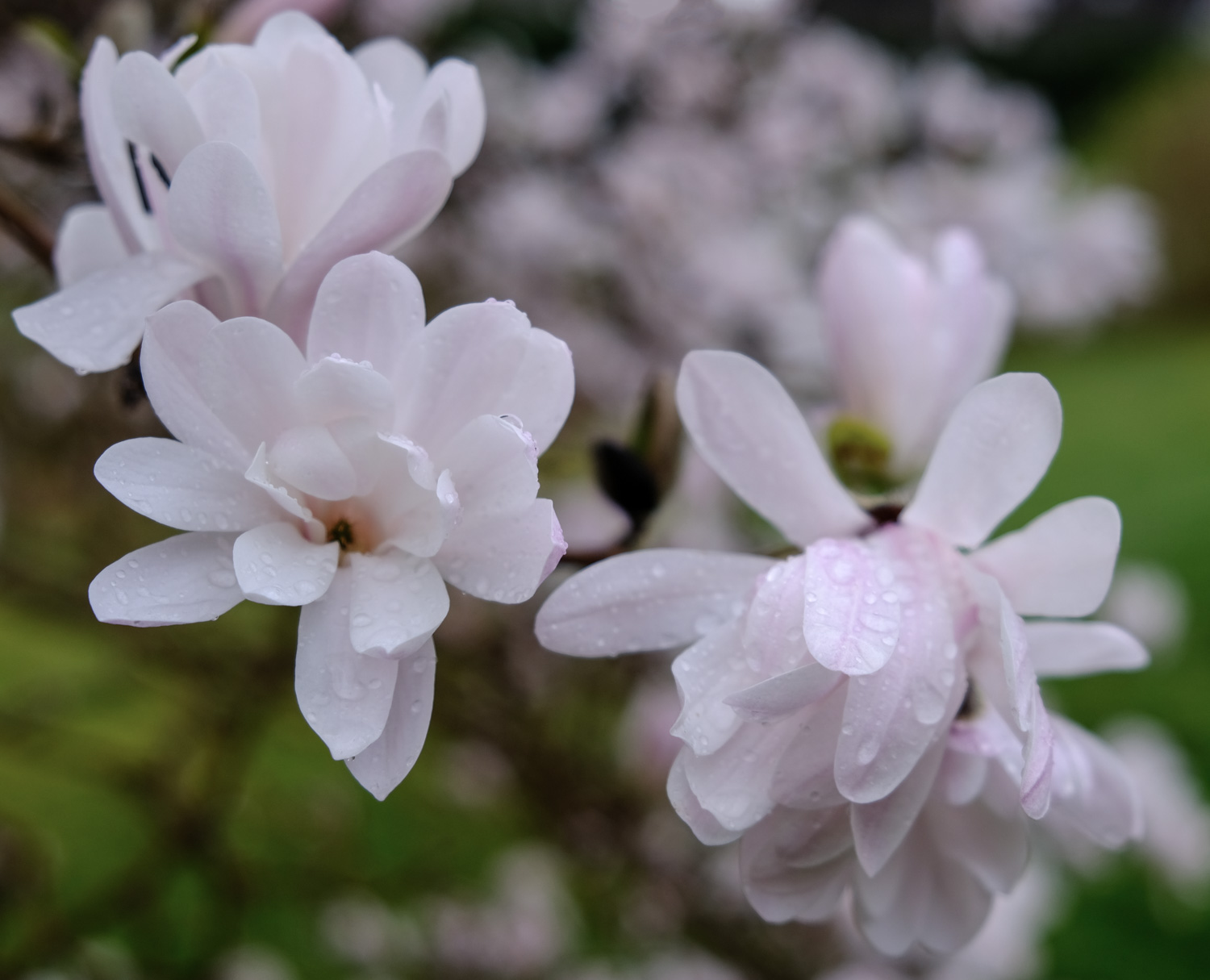
Today it was cold with heavy showers and only short glimpses of sun. I feel so sorry for my magnolia…last year she froze black after one single day in the sun, this year the lovely white and pink petals are heartlessly smashed to the ground.


I thought I would honor her beauty before she is gone. With raindrops in her hair, she is still a grand Lady in all her splendor. Wish you all a great weekend.

Thursday Thoughts – Beyond Beauty

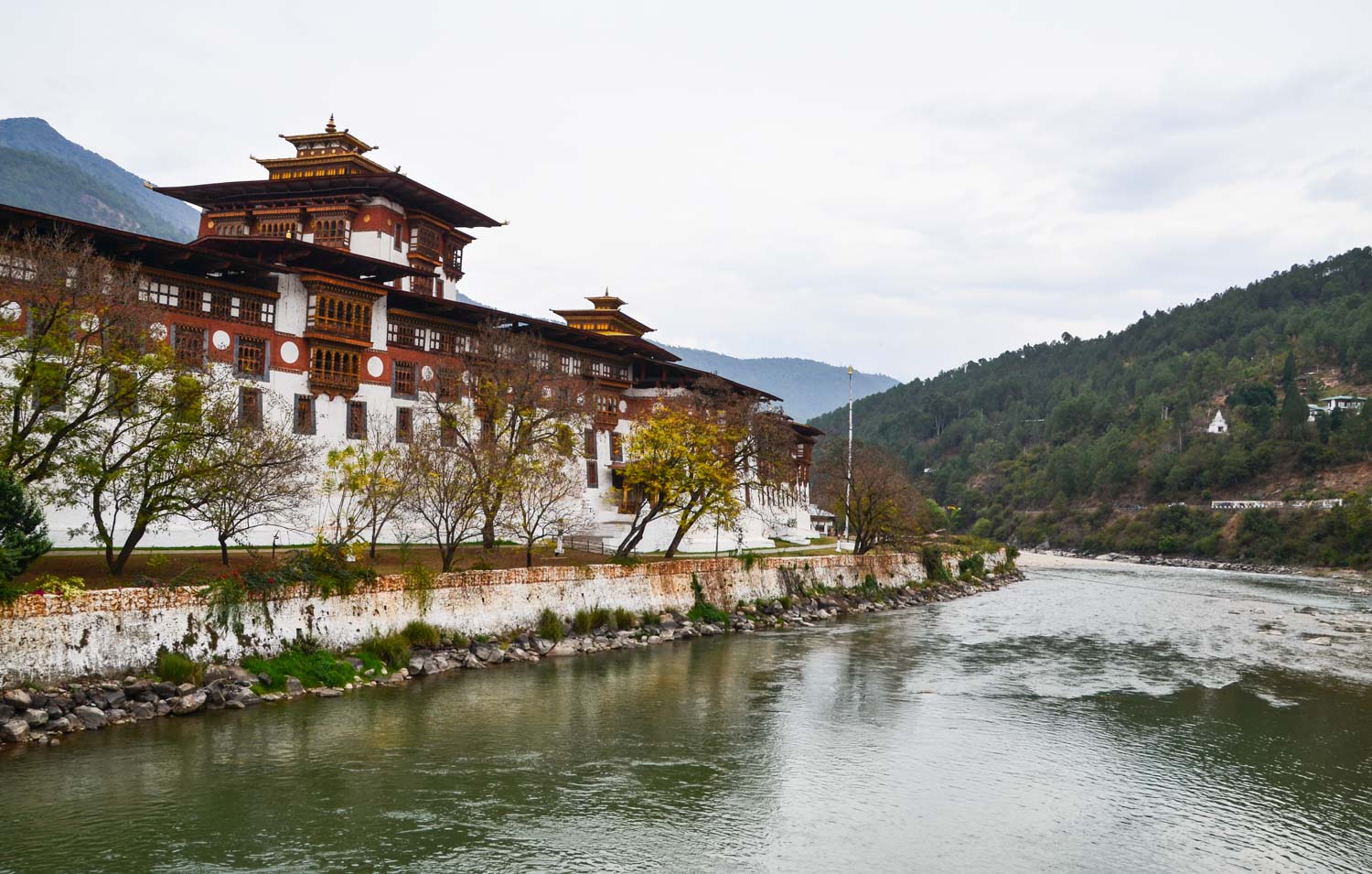
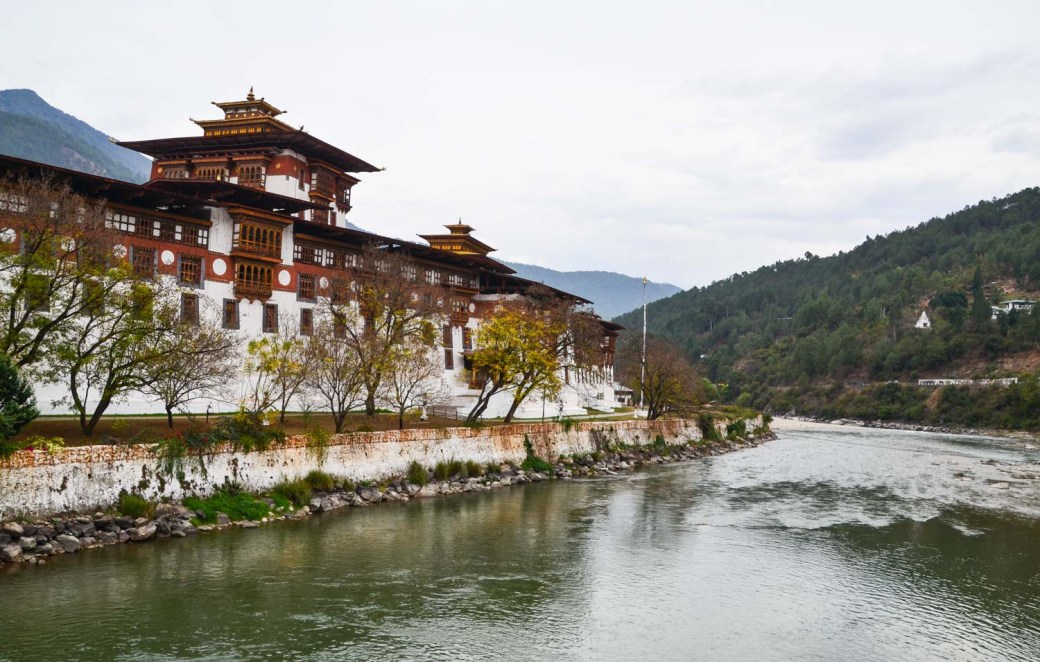
In the fertile Punakha Valley, where the Mo Chhu (Mother river) and the Pho Chhu (Father river) meet, lies Punakha Dzong – Pungthang Dechen Phodrang (Palace of Great Happiness). It was constructed in 1637 and maybe the most impressive building in Bhutan – also considered the most beautiful dzong in the country.
Bhutan 2018 663

The very size of Punakha Dzong is impressive, 180m long and 72m wide, but the elaborately painted gold, red and black carved woods, the brass roof and the location adds to the light perfection.

Punakha served as Bhutan’s capital for over 300 years and the first king was crowned here in 1907. Since the mid 1950’s, Thimpu is the capital, but Punakha is still the center for official meetings, the kings’ weddings and other important ceremonies.

The dzong, like all the other dzongs in Bhutan, has suffered fires several times, but is always restored. Due to its location by the two rivers, it is also vulnerable to the floods following climate change. In 1994 a glacial lake burst and destroyed parts of the building, and before that, in 1897, there was also a severe earthquake.

The temple is grand and holds thrones for the King as well as for the high Lama.

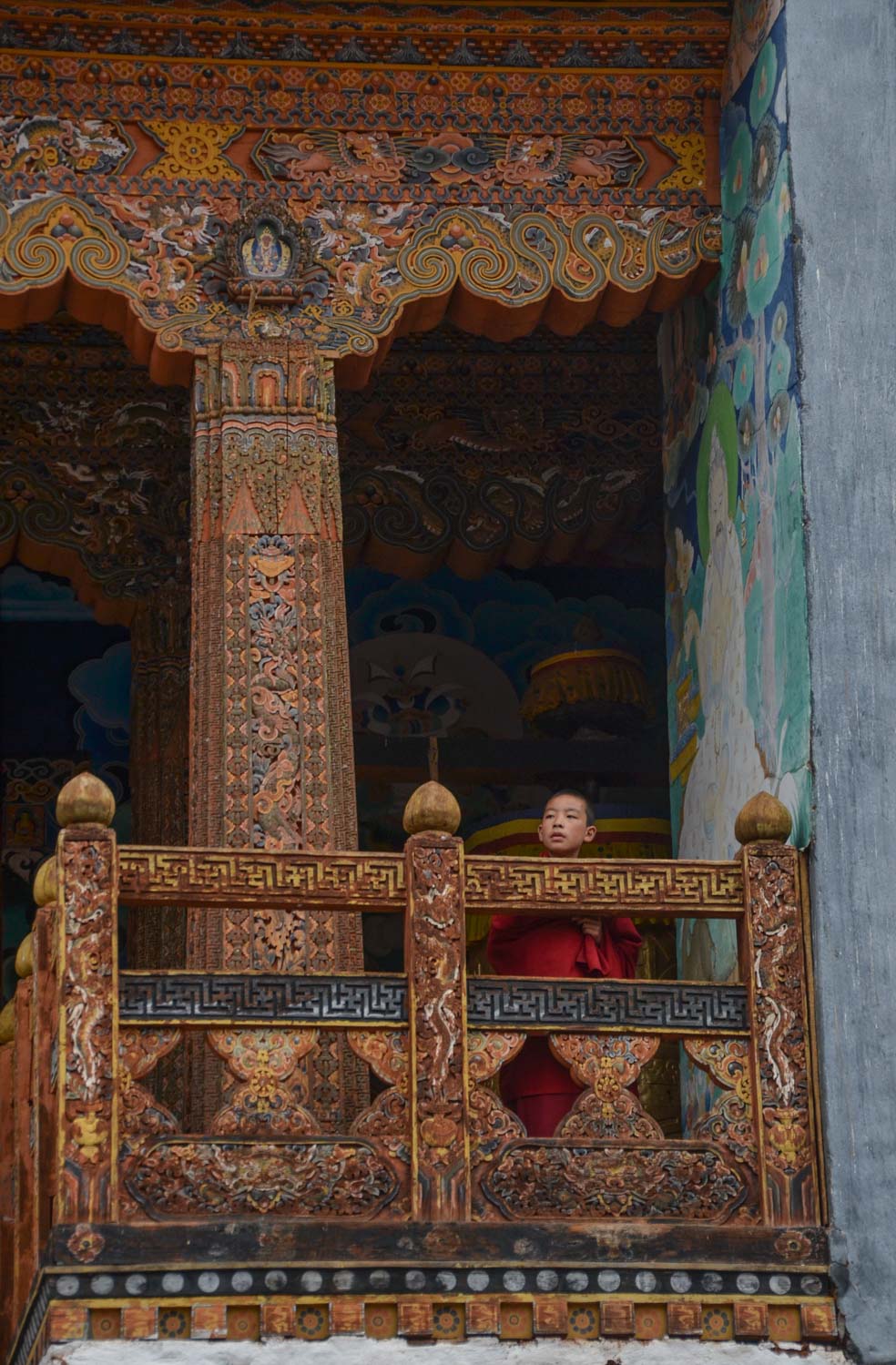
There are 300 monks in the dzong, and our guide told us that today the monastery schools are almost like ordinary schools – you take different subjects like science and mathematics along with languages and the scriptures.

The young monks are very curious and good at English.
The junction of the two rivers, seen from inside the dzong.

And so we left this magnificent fortress – without using the middle, golden steps, made for the King only. A breathtaking visit – only there was so much more we wanted to see, hear and learn – but maybe next time…

 

Man’s Best Friend – For Real

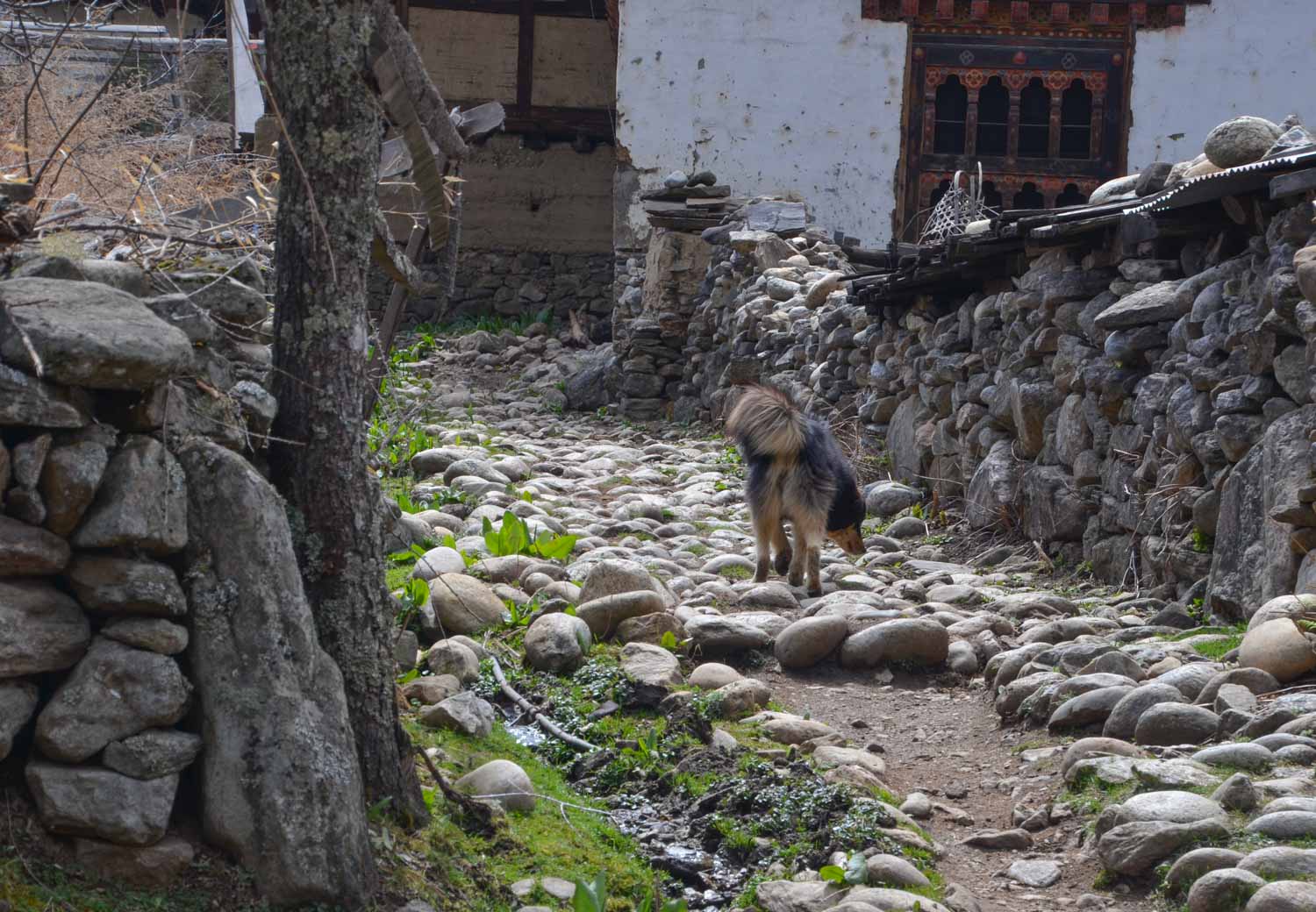
I have never, during my travels, seen so many dogs as I did in Bhutan. And definitely never dogs that well kept. They were everywhere, and they were all quite lovely. Our guide, Rinzen, told us that a dog chooses a door – a house – to which it will return and wait for food every day. And they are fed. With joy.

Here are some of all those that I met, and something of their tasks…named by me…
In Thimpu, we had a hotel with a view – of dogs. There was a construction site outside our window, and some dogs had made it their home. Here is, in short, their story with us.

There is rabies in the country, but mostly on the border to India in the southern part of Bhutan. Thousands of dogs have been vaccinated, and there are many sterilized as well. The government is dealing with it in a constructive and loving way.

Bhutan had many special dogs…but a couple of them more special than the others.

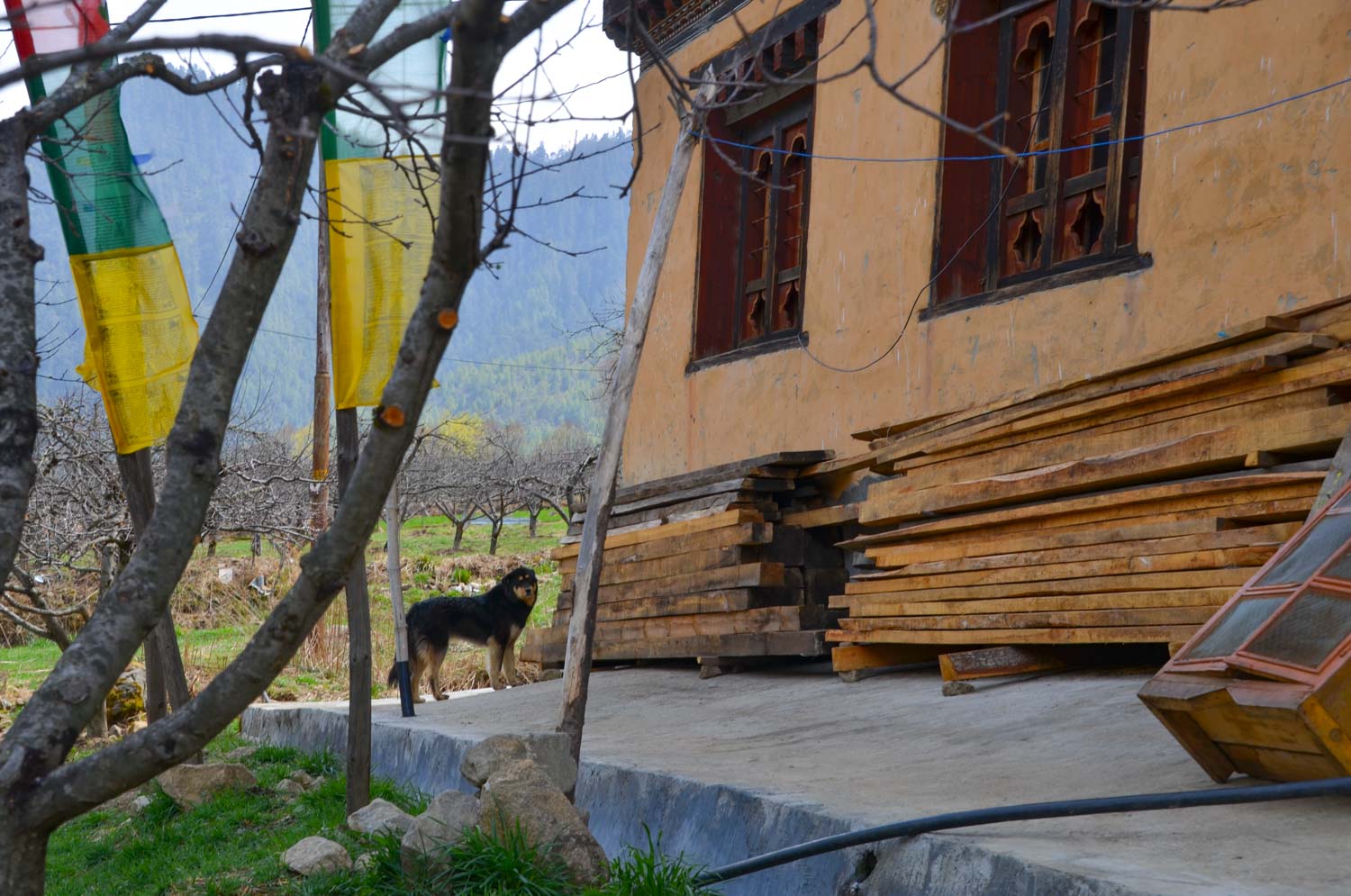
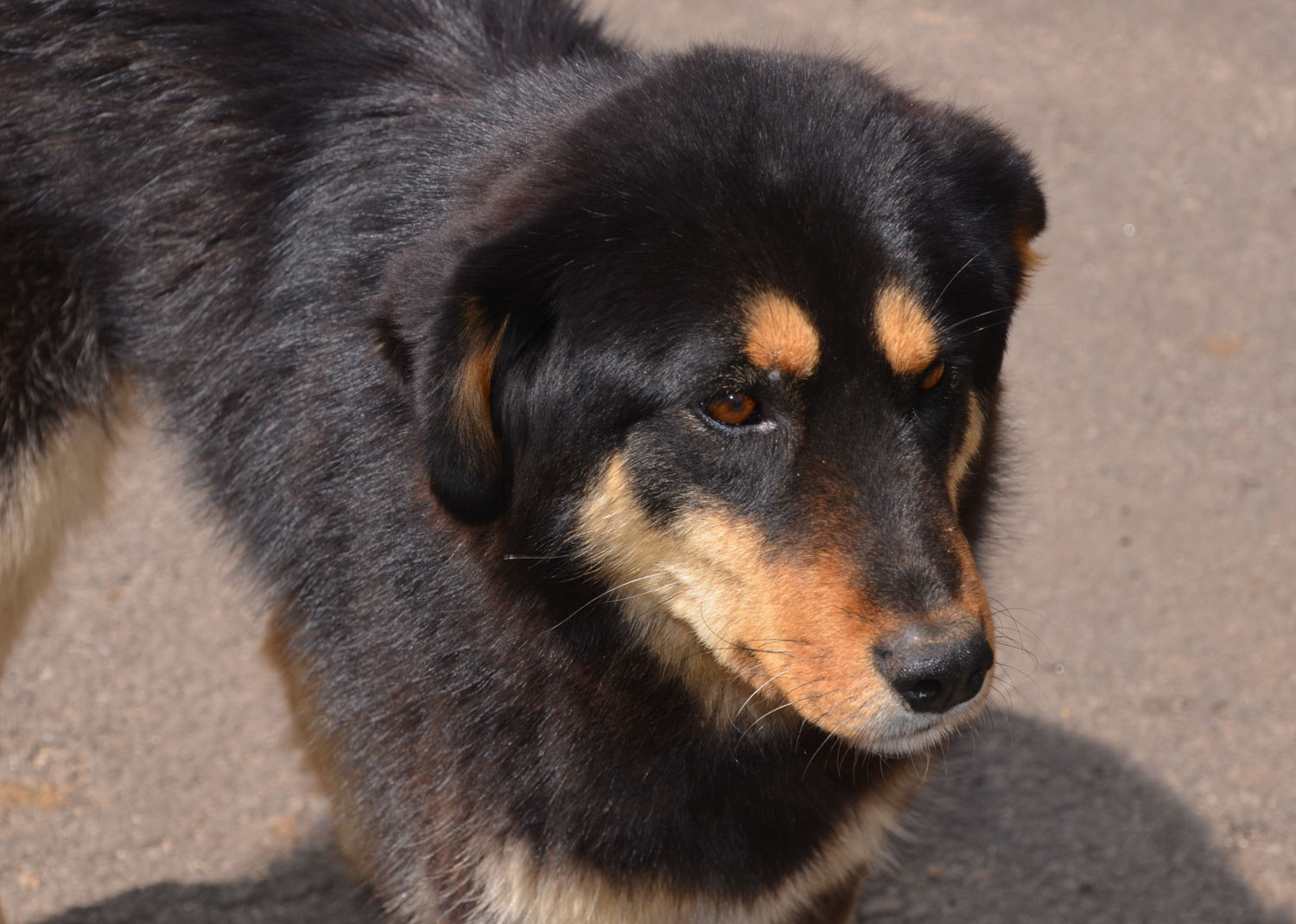
We had lunch at a farmstead one day – an interesting experience and very good food. Then, when we were about to leave, I saw a beautiful dog standing in the garden, looking at me. I lifted my camera slowly while talking to him. But no, he shied away and tried to hide around the corner. I kept talking in a soft voice.

Finally – when I had given up on a photo – he came out on the road to our car, went straight up to me and let me pat him on the head and on the back – touching his thick, shining coat. Surely you can understand from his gentle eyes how sweet he was.

Then he slowly turned around and walked away.


A Dancing Traffic Light

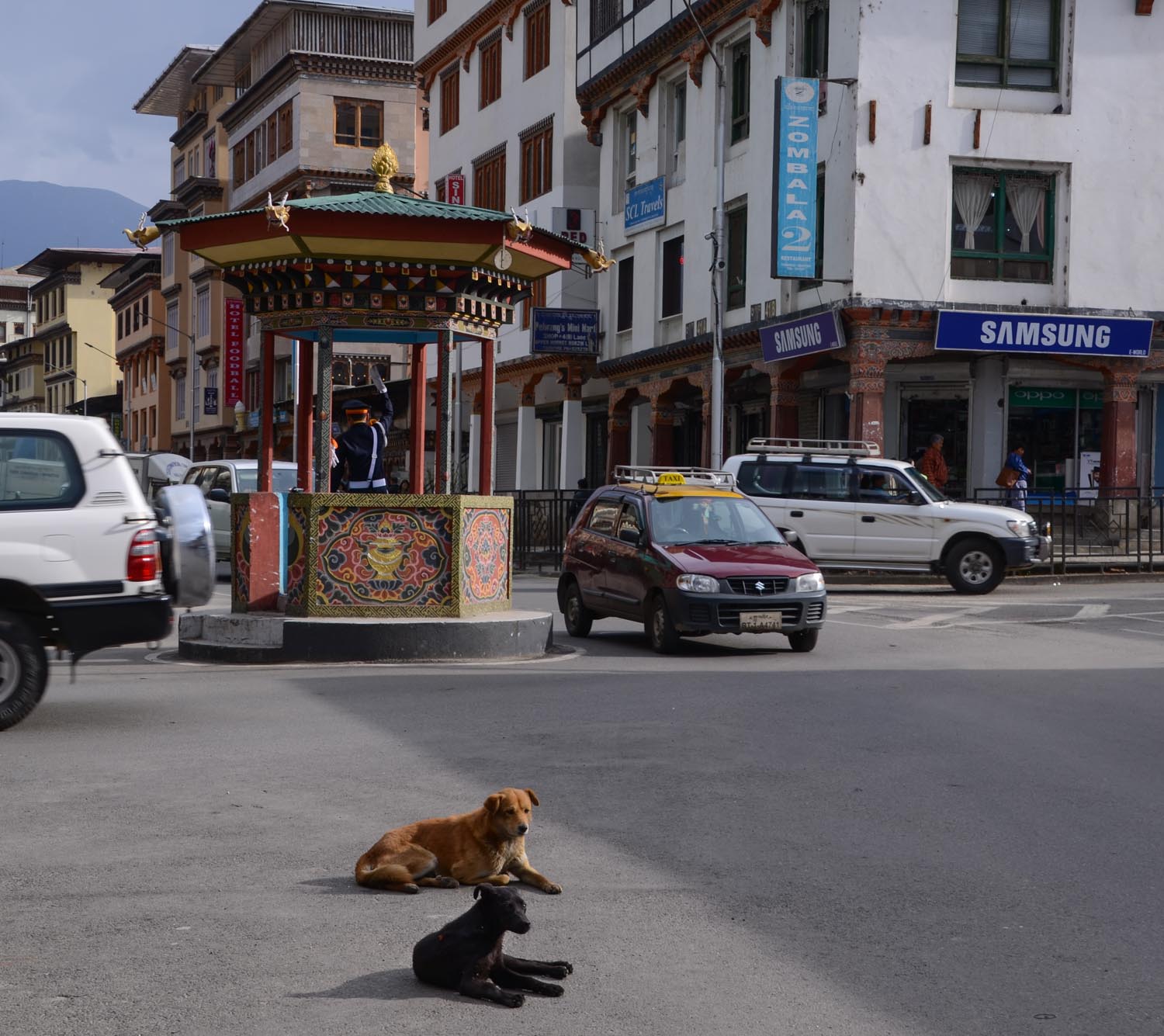
I remember watching a YouTube clip long ago, with Bhutan’s only traffic light. This traffic light is still there, in Thimpu, the Capital.

In the city center, we found it – and it was just about to be exchanged.

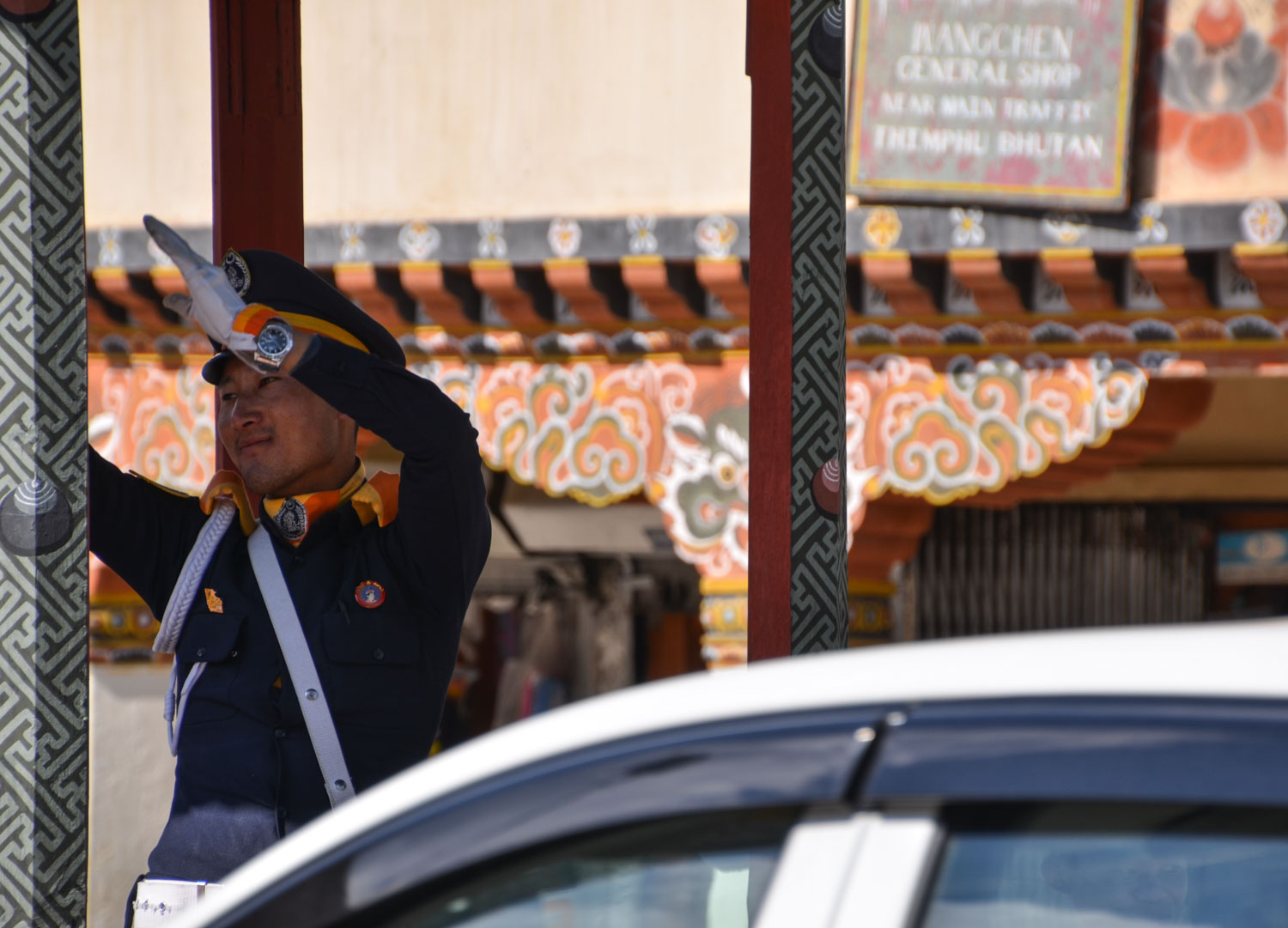
Here he is – the smiling, human traffic light – a complete joy to watch him at work! In fact, the Bhutanese got an ordinary traffic light in Thimpu some years ago, but they did not like it. After three days they wanted their human light back. And he danced, this young man – a pity I did not film him.

For a people that value family and human contact the highest, and also treasure nature, nature’s gifts and everything living – I can easily understand their decision. It works. He works perfectly. Everybody feels safe in his hands – even the dogs.

There are 80 000 citizens in Thimpu – and they love their traffic light! Take a look at these two clips. In the second one, notice the traffic sign for pedestrians behind him – the person on it is wearing a Gho. (The male national dress)

Earth Day

The theme this year is to put an end to plastic pollution.

I hope we will all do our best not to use plastic. Bags, for example. Every day in media, we see turtles, birds, sharks, etc. entangled and dying. Not to talk about all the micro plastics killing lives in the ocean and in our lakes. On a trip to Morocco some years ago I was shocked to see millions of plastic bags blowing over the desert sand.

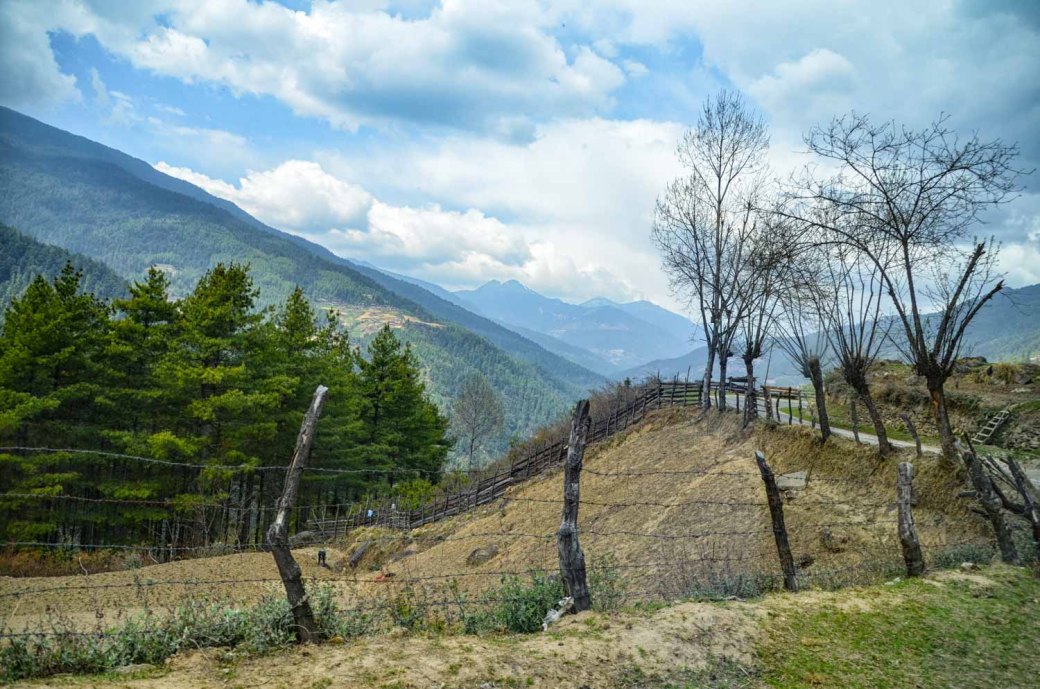
As I recently came back from Bhutan, I want you to know, they have banned plastic bags. So should we all. This is an easy starter, then it will be even easier to follow that road of sustainability. Even if you might think it difficult – just imagine what lies at the end of this winding and narrow path! And think of what awaits our planet, and us all, if we don’t follow that road. So let us Do instead of think and talk.


Saving the World – And the Contents of a Pouch

Listen to this hopeful and brilliant TED talk by an intelligent and sound soul. Humor and sensibility are essential in this approach. This is Bhutan and its people in a nutshell.

My contribution is my own pouch findings in Bhutan…Tshering will show you the whole potential of his Gho.


Thursday Thoughts – 108 Chortens and A Himalayan Panorama

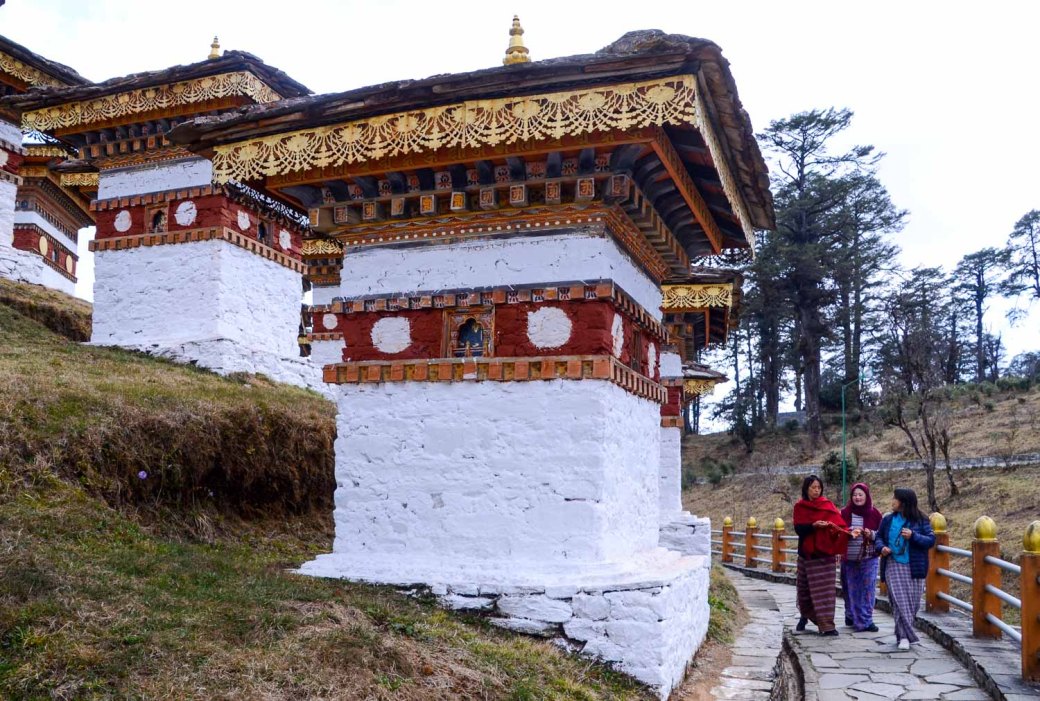
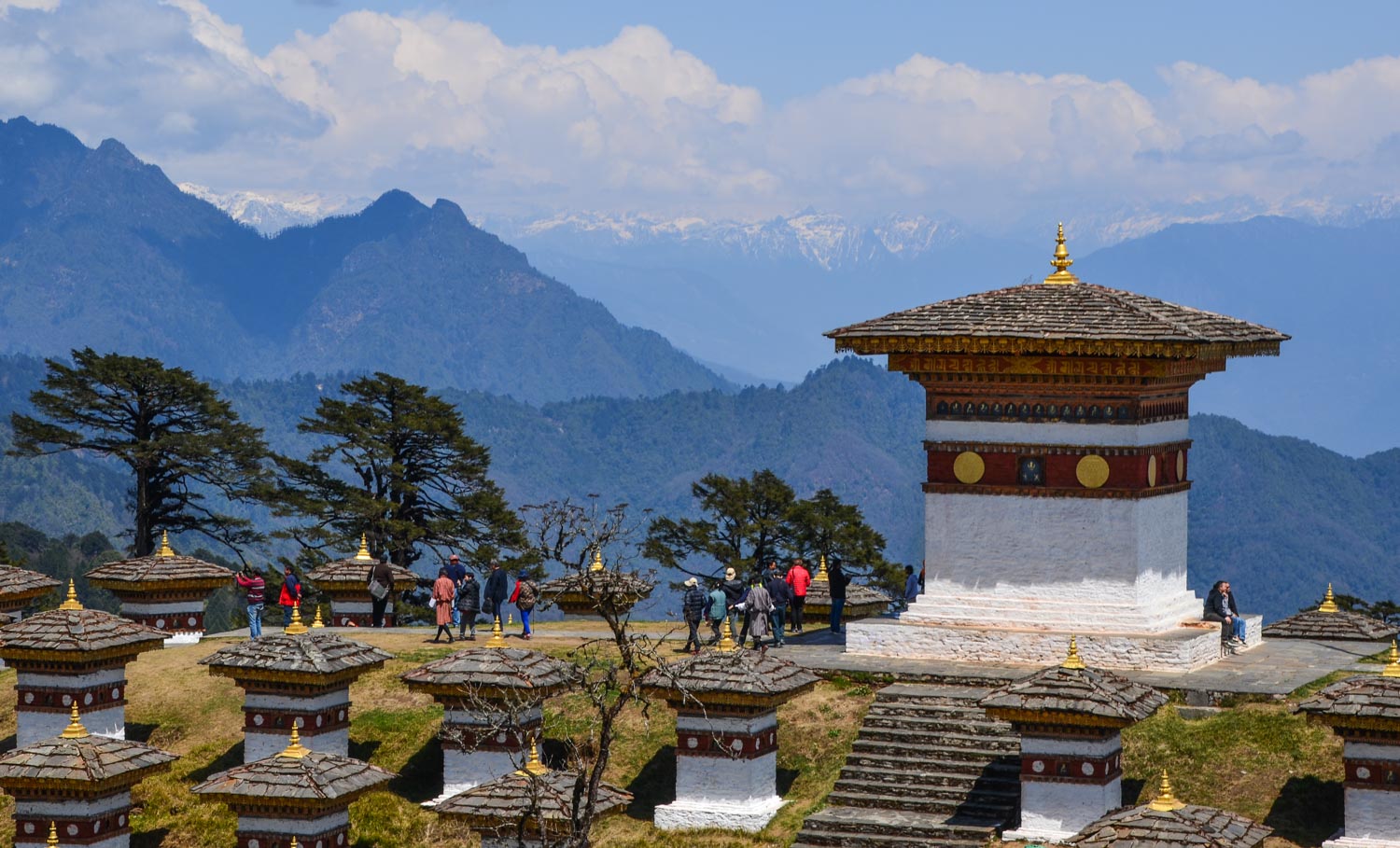
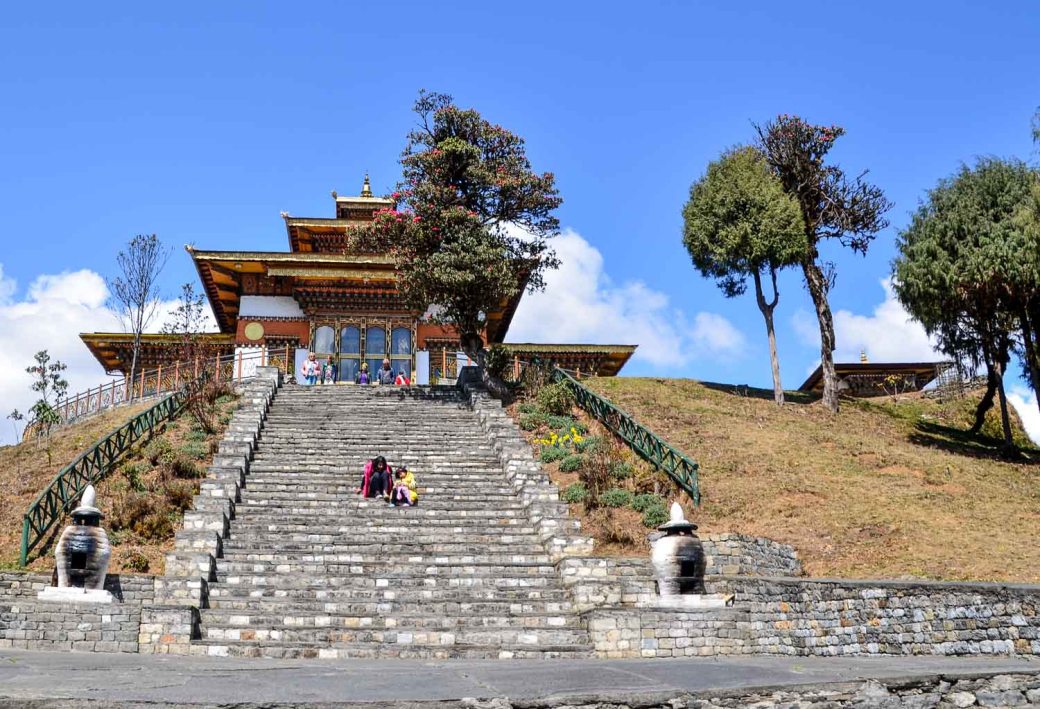
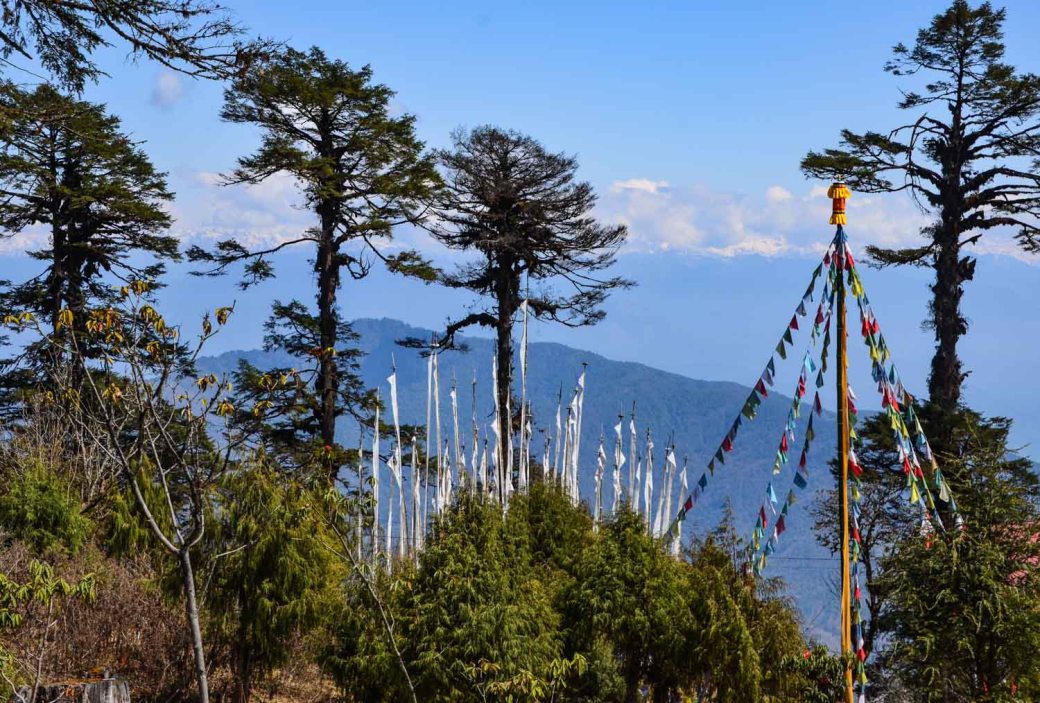
Between Paro and the Capital of Bhutan, Thimpu, the road takes you over the Dochula Pass (3140 m) with its 108 chortens. A chorten is a kind of stupa, often built at crossroads and passes to ward off evil. And all chortens contain religious relics.

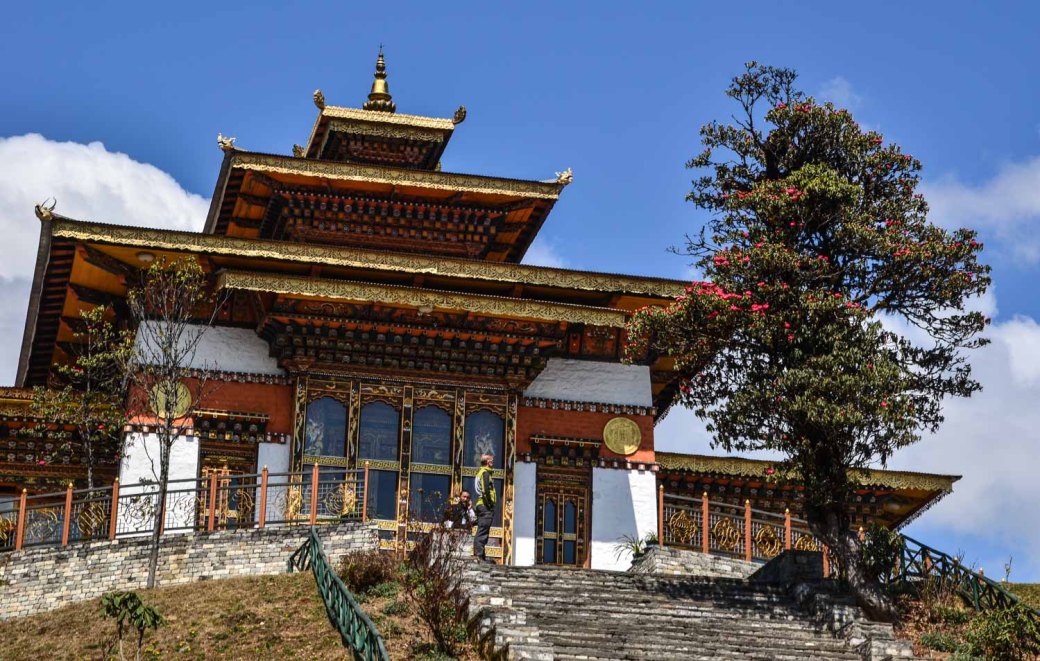
The Druk Wangyal Khang Zhang Chortens are red-band or khangzang chortens, built in a central hillock at the pass, under the patronage of the Queen Ashi Dorji Wangmo Wangchuk. In local language they are called ”chortens of victory”, because they were built as a memorial in honour of the Bhutanese soldiers who were killed in the December 2003 battle against Assamese insurgents from India. It also marks the victory of King Jigme Singye Wangchuck who dislodged the rebels from their camps in Bhutanese territory.

This is a peaceful place for slow walks – contemplating life, feeling the fresh air and nature’s beauty.

Circumambulating clockwise.

When the sun comes shining through – my heart shines too.

The rhododendrons and magnolias touch the sky.

After the completion of the chortens, the temple known as the Druk Wangyel Lhakhang was built in June 2008 – as a memorial to celebrate 100 years of monarchy in Bhutan.

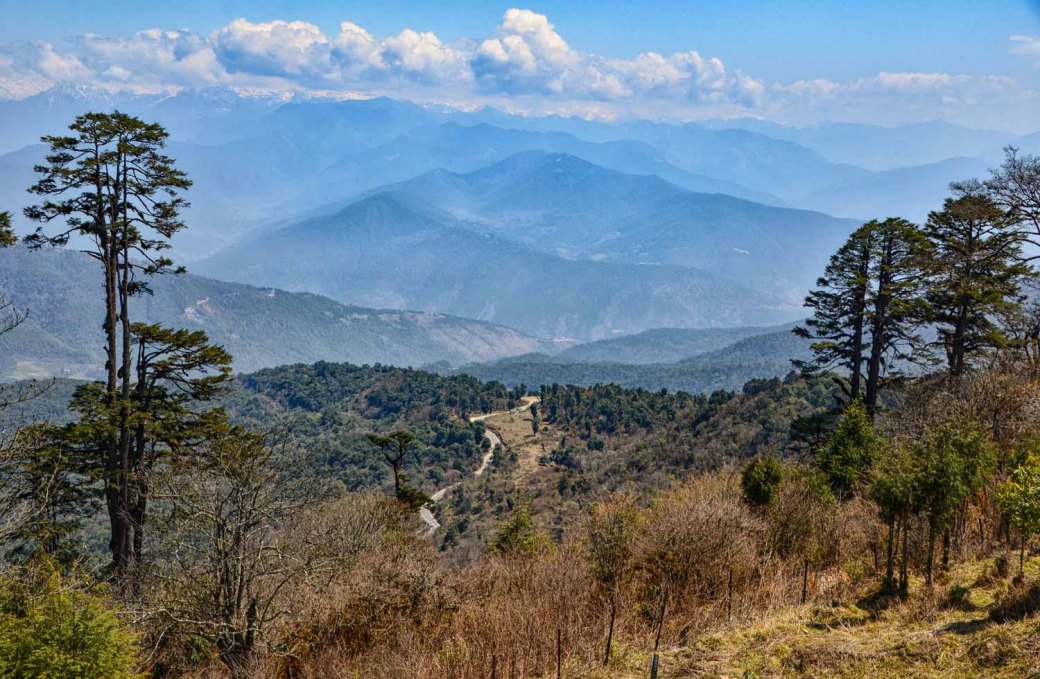
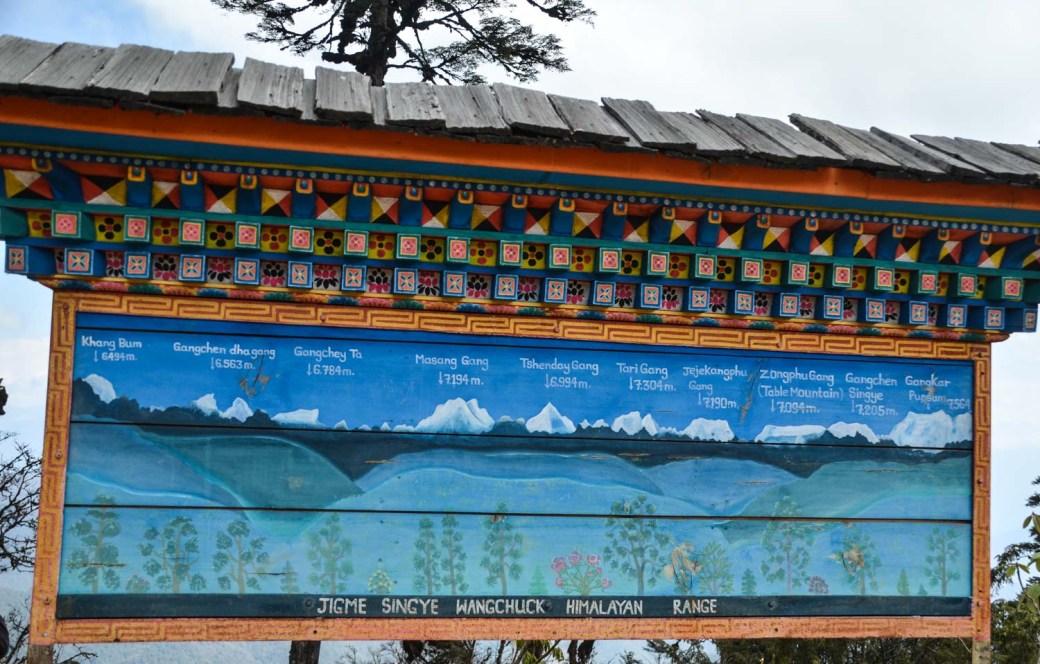
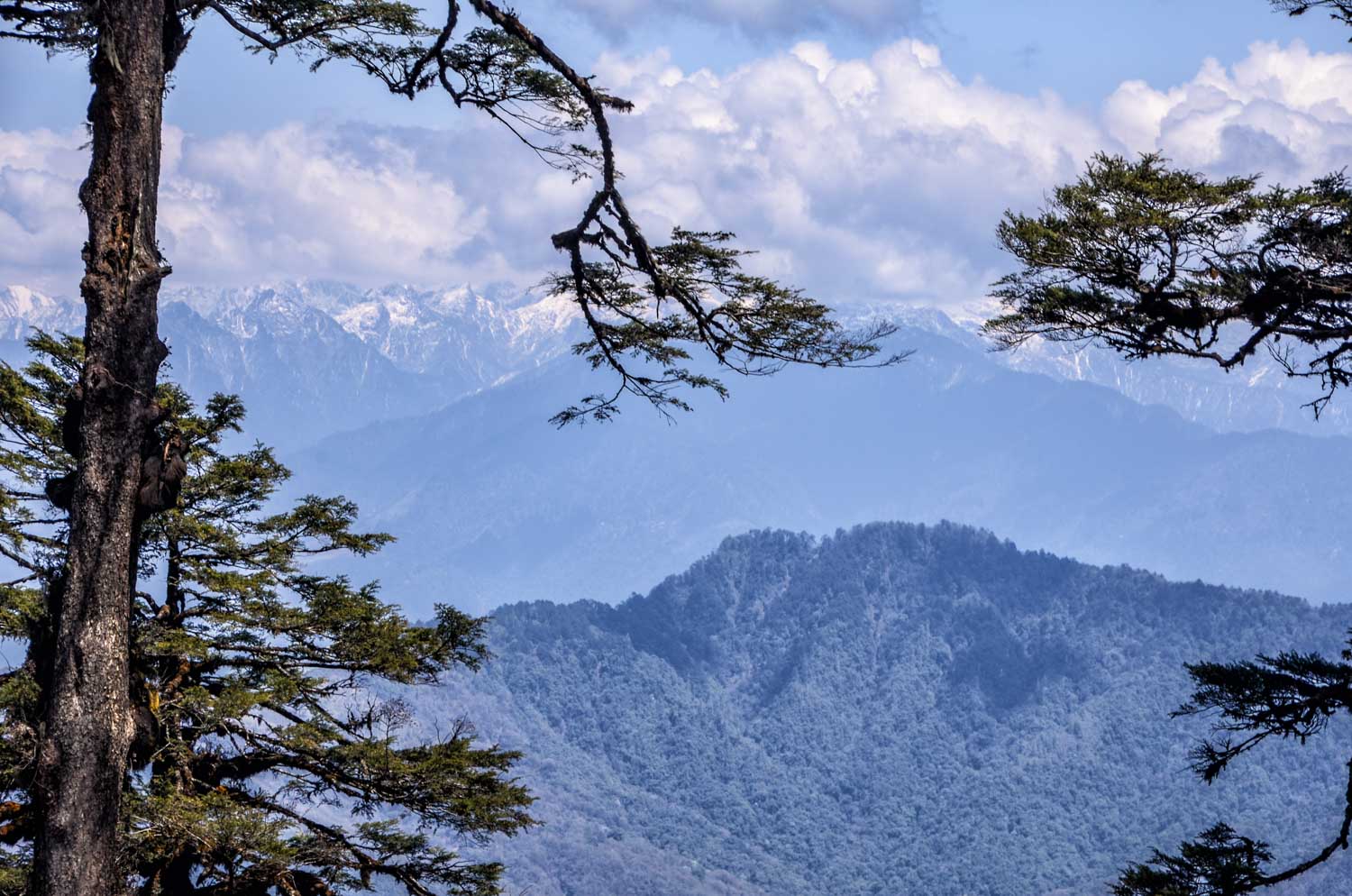
From the Dochula Pass you will, on a clear day, have a panoramic view of the Himalayan  range. The best time is in October/November, but we were still quite lucky this day.

On the far right you will find the highest unclimbed mountain in the world, Gangkar Puensum, 7564 meters. It is also the highest mountain in Bhutan.

Since 1994, climbing of mountains in Bhutan higher than 6,000 meters has been prohibited out of respect for local spiritual beliefs, and since 2003 mountaineering has been completely forbidden.

But somewhere, far away behind the treetops, these enigmatic giants are waiting…


Walking Home – Slow Contemplation

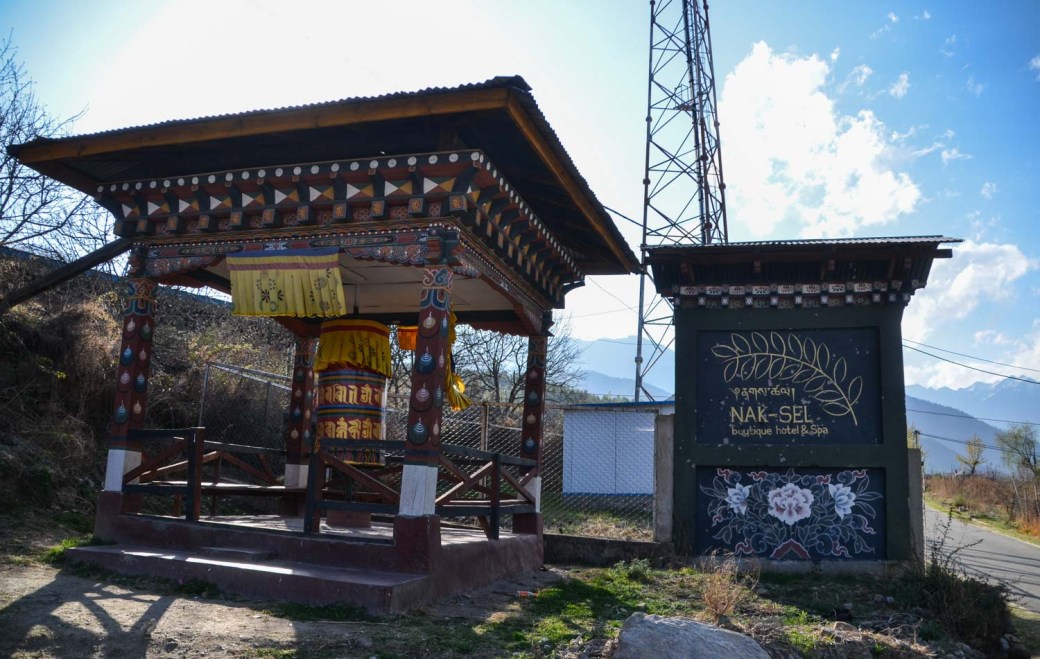
After Paro Tsechu, we decided to walk home to our hotel, Nak-Sel, in the lovely evening light. Some kilometers that would take about an hour on the narrow, dusty road.


A walk well worth the effort in the thin air – giving us the chance to take in the beautiful countryside and to talk to some of its harmonious inhabitants.

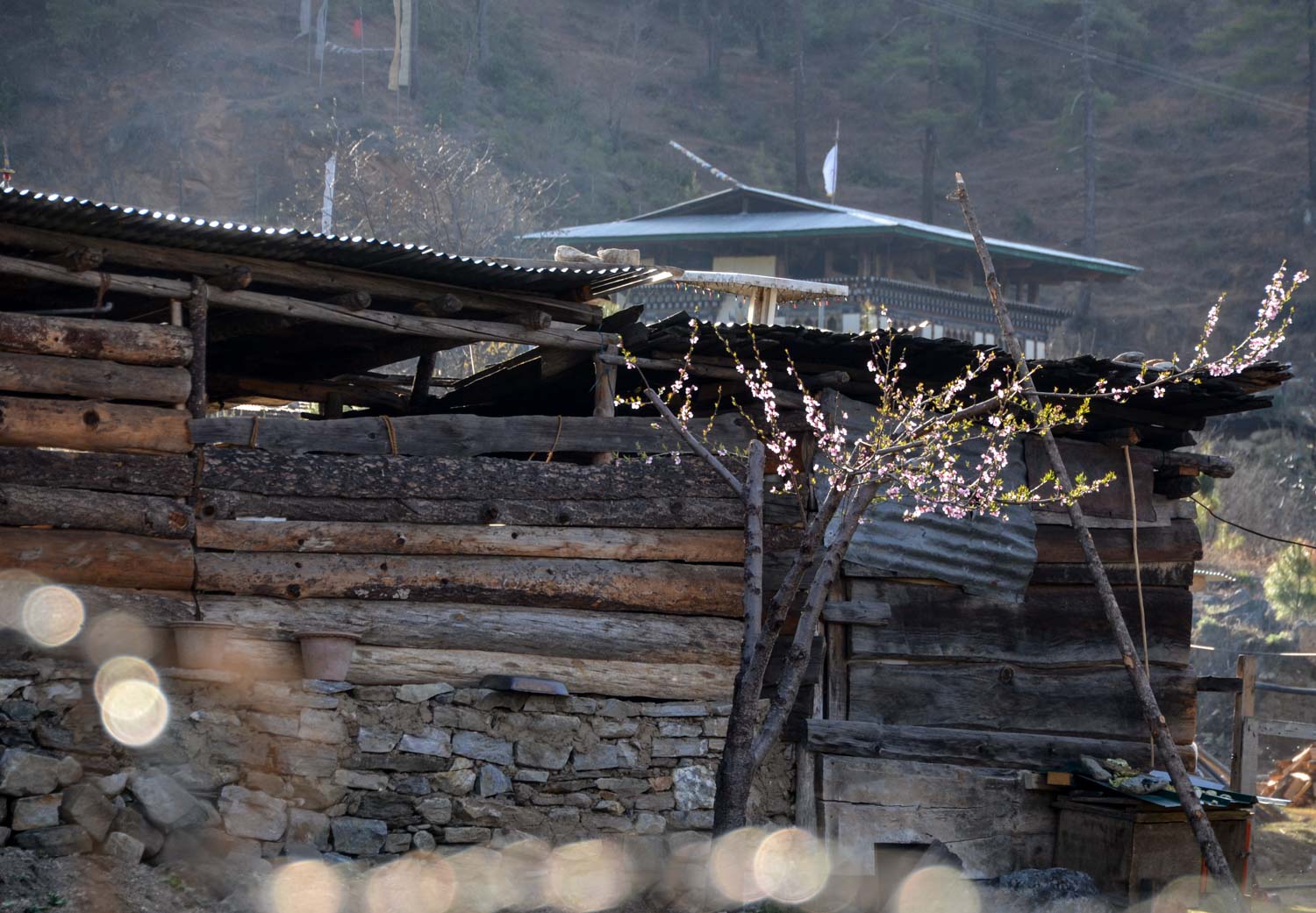
The Bhutanese houses are built to dry the hay on the open upper floor. Even if you don’t have any hay, you build this way – many washed clothes were hanging in this space, and old furniture leaning on the structures.

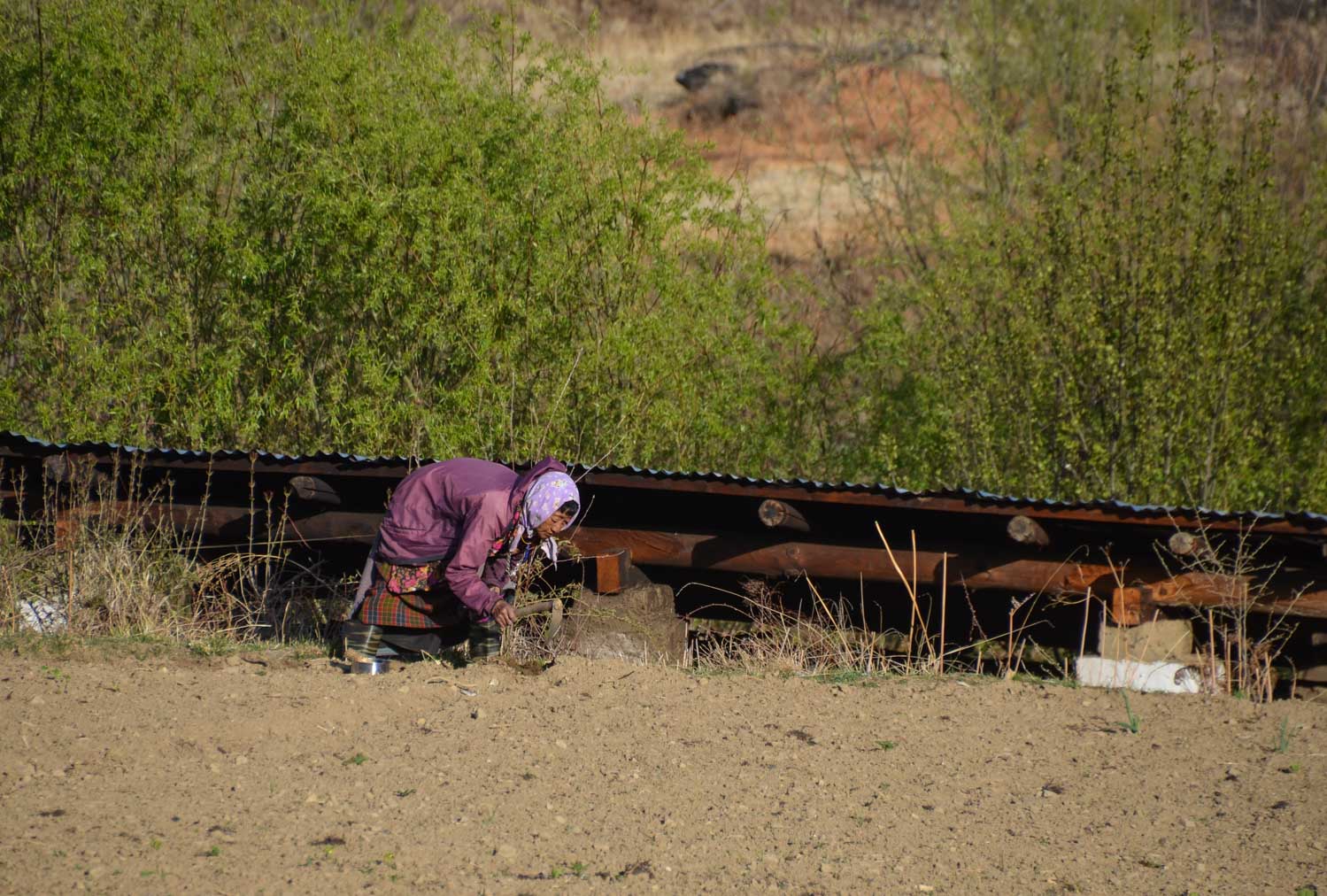
The last hours of light for hard working farmers.

The old farmsteads lay mostly quiet in the setting sun – and the first cherry blossoms  enchantingly aglow.

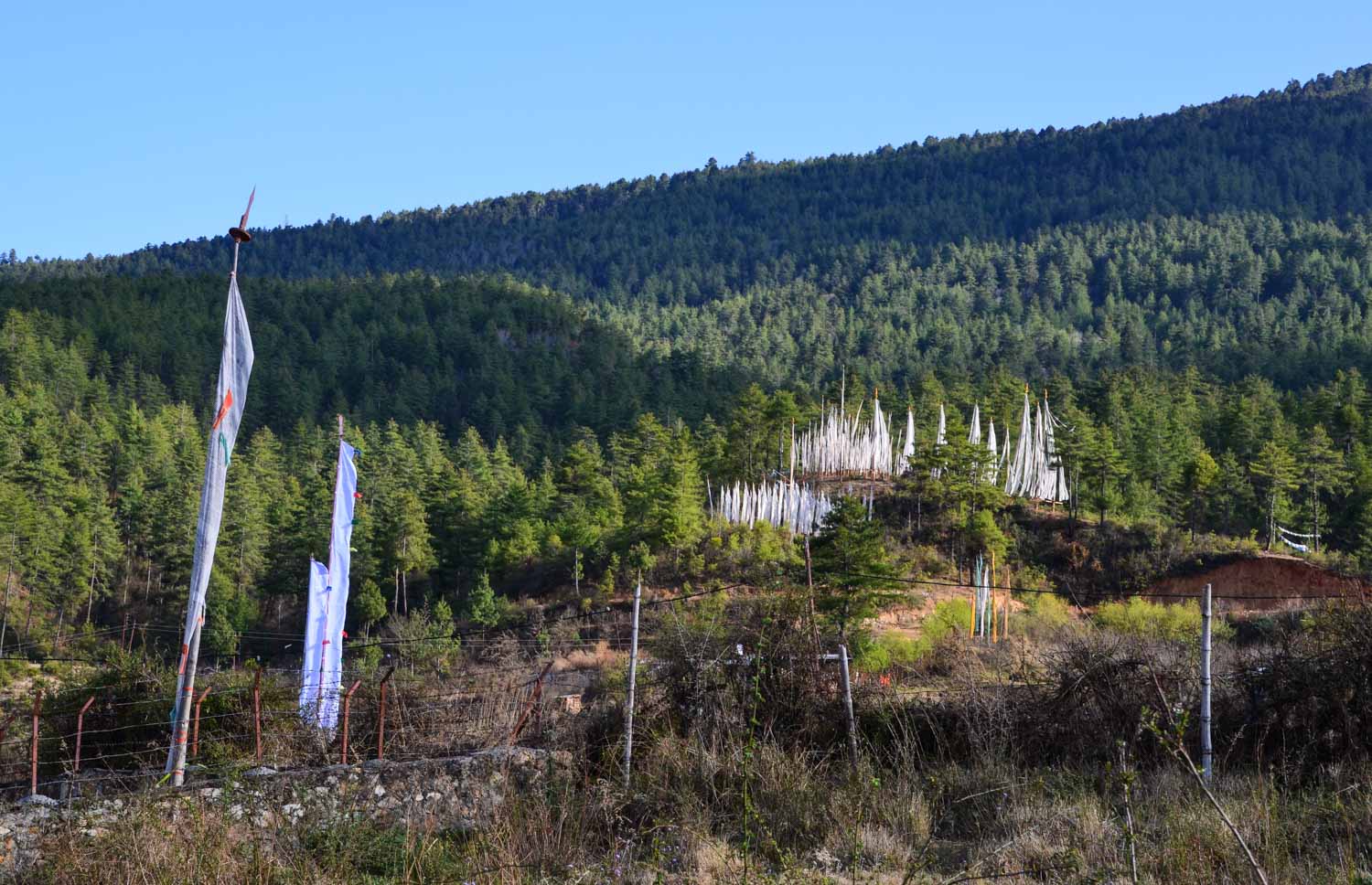
Always 108 flags for the dead. Everywhere on the hills, where the wind is blowing. Naturally there is a religious meaning, but according to our guide, the exact reason to just 108 is lost in history.

An overwhelmingly interesting day had come to an end. And with the stunning views of Jomolhari, 7326 meters, we reached Nak-Sel and went to enjoy a lovely dinner.

I Had a Dream Tonight

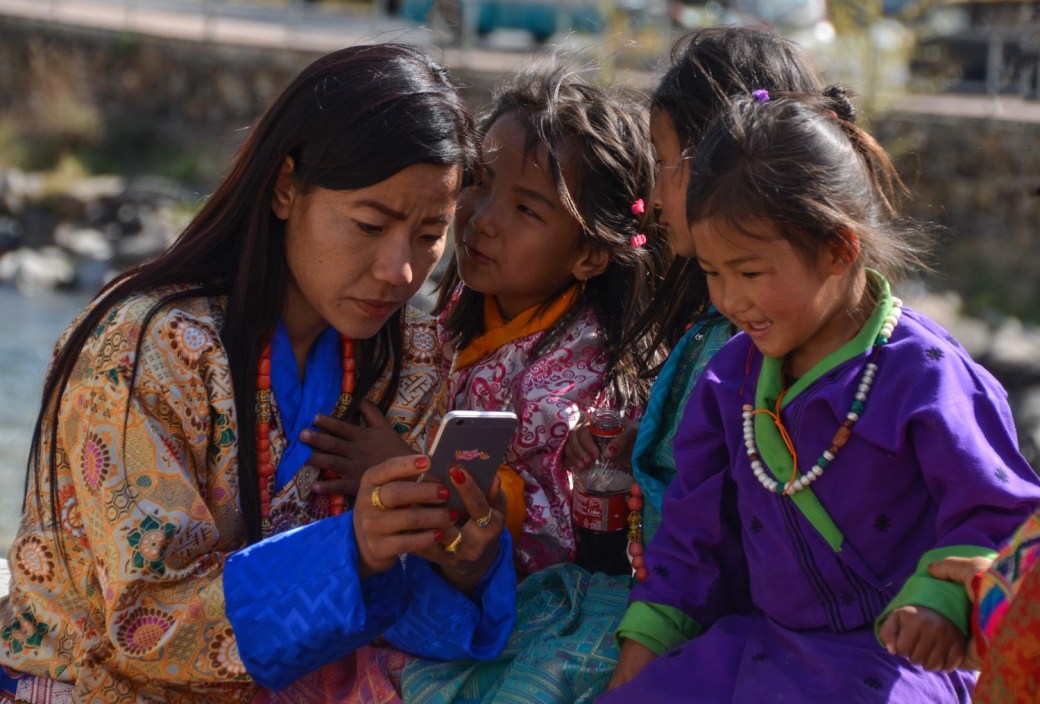
I never saw a child carrying or using a mobile phone in Bhutan. And even when grown-ups were using them, no child seemed interested. They just smiled,  and played with their dolls, bicycle wheels or footballs…

Always smiling with that open face you never see in the western world any more.

I had a dream

The Streets of Paro

At 2200 meters above sea level, Paro hosts Bhutan’s international airport and about 15000 citizens. A charming town with its most famous landmark about 10 kilometres outside town: Taktshang (Tiger’s Nest) Hermitage on the face of a sheer 1,000-metre (3,281-foot) cliff. This was our goal for the last day of our tour.

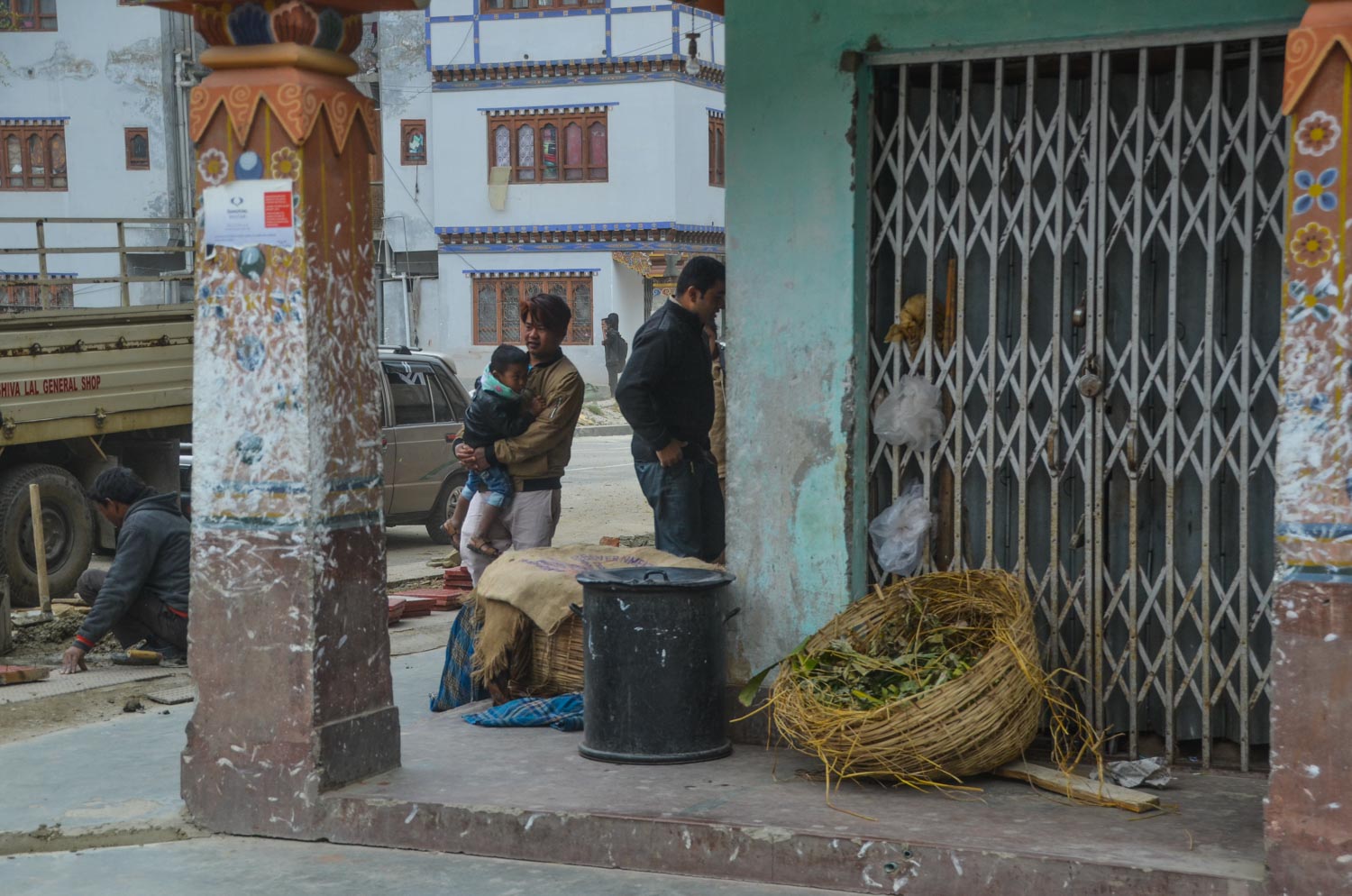
Street life is rather lively, and throughout our trip, the towns and villages were constantly expanding.

Architecture is restricted to the old ways, and no matter the material, you have to build and decorate your house according to tradition.

Roadwork everywhere too. The two, three roads connecting the villages of the valley was built by India. The workers stay for many years to keep up the road quality.

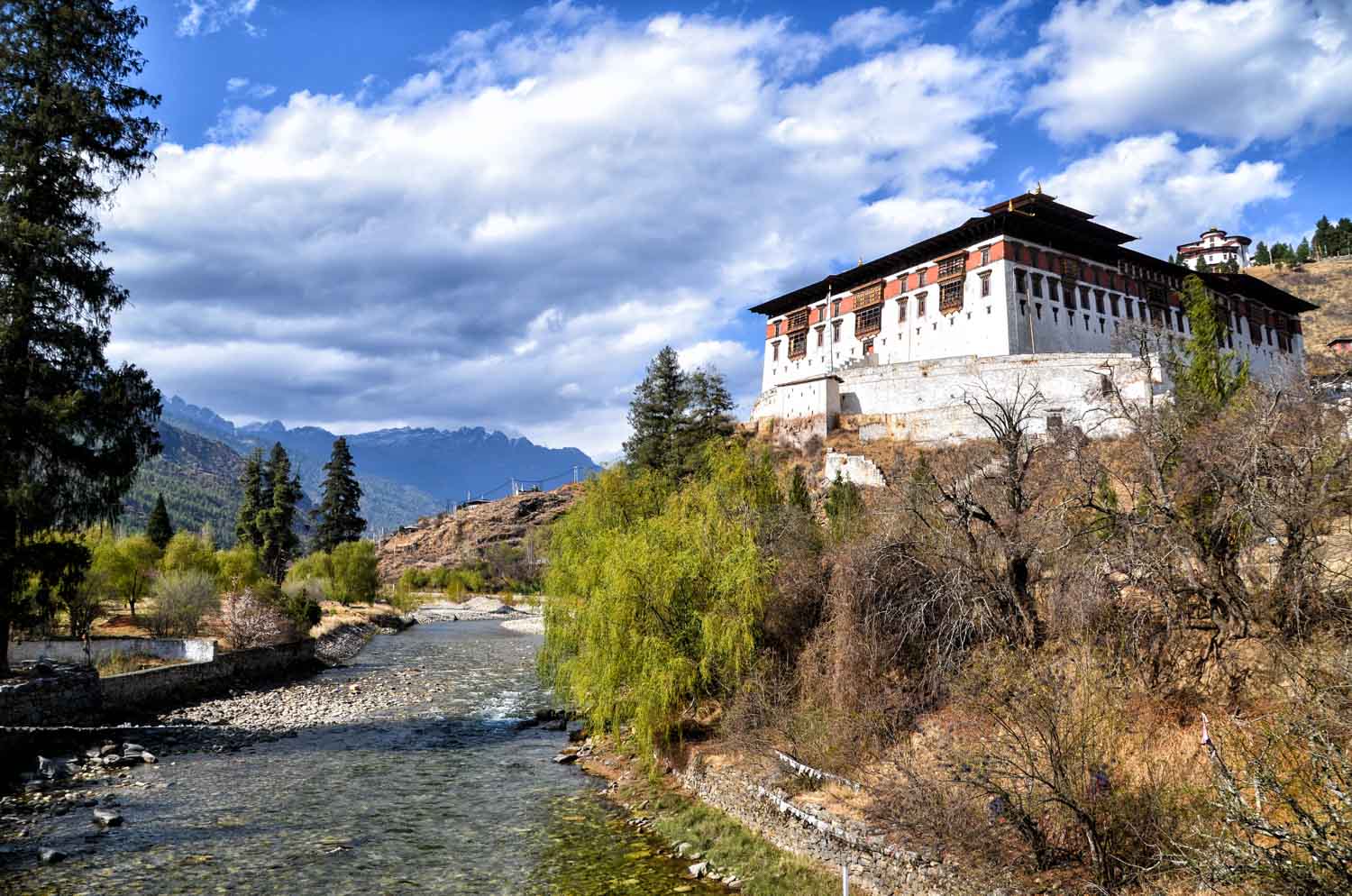
The bridge over to Rinpung Dzong. The Dzong (a fortress/monastery) was built in the beginning of the tenth century. The famous festival, Paro Tsechu, is held here every year – and we visited on our first day in Bhutan.