Wordless Wednesday


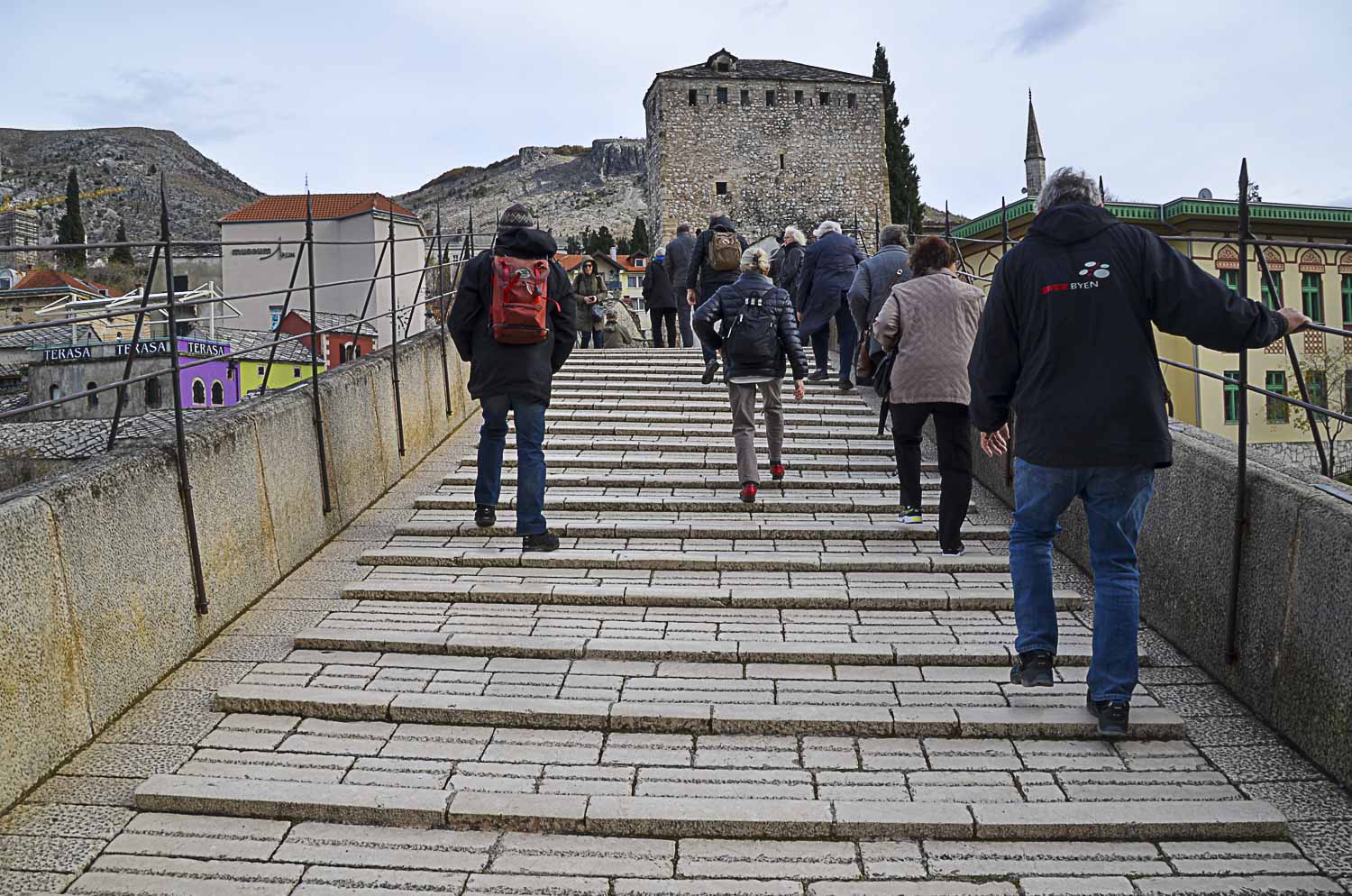
One of my favourite images for 2019 was one of the Stari Most. I think its special beauty and story is worth a post of its own.
Ever since I was a child I have wanted to see this city and its magnificent bridge. But the Old Bridge was destroyed on 9 November 1993 during the War in Bosnia and Herzegovina. I was devastated to see the war ruining so many people’s lives, the beautiful city and the famous bridge. In my classes, I had several students whose whole family had fled this area trying to escape the terrible war. I am glad they found a new, safer home in Sweden.
Mostar was named after the bridge keepers (mostari) who in medieval times guarded the bridge. The Old Bridge is today one of Bosnia and Herzegovina’s most visited landmarks. They say the dangerous jump from the bridge into the cold Neretva waters is still a rite of passage for boys in Bosnia and Herzegovina. We did not see anyone jumping though, but I guess the waters are even more cold this season…
More history: When the town was fortified between 1520 and 1566, the original wooden bridge was rebuilt in stone. Stari Most was erected in 1566 on the orders of Sultan Suleiman the Magnificent and spanning 28 meters of the Neretva river (92 feet) and 20 meters (66 feet) above the water level, it quickly became a wonder in its own time.
A monumental project to rebuild the Old Bridge and restore surrounding structures and historic neighbourhoods was initiated in 1999 and mostly completed by Spring 2004. In July 2005, UNESCO inscribed the Stari Most and its closest vicinity onto the World Heritage List.
This single-arch stone bridge is an exact replica of the original bridge that stood for over 400 years and was designed by Hajrudin, a student of the great Ottoman architect Sinan. The two towers, Halebija and Tara, have always housed the guardians of the bridge and during Ottoman times they were storehouses for ammunition.
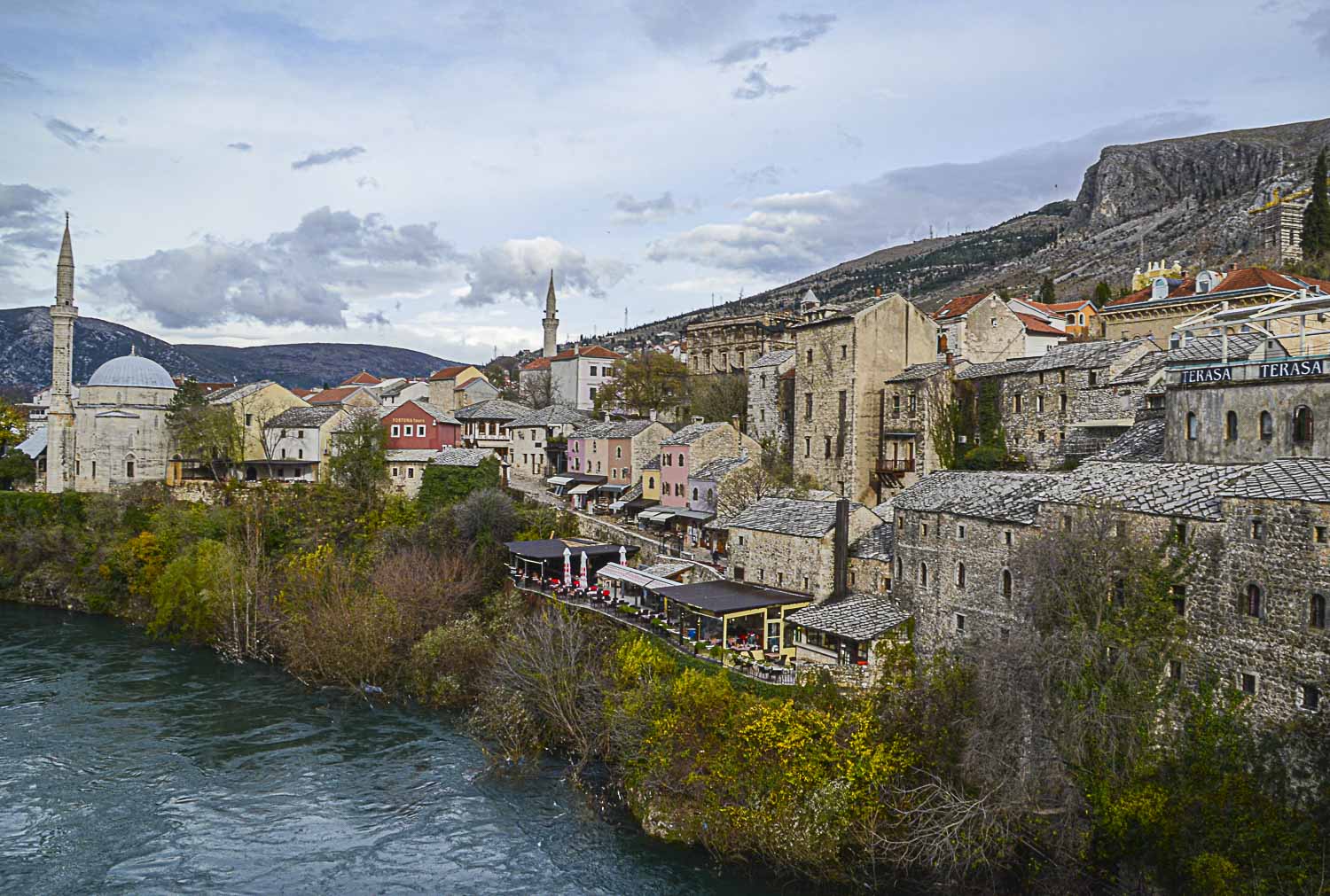
Crossing from the west bank to the east you’ll also be crossing the ancient point where East and West symbolically met. To the right is the oldest mosque in Mostar: the Cejvan Cehaj Mosque built in 1552.
A must is also the visit to Old Bazar Kujundziluk, an Ottoman-era market that maintains its original atmosphere with cobblestone roads and narrow streets lined with artisan shops –
– and of course – Cats.
It may have been rainy some days on our tour, but we were very grateful to visit the Balkans during off season – letting us thoroughly enjoy and contemplate their many historic gems.
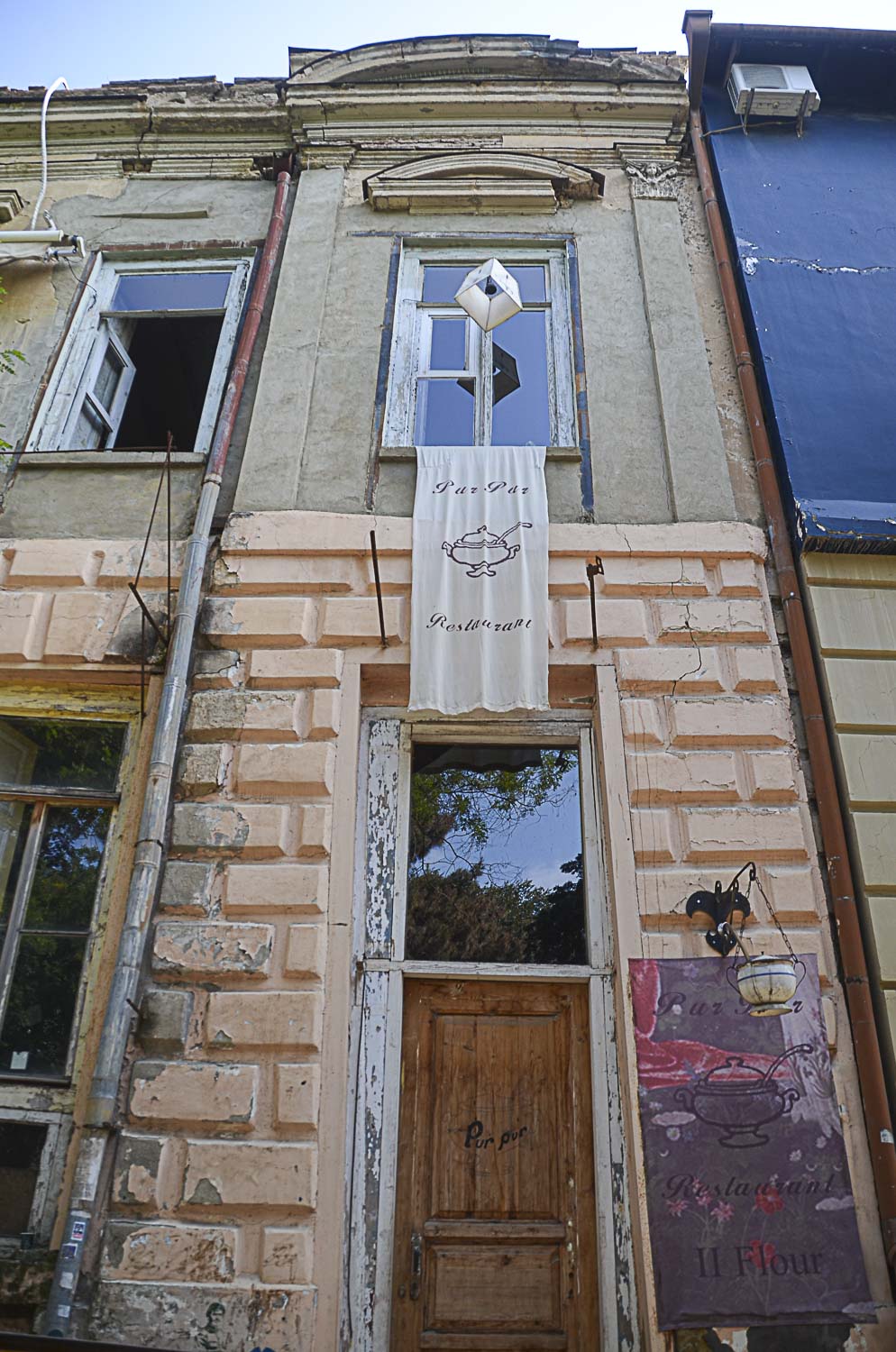
This is Pur Pur, another magical restaurant In Tbilisi, Georgia.

A bit hard to find though – in the middle of this big construction site called – Tbilisi. Luckily there were some signs on the way…
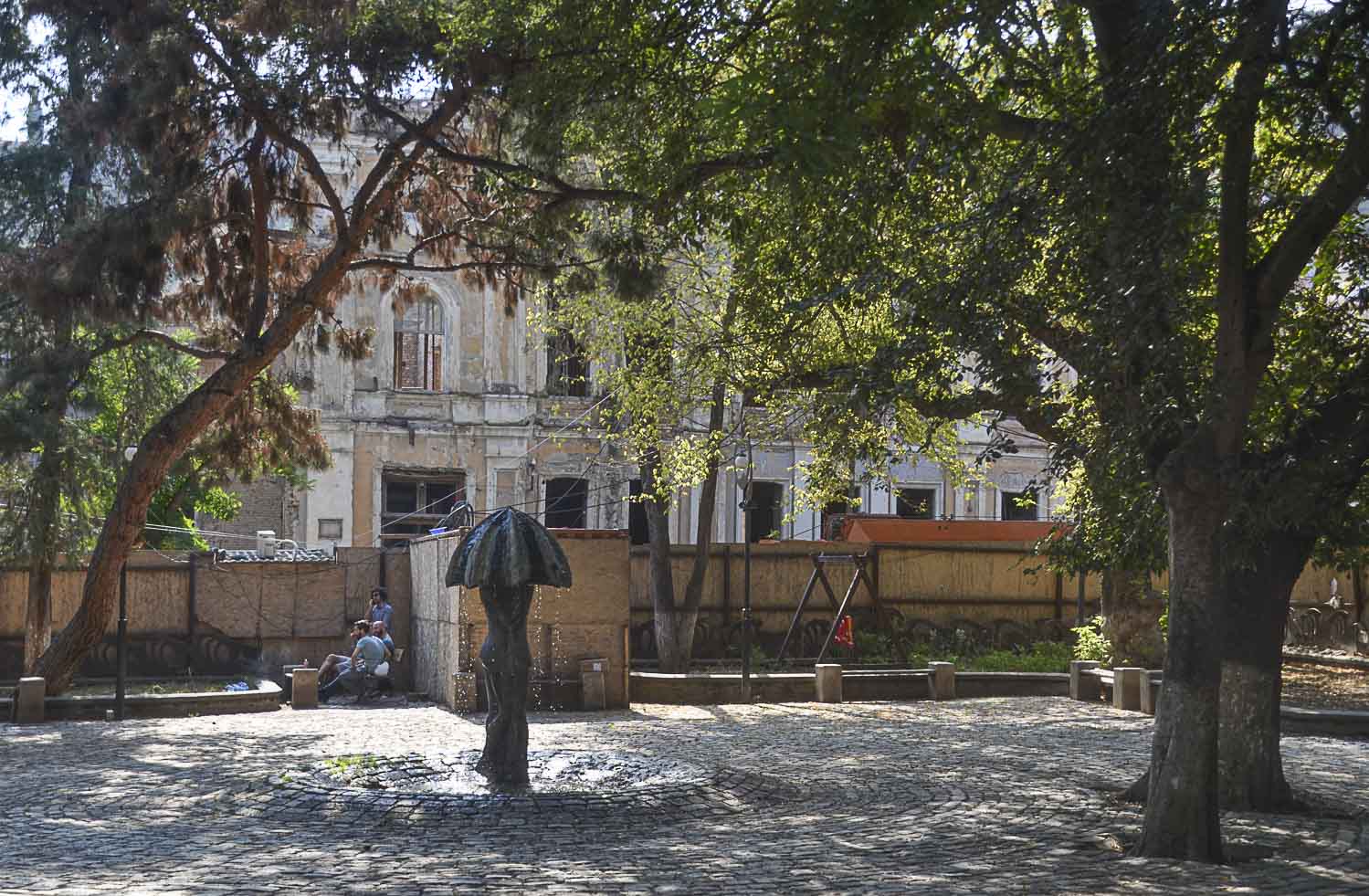
…so, finally we found Pur Pur, in the old town area. Resting close to a peaceful park –

– leaning against another house, it was one of the last houses still standing. Just open the door, walk slowly up the stairs, enter the room, and you will be enveloped in its warm, rich and creative atmosphere!
Their food is delicious, and so is the Georgian wine. We got the blue table by the window, where we had our farewell dinner, saying goodbye to a very special country, a very special city and a very special people.
If you ever find Pur Pur while roaming the world – (it might not be found in the same house by then…) I do recommend you to drop in – and not only for the food and the wine. You will leave a richer person than you first arrived here.

All grey and drizzle today, just like the last 6 weeks here in Skåne. My thoughts wander to the lovely Cafe Leyla in Tbilisi. Let’s peep inside!
This place will surprise you with a healthy dining experience: they serve only village – grown, non – GMO and seasonal products.
Try some of their honey and apple homemade vodkas – they taste just like the cafe looks!
Sweet people will take good care of you – and the food is delicious.
The interior design is Oriental, and just like I want it – no loud music. Only people silently talking and discussing. If you ever visit Tbilisi, be sure to go to Leyla´s when your bones need a rest and your eyes need a refreshed view and your stomach says ”feed me”. It’s lovely to sit outdoors as well.
Udabno, at first sight, seems a forgotten place in the desert. Originally a Soviet built village – but then abandoned and left to the last, striving old farmers. Since about 8-10 years it has been brought to life again, by a Polish guy who fell in love with Georgia when traveling the countryside. His idea was to build a restaurant and hostel for people driving through on their way to David Gareja (the monastery I posted on before). This turned out quite well – and his Oasis is thriving. They promise delicious Georgian food and friendly people – and on top you get dogs and cats at your feet, charming the guests.
Sighnaghi, the pearl of the Kakheti region, is one of the most important villages in Georgia’s greatest wine district. The oldest parts are from the 18th century, with a 4-5 km town wall. We also heard it was considered maybe the most beautiful village in Georgia. Built 790 meters above sea level, it overlooks the glorious Alazani Valley and the Caucasus Mountains. In fact almost every part of it was restored by Italian architects, and paid for by the mighty family Sjevardnadze.

We learned that the cradle of Wine is Kaukasus, and Georgia has the oldest wine traditions in the world, second only to Armenia. 8000 years old Clay barrels for wine making have been found here. The wine making was unique – and still is today. The grapes were put in the clay barrels that were buried in the ground for fermentation – no additives…not even sugar. 100% ecological.
No wonder the wine tastes heavenly. We tried three different Saperavi wines from the OKRO`s Wines, relaxing on a terrace overlooking a lovely cat overlooking the whole valley and the mountains. Finishing off with a mild Chacha (70% – but not noticeable).
In the end I thought the strict rules applied for making these Georgian wines exceeded all intricate EU-rules, making EU not fully able to realize the fantastic quality of these wines – and therefore not marketing them as they should. Rather interesting…
A war monument with thousands of names from the area, meant another moment of contemplation. So many horrors and so many wars this country has suffered. And still – inhabited by upright, friendly and hospitable people.
We hit the road again, and our knowledgeable guide remembered my talking about a photo of the grape vendors…This party was packing up for the night, but we stopped for a chat and a photo. Sweet guys…in the end I jumped in the car with some kilos of the sweet grapes too (not the guys!)! I was not allowed to pay anything…but hugs were free!
Fabrika, Tbilisi, ”Once a soviet sewing factory, has been revived and transformed into a multi-functional urban space bringing together enthusiastic individuals ready to stretch their minds with new exhilarating experiences.” This is how this urban hot spot describes itself to potential visitors – let’s have a look!
”With its striking “old-meets-new” attitude, Fabrika oozes genuinely cool soviet vibes blended with funky industrial elements.
It has become the symbol of renovation, recreation and reinvention.”
I loved the graffitti…
The spacious yard – not many there in the middle of the day, but, I could easily imagine the crowds on a hot summer’s night!
Why not step inside? Everything so airy and colourful. Youngsters working or relaxing, playing games or just sleeping. Rather quiet at this time of the day…and no heavy music. – Which was much appreciated by me – generally there is too much music, all the time and everywhere in society. Sometimes I find it difficult to hear my own thoughts…
The hostel seemed popular, and the food was tasty. People dropping in and out every minute. Fabrika prides itself of being the creative center of Tbilisi –
…and I do believe it is. Maybe next time we will drop in a late evening for the joy of the creative process. The Georgians we met were very good at English, and I would not say no to a night of fruitful discussions on Life – over a cool drink. Before it is over.
We walked back through the streets, with the ”old-meets-new” feeling lingering all the way home. I wonder for how long Old Tbilisi will keep its ”Old” part.
Du måste vara inloggad för att kunna skicka en kommentar.