Letters – letters and words, combined they make language. One of the things separating us from animals – the written language. What would happen if we didn’t have it? Letters and words give you power. Not only for Love. They are the strongest weapon. Burning books is still done…, leaking written facts…, starting and ending wars. Letters.
The most beautiful letters I know of are the Tibetan letters. The skill of making them is pure art. This is not a full alphabet, but called an alphasyllabary. It is a segmental writing system in which consonant–vowel sequences are written as a unit: each unit is based on a consonant letter, and vowel notation is secondary. Read more about the alphabet here.

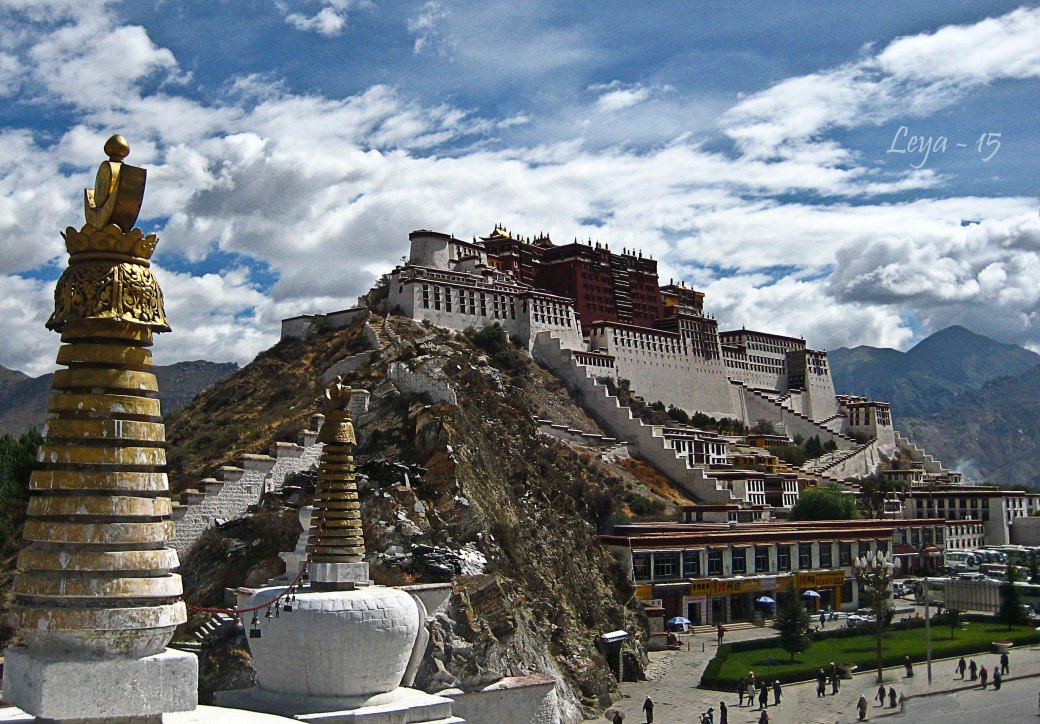
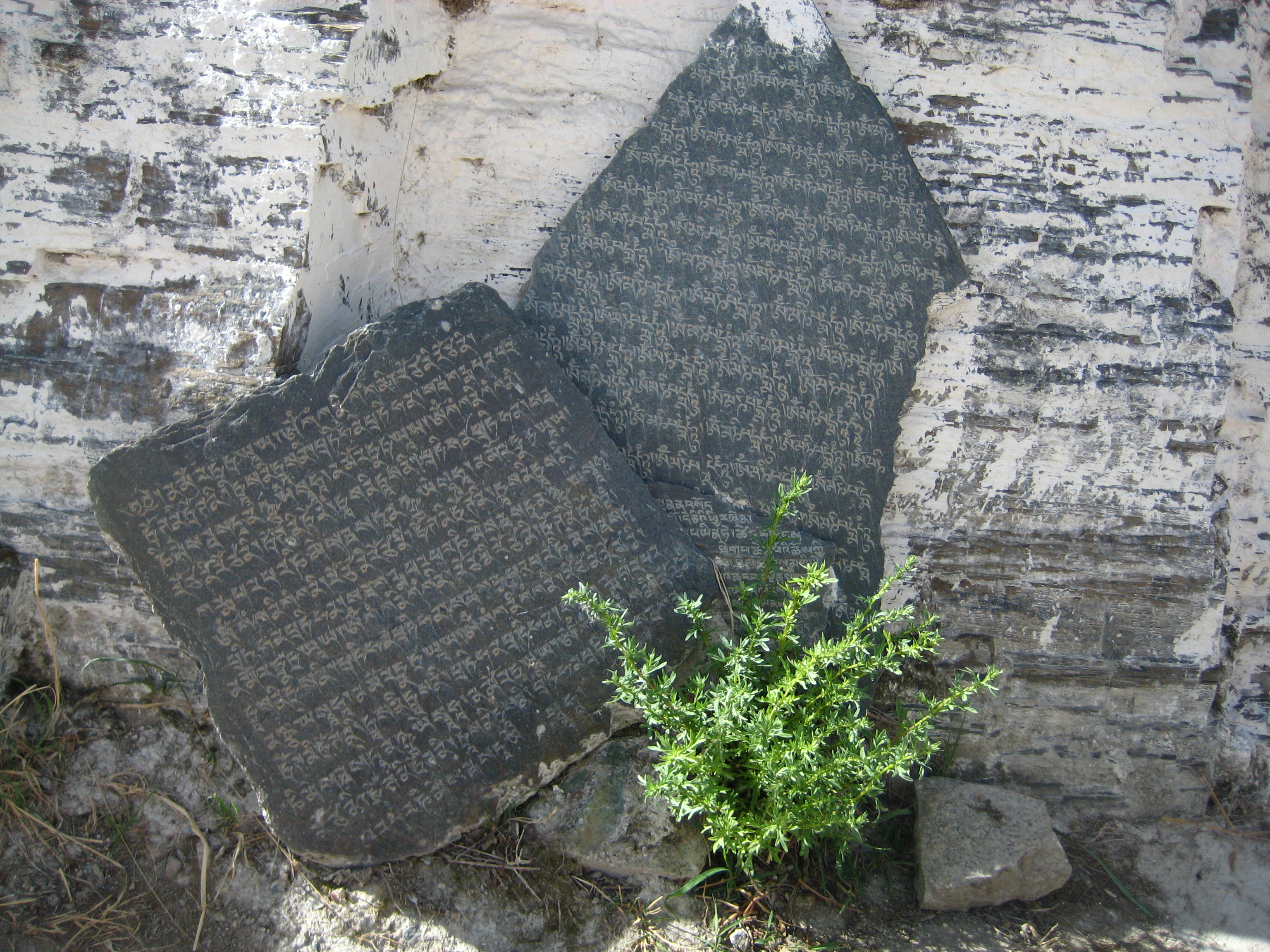
These pilgrim stones are placed on the path leading up to the Pothala Palace in Lhasa, Tibet. Even if I don’t know the exact meaning of what’s written on them, I think I know something of their content.
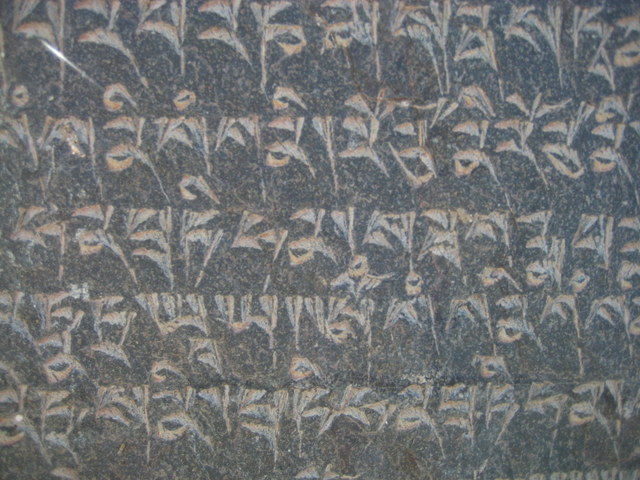
I know that somewhere on these stones is carved the primary mantra of Tibetan Buddhism. It is commonly carved onto rocks or written on paper that’s inserted into prayer wheels. When the wheels are spinned the prayers will find their right way without someone constantly reciting them. Oṃ Maṇi Padme Hūṃ (Tibetan: ༀམཎིཔདྨེཧཱུྃ )

The mantra in Tibetan with the six syllables coloured. The exact meaning of the words is discussed, but below is the interpretation by the 14th Dalai Lama:
- ”It is very good to recite the mantra Om mani padme hum, but while you are doing it, you should be thinking on its meaning, for the meaning of the six syllables is great and vast… The first, Om […] symbolizes the practitioner’s impure body, speech, and mind; it also symbolizes the pure exalted body, speech, and mind of a Buddha[…]”
- ”The path is indicated by the next four syllables. Mani, meaning jewel, symbolizes the factors of method: (the) altruistic intention to become enlightened, compassion, and love.[…]”
- ”The two syllables, padme, meaning lotus, symbolize wisdom[…]”
- ”Purity must be achieved by an indivisible unity of method and wisdom, symbolized by the final syllable hum, which indicates indivisibility[…]”
- ”Thus the six syllables, om mani padme hum, mean that in dependence on the practice of a path which is an indivisible union of method and wisdom, you can transform your impure body, speech, and mind into the pure exalted body, speech, and mind of a Buddha[…]”
- Quotation from Wikipedia




 Leya
Leya 
Du måste vara inloggad för att kunna skicka en kommentar.