In the Territory of Zhongxian County of Chongqing there is a rock on the Yangtze river, with a vermilion 12-storey pavilion built against it.
No post was made on this, because I thought the weather was too bad and my shots could not give a fair picture of its beauty. Tonight I happened to find this pavilion again…and a post just had to be written. This is a beautiful piece of art – try to forget about the miserable weather conditions and just enjoy.

Built in the Ming Dynasty (1368 – 1644), Shibaozhai consists of a gate, a pavilion and a temple.

The bridge out to the cliff is rather tricky to walk. A good advice is to walk in the middle…
…and then follow the marble reliefs.
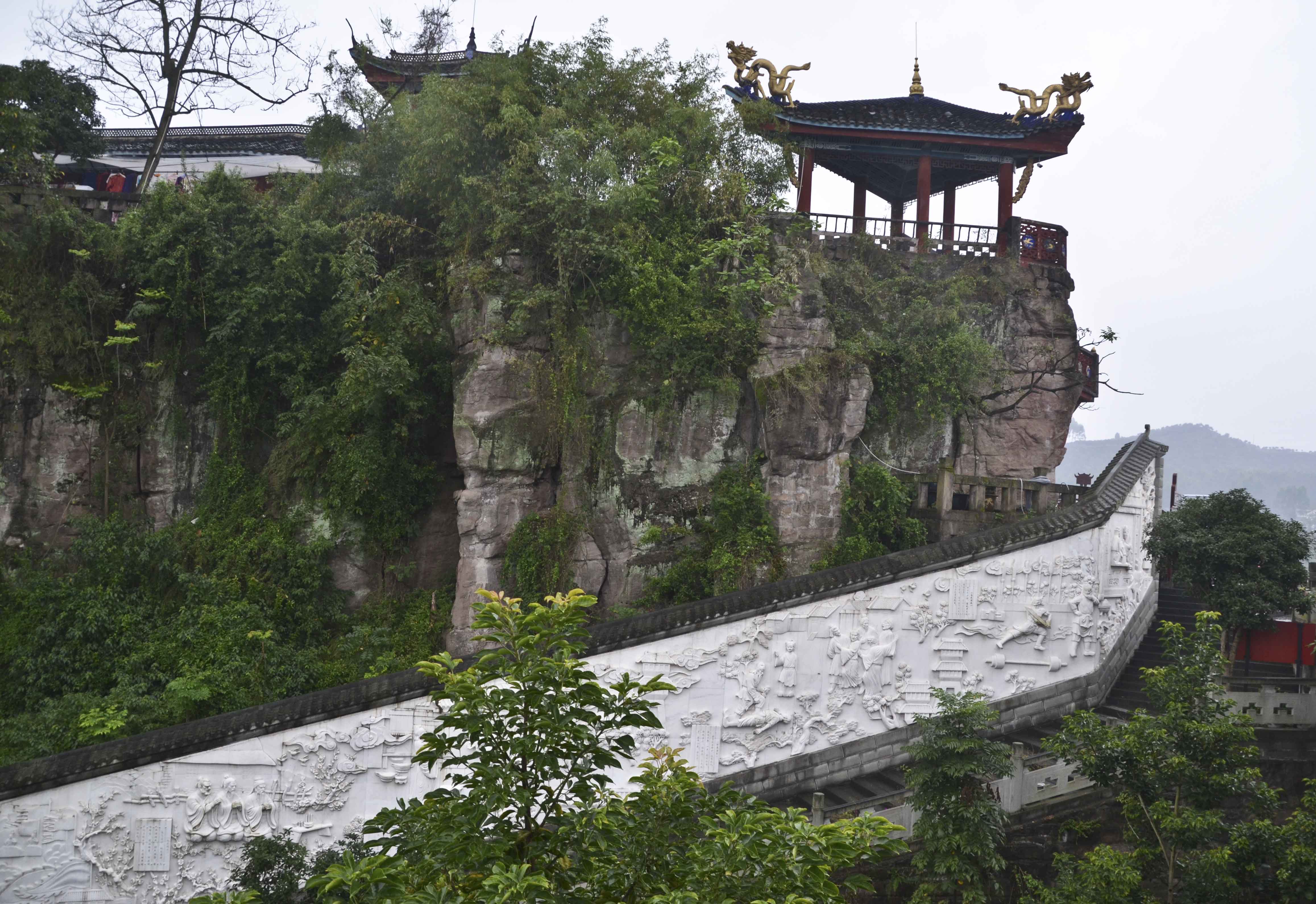
The gate is covered with some vivid reliefs, and within the gate is the 184 feet high 12-storey wooden pavilion. It is the tallest specimen of ancient architecture with the most storeys in China. A breathtaking view when the pavilion comes in sight just around the corner.
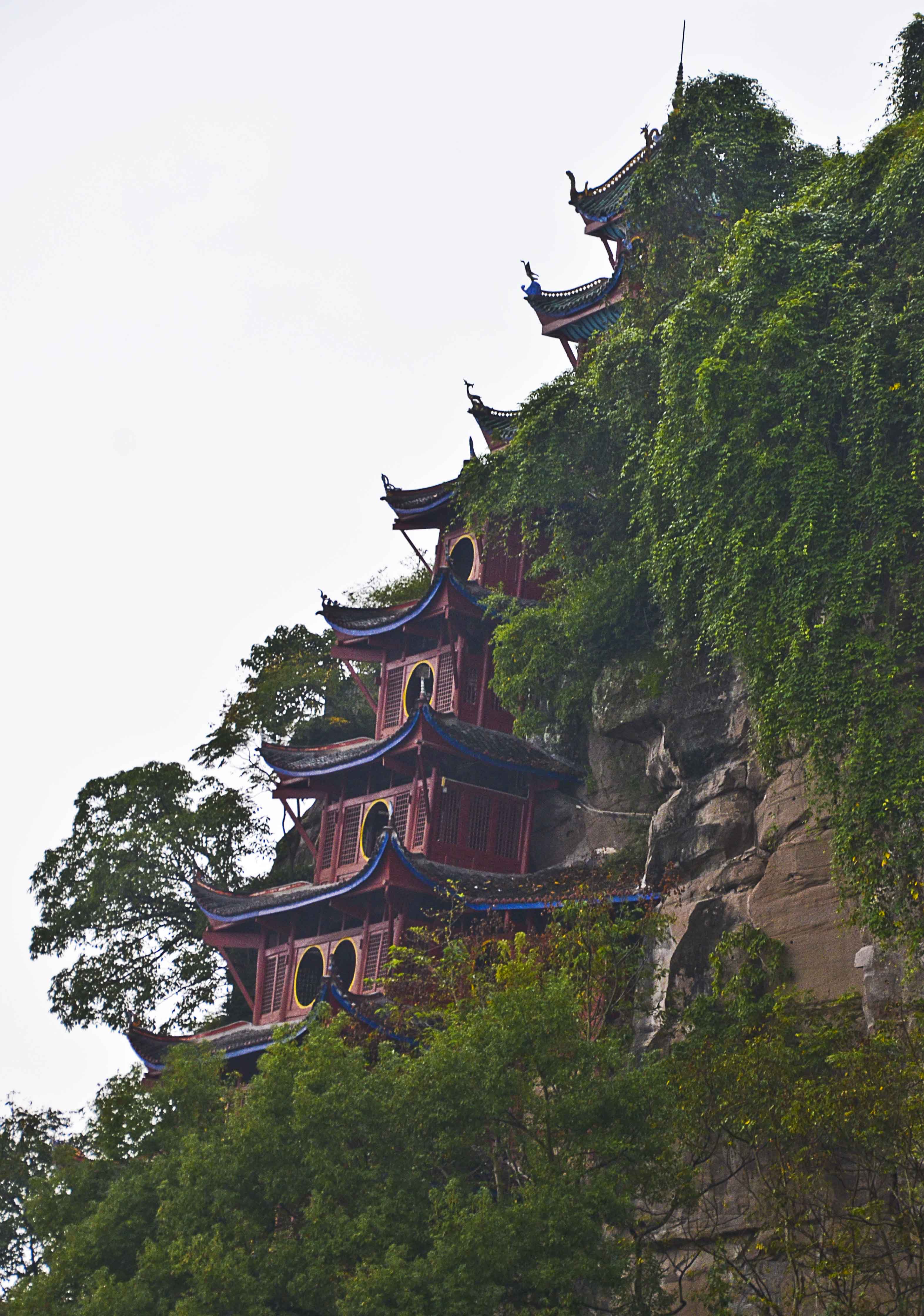
Originally it was only nine storeys high,
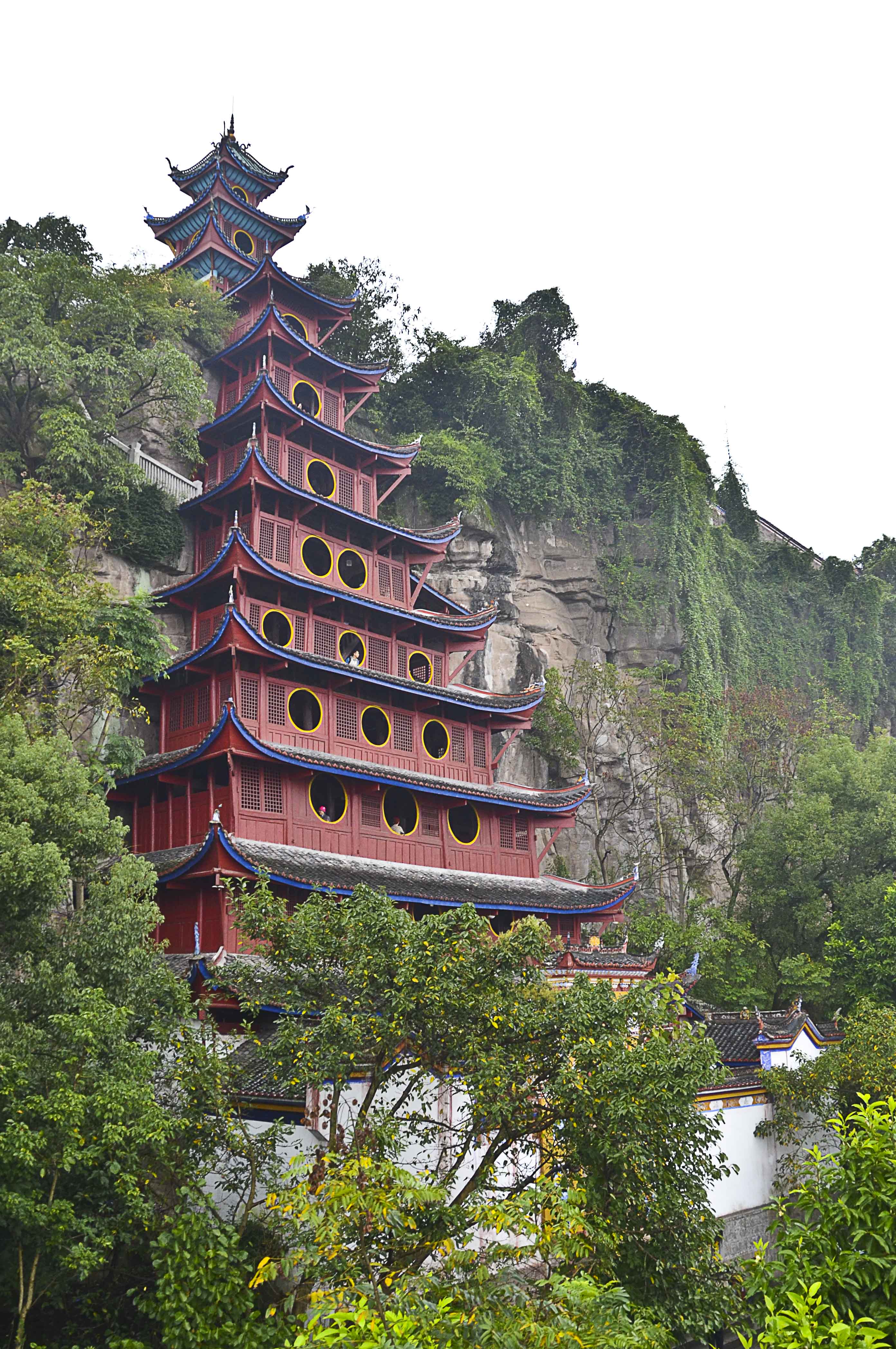
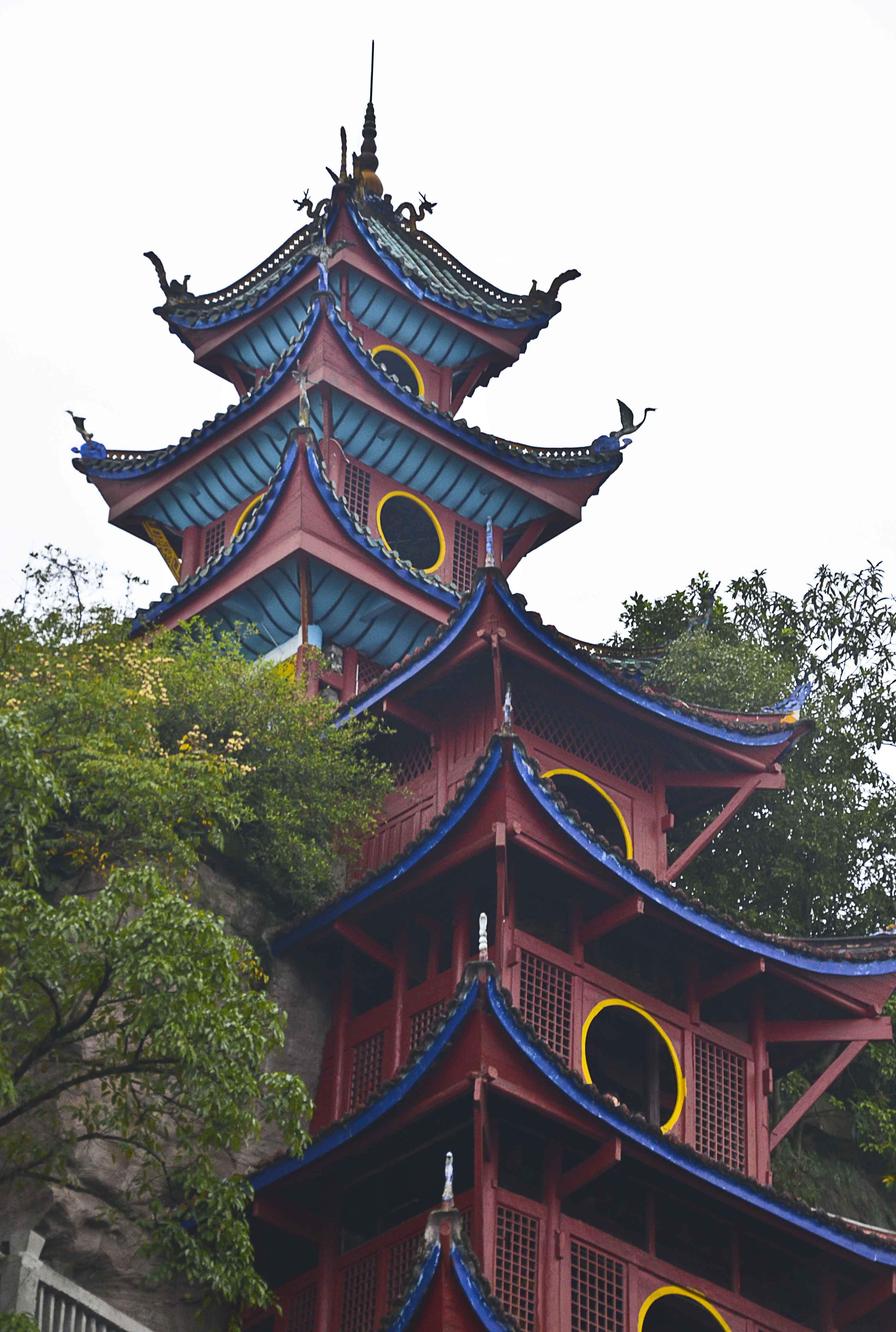
but in 1956 three more (called Kuixing Pavilion) were added. A spiral staircase in the pavilion can take tourists to the top to reach the temple.
Inside the pavilion, there are steles and inscriptions of past dynasties on each floor. And on your way up, you can also admire the Yangtze River from the windows of each floor.
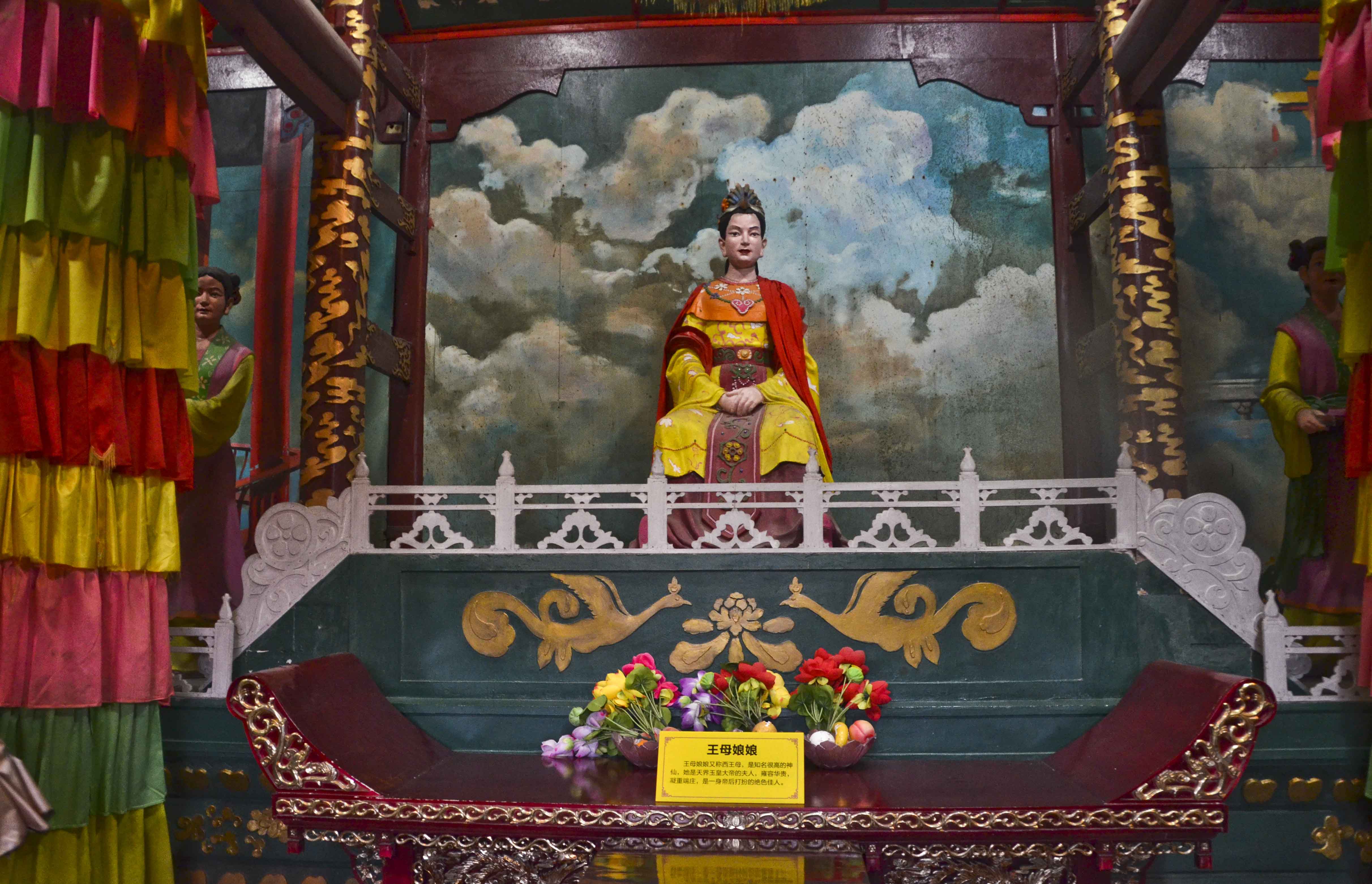
At least some of it…in the drizzle.

Upon arriving at the top of the pavilion, there is a flat stone dam. Here stands the ancient ‘Lanruo Temple’ at the highest point of the Precious Stone Fortress.
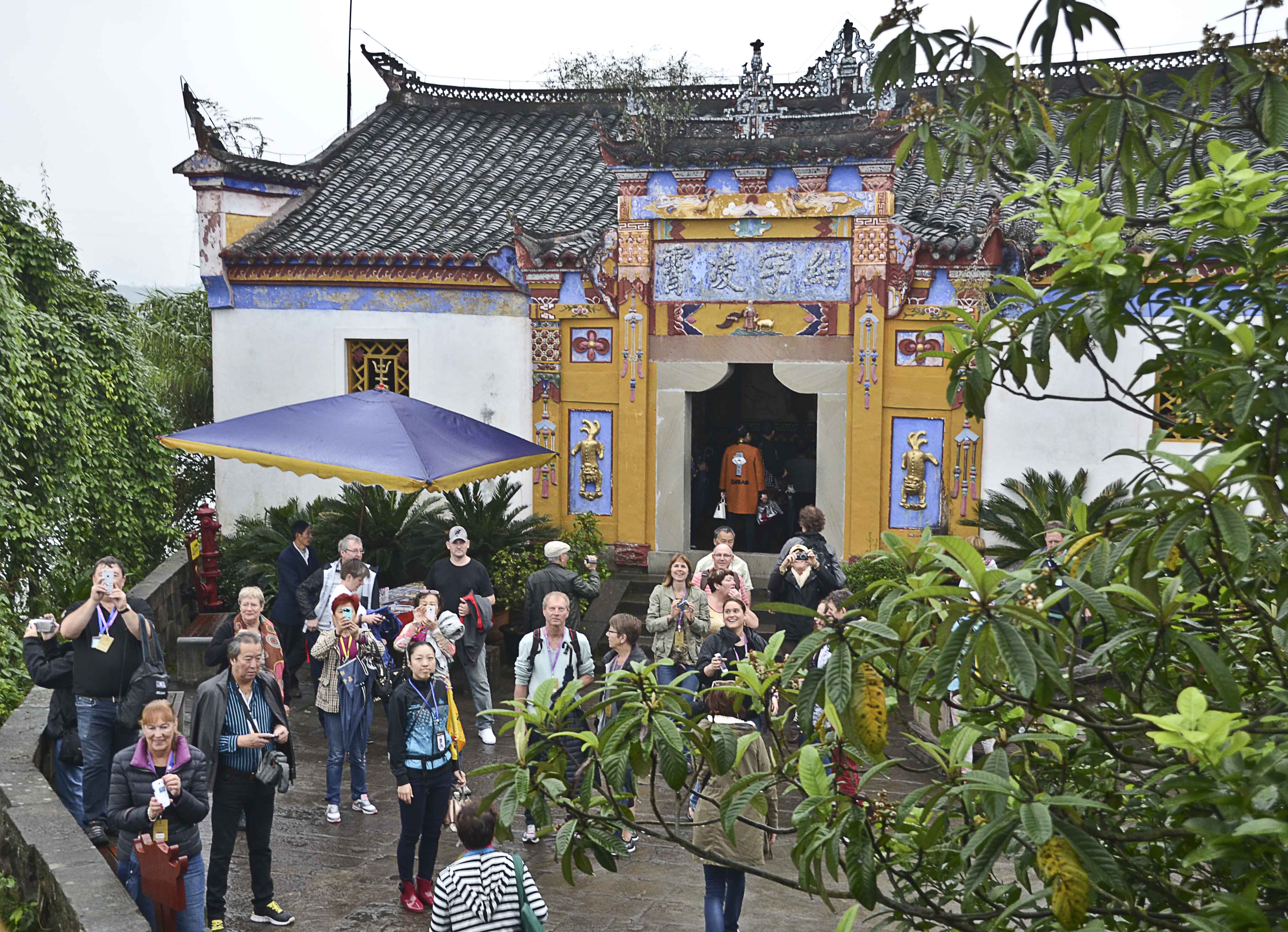
The so-called Rice Flowing Hole has a legend to it. According to this legend, rice flowed from the hole every day after the temple had been built. A greedy monk wanting even more rice to flow from the hole made it larger – and from that day no more rice appeared.
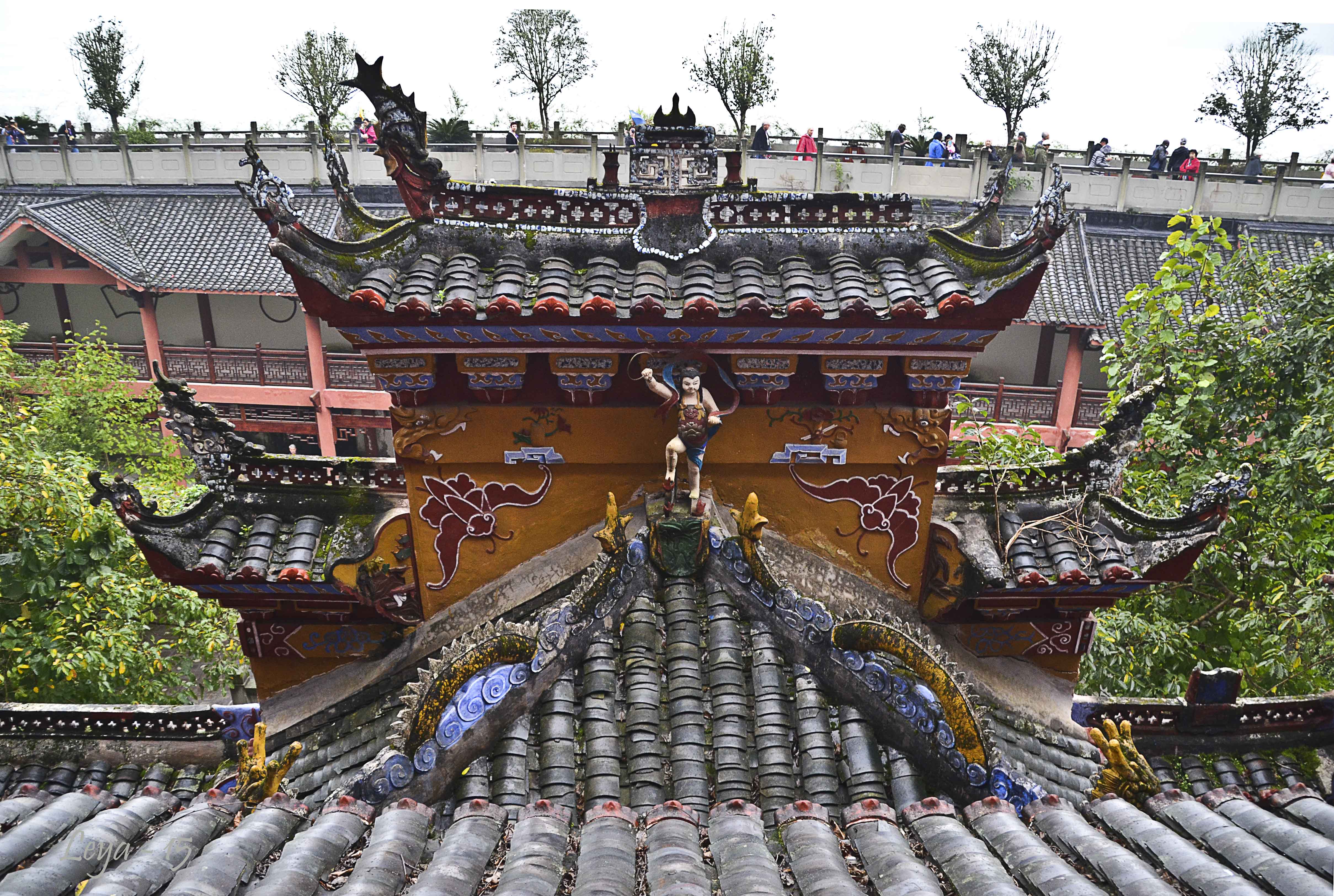
After the water level rose because of the Three Gorges Dam Project, millions of people had to leave their homes for ever, and the Shibaozhai too was threatened to disappear in the water. Thanks to measurements to protect the pavilion, we can still visit this masterpiece today.
Go back to the first photo again – and you will realize that the whole village beneath the pavilion is now submerged.
 Leya
Leya 
Pingback: SL-WEEK 37: Electricity | Leya
amazing! thanks for sharing 🙂
Travel is such an eye opener to the very special world that is outside your front door.
It is. But travelling inside is an eye opener as well.
That is really an amazing piece of architecture. I love the colours in these temples. So fully of life!! Thanks for introducing me to this place, Ann-Christine!
My pleasure!
Beautiful.
What an amazing place – thanks so much for sharing.
Thank you for reading and commenting!
Great shots.
I think the bad weather works well here as, due to it blanketing the whole sky, there’s less detail to draw attention from the subject of each shot.
Maybe you are right. I was so disappointed in that China trip because of bad weather for two weeks, so maybe I did not see this. A very special place.
Molto interessante cara Leya, le foto sono splendide!!
Saluti, Patrizia
You are always so kind, Pat!
Spectacular!
Très intéressant!
I’m glad!
This is truly amazing. What an achivement to build this fortress an it must be very special to see it with your own eyes. Remarkable!
It was indeed. If you look at the first photo you can also see how the whole village below the pavillion now has been submerged…only the pavilion is left.
Yes I noticed that, sad.