Rilski Manastir – or Rila Monastery – I let you have a peek some days ago…now, let us go inside – hopefully you will love it as much as I did!
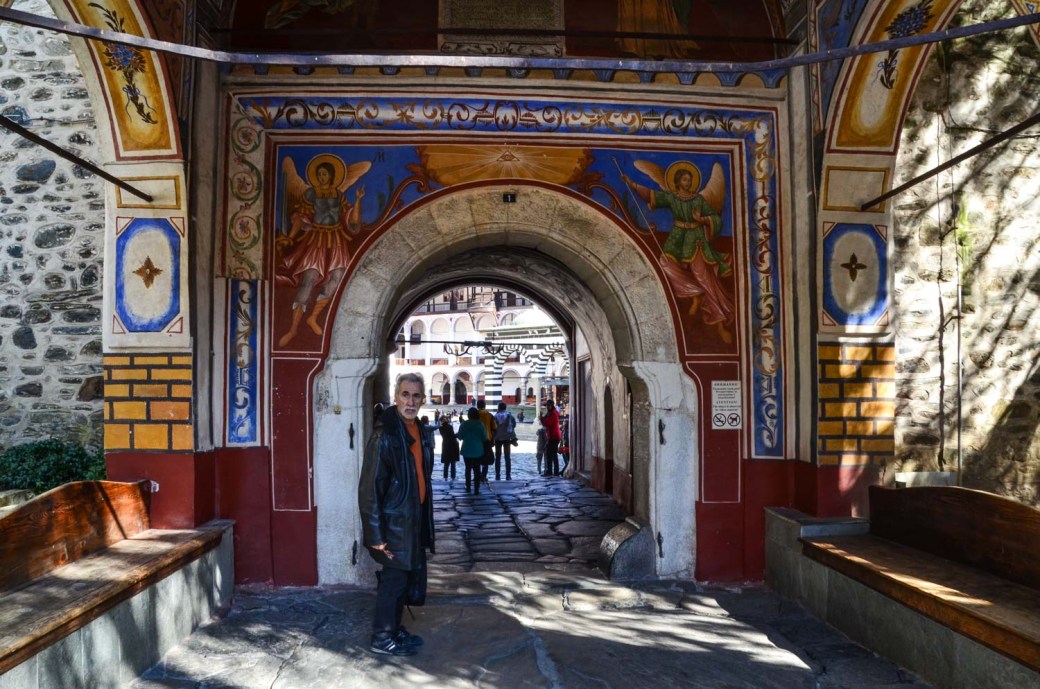
An old friend of mine left us a hint about it… and so we went for a day to the Rila mountains and the monastery. This turned out to be the most fantastic experience we had during our four days in Bulgaria.
The Rila Monastery is the largest and most famous Eastern Orthodox monastery in Bulgaria. 1,147 m (3,763 ft) above sea level, hidden inside Rila Monastery Nature Park. The monastery is named after its founder, the hermit Ivan Rilski, or Ivan of Rila, (876 – 946 AD), but today houses 8 monks only.
According to Wikipedia, and our guide, the Rila Monastery is regarded as one of Bulgaria’s most important cultural, historical and architectural monuments and is a key tourist attraction for both Bulgaria and Southern Europe.
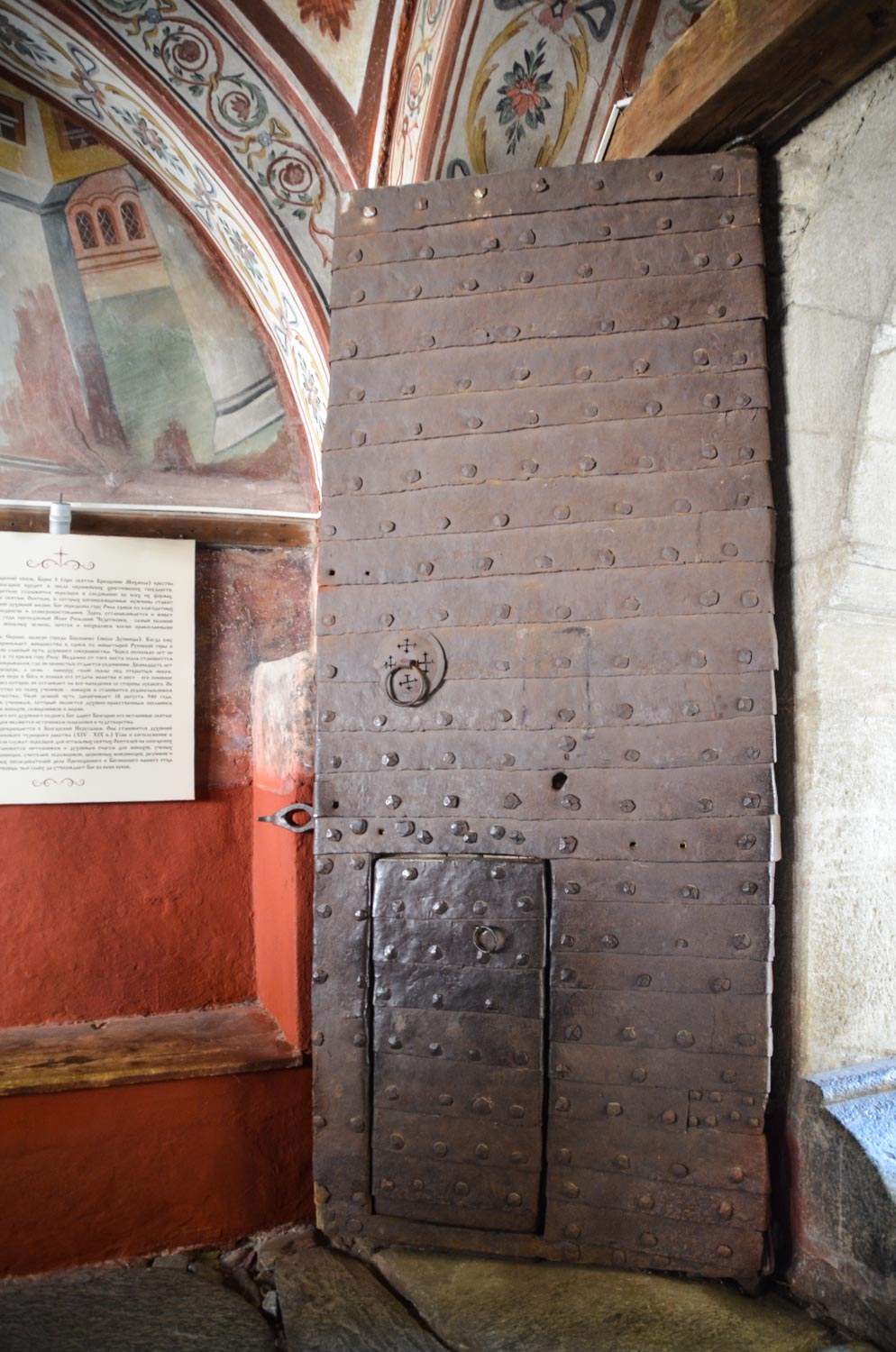
The old doors of the monastery were huge, to protect them from intruders. No weapons or armor were tolerated inside, so visitors had to enter through a tiny door, unarmed.

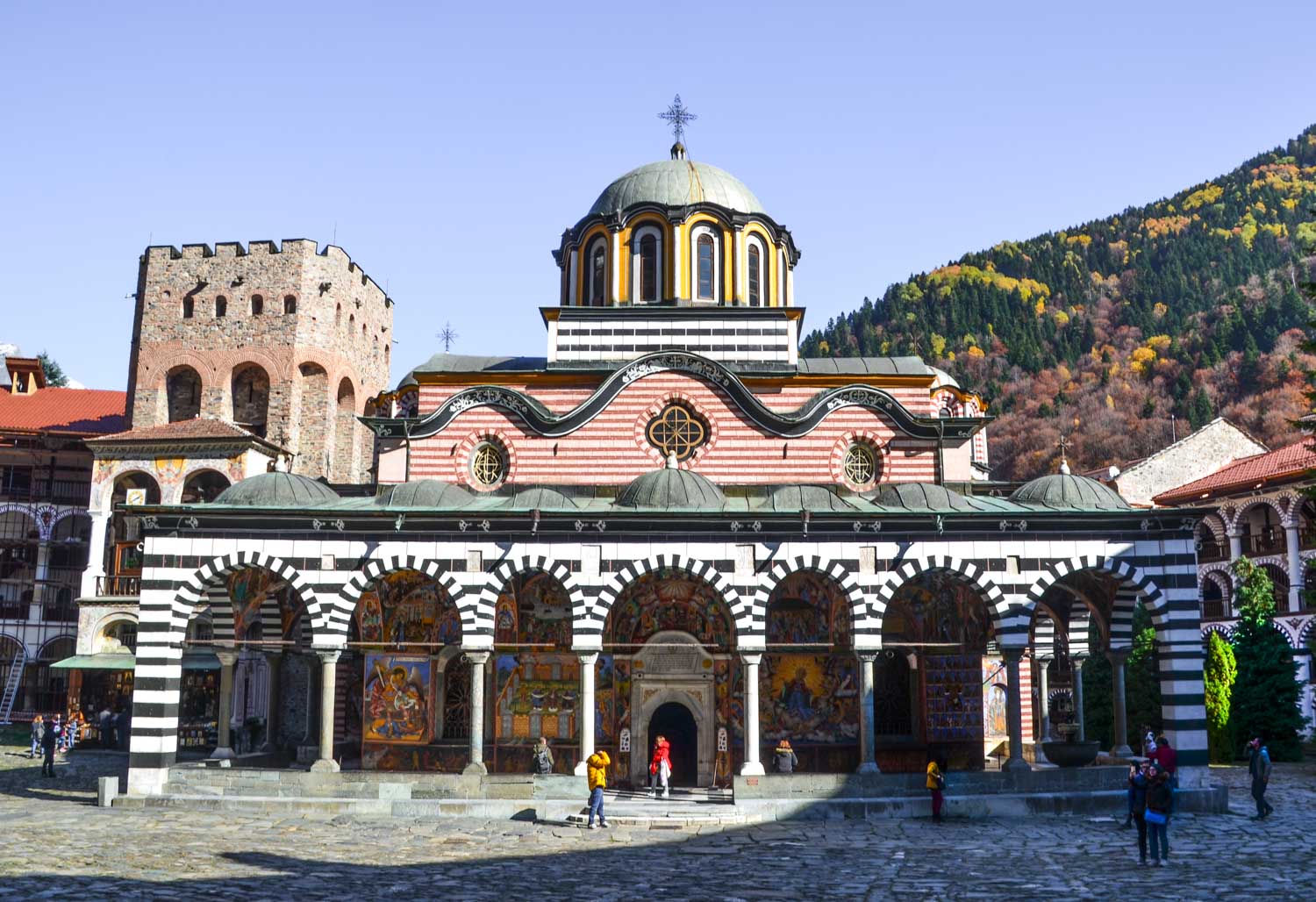
This is what you will find when you enter through the door. Burnt down and ravaged through the centuries, the buildings have been rebuilt several times to its former glory.
The main church of the monastery was erected in the middle of the 19th century. Its architect is Pavel Ioanov. The church has five domes, three altars and two side chapels, while one of the most precious items inside is the gold-plated iconostasis, famous for its wood-carving. No photos allowed, of course… The beautiful frescoes, finished in 1846, are the work of many, for me unknown, masters from Bansko, Samokov and Razlog, including the famous brothers Zahari Zograf and Dimitar Zograf. The church is also home to many valuable icons, dating from the 14th to the 19th century. Porticos in the courtyard have Mamluk influence with the striped painting and the domes, which became more popular in the Ottoman Empire after the conquest of Egypt.

The Rila Monastery was re erected at its present place by Hrelyu, a feudal lord, during the first half of the 14th century. The oldest buildings in the complex date from this period -— the Tower of Hrelja (1334–1335) and a small church just next to it. The bishop’s throne and the rich-engraved gates of the monastery also belong to the time. However, the arrival of the Ottomans in the end of the 14th century was followed by numerous raids and a destruction of the monastery in the middle of the 15th century.

The bell tower
The museum of the Rila Monastery is particularly famous for housing Rafail’s Cross, a wooden cross made from a single piece of wood (81×43 cm). Magnificent – but No photos allowed of course. The cross was whittled down by a monk named Rafail using fine burins and magnifying lenses to recreate 104 religious scenes and 650 miniature figures. He worked for 12 years to finish the cross, and it was completed in 1802, when the monk lost his sight. Stock photos.

Glorious frescoes on the church

Very special, carved, wooden chairs
The monastery complex, regarded as one of the foremost masterpieces of Bulgarian National Revival architecture, was declared a national historical monument in 1976 and became a UNESCO World Heritage Site in 1983.
On 25 May 2002, Pope John Paul II visited Rila Monastery during his pilgrimage to Bulgaria.

Seldom have I taken so many photos of one single building complex, but I also waited a long time…to finally catch one of the 8 monks on a photo!

My favorite fountain – and I would return to it at the end of the day…
Not to be forgotten is that this monastery is ”alive” and working. You can rent a room for the night – simple or luxury – and we saw the laundry coming out and the gardener pruning his pot plants.
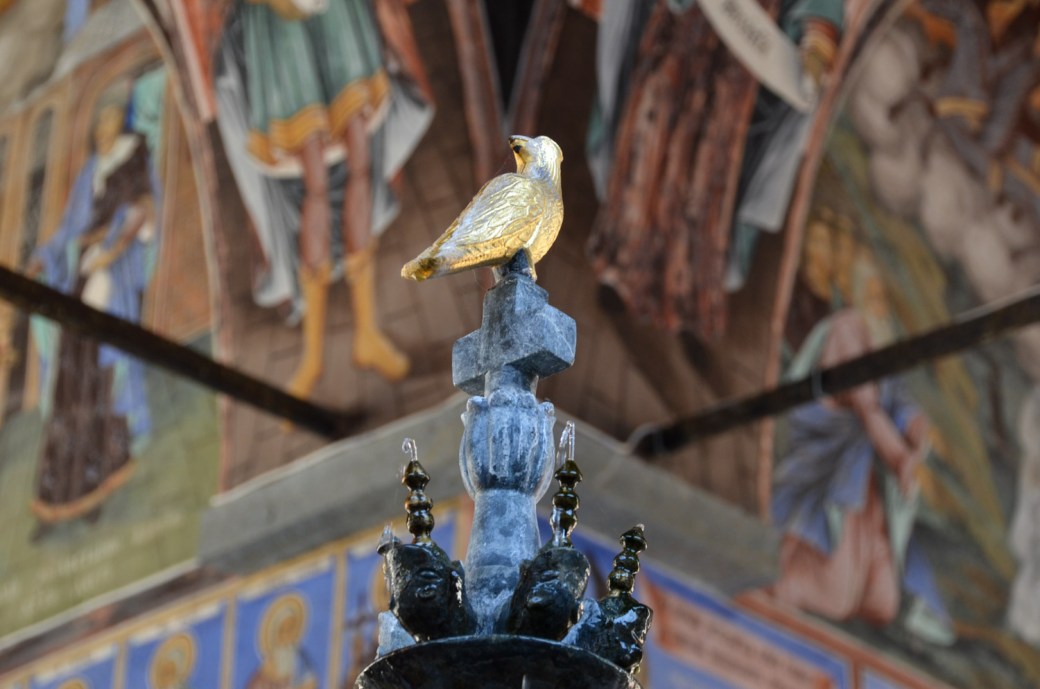
I had seen a golden bird sitting somewhere, in a broschure? – I was sure… The whole day I was on the lookout for this bird, but could not find it. Just before the car was taking us back to Sofia, I saw him. He was just a little one, perched on top of the fountain.
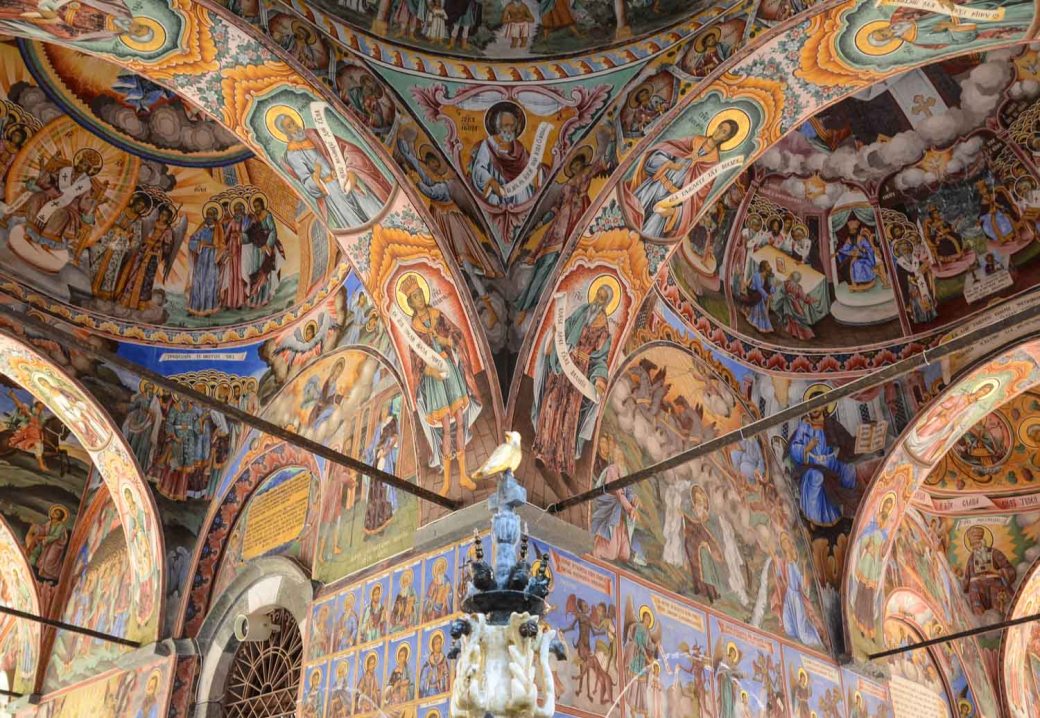
Saying my goodbyes…I almost think I heard him answer –









 Leya
Leya 
Du måste vara inloggad för att kunna skicka en kommentar.