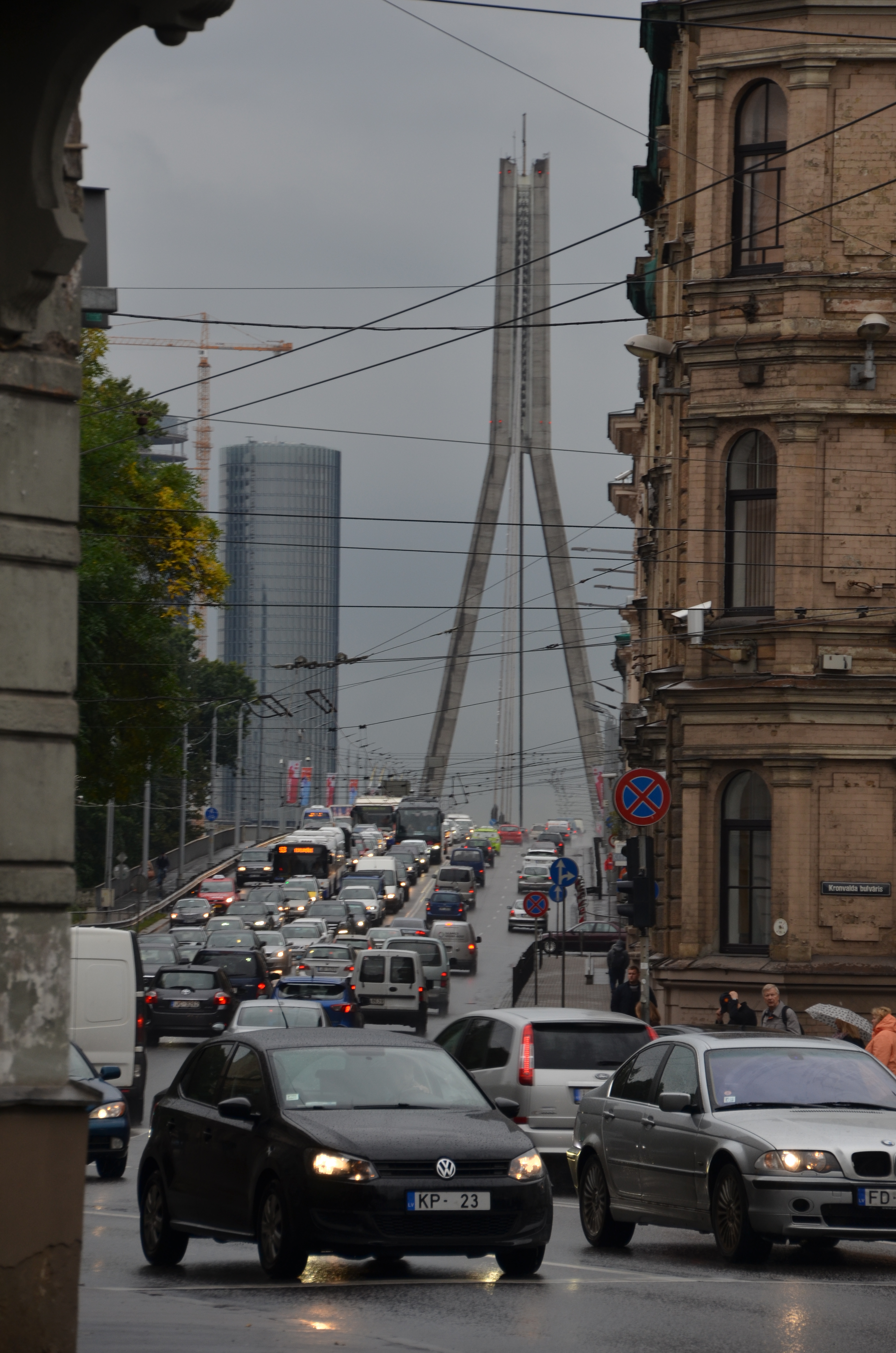
#233 Puls – Pulse (293/365)
The Art Nouveau movement in Europe was the architectural answer to the literary Modernist movement, starting in the 19th century.

Smilšu iela (street) 2 – (1902). One of the best examples of Jugend in Riga. The peacock typical of Jugend style and the sculptures featuring one of the most beautiful Jugend women in Riga.

The Art Nouveau movement reached its peak in the early 20th century, which is when the majority of Riga’s Art Nouveau houses were built. Riga’s term, Jugendstil, originates from the German and Scandinavian movement named after the avant-garde periodical Jugend (”Youth”). Art Nouveau was a reaction to the 19th century Academic art, and ”was inspired by natural forms and structures, not only in flowers and plants, but also in curved lines. Architects tried to harmonize with the natural environment.” (Wikipedia)

Tirgonu iela 4
Art Nouveau and Jugend could also have other names in other countries: Art Nouveau in France, Modernismo in Spain, Sezessionsstil in Austria, Stile Liberty or Stile Floreale in Italy.

In order to preserve Old Riga, Riga’s wooden buildings and the Art Nouveau architecture, the historical centre of Riga has been designated a UNESCO World Heritage Site.
Riga is one of the largest centres of Art Nouveau, with more than a third of the buildings of its Old Town and Central District built in the style; other significant centres include Paris, Barcelona, Berlin, Vienna, Krakow, Moscow and St Petersburg.

Elizabetes iela 10A and 10B (1903, M, Eisenstein). Masks, peacocks, geometrical figures and remarkable sculptured heads set among blue tiles.
The main street for Riga’s Art Nouveau district is Elizabetes, which intersects Brivibas Boulevard. Also, Alberta and Strelnieku Streets feature great examples of the style. In total, there are over 800 Art Nouveau buildings in Riga.
Most of the Art Nouveau buildings were designed and built by Latvian architects. Buildings by one of the most famous architects, Mikhail Eisenstein (father of director Sergei Eisenstein), can be found at Elizabetes 10a and 10b, as well as at Alberta 2, 2a, 4, 8 and 13. Strelnieku Street also features eccentric examples of the style.
In Riga, Art Nouveau might be split into two main directions, decorative and romantic-nationalistic The latter Art Nouveau style can be seen in the buildings by Latvian architects E. Laube, K. Peksens, and A. Vanags, such as those on Terbatas Street 15/17 and Brivibas Street 47, 58, and 62.
The day we had reserved for ”hunting” these architectural wonders started out in rain – so, here are featured only a few of the great buildings we tried to find.

Alberta iela 4(1904, M Eisenstein) is considered to be the most elegant and original eclectic decorative Jugend house in Riga. Three Medusa heads, mouths wide open, above the corniche, the façade covered with eagles and lions and in the middle of the building a woman’s head flying, symbolizing the sun and protection.
What is Art Nouveau then? It is defined as an ornamental style whose main motifs are nature, references to antiquity and mythology. Architecturally, it is characterised by its functional structure and a richly decorated façade, including window and door openings, bay windows, reliefs, sculptures, ornamental lines or areas and stained glass. However, the interior design is just as essential an element in Art Nouveau.

Things of great beauty might reveal a grim Latvian past …On this house we could read:

We should be rather satisfied with our finds, only having three days in total for Riga and its surroundings. Some of these houses were found just roaming around in the City Centre. Finally, some exquisite details!

The back of things – Riga and the medieval restaurant. Join in with Cee’s challenge for more!

Boundaries – physical or others are essential to mankind and society. On visiting the open air museum in Riga, I found some old beauties – an elegant garden fence and a rustic pigsty fence. I love them both. Join in and let us see your choices!
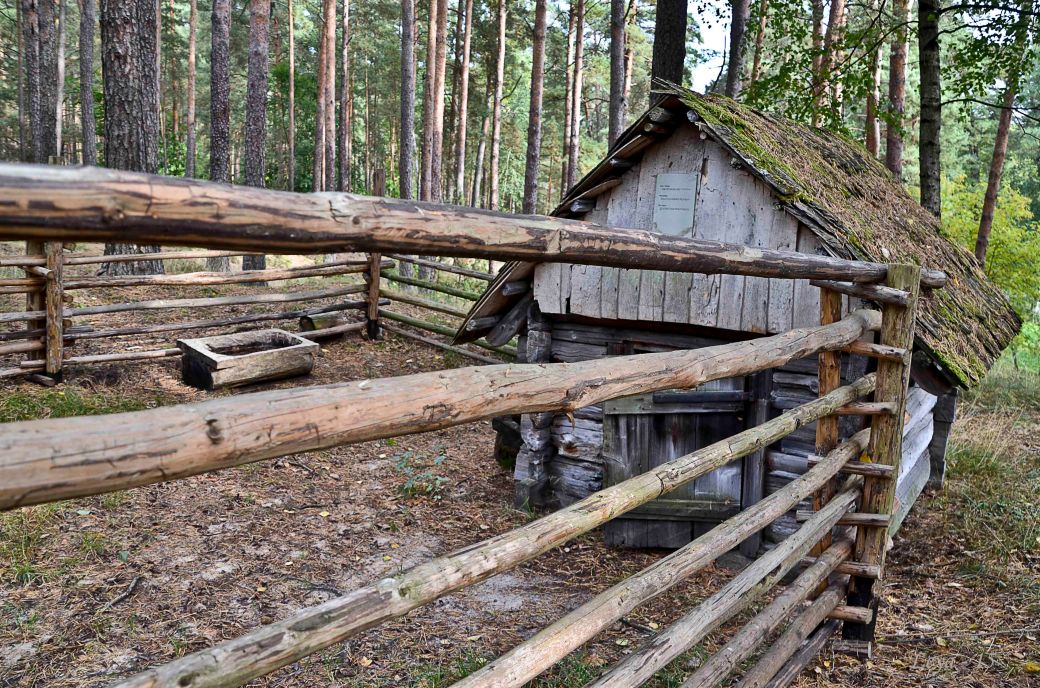

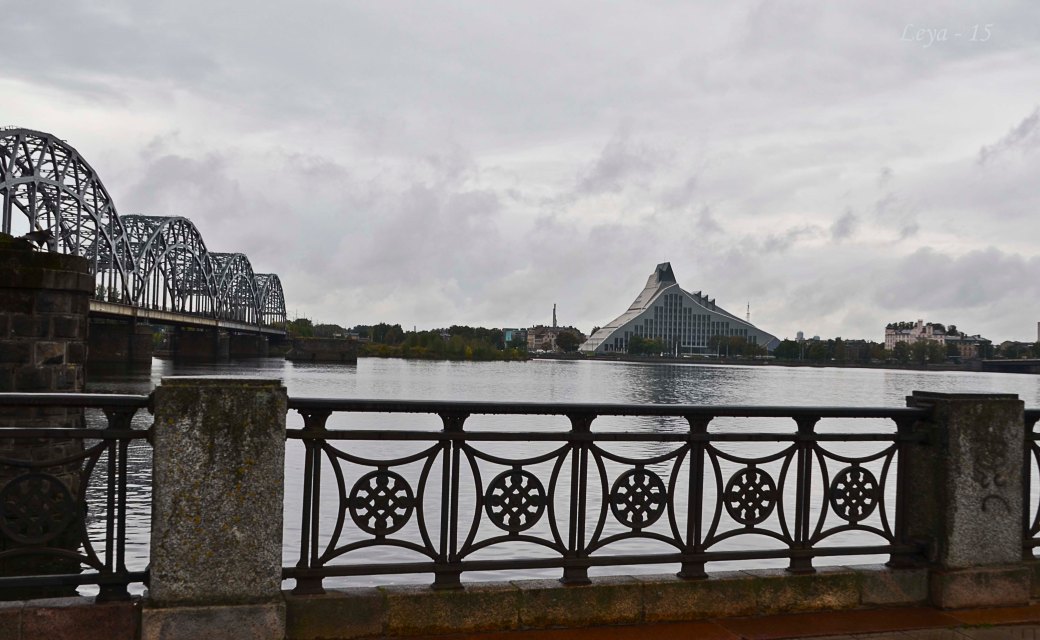 Riga is the capital of Latvia, and situated on the river Daugava. Inhabitants about 707 000, a third of the country’s total. Riga is also the biggest city in the Baltic area. Together with Umeå in Sweden it was the 2014 European Capital of Culture. More: USA Today’s readers voted Riga as Europe’s most attractive city and CNN Travel and Lonely Planet also give their praise to the city.
We visited for three days and fell in love with the mix of green areas, old and new, worn, dilapidated, beautiful houses, Russian style ”boxes”, the massive Jugend areas and the restored gems. And the people. The span is refreshing and we enjoyed every minute.
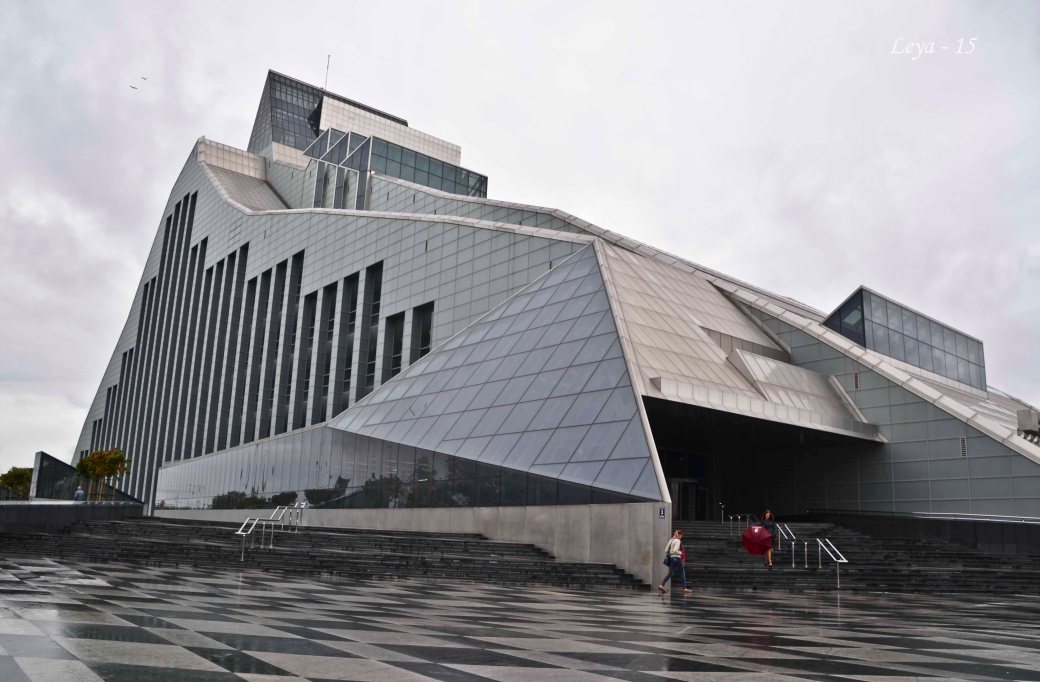
One of the newest buildings here – which you cannot miss when you arrive – is the National Library. Gaismas pils, or The Castle of Light, at Mūkusalas iela on the river Daugava opposite Riga’s Old Town. Latvian architect Gunnar Birkerts, was inspired by Latvian folklore in his construction.
The building is 40 000 m2, built in 13 stories, where the two on top is only meant for cultural arrangements and for rent (having a party? I didn’t ask the cost…) There are approxiamately 1000 study seats in several rooms, and storing room for six million books.
The Library opened August 29, 2014.
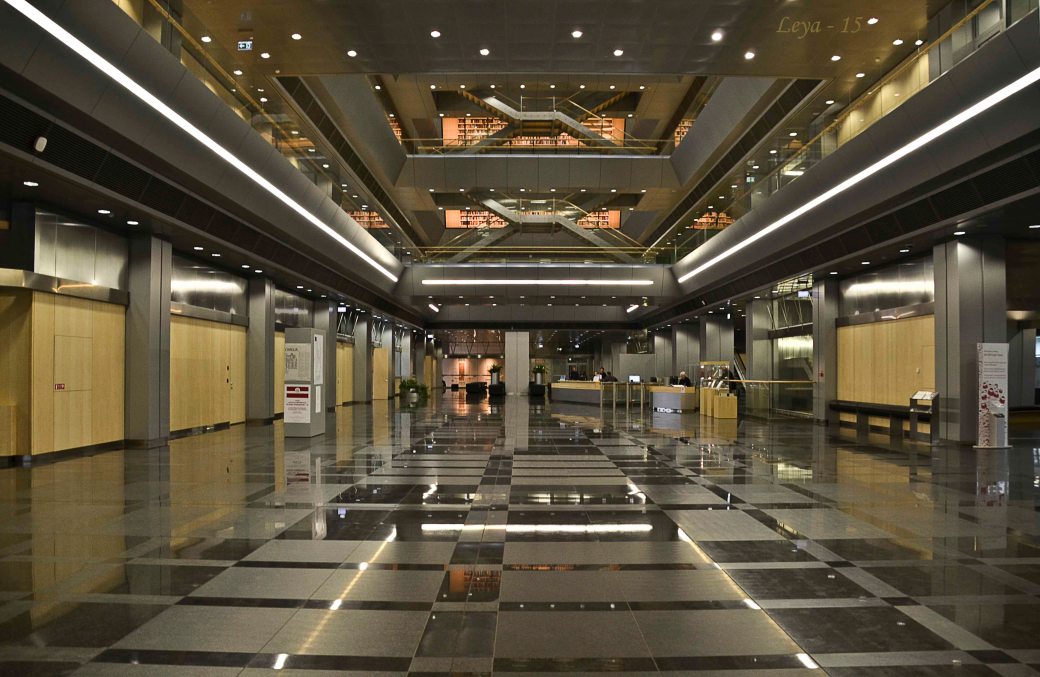
Already in the entrance, I loved it…but with a strange feeling in my stomach…
We had to put all our things in lockers and you were not allowed to bring any drink or food – not even water. You had to get a visitors’ badge too and display it clearly. Then you had to pass the gates and a sighing lady…who looked like ”it would be really nice here… if it weren’t for the visitors.”

Large empty spaces and mirrors called for a selfie first…
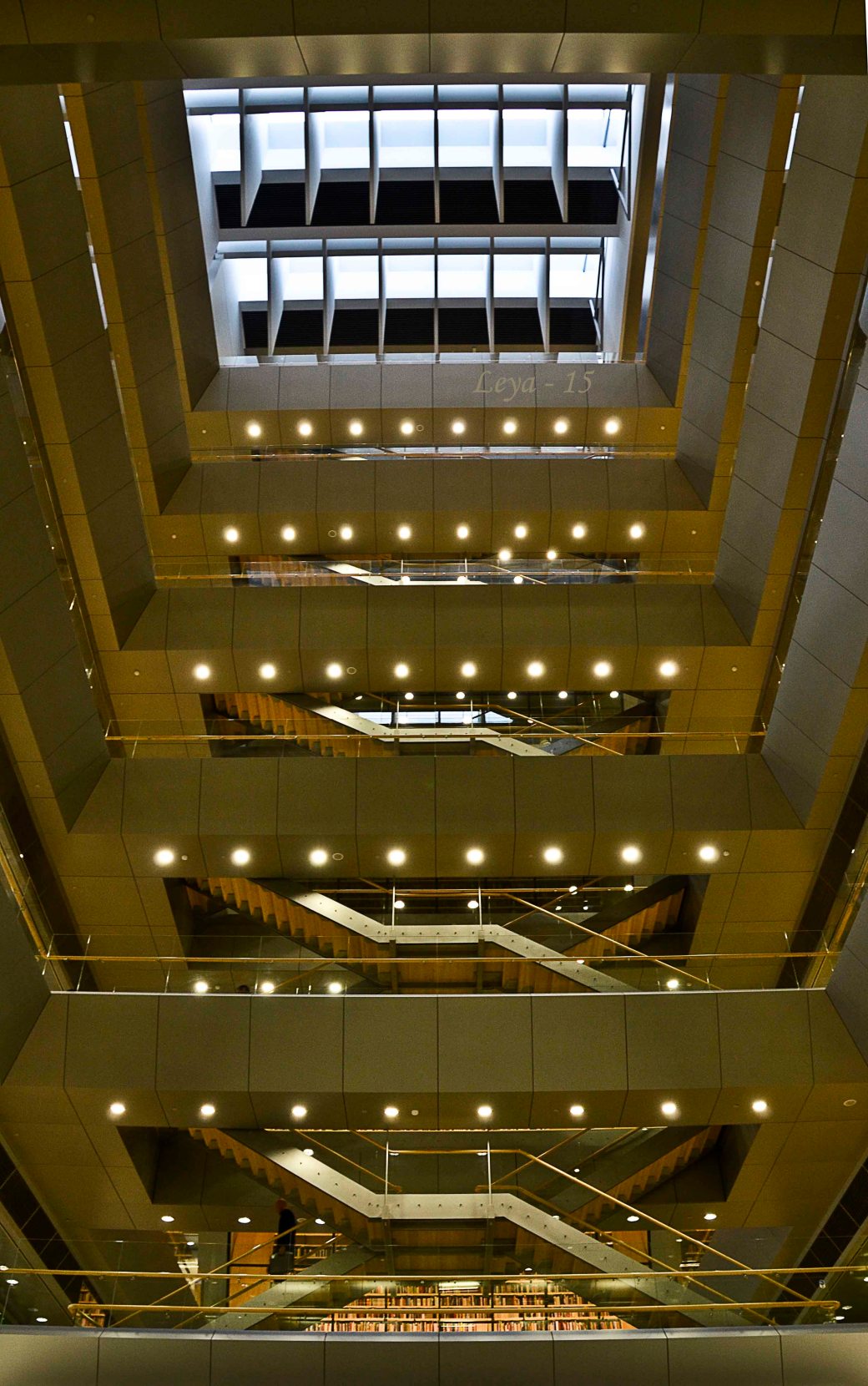
As we went searching for the books, suddenly there was a marvellous display right ahead – up in the air.
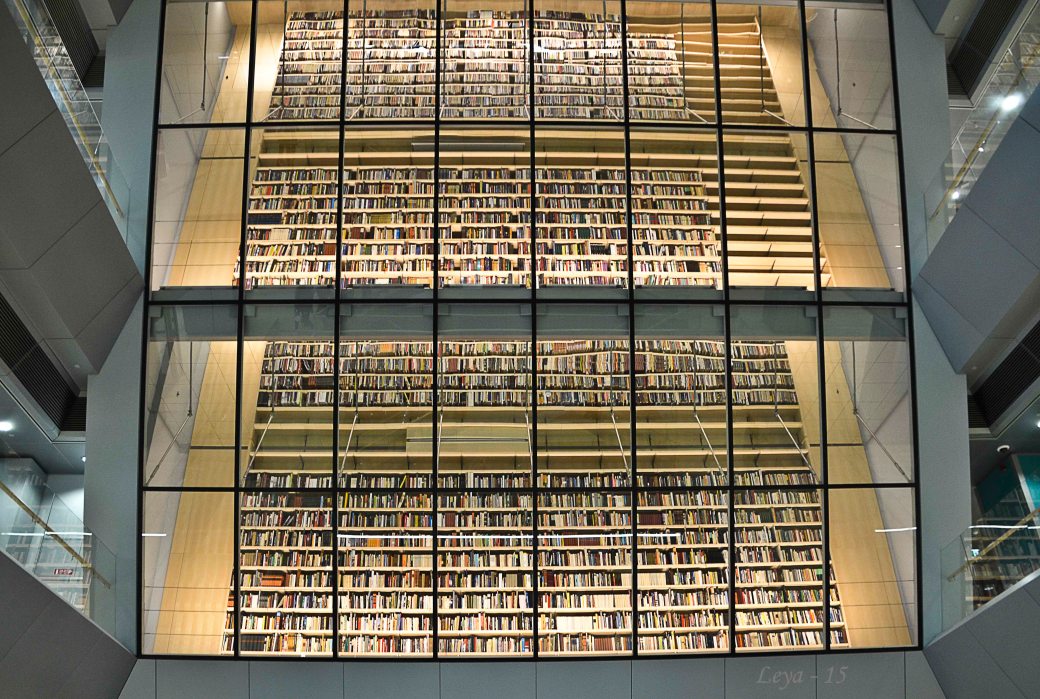
Beautifully displayed – we headed for them immediately. But, being there, we realized that they were locked in behind glass – only eye candy…
We entered stairs and elevators, slowly becoming more and more desperate…where were the books? And the people? Students? Children?
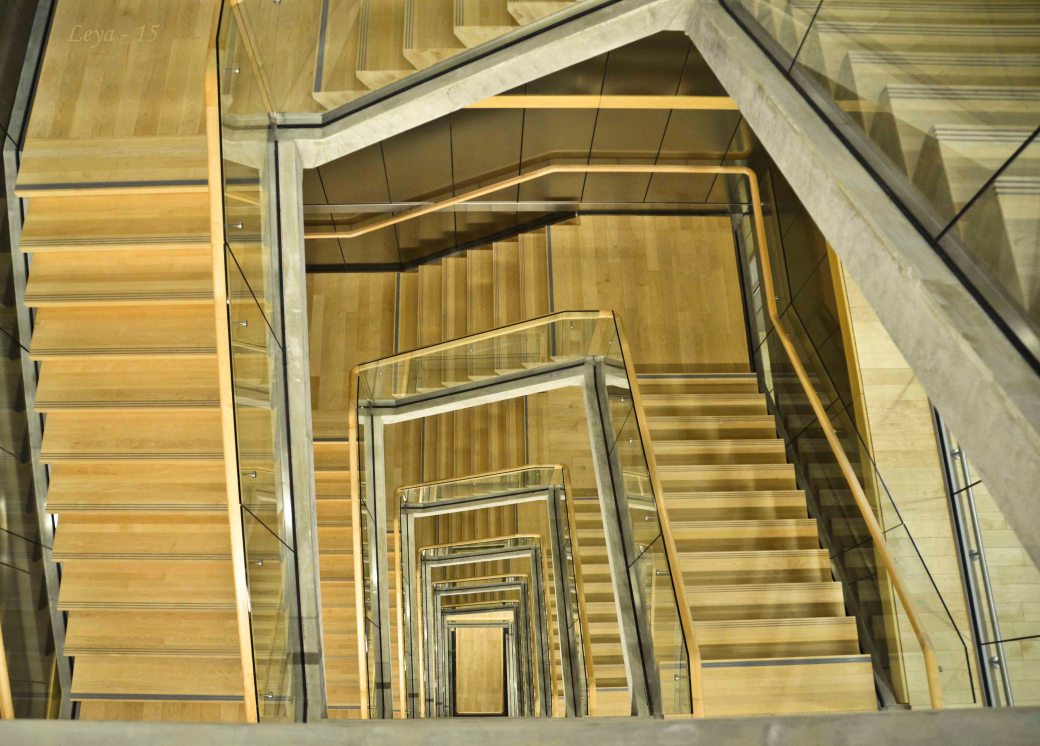
We tried every door on every floor, but no. They were all locked. We saw the children’s books department – but only through a tiny window…the door was locked.

Finally we managed to find one door open. Some students were sitting there, studying. You could hear a needle drop…And, there was something strange about the room. Not the artsy furniture….not the silence…but – look up in the right corner of the photo: There Were Some BOOKS. In a LIBRARY ?- WOW.

In fact, these were the only books we saw and were able to touch in this building…But the view of Old Town was not so bad.
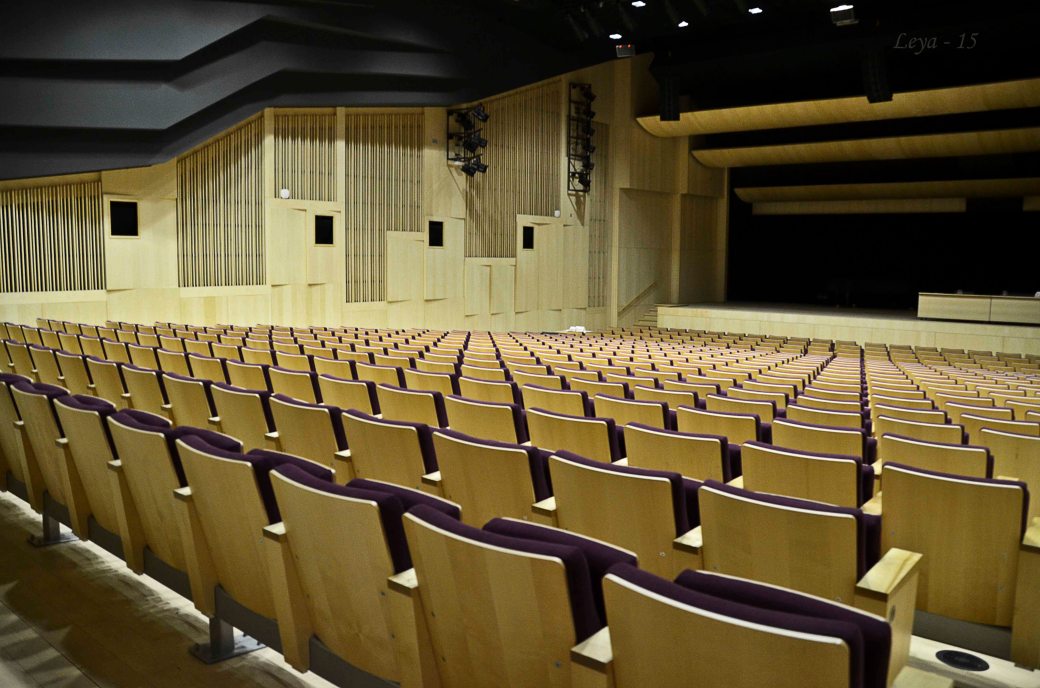
Giving up on the books and about to leave we saw another open door and peeped in. No people of course, but a beautiful aula.
We decided for a last try to reach the uppermost rooms on level 11 and 12. Found an elevator, and a cleaning lady on her way up. No admittance except for guided tours…She agreed on her being our guide and up we went.

This was only for special guests – and no panorama view was possible to photograph because all windows were filled with giant black dots.
As we went down again in the elevator, passing corridors after corridors after corridors…
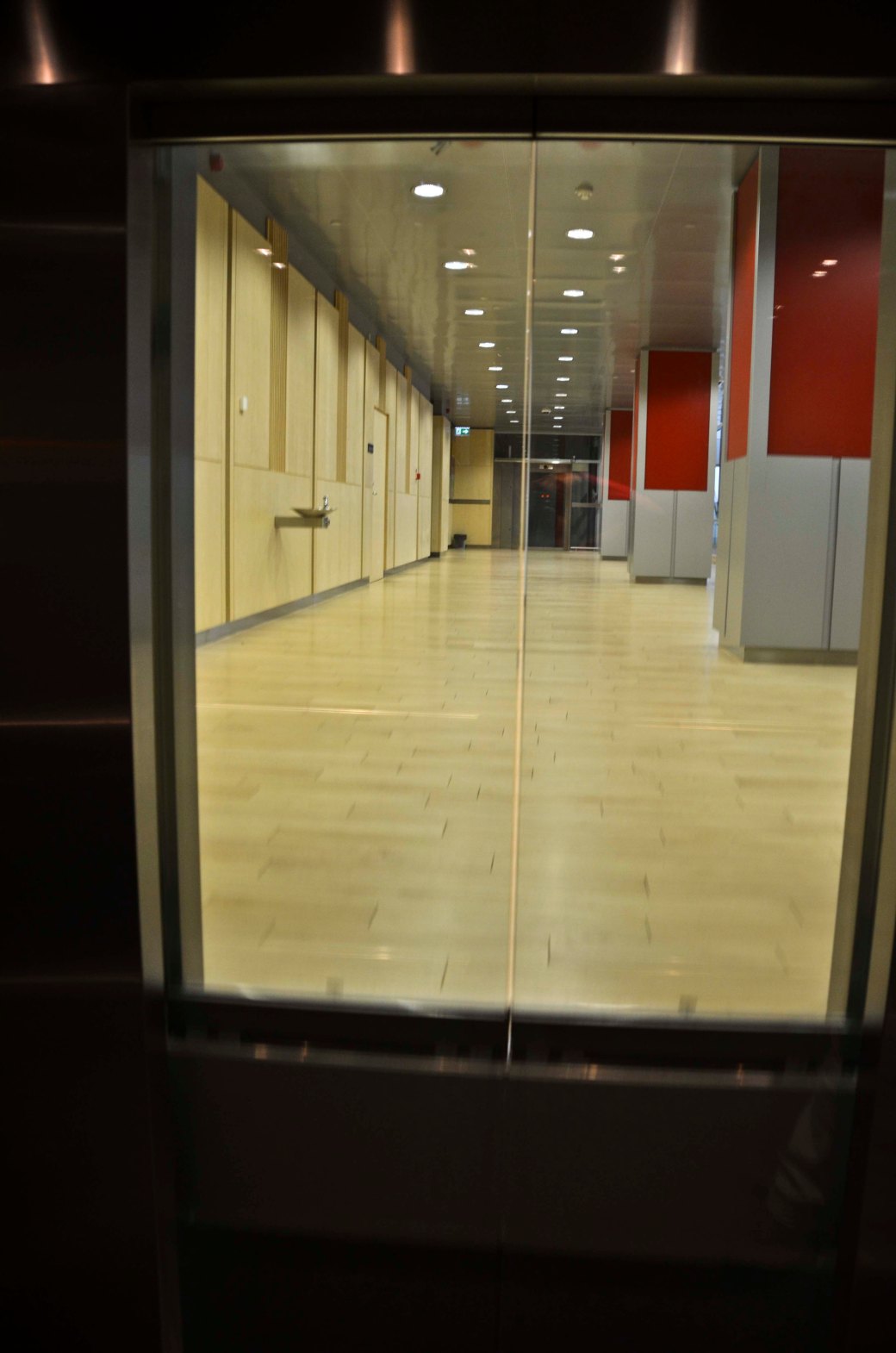
…we talked about how much this reminded of North Korea and the library in Pyongyang. My husband’s pictures in my head, and he could confirm the feeling…
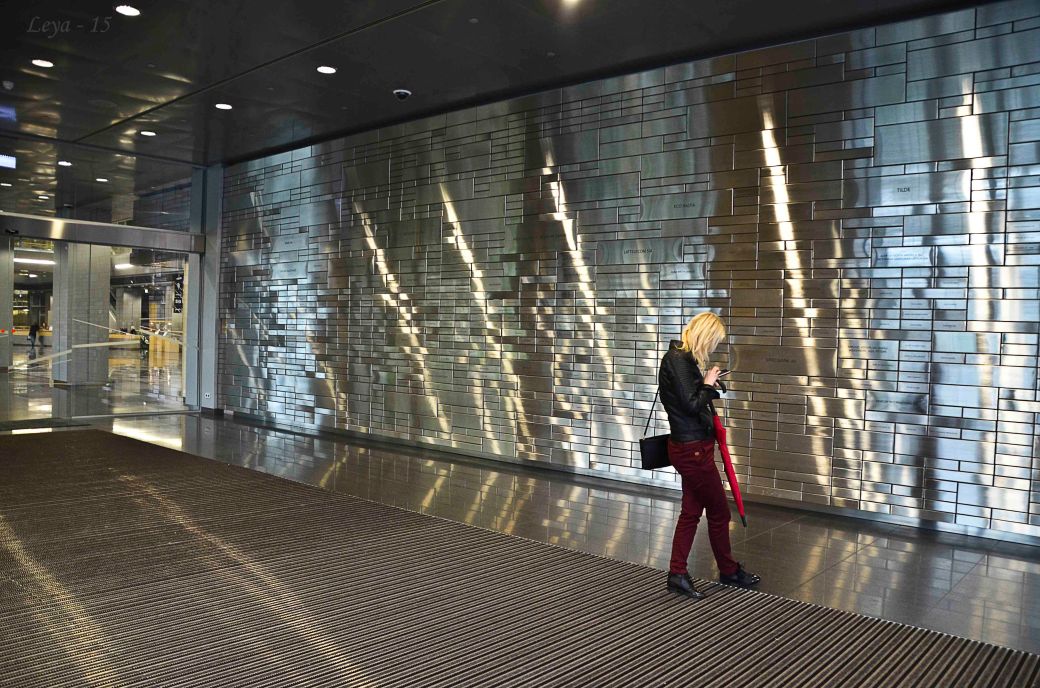
Leaving through the entrance, we agreed on this: What you can do here is enjoy the architecture and the fine materials used – and fiddle with your phone – there is no joy in books or reading visible here…

…as there is in this old ”biblioteka” where there is soul and warmth! A true home for books, readers and the joy of stories.
What do you think? Do you go to the library still? Should it be ”alive” or only for display?
Change – few things in this life we can say will be constant, but one of them is change, and a second one is death.
Architecture’s changings are always interesting – not always in a positive way… but, interesting. Here’s an example from Bellinzona in Tessin, Switzerland.

WordPress – Grid, make it the most important in your photo. Well, grids are not always manmade – you find nature’s grids everywhere…My choice fell on a Vanda, a remarkable Asian orchid, intensely coloured with a splendid grid. This Vanda I found standing in Denmark, outside a hotel.
For more grids – click here.

For public transportation – Cee’s B&W Challenge, I have chosen three pictures. One Danish train, a Swiss mountain train and a Warsaw underground. For more of this, click here.

Swiss mountain train
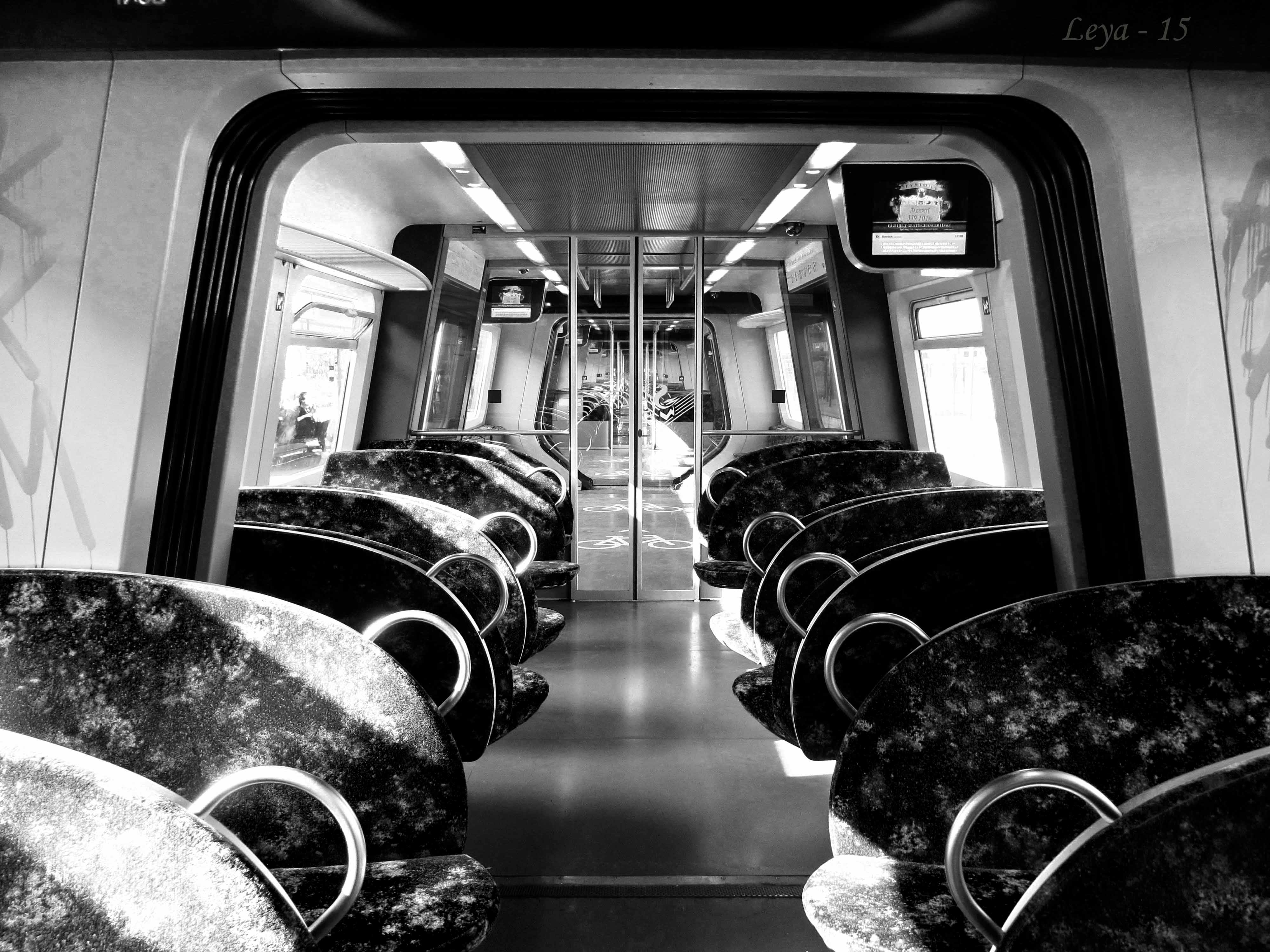
Danish train to Köge
 Leya
Leya 
Du måste vara inloggad för att kunna skicka en kommentar.