My son went to Kiev and Chernobyl this Autumn, and I asked him if he would share some of his photos and impressions on this blog. He said yes, and I am happy to have him here once again. Hope you will enjoy his work!
I’ve wanted to visit Chernobyl for a long time. The combination of two of my biggest interests; urban exploration and history, took me here.
The worst nuclear disaster in history took place in April 26th 1986. A disaster releasing an amount of radioactivity equal to 400 Hiroshima bombs.
Pripyat had 50 000 citizens who were evacuated by bus, roughly 1,5 days after the accident. They were given false promises of coming back – and so they left everything, even their beloved pets.


Every corridor in the buildings I visited felt endless. Seemingly reaching for the end of the world.


The Middle School was modern and well equipped with both music halls and sports facilities. They even had a large storage where they kept child-sized Soviet gas masks, in case of an emergency..
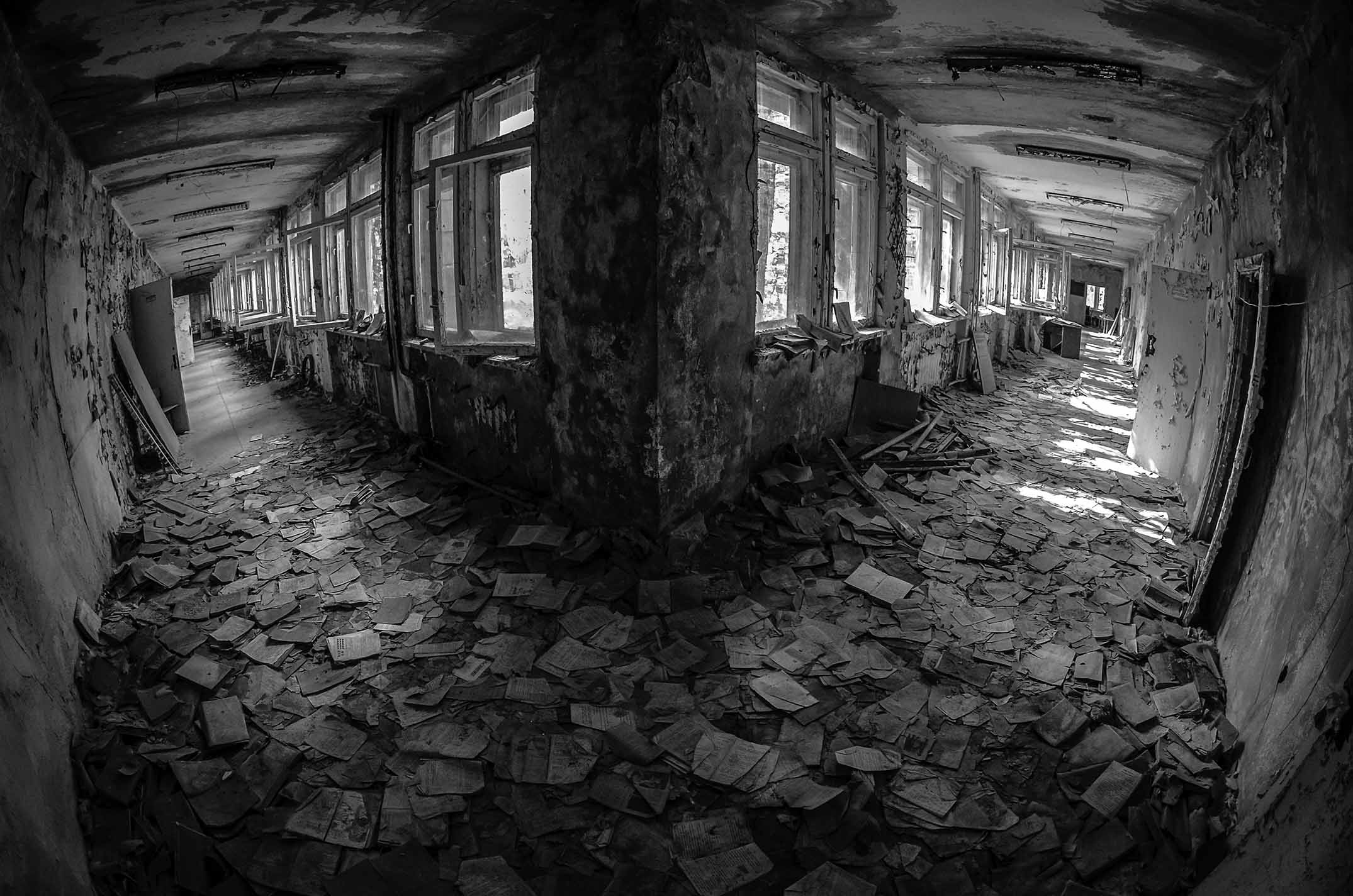
This was one of five secondary schools in this town. Hundreds of children once ran up and down these corridors. It almost felt like all of these notebooks, documents and files tried to chase after their owners when they left.


There are an endless amount of houses out in the Chernobyl woods. Some hide treasures, but most of them are just husks. Although they are just as beautiful.
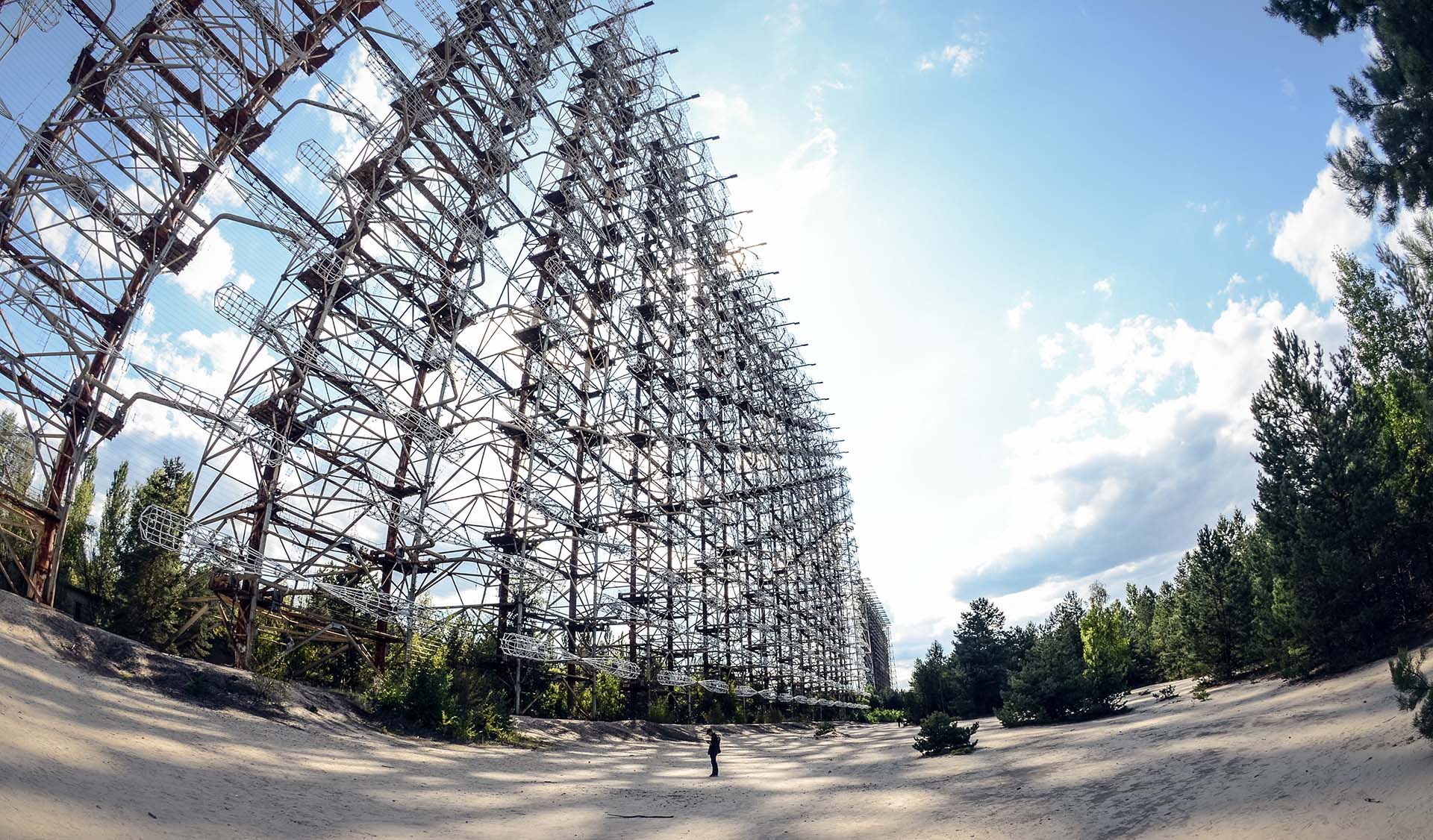
The Duga Radar was a so called ”over-the-horizon” radar that was supposed to detect missiles and airstrikes. Soon, it got the nickname ”The Russian Woodpecker” because of the repetitive tapping noise it caused at 10Hz on shortwave radios.
The radar itself is enormous – towering 150 meters high and around 700 meters wide.


We managed to sneak past security and get a peek at cooling tower #5. It was supposed to pump large amounts of water around the reactor for cooling, but the tower was never finished after reactor #4 exploded.
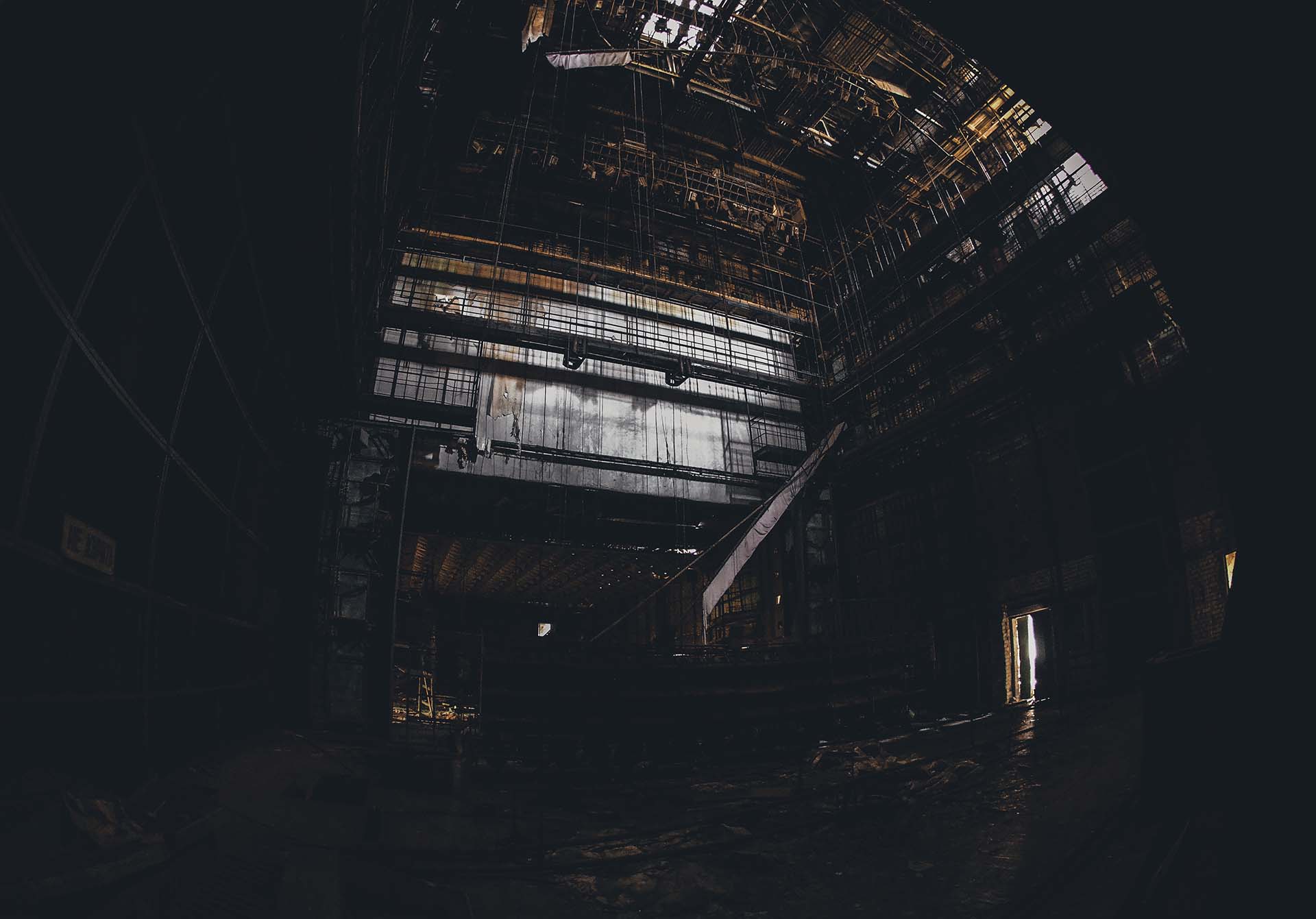
The ”Palace of Culture Energetik” was a large community center for the citizen of Pripyat. ”Energetik” is a wordplay – meaning both ”energetic” and ”power plant worker”. The purpose was to have a wide range of recreational activities including a library, gym, swimming pool, dancing halls and the very theater in the image above.


I am barely even scratching the surface of the stories and the history of Chernobyl. If you are interested in learning more, I recommend the TV Series called ”Chernobyl” on HBO. They portray the disaster in an incredibly powerful and emotional way, while staying close to the facts and real life stories. I also recommend the book which the show is based on: ”Voices from Chernobyl” by Svetlana Alexievich.
I would love to answer any questions that you might have.
Regards,
David P


 Leya
Leya 
Du måste vara inloggad för att kunna skicka en kommentar.