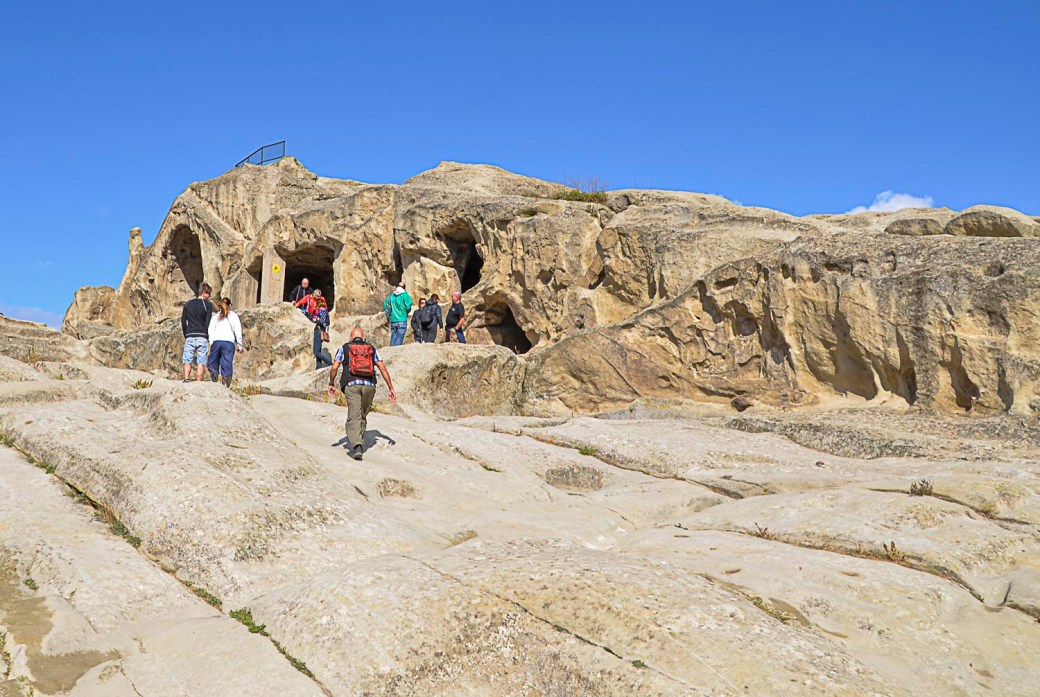
We decided to take a day out of Tbilisi – for some of Georgia’s old historic sites. Uplistsikhe is an interesting ancient rock-hewn town in eastern Georgia, built on the left bank of the Mtkvari River. It is identified by archaeologists as one of the oldest urban settlements in the country.

As our eminent guide, Katie, led us through the remains of this once 20 000 people inhabited town – she told us that even if it was almost destroyed by the Mongolians in the 13th century, the area also suffers from frequent earthquakes, which finally finished its existence.
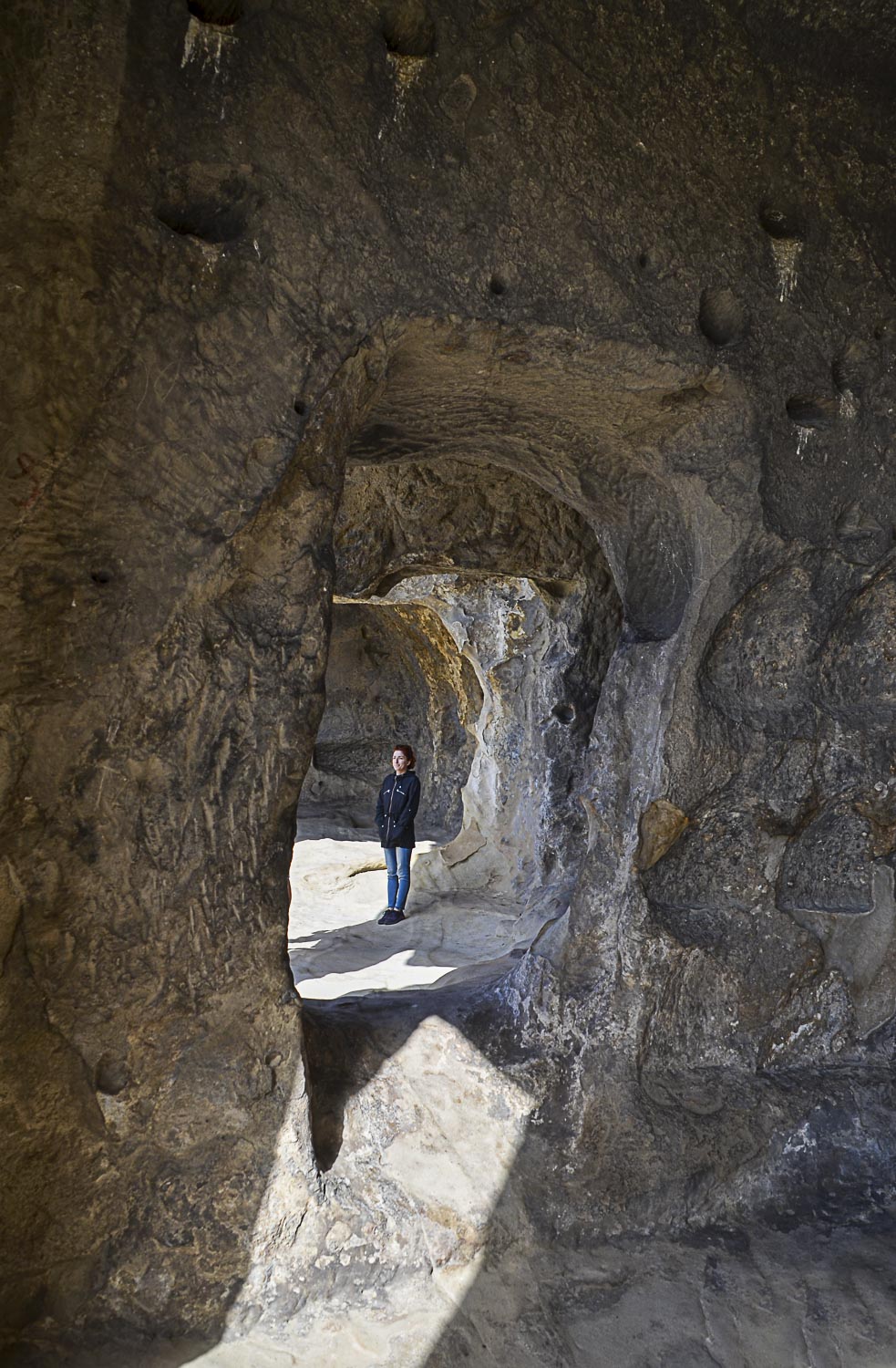
The town contains various structures dating from the Early Iron Age to the Late Middle Ages, and is notable for the unique combination of various styles of rock-cut cultures from Anatolia and Iran, as well as the coexistence of pagan and Christian architecture.
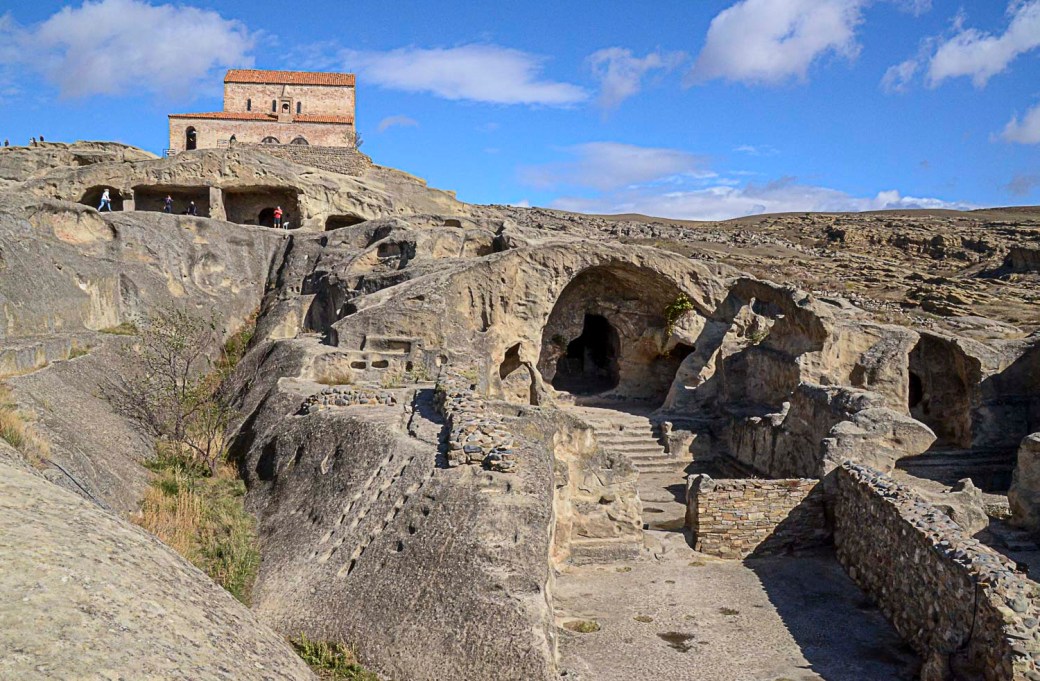
At the summit of the complex is a Christian basilica built of stone and brick in the 9th-10th centuries. (Another photo from it last Silent Sunday.)
The quiet interior is in perfect harmony. I felt completely at peace with myself, alone in the natural light, in a translucent sphere.

Archaeological excavations have discovered numerous artifacts of different periods, including gold, silver and bronze jewellery, and samples of ceramics and sculptures. Many of these artifacts are in the safekeeping of the National Museum in Tbilisi.

After this windy adventure, we left for Jvari Monastery (in the header, seen from Svetitskhoveli), whose name is translated as the ”Monastery of the Cross”. Jvari Monastery is a sixth century Georgian Orthodox monastery near Mtskheta, and is listed as a World Heritage site by UNESCO.
Jvari is a rare case of the Early Medieval Georgian church that survived to the present day almost unchanged. The church became the founder of its type, the Jvari type of church architecture, prevalent in Georgia and Armenia.
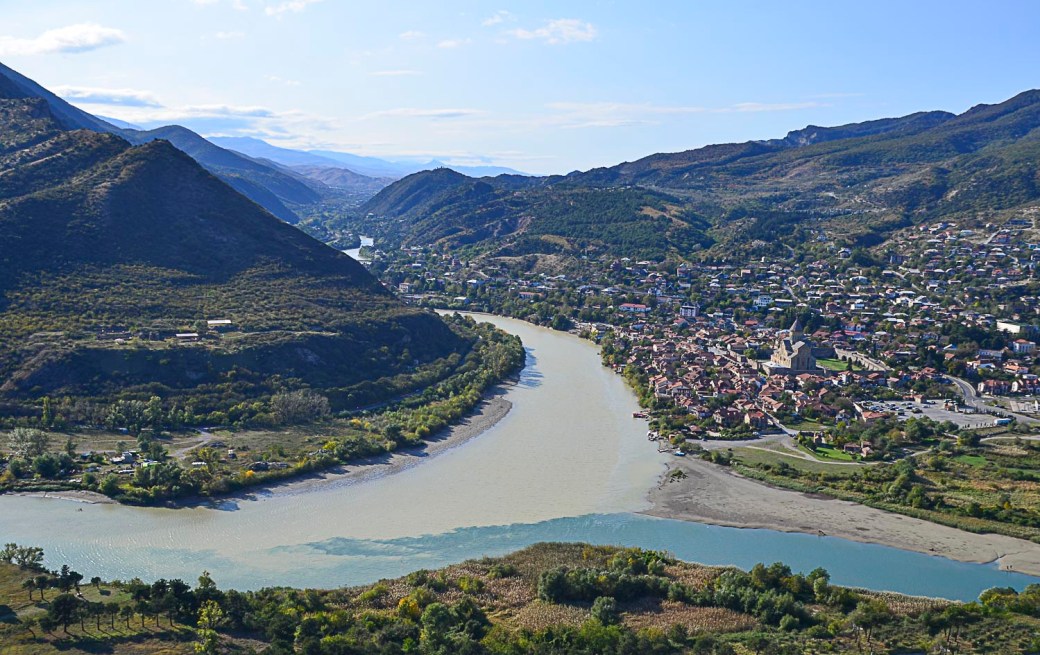
The monastery stands on the rocky mountaintop at the confluence of the Mtkvari and Aragvi rivers, overlooking the town of Mtskheta.
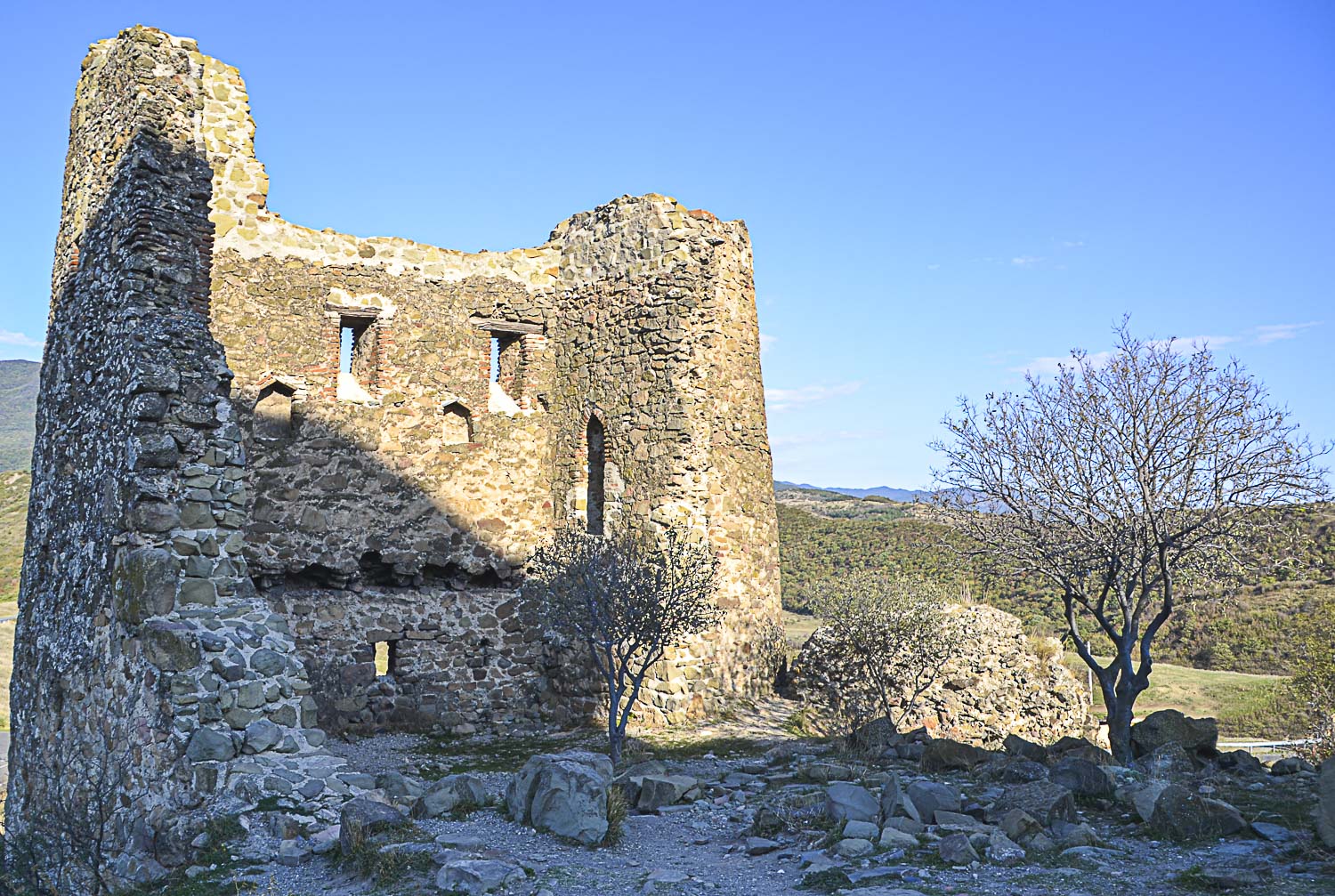
Built atop of Jvari Mount (656 m a.s.l.), the monastery is an example of harmonious connection with the natural environment, characteristic to Georgian architecture.

We ventured down to Svetitskhoveli in Mtskheta (this city also recognized by UNESCO as a World Heritage Site), one of the oldest cities of Georgia, founded by the ancient Meschian tribes in the 5th century. It was capital of the early Georgian Kingdom of Iberia from the 3rd century BC to the 5th century AD, and continued to serve as the coronation and burial place for most kings of Georgia until the end of the kingdom in the 19th century.
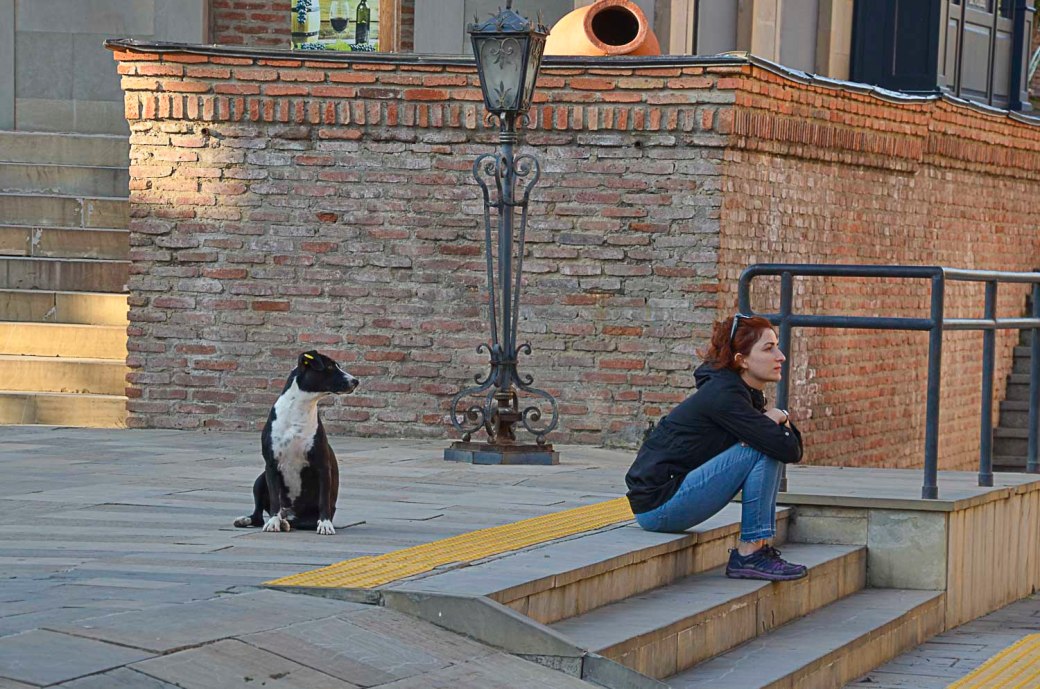
The Svetitskhoveli Cathedral (literally the Cathedral of the Living Pillar) is currently the second largest church building in Georgia, after the Holy Trinity Cathedral in Tbilisi. Known as the burial site of Christ’s mantle, Svetitskhoveli has long been one of the principal Georgian Orthodox churches in the region. It is considered a masterpiece of the Early and High Middle Ages.
At the end of the day, our lovely, knowledgeable guide, Katie, waited patiently for her ”sheep” to return to their master.
 Leya
Leya 
Lovely pictures and interesting read.
Thank you – glad to share them!
What a great visit you had, Ann Christine. Thanks for sharing your photos.
So happy you enjoyed the tour!
After a very sociable afternoon, it’s hard to imagine myself there, hon. But how very beautiful 🙂 🙂
Oh Jo, there were many visitors – surely you could be sociable there as well! But maybe not enough – it is not Algarve ;-D
One Algarve is enough. Too much of everything yesterday! I’d love the opportunity to visit this place. 🙂 🙂
♥
So much history. Looks fascinating
It was!
Beautiful photography, fascinating narrative. Thank you.
Thank you for coming with me, Michael. And I shine from hearing you liked the photos too!
Lovely place and photos.
Thank you, Sherry! Glad you enjoyed it.
This is wonderful. Visit now before we all discover it seems to be the motto!
😀
Looks amazing, may be my next trip 🙂
I am glad to have inspired you, thank you!
Absolutely beautiful. I love history the best. This weekend I will be posting about a historic site near my home.
Glad you enjoyed it! Hope to see your historic site as well!
I will let you know when I post it. Thanks Leya.
♥
I posted a coast picture
Thanks for my Virtual tour, A C!
You are welcome, Sue!
😊😊
So much history contained in those old buildings. Thanks for sharing the tour, Ann-Christine.
Much enjoyed it – so glad to share!